Article | Specialist Picks Modern And Contemporary Art London
Specialist Picks: Modern & Contemporary Art London
The London team is back with their favorites from our upcoming Modern & Contemporary Art auctions.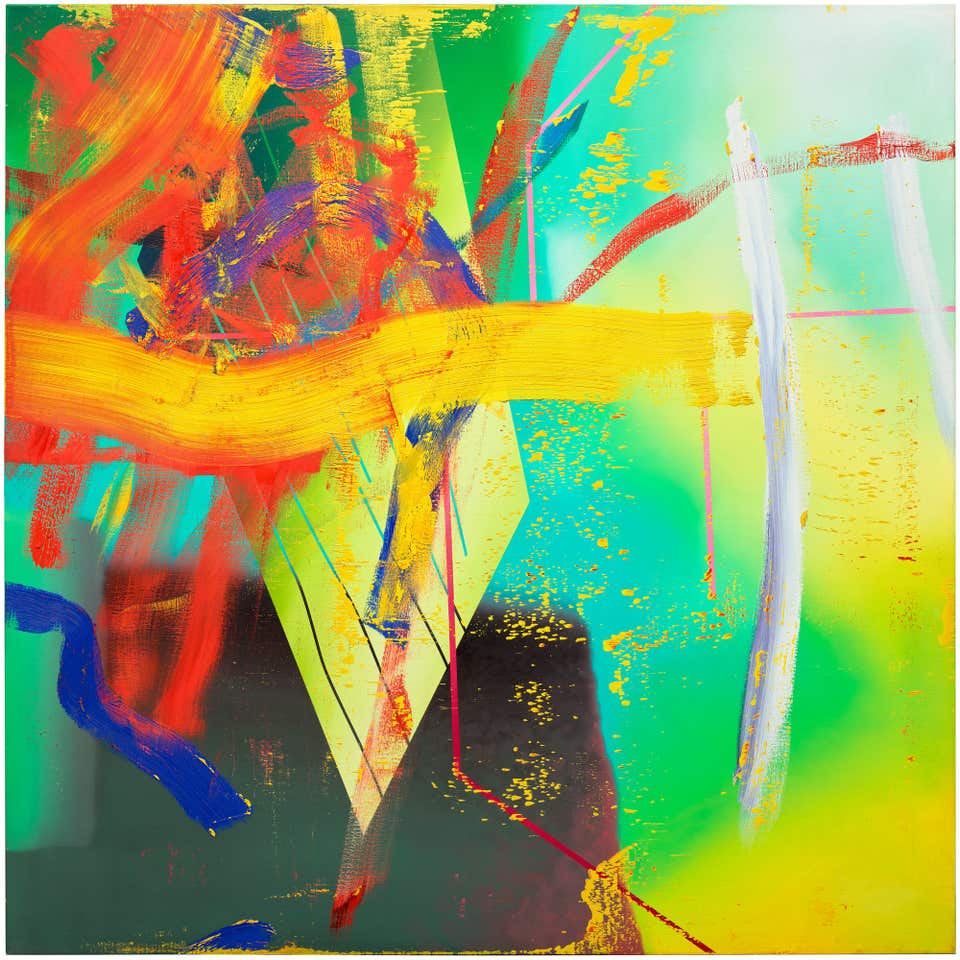
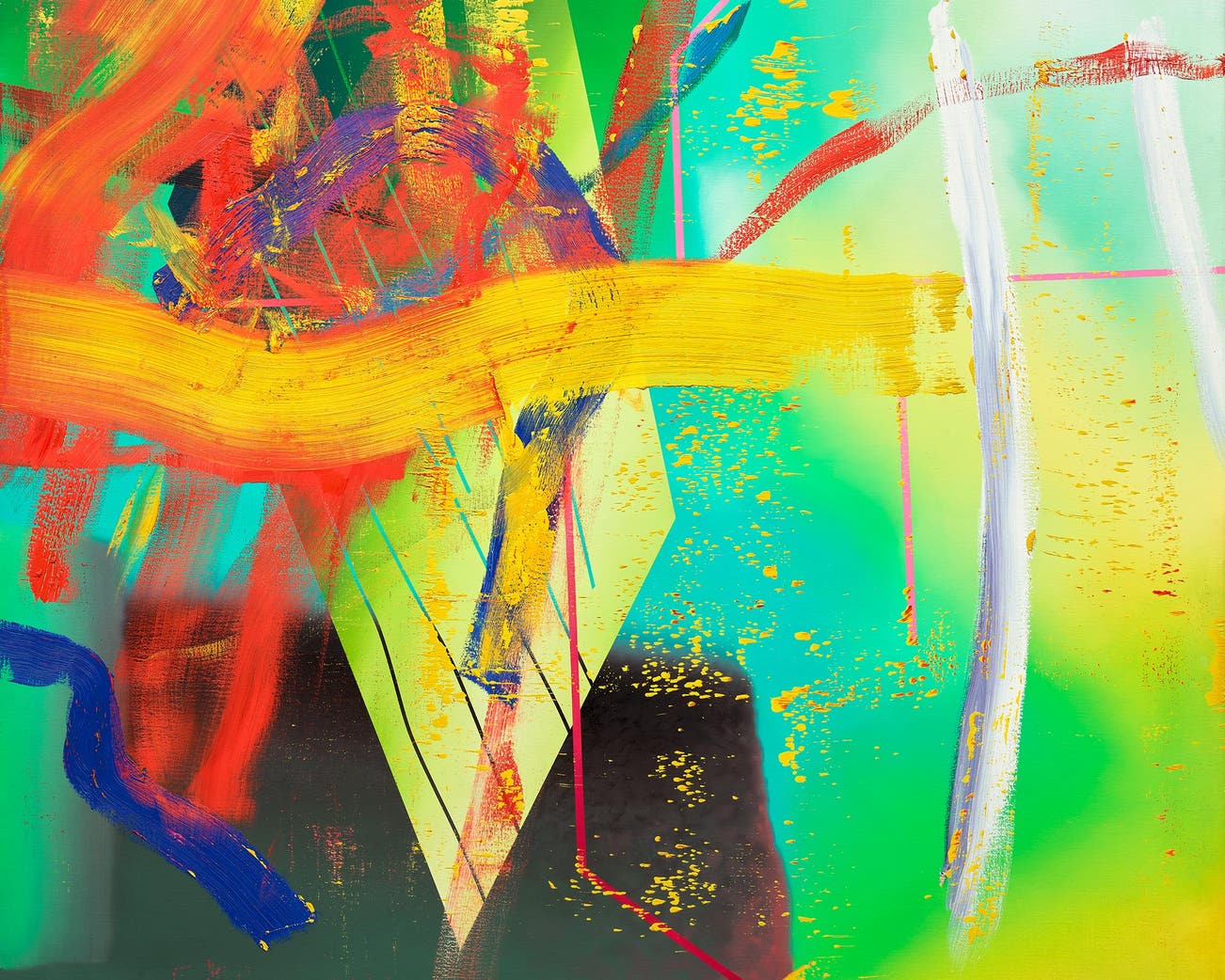
GERHARD RICHTER, Mathis, 1983. Modern & Contemporary Art London.
Gerhard Richter
Charlotte Gibbs, London Head of Auctions & Specialist, Head of Sale, Director
Having lived and studied in Berlin, I would have to choose Gerhard Richter’s Mathis as the highlight of our Evening Auction. A titan of 20th-century German art, Richter’s groundbreaking interrogation of the presumed veracity of photography and painting helped lay the foundations for much of what we understand as contemporary art today.
Painted in 1983, Mathis belongs to a pivotal period in Richter’s practice when he began bringing together multiple techniques within a single large-scale composition to create his celebrated Wild Abstracts. Using enlarged abstract sketches to form shadowy background silhouettes, the composition is animated by swathes of squeegee-applied oil dragged across the canvas, while bold, expressive brushstrokes introduce a sense of wild movement and unbridled vitality. The result is a monumental painting rendered in Richter’s most vivid and unrestrained hues.
When standing before Mathis, I am reminded of Richter’s vast collection of printed source material, Atlas, on display at the Lenbachhaus in Munich. Like Atlas, the painting reveals Richter grappling with fundamental questions of memory, representation and the construction of images, all against the backdrop of post-war European history. It is this unique tension between abstraction and recollection, spontaneity and structure, that makes Mathis such an important piece of art history.
David Hockney
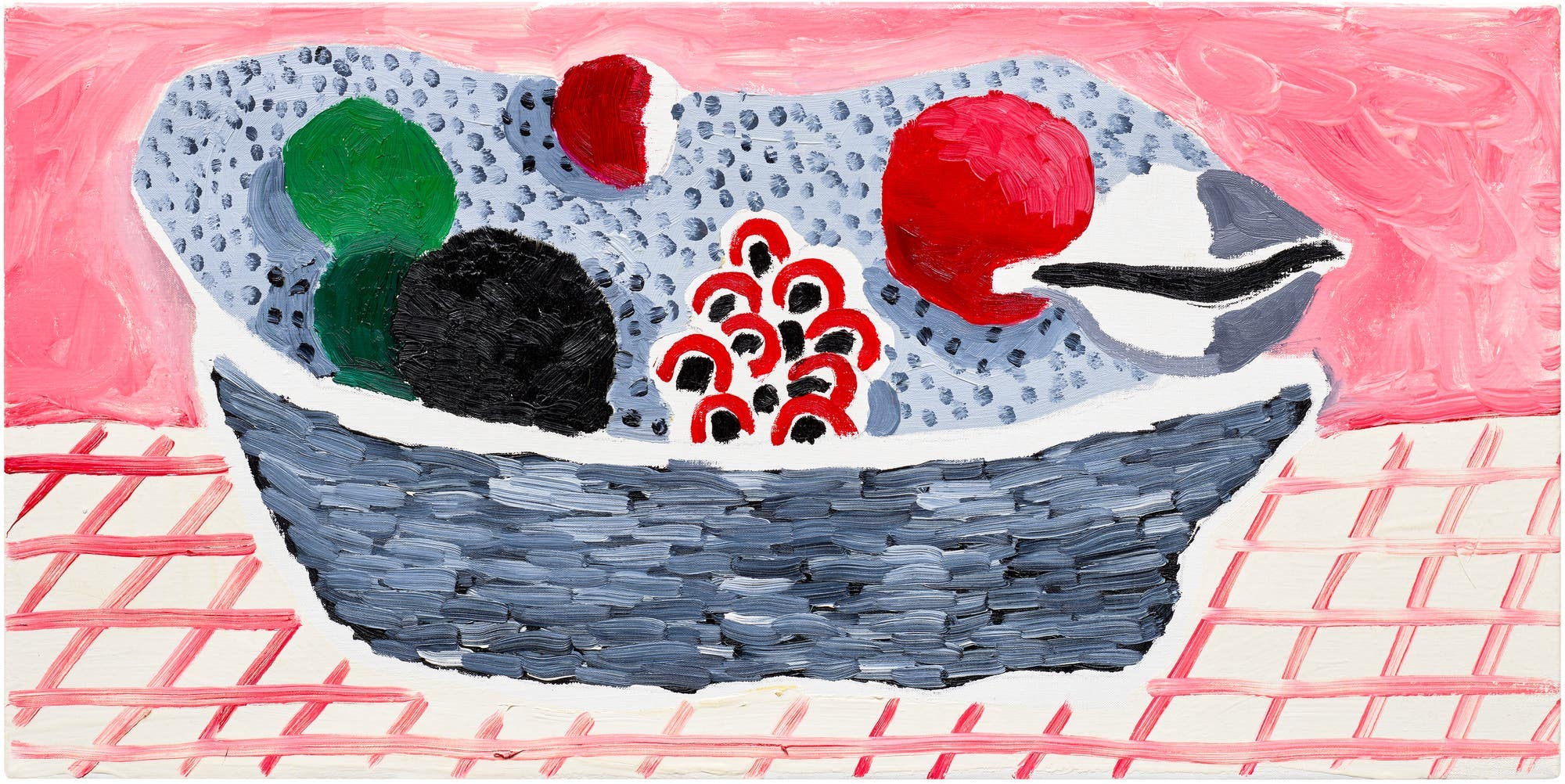
DAVID HOCKNEY, Red and Black Fruit, 1988. Modern & Contemporary Art Evening Sale, London.
Babak Ibbetson, Researcher and Writer
Red and Black Fruit was painted by David Hockney in 1988 and belongs to the long tradition of the still-life genre that was popularised during the Dutch Golden Age. Given a new life in modern art, as Hockney looked beyond naturalism, he increasingly considered Pablo Picasso’s example in the years leading up to Red and Black Fruit’s creation. The Spanish master prompted deeper pause and reflection on how to explore space, creating images that gradually reveal themselves and placing emphasis on observation as an active process of discovery. Modulating viewpoints imperceptibly and working with a condensed range of colours — greens, pewter greys paired with deep and pink-hued reds — Hockney leaves behind a world that is brighter, more vivid, widening our perspective through his sheer passion for painting.
Maurizio Cattelan
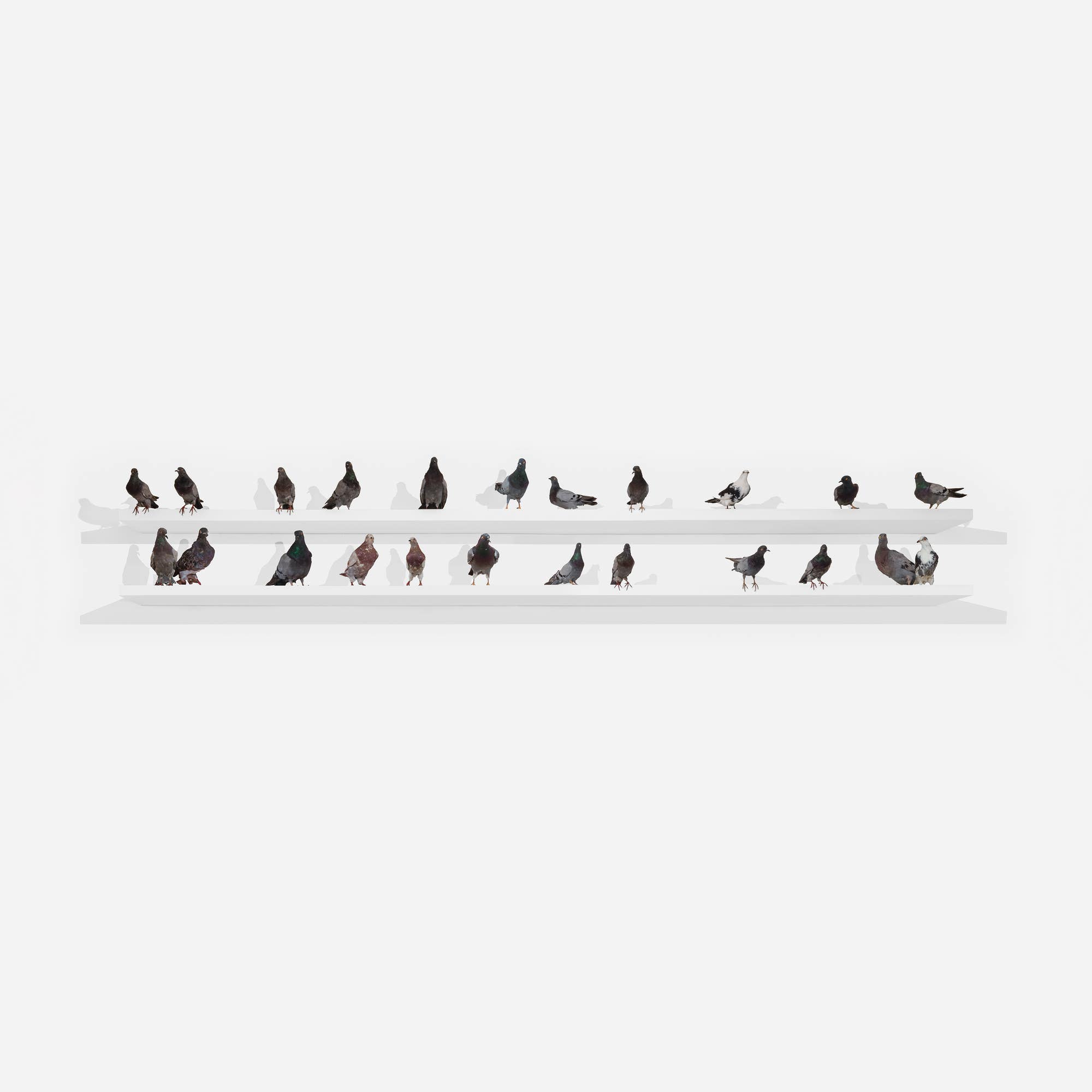
MAURIZIO CATTELAN, Turisti, 1997. Modern & Contemporary Art Evening Sale, London.
Christopher Phang-Lee, Associate Specialist
Offbeat and irreverent, Maurizio Cattelan's Turisti are icons of his challenging, witty practice. The original generation of his fundamental pigeon cycle, they belong to the series first presented at the 47th Venice Biennale in 1997 for the Italian Pavilion and which he has reissued in multiple guises in the intervening years. Lurking up high, they look down on us as the perfect agents of Cattelan's personal brand of humour and studied conflation of high and low art, incarnations of the sacred and profane. The most valuable pigeons in the world, these tourists are the menacing, unsettling tricksters of Cattelan's universe.
James Turrell
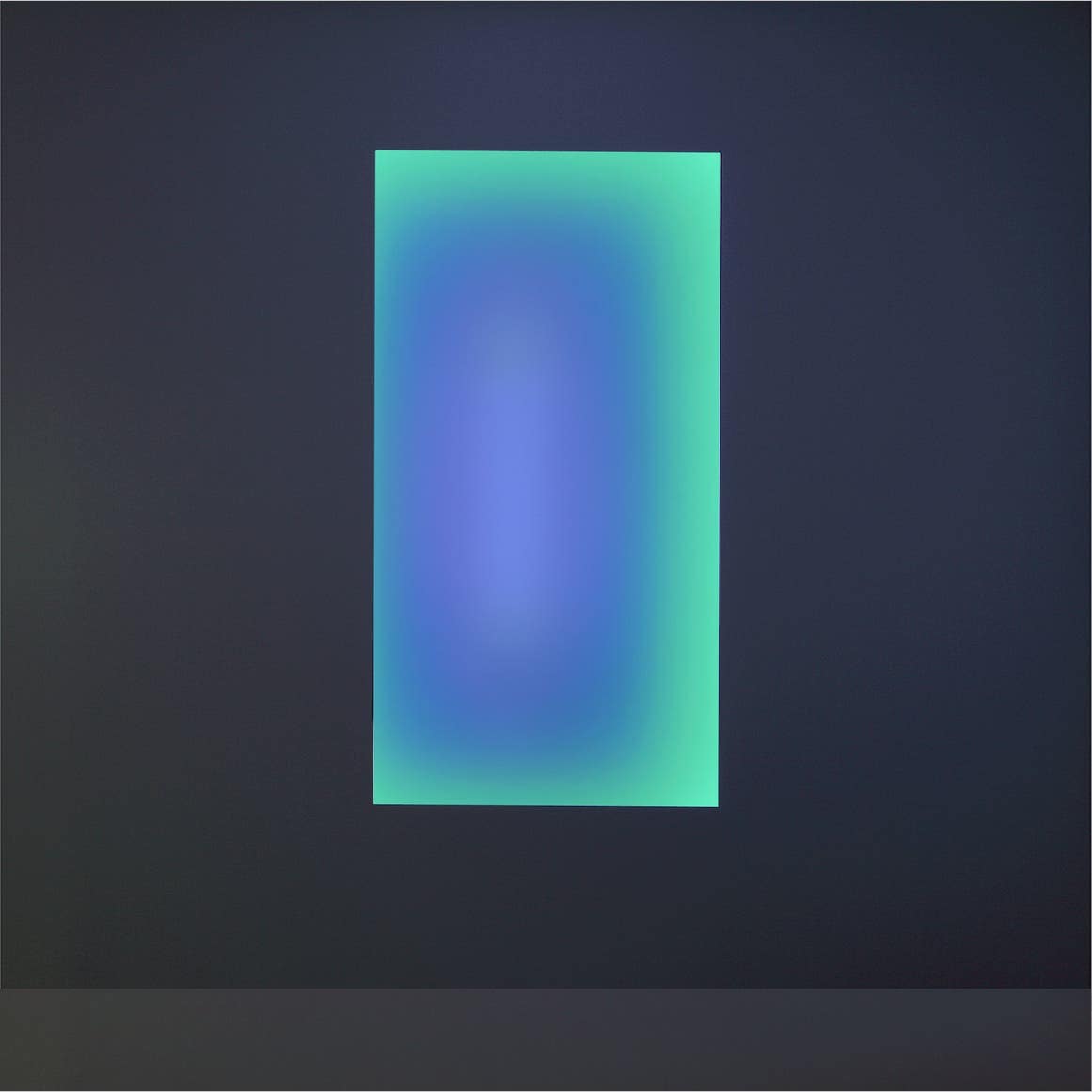
JAMES TURRELL, Ein Feshkha, 2008. Modern & Contemporary Art Evening Sale, London.
Emily Crozier, Sale Manager
Having previously worked with artists who use light as their medium, I know that it is impossible to talk about light sculpture without referencing James Turrell. Standing before Ein Feshkha in our galleries, it is easy to understand why. Turrell has said, “I look at light as a material,” and that idea is immediately apparent here: he treats light not simply as a means of illuminating something else, but as the work’s material itself, giving something entirely intangible an almost physical presence. At first, the work appears as a luminous field of colour, but as you spend time with it, your perception begins to shift. Its edges seem to dissolve into the surrounding space, and it becomes increasingly difficult to distinguish between light, surface and depth.
Turrell has spent his career exploring this relationship between light and perception. I particularly love that, despite the complex technology involved in creating Ein Feshkha, the work itself feels incredibly simple and contemplative. The colour subtly changes, allowing the work to unfold slowly rather than revealing itself all at once, and encouraging you to spend time it. Ein Feshkha is not just something we look at, but something we experience - a work that rewards the time we give to it.
Antony Gormley
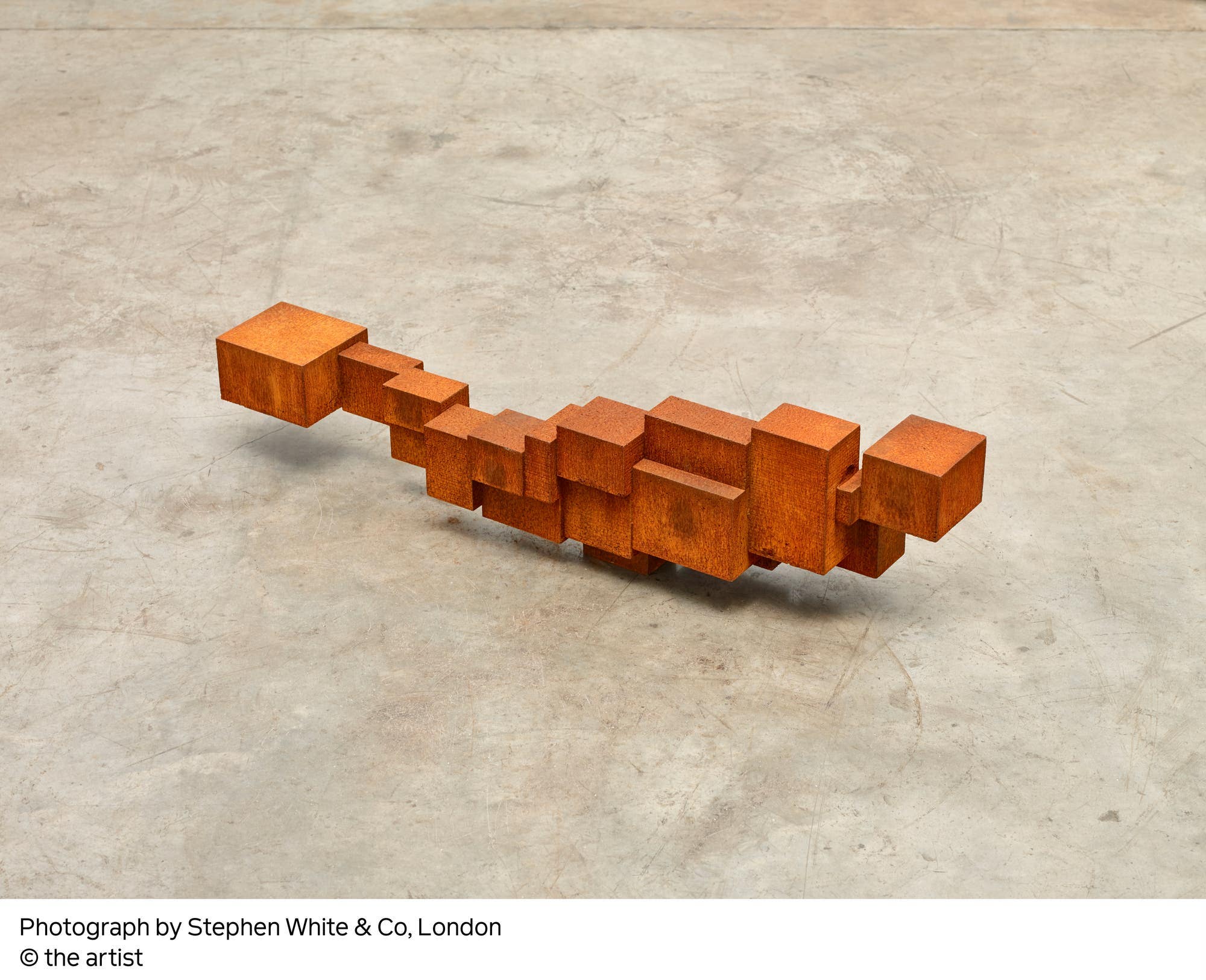
ANTONY GORMLEY, Small Fall 2 III, 2015. Modern & Contemporary Art, London.
Charlotte Raybaud, Senior Specialist, Head of Sale, Director
I’m incredibly drawn to the notion of contradictions coexisting, and for me, Antony Gormley's Small Fall 2III captures this perfectly. On the one hand, the piece is comprised of unforgiving blocks of iron; and on the other, the same blocks seem to defy their own rigidity to capture the gentle curves of the titular figure’s arching back as it seems suspended mid-fall, mid-flight, mid-dive. The work’s interlocking cubes in varying sizes really speaks to our century’s existence through on-screen pixels, and therein lies yet another contradiction: a particle from a non-physical, digital world, seems to collide purposefully with the very physicality of the human form. For me, this is where Gormley’s continuous exploration of humanity really takes shape. In this instance, he reimagines the classical motif of a statue through spatial abstraction, entirely warping the human frame as he reproduces it in a pared down rendition of building blocks. Beautiful in the flesh, Small Fall 2 III is a fantastic example by one of the most important living sculptors of our time—a must see in our auction this season.
Rose Wylie
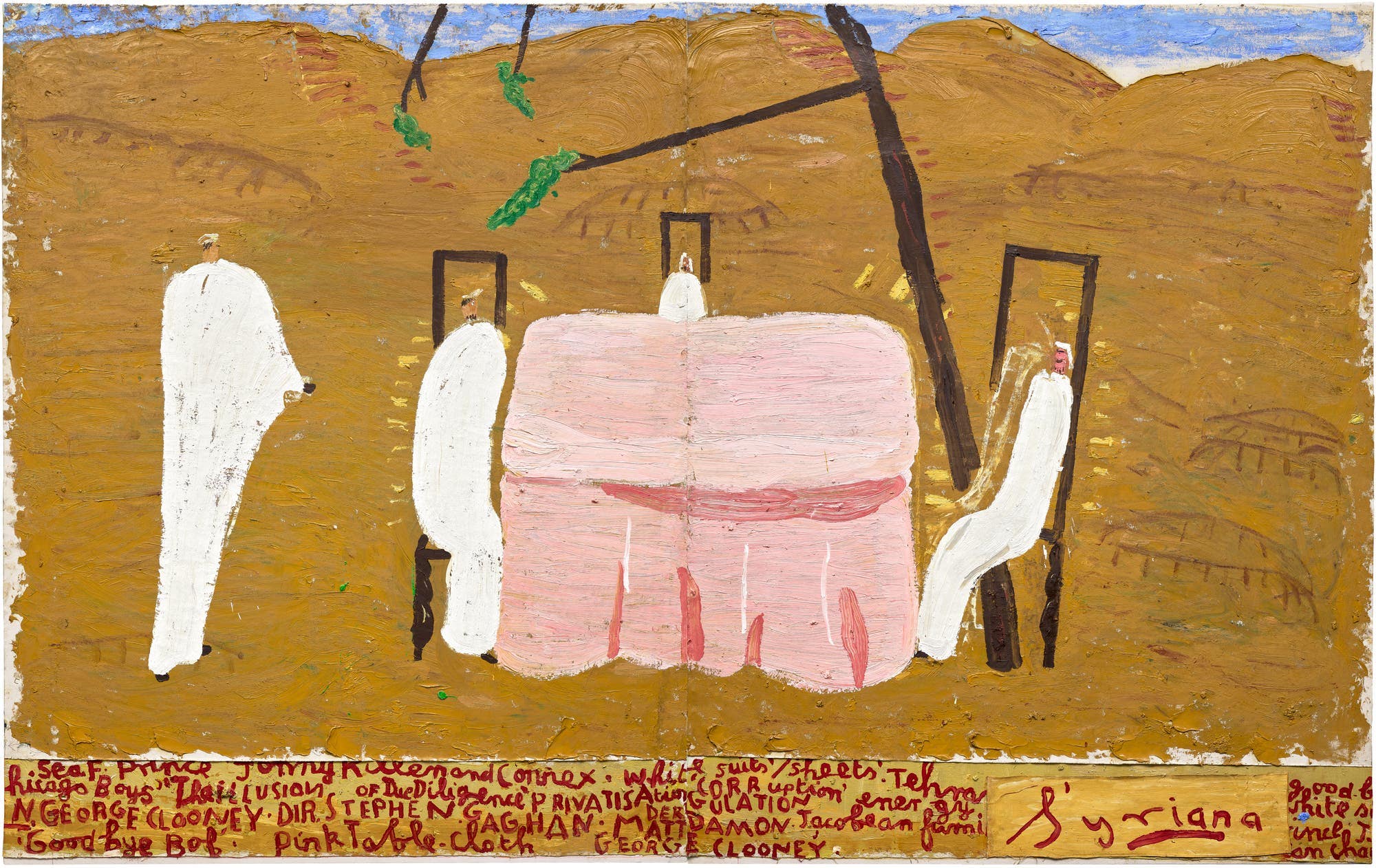
ROSE WYLIE, Pink Table Cloth (Close Up), 2013. Modern & Contemporary Art, London.
Isobel Hallam, Senior Cataloguer
After seeing this work in Rose Wylie’s ground-breaking solo exhibition, Rose Wylie: The Picture Comes First, at the Royal Academy earlier this year, I couldn’t help but select it as my specialist pick this season. Expansive in both scale and subject, Pink Table Cloth (Close Up) captures Wylie at her best: playful, instinctive and deeply attuned to the visual language of cinema. Executed with a flash of her signature blush-pink palette and rooted in visual memory, the painting depicts a surreal scene from Stephen Gaghan’s 2005 film Syriana. Together with its sister painting, Pink Table Cloth (Long Shot), Wylie plays with the conventions of cinematic framing, shifting between close-up and long shot to manipulate our perception of the scene and is a work to look out for in our galleries this season!
John Chamberlain
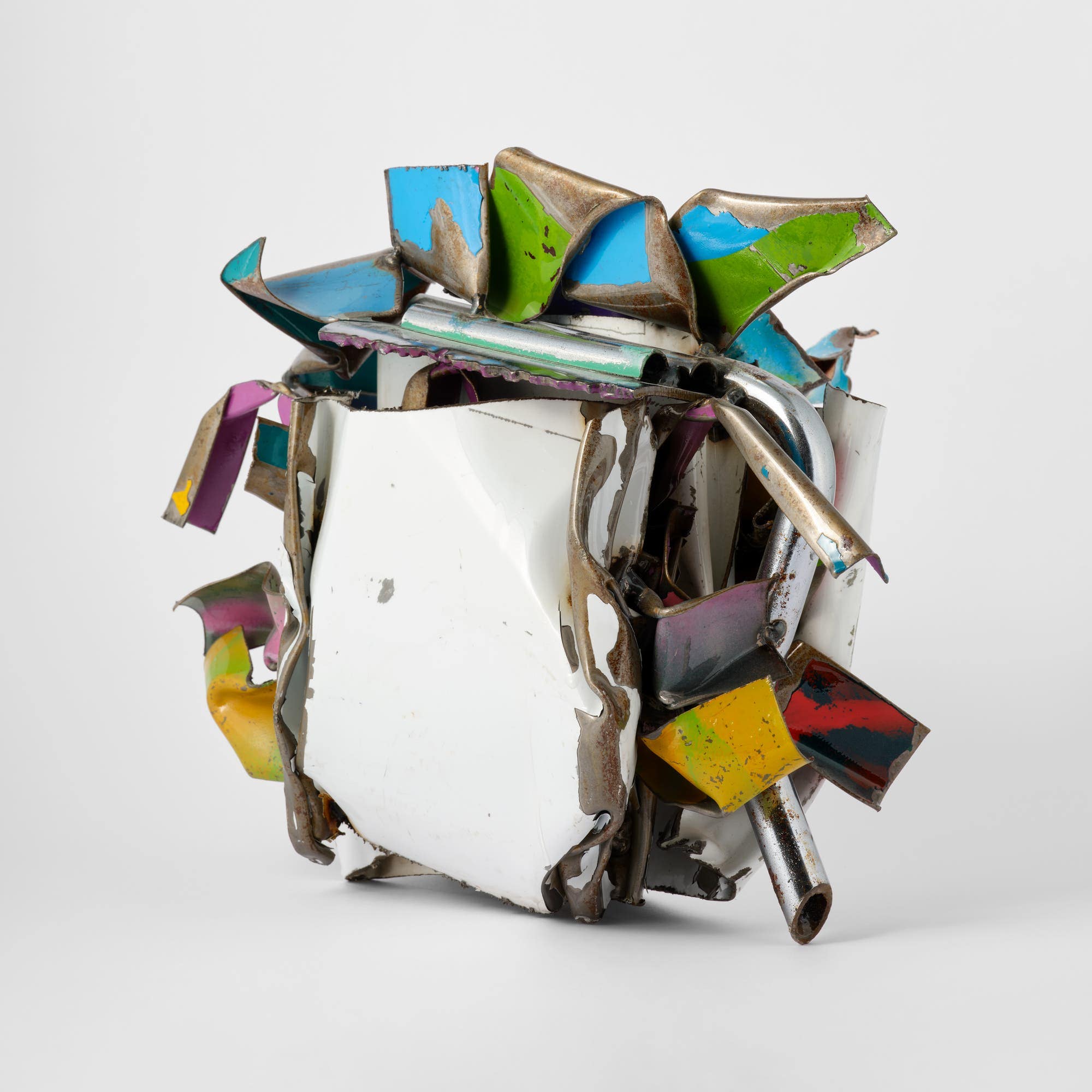
JOHN CHAMBERLAIN, NOBODY, 2009. Modern & Contemporary Art, London.
Amity Fenton, Sale Coordinator
A work that I feel particularly drawn to is John Chamberlain’s sculpture NOBODY. I love the dynamism of the work. Ribbons of blue, orange, yellow and green burst from the tightly compacted white metal beneath, as though the work has been crushed and clamped, the colour forced out through the seams. Chamberlain’s painterly-like handling of colour and the fluid, improvisatory movement of the metal recall Abstract Expressionism in a three-dimensional form. Here, the colour seems more inherent than applied, recalling the industrial enamel of scrap metals. As a later work executed on a more modest scale, NOBODY achieves a notable elegance and tactility. Nevertheless, I’d say it retains the swagger of postwar American machismo, and the rusting industrial character of his monumental automobile sculptures, down to the miniature exhaust-pipe-like protrusion. To me, this sculpture exemplifies Chamberlain’s mastery of his medium.