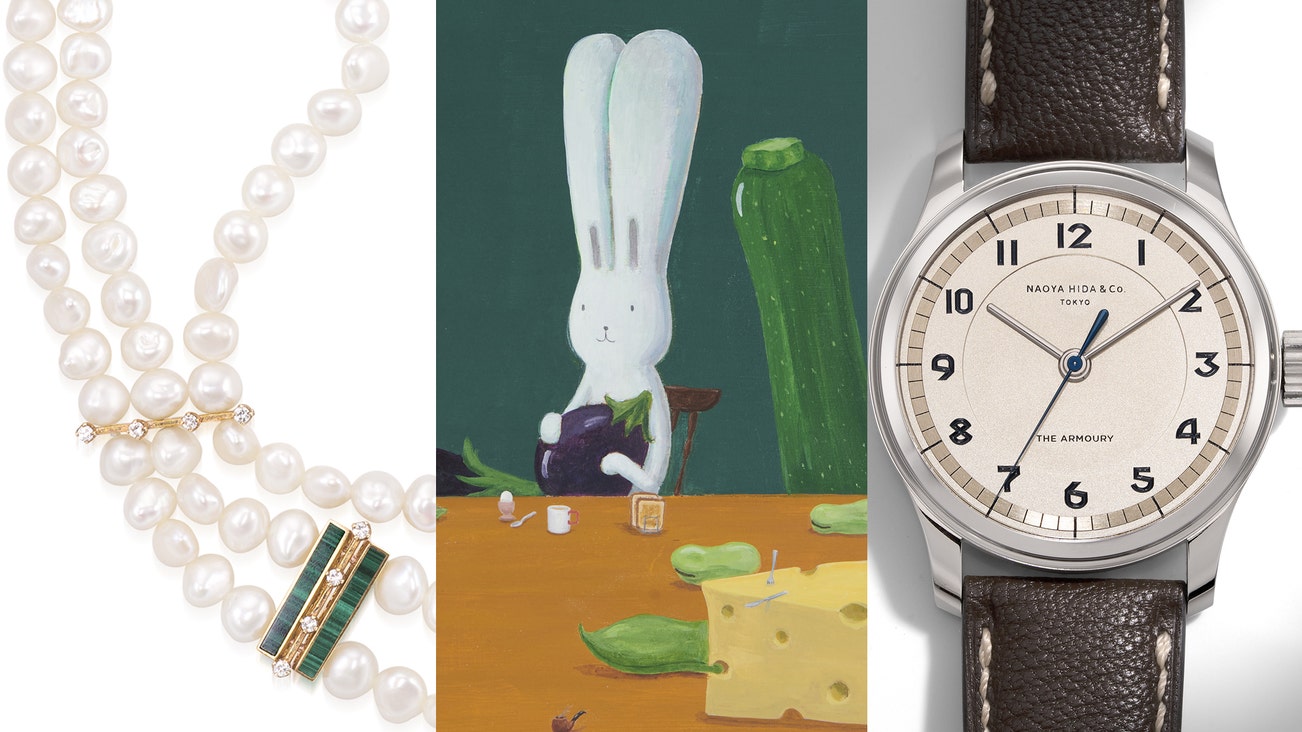
Article | Shokunin The Art Of Perfection Kyobai Auction Hong Kong
Shokunin: The Art of Perfection
In Japan, mastery is never finished. From a single stroke of ink to a strand of pearls, the makers in KYŌBAI: The Japan Edit share one devotion, that of the shokunin.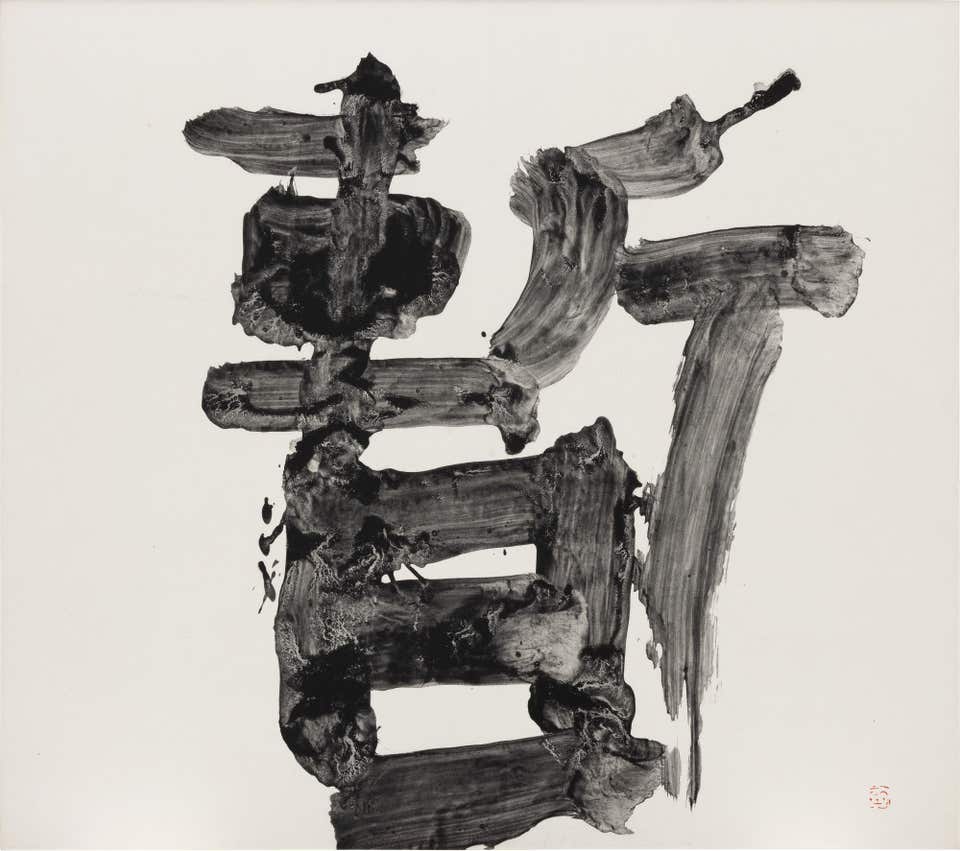
Lot 31: YU-ICHI INOUE, Zan (A Moment), 1975. KYŌBAI: THE JAPAN EDIT.
Perfection is a curious pursuit. The closer a maker comes to mastering a material, the more there is to discover. Ink resists the brush, molten glass moves according to its own nature, and wood bends only so far. In the Japanese tradition of shokunin (職人), mastery is perhaps less a destination than a way of seeing the world.
On 4 December 2026, Phillips brings that spirit to Hong Kong in KYŌBAI: The Japan Edit, a sale spanning art, design, ceramics, watches and jewellery.
The Way of the Brush
For Yu-ichi Inoue (1916–1985), a single character could contain an entire world. Trained under the calligrapher Sokyu Ueda, he co-founded the avant-garde group Bokujinkai in 1952, challenging the boundaries between writing and art. At a time when Western notions of fine art had relegated calligraphy to the margins, Inoue sought to reclaim its place as a form of artistic expression. The written character became both his subject and his lifelong obsession.
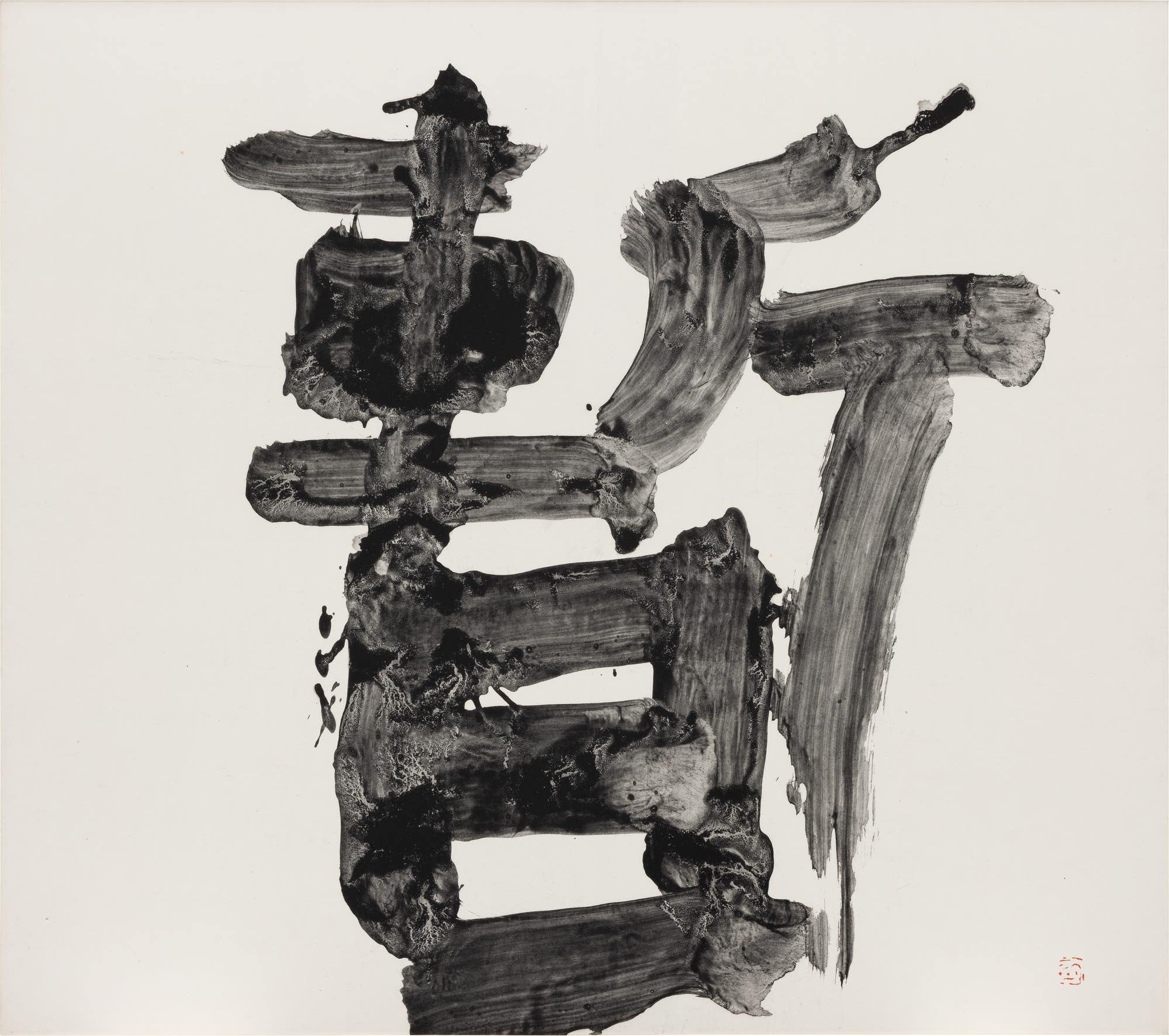
Lot 31: YU-ICHI INOUE, Zan (A Moment), 1975. KYŌBAI: THE JAPAN EDIT.
Working with black ink, Inoue discovered an extraordinary spectrum of greys, developing unconventional techniques that gave his characters a raw, expressive vitality. His work invited comparisons with Abstract Expressionism and Art Informel, and was exhibited at documenta II in Kassel. Even as his work gained international recognition, Inoue continued teaching, beginning each day with the ritual of calligraphy. The apparent spontaneity of his brushwork was the expression of a discipline cultivated over decades.
In Zan (A Moment), the character 暫 speaks of brevity and the passing of time. For Inoue, a character's meaning, form and sound were inseparable, converging in the movement of the brush. Here, a gesture lasting only seconds carries the weight of a lifetime, as though decades of practice had been gathered into a single moment.
The Way of Glass
In the furnaces of Murano, Yoichi Ohira (1946–2022) found an unexpected home for his Japanese sensibility. Having moved to Venice in 1973 to study sculpture, he became artistic director of the de Majo glassworks in 1987 before developing an independent practice alongside master glassblowers, including Livio Serena. His work brought Japanese design sensibilities into dialogue with centuries of Venetian glassmaking tradition.
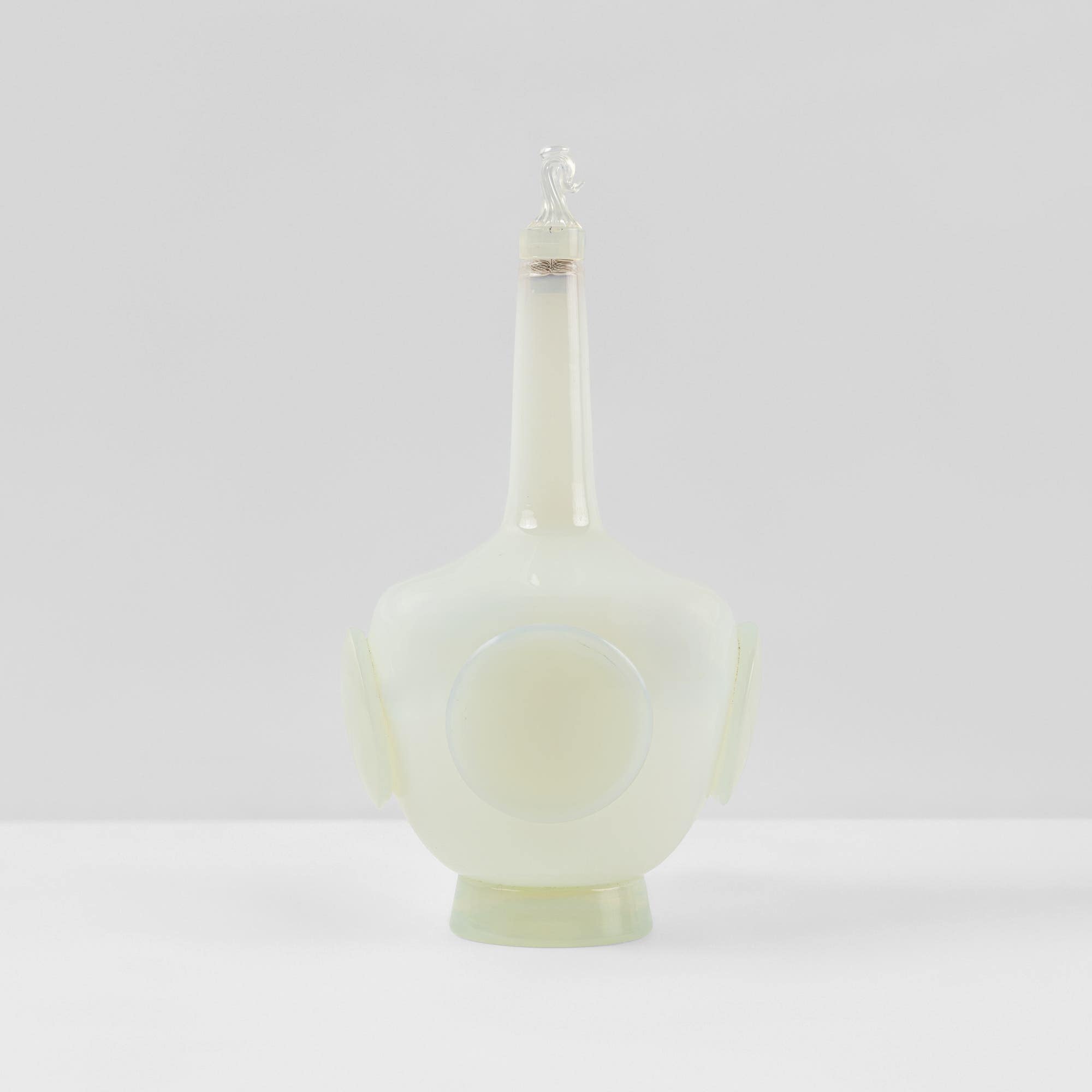
Lot 35: YOICHI OHIRA, Bottle with stopper. KYŌBAI: THE JAPAN EDIT.
Ohira conceived the form; Serena gave it life in the furnace. Between the artist's vision and the glassblower's hand lay a material that could never be entirely commanded. Glass, after all, is shaped in a fleeting state between molten fluidity and solid form, demanding both precision and an acceptance of its unpredictable nature.
Executed by Serena in 1997, the present bottle is fashioned from lattimo, the milk-white glass of Venetian tradition. Its opaline body rises to a slender neck and clear stopper, playing with the tension between transparency and opacity that fascinated Ohira throughout his career. His explorations drew inspiration from Venice itself, where architecture meets water and solid forms dissolve into reflection.
The Way of the Basket
A basket is ordinarily defined by what it holds. In the hands of Hisako Sekijima, what matters is the space it leaves empty.
Having encountered contemporary American craft while living in New York in the late 1970s, Sekijima returned to Japan with a new perspective on mingu, the utilitarian objects of everyday life. She began to reconsider basketry beyond its functional origins, treating interlacing, structure and negative space as subjects in their own right.
“I define a basket as an object, often a vessel shape, created in a textile structure where the dynamics of each component are visible.”
— Hisako Sekijima
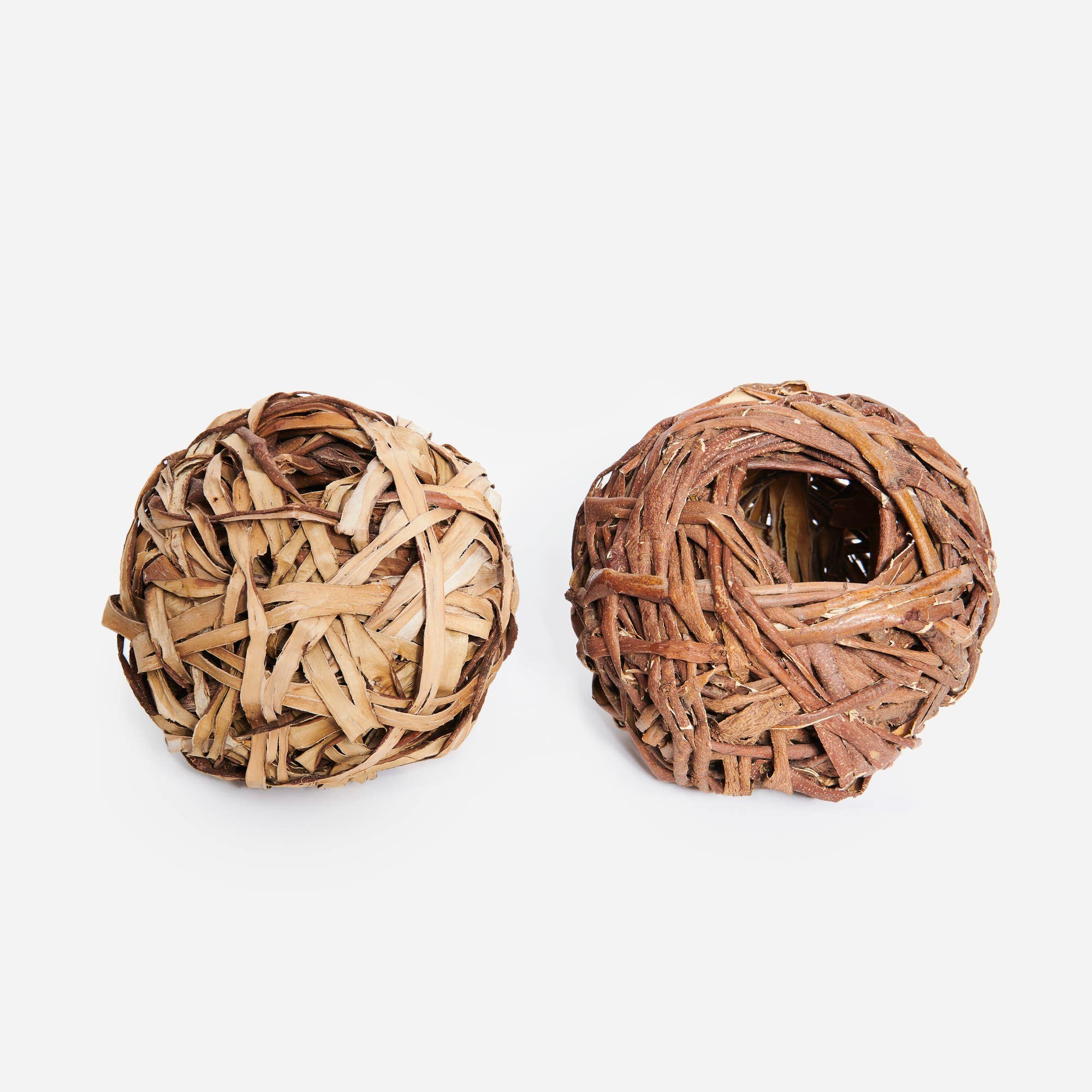
Lot 40: HISAKO SEKIJIMA, Reverse of Colour (A Set of 2 Pieces), 2024. KYŌBAI: THE JAPAN EDIT.
In Reverse of Colour, two near-spherical forms, one pale and the other a deep reddish brown, emerge from interwoven mulberry, Japanese hackberry and Aphananthe wood. Their irregular openings and exposed structures invite the eye to wander between material and emptiness. Rather than imposing a predetermined shape, Sekijima allows the properties of the wood and the logic of weaving to guide the final form.
There is a quiet paradox in her practice: the greater the command of the craft, the more freedom she gives the material. Described by the Victoria and Albert Museum as “one of Japan's most adventurous basket-makers,” Sekijima continues to challenge the boundaries of her medium. Her work is currently celebrated in the exhibition Baskets About Baskets at the Kikuchi Kanjitsu Memorial Tomo Museum in Tokyo, until March 2027.
The Way of the Pearl
Jewellery, too, has its shokunin. Long before cultured pearls existed, natural pearls were among the world’s most coveted gems. In the waters of Mie Prefecture, Kokichi Mikimoto pursued years of experiments through repeated setbacks until, in 1893, he succeeded in culturing a semi-spherical pearl, the world’s first cultured pearl. It laid the foundations of the house that bears his name, and earned him the title of “the Pearl King.”
“It is one of the wonders of the world that you were able to culture pearls.”
— Thomas Edison to Kokichi Mikimoto, 1927
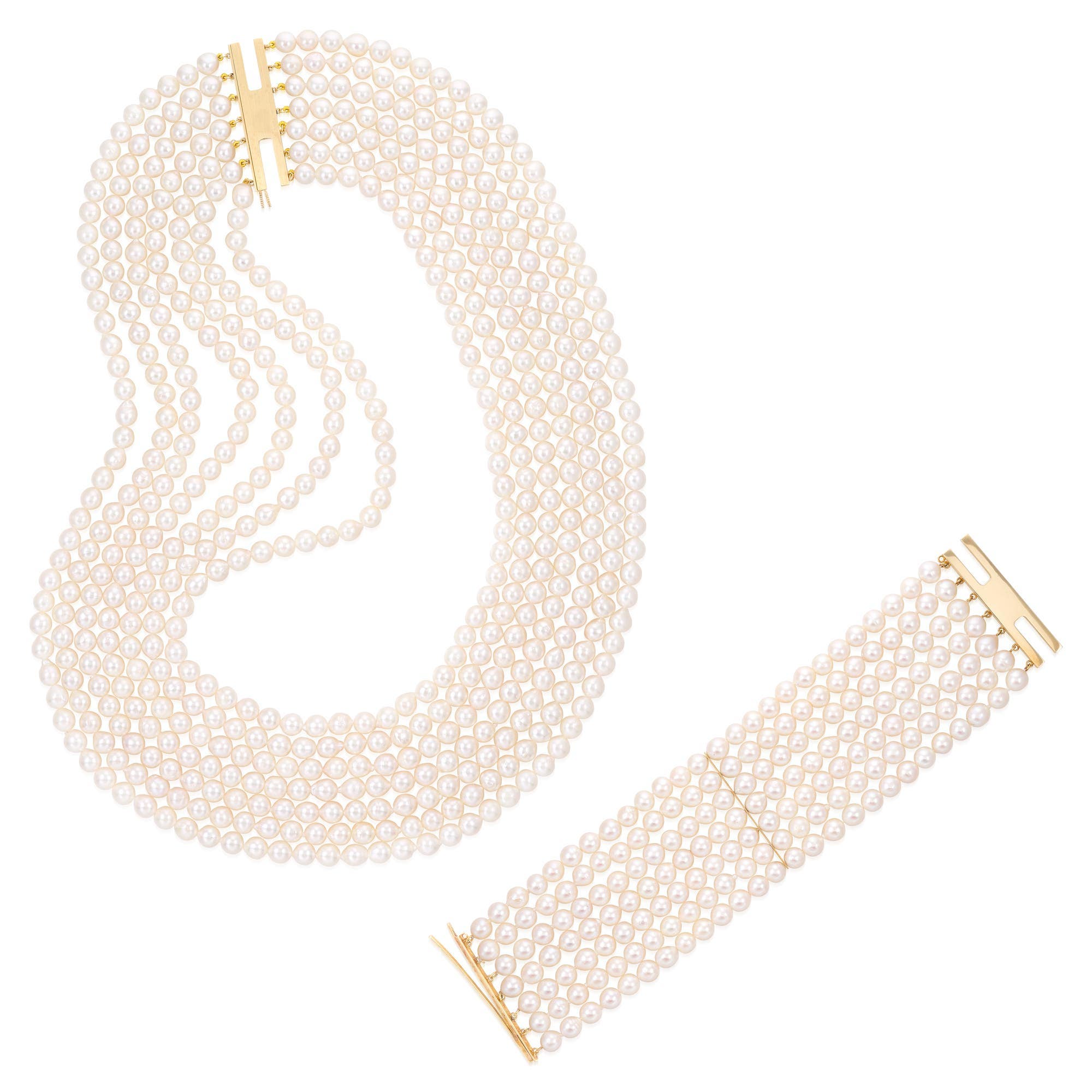
Lot 14: MIKIMOTO, Cultured pearl demi-parure. KYŌBAI: THE JAPAN EDIT.
If the creation of a pearl requires an understanding of nature, its transformation into jewellery calls for another kind of discernment. The present demi-parure brings together seven rows of cultured pearls in a graceful cascade, complemented by a matching bracelet. Each strand depends on the careful selection and arrangement of individual pearls, balancing their subtle variations into a harmonious whole.
What appears effortless is the result of countless acts of judgement, a pursuit of beauty in which the human hand works with what nature has already begun.