Article | Shamim Momin Bronx Museum Charity Auction July 2026 New York
A New Chapter for The Bronx Museum
Works in our upcoming auction directly support the mission of the storied and expanding institution. Director and Chief Curator Shamim M. Momin tells Phillips all about it.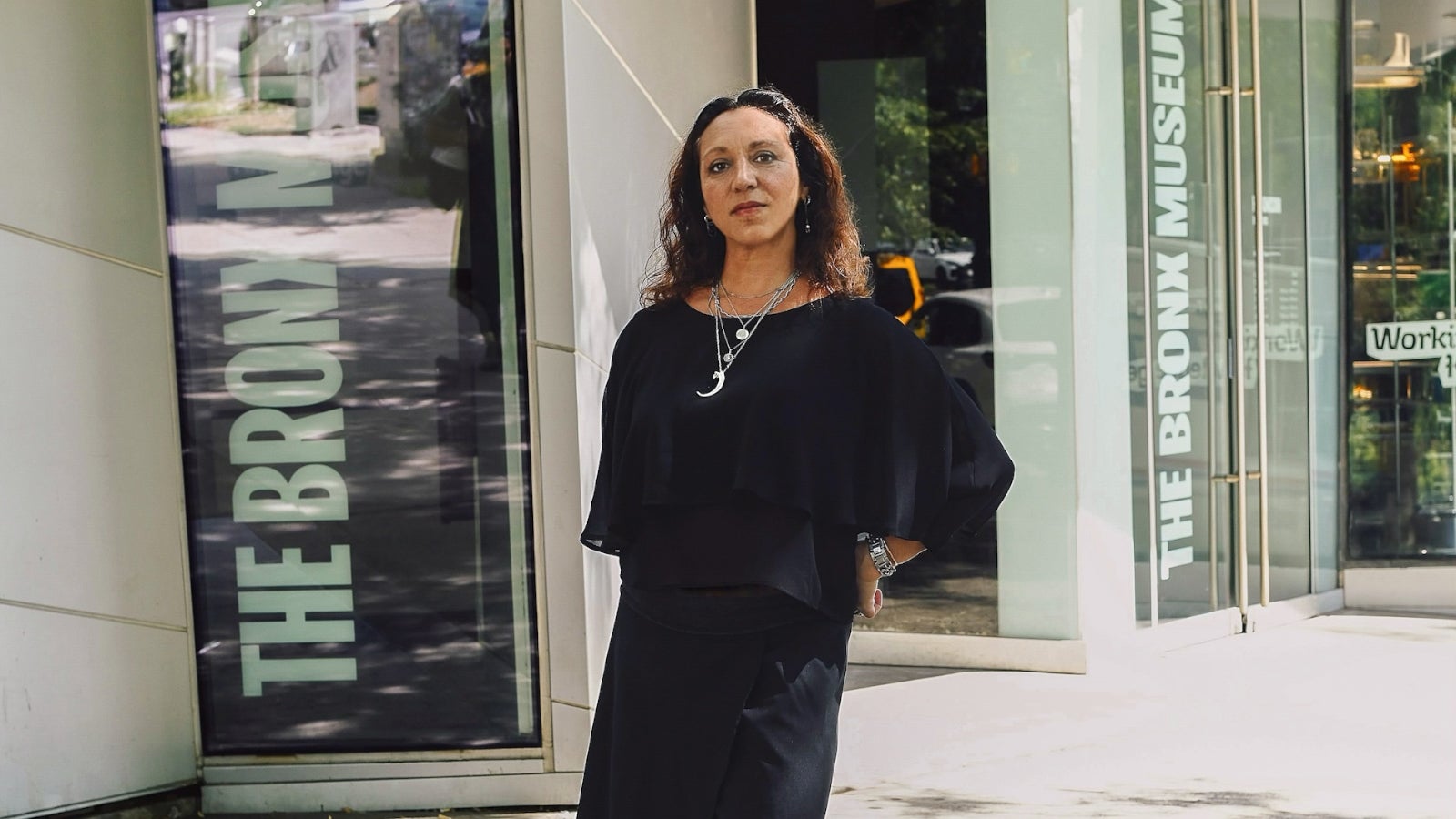
Portrait of Shamim M. Momin, Director & Chief Curator of The Bronx Museum, Photo by Guarionex Rodriguez Jr for The New York Times, 2025.
Two works on offer in our upcoming Modern & Contemporary Art auction were donated for sale by the artists to support the Bronx Museum at a milestone moment. The Museum is revitalizing its South Wing — backed by nearly $43 million in funding, primarily from the City of New York — to further its goals of amplifying the voices of diverse contemporary artists and providing free access to meaningful creative experiences.
Shamim M. Momin, who began her career at the Whitney Museum of American Art, where she co-curated the 2004 and 2008 Whitney Biennials, took the helm of The Bronx Museum in 2025. She brings with her more than 25 years of experience at the Whitney and beyond, including LAND (Los Angeles Nomadic Division), which she founded and ran for a decade, and the Henry Art Gallery in Seattle. She also brings the personal connections she’s forged with artists along the way, including Tala Madani and Gary Simmons, who donated works to this sale. Discover our conversation below, and don’t miss the chance to view these works at our 432 Park Avenue gallery through July 16.
“It’s always so lovely to see the incredible generosity of artists, especially artists you have a long history and relationship with. It’s so meaningful because it’s not just about my personal relationship with them; it’s about their belief in the mission of The Bronx Museum and what we do, which is so aligned with both of their practices and also the things that they care most about.”
—Shamim M. Momin
PHILLIPS: Shamim, please tell us a bit about your background and your curatorial interests.
SHAMIM M. MOMIN: My curatorial efforts have always been to look at artists who aren’t easily embraced by the traditional art world. That may be because of their medium or their voice — their approach, their thinking. Essentially, their diversity — ethnically or otherwise.
I started at the Whitney as a curatorial assistant, working for Thelma Golden, who was a great influence on me. Adam Weinberg was one of my early mentors as well. I had an extraordinary experience at the Whitney. I was able to delve not just into contemporary work, but also to commission work by artists of diverse voices and practices. It’s not unusual now, but the 2008 Biennial really focused on the idea of what we were calling expanded practice at the time — artists who work across multiple disciplines, and how to properly capture that as a totality of their work. This led me and my co-curator, Henriette Huldisch, who is now chief curator at the Walker, to extend the exhibition into the Park Avenue Armory, so that these artists who were showing in galleries could also be showing other kinds of work that had a different kind of negotiation with space.
P: So, you were at the Whitney for 12 years. What came next?
SMM: My time at the Whitney led to the desire to work with artists in a more immediate and responsive way. I was seeing so much of that kind of activity in Los Angeles, but there were fewer mid-sized or smaller organizations that were helping to amplify these practices. So, I chose LA as my next stop and started an organization called LAND (Los Angeles Nomadic Division). The intent was site- and situation-specific commissioned projects with contemporary artists, which we started from scratch. It was a big pendulum swing from a large museum to essentially a startup, but I knew if we could make it to ten years, I would step aside just to remove my personality and my agenda and have it become a sustainable organization.
I was then offered this incredible position at the Henry Art Gallery in Seattle, working with a former colleague from the Whitney, Sylvia Wolf. They brought me on to energize the curatorial program and how it interacted with all the other departments. I didn’t expect the pandemic, but it did offer the opportunity to go out into the public realm and instigate a public art program.
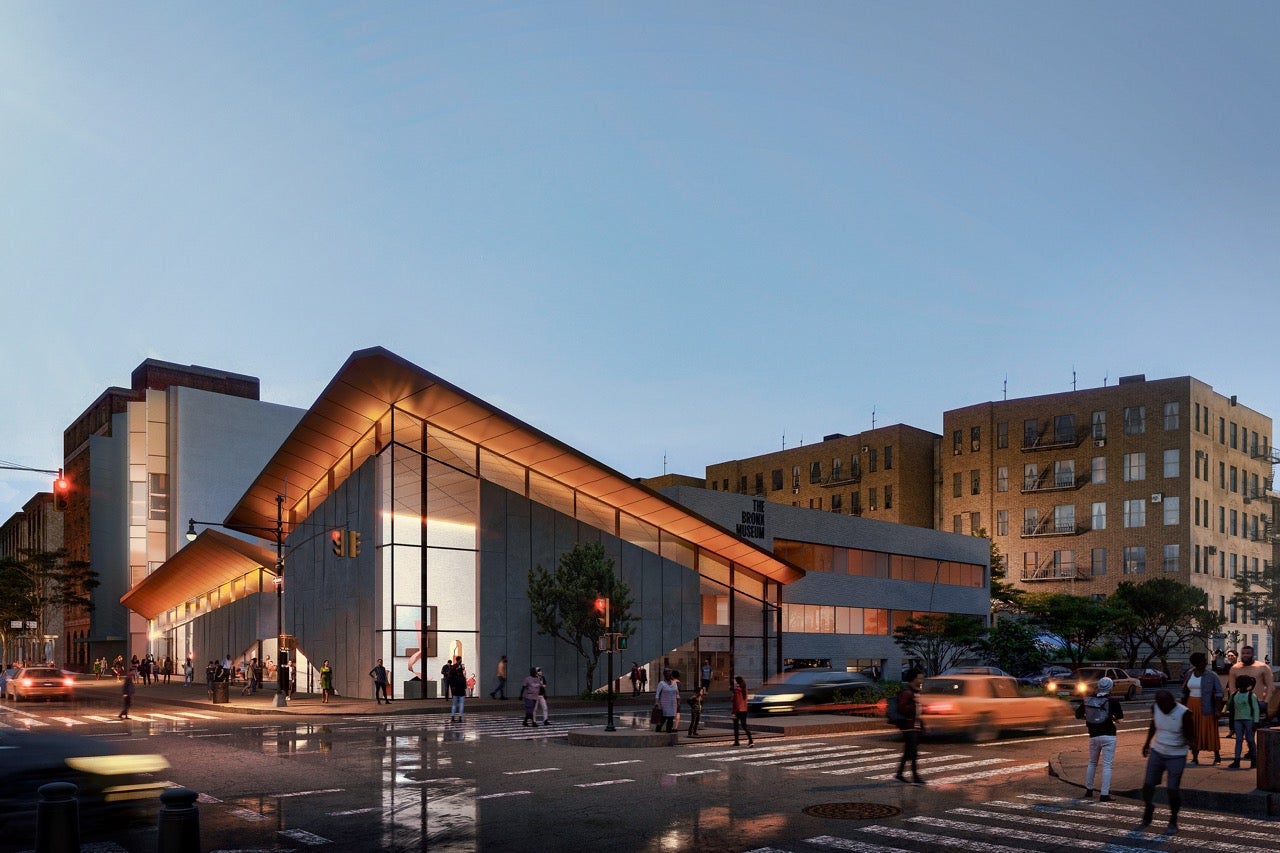
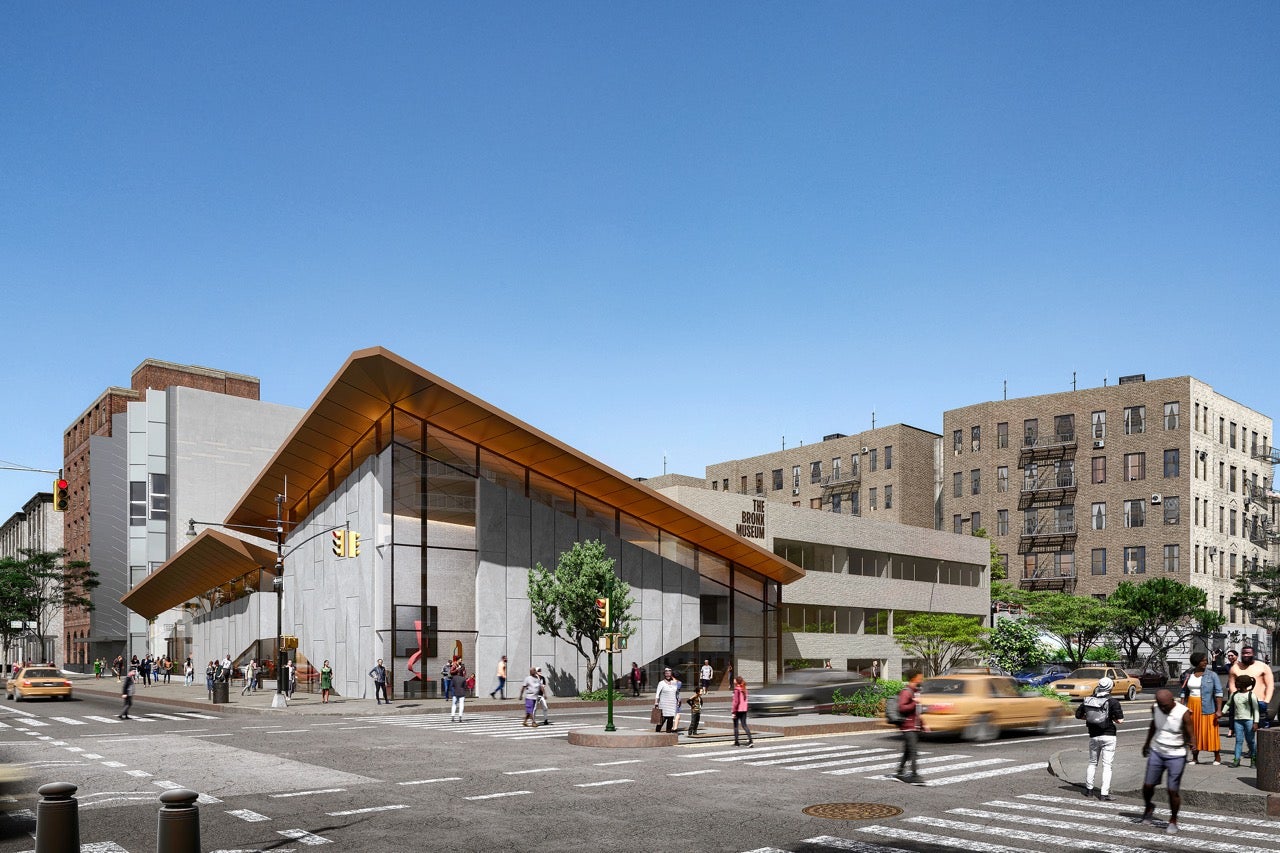
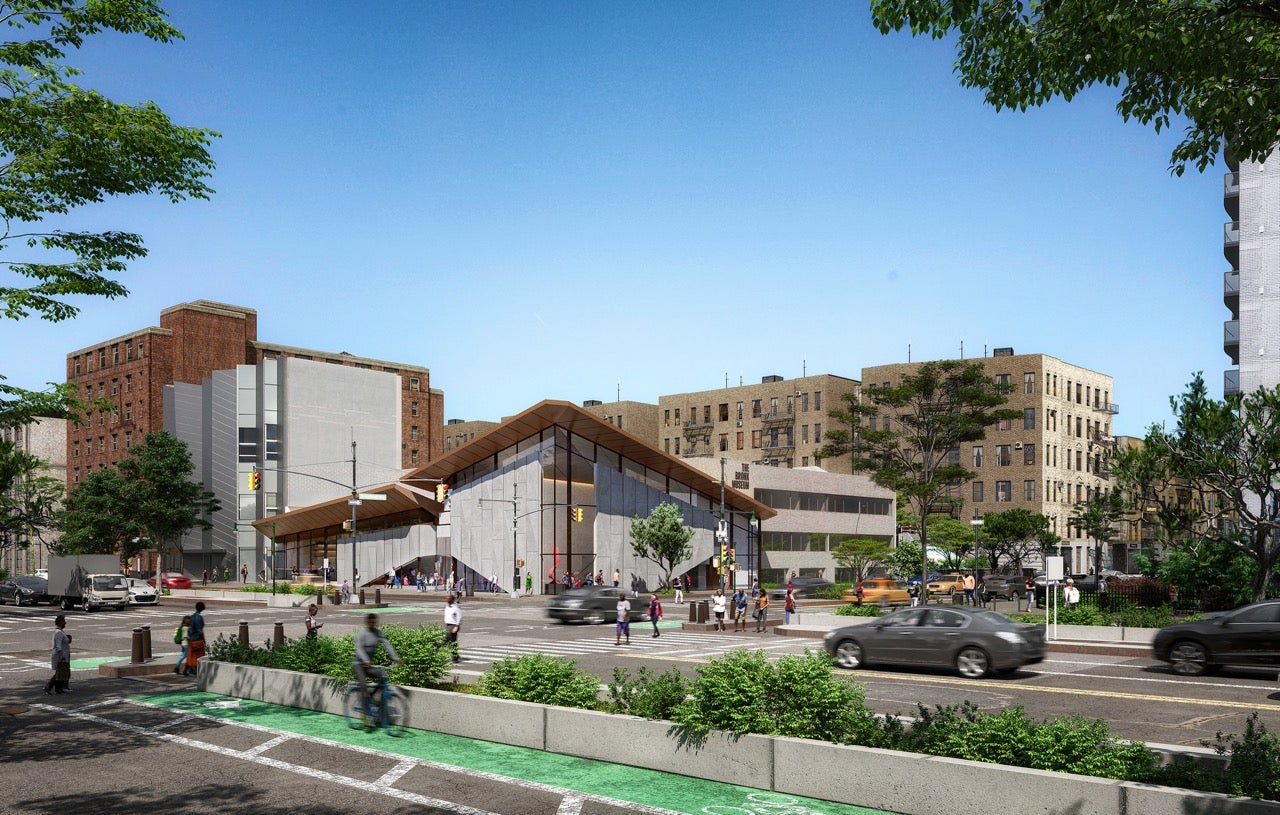
The Bronx Museum South Wing Exterior Render, Courtesy Marvel
P: And then what brought you to The Bronx Museum?
SMM: When this opportunity came up, it just felt so necessary, almost like an obligation. I don’t want that to come across as arrogant in any way, but it feels like a responsibility to my experience, to where the world is right now, and to the mission of The Bronx Museum, which is so aligned, so parallel, to everything I’ve always done.
I’ve always known of The Bronx Museum because Holly Block was an idol when I was a baby curator. What she did to put The Bronx Museum on the map was so incredibly important and impressive. But I didn’t realize that the Museum itself was founded by a group of community organizers who felt there weren't enough diverse voices representing The Bronx’s many communities. They started the Museum purely to make space for that. It’s extraordinary — this is a fact of the museum’s DNA; it’s what we do and always have done. Don’t get me wrong, I’m delighted that other museums are paying much more attention to diversity and social justice, but what I loved about this possibility is that this is what The Bronx Museum is.
P: The two works donated for sale by Tala Madani and Gary Simmons will help raise funds for The Bronx Museum. Can you tell us about the initiatives and vision these funds will help support?
SMM: It isn’t directed towards a specific initiative outside of supporting the new building. And when I say that, I really mean the new organization. Because the sustainability aspect, the operations, and the support of my staff and team are so critical. I think a lot of times, when museums go through renovations, they overlook many of the things that need to happen to make it work, and to me, the team is the heart of everything.
All the fundraising we’re doing now is not for the building itself; it’s for us to deeply consider what it means to have this building and how to run it. I met with Marvel Architects before I took the position to ensure their goals aligned with the mission. They really spent time researching the area and the community, and what would make sense conceptually for this new space. Their goal is so beautifully aligned with the mission — it reorients the building towards this major corner of Grand Concourse and 165th. Grand Concourse was once called the Champs Élysées of New York, and it was originally built that way. We’ve been referring to the new building as a third space — it’s more critical than ever to be in the world with others, and community is harder to get in the way that we live now. But The Bronx has always had a very active street culture, and so this reorientation of the South Wing — making it street level, transparent, a huge public space and atrium — is incredibly important to us.
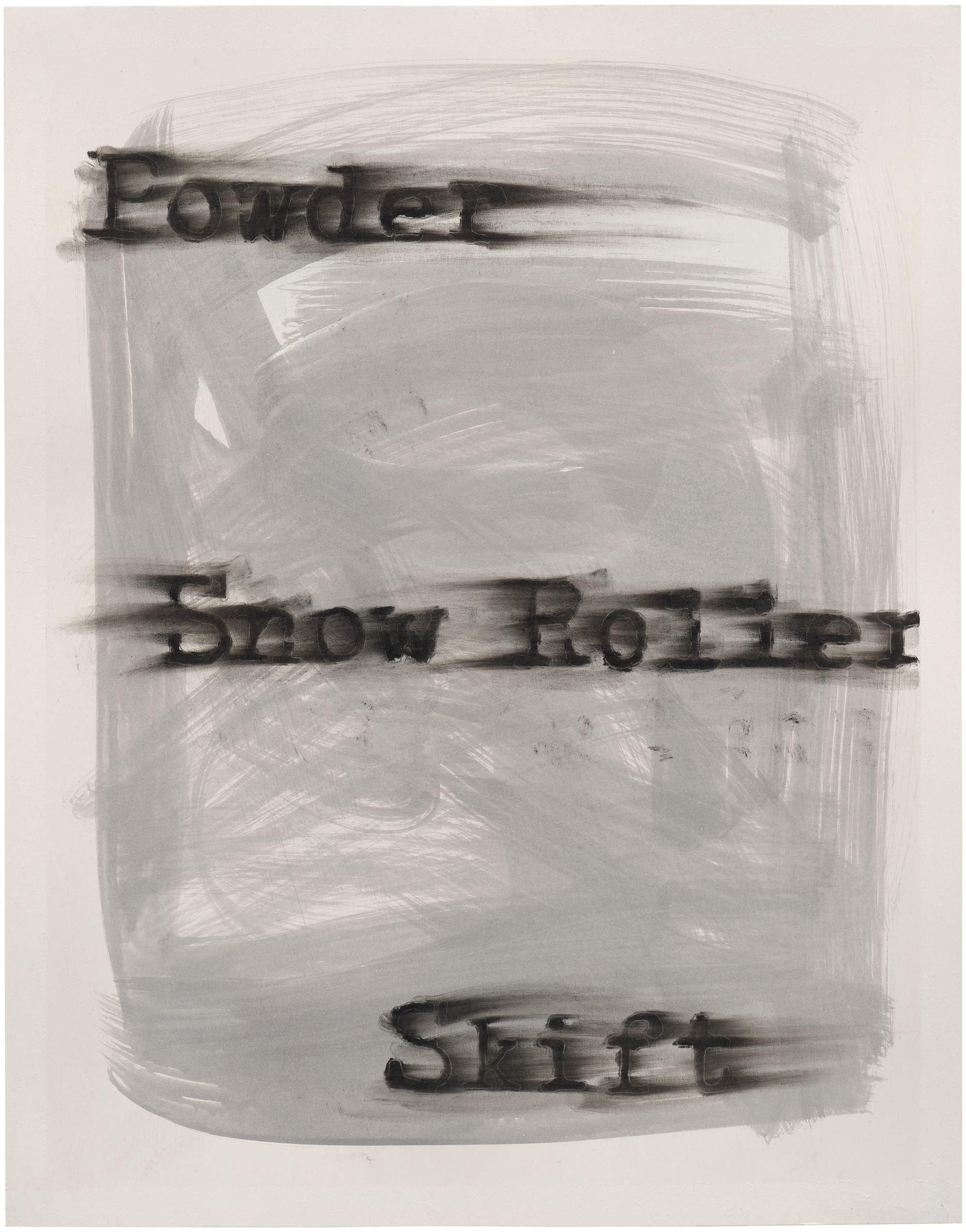
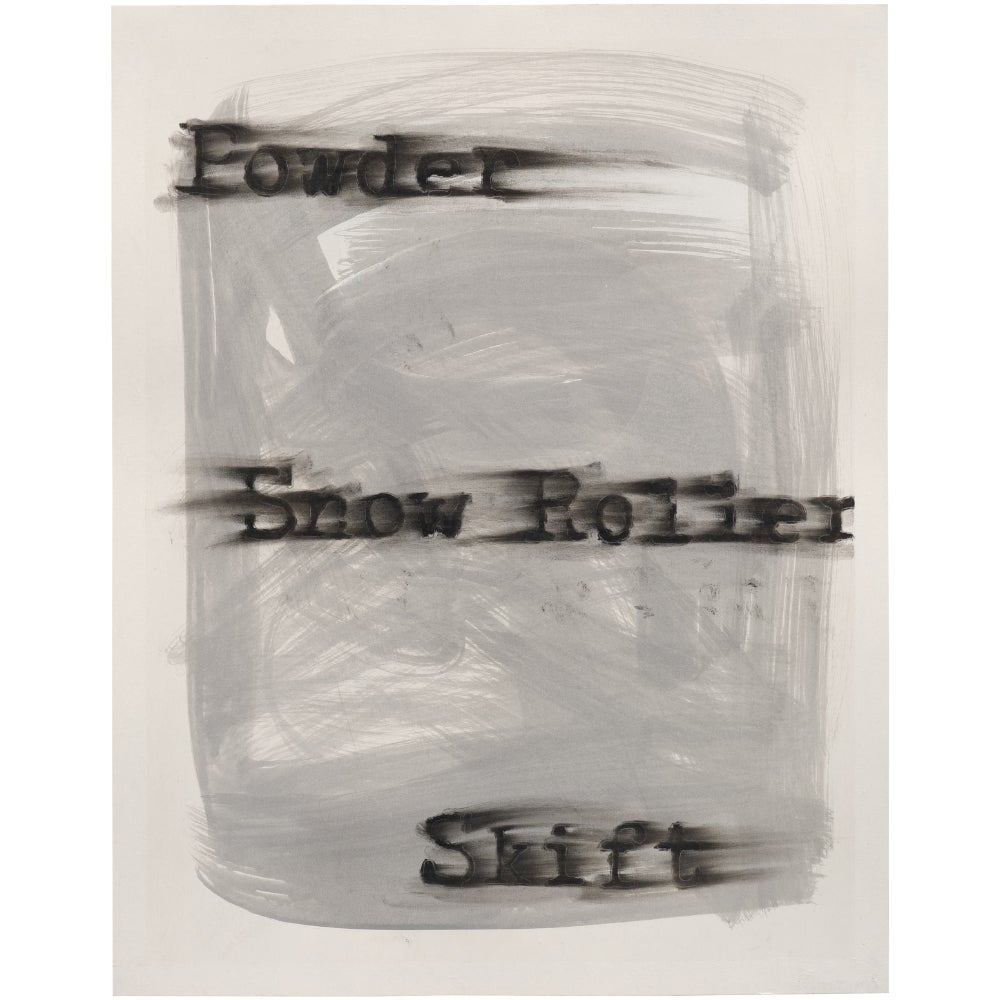
Gary Simmons, Snow Roller, 2024. Modern & Contemporary Art New York.
P: What is your relationship with these artists and their work?
SMM: Both of the artists are folks I’ve worked with. The first thing I did with Gary was at the Whitney, when we had a work of his in the permanent collection that only existed in concept, and then we had it made — one of the ghost pieces. I helped orchestrate that as a kind of tribute to Thelma because she was the one who brought him into the collection. Since then, we’ve been close and worked on numerous other projects.
At the Henry, we had these annual commissions that are a major investment in the enormous space there. Gary was one of them, and it was a big decision because the work was scheduled during the pandemic. We decided to continue ahead with it because we felt so strongly that we had to keep providing these areas of access and joy and resistance, and bring attention to all of the things his work is thinking about around cultural symbols relating to class and race and the histories that are often ignored.
And then Tala’s commission was, I think, two cycles after that, the last show I opened myself there. We really wanted to share her incredible painterly practice, which combines with her interest in humor and animation, and all the influences that go into that. Her work calls into question systems of hierarchy, power, and gender.
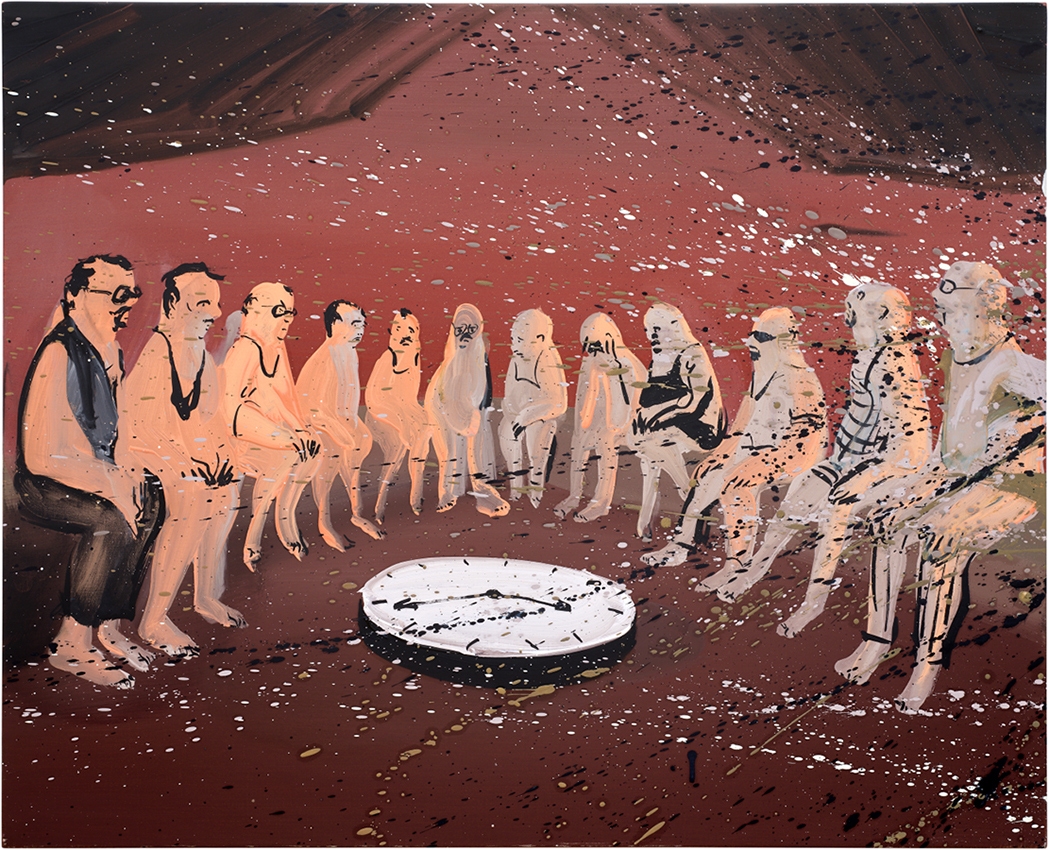
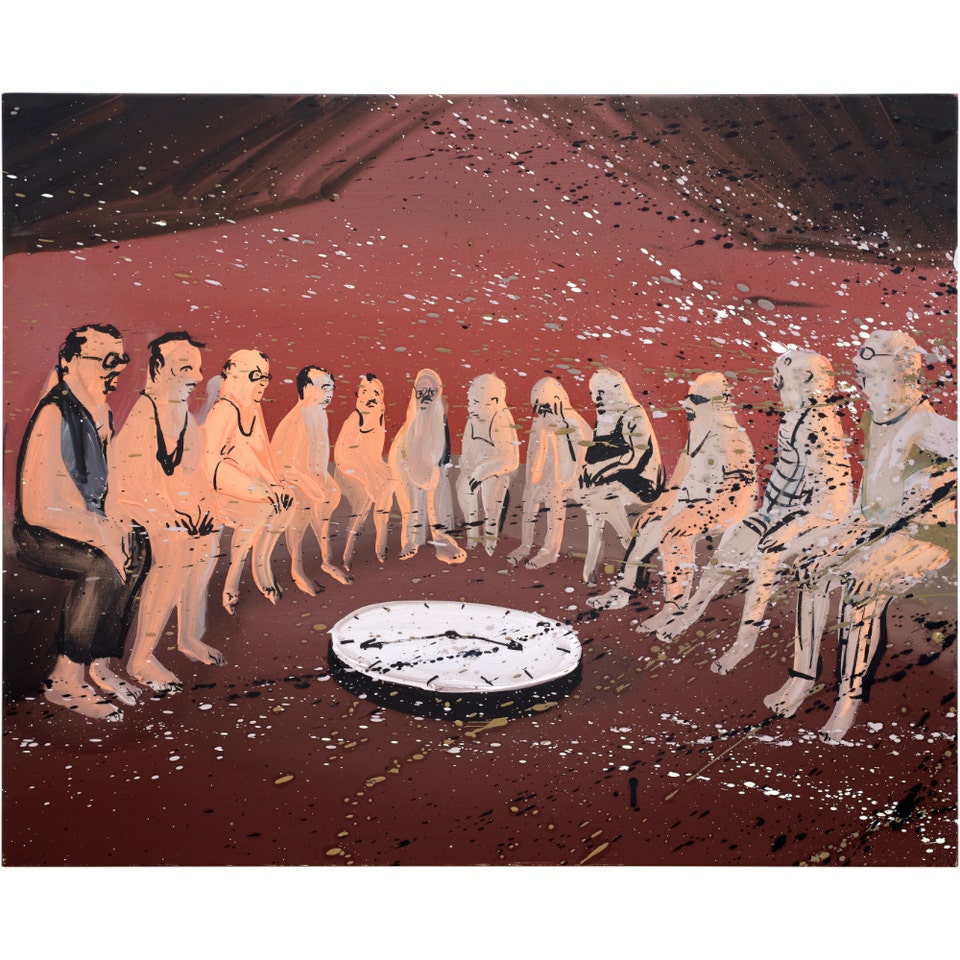
Tala Madani, Watch Men, 2026. Modern & Contemporary Art New York.
P: What can you tell us about the specific works in the sale?
SMM: Tala made this work specifically for us, and she finished it very recently. It’s related to another piece that was in the show we did together. She uses this very emblematic figure of a kind of middle-aged man who is both goofy and fumbling, but also clearly representative of the patriarchal aspect of the world we live in, and also references her background as an Iranian, born in Tehran. These figures watch the clock, essentially watching their influence or lack of influence on temporality and how things unfold.
And then Gary’s piece is a work on paper from his show at Hauser in 2024, and it’s in that same language around the idea of skating and the tracking you would see on ice, which is very tied to the way his erasure drawings have looked or the other kinds of gestures he has made that he invokes over and over. He often uses popular culture characters that were extremely racist in origin, reclaiming them and using them in a different way. This work incorporates his love of language — the suggestive words that come in and are sort of semi-erased throughout. We can’t go too deep into it here, but he’s really thinking about the idea of thin ice, just that notion of a moment in time where we were literally in the balance of collapse and using this as a metaphor in a lot of different ways.
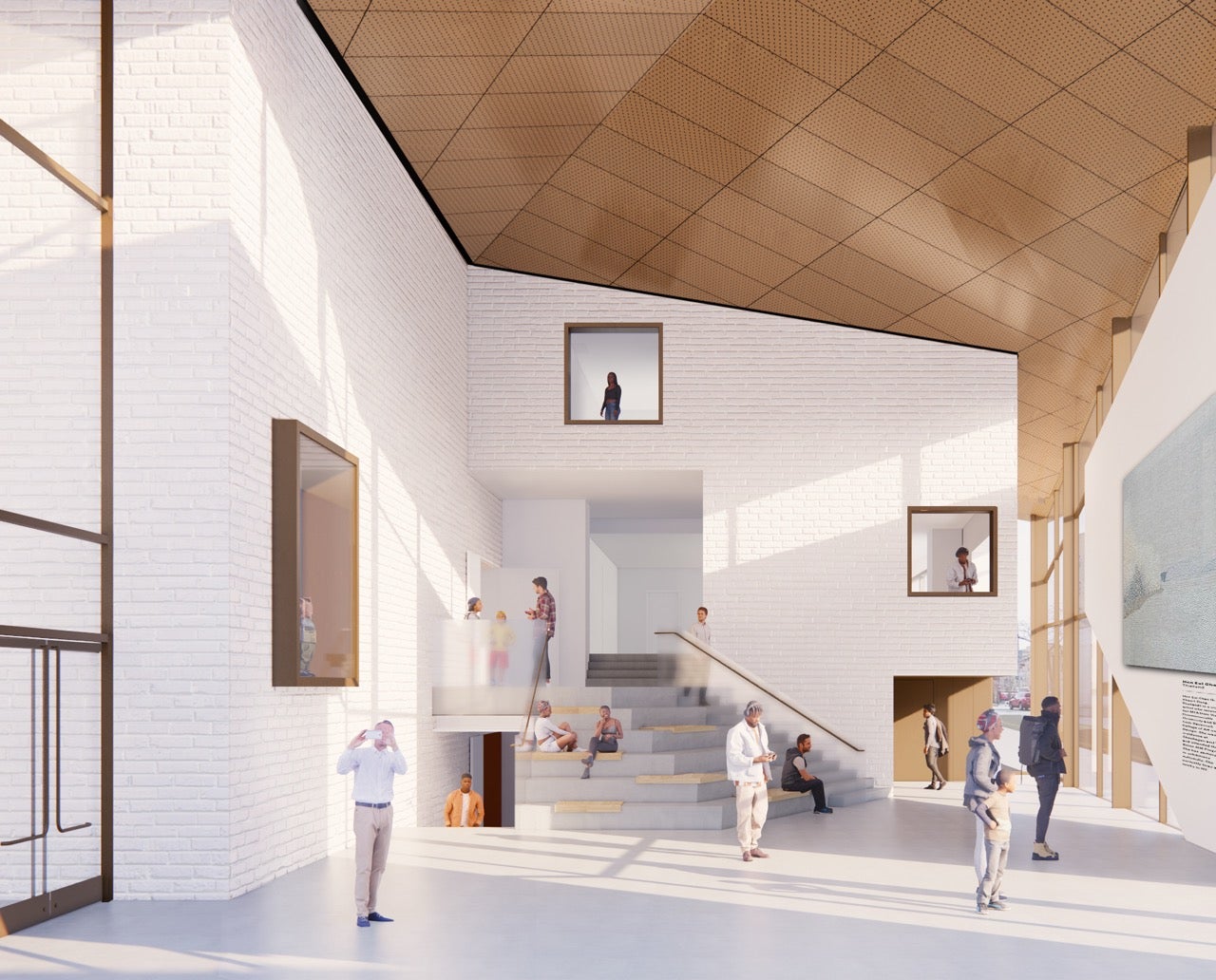
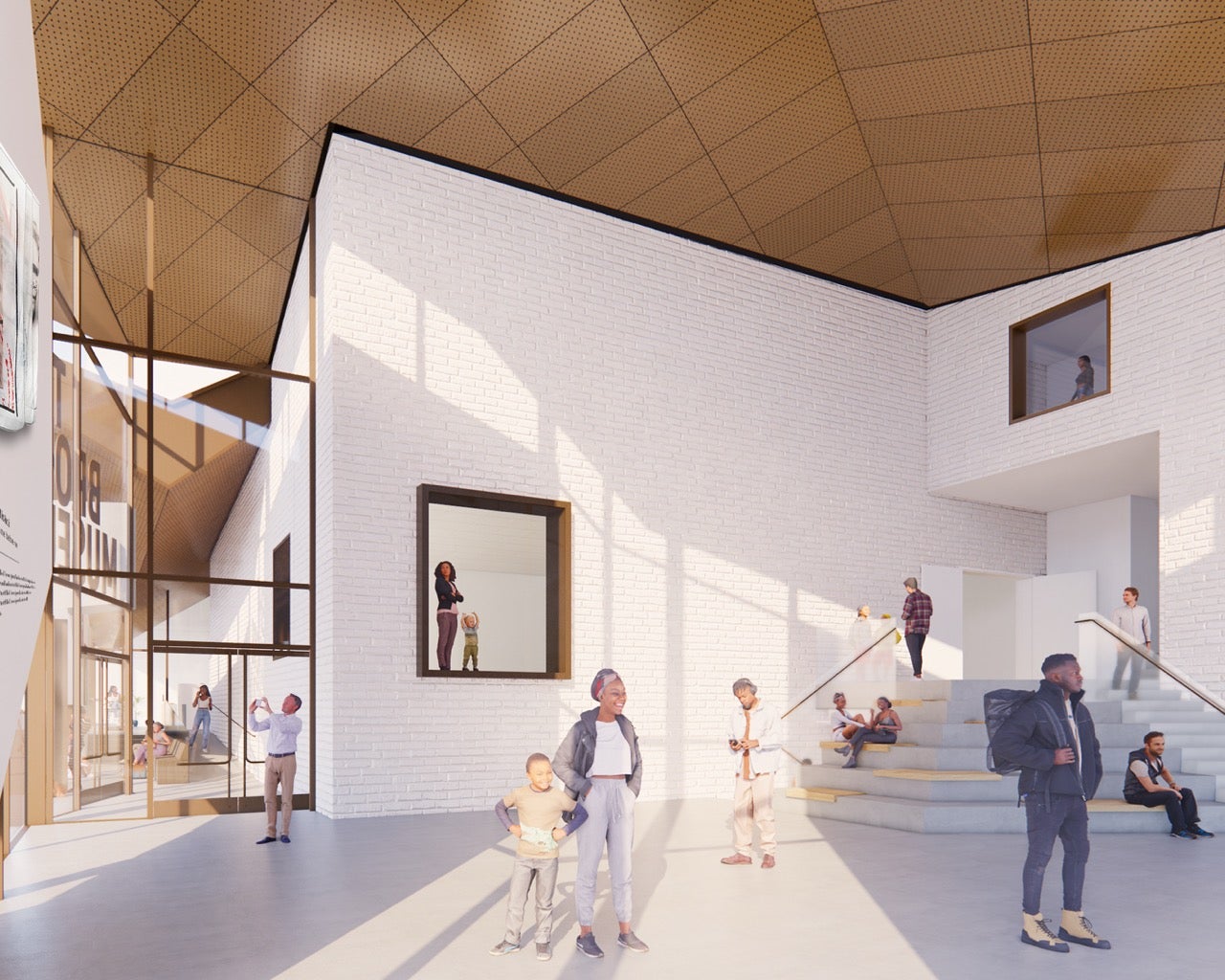
The Bronx Museum South Wing Interior Render, Courtesy Marvel
P: Lastly, what’s your favorite place for a bite near the museum?
SMM: The Hungry Bird is a favorite around the Museum, but here’s the thing — I think a lot of the best places in The Bronx are the places you have to know people to know where to go, and I’m still learning. I don’t like to pretend I’m an expert in ways that I’m not, and this is what we mean when we talk about being committed to our community and to our local audiences.