Article | Reaching For The Stars The Space Traveller I And Ii
Reaching for the Stars: The Space Traveller I & II
George Daniels' The Space Traveller I & II wristwatches meet for the first time.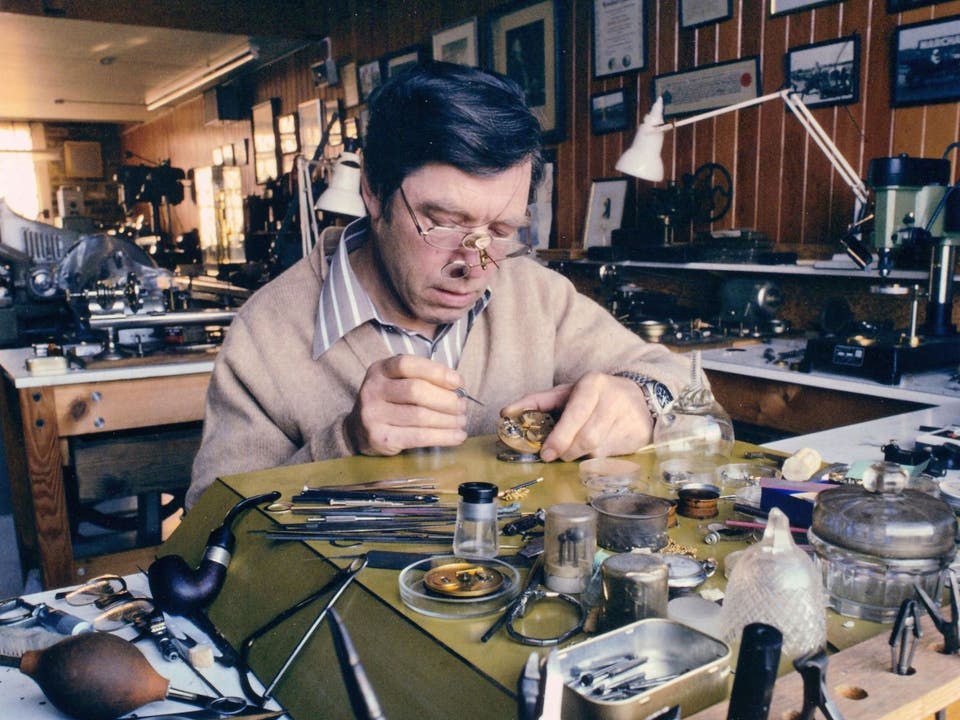
There are very few occasions in the history of watchmaking when two masterpieces can be viewed together and, by doing so, reveal the development of an idea at its most complete. To have George Daniels’ two Space Traveller watches in one place at the same time is a once in a lifetime occasion as this is the very first time in history that the two can be viewed together in one location.
An Insight into the Mind of George Daniels
Made in 1982 and between 1982/1983 respectively, the Space Traveller I and Space Traveller II occupy a unique position within Daniels’ oeuvre. They are not simply two examples of the same model, nor are they conventional variations on a theme. Rather, they represent two closely related stages in the work of one of the greatest watchmakers of the modern era: the first is the original expression of an extraordinary idea, the second is its refinement and further development. Together, they offer perhaps the clearest insight into the mind of George Daniels as both inventor and watchmaker.
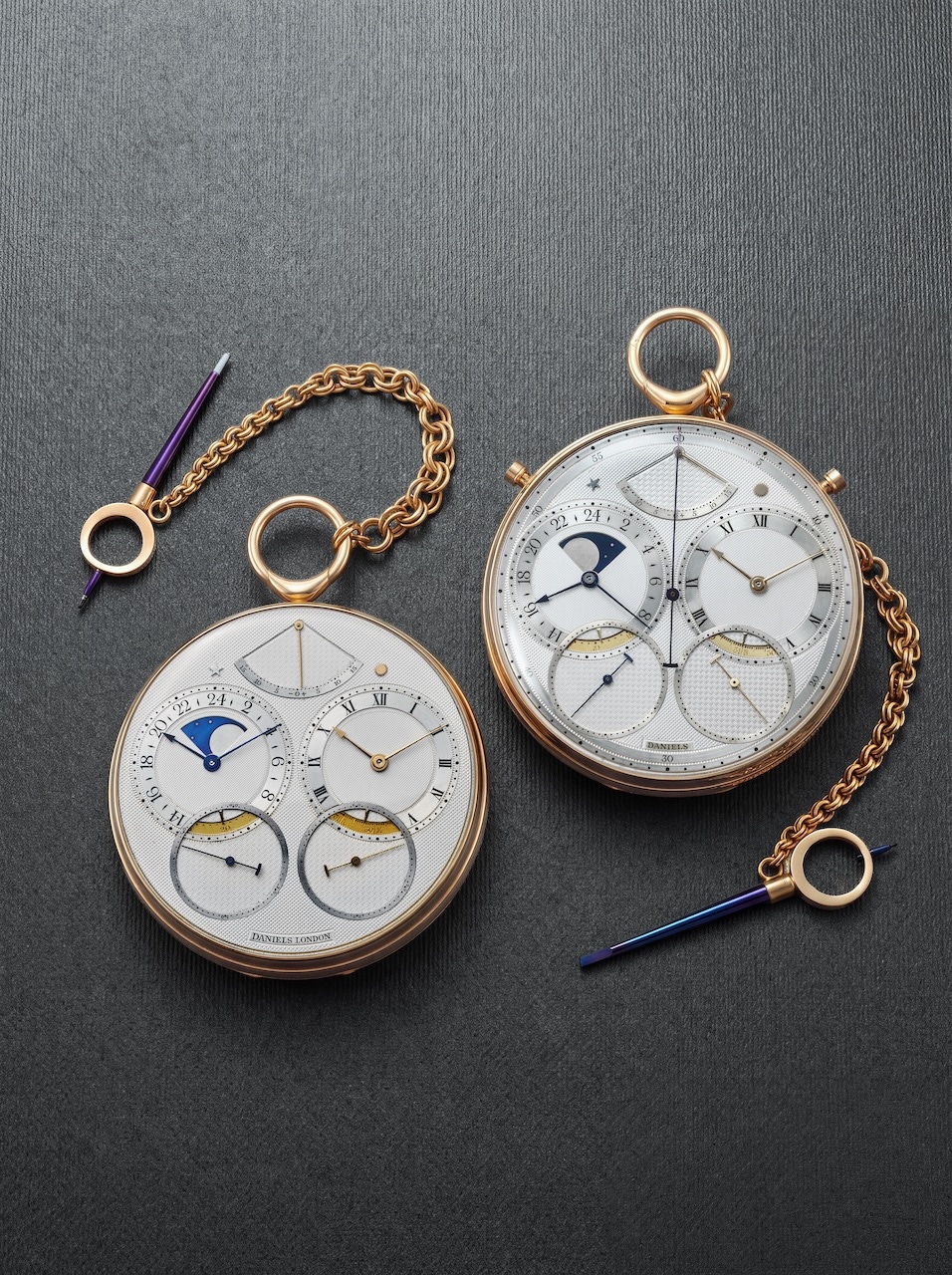
The first encounter of the Space Traveller I and II.
The Space Traveller I
The Space Traveller I was conceived as a timepiece to honor the astronauts Daniels admired so much. It was the culmination of 13 years during which the master had established himself as a maker of highly original, entirely hand-crafted watches. His work had evolved from the tourbillon pocket watches of the early 1970s towards increasingly ambitious mechanical constructions centered on his own independent double-wheel chronometer. The Space Traveller brought together this technical development with an exceptional range of astronomical indications.
An Array of Complications
It displays on the same dial the mean solar time (our civil time of 24 hours per day) and sidereal time which is the standard of time used by astronomers, it is based on the time it takes the Earth to turn on its axis which is approximately 23 hours, 56 minutes and 4.1 seconds. His double-wheel escapement was the perfect movement for these complications as one escape wheel had one tooth less than the other allowing one train of wheels to display mean solar time and the other sidereal time: a simple and elegant solution for a complicated problem! An annual calendar, the age and phase of the moon and the equation of time complete the ensemble.
The relationship between solar and sidereal time had fascinated Daniels, and the watch was conceived as a theoretical instrument for space travel as much as an exercise in horological precision.
Solar and Sidereal Time
Its technical achievement is all the more remarkable because Daniels did not merely reproduce an existing astronomical mechanism. Drawing inspiration from the work of the 18th-century watchmaker George Margetts, he sought to improve the calculations governing the solar and sidereal trains. With the assistance of a Cambridge mathematician, he arrived at a ratio producing an extraordinary theoretical variance of only 0.28 seconds per year. This extraordinary attention to a seemingly minute improvement is quintessentially Daniels: no solution was ever accepted simply because it was already good; it had to be made better.
Says Roger Smith about the Space Traveller I “The watch was a masterclass in design, with its beauty derived from the simplicity and clarity of its construction. Nothing was superfluous, every component had purpose.”

Roger Smith and George Daniels. Photo: The George Daniels Educational Trust
The first Space Traveller was sold in 1982, but Daniels soon regretted letting it go. His response was not merely to recreate the watch, but to make another and push the concept further. The result was the Space Traveller II, completed in 1982/1983. It retained the fundamental architecture and astronomical features of the first watch but added an extraordinary chronograph capable of timing either mean solar or sidereal time.
The movement therefore became considerably more complex, with the chronograph work integrated into an already exceptionally intricate mechanism. Seen side by side, the difference is immediately apparent: the central bridge of the second watch is slimmer to accommodate the additional mechanism, while the movement itself presents a denser and even more elaborate construction.
Daniels used to say with his typical tongue in cheek humor: “when you are on your package tour to Mars you need a watch like this, and when using the telephone for long distance calls you could switch the chronograph into sidereal time to cut your bills by 3.555 minutes per day.”
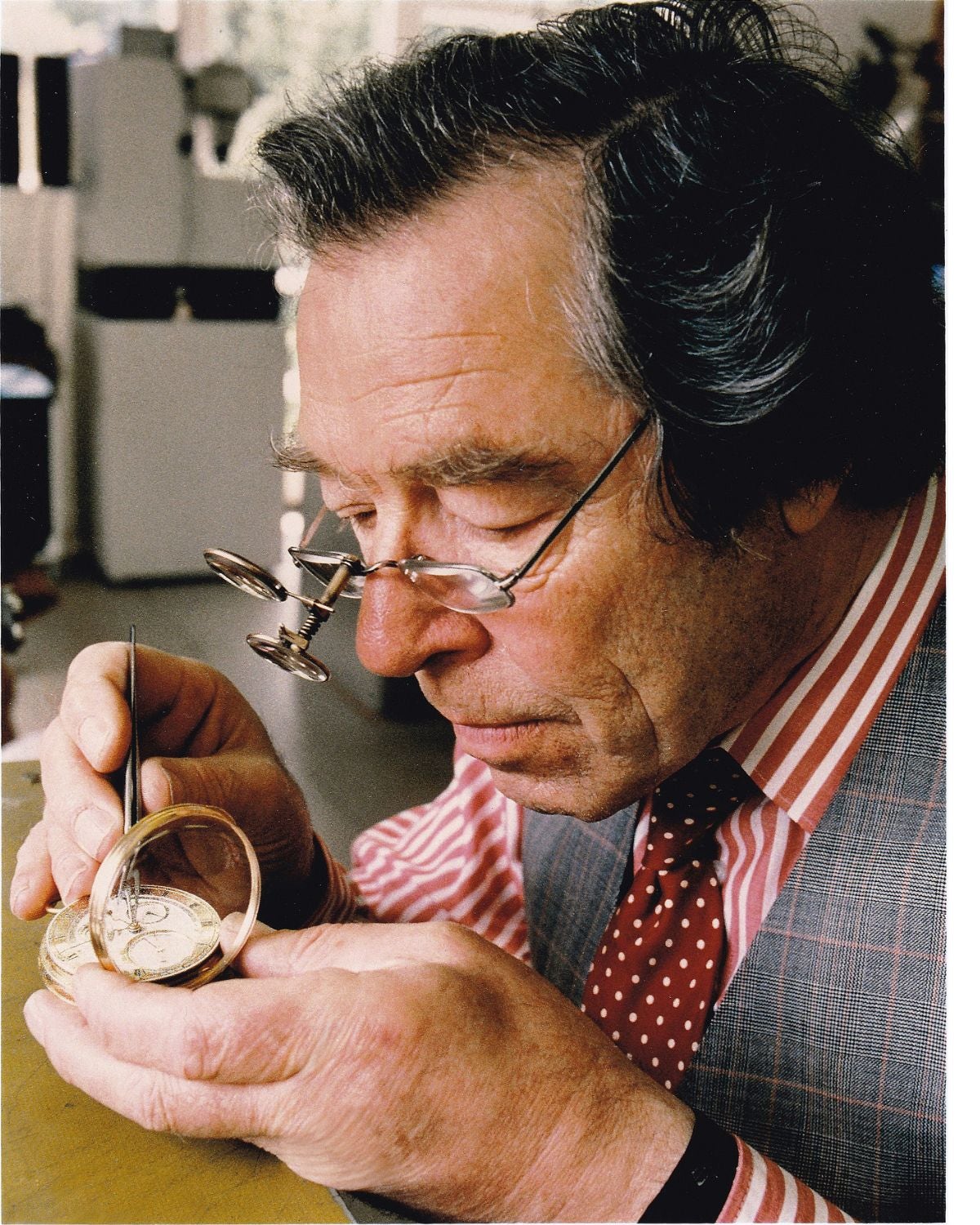
George Daniels at the bench. Photo: The George Daniels Educational Trust.
Daniels’ Personal Watch
Yet the importance of the Space Traveller II goes beyond its additional complication. Unlike the first watch, Space Traveller II remained with Daniels and became his personal watch. He wore it regularly, particularly at important occasions, and its fully open caseback allowed those around him to admire not only the dial but also the extraordinary mechanism within. In this respect, the two watches tell two very different stories: one was made to be released into the world; the other was the watch Daniels chose to keep for himself.
Two Halves of an Important Story
This distinction is fundamental to understanding why seeing both together is so important. The Space Traveller I is the original statement, the watch in which the concept was first fully realized. Space Traveller II is the response of the maker to his own work: a second chance to revisit, refine and extend an idea that he clearly felt had not finished with him.
In most artistic disciplines, an early masterpiece and its later evolution might be studied together in a museum. In watchmaking, and particularly in the work of George Daniels, such an opportunity is exceptionally rare and in the present case unique as the two Space Travellers had never been exhibited together...until now.
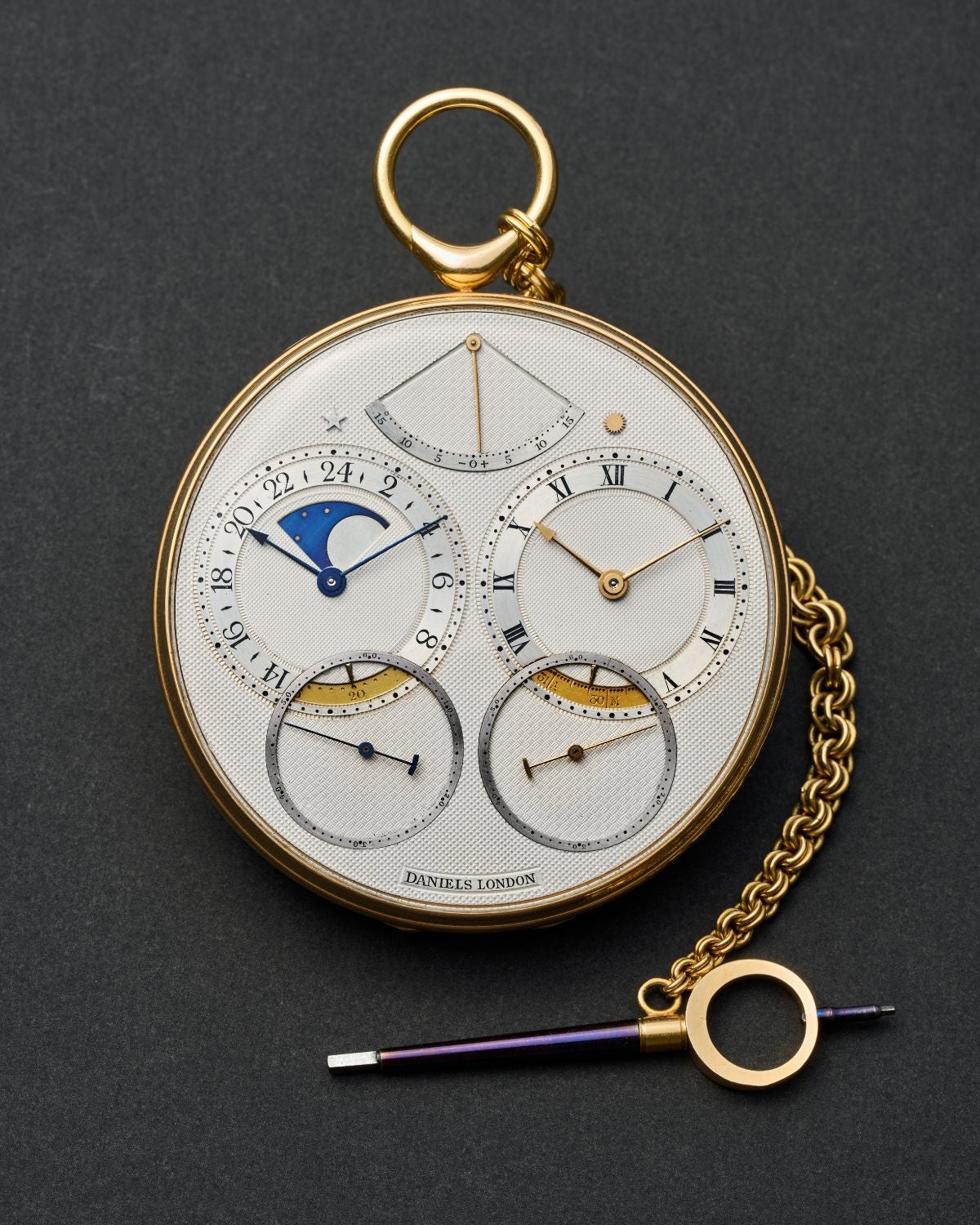
Space Traveller I: A unique 18k yellow gold open face watch with George Daniels’ independent double-wheel escapement, mean-solar and sidereal time, annual calendar, age and moonphases, and equation of time indications, 1982.
A Pivotal Moment
The two Space Travellers also mark a pivotal moment in Daniels’ technical development. They were made during the period in which his independent double-wheel escapement had reached its most mature expression. The double-wheel escapement was itself a crucial step towards Daniels’ later invention of the Co-Axial escapement, the breakthrough that would ultimately give his work an influence far beyond the small number of watches he personally produced.
The Space Travellers therefore stand at a fascinating point in his career: they represent the culmination of his development as a maker of individual masterpieces while also foreshadowing the inventions that would eventually transform modern mechanical watchmaking.
Forming a Bridge
Roger Smith has described the Space Travellers as the culmination of 13 years of Daniels making highly original one-off watches, and as a catalyst for many future developments. That observation is particularly powerful when the two watches are considered together. Space Traveller I and II are not isolated masterpieces. They form a bridge between Daniels’ early career and the work that followed: between his historical understanding of traditional watchmaking and his determination to invent something new; between the solitary creation of a single watchmaker and an innovation that would eventually find its way into industrial watch production.
Their reunion is therefore more than an opportunity to compare two extraordinarily rare watches. It is an opportunity to see an idea develop in three dimensions. The first watch establishes the concept; the second demonstrates how Daniels himself reconsidered and advanced it. The similarities reveal the consistency of his vision, while the differences reveal his refusal to stand still.
The Magic of Viewing them Together
For collectors, scholars and watchmakers, seeing the Space Traveller I and II together offers something that photographs and catalogue descriptions cannot fully provide: a direct comparison of two unique objects made by the same hand, only a year apart, at one of the most important moments in modern horological history. One can follow the evolution of the movement architecture, appreciate the additional complexity of the chronograph, and observe how Daniels approached the same fundamental problem twice.
Perhaps most importantly, their presence together restores the relationship that has always existed between them. Space Traveller I cannot be fully understood without knowing that Daniels immediately felt compelled to make another. Space Traveller II cannot be fully understood without recognizing it as both an extension of and a deeply personal response to the first.
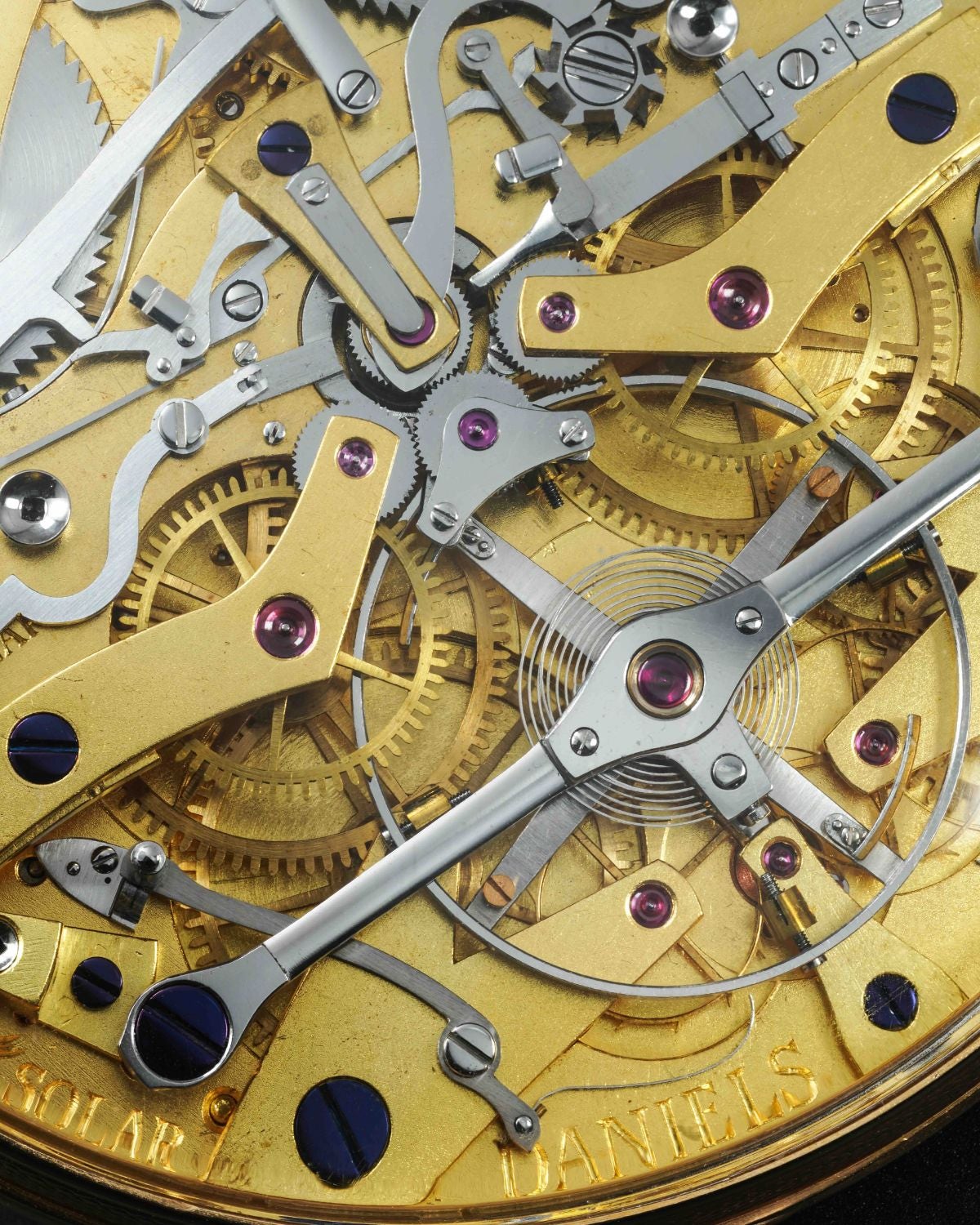
Space Traveller II: A unique 18k yellow gold chronograph watch with George Daniels' independent double-wheel escapement, mean-solar and sidereal time, annual calendar, age and moon phases and equation of time indications, 1982/1983.
Two Chapters of the Same Idea
Individually, they are among the greatest watches of the 20th century. Together, they are something greater still: a unique opportunity to witness the complete arc of a master watchmaker’s thought, from conception to reconsideration, refinement and personal attachment.
To bring both Space Traveller watches together, even temporarily, is therefore to reunite two halves of one of the most important stories in modern watchmaking. For a moment, the original and its evolution, the watch Daniels sold and the watch he kept, can once again be studied side by side as George Daniels himself would surely have understood them: not as duplicates, but as two chapters of the same extraordinary idea.