Article | In Tokyo The Future Dreams Of Chrome Kyobai Auction Hong Kong
In Tokyo, the Future Dreams of Chrome
Artist Hajime Sorayama and watchmaker Otsuka Lotec are separated by decades, yet united by a vision built on metal and innovation.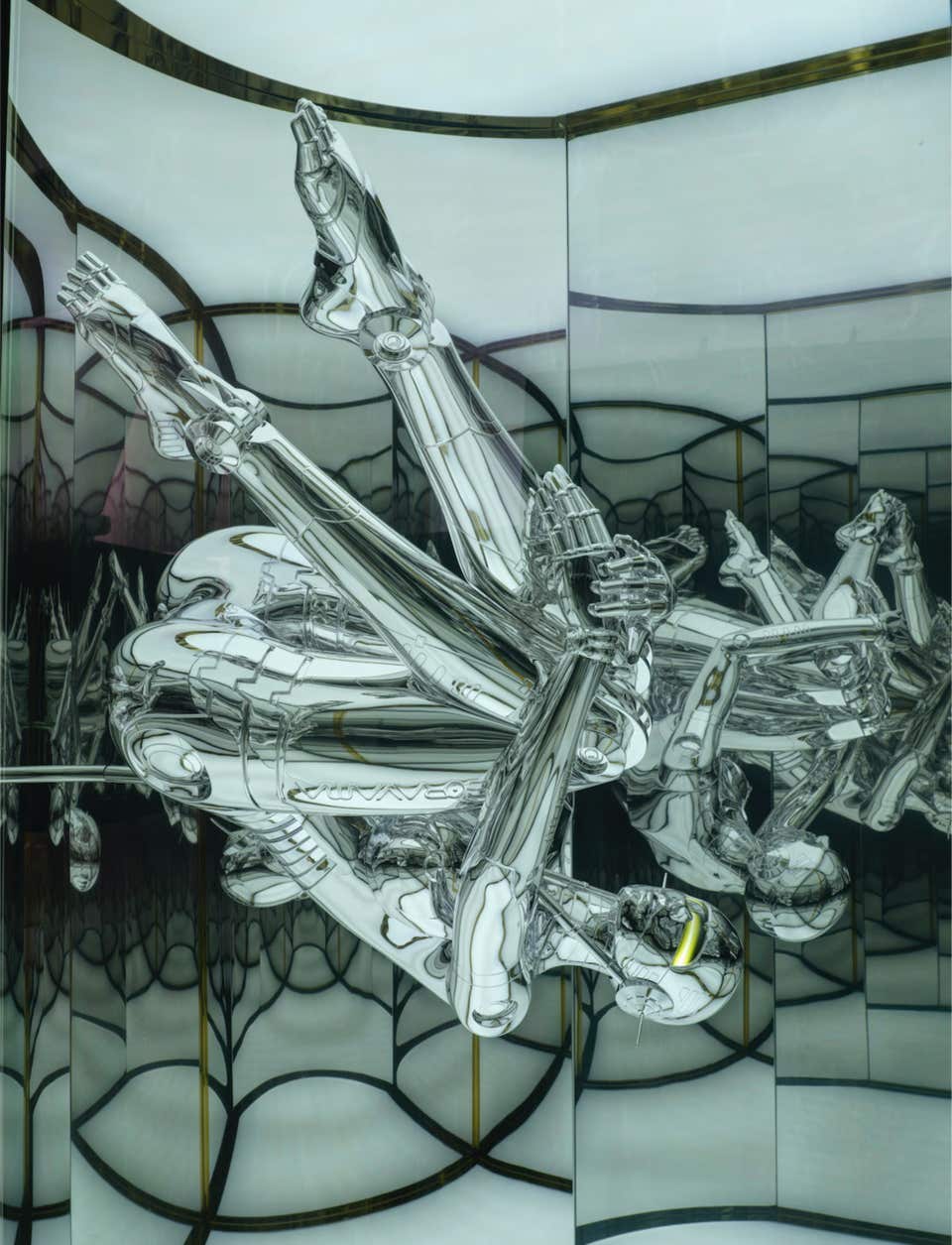
Lot 10: HAJIME SORAYAMA, Untitled (Sexy Robot Space Traveler), 2022. KYŌBAI: THE JAPAN EDIT.
There is a particular gleam to Japanese creativity, and on 4 December 2026, Phillips brings it to Hong Kong for KYŌBAI: The Japan Edit. Spanning art, design, ceramics, jewels and watches, the sale celebrates a creative culture without boundaries, where tradition and innovation meet in idiosyncratic ways.
Running through the auction is an unconventional spirit, one that boils in the makers’ veins. They have given it form, in pieces you can stand beside or strap to your wrist — cast in resin and chrome, machined from steel, or set spinning on the smallest ball bearing in the world.
The Seduction of the Future
Few have imagined tomorrow as completely as Hajime Sorayama. For close to fifty years his shining robotic muse has stood for the future, and here she appears at her most monumental, cast in two and a half metres of chrome.
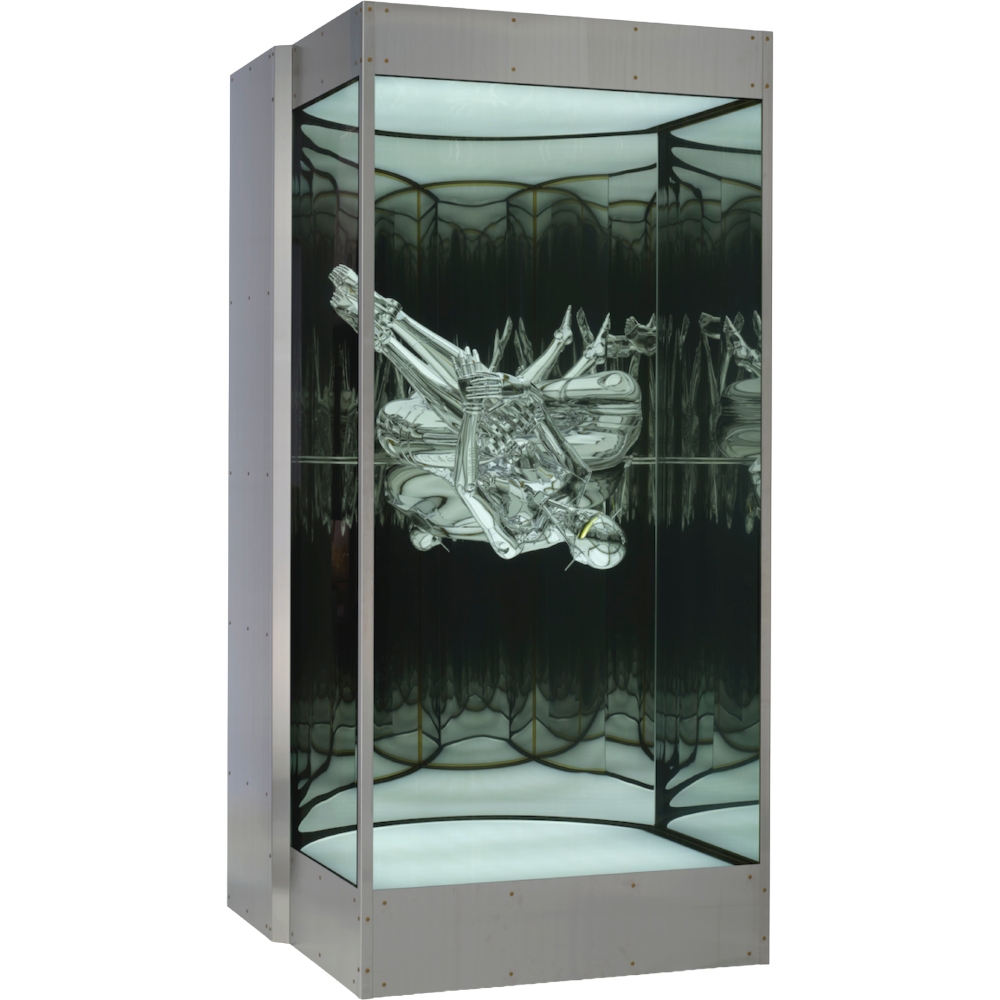
Lot 10: HAJIME SORAYAMA, Untitled (Sexy Robot Space Traveler), 2022. KYŌBAI: THE JAPAN EDIT.
Sorayama’s muse was born of a problem. When he was brought in on a Suntory whisky advertisement, the plan was to feature C-3PO from Star Wars, but copyright fees and a tight deadline stood in the way. In 1978 Sorayama devised a metallic alternative of his own, the first of the robots that would become the Sexy Robot. He has devoted himself to her ever since. Fusing commercial chic, erotic futurism and superrealism, she gave rise to a new archetype, the gynoid: a chrome-plated goddess with the soft curves of mid-century pin-up illustration and the flawless finish of aerospace engineering.
“I’m not drawing a robot. I’m drawing a creature clad in metal skin.”
— Hajime Sorayama, in conversation with The Talks
Untitled (Sexy Robot Space Traveler) grows out of the solo exhibitions Sorayama staged in 2023 at NANZUKA UNDERGROUND in Tokyo and at CICA in Vancouver, where the present work was shown. Built from glass-fibre-reinforced plastic, resin and steel and fitted with LED lights, she has stepped off the illustration board and into real space. Her airbrushed chrome surface is as sharp as liquid metal, catching the ambient light and every movement of the viewer, so that the sculpture works as a lens on the space around it.
In Sorayama’s universe, the machine is sensual by nature. Western science fiction has often imagined the artificial body as dystopian and inhuman; Space Traveler radiates a divine composure instead. Suspended in flight, weightless and free of the body’s limits, she blurs the boundary between human and machine, flesh and alloy.
“I watched as the metal was cut, its reflection spiralling, coiling like [a] living creature.”
— Hajime Sorayama, in conversation with The Talks
Born Among Steel
Sorayama’s choice of metal was no accident. He grew up in Imabari — a small industrial town in Ehime known for shipbuilding and towel manufacturing — in the years after the Second World War. His father was a carpenter and his mother a seamstress, but it was metal, not wood or cloth, that held him. As a boy he would watch a neighbour across the street braze metal for a living, and on his way home from school he would linger at the local ironworks, gazing at the turning lathes. His early robots carried the textures of lead and aluminium before evolving into the polished chrome for which he is celebrated today.
His influence on visual culture is hard to overstate. His figures have shaped films from Paul Verhoeven’s RoboCop (1987) to Alex Garland’s Ex Machina. His award-winning design for AIBO, Sony’s robotic pet, merged his imagination with cutting-edge technology, and Dior’s Pre-Fall 2019 menswear show carried the Sexy Robot onto the runway. His travelling solo exhibition Light, Reflection, Transparency has toured China through 2025 and into 2026, and Creative Museum Tokyo has staged the largest retrospective of his career.
The Hand Behind the Chrome
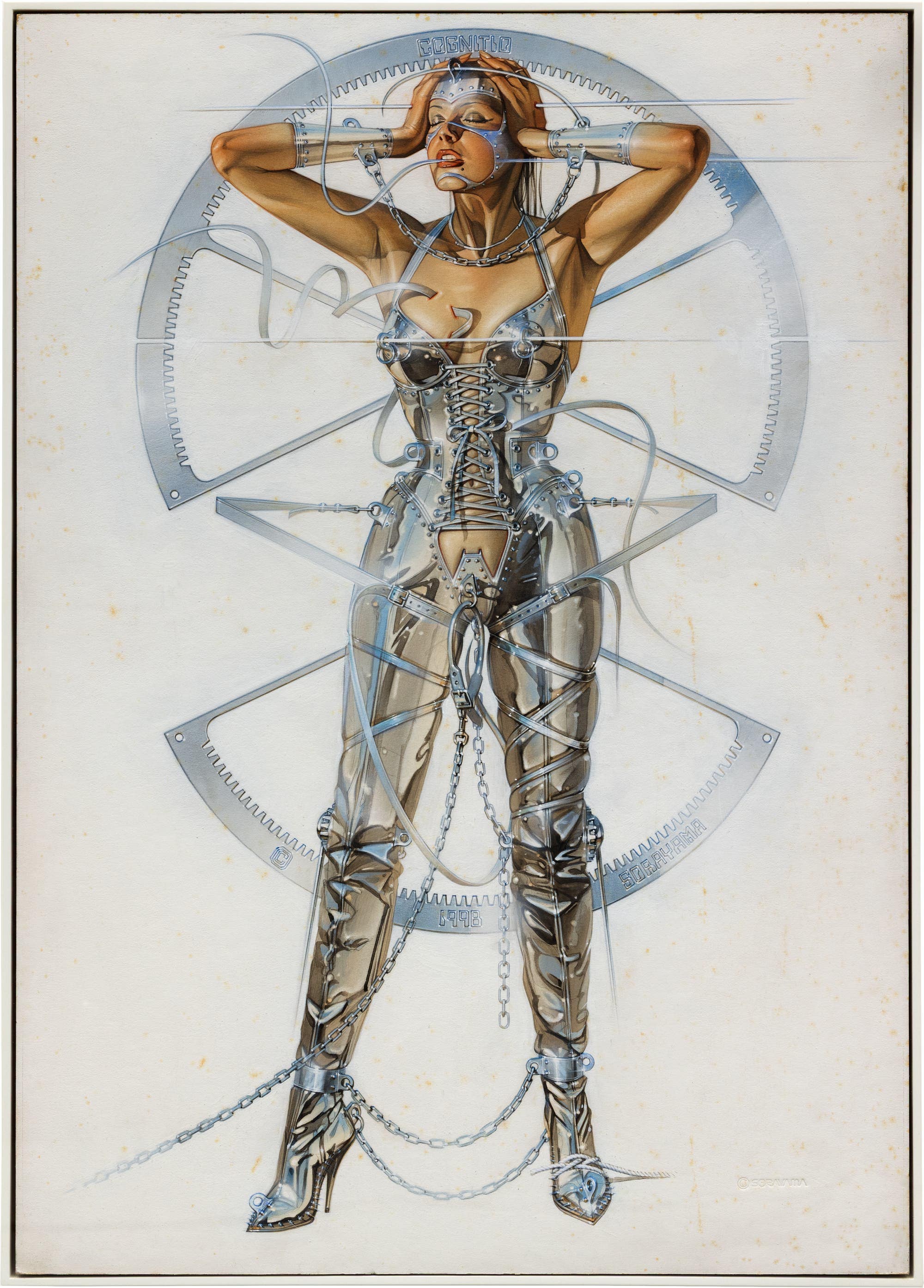
Lot 11: HAJIME SORAYAMA, Untitled, 1998. KYŌBAI: THE JAPAN EDIT.
Painted in 1998, a milestone year in which Sorayama staged a solo exhibition in Cologne, Germany, Untitled belongs to an important moment in his growing international career. Using his signature airbrush technique, Sorayama achieves remarkable precision and exceptionally smooth transitions of light and shadow, giving the image its striking, almost hyperreal appearance.
Seen beside Space Traveler, it demonstrates the technical mastery for which he became celebrated, bringing together the sensuality, fantasy and futuristic aesthetic at the heart of his practice. It is a compelling example from a pivotal period, when his distinctive visual language was gaining increasing international recognition.
The Art of Mechanical Imagination
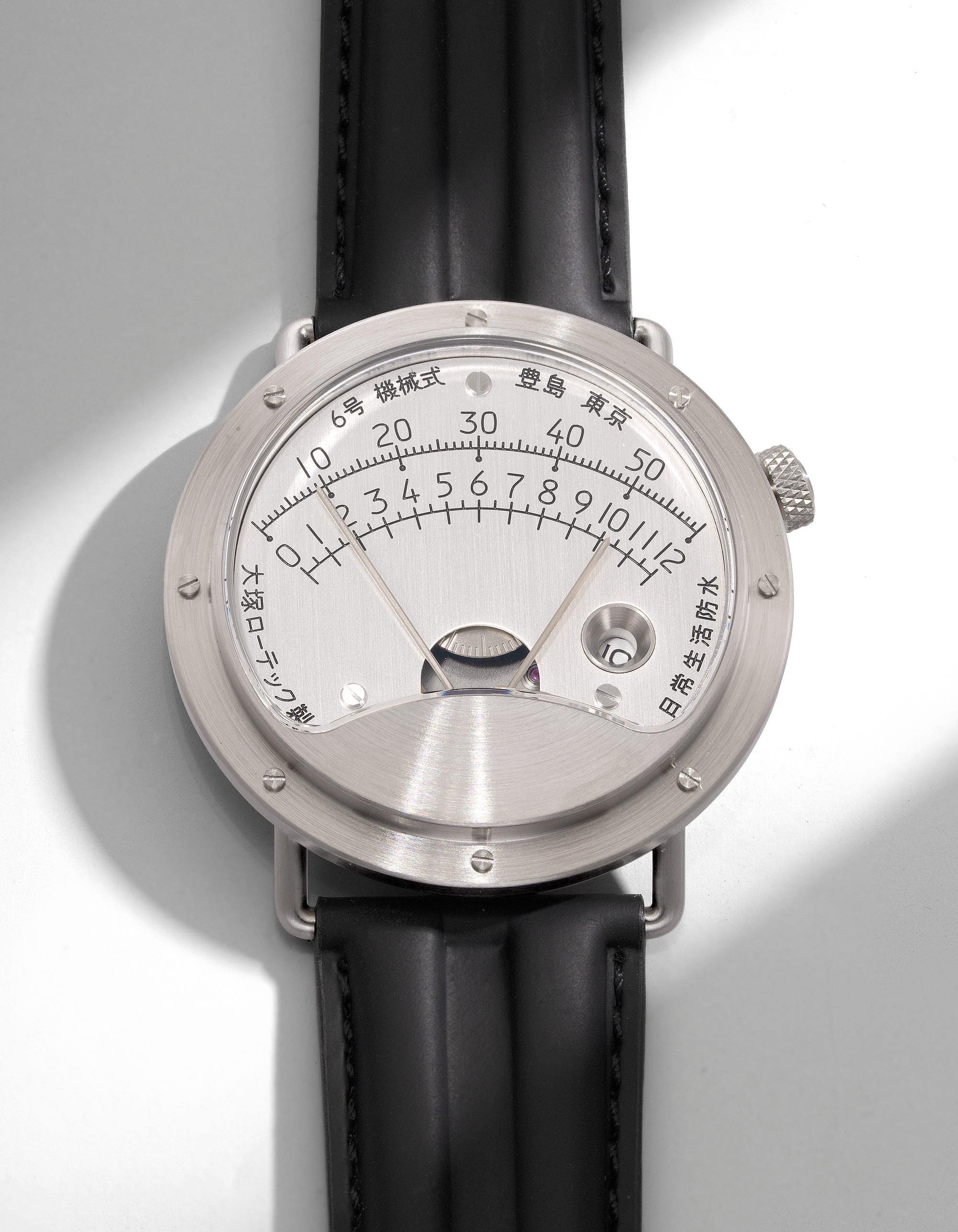
Lot 8: OTSUKA LOTEC, Model No. 6, circa 2026. KYŌBAI: THE JAPAN EDIT.
The industrial designer Jiro Katayama looks for the future in machines. Otsuka Lotec, the independent watchmaker he founded in Tokyo, draws on cars, trains, aircraft, gauges and cameras, turning the visual language of analogue instruments into highly distinctive timepieces.
The Model No. 8, introduced in March 2026 and the brand’s latest release, takes its cue from the REDD.37 tube mixing console at Abbey Road Studios. Its jumping “hour channel”, read by a knob-like pointer, recalls the console’s adjustment knobs; the retrograde minutes, marked in red, slide like faders; and the retrograde disc takes the form of a tape recorder’s inner platter. Beneath the dial, a modified Miyota cal. 90S5 carries a 62-component in-house module running on MinebeaMitsumi ball bearings, among them a 1.5-millimetre bearing that is currently the smallest in the world.
One Sensibility
Despite their differences, a chrome muse and a watch modelled on a recording console both speak to an increasingly fluid collecting sensibility, one that finds as much fascination in the ingenuity of a mechanism as in the imagination of an artist. That same cross-disciplinary curiosity extends into Phillips’ companion online sale, KYŌBAI: The Photo Edit (December 1–8), which traces the pre- and post-war visual culture that paved the way for Japan’s modern avant-garde through rare works by Shikanosuke Yagaki, Minayoshi Takada, and Ryukichi Shibuya.