Article | Futuristic Timepieces Minimalist Design Phillips New York Fall 2026 Online Auction
Sleek Lines and Minimalist Design: Four Takes on Futuristic Timepieces
Why do curves and pared-back displays still make us think of tomorrow?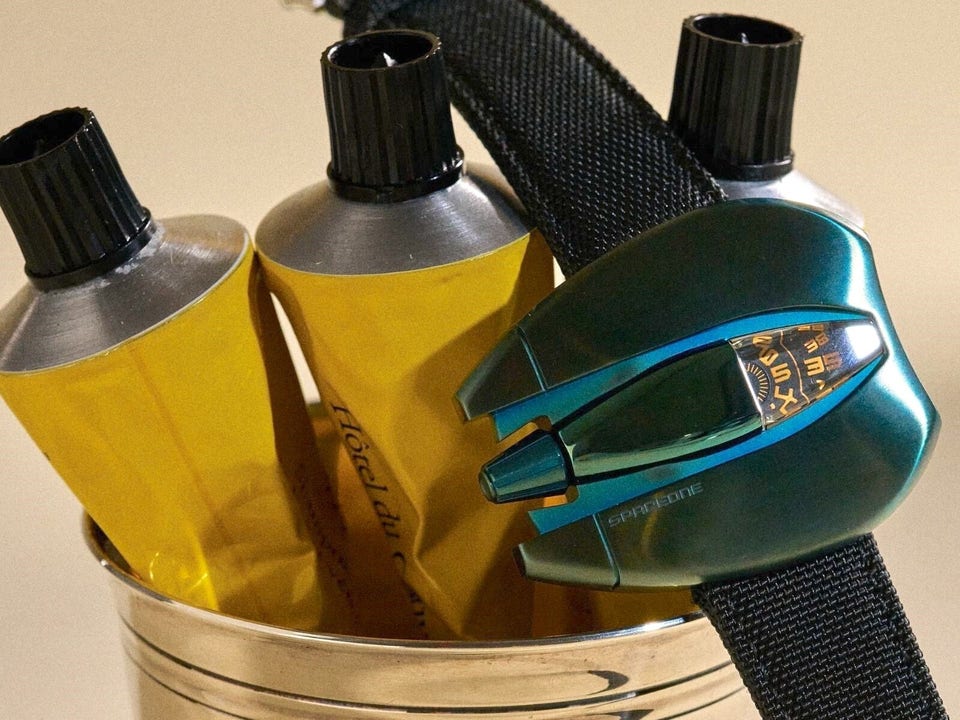
Phillips in Association with Bacs & Russo is delighted to present The New York Sessions, Fall 2026, an online auction running from 1–9 October. Featuring more than 80 exceptional timepieces from leading makers including Patek Philippe, Rolex, A. Lange & Söhne, Audemars Piguet, and F.P. Journe, the sale includes all the lots featured in this story.
For more than a century, designers trying to picture tomorrow have often found themselves drawing curves. During the 1920s and 1930s, the flowing profiles developed for aircraft, automobiles, and locomotives began appearing on radios, refrigerators, vacuum cleaners, and even the likes of pencil sharpeners. Of course, many of these objects had little need to move efficiently through the air.
Aerodynamics had migrated from the wind tunnel and become an aesthetic in itself, with smooth surfaces and rounded edges promising speed, efficiency, and technological progress.
The Space Age saw that language develop further. Capsules, domes, cockpit windows, molded interiors, and sparsely populated control panels shaped how people imagined life beyond Earth. Such visions could be seriously utopian, like Oscar Niemeyer’s architecture, or playfully domestic, like Eero Aarnio’s Ball Chair. They could provide the pristine interiors of 2001: A Space Odyssey or even send George Jetson to work in a bubble-top flying car.

Museu de Arte Contemporânea (MAC), Niterói, Brazil, designed by architect Oscar Niemeyer – Photo: Maria Fátima Leite / Wikimedia Commons – CC BY-SA 4.0
For all the imagination behind them, such depictions of the future still needed recognizable points of reference. Industrial designer Raymond Loewy had a phrase for negotiating this pull between novelty and familiarity: “Most Advanced Yet Acceptable.” A futuristic design could look fresh enough to suggest progress, while retaining just enough of the known world to be understandable.
Our ideas about tomorrow have changed many times since then. Curves, continuous surfaces, and carefully reduced detail have proved harder to dislodge. Why has this particular vision of the future proved so persistent?
The four timepieces featured here, all offered in The New York Sessions, Fall 2026, suggest that the answer lies as much in what their designers leave out as in the lines they draw.
Depth Perception
Ming co-founder Ming Thein came to watchmaking with an accomplished career in photography behind him, and his understanding of light, proportion, and perspective has been central to the brand’s visual identity since its launch in 2017.
The 17.09 Burgundy begins with a highly rounded 38mm stainless steel case. Its polished bezel traces a clean circle around the dial, while the lugs twist outward from the caseband before flaring at their tips. Brushed and polished surfaces help define those curves without adding unnecessary ornament.
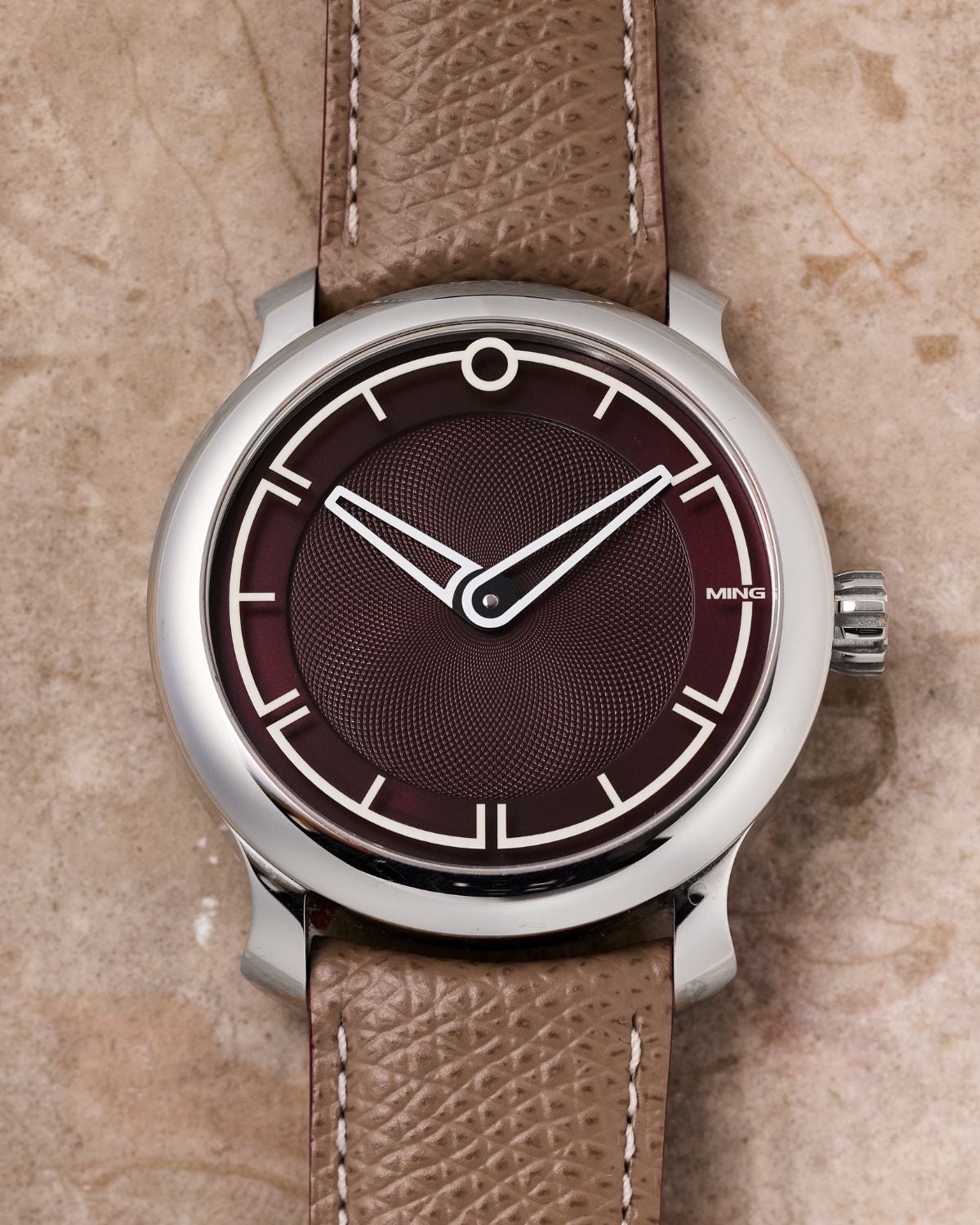
Lot 58: A circa 2021 MING 17.09 Burgundy Ref. 17.09 in stainless steel, included in the Phillips New York Sessions, Fall 2026. Estimate: USD $2,000–4,000
That controlled exterior continues beneath the sapphire crystal. The watch has only two hollowed hands, with its hour markers laser-etched into the underside of the crystal and filled with Super-LumiNova, leaving them suspended above the dial and detached from the watch below.
And yet Ming has avoided making the display sterile. A fine Clous de Paris pattern distinguishes the center, surrounded by a circular-grained outer section that shifts in appearance with the light. Inside, the automatic caliber 330.M1 allows the central hour hand to be advanced independently in one-hour increments while the rest of the movement continues to run.
Time Cascades
Marc Newson has spent his career giving industrial objects smooth, often biomorphic forms. The Australian’s work has ranged from furniture and aircraft interiors to luggage, bicycles, cameras, and watches, with the curving aluminum body of his Lockheed Lounge becoming one of the most recognizable pieces of late-20th-century design.
The Hourglass for Hodinkee applies this approach to a timekeeping device that long predates pocket and wristwatches. Formed by hand from a single piece of borosilicate glass, its two rounded chambers flow into one another through a narrow waist. No frame interrupts the outline, and the hand-production process gives each example slight variations of its own.
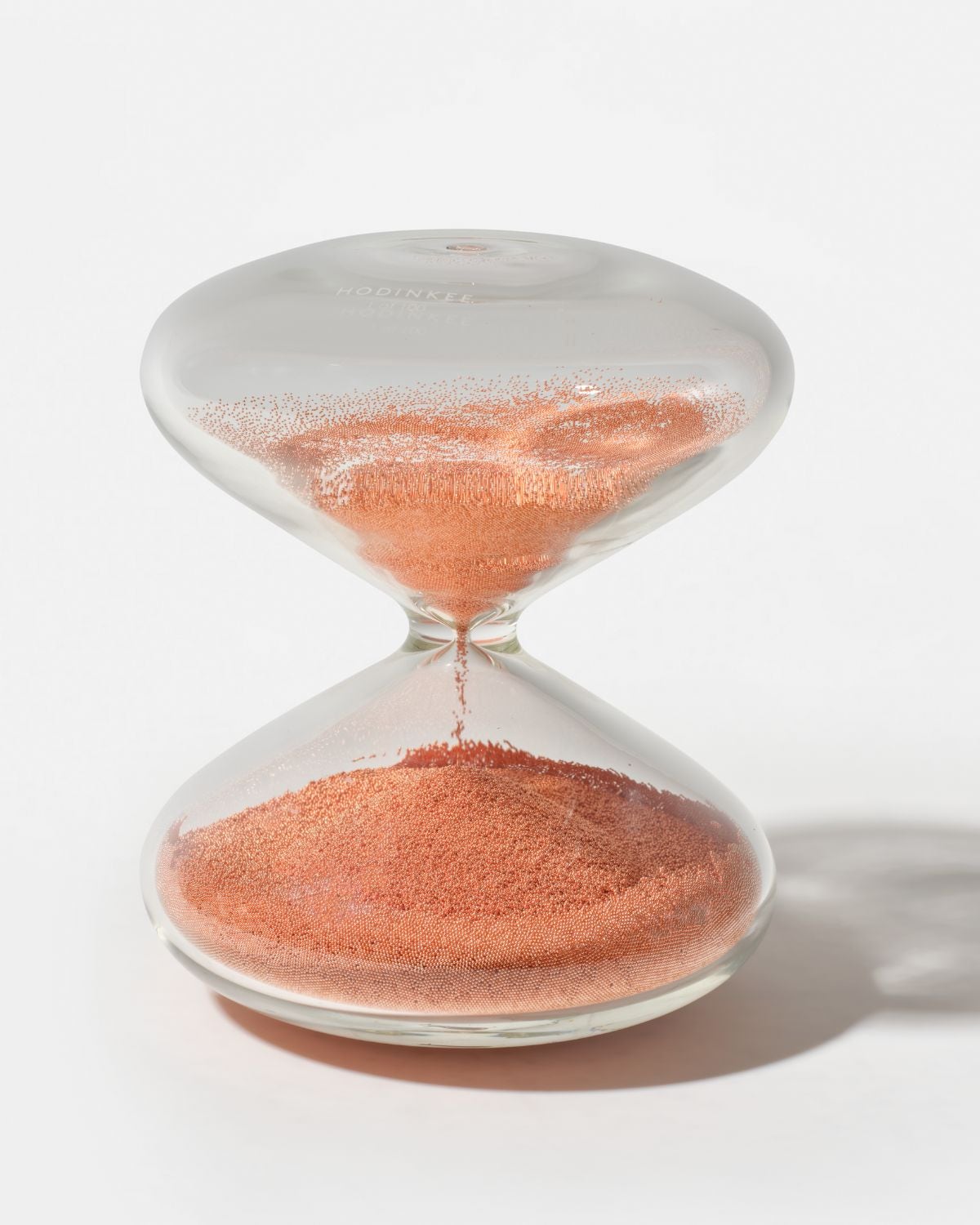
Lot 53: A 2022 Marc Newson × HODINKEE Hourglass Ref. HG10 Copper in hand-blown borosilicate glass with copper-coated stainless steel nanoballs, one of a limited edition of 100 pieces, included in the Phillips New York Sessions, Fall 2026. Estimate: USD $10,000–20,000
Precisely 1,249,996 stainless steel spheres, each measuring 0.6mm, pass from one chamber to the other over about ten minutes. A fine copper coating gives them their warm metallic color, while a protective layer prevents corrosion. The spheres gather, separate, and form changing patterns as they fall, accompanied by a delicate metallic murmur.
In effect, Newson reduces timekeeping to three simple things: gravity, movement, and sound.
Capsule Form
SpaceOne offers the most literal expression of Space Age design in our group. The French brand’s first watch was created by entrepreneur Guillaume Laidet and independent watchmaker Théo Auffret, who looked to the spacecraft, science fiction illustrations, and imagined technologies of the 1960s for inspiration.
Its broad titanium body has the rounded, aerodynamic volume of a capsule, while the raised sapphire crystal resembles a cockpit canopy. The crown projects from one end, and the time display occupies a relatively small opening at the other, leaving the surrounding case to provide much of the drama.
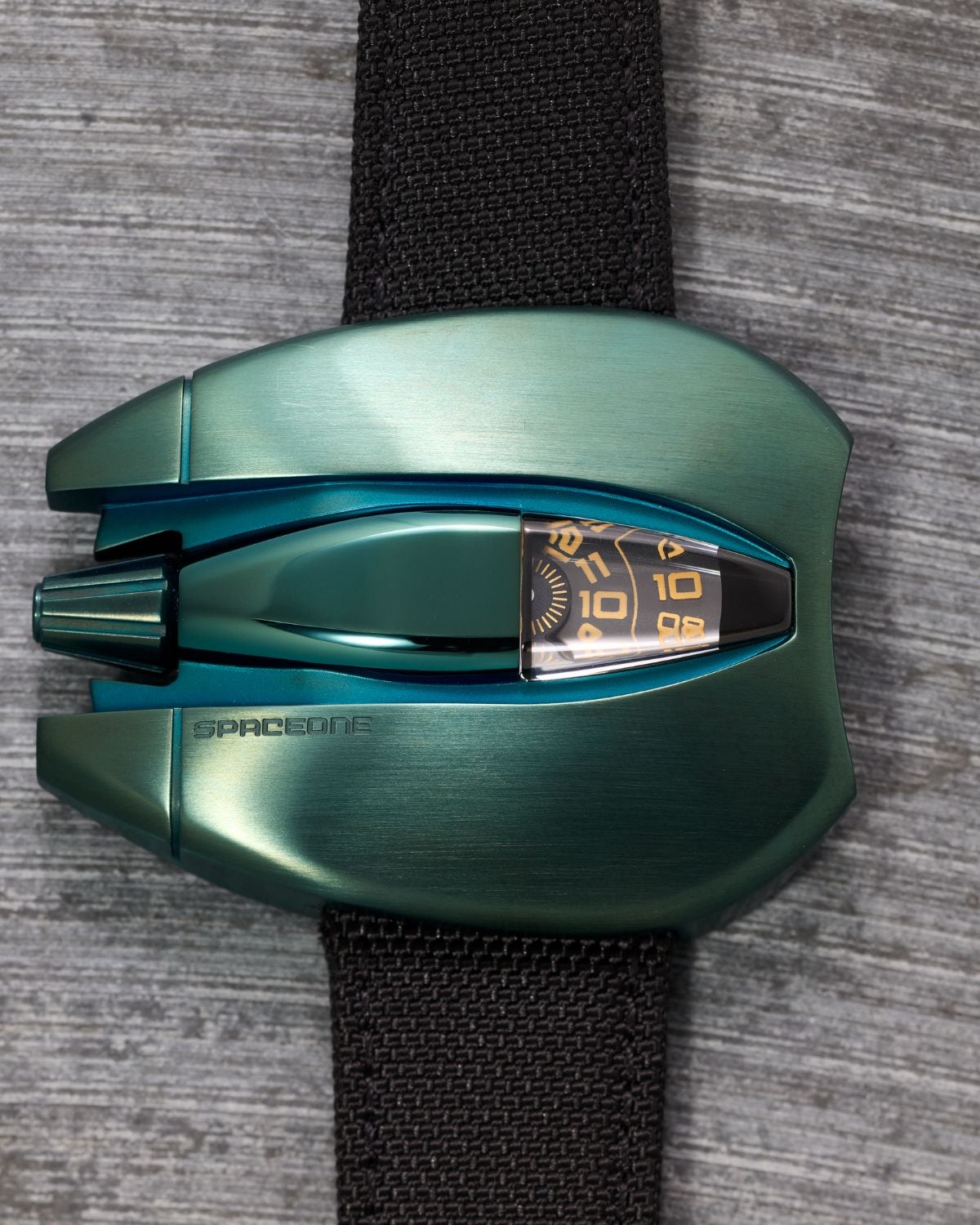
Lot 38: A 2025 SpaceOne Jump Hour “Perpétuel Gallery” Prototype in titanium, a unique piece, included in the Phillips New York Sessions, Fall 2026. Estimate: USD $4,000–8,000
The display itself is really quite economical. Hours and minutes appear alongside one another, with the minutes shown on a transparent sapphire disc. Auffret’s workshop developed the jumping-hour mechanism from nine custom components, fitting it over a Swiss automatic Soprod P024 movement.
The present watch is the unique prototype for a 25-piece edition commissioned by Dubai’s Perpétuel Gallery. Its brushed green titanium case and bright orange indications were used to settle the final color scheme, although its numeral display differs from the production pieces.
Circles Within Circles
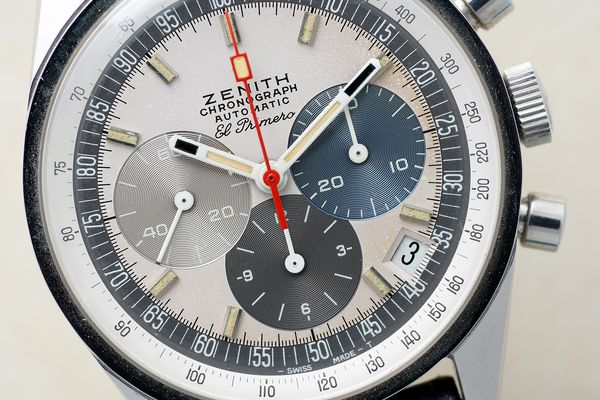
When George Bamford and Hiroshi Fujiwara turned their attention to Zenith’s El Primero, they began with an already familiar chronograph. Bamford Watch Department had recently become an official customization partner for Zenith, while Fujiwara’s Fragment Design had built an international following through its spare graphics and discreet double-lightning emblem.
Released in 2018, their collaboration retains the El Primero’s rounded 42mm stainless steel case and bracelet. Inside is the automatic Caliber 400B, a descendant of the high-frequency chronograph movement Zenith introduced in 1969.
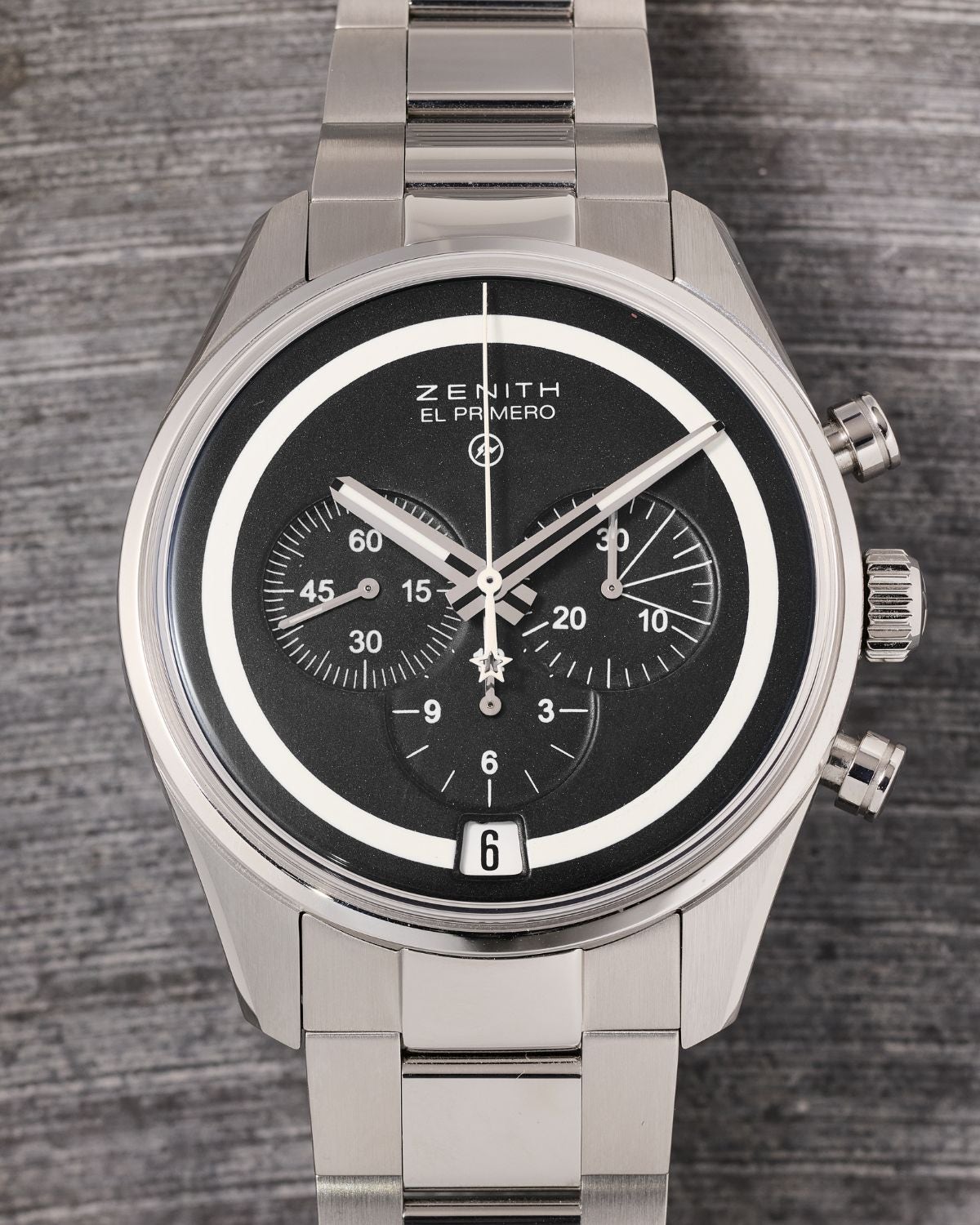
Lot 66: A circa 2018 Zenith × Bamford Watch Department × Fragment Design El Primero in stainless steel, included in the Phillips New York Sessions, Fall 2026. Estimate: USD $4,000–8,000
The dial is where the two designers made their mark. Applied hour indexes have been removed, and the palette reduced to matte black and white. A broad white circle runs around the dial, intersecting the date aperture at 6 o’clock and enclosing three recessed chronograph registers. The registers, case, hands, and outer track create a composition of circles within circles.
Despite the amount of information required by a chronograph, the display is clean and graphically disciplined. Sold exclusively through Dover Street Market boutiques in London, New York, Singapore, and Tokyo, the watch brought a new visual identity to one of Zenith’s best-known chronographs, mainly by taking elements away.
Tomorrow Comes Round
These four timepieces, then, interpret futuristic design in differing ways. Some look back to the optimism of the Space Age, while others use optical depth or pared-back graphics to make familiar forms appear new. What links them is the way their rounded shells frame displays from which almost everything unnecessary has been removed.
Predictions about the future have changed many times over the decades, but one expectation has stayed constant: that tomorrow will surely arrive with sleek lines and minimalist design.
You can learn more, place a bid, and view the entire New York Sessions, Fall 2026, catalog here.