Article | F P Journe Octa Calendrier Ref Q 1300 2 Phillips Perpetual Picks 2026
Perpetual Picks: F.P. Journe's Octa – The Automatic That Changed Everything
With a 2007 Octa Calendrier as our guide, we explore how a pioneering self-winding movement helped transform F.P. Journe and gave rise to one of modern watchmaking's most versatile collections.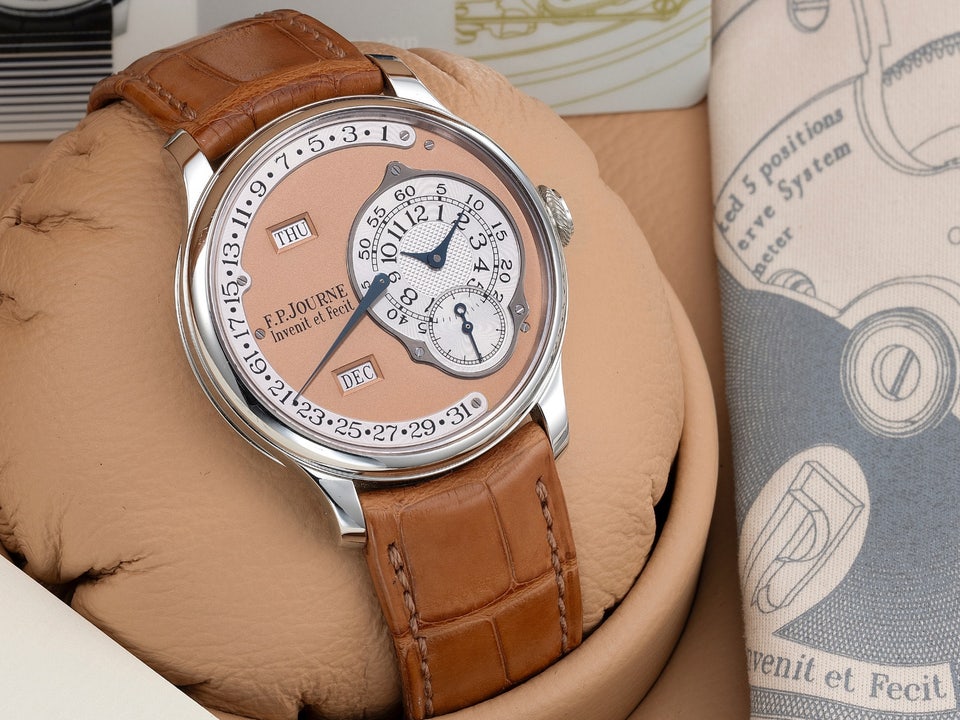
Welcome to our series highlighting the exceptional watches available through Perpetual, Phillips’ boutique service offering immediate access to the world’s rarest and most desirable timepieces. You can view currently available watches by stopping by our boutiques in London, Gstaad, and Hong Kong or by visiting Phillips Perpetual online.
When François-Paul Journe founded his eponymous manufacture in 1999, he had already established himself as one of the most accomplished watchmakers of his generation.
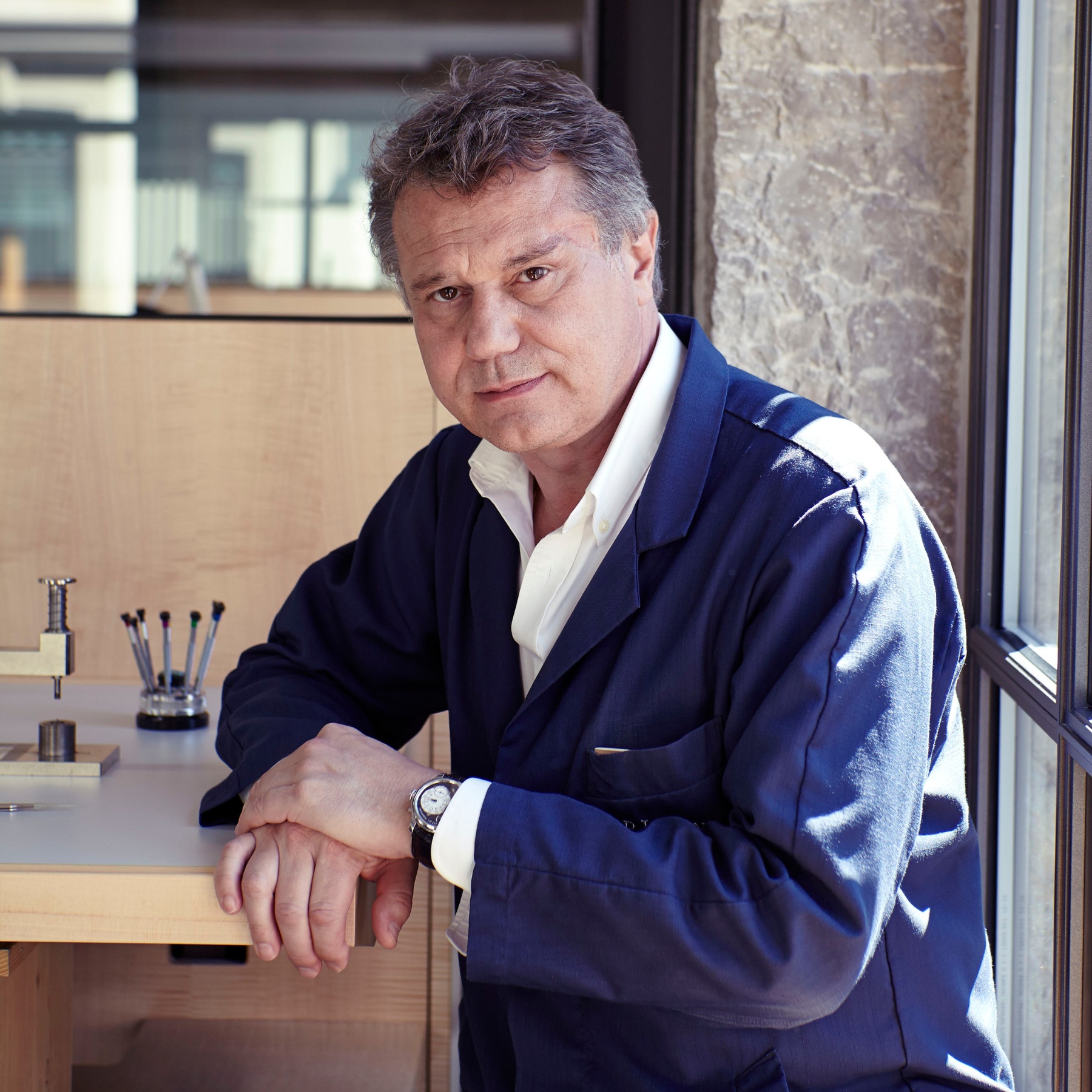
François-Paul Joune. F.P. Journe
The Tourbillon Souverain and Chronomètre à Résonance demonstrated his mastery of chronometry and complications, but they also posed a practical question. If F.P. Journe was to become more than a workshop producing highly specialized watches in small numbers, it needed an everyday automatic collection. Journe's answer would shape the future of his brand.
The Blueprint
As early as October 1994, during dinner with friends at the Parisian bistro La Dédicace, Journe sketched several watch concepts on a paper tablecloth. Among them were recognizably early versions of what would later become members of the Octa family, including an unmistakable outline of the Octa Calendrier.
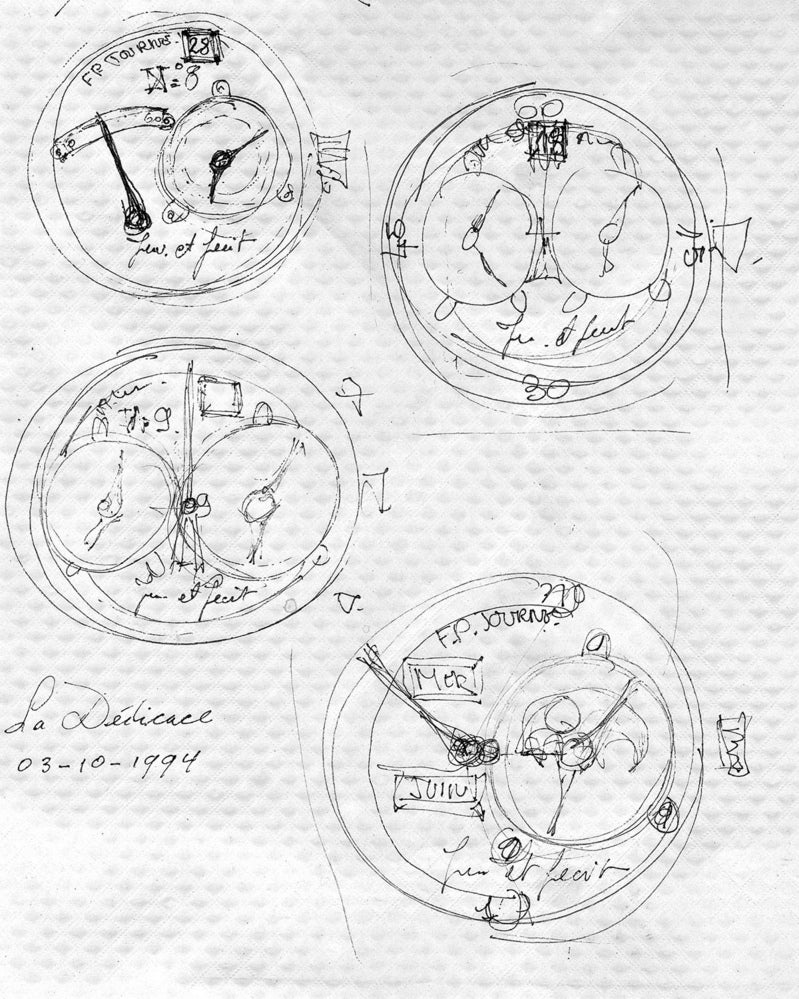
François-Paul Joune’s 1994 sketch on the table cloth of a Paris bistro. F.P. Journe
The challenge was ambitious. Rather than develop a different movement for every complication, Journe wanted to create a single automatic caliber capable of accommodating an entire family of watches while retaining the same dimensions, allowing him to use the same case across the collection.
It also had to be practical. Automatic winding was essential, but so too was sufficient autonomy for the watch to remain running after a weekend off the wrist.
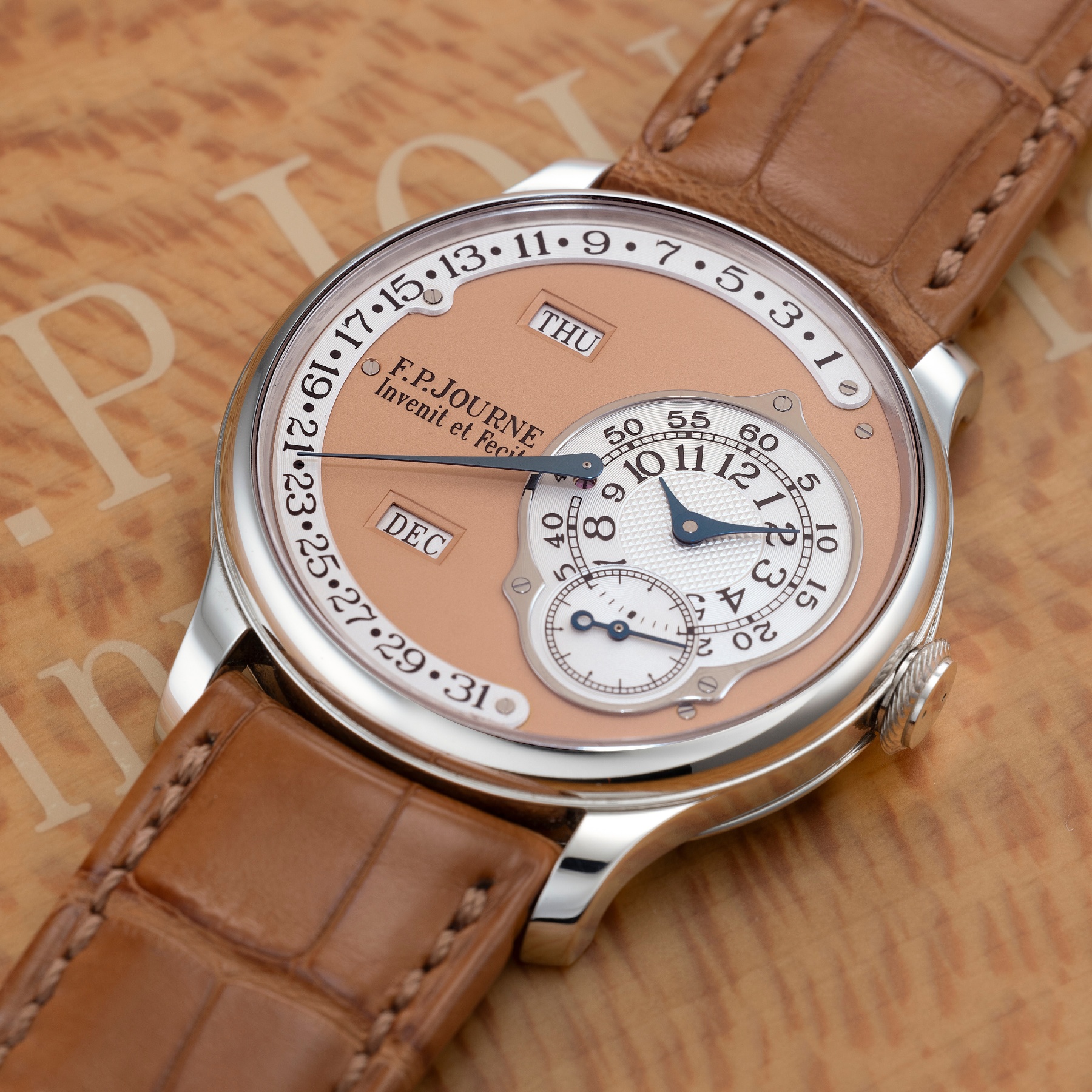
A 2007 F.P. Journe Octa Calendrier in platinum, available at Perpetual Hong Kong.
Achieving both required a fresh approach. A specially developed one-meter mainspring delivered more than five days of chronometric autonomy, while the movement itself was engineered with future complications already in mind.
By leaving space beneath the dial and positioning the winding rotor off center, Journe created an architecture that could accept additional mechanisms without increasing the movement's thickness.
Proof of Concept
The Octa Réserve de Marche introduced that architecture in 2001. The Octa Chronographe followed a year later. Then came the Octa Calendrier in 2003.
Far more than simply the collection's third complication, the Octa Calendrier demonstrated that Journe's original concept worked exactly as intended. An annual calendar displaying the day and month through two apertures and the date on a retrograde scale around the dial's periphery, it retained the same movement dimensions as its predecessors while remaining intuitive to use.
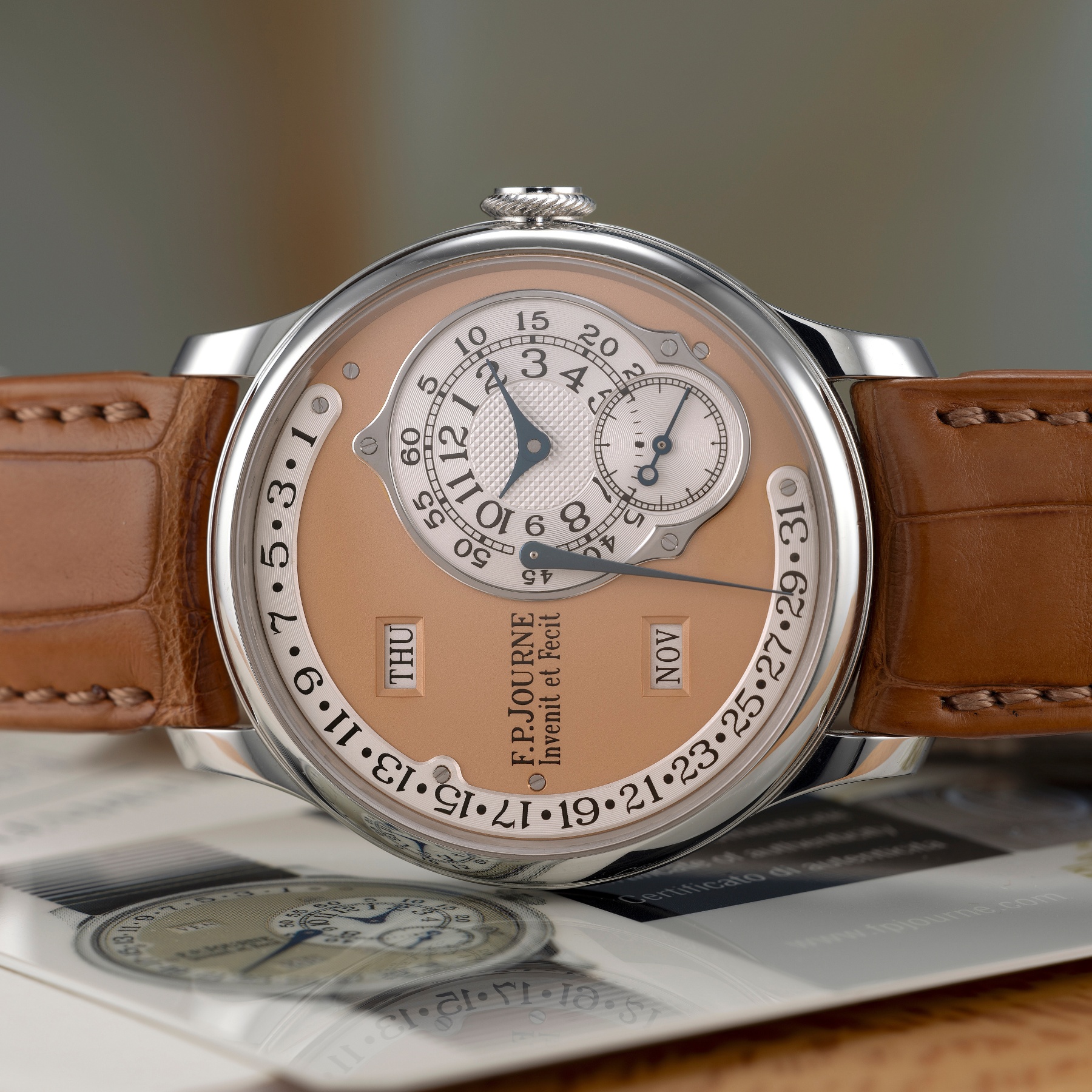
A 2007 F.P. Journe Octa Calendrier in platinum, available at Perpetual Hong Kong.
All adjustments were performed through the crown, avoiding additional pushers and recessed correctors often associated with calendar watches.
Within just three years, the same movement architecture had successfully given rise to four distinct watches – the Réserve de Marche, Chronographe, Calendrier, and Lune – each serving a different purpose while sharing the same mechanical foundation. That adaptability became one of the Octa's defining achievements.
A Mature Expression
The present watch captures the Octa at an especially interesting moment in its evolution. Dating from 2007, this example combines the original 38mm platinum case with the second-generation caliber 1300.2, still featuring bi-directional winding but now with mainplate and bridges crafted from 18K rose gold rather than the rhodium-treated brass used in the earliest Octas.
The change represented more than a new choice of material. By 2004, Journe had expanded his Geneva production facilities sufficiently to manufacture movements in a noble metal, a decision that would become a signature of the brand from that point onward.
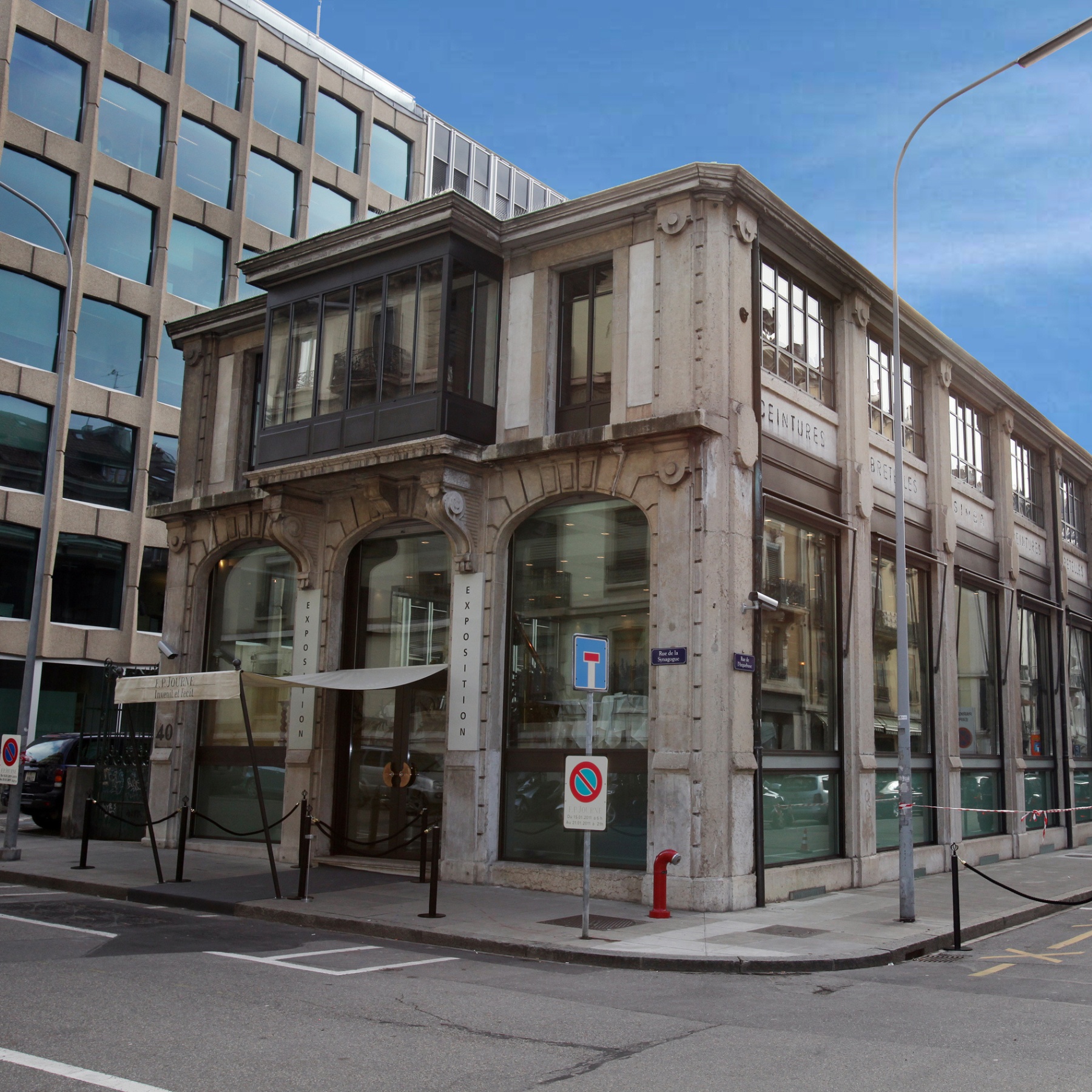
Manufacture Journe in Geneva. F.P. Journe
Its 38mm case is equally significant. Although 40mm Octas had already joined the collection, the original proportions remained available, preserving the compact dimensions around which the Octa had first been conceived.
The asymmetrical layout, with its off-center time display balanced by the sweeping retrograde date and calendar apertures, remains one of the most recognizable dial designs in contemporary watchmaking.
Building a Collection
Looking back, it is easy to regard the Octa as an established pillar of the F.P. Journe collection. At the turn of the millennium, however, its success was anything but assured.
Journe was attempting something few independent watchmakers had seriously pursued: creating a genuinely adaptable automatic movement that could evolve into an entire collection without compromising performance, proportions, or practicality. The Octa Calendrier proved he had succeeded.
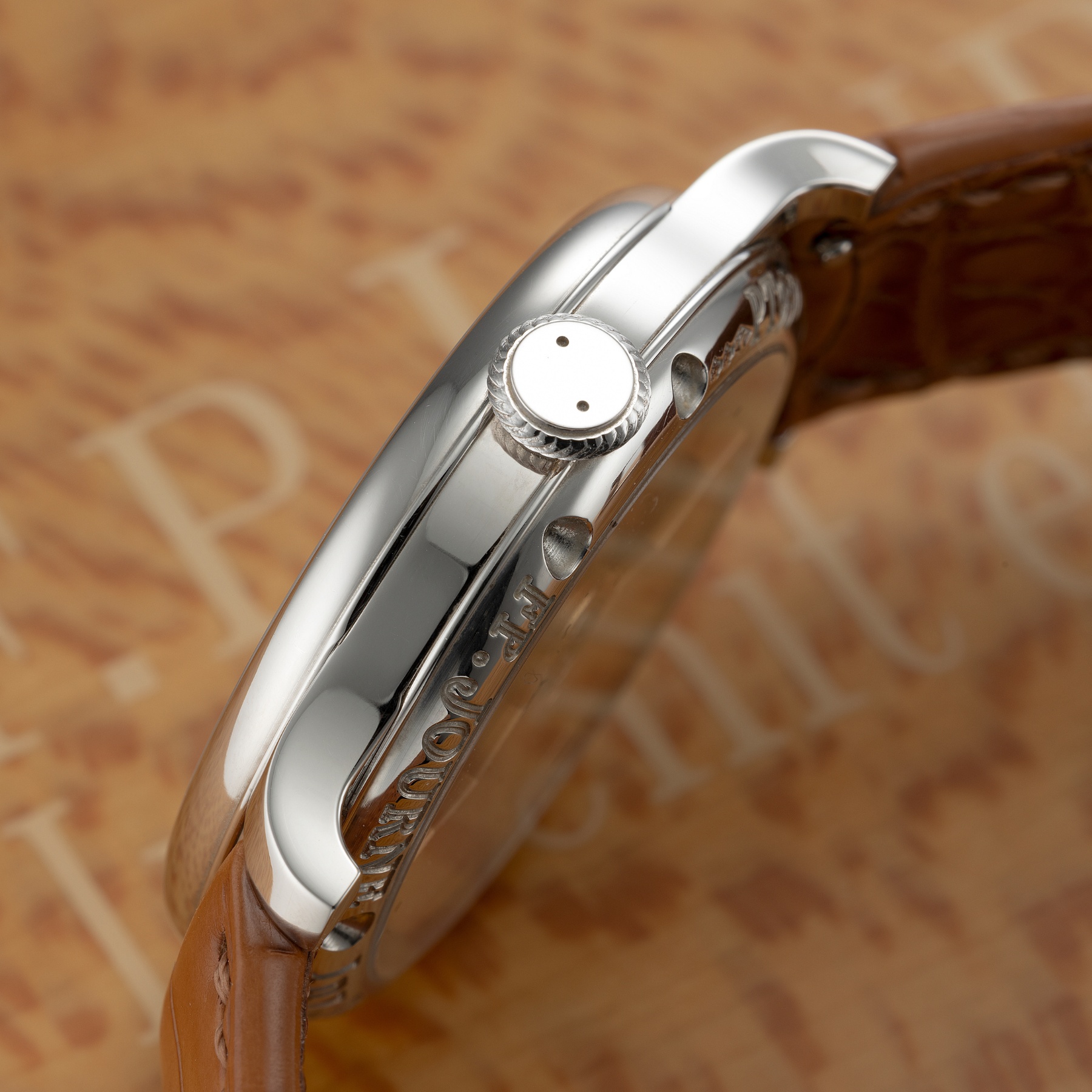
A 2007 F.P. Journe Octa Calendrier in platinum, available at Perpetual Hong Kong.
This 2007 Ref. Q stands at the point where that original vision had fully matured. It retains the classical 38mm proportions and the elegant asymmetry first imagined on a Parisian tablecloth over a decade earlier, while incorporating the refined 18K rose-gold caliber that marked the next stage in the Octa's evolution.
It represents one of the clearest expressions of the movement that helped transform F.P. Journe, laying the foundations for one of modern watchmaking's most versatile automatic collections.
Please enquire with the Phillips Perpetual team for further information.