Article | A Wandering Line Phillips Paris October Modern Contemporary Art Design
A Wandering Line
Six artists, six relationships with Paris that only a flâneur with nowhere to be can embrace to their fullest.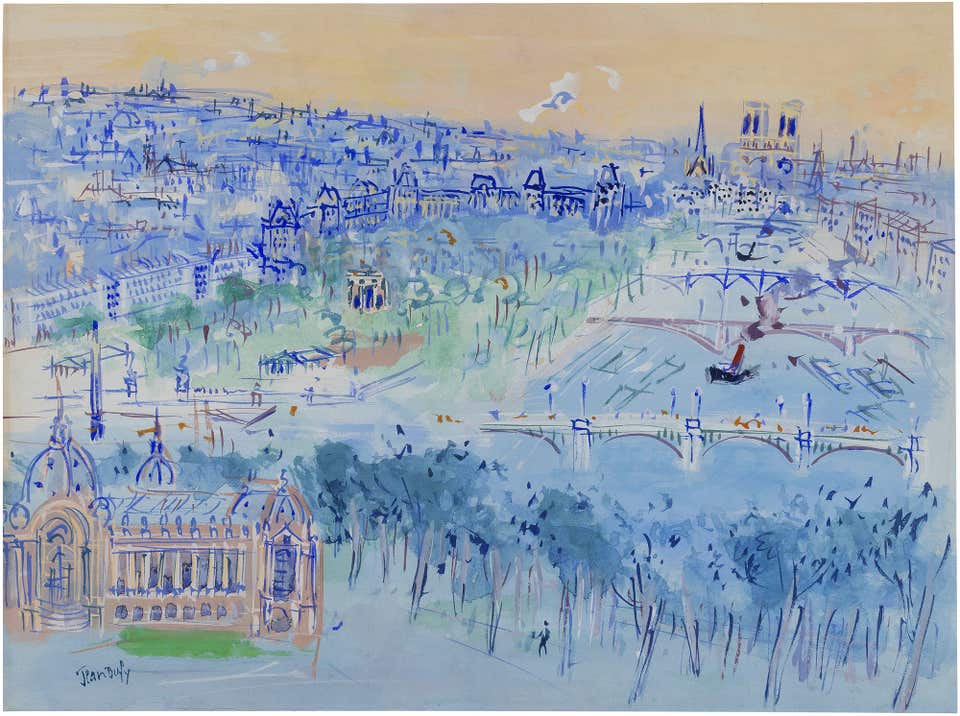
JEAN DUFY, La Seine et le Petit Palais, circa 1947-1950. Vente Art Moderne & Contemporain et Design Paris.
Let’s recall Baudelaire’s flâneur, a “botanist of the sidewalk,” a stroller who wanders the streets without an objective or destination. This action, in turn, lets the city bloom before us without our intervention; we decode a world of art, architecture, urban life, fleeting moments, and life-altering discoveries from the perspective of the passionate observer. And nowhere rewards this ambulating eye quite like Paris, which has always opened its spiraling topography to those searching for inspiration, and like any keen onlooker, we have just as much to gain as the artists who animate the city’s energy. Join us for a walk in six movements as we find traces of several artists featured in our Vente Art Moderne & Contemporain et Design sale in the locales that continue to inspire us today.
Sanyu
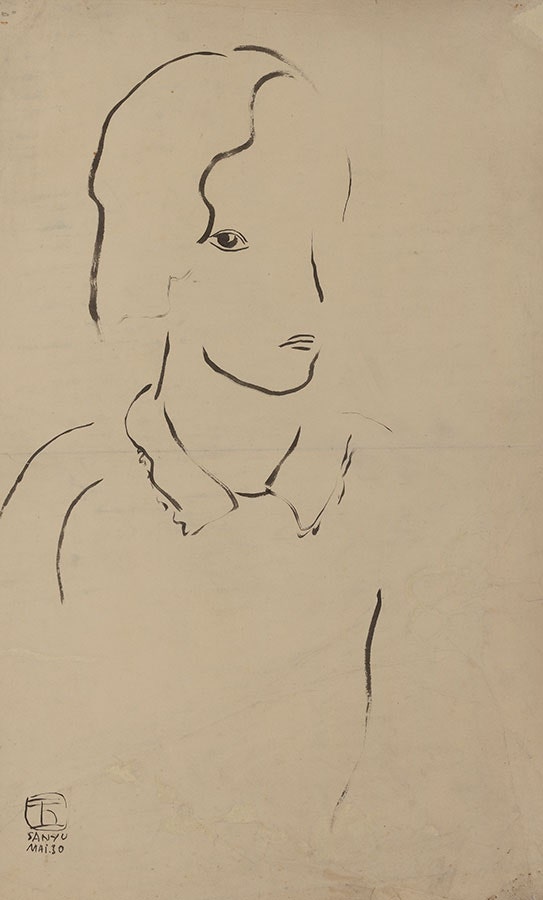
SANYU, Dorothea Braby, 1930. Vente Art Moderne & Contemporain et Design Paris.
We begin in Montparnasse, at a corner of its eponymous boulevard, where Sanyu is busy at work among the countless academies, studios, and crowded cafés that hum with models and artists. After his arrival in Paris in the early 1920s, Sanyu developed his practice here, with his economic linework and modernist simplicity feeling rather at home within this context. We can easily imagine Dorothea Braby as a quick encounter like many others on any given day in any given drawing class or tableside. We see an exchange: Sanyu’s trained brush bringing together Chinese tradition and Parisian allure in each contour. Ink and paper exist everywhere, but this work can only be created here.
Joan Miró
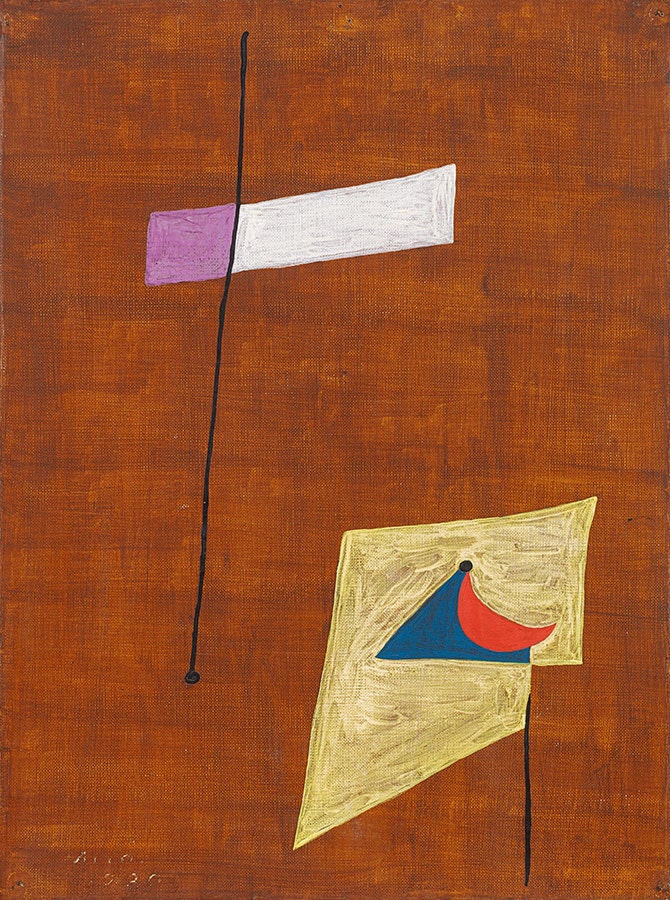
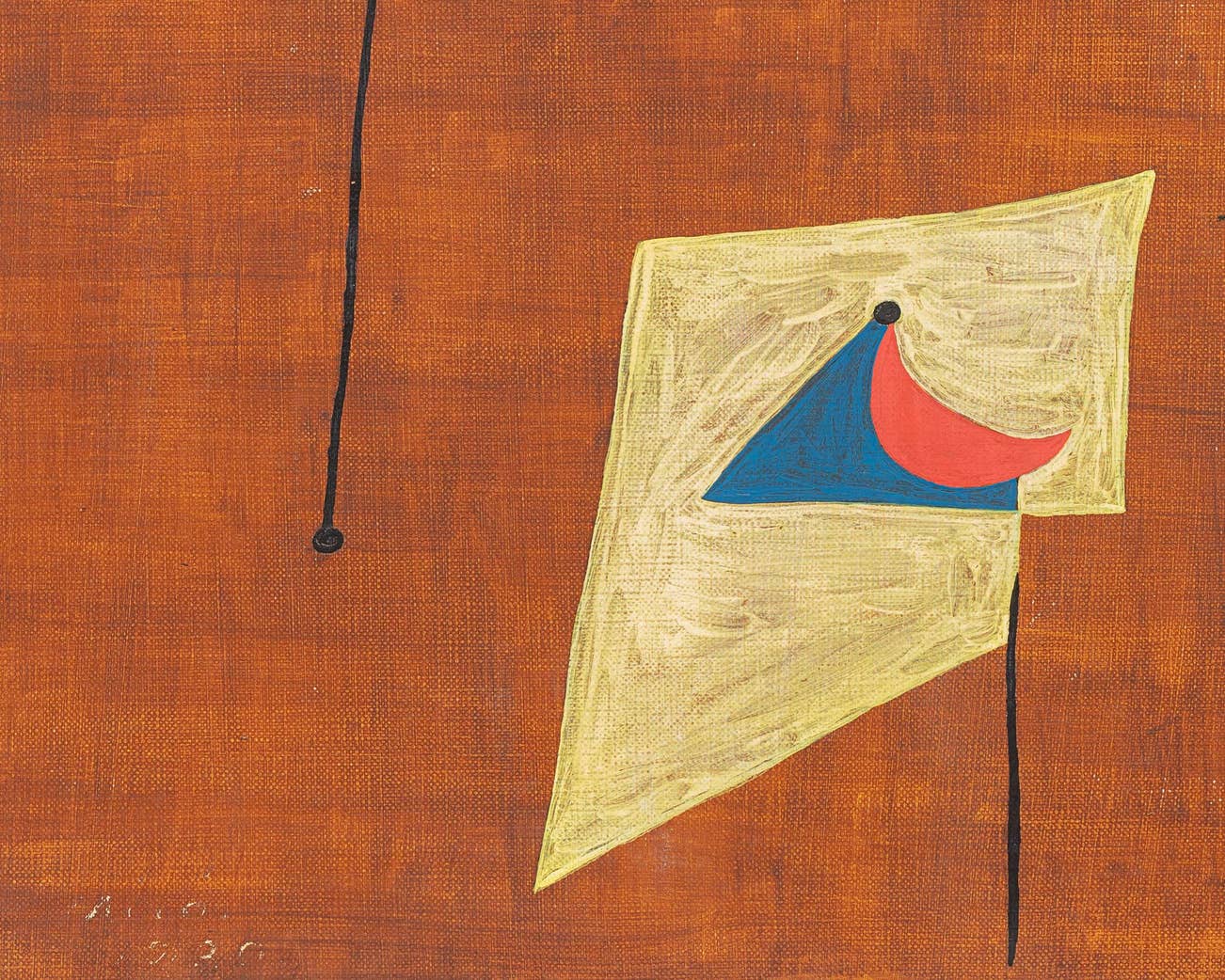
JOAN MIRÓ, Peinture, 1930. Vente Art Moderne & Contemporain et Design Paris.
We’re not cheating by taking the métro! If anything, the walk through Montmartre makes the ride necessary. As the streets narrow and our angles become vertical, we’re brought back to Joan Miró’s early experiences here. His spartan studio on rue Blomet sat firmly within the Surrealist quarter, and by the end of the 1920s, he traded one set of exquisite corpses for another, settling on the quiet rue Tourlaque, near the cemetery. We move up and down the hillside stairways and run our hands along the plastered walls. This is a place where surfaces invite scrawls. These marks are evident in Peinture, in its unevenness and collage-like layering, and its placard quality making it feel perfectly at home on the butte.
Jean Dufy
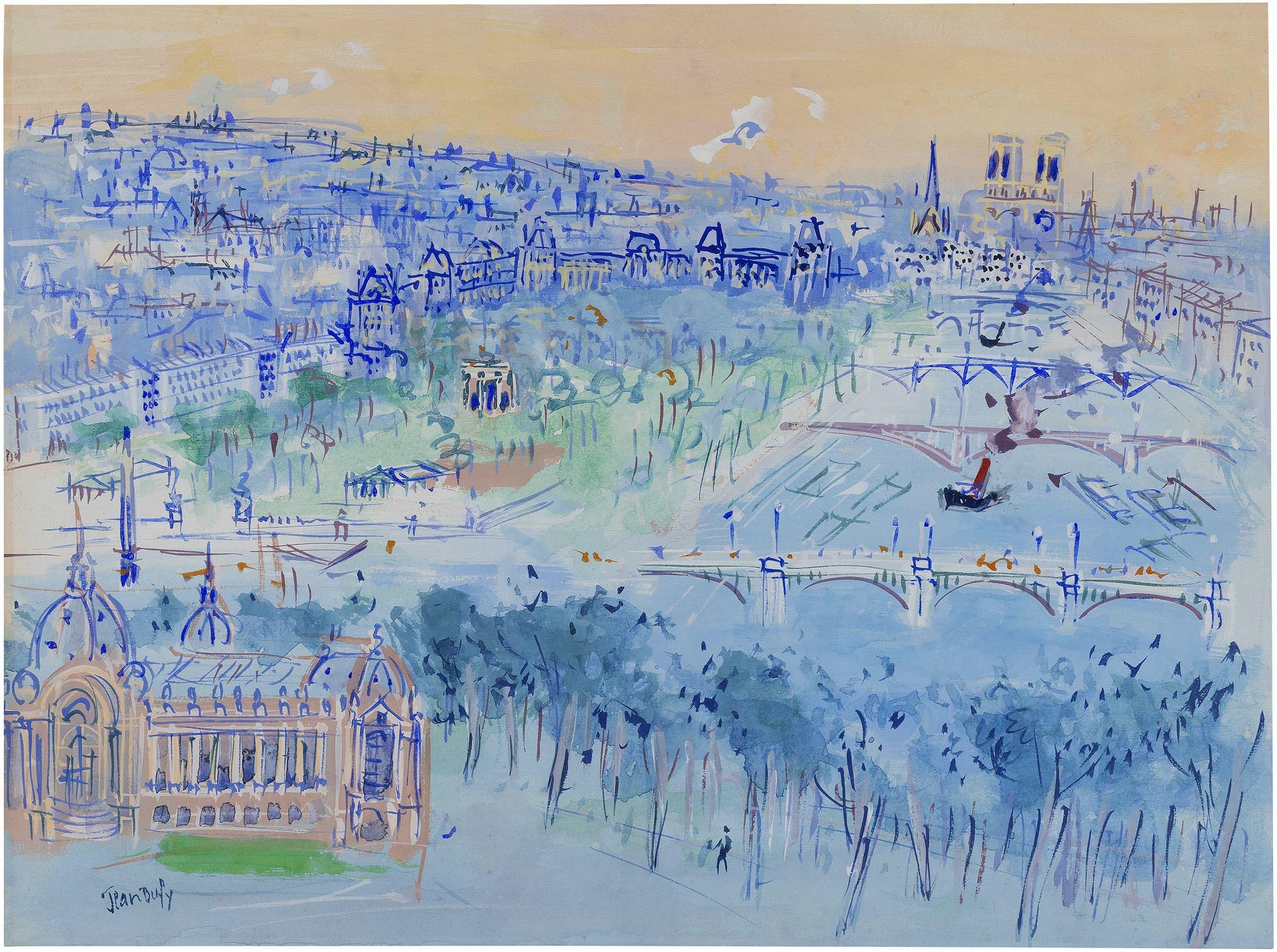
JEAN DUFY, La Seine et le Petit Palais, circa 1947-1950. Vente Art Moderne & Contemporain et Design Paris.
Let’s add a funicular to our list of ambulatory accessories and make our way downhill and back toward the Seine. Soon we’re sharing a view with Jean Dufy, whose The Seine and Petit Palais inspires a visual aspect of memory. We are standing inside a rather refreshing scene, in fact. The city’s normally gray vantages are washed in a lively blue, and the ornate Pont Alexandre III is barely detailed, rather it is sketched as if rearguard to a bridge parade toward the city’s grand monuments. This is Paris in a flash, but it is precisely its eternal traits that give us this moment to be capture it briefly, as Dufy does masterfully.
Jean-Paul Riopelle
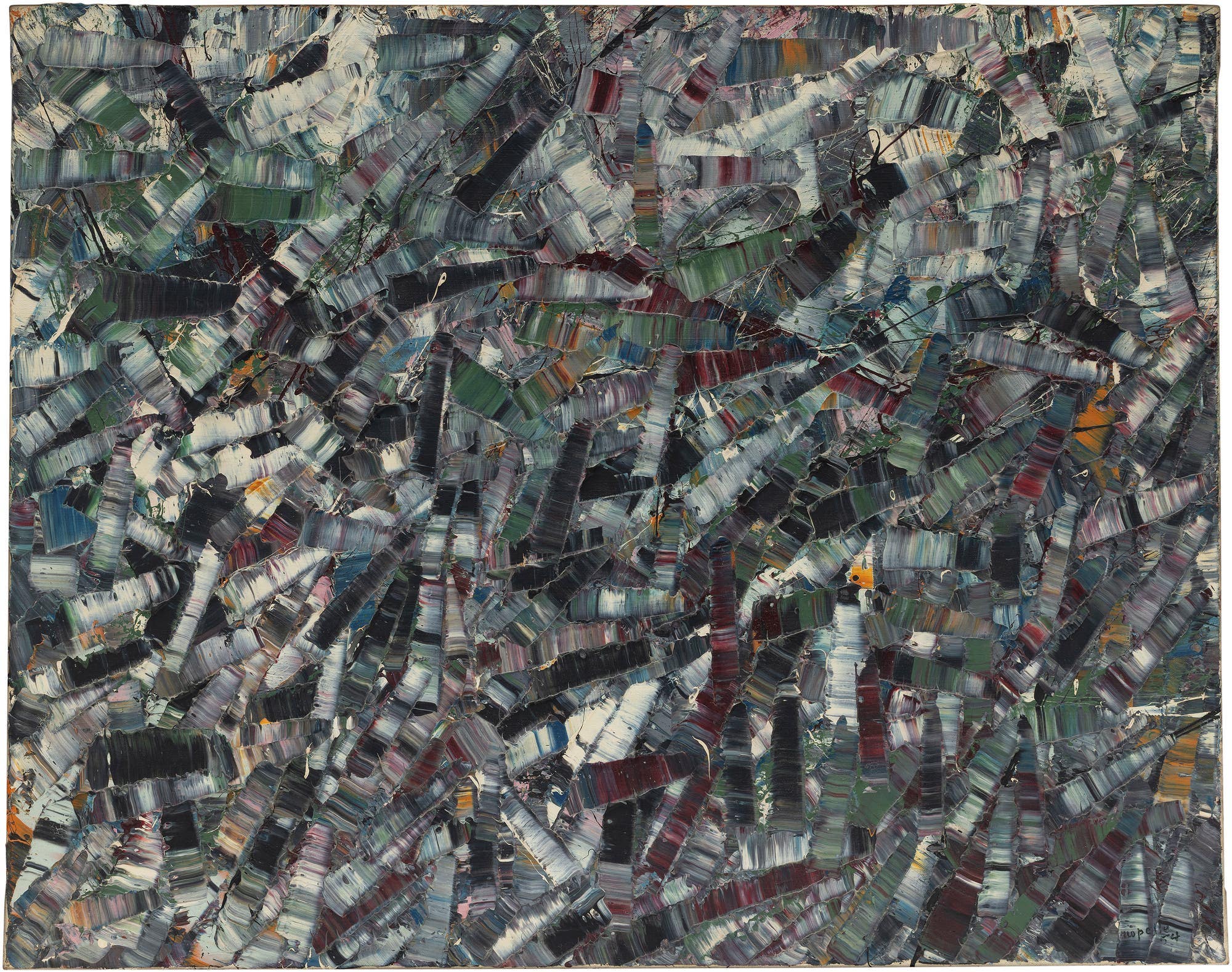
JEAN-PAUL RIOPELLE, Untitled, 1954. Vente Art Moderne & Contemporain et Design Paris.
Across the river to the Left Bank, we walk along the rue des Beaux-Arts and rue de Seine in search of Jean-Paul Riopelle. His Saint-Germain-des-Prés was shared by a litany of artists, writers, poets, philosophers, and designers — amalgamated as the avant-garde of post war Paris — and Riopelle quickly settled into the environment led by another Jean-Paul. We’re practically fighting for existential space here: everywhere we look an essay is challenging our ideas, a lecture is on everyone’s lips, a gallery is unveiling some shock of the new, and this grand mosaic of ideas finds brilliant expression in Avant le Printemps. Its dense layers jostle without aim, creating paths here, dead ends there, staking claims that end where another begins, and together make up a spontaneous architecture known only to its practitioners. Not a problem to be solved, we remember from a distant book, but a reality to be experienced.
Louise Bourgeois
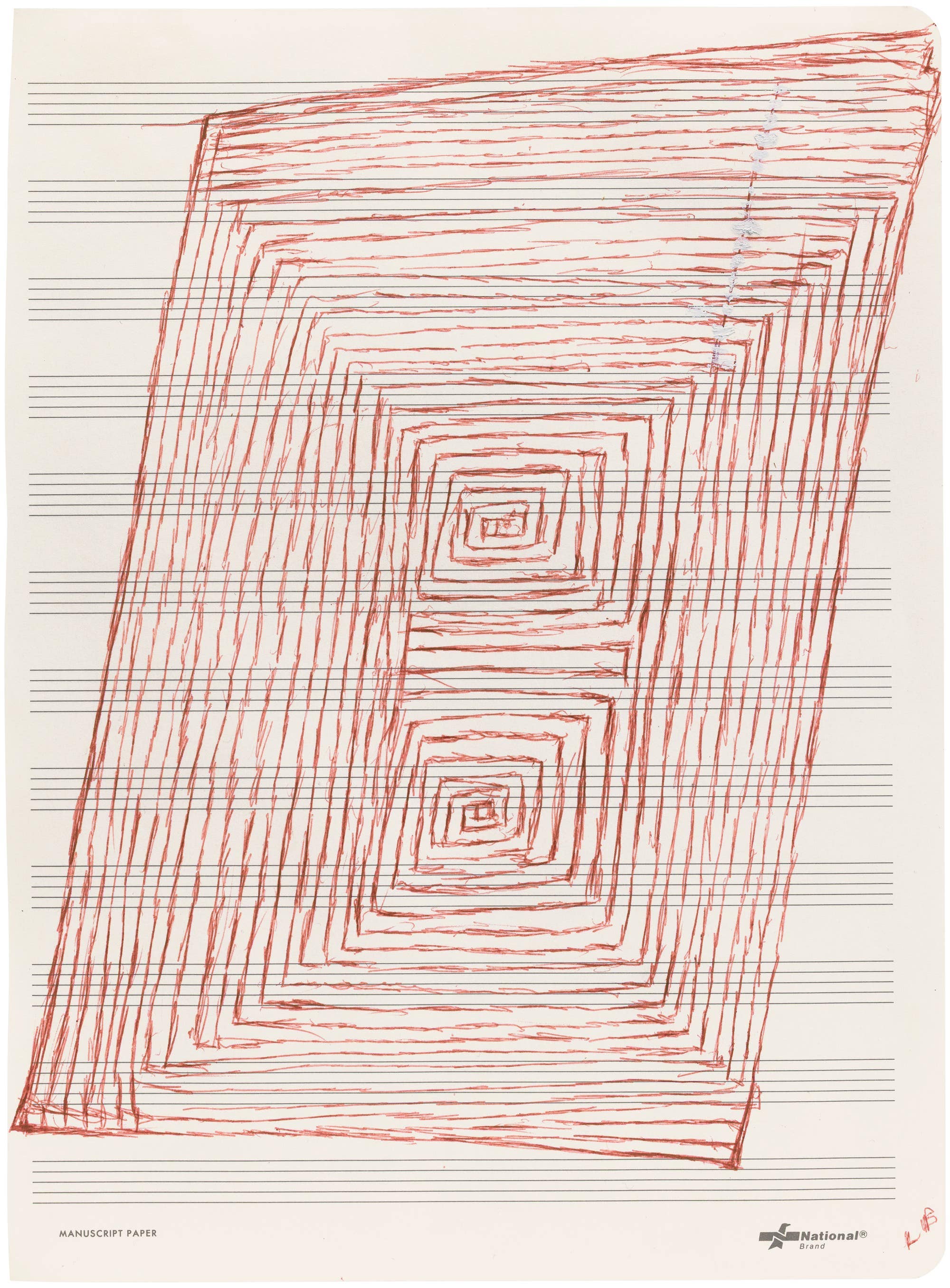
LOUISE BOURGEOIS, Sans Titre, 1998. Vente Art Moderne & Contemporain et Design Paris.
Our ontological dizziness abated, we stay in the neighborhood with Louise Bourgeois, only to realize that we’re now spiralling along the Seine. A New Yorker on the dotted line, Bourgeois was born here and gives us a new way of framing things from the perspective of a native who took Paris abroad. The city is impossible as a place, but all too useful as a memory. Her childhood in a tapestry workshop carries the thread, winds and unwinds, shapes and restores, each turn in this spiral from feeling to creation. Even in her eighties, many decades removed from Paris, Bourgeois continued to illuminate how lines spool outward in all directions and create associations with every turn, and yet, in their fragile constructions, are fundamentally reaching for connections, even in silence.
Georges Jouve
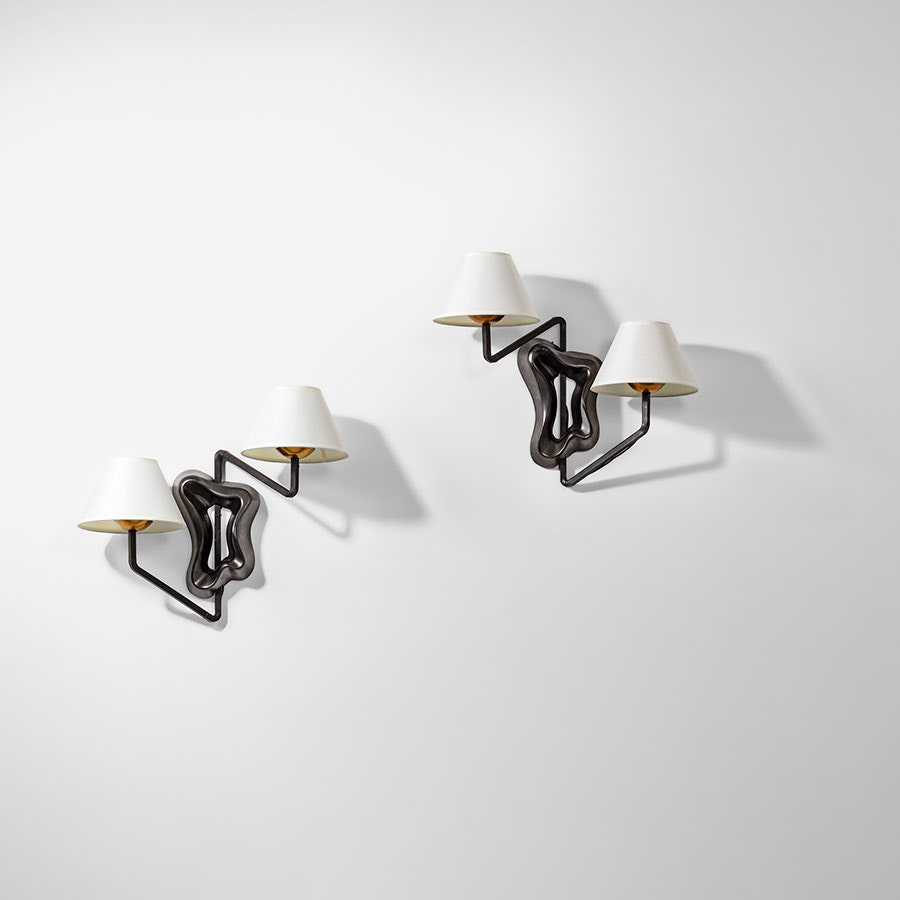
GEORGES JOUVE, Paire d'appliques, circa 1955. Vente Art Moderne & Contemporain et Design Paris.
Finally, we return to Boulevard du Montparnasse, where it all began. Looking through shop windows at lamps and ceramics, our eye for postwar design will see Georges Jouve's influence in the softened form of a doorway, or in the curvature of a wrought-iron balcony. In the 1950s he was championed by Steph Simon, whose gallery on this very street showed his work alongside furniture by Jean Prouvé and Charlotte Perriand. It’s fascinating to see how much these interiors and exteriors operate in harmony, and Jouve was the perfect maker for a modern city whose history and future are always being mediated by any moment we walk into, through, or past.