Article | A Collectors Guide To Warhol Editions With Paul Marechel
A Collector's Guide: Why Collect Warhol Editions at Phillips?
Cary Leibowitz's conversation with the noted Warhol scholar Paul Maréchal offers everything collectors need to know.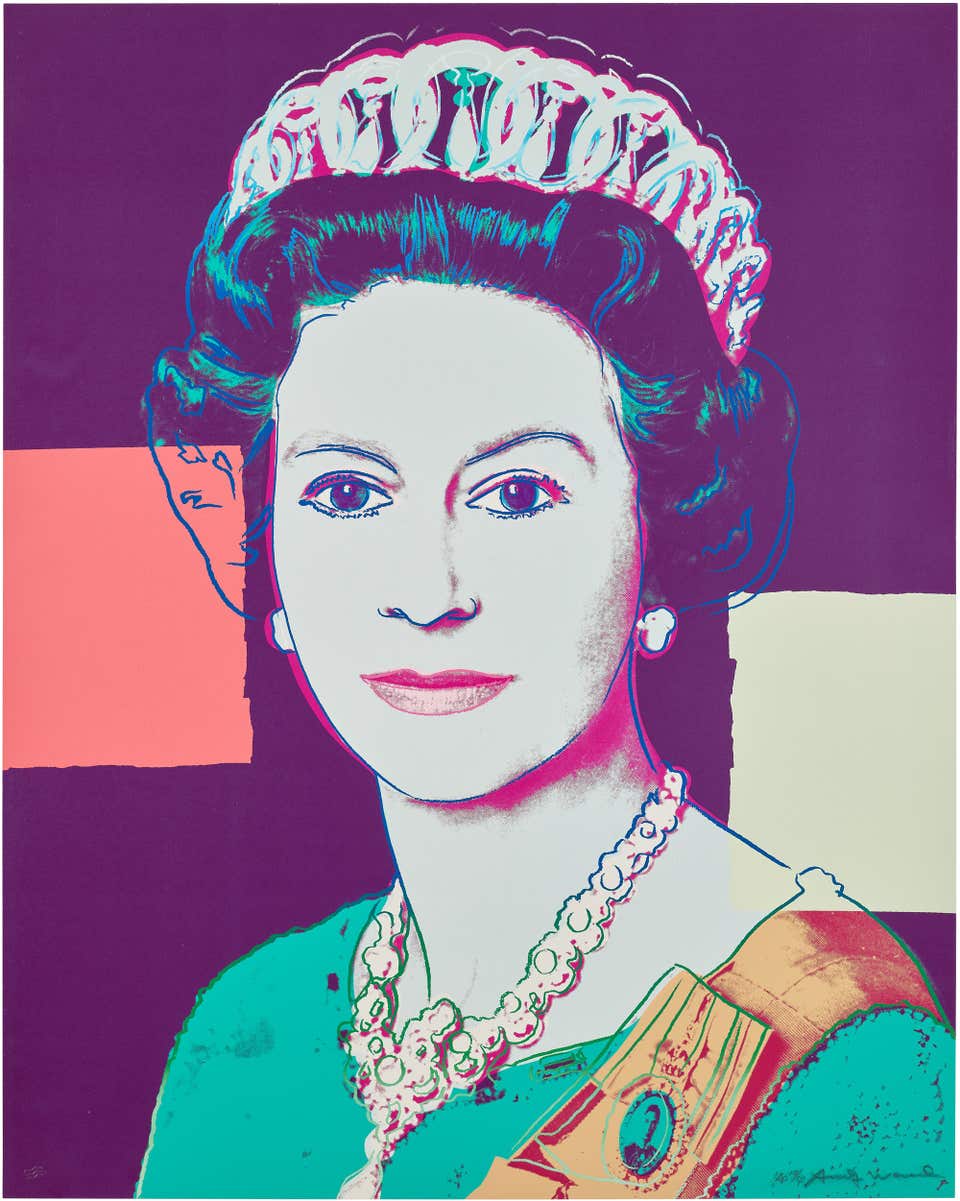
ANDY WARHOL, Queen Elizabeth II of the United Kingdom, from Reigning Queens, 1985. Editions & Works on Paper, New York.
Standing at the forefront of the Editions category, Phillips achieved the strongest performance globally for Andy Warhol works in the first half of 2026, with Warhol accounting for an astonishing 16% of the global Modern & Contemporary Editions market.
In the interview below, Cary Leibowitz — Deputy Chairman and Worldwide Co-Head of Editions — sits down with leading Warhol scholar Paul Maréchal to discuss the artist’s market legacy, printmaking techniques, and lasting cultural impact. The following conversation offers an inside look at how Warhol transformed printmaking into a primary artistic language and redefined modern art production. Bookmark this discussion as a reference point, and be sure to tune in to upcoming Phillips Editions auctions, where we continue to set record after record.
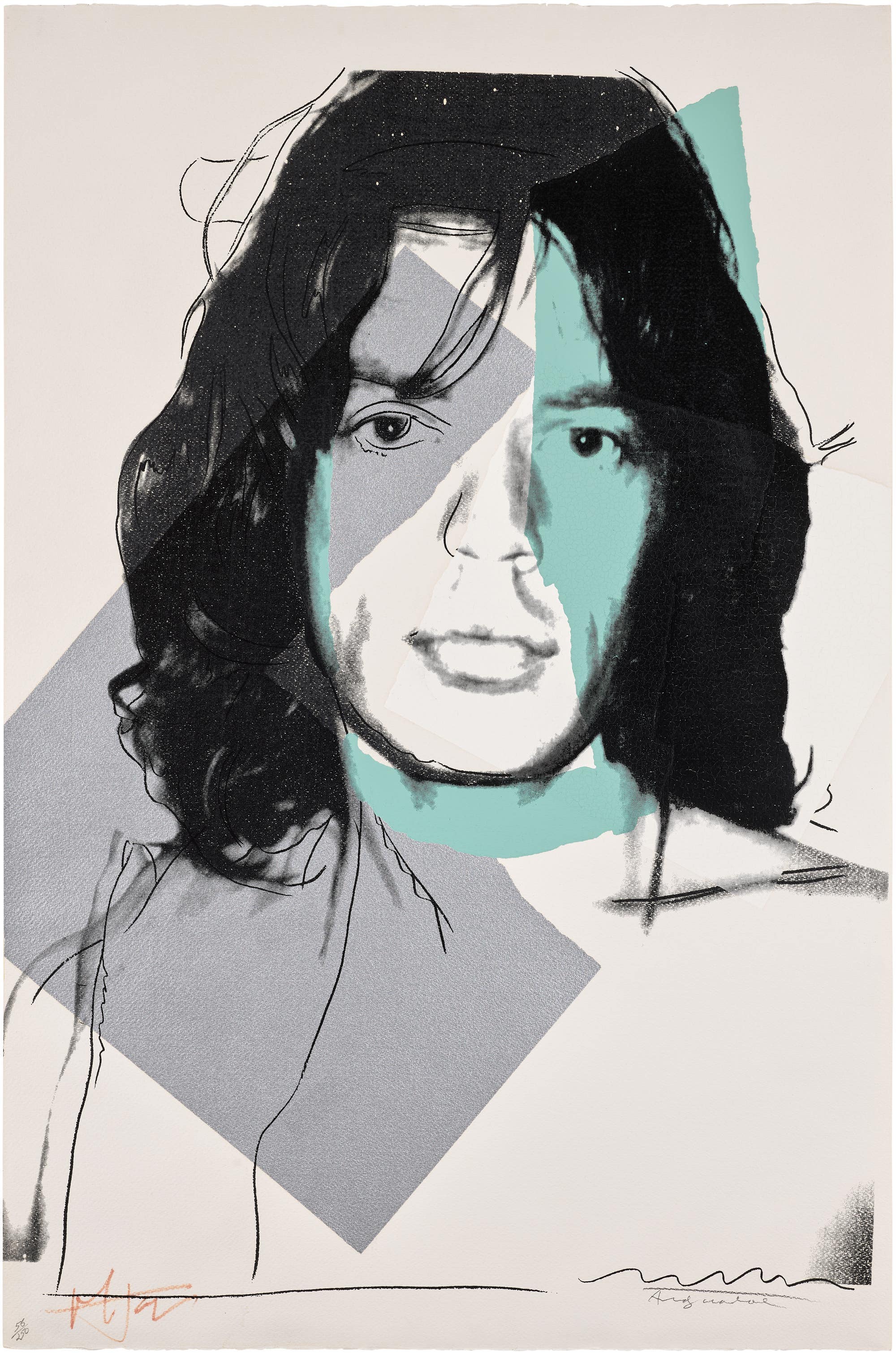
ANDY WARHOL, Mick Jagger, 1975. Editions & Works on Paper, New York.
CARY LEIBOWITZ: Paul, can you begin by telling us how your interest in Andy Warhol first developed and what ultimately led you to begin collecting and documenting his work?
PAUL MARÉCHAL: My journey into the world of Andy Warhol actually began with a single, unexpected discovery: a Paul Anka record cover titled The Painter. Looking at it, I immediately connected its innovative design to Warhol’s two most famous and iconic album covers — Sticky Fingers for The Rolling Stones and the debut album for The Velvet Underground & Nico. It was a true lightbulb moment. I realized that if Warhol was able to produce such groundbreaking, legendary album art in the 1960s and 70s, he couldn't have just started from scratch; he must have been deeply experimenting with the medium much earlier.
Driven by curiosity, I contacted the Andy Warhol Museum in Pittsburgh to find out how many covers they had officially identified at the time. Their answer was 21. That gap in the historical record sparked a decade-long obsession to investigate, collect, and document this overlooked side of his genius. By the time I published the second edition of my book on the subject, that initial list of 21 covers had expanded to 65 uniquely identified works. What started as an interest in a single record cover ultimately transformed into a lifelong passion for documenting how Warhol seamlessly blurred the lines between commercial design and fine art.
CL: Do you remember the first Warhol work you acquired? What drew you to that particular piece?
PM: I remember it vividly. It was that very same Paul Anka record cover that had sparked my initial curiosity. What drew me to it wasn't just its aesthetic appeal, but the profound realization that it represented a completely unmapped territory in Warhol's career. It felt like holding a missing piece of art history. Acquiring that first record cover set off a relentless, global hunt. It transformed my approach from casual buying into a mission to build what has now become the world's most complete collection of record covers designed by Andy Warhol. Every subsequent acquisition was driven by that same initial thrill: uncovering rare, early commercial items that society had treated as disposable, but which were, in reality, crucial steppingstones in Warhol’s artistic evolution.
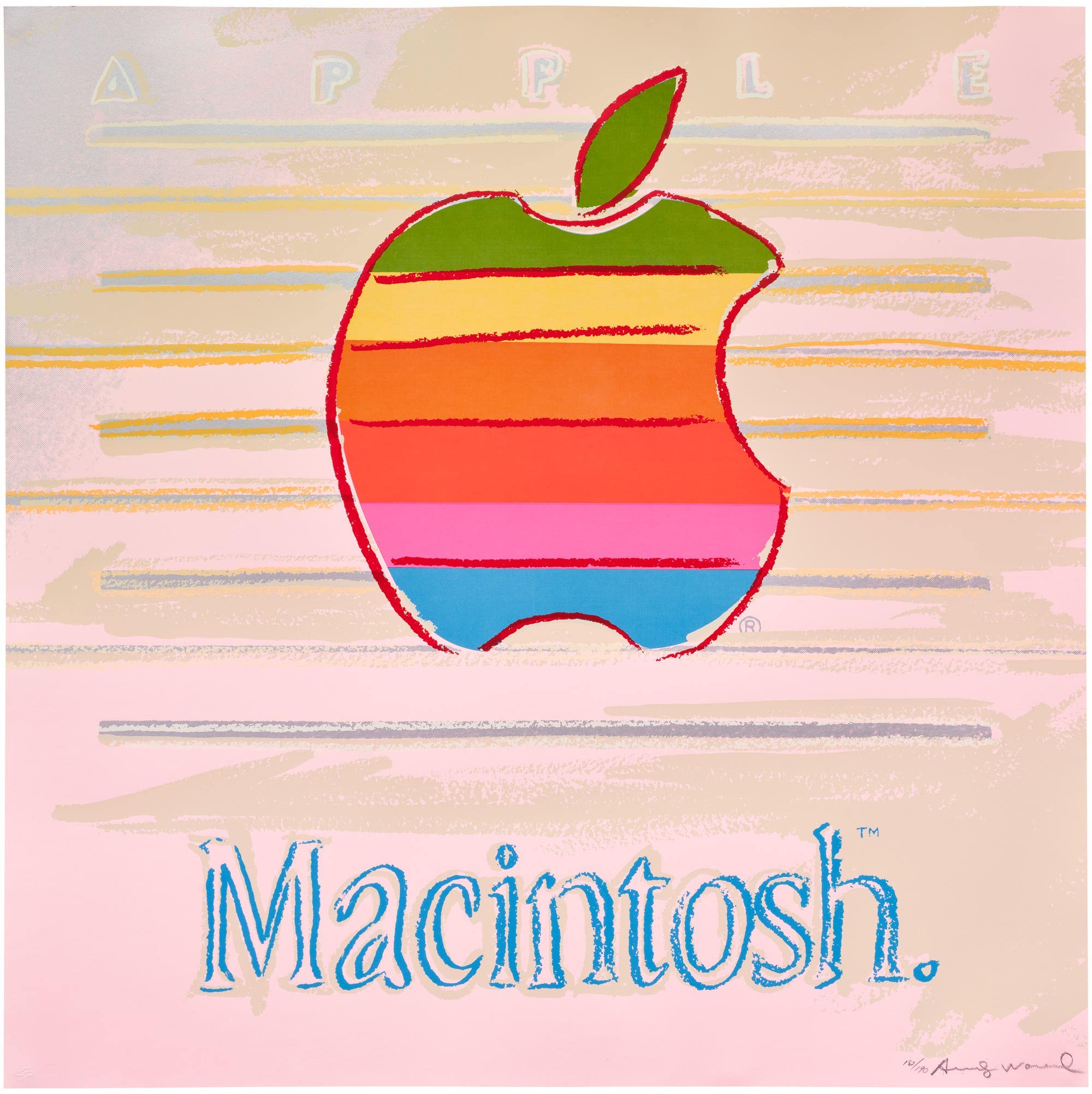
ANDY WARHOL, Apple, from Ads, 1985. Editions & Works on Paper, New York.
CL: You wrote the definitive catalogue raisonné volumes on Warhol's commercial prints, posters, record covers, and textiles. Warhol worked across an extraordinary range of media sources, what makes his work particularly rich territory for collectors?
PM: What makes Warhol’s work an extraordinarily rich territory for collectors is how these mediums, whether a record cover, a textile pattern, or a poster — seamlessly bridge the gap between fine art and so-called commercial design. They perfectly embody Warhol’s core philosophy: that art should not be confined to traditional gallery walls, but should be an active part of everyday life.
For a collector, this cross-media approach offers an incredibly dynamic landscape. When you collect his textiles or commercial prints, you aren't just acquiring secondary ephemera; you are holding the very blueprints of Pop Art. Warhol used these commercial mediums as his personal laboratories to experiment with repetition, color, and scale before bringing those lessons to his famous canvases. This fluidity means that a contemporary art collection gains tremendous depth when a textile or a rare record cover is displayed alongside a traditional print, creating a rich, tactile dialogue that reveals the true scope of Warhol’s genius.
CL: Your latest book examines Warhol’s textiles and fashion. What does this
material reveal about his development as an artist, and why has it remained relatively overlooked?
PM: It has remained relatively overlooked because, for a long time, the art market and institutions focused almost exclusively on his iconic 1960s silkscreens, leaving his early 1950s work treated as mere commercial ephemera. However, this material reveals something fundamental: Warhol’s 1950s textile work laid the structural groundwork for his entire Pop Art philosophy.
When designing fabric patterns, he experienced a true artistic revelation: by shifting a motif by a mere couple of inches, the composition instantly became dynamic and seamless, blurring the lines of where it began or ended. This early mastery of industrial repetition taught the young artist how a simple pattern could become visually thrilling. Ultimately, serialization became a natural progression; he took the technical lessons of the textile printing press and pushed them further into the realm of fine art.
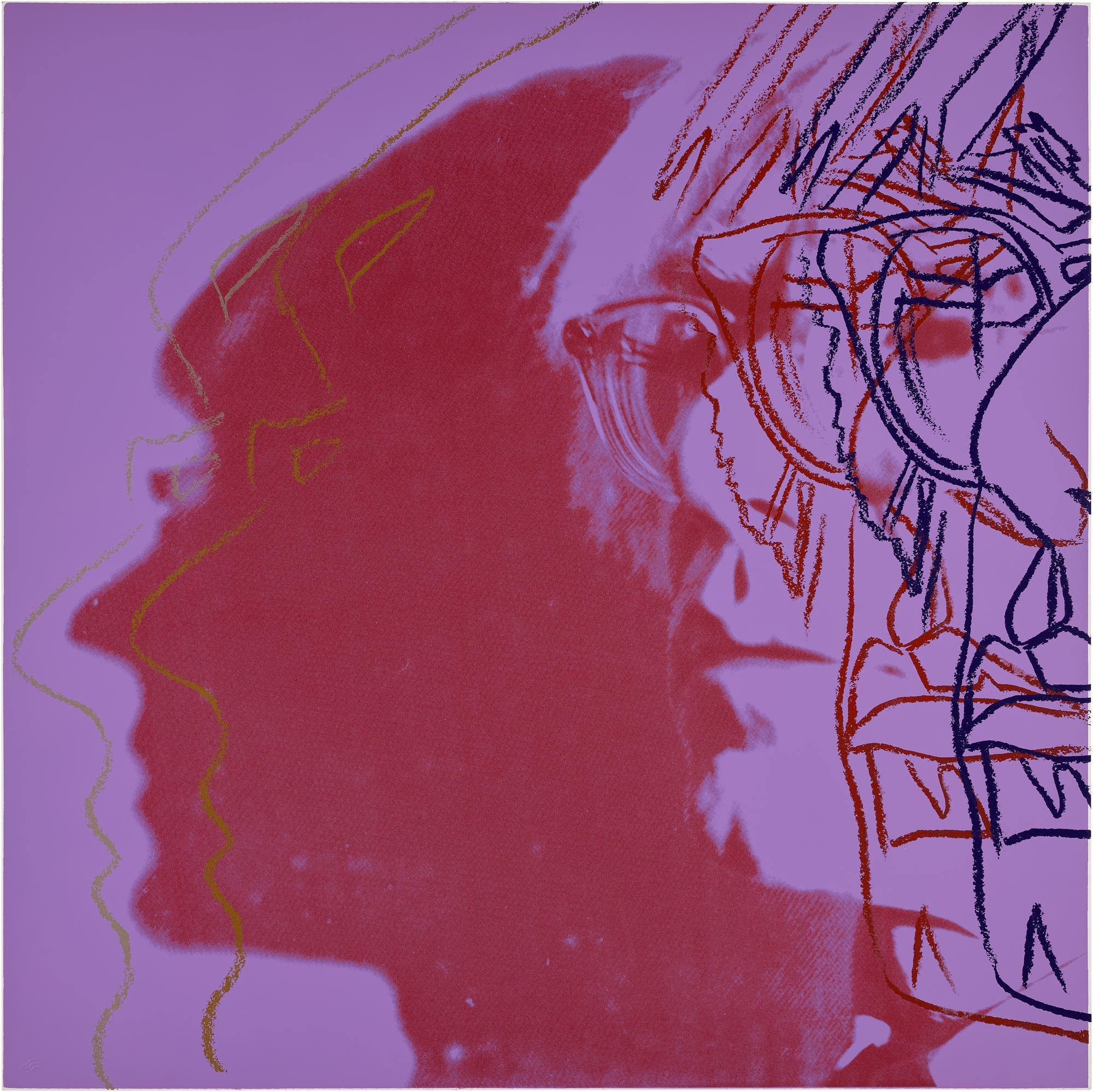
ANDY WARHOL, The Shadow, 1981. Editions & Works on Paper, New York.
CL: Has researching these less familiar aspects of Warhol’s career changed the way you view his better-known paintings and prints?
PM: Absolutely. Researching these lesser-known aspects completely redefines how we look at his famous 1960s paintings and prints. It reveals that in the 1960s, Warhol didn't just change his style; he shifted from a designer working for industries to becoming an industry himself, seizing complete control over his means of production. He no longer wanted to depend on traditional publishers or textile manufacturers. Instead, he weaponized the screen-printing process to multiply his artwork at an unprecedented scale, a drive for total autonomy that extended to founding Interview magazine and purchasing a 16mm film camera.
Yet, looking at his famous fine art through the lens of his early career shows that he never truly abandoned his love for textiles. Instead of designing patterns for external factories, he integrated fabric directly into his new independent studio practice. He began making his very first screenprints on T-shirts during the 1960s — a medium and practice he would return to even more extensively during the 1980s. He also printed on cellulose paper dresses, taking ready-made garments and applying his own imagery.
Seeing his well-known prints today, I no longer just see Pop iconography; I see a brilliant full-circle evolution where the artist was no longer just a designer for the industry, but the sole director of his own tactile and mass-produced creations.
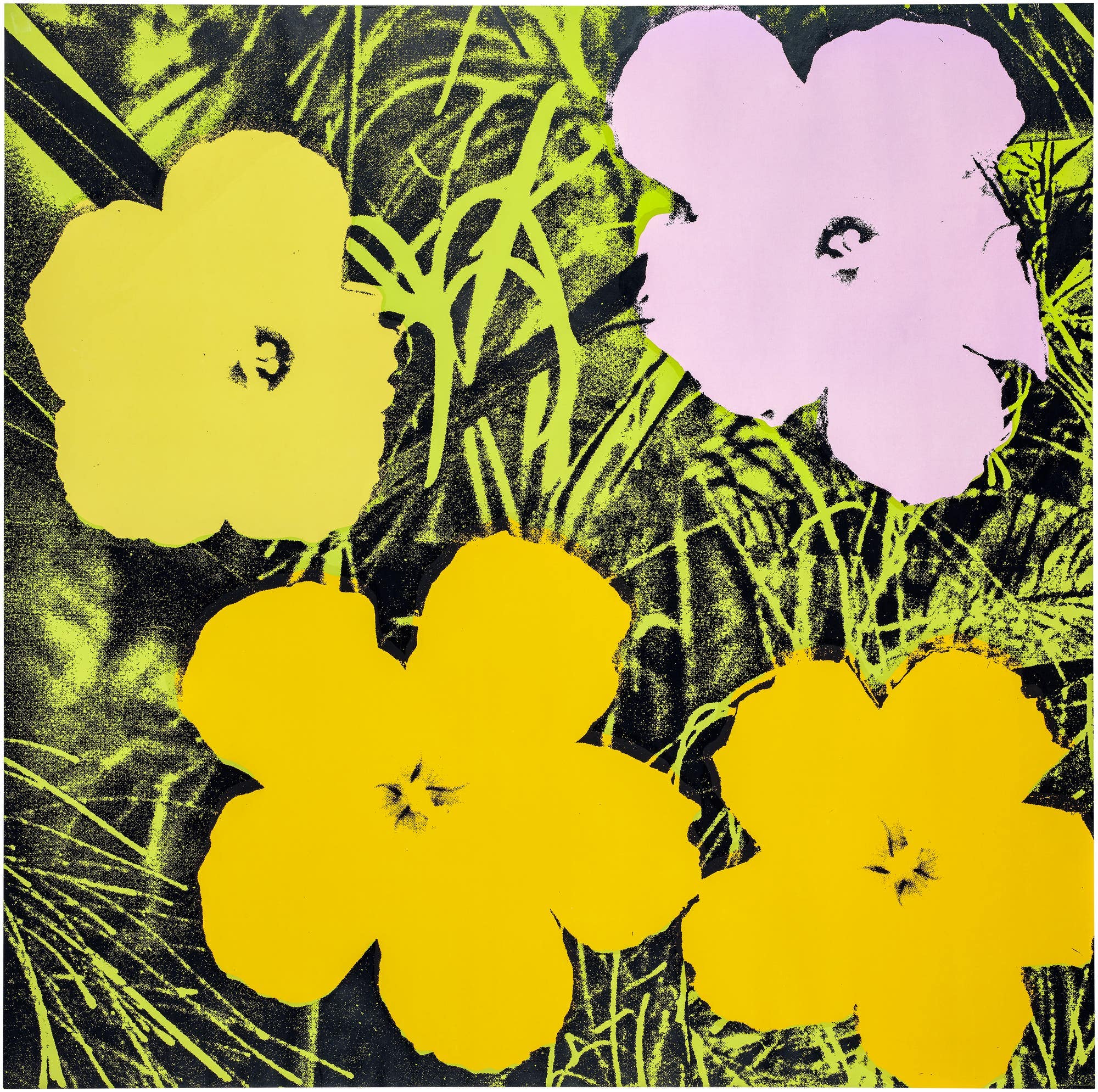
ANDY WARHOL, Flowers, 1970. Editions & Works on Paper, New York.
CL: What makes Andy Warhol’s work such a core pillar of the art market and continues to resonate so strongly with collectors and audiences today?
PM: Andy Warhol remains a core pillar of the art market because he did not just reflect culture — he predicted it. Decades before the rise of social media, smartphones, and our current obsession with branding and celebrity culture, Warhol understood that the modern human experience would be defined by images, repetition, and mass consumption. When audiences and collectors look at a Warhol today, they are not looking at a nostalgic relic of the 20th century; they are looking at a mirror of our current reality.
From a market perspective, his resonance lies in his unparalleled versatility. Warhol created a universal visual language that is instantly recognizable across the globe, yet his body of work offers endless layers for discovery. A collector can enter the market through his blue-chip 1960s icons, and then expand into the fascinating, tactile, and scarcer territories of his textiles, unique polaroids, or early commercial graphics. This structural depth ensures that his market never stagnates. Ultimately, Warhol continues to captivate because his art bridges the elite and the everyday, making him an enduring, stable, and vital force in both art history and the global market.
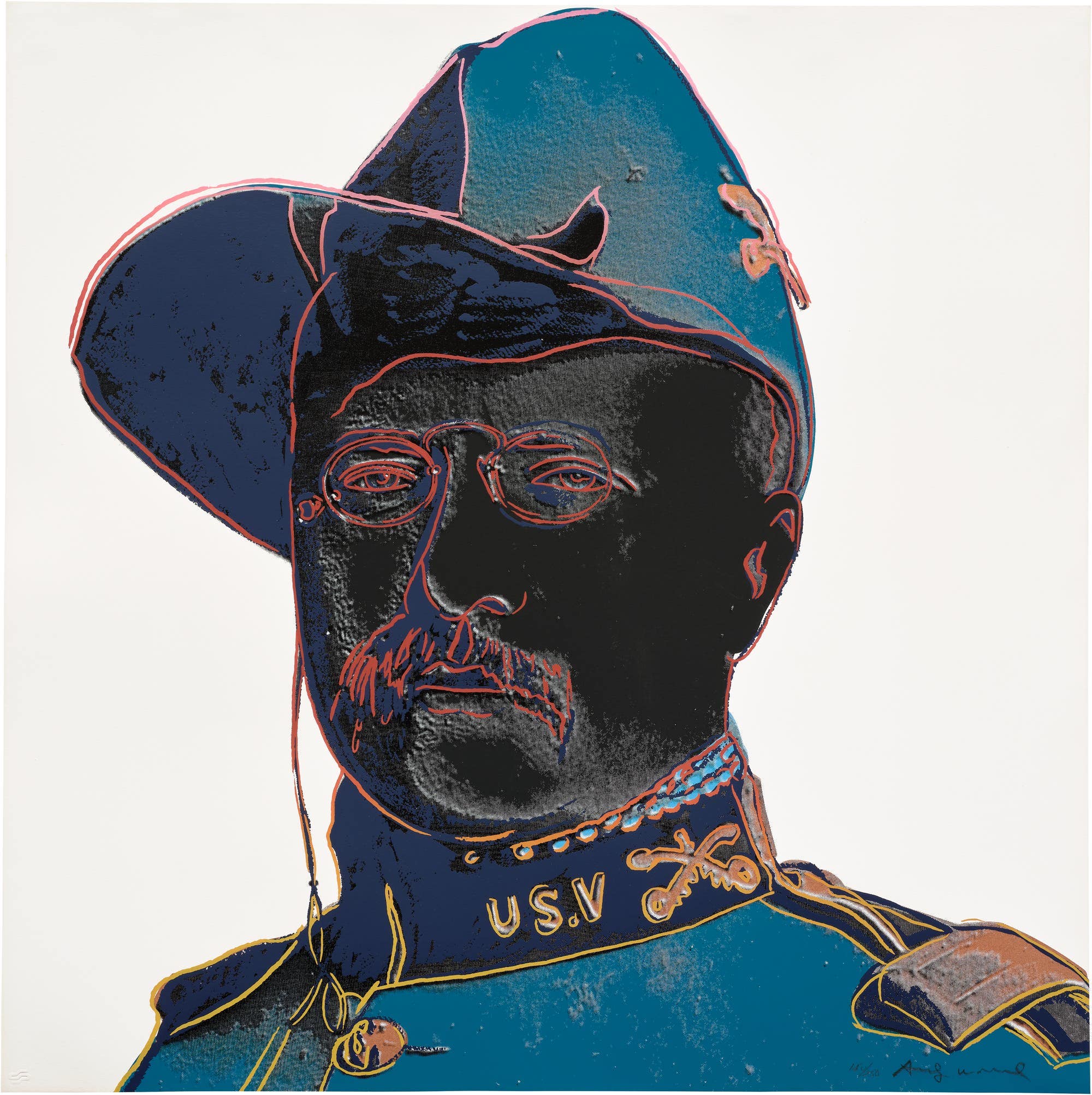
ANDY WARHOL, Teddy Roosevelt, from Cowboys and Indians, 1986. Editions & Works on Paper, New York.
CL: After so many years of collecting and studying Warhol, is there one work that remains especially meaningful to you — or one you would still love to find?
PM: Asking a historian or a collector to pick just one favorite work is a bit like asking parents to choose their favorite child — each piece represents a unique chapter of a larger story, and it is impossible to separate them.
For me, the true meaning doesn't reside in one single, isolated object, but rather in the thrilling journey of the hunt itself. What I am always looking to 'find' next is not a specific physical masterpiece, but rather the hidden connections between pieces that the world has forgotten or overlooked.
The greatest reward after all these years of research is that moment of revelation when a seemingly anonymous 1950s textile pattern suddenly unlocks the visual logic of a world-famous 1960s canvas. The 'holy grail' for any passionate collector isn't a final destination or a single acquisition; it is the ongoing excitement of piecing together the complete, interconnected puzzle of Warhol’s visionary mind.
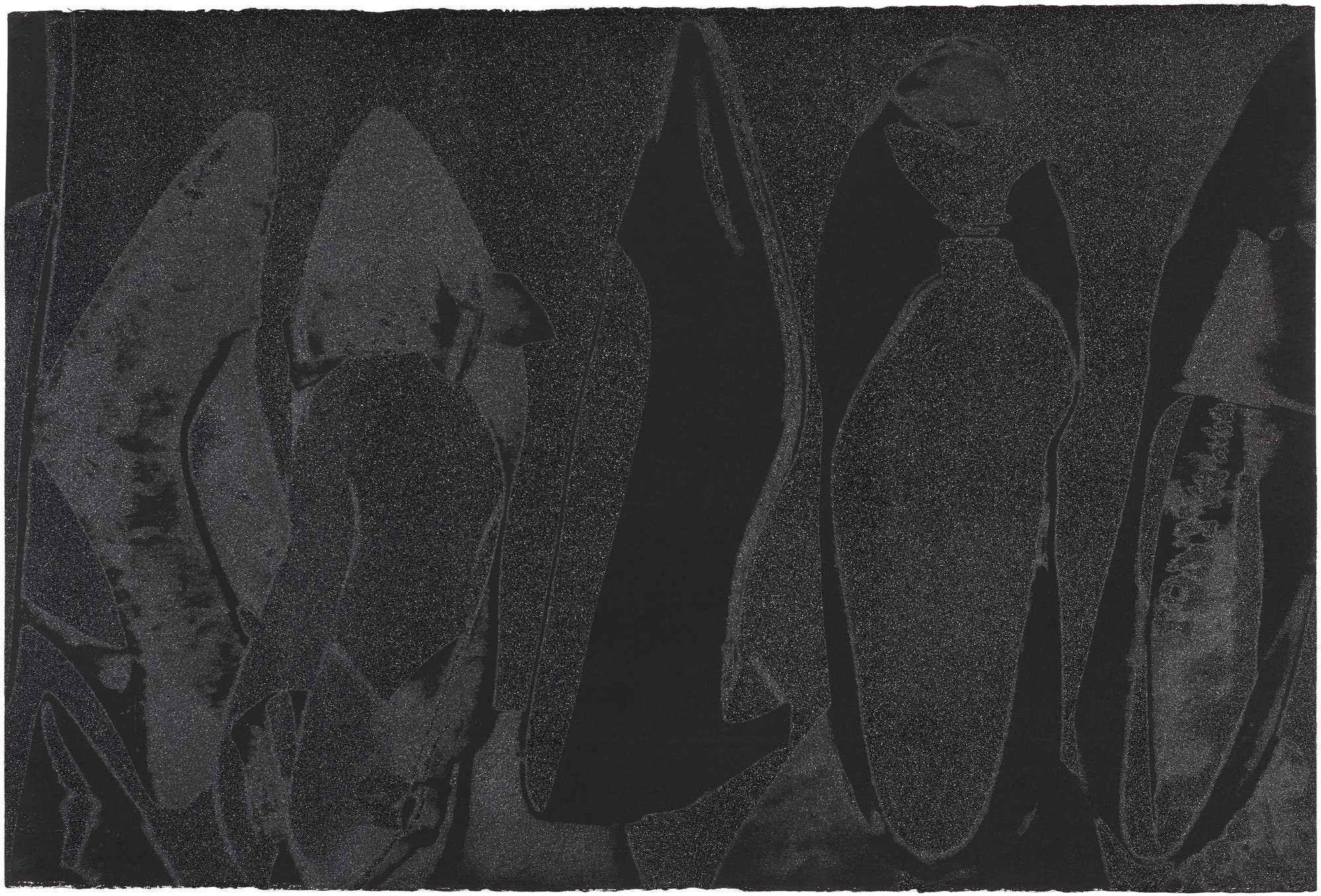
ANDY WARHOL, Diamond Dust Shoes (Black), 1980. Editions & Works on Paper, New York.
CL: Can you give us a glimpse into your next project or what areas of Warhol’s career are you eager to explore next?
PM: My next project dives into a subject that I find absolutely fascinating: how Warhol systematically transformed his own image into a global brand. Along with Pablo Picasso and Salvador Dalí, Andy Warhol was undoubtedly one of the three most photographed artists in modern history.
He understood very early on that in the modern world, the artist’s persona could become just as powerful and recognizable as the artwork itself. His endless stream of self-portraits — whether executed in traditional paintings, vibrant silkscreens, instant Polaroids, or his custom, limited-run wallpapers—shouts a clear and powerful message out loud: you have to be seen to be believed.
My upcoming book will explore the precise mechanisms he used to craft this public identity. Beyond the art itself, it will examine how Warhol carefully orchestrated his media presence, meticulously choosing the specific circumstances, environments, and strategic individuals — from underground icons to high-society elites — with whom he allowed himself to be photographed. It is the logical next step in my research, tracing how his early mastery of commercial design eventually culminated in the complete, deliberate branding of his own image.