Article | Penone Toys With The Tactility Of Nature
The Tactility of Nature: Penone's Fingernail and Marble
Italian artist Giuseppe Penone's work draws from his ongoing fascination with nature and absorbs elements of Minimalism, Arte de Povera and Land Art.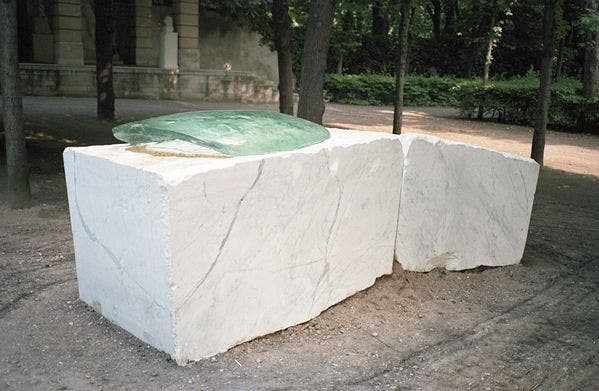
Giuseppe Penone's Fingernail and Marble (Unghia e marmo), 1988 stands as a powerful example of the renowned artist's sculptural practice.
Penone's artistic career, spanning many decades, is united by his ever-evolving interest in the physical tactility of nature. Within the field of art history, Penone's artwork absorbs elements from Minimalism, Arte de Povera and Land Art. His fascination with nature as a means of slow and gradual artistic construction lends his work a calming and meditative quality. As Penone explains, his creations convey "a reflection on the traces we leave on things, random marks or involuntary images like the imprint leaf on a piece of glass or a vase." Nature forever remains the ever-changing background of human existence: Penone channels this powerful and unrelenting strength in order to toy and interact with its elements.
I began with the idea of the fingernail as a tool for making sculpture. — Giuseppe Penone
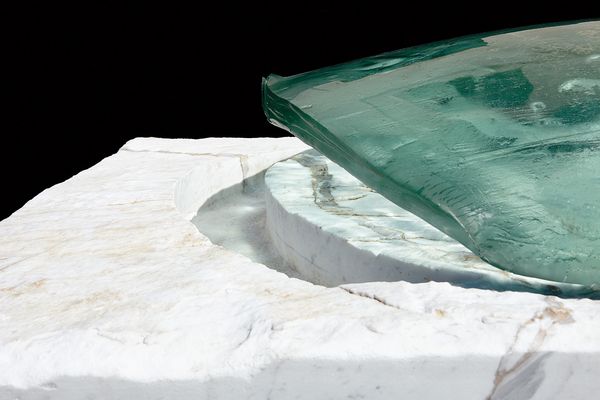
This work, on offer in our upcoming New Now sale in New York, is comprised of two marble slabs which act as the base for a glass fingernail to sit. The artist explains that within Fingernail and Marble (Unghia e marmo), "I began with the idea of the fingernail as a tool for making sculpture, as a utensil of the body…I thought of making the fingernails of glass because glass is used to clean wood, it's sharp. At the same time it's transparent, so the glass and fingernail would have the same identity and fragility."