Article | Five Things To Know Ettore Sottsass Early Enameled Copper Plates
Five Things to Know: Ettore Sottsass’ Early Enameled Copper Plates
Insights into the remarkable enameled copper plates created by the father of the Memphis Group for Il Sestante Gallery in Milan.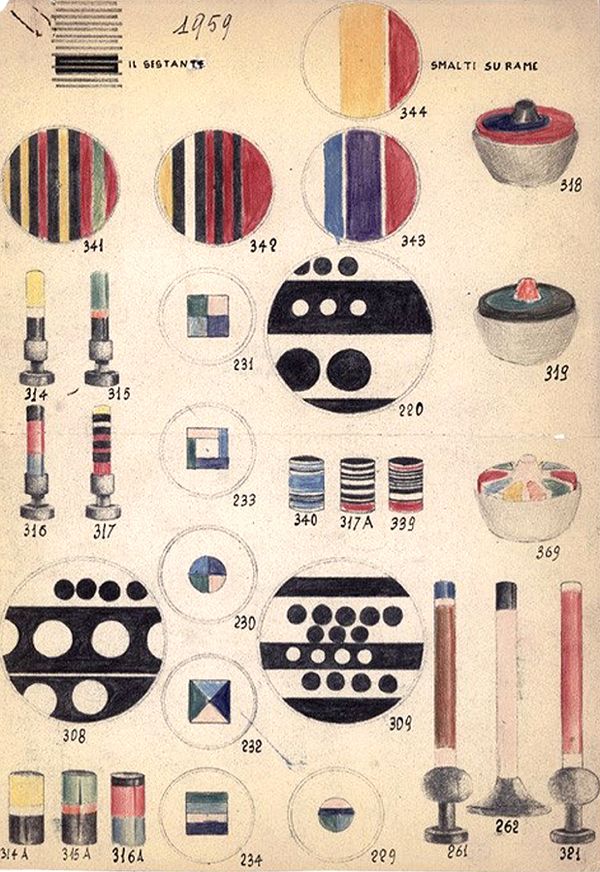
A page from the first catalogue of the Il Sestante gallery, Milan, 1959. Archivio Fulvio Ferrari. Torino / Erede Ettore Sottsass DACS, London 2025.
Italian architect and designer Ettore Sottsass, Jr. (1917–2007) remains a highly influential figure in 20th century design. He produced a substantial and diverse body of work over a career that spanned more than six decades and is renowned as the founder of the famed Memphis Group.
Now, an offering of the designer’s early enameled copper plates comes to auction at Phillips London this April. These plates are a crucial milestone in his career, offering a glimpse into his early exploration of materials, colour, and technique — elements that would later come to define him as one of the most impactful pioneers of 20th century design.
Sottsass’ breakthrough into the design world
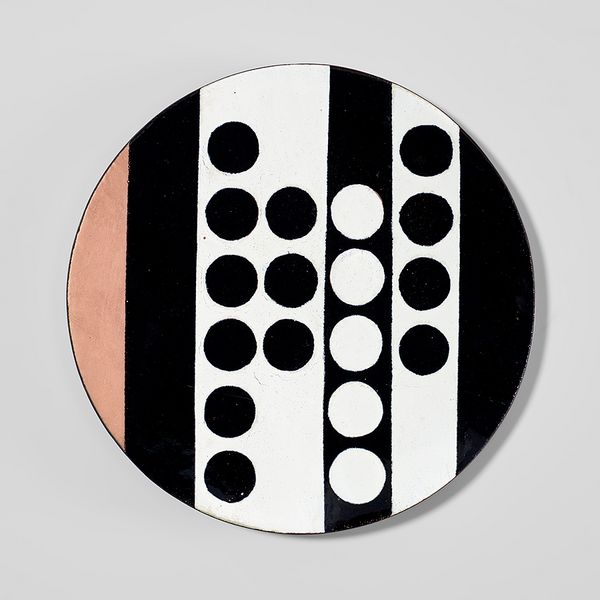
Ettore Sottsass, Jr., Plate, circa 1958. Design London.
In 1958, Ettore Sottsass unveiled a remarkable collection of enameled copper plates for the opening of Il Sestante Gallery in Milan. This collaboration, which occurred before his involvement with the Memphis Group, played a pivotal role in establishing his reputation within the design world. The gallery, founded by Marisa Villa Scarzella and Lina Villa Matteucci on Milan’s iconic Via della Spiga, focused on industrial craftsmanship, art, and graphic design. This collaboration laid the groundwork for Sottsass’ later successes.
A tradition reimagined
Sottsass reimagined the traditional craft of enameled copper, transforming it into a modern medium for design. His use of vibrant colours and striking patterns in this collection was revolutionary, pushing boundaries and significantly impacting the design world of the late 1950s. This impact is still felt by designers today.
Sottsass never shied away from a challenge
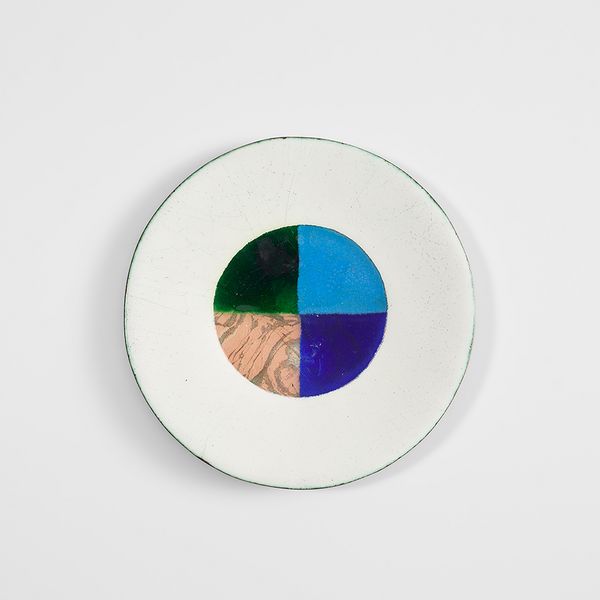
Ettore Sottsass, Jr., Plate, circa 1958. Design London.
The technique of enameling copper is highly complex, yet Sottsass approached it with great skill and enthusiasm. His 1:1 scale heliogravures, coloured with wax pastels, served as the foundation for almost 100 unique works. These drawings were used by the artisan Franco Bucci of Mastro 3 to bring the works to life. The process required multiple firings in a kiln at 1,000°C, resulting in copper plates with a smooth, glass-like enamel layer. The labor-intensive process produced works that were both functional and visually striking.
La vita a colori
Sottsass employed a chromatic-symbolic language that became a hallmark of his design style. He used a bold combination of contrasting colours to create visually captivating objects with deep meaning. These colours symbolized the essence of Italian design: optimism, vitality, and a deep connection to the joy of life. Through this use of colour, Sottsass infused his pieces with a sense of emotional depth and symbolism.
Out of this world: Sottsass as mystic philosopher
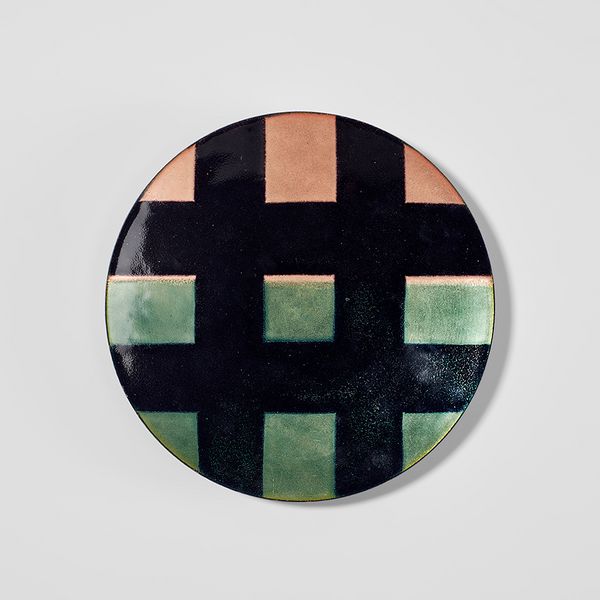
Ettore Sottsass, Jr., ‘Simbolo della calma' plate, circa 1958. Design London.
Sottsass drew inspiration from a diverse array of cultures and artistic traditions. His enameled copper plates reflect his fascination with ancient art, cosmology, and mysticism. In many of his sketches, Sottsass documented his sources of inspiration, such as in the ‘Simbolo della calma’ plate (lot 21), which embodies symbols of calm and other intellectual concepts that gave his work a deeper, metaphorical significance. The geometric shapes and markings on each piece evoke a sense of mystery, as if they were vessels of ancient wisdom or sacred knowledge, inviting the viewer to explore the layers of meaning hidden within each design.
Recommended Reading
Specialist Picks: Design London >
Collecting Guide: Postmodern and Contemporary Design 101 >
