Article | Collecting Guide Postmodern And Contemporary Design 101 Auction
Collecting Guide: Postmodern and Contemporary Design 101
Break through a sea of information to discover what defines the category and the names to know.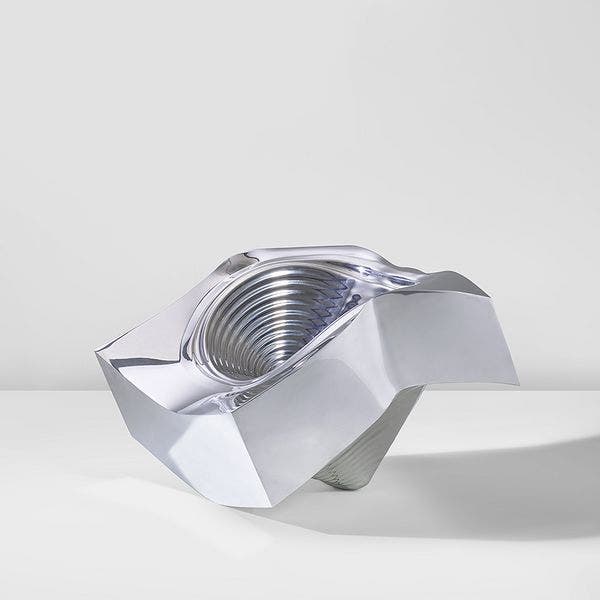
Ron Arad, ‘Thick Vac’ chair, 2006. Design London.
Our upcoming London Design auction offers several postmodern and contemporary works, bringing with it an opportunity to break down the category for budding and experienced collectors alike. Because the aesthetic approach in this category can vary so widely from one designer to another, we find that we may understand these works more deeply by looking at what unites them. From there, as art and design lovers, we can zoom in to discover what unique aspects of these designers’ works excite us most.
Below, we discover what unites a wide range of designers, from Shiro Kuramata, to Gaetano Pesce, Paul Evans, Elizabeth Garouste and Mattia Bonetti, Marc Newson, Ron Arad, Allen Jones, and Fernando and Humberto Campana.
Pushing material boundaries
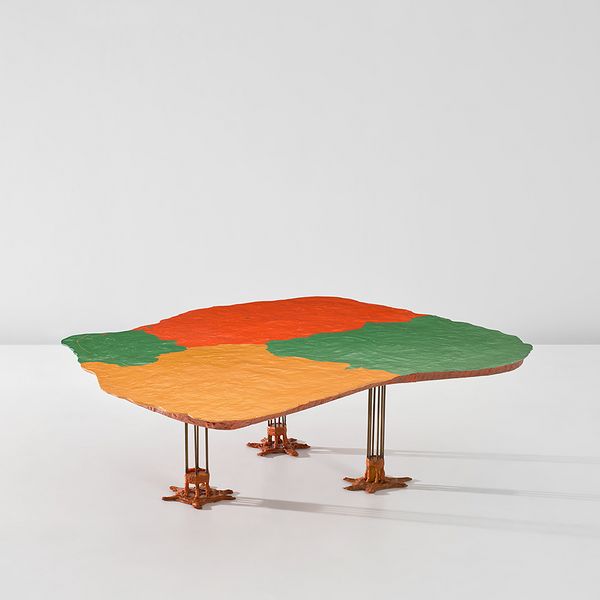
Gaetano Pesce, Unique coffee table, from the Dujardin shop, Brussels, 1994. Design London.
These designers are known for the innovative materials in their creations. Whether it’s Shiro Kuramata’s use of industrial materials, Gaetano Pesce’s experimentation with resins, or the Campana brothers’ incorporation of unexpected materials like stuffed toys. Each designer has used materiality to express their creativity and challenge design norms, often making a statement about the world we live in.
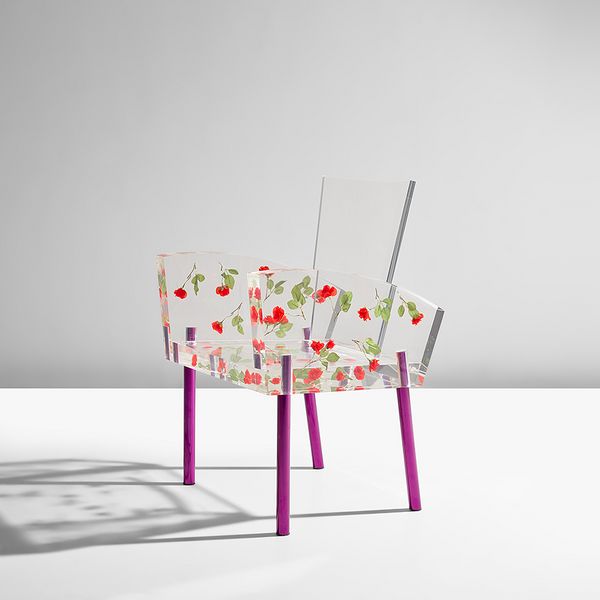
Shiro Kuramata, ‘Miss Blanche’ chair, designed 1988, executed before 1991. Design London.
In Kuramata’s above ‘Miss Blanche’ chair, synthetic roses are suspended in acrylic resin, showcasing his expressive use of commercial materials. Conceptually, these materials in this context raise questions about beauty, artifice, and femininity in conversation with Tennessee Williams’ 1947 play A Streetcar Named Desire. Gaetano Pesce’s playful coffee table showcases his innovative use of vibrant, multicoloured resin, reflecting his ongoing fascination with form and colour.
Bold, sculptural aesthetics
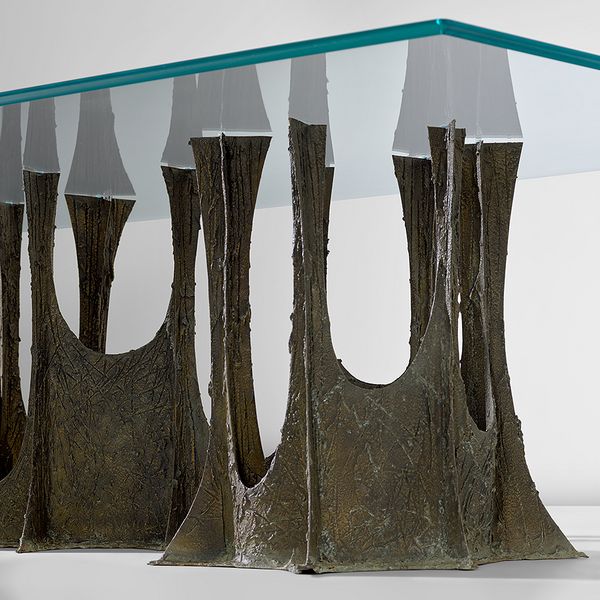
Paul Evans, ‘Stalagmite’ dining table, model no. PE-102, 1972. Design London.
Sculptural statement pieces abound in the work of these designers, often blurring the line between furniture and art. From Paul Evans’ metalwork to Ron Arad’s flowing, curvilinear forms, and Marc Newson’s organic design, we discover a shared focus on bold shapes and expressive forms.
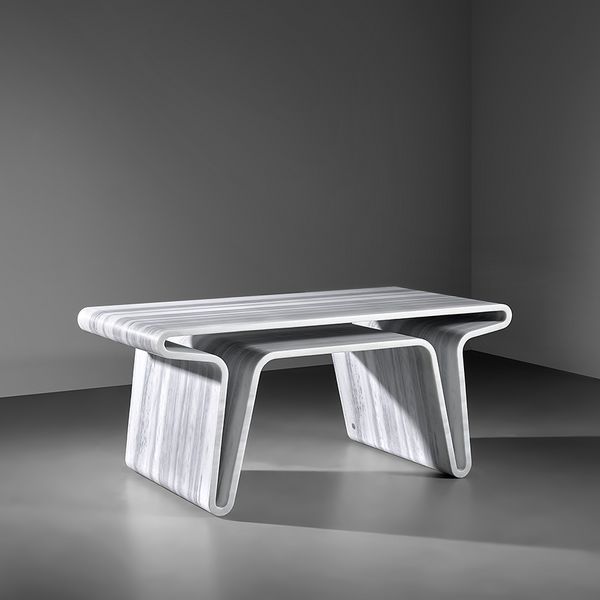
Marc Newson, ‘Extruded Table 3’, 2008. Design London.
The sculptural qualities of Marc Newson’s ‘Extruded Table 3’ invite viewers to contemplate negative space, once remarking that his works have “as much to do with what is not there as what is there.” Likewise, in works by Ron Arad, such as his iconic ‘The Big Easy’ series, we discover his exceptional ability to coax volume and undulation from his materials.
Rejecting Modernism
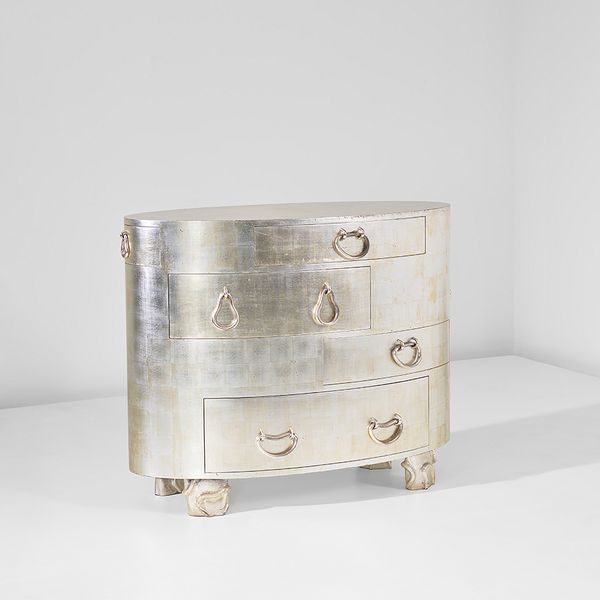
Elizabeth Garouste and Mattia Bonetti, ‘Kawakubo’ chest of drawers, 1994. Design London.
Many of these designers rose to prominence during the Postmodern Design movement, which rejected Modernism's minimalist ideals in favor of more experimental, eclectic, and dynamic approaches to form and function. Designers like Gaetano Pesce and the duo of Elizabeth Garouste and Mattia Bonetti were heavily influenced by this avant-garde approach, which paved the way for contemporary design.
Garouste and Bonetti’s above work is characteristic of this approach, created as a tribute to the avant-garde fashion designer and founder of Comme des Garçons, Rei Kawakubo. Her revolutionary approach to fashion — involving deconstruction, unconventional silhouettes, and sculptural forms — shares principles with design movements that emerged from postmodernism through bold experimentation and rejection of traditional, utilitarian norms.
You know it when you see it
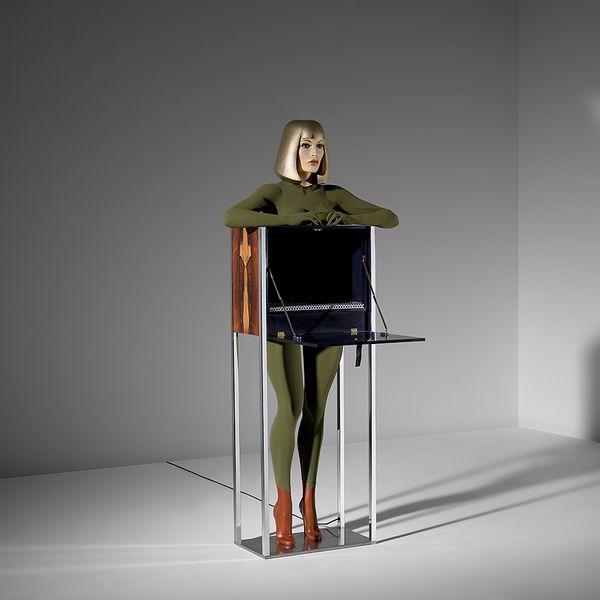
Allen Jones, ‘Refrigerator’, 2002. Design London.
Strong and identifiable personal design language is also a hallmark of postmodern and contemporary design — whether it’s Allen Jones’ provocative figurative works, Shiro Kuramata’s minimalist but emotional pieces, or the Campanas’ organic and socially conscious designs. For any of these designers, their works are instantly recognizable wherever you encounter them.
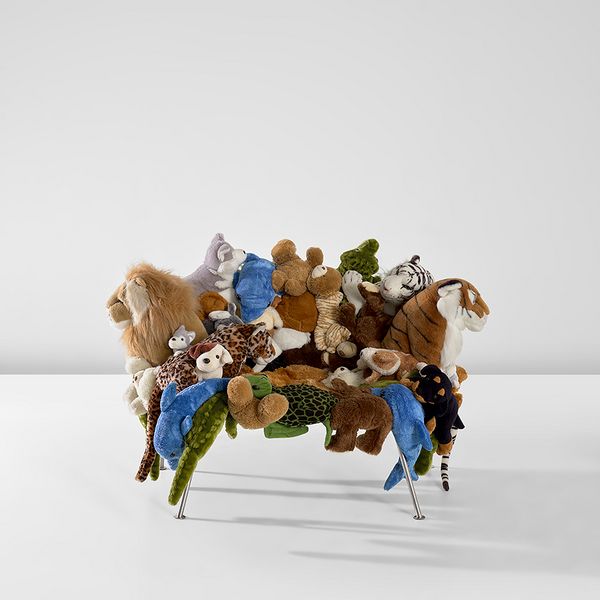
Fernando Campana and Humberto Campana, ‘Banquete’ chair, designed 2002, produced 2006. Design London.
This recognizability often stems from the identity of the makers. For Allen Jones, a Pop Art influence meets his own British sense of irony in works that probe the relationships between the body, the machine, and consumer culture. Likewise, the Campana brothers’ works are deeply rooted in their Brazilian culture and traditions, confronting the environmental issues that threaten them head-on.
Recommended Reading
Specialist Picks: Design London >
Spotlight on Women Designers >
Five Things to Know: Ettore Sottsass’ Early Enameled Copper Plates >
