43
露絲·理惠
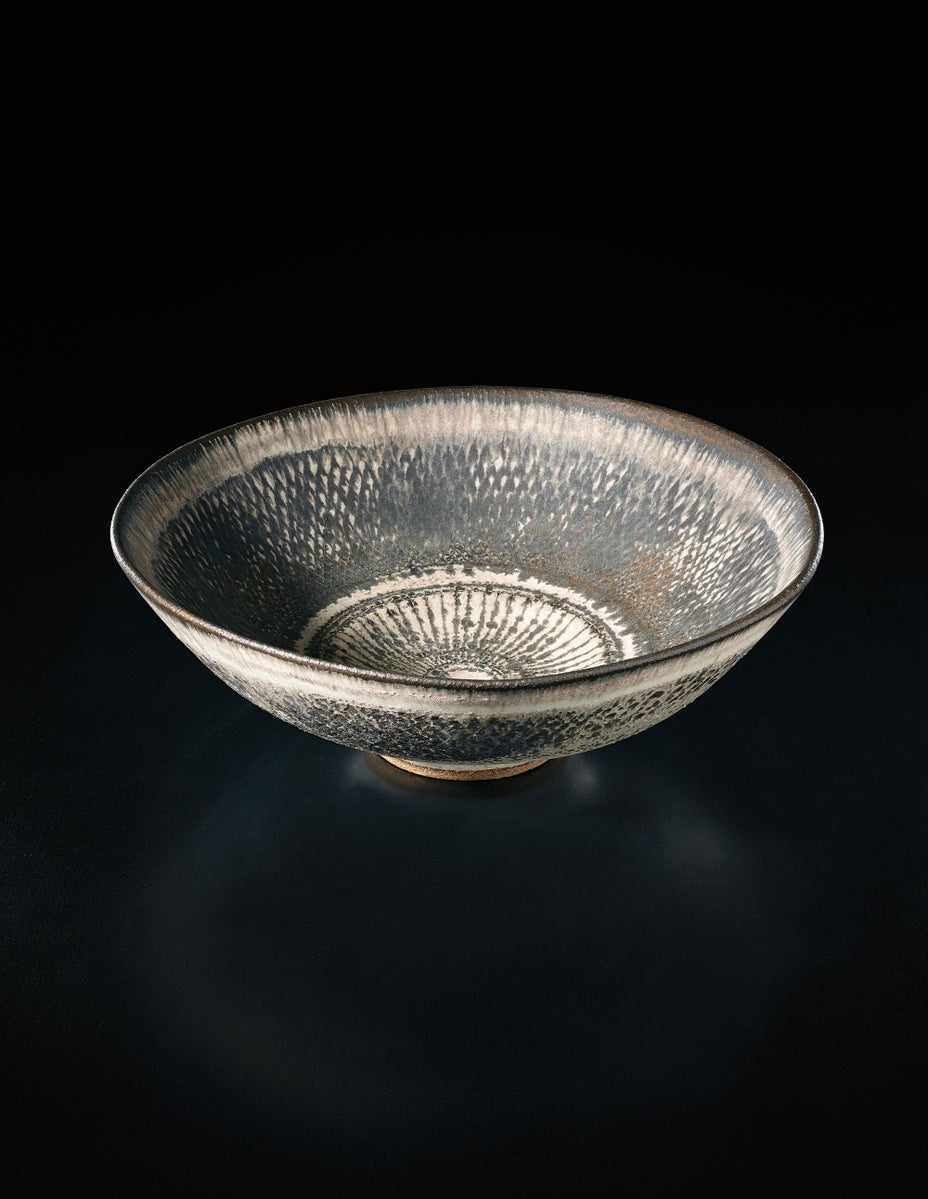
《巨型編織》 碗
完整圖錄內容
由她創的 「一次燒成」 窯燒法當初為的是嘗試減少在維也納30年代建立的工作室到窯石路之間用單車運送置放在車簍裡易碎且未經燒製的瓶瓶罐罐因相互碰撞所造成不可避免的損壞。從具有高度現代藝術美學概念的初期創作實驗至80年代末做的最後幾隻瓶罐,在窯燒過程中,瓷胎和釉生動交流,與黏土混合的礦質元素在窯燒的過程中爆破,穿透釉面形成斑駁,色彩閃爍,賞心悅目。嵌釉手刻款識自然流露出其本質, 釉面層對立,相互混合流淌與覆在下面的瓷胎產生反應, 生成戲劇般的效果,令人瞠目結舌。這隻「編織」碗將瓷胎和釉之間的交流推向極致,碗面近乎全為嵌釉,深入瓷面,與瓷胎結合;在里爾的作品中,這隻碗非同尋常。
露絲·理惠
Austrian | B. 1902 D. 1995Dame Lucie Rie studied under Michael Powolny at the Kunstgewerbeschule in Vienna before immigrating to London in 1938. In London she started out making buttons for the fashion industry before producing austere, sparsely decorated tableware that caught the attention of modernist interior decorators. Eventually she hit her stride with the pitch-perfect footed bowls and flared vases for which she is best-known today. She worked in porcelain and stoneware, applying glaze directly to the unfired body and firing only once. She limited decoration to incised lines, subtle spirals and golden manganese lips, allowing the beauty of her thin-walled vessels to shine through. In contrast with the rustic pots of English ceramicist Bernard Leach, who is considered an heir to the Arts and Crafts movement, collectors and scholars revere Rie for creating pottery that was in dialogue with the design and architecture of European Modernism.