15
傑蘇斯.拉斐爾.索托
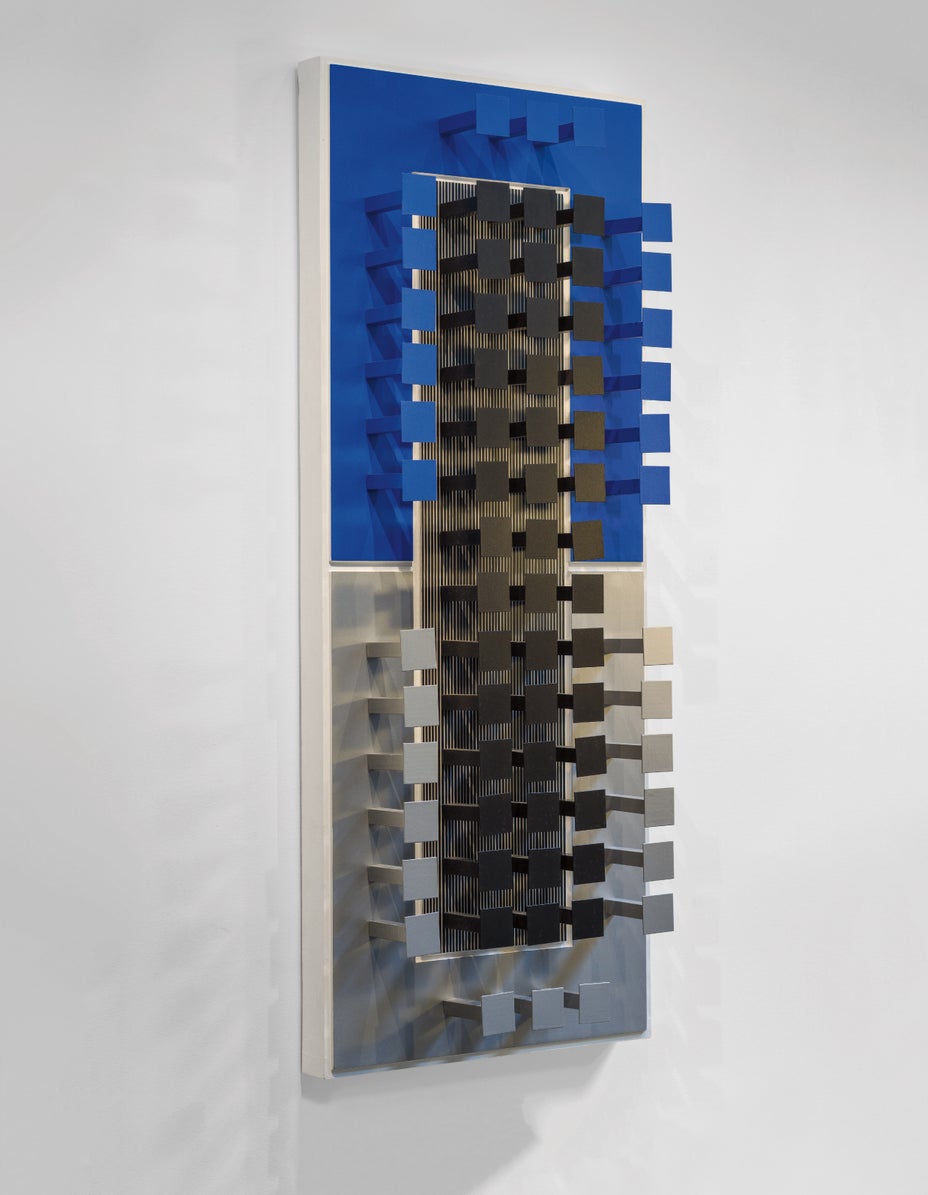
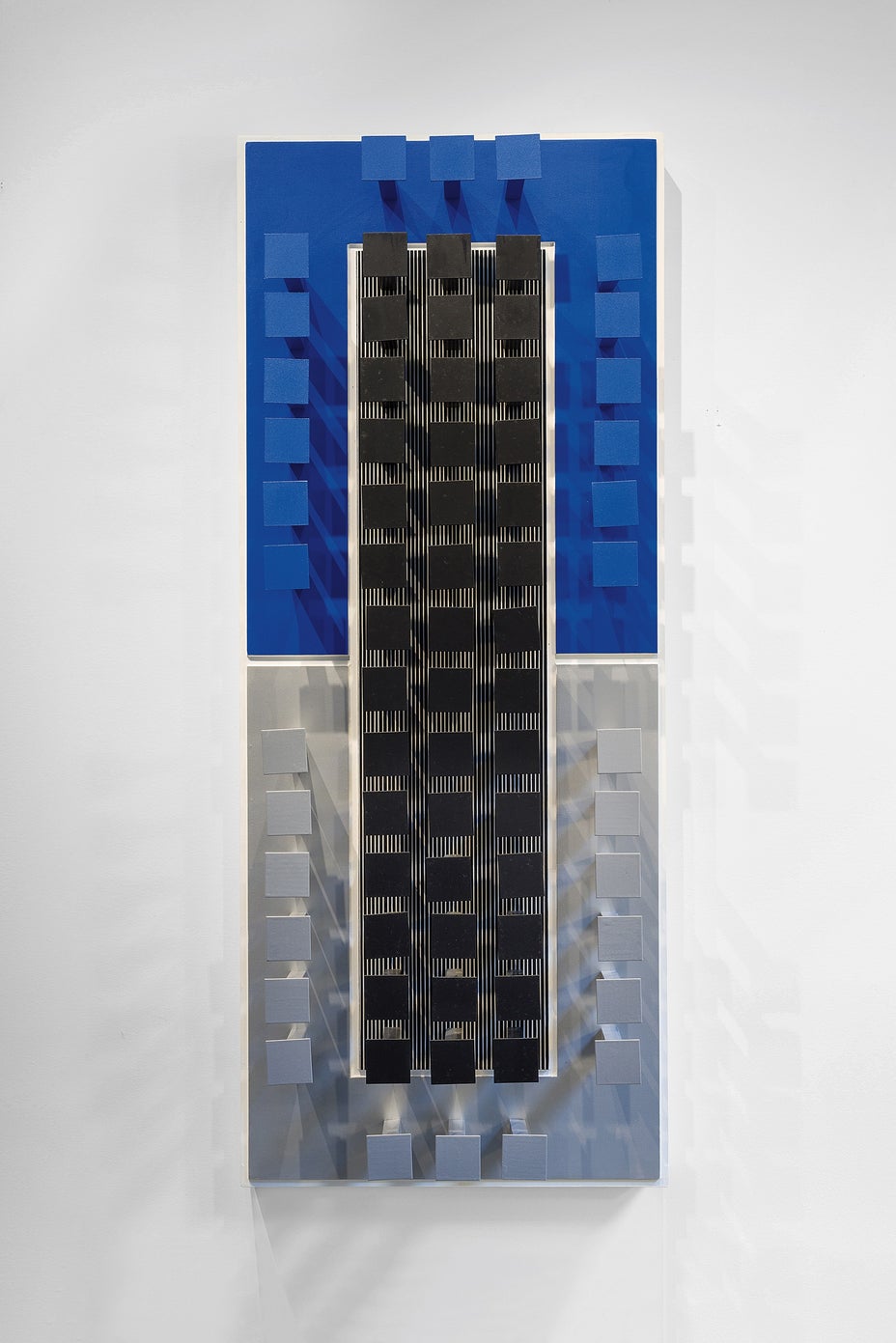
Vibración vertical
完整圖錄內容
The present lot, Vibración vertical, is an exceptional example of Soto’s mature work that incorporates many of his characteristic techniques to produce pure abstraction and kineticism. The overlaying of pictorial elements through the use of basic materials—metal and wood—produce visible vibrations that mesmerize the viewer, affecting the physical space around the object. Interestingly, this and other works from the 1970s concluded Soto’s period in Paris, where he developed the core of his practice and became an internationally renowned artist after achieving his first retrospective at the Musée d’Art Moderne de la Ville de Paris in 1969.
傑蘇斯.拉斐爾.索托
Venezuelan | B. 1923 D. 2005Jesús Rafael Soto was born in Ciudad Bolívar and studied at the School of Visual and Applied Arts in Caracas. During this period he became acquainted with Los Disidentes, a group of artists that included Alejandro Otero and Carlos Cruz-Diez. In addition to his fellow compatriots, Soto’'s work was influenced by Kazimir Malevich and Piet Mondrian.
The main artistic tenets evinced in Soto's works are pure abstraction, vibrations, progressions and geometric rigor. They can be seen through the use of lines and superimposed squares in his sculptures, made with paint and a series of industrial and synthetic materials. He spent much time in Europe, becoming a key member of the Group Zero movement, which included such artists as Lucio Fontana, Gunther Uecker and Yves Klein. As a result, Soto's work also incorporates modernist concepts such as light, time, movement, color manipulation and space. All of these facets place him as an important figure within the Kinetic and Op Art movements.