199
Rolex
Ref. 6239
Cosmograph Daytona "Paul Newman"
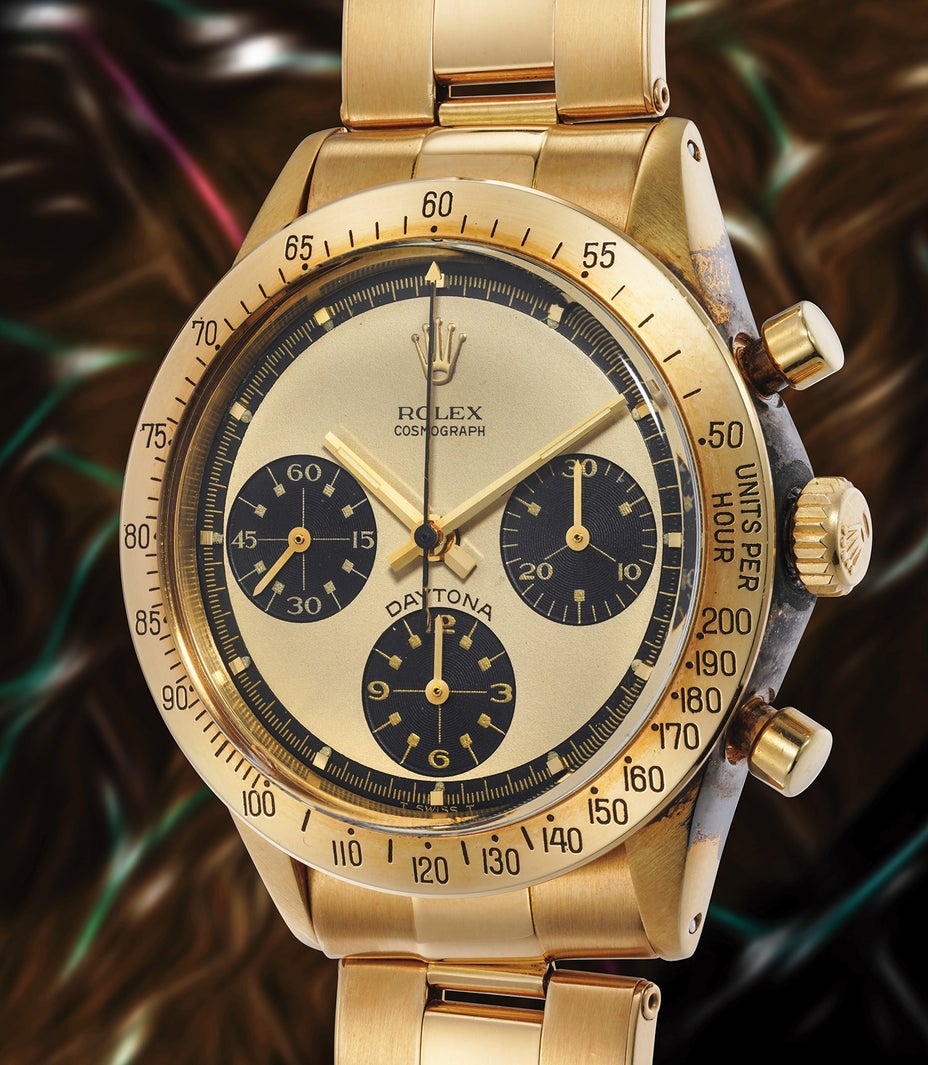
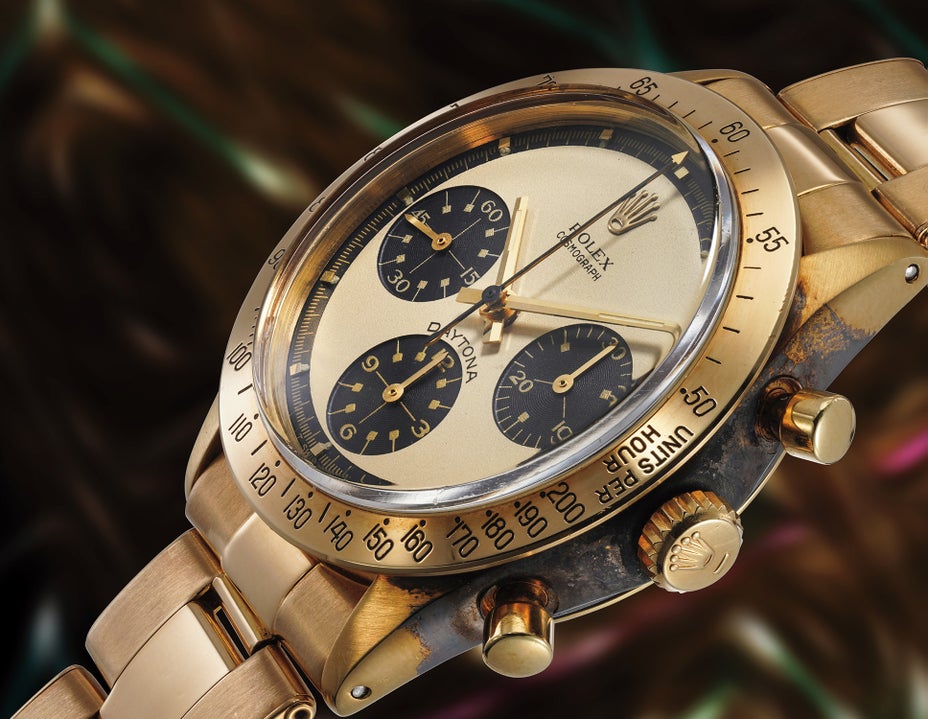
勞力士,非常罕有、極度精美,黃金計時鏈帶腕錶,備「Paul Newman」香檳色錶盤。
完整圖錄內容
Reference 6239 was hardly ever cased in gold. During the reference's lifespan, approximately 300 examples were cased in yellow gold, which is quite astounding when one takes into account the model’s approximate 14,000 unit production run. Such a restricted production can be explained by considering the tool watch vocation of the model, which was conceived as a sport's watch and thus was preeminently demanded with the sturdy and lightweight stainless steel case.
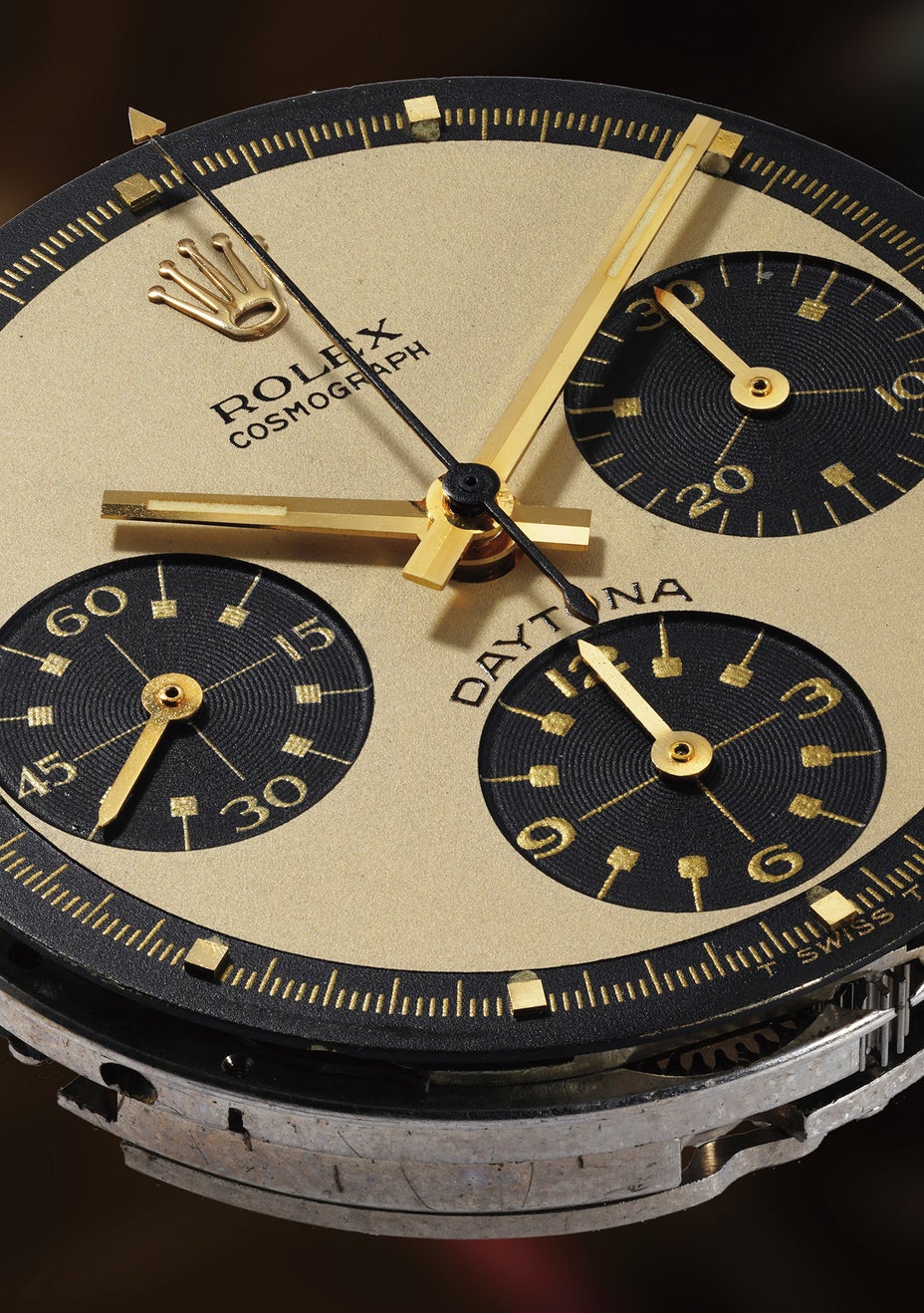
Featuring a champagne dial with gold graphics inside the sunken subsidiary registers, this timepiece was one of the most luxurious Cosmographs available on the market during the late 1960s. Glamorous and eye-catching, it is yet another variant of the beloved "Paul Newman" model.
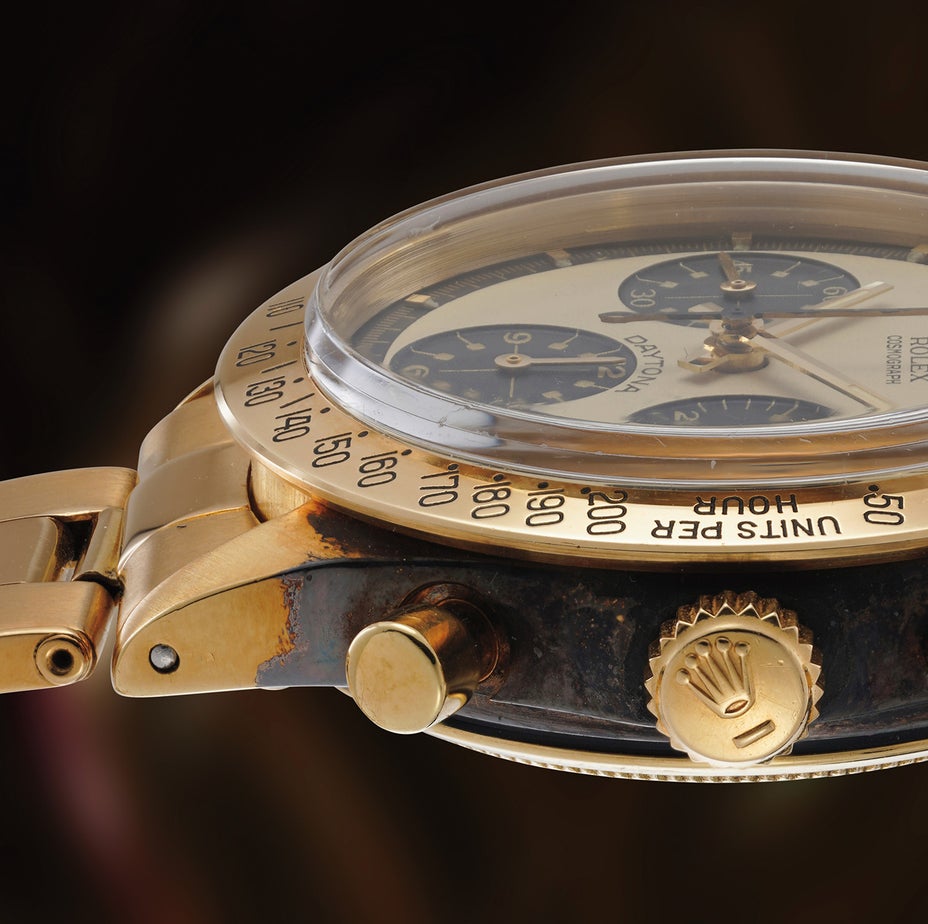
The dial is particularly impressive as all the luminous dots remain intact and full. The larger and slightly slanted "T Swiss T" designation at 6 o’clock is correct for the serial number. Furthermore, the champagne dial has aged gracefully, showing barely any sign of ageing. Displaying crisp graphics and eye-catching details, the dial is presented in a noteworthy state of preservation. The case is equally impressive, as the lug holes have a distance between the edge of the case, and two crisp hallmarks beneath the lugs are present. Later generation examples would feature white graphics inside the counters.
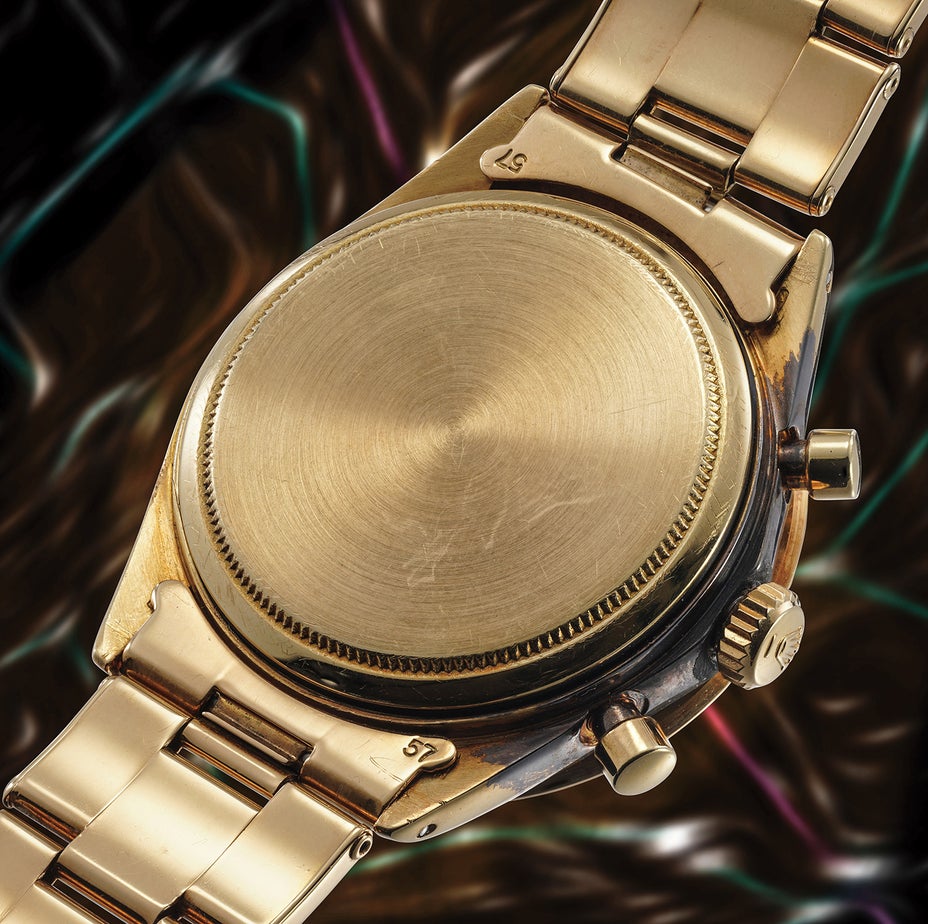
Interestingly, the present watch was delivered to London, as seen by the London hallmarks on the case and bracelet. The inside case back is stamped with the repeated serial number, meaning the present watch was made upon special order, along with "RWC Ltd" and London hallmarks for 1968, meaning the watch was delivered to the United Kingdom, possibly to a retailer like Asprey. The bracelet as well, is hallmarked for 1972, meaning that the watch probably was sitting in stock for a number of years before it was sold with its bracelet.
Rolex
Swiss | 1905Founded in 1905 England by Hans Wilsdorf and Alfred Davis as Wilsdorf & Davis, it soon became known as the Rolex Watch Company in 1915, moving its headquarters to Geneva in 1919. Like no other company, the success of the wristwatch can be attributed to many of Rolex's innovations that made them one of the most respected and well-known of all luxury brands. These innovations include their famous "Oyster" case — the world's first water resistant and dustproof watch case, invented in 1926 — and their "Perpetual" — the first reliable self-winding movement for wristwatches launched in 1933. They would form the foundation for Rolex's Datejust and Day-Date, respectively introduced in 1945 and 1956, but also importantly for their sports watches, such as the Explorer, Submariner and GMT-Master launched in the mid-1950s.
One of its most famous models is the Cosmograph Daytona. Launched in 1963, these chronographs are without any doubt amongst the most iconic and coveted of all collectible wristwatches. Other key collectible models include their most complicated vintage watches, including references 8171 and 6062 with triple calendar and moon phase, "Jean Claude Killy" triple date chronograph models and the Submariner, including early "big-crown" models and military-issued variants.