164Σ︎
Rolex
Ref. 2508
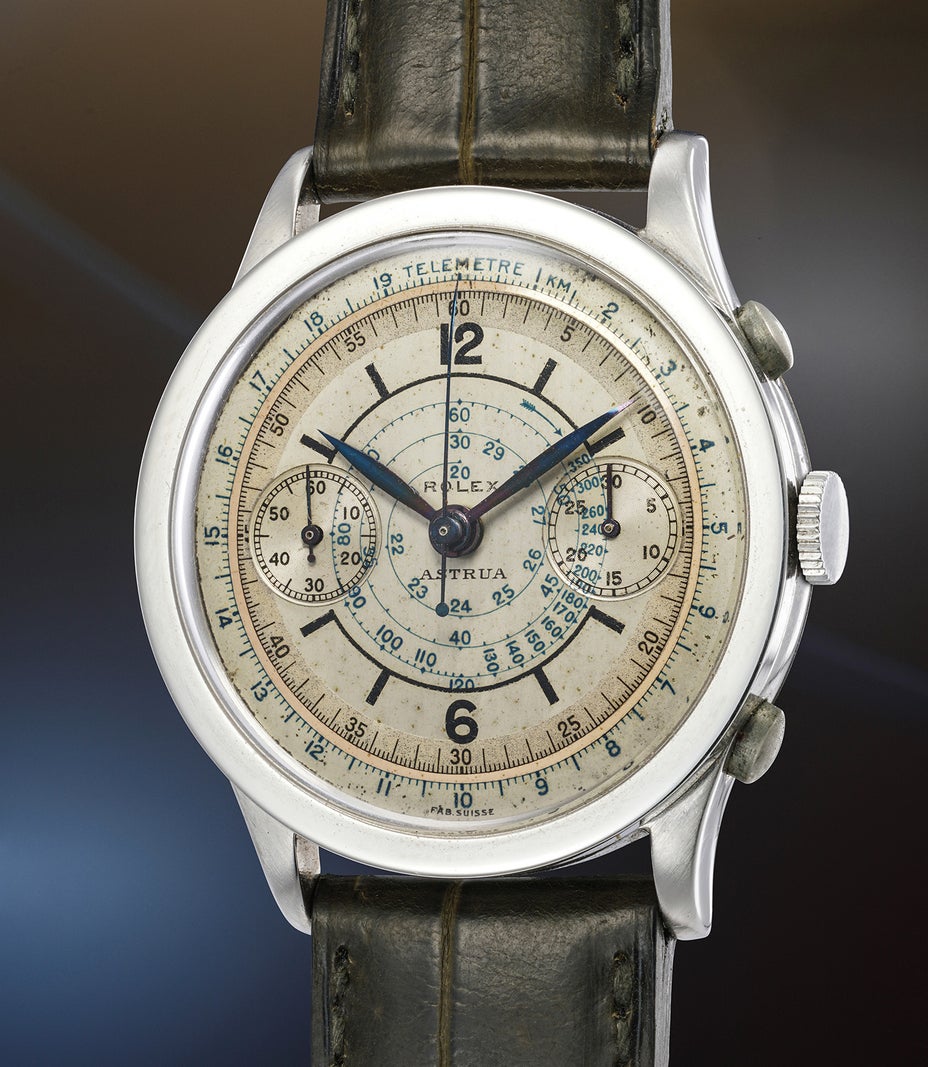
勞力士,極度罕有,精鋼計時腕錶,備多重刻度圈「three-tone」錶盤、橄欖形按鈕,由Astrua銷售。
完整圖錄內容
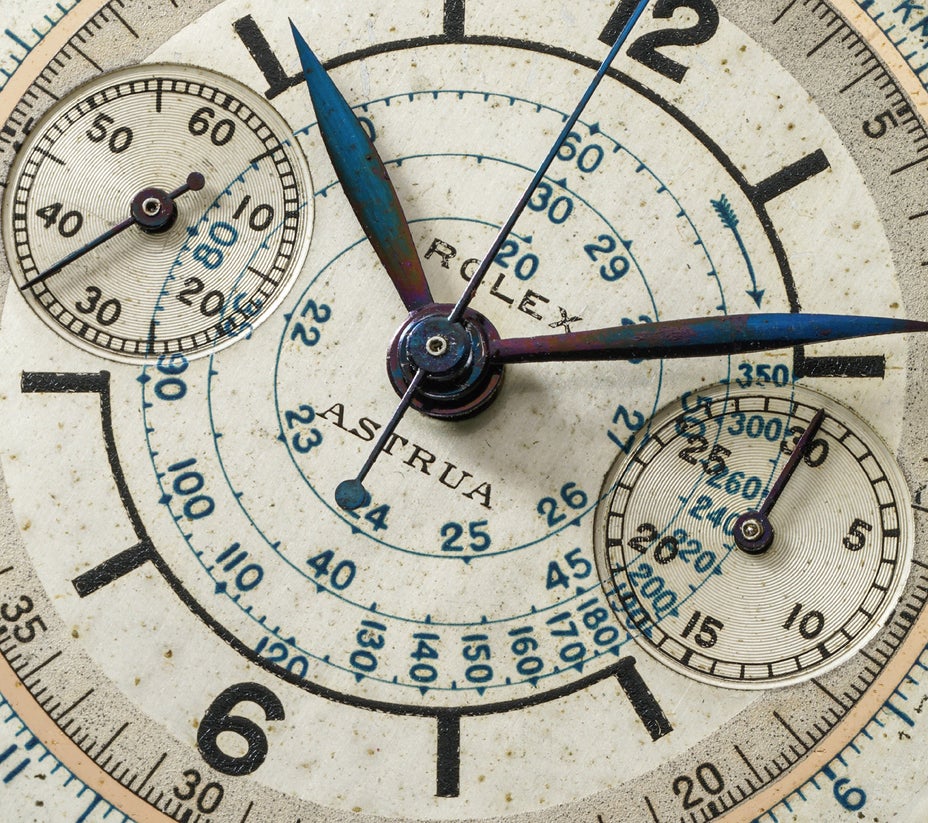
The present watch is a remarkable example of the reference not only in virtue of its condition - most notably of the absolutely unrestored dial - but especially due to the presence of Turin retailer Astrua’s signature on the dial. Co-signed dials are as rare as they are collectible, a precious window into the past of the company - as nowadays Rolex does not produce co-signed timepieces anymore.
Even without the Astrua signature, however, the dial of this specimen exudes charm, also thanks to its complicated architecture. It features an outer telemeter scale and an inner spiral tachymeter case, large hour markers and an additional scale with Arabic five-minute combined with baton fifth-of-a-second divisions (typical of the time). Furthermore, one can find three different types of finishing on it: the centre and outer track of the dial are silvered brushed, the fifth-of-a-second scale lays on a track with a grené finish, and a thin bronze metallic track separates it from the telemeter scale.
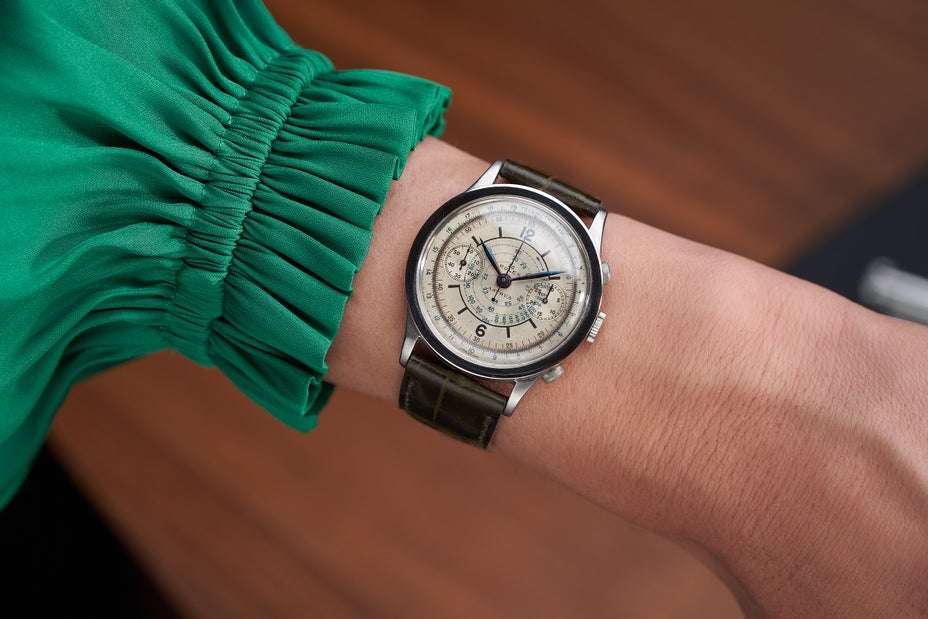
Reference 2508 can be categorized into two different generations, the first one boasting a large 37.2mm case fitted with oval pushers – as found on the present example. The second generation was slightly smaller measuring at 35.2mm and was fitted with rectangular pushers.
The 2mm difference in diameter may appear small, but the impact on the wrist is impressive. Scholarship tells us that only a very small number of these first generation watches were made. It is amazing to see how a more than 80-year-old chronograph wristwatch can be as timeless and contemporary today as it was when first launched.
A sporty yet elegant gentleman’s watch, the design of reference 2508 - especially the first generation - is more modern compared to other earlier Rolex chronograph watches, making it nowadays a favourite of Rolex collectors.
Rolex
Swiss | 1905Founded in 1905 England by Hans Wilsdorf and Alfred Davis as Wilsdorf & Davis, it soon became known as the Rolex Watch Company in 1915, moving its headquarters to Geneva in 1919. Like no other company, the success of the wristwatch can be attributed to many of Rolex's innovations that made them one of the most respected and well-known of all luxury brands. These innovations include their famous "Oyster" case — the world's first water resistant and dustproof watch case, invented in 1926 — and their "Perpetual" — the first reliable self-winding movement for wristwatches launched in 1933. They would form the foundation for Rolex's Datejust and Day-Date, respectively introduced in 1945 and 1956, but also importantly for their sports watches, such as the Explorer, Submariner and GMT-Master launched in the mid-1950s.
One of its most famous models is the Cosmograph Daytona. Launched in 1963, these chronographs are without any doubt amongst the most iconic and coveted of all collectible wristwatches. Other key collectible models include their most complicated vintage watches, including references 8171 and 6062 with triple calendar and moon phase, "Jean Claude Killy" triple date chronograph models and the Submariner, including early "big-crown" models and military-issued variants.