1007
Ilbery
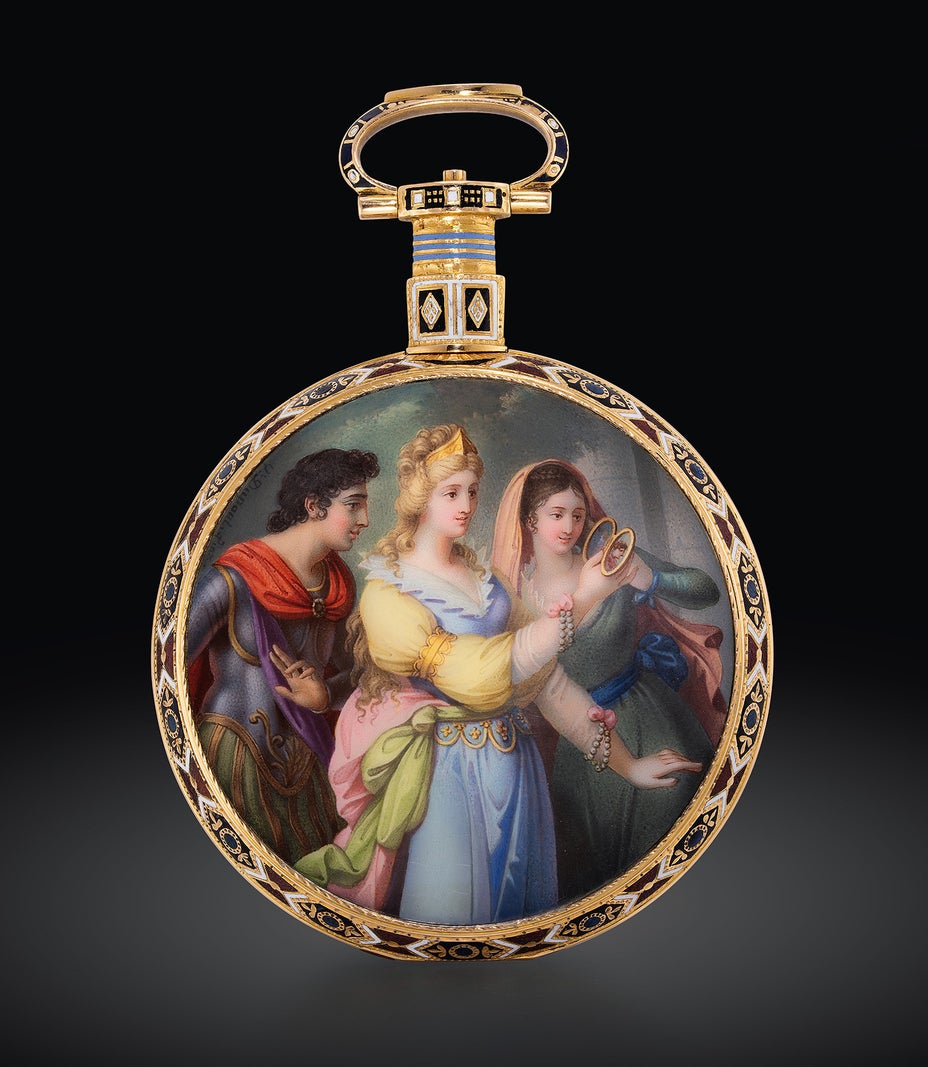
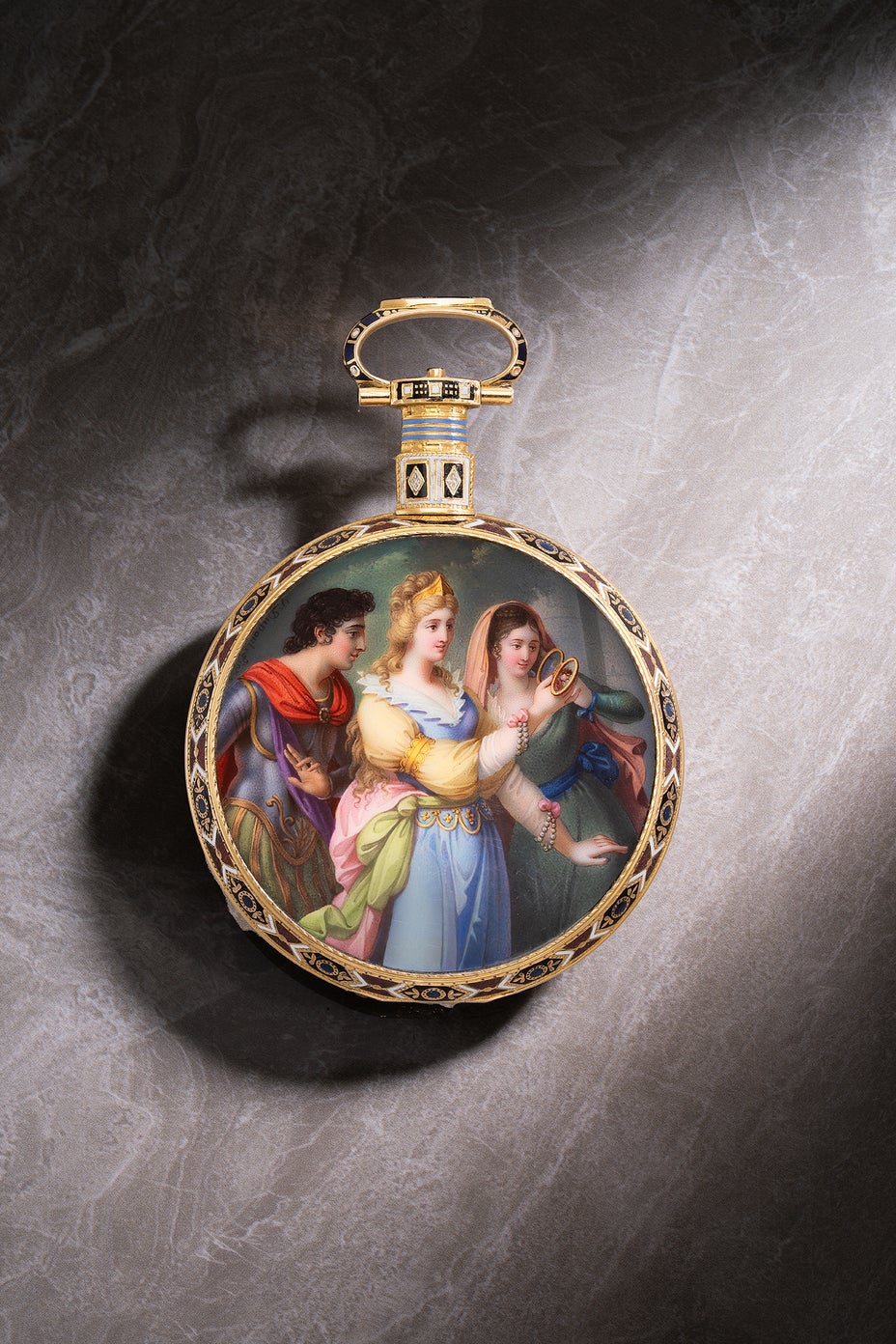
"King Arthur and Emmeline" by V. Dupont Pinx
Ilbery, 十分精美罕有,黃金琺瑯大八件懷錶,備白色琺瑯錶盤、雕花機芯、雙聯式擒縱、V. Dupont Pinx之彩繪琺瑯作品,特為中國市場而製,約1820年製
估價
HK$640,000–1,280,000
€70,800–142,000
$82,100–164,000
成交價
HK$1,206,500
製造商
Ilbery
年份
Circa 1820
錶殼號碼
7242
型號名稱
"King Arthur and Emmeline" by V. Dupont Pinx
材料
Yellow gold and enamel
機芯
Manual keywound, duplex movement
尺寸
59mm diameter
簽名
Movement signed
完整圖錄內容
William Ilbery was one of the most renowned British watchmaker of his time. He was active in London from circa 1780 to 1839. Although he worked mainly in London, Ilbery maintained close contact with trade in other countries. In particular, Ilbery was remembered for his production of luxurious enamel pocket watches in gold for the Chinese market where they were highly coveted. These pocket watches were adorned with exquisite enamel miniature paintings on the cases. Most of these pocket watches depicted floral arrangements, domestic scenes, classical paintings with only a few inspired by scenes from Greek mythology. Ilbery had the most elaborated cases of his watches decorated by the best Geneva enamellers such as Jean-François-Victor Dupont and Jean-Louis Richter.
This exquisite pocket watch features a spring-loaded back cover intricately painted with a captivating scene of King Arthur and Emmeline. In this artwork by Jean-François-Victor Dupont, Emmeline holds a mirror belonging to her attendant Matilda, reflecting King Arthur's image, inspired by a 1787 engraving by P.W. Tomkins after Charles Ansell. The bezels are adorned with striking red, white, and blue champlevé enamel in a geometric pattern, enhancing its visual appeal.
Jean-François-Victor Dupont
Jean-François-Victor Dupont (1785-1863) stands as a luminous figure in the realm of enamel artwork, celebrated for his exquisite paintings on enamel, porcelain, and ivory. A contemporary of esteemed enamel artists such as Jean Louis Richter and Isaac Adam, Dupont forged a distinctive style marked by originality, romanticism, and a vibrant palette. His miniatures drew inspiration from the acclaimed Genevan school, beautifully intertwining themes of Symbolism and Neoclassicism, particularly those inspired by Greek and Roman mythology.
As Romanticism blossomed across Europe, Dupont’s work captured the essence of this transformative period, influencing contemporary tastes and customs during the early Restoration of the French Monarchy. His art resonated deeply with a discerning Chinese clientele, who sought unparalleled attention to detail akin to the finest Chinese porcelain. The composition of his paintings is striking, featuring figures in the foreground that pulsate with life against a minimalist background, instilling a sense of dynamic action.
Dupont crafted his own enamels, achieving a stunning color spectrum, with signature shades of red, blue, and a unique purple that set his work apart. His use of the rare “pointillé” technique for faces and hands, alongside the one-bristle paintbrush, added an extraordinary depth to his creations. Frequently signing his pieces—such as "Dupont fecit" or "Vr Dupont"—he affirmed his identity as an artist. His works were exhibited widely from 1822 to 1843, gracing notable exhibitions in Geneva, Paris, and Lyon. Today, his legacy endures in collections like the Musée d’Horlogerie et Emaillerie de Genève, celebrating his profound contributions to the art of enamel painting.
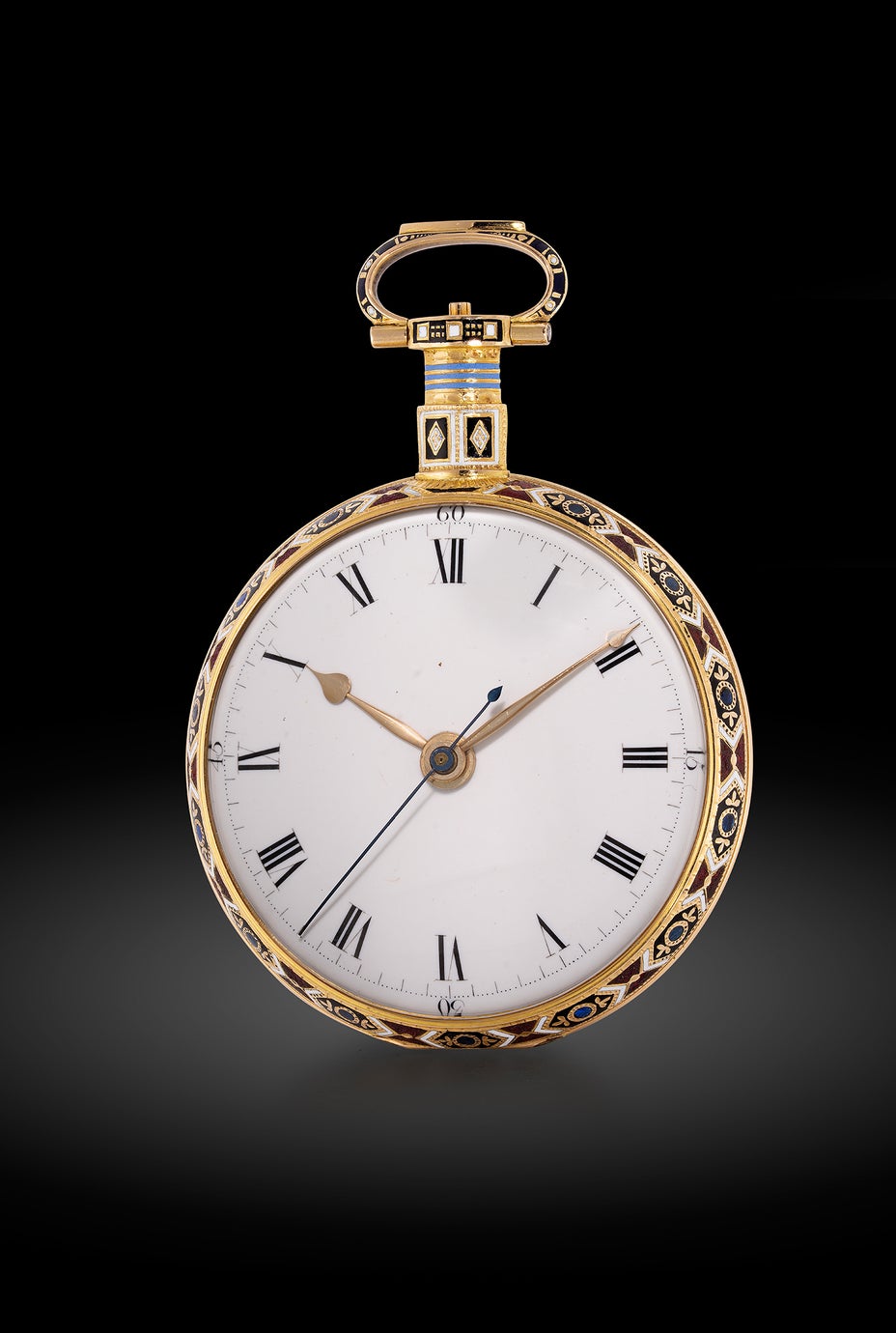
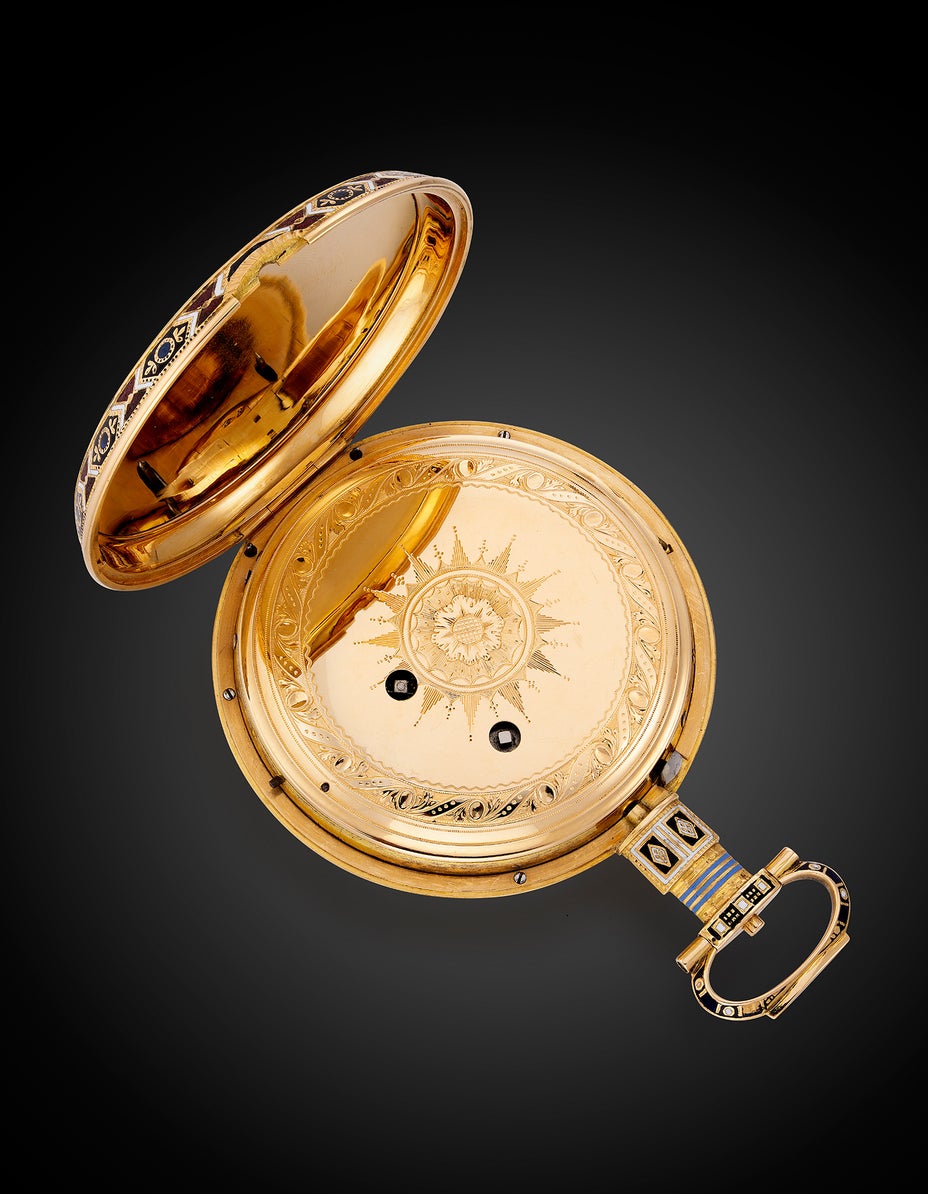
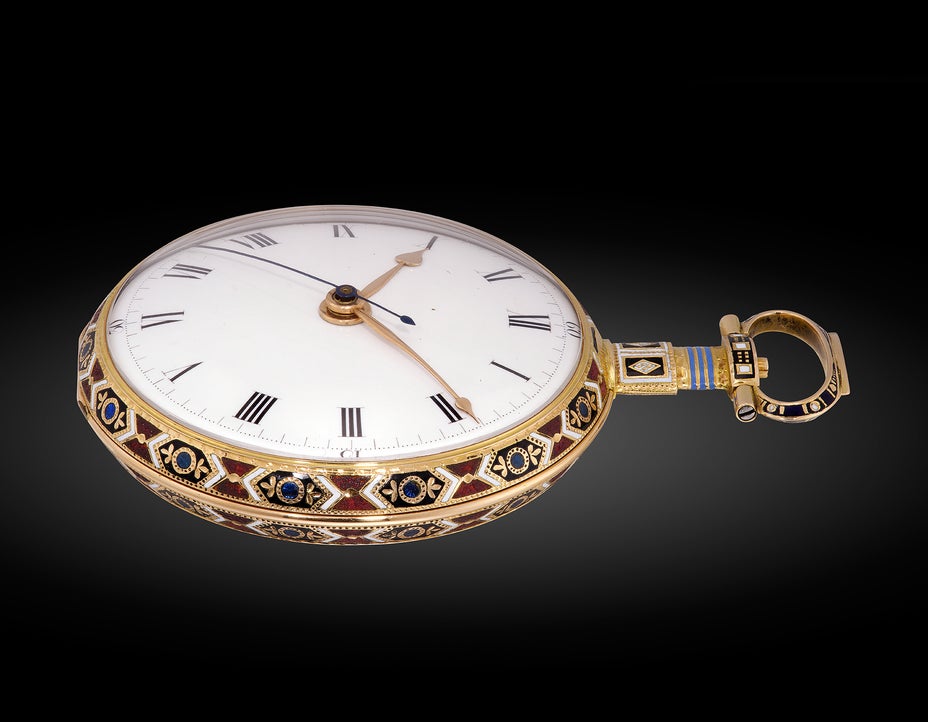
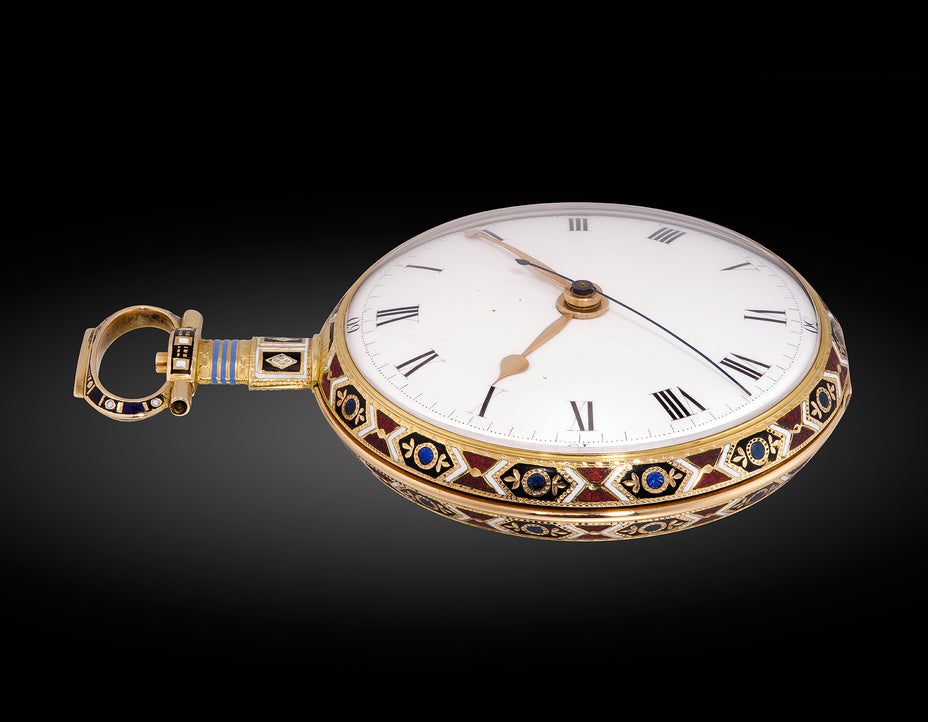
The watch's hinged, spring-loaded gold engraved cuvette is expertly mounted to the movement ring, while the white enamel dial displays Roman chapters, outer minute divisions, and quarter seconds, complemented by elegant gold spade hands.
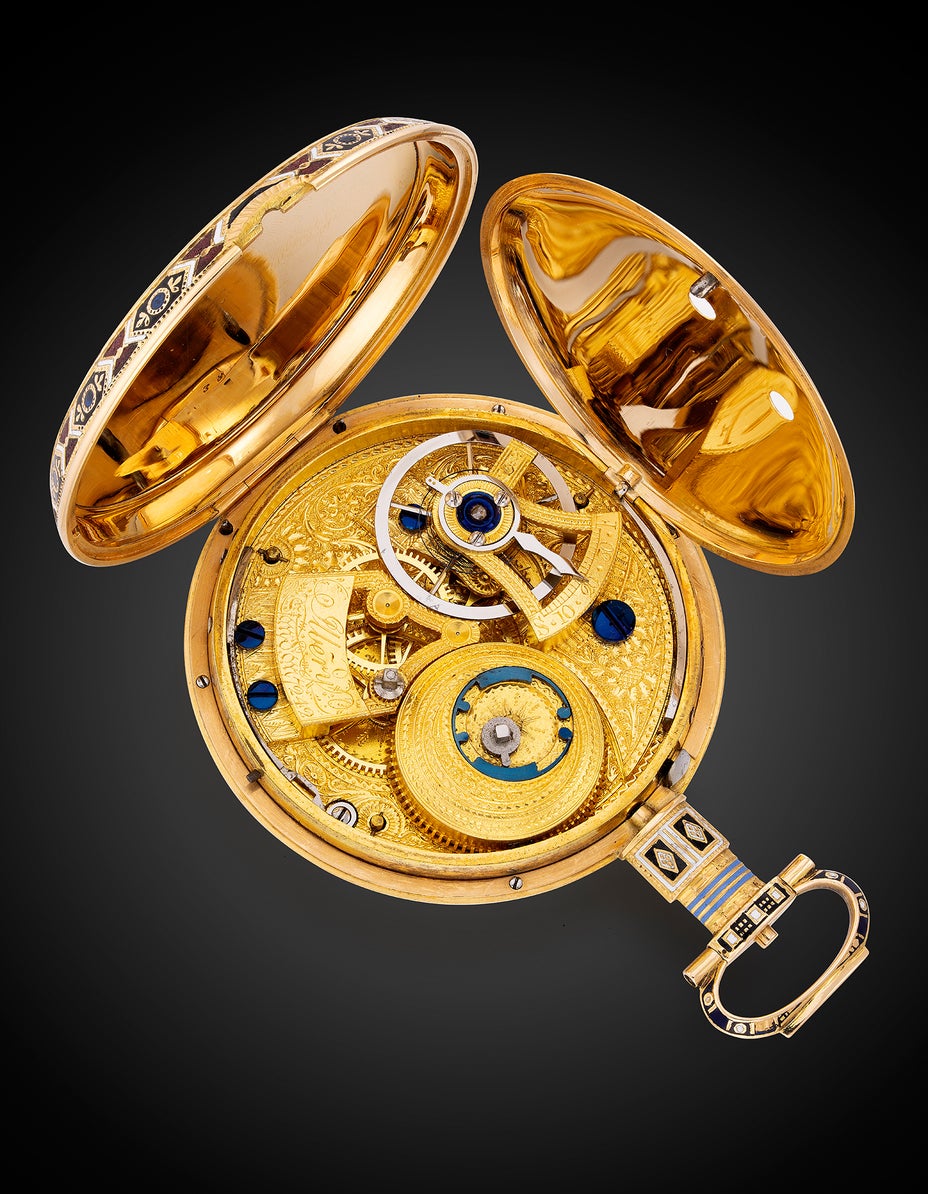
Housed within is the movement is a remarkable 49 mm gilt brass 'Chinese' calibre, featuring five jewels, a free-standing barrel, a duplex escapement, and a plain five-arm steel balance with a flat balance spring and diamond endstone.
This remarkable timepiece, with a diameter of 59 mm, is published in the Sandberg book, showcasing a blend of artistry and horological precision that is truly exceptional. Preserved in superb overall condition, the present watch with its exquisite enamel miniature paintings and its unusual theme will be as coveted by today’s discerning collectors as in China in the 19th century.
This exquisite pocket watch features a spring-loaded back cover intricately painted with a captivating scene of King Arthur and Emmeline. In this artwork by Jean-François-Victor Dupont, Emmeline holds a mirror belonging to her attendant Matilda, reflecting King Arthur's image, inspired by a 1787 engraving by P.W. Tomkins after Charles Ansell. The bezels are adorned with striking red, white, and blue champlevé enamel in a geometric pattern, enhancing its visual appeal.
Jean-François-Victor Dupont
Jean-François-Victor Dupont (1785-1863) stands as a luminous figure in the realm of enamel artwork, celebrated for his exquisite paintings on enamel, porcelain, and ivory. A contemporary of esteemed enamel artists such as Jean Louis Richter and Isaac Adam, Dupont forged a distinctive style marked by originality, romanticism, and a vibrant palette. His miniatures drew inspiration from the acclaimed Genevan school, beautifully intertwining themes of Symbolism and Neoclassicism, particularly those inspired by Greek and Roman mythology.
As Romanticism blossomed across Europe, Dupont’s work captured the essence of this transformative period, influencing contemporary tastes and customs during the early Restoration of the French Monarchy. His art resonated deeply with a discerning Chinese clientele, who sought unparalleled attention to detail akin to the finest Chinese porcelain. The composition of his paintings is striking, featuring figures in the foreground that pulsate with life against a minimalist background, instilling a sense of dynamic action.
Dupont crafted his own enamels, achieving a stunning color spectrum, with signature shades of red, blue, and a unique purple that set his work apart. His use of the rare “pointillé” technique for faces and hands, alongside the one-bristle paintbrush, added an extraordinary depth to his creations. Frequently signing his pieces—such as "Dupont fecit" or "Vr Dupont"—he affirmed his identity as an artist. His works were exhibited widely from 1822 to 1843, gracing notable exhibitions in Geneva, Paris, and Lyon. Today, his legacy endures in collections like the Musée d’Horlogerie et Emaillerie de Genève, celebrating his profound contributions to the art of enamel painting.
The watch's hinged, spring-loaded gold engraved cuvette is expertly mounted to the movement ring, while the white enamel dial displays Roman chapters, outer minute divisions, and quarter seconds, complemented by elegant gold spade hands.
Housed within is the movement is a remarkable 49 mm gilt brass 'Chinese' calibre, featuring five jewels, a free-standing barrel, a duplex escapement, and a plain five-arm steel balance with a flat balance spring and diamond endstone.
This remarkable timepiece, with a diameter of 59 mm, is published in the Sandberg book, showcasing a blend of artistry and horological precision that is truly exceptional. Preserved in superb overall condition, the present watch with its exquisite enamel miniature paintings and its unusual theme will be as coveted by today’s discerning collectors as in China in the 19th century.