67
Gerhard Richter
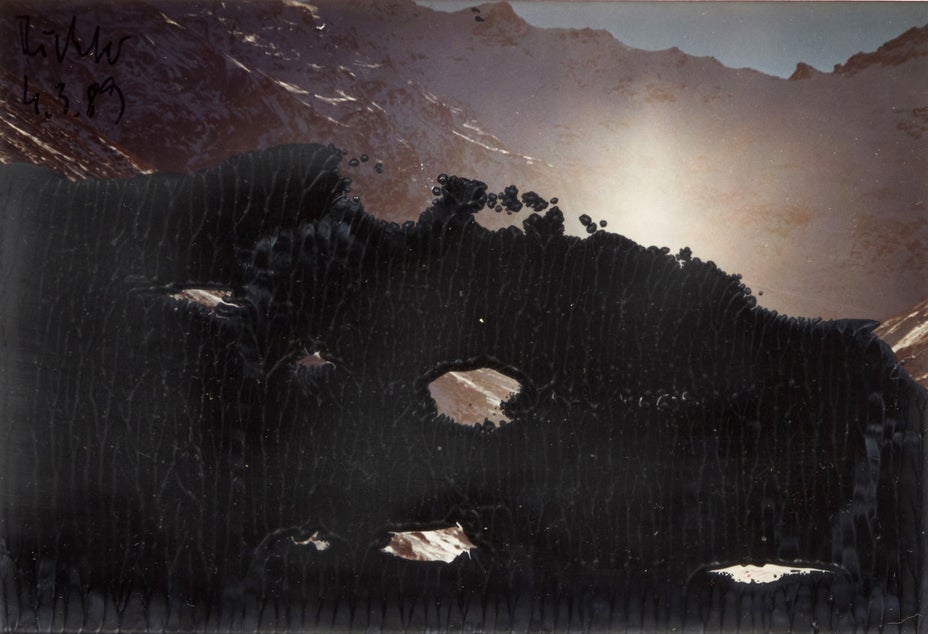
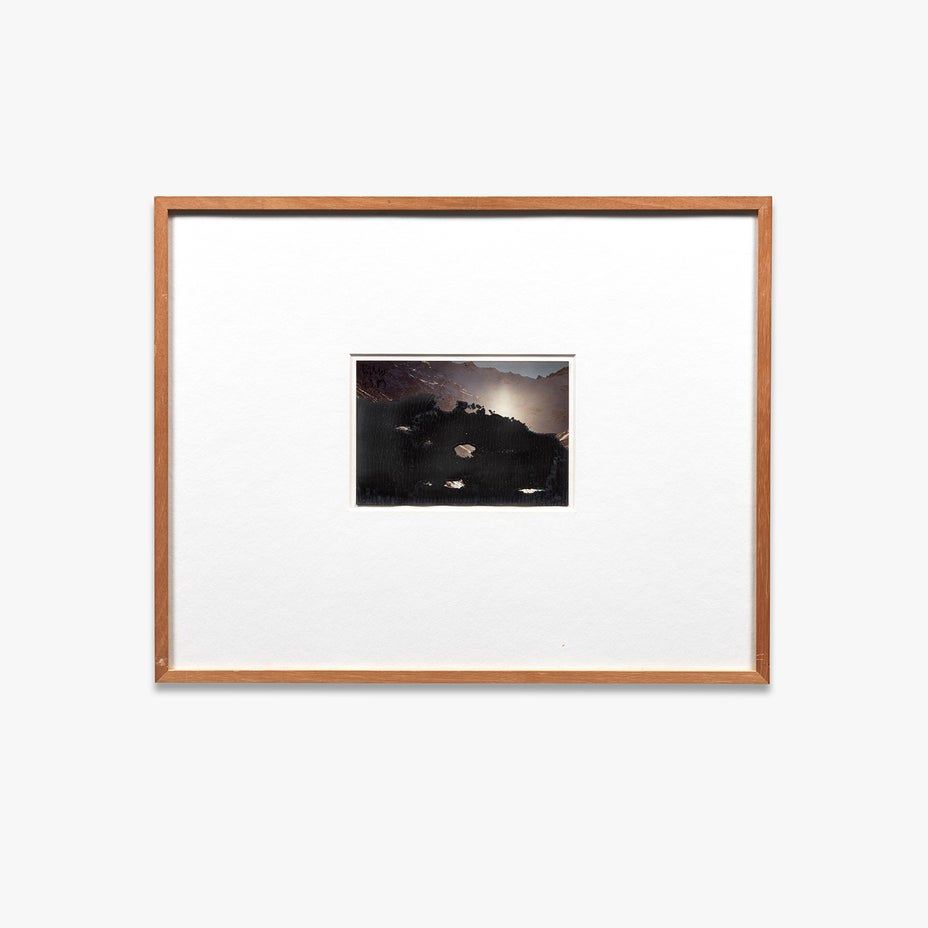
《4.3.89》
完整圖錄內容
In 1989 Gerhard Richter began his overpainted photographs series as a means of exploring the tension between painting and photography. This image, taken in April of that year, is one of the earliest prints from this body of work. With the heavy application of paint applied to a photograph of snow-topped mountains, Richter immediately disrupts the depth of field and brings a heightened awareness to the surface quality of the photograph and paint, alike.
Gerhard Richter
German | 1932Powerhouse painter Gerhard Richter has been a key player in defining the formal and ideological agenda for painting in contemporary art. His instantaneously recognizable canvases literally and figuratively blur the lines of representation and abstraction. Uninterested in classification, Richter skates between unorthodoxy and realism, much to the delight of institutions and the market alike.
Richter's color palette of potent hues is all substance and "no style," in the artist's own words. From career start in 1962, Richter developed both his photorealist and abstracted languages side-by-side, producing voraciously and evolving his artistic style in short intervals. Richter's illusory paintings find themselves on the walls of the world's most revered museums—for instance, London’s Tate Modern displays the Cage (1) – (6), 2006 paintings that were named after experimental composer John Cage and that inspired the balletic 'Rambert Event' hosted by Phillips Berkeley Square in 2016.