21
Gerhard Richter
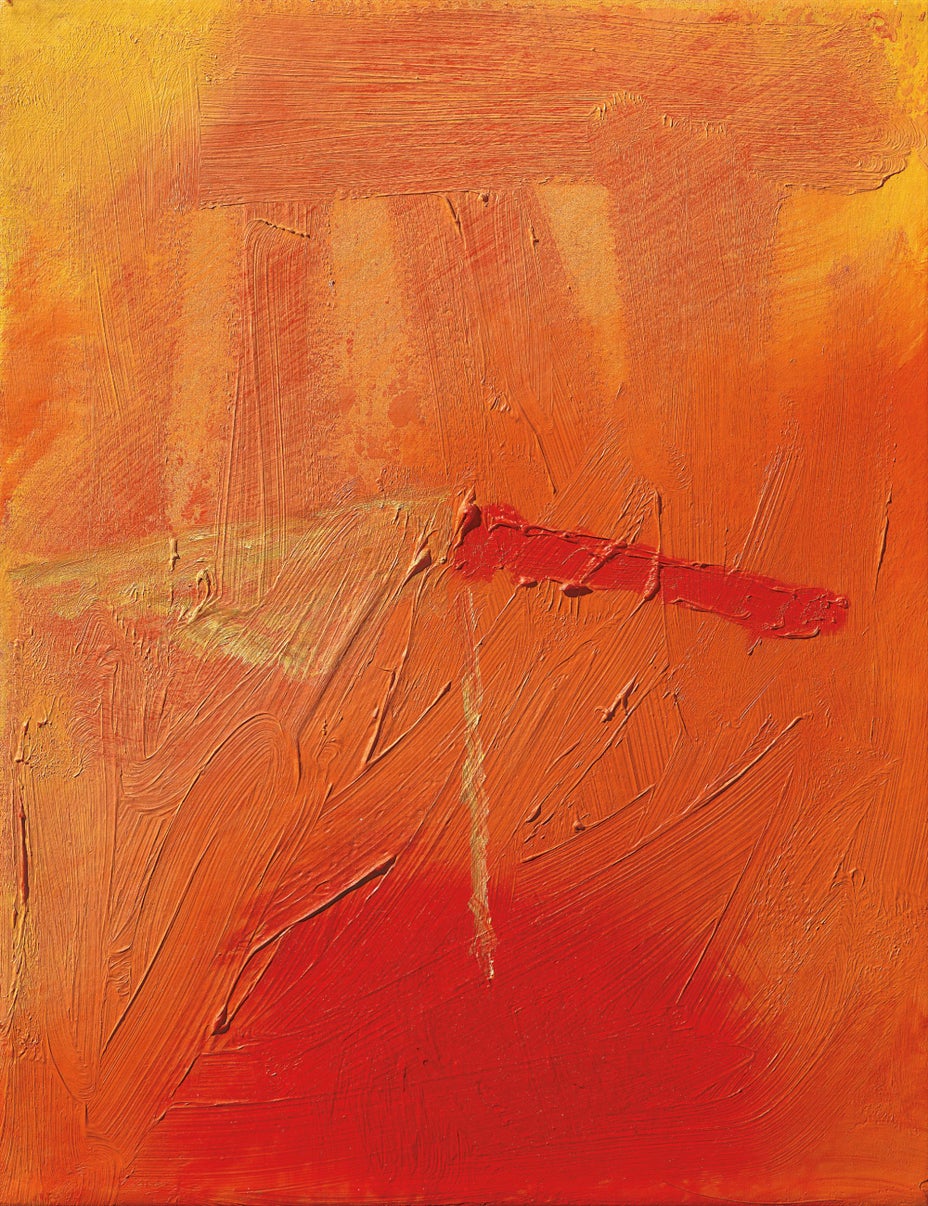
《抽象畫 454-4 號》
此作品附設格哈特.里希特作品全集編號454-4。
完整圖錄內容
里希特研發出一種類似「濕畫法」( a la prima )的技巧,將顏料層層堆疊來創作此畫。他分區塊塗抹顏料,並將上層的顏料與底層融合,藉此不僅開發出厚塗技法所能堆厚而得的層次感,更透過添加康乃馨油,讓每一層顏料在繪畫過程中保持濕潤,從中發掘出獨創的效果。因此,在《抽象畫 454-4 號》中,里希特強調在其抽象藝術實驗核心的悖論之一,即是自發性的抽象表現主義與精心架構的結合。里希特的單色調作品或許最能表達,他對藝術本質獨特且影響深遠的探討,也讓觀者能一窺其最尖銳的提問:「創作,該如何不將色彩視為畫面元素;又如何不帶有主體內容地實踐繪畫。」(M.高德菲,〈被破壞的風景〉,《格哈特.里希特:全景》,第86頁)
Gerhard Richter
German | 1932Powerhouse painter Gerhard Richter has been a key player in defining the formal and ideological agenda for painting in contemporary art. His instantaneously recognizable canvases literally and figuratively blur the lines of representation and abstraction. Uninterested in classification, Richter skates between unorthodoxy and realism, much to the delight of institutions and the market alike.
Richter's color palette of potent hues is all substance and "no style," in the artist's own words. From career start in 1962, Richter developed both his photorealist and abstracted languages side-by-side, producing voraciously and evolving his artistic style in short intervals. Richter's illusory paintings find themselves on the walls of the world's most revered museums—for instance, London’s Tate Modern displays the Cage (1) – (6), 2006 paintings that were named after experimental composer John Cage and that inspired the balletic 'Rambert Event' hosted by Phillips Berkeley Square in 2016.