111
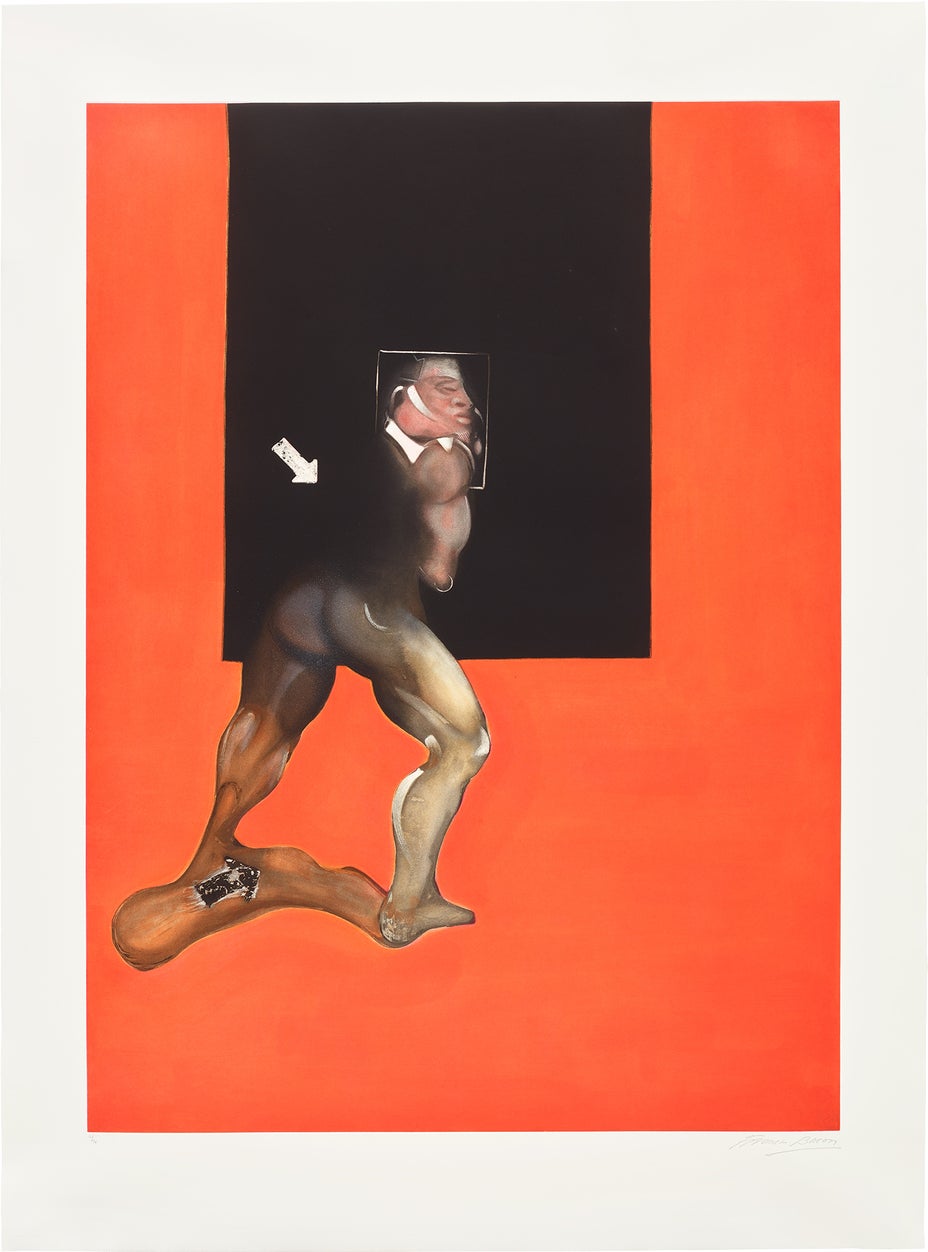
Francis Bacon
《人體研究(追隨在「人體研究」之後,1987年)(S. 8, T 30)》
紙本:163 x 120.9 公分 (64 1/8 x 47 5/8 英吋)
鈴印:倫敦 Marlborough Graphics 畫廊、羅馬2RC Edizioni d'Arte畫廊、法蘭西斯.培根遺產管理委員會
尚有30版羅馬數字藝術家試作版,由倫敦 Marlborough Graphics 畫廊及羅馬2RC Edizioni d'Arte畫廊共同出版,此作已裱。
完整圖錄內容
Francis Bacon
Irish-British | B. 1909 D. 1992Francis Bacon was a larger-than-life figure during his lifetime and remains one now more than ever. Famous for keeping a messy studio, and even more so for his controversial, celebrated depictions of papal subjects and bullfights, often told in triptychs, Bacon signified the blinding dawn of the Modern era. His signature blurred portraits weren't murky enough to stave off his reputation as highly contentious—his paintings were provocations against social order in the people's eye. But, Bacon often said, "You can't be more horrific than life itself."
In conversation with yet challenging the conventions of Modern art, Bacon was known for his triptychs brutalizing formalist truths, particularly Three Studies for Figures at the Base of a Crucifixion, which Bacon debuted in London in 1944, and Three Studies of Lucian Freud, which became famous when it set the record for most expensive work of art at auction at the time it sold in 2013.