Property from a Private Collection, Philadelphia
113
Finn Juhl
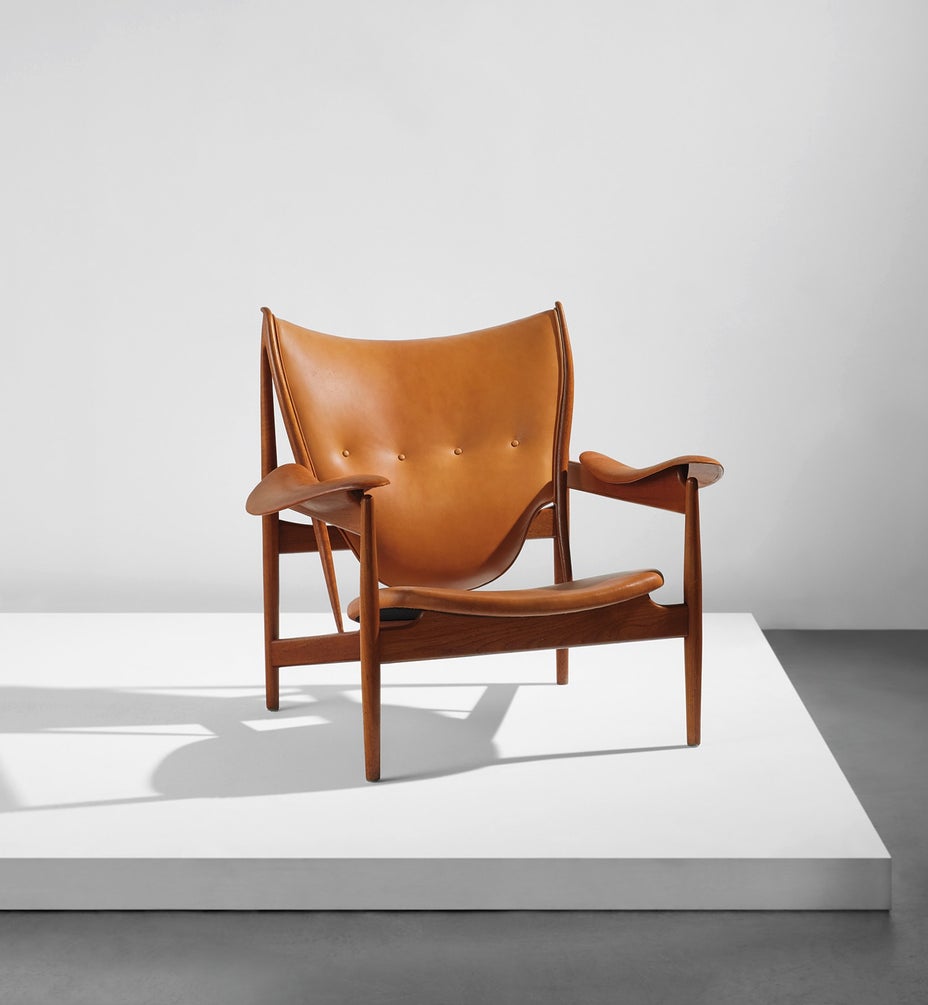
“Chieftain” chair, model no. FJ 49 A
Estimate
$40,000–60,000
Sold For
$47,500
circa 1955
Teak, leather upholstery.
36 3/4 x 40 1/2 x 35 in. (93.3 x 102.9 x 88.9 cm)
Executed by master cabinetmaker Niels Vodder, Copenhagen, Denmark. Underside impressed NIELS VODDER CABINETMAKER/COPENHAGEN DENMARK/DESIGN: FINN JUHL.
Full-Cataloguing
Bow Down
First presented at the Copenhagen Cabinetmakers’ Guild exhibition of 1949, Finn Juhl’s “Chieftain” chair is said to have earned its name after King Frederik IX sat in it during the exhibition, though Juhl also exhibited it alongside tribal objects that are believed to have inspired the chair’s form. The “Chieftain” certainly has a throne-like presence, both in its generous proportions and due to its imposing shield-shaped back. The design, along with Juhl’s “Egyptian” chair (also exhibited in 1949) was further inspired by furniture from the tomb of Tutankhamen, specifically the triangle-shaped sides formed by connecting the stiles that hold the back rest in an elegant step joint with the back legs. Despite these historical references and the chair’s robust presence, the “Chieftain” nevertheless conveys a sense of lightness due to the floating seat and back; all of these characteristics have contributed to the chair’s recognition as a masterwork of Danish modern design.
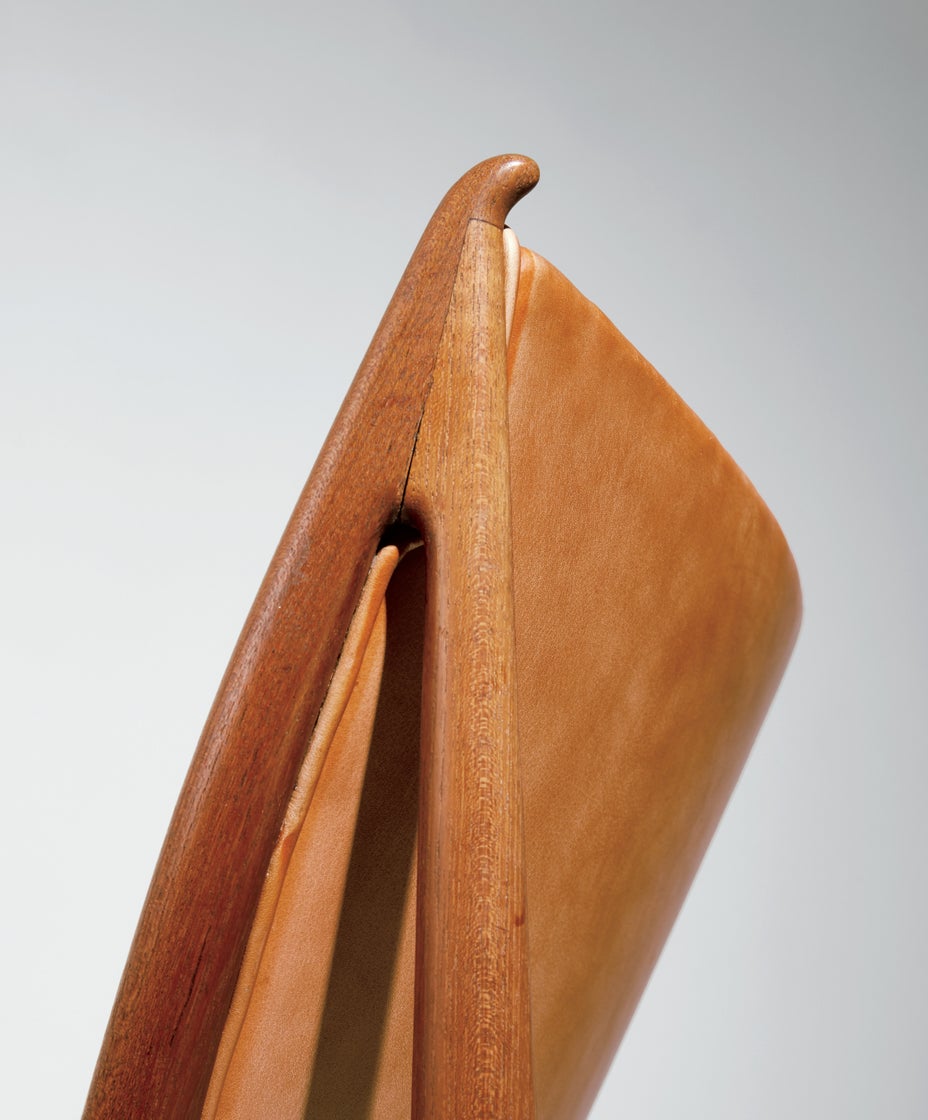
The present example was executed by the master cabinetmaker Niels Vodder, dating this chair to the earliest phase of production before the license was conferred to Ivan Schlechter in 1972 and then to Niels Roth Andersen from 1988 to 2000 (the American furniture manufacturer Baker also produced a version in the 1950s and the design is now produced by House of Finn Juhl). Fewer than 100 examples are believed to have been executed by Vodder and the present example bears all the attributes typical of his mid-1950s production: the classic shape of the horns (which would become more elongated in the 1960s); the three die-cut steel seat tabs with smooth rounded corners; the planished steel arms and the sculpted teak back spacer.
First presented at the Copenhagen Cabinetmakers’ Guild exhibition of 1949, Finn Juhl’s “Chieftain” chair is said to have earned its name after King Frederik IX sat in it during the exhibition, though Juhl also exhibited it alongside tribal objects that are believed to have inspired the chair’s form. The “Chieftain” certainly has a throne-like presence, both in its generous proportions and due to its imposing shield-shaped back. The design, along with Juhl’s “Egyptian” chair (also exhibited in 1949) was further inspired by furniture from the tomb of Tutankhamen, specifically the triangle-shaped sides formed by connecting the stiles that hold the back rest in an elegant step joint with the back legs. Despite these historical references and the chair’s robust presence, the “Chieftain” nevertheless conveys a sense of lightness due to the floating seat and back; all of these characteristics have contributed to the chair’s recognition as a masterwork of Danish modern design.
The present example was executed by the master cabinetmaker Niels Vodder, dating this chair to the earliest phase of production before the license was conferred to Ivan Schlechter in 1972 and then to Niels Roth Andersen from 1988 to 2000 (the American furniture manufacturer Baker also produced a version in the 1950s and the design is now produced by House of Finn Juhl). Fewer than 100 examples are believed to have been executed by Vodder and the present example bears all the attributes typical of his mid-1950s production: the classic shape of the horns (which would become more elongated in the 1960s); the three die-cut steel seat tabs with smooth rounded corners; the planished steel arms and the sculpted teak back spacer.