Article | Highlights From The 1979 Collection
Highlights from the 1979 Collection
A lifelong collector distills decades of passion into 18 Rolex watches — all from a single year, now being offered for the first time.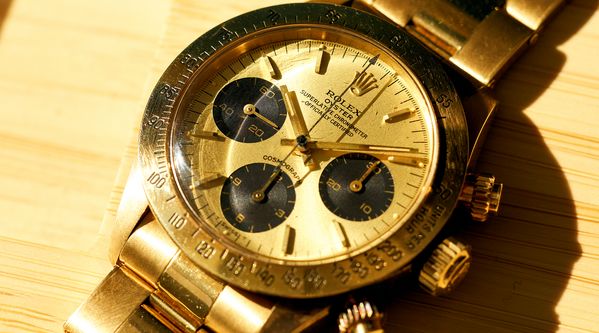
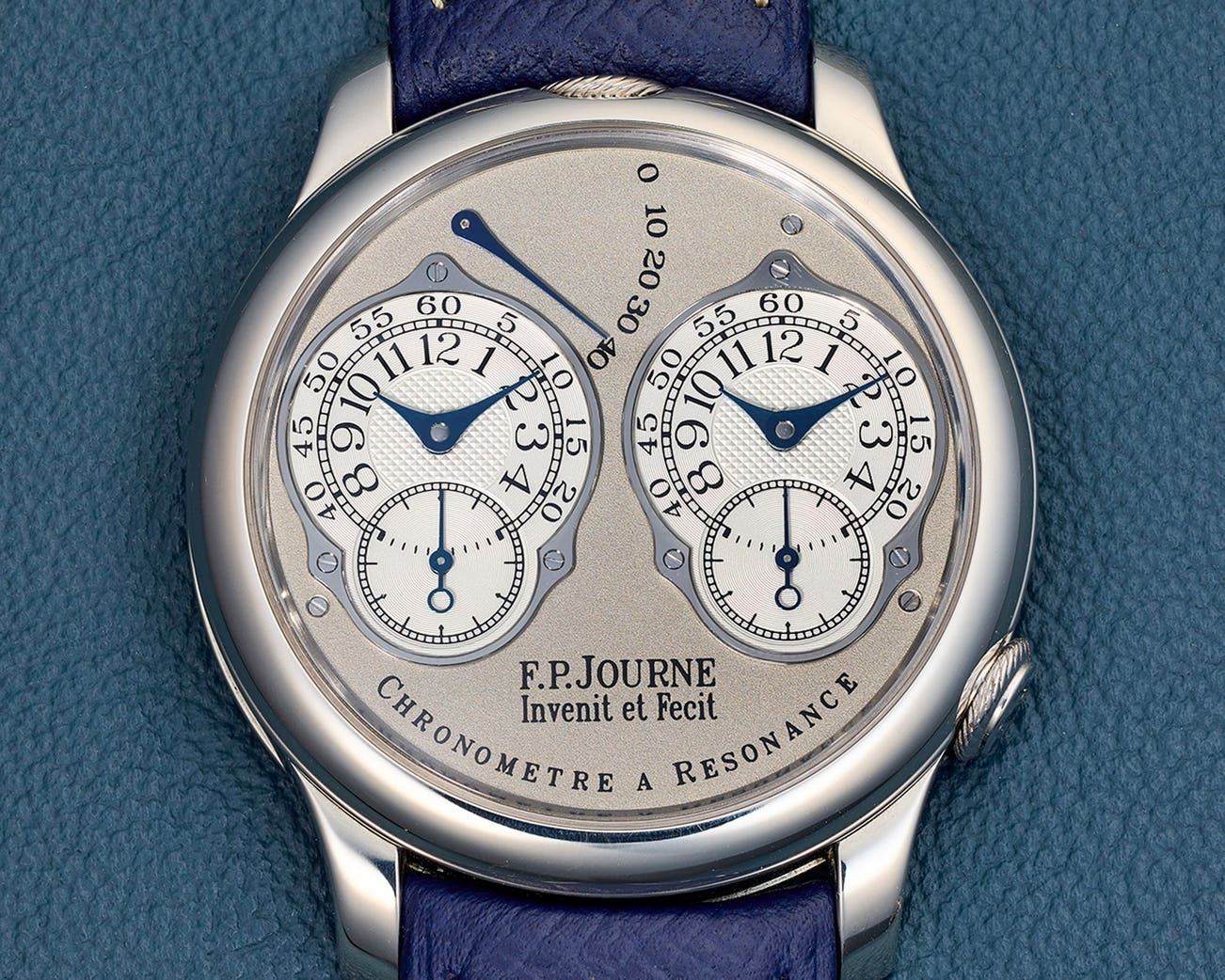
Phillips in Association with Bacs & Russo is thrilled to welcome you to Watches Online: The New York Sessions Featuring the 1979 Collection, Spring 2025, running from 10:00 AM ET, Tuesday, 1 April, to 12:00 PM ET, Tuesday, 8 April. Featuring more than 65 different high-end luxury wristwatches, the sale covers everything from A. Lange & Söhne and F.P. Journe to Audemars Piguet and Patek Philippe, including all the watches featured below.
– By Logan Baker
When it comes to collecting vintage Rolex, there are many approaches. Some chase grails, others seek nuance. A few aim for breadth, others, depth. Rarely do you find a collection that does both with such conviction — and with such a specific, almost poetic constraint — as The 1979 Collection, a group of 18 Rolex watches, all dated to 1979, set to be offered as part of Phillips’ inaugural New York Sessions: Spring 2025 online auction.
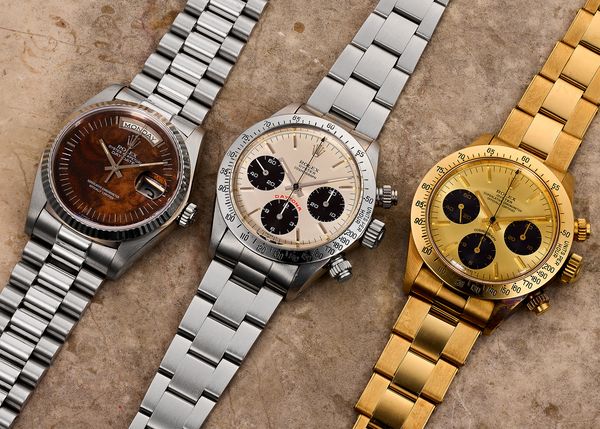
Curated over decades by a discreet but deeply passionate collector, The 1979 Collection isn't just a thematic exercise. It’s a distillation of one man’s pursuit of quality, consistency, and storytelling through watches — all tied to a single year. The lineup spans the Rolex spectrum: from steel sports models with just the right amount of patina to yellow gold Day-Dates outfitted with hardstone, wood, and exotic dials. There's diversity here, not only in reference and configuration but in character. And in the details — bevels, lume plots, dial textures — you can sense the collector’s painstaking discernment: a person who constantly sought upgrades, always chasing the cleaner case, the more vibrant dial, the finer example.
Anchoring the group are pieces like a reference 6265 Daytona in yellow gold, its soft patina and untouched chamfers telling you everything about how it’s been cherished, not worn. A steel example offers a complementary tone, its sub-dials turning ever-so-slightly tropical.
Though this collector’s journey spans more than 30 years, The 1979 Collection is his way of sharing something special with the world. It's a chance to reflect on the craftsmanship, design, and cultural resonance Rolex captured in a single, very specific moment in time — and to offer it up to a new generation of collectors.
Lot 13: A Circa 1979 Rolex Day-Date Ref. 18039 in 18k White Gold with Wood Dial
Estimate: USD $20,000 - 40,000
Originally introduced in 1956, the Day-Date made history as the first wristwatch to display both the date and the day of the week fully spelled out. It was a groundbreaking innovation at the time, blending refined style with everyday practicality. Decades later, the Day-Date remains an icon. While this particular watch features an English day wheel, Rolex has long offered the model in an impressive array of 26 languages.
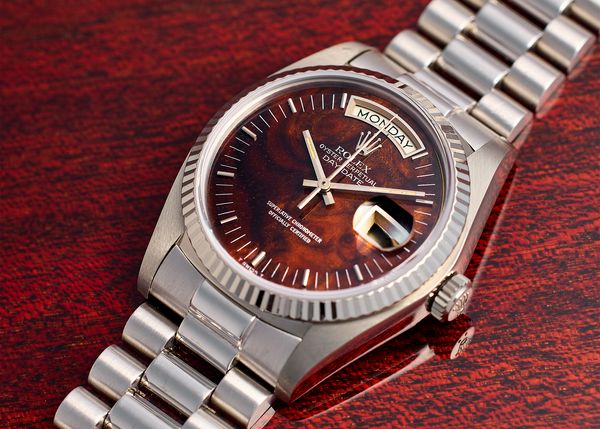
Lot 13: A Circa 1979 Rolex Day-Date Ref. 18039 in 18k White Gold with Wood Dial that's included in the Phillips New York Sessions, Spring 2025, Online Auction. Estimate: USD $20,000 - 40,000
This example, dating to around 1979, belongs to one of the rarest iterations of the Day-Date. The reference 18039 was introduced in 1978 as an evolution of the beloved reference 1803. It brought key upgrades, including a sapphire crystal and the automatic caliber 3055 with a convenient quick-set date function. Crafted in 18k white gold, this watch stands out with a highly unusual wood dial — a feature more commonly seen in yellow gold models — making this configuration especially rare and collectible.
Presented in excellent condition, this 18k white gold Day-Date comes complete with its presentation box and features a richly patterned, charismatic wood dial that adds warmth and character to this exceptional timepiece.
Lot 14: A Circa 1979 Rolex Day-Date Ref. 18038 in 18k Yellow Gold with Onyx Dial and Spanish Date Day Disc
Estimate: USD $18,000 - 25,000
Among the many variations of Rolex’s legendary Day-Date, the reference 18038 in yellow gold with a black onyx dial stands apart as a masterclass in understated elegance. Produced from the late 1970s through the 1980s, the 18038 marked an important evolution in the model’s lineage, introducing the Caliber 3055 with a quickset date function while retaining the iconic President bracelet and fluted bezel that have defined the Day-Date since its debut in 1956.
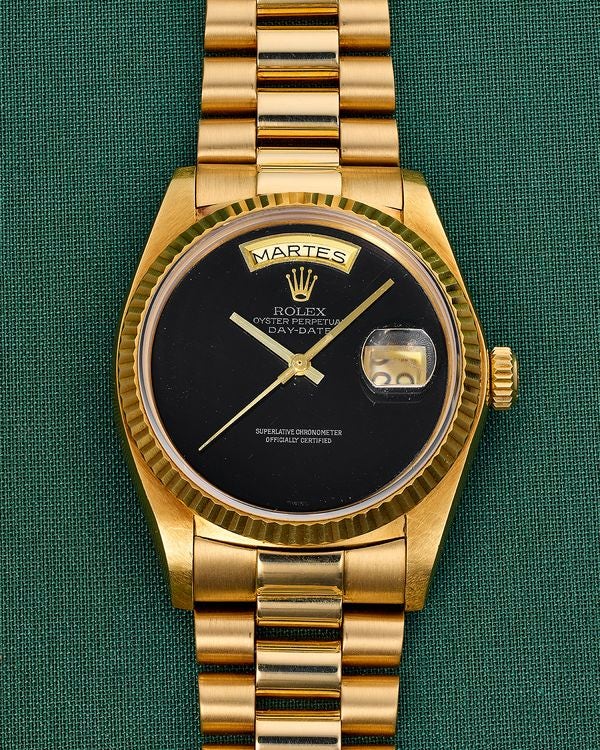
Lot 14: A Circa 1979 Rolex Day-Date Ref. 18038 in 18k Yellow Gold with Onyx Dial and Spanish Date Day Disc that's included in the Phillips New York Sessions, Spring 2025, Online Auction. Estimate: USD $18,000 - 25,000
The black onyx dial — completely free of hour markers — is a bold and refined design choice that places full emphasis on the material itself. Known for its rich, deep hue and natural luster, onyx transforms the dial into a minimalist statement of luxury. Devoid of indices or numerals, it offers a clean, modern look that remains timeless.
Adding to the distinctiveness of this piece is a Spanish-language day disc, a subtle but sophisticated nod to Rolex’s global reach and commitment to personalization. This detail not only enhances the watch’s uniqueness but also reflects the brand’s enduring connection with Spanish-speaking markets across Europe and Latin America.
Offered in excellent overall condition and accompanied by its full set of original accessories, this yellow gold Day-Date boasts stately proportions and a striking presence. It is a true collector’s piece — versatile, rare, and ready to make an impression on any occasion.
Lot 15: A Circa 1979 Rolex Day-Date Ref. 18078 in 18k Yellow Gold with Dégradé Lacquer Dial
Estimate: USD $20,000 - 40,000
Admired for its iconic status, wide-ranging variations, and enduring style, the Rolex Day-Date stands as one of the brand’s most celebrated creations. First introduced in the mid-1950s, it was a landmark innovation — the world’s first self-winding chronometer wristwatch to feature both a day and date display, housed in a waterproof case. Positioned at 12 and 3 o’clock respectively, these indications became defining elements of the model.
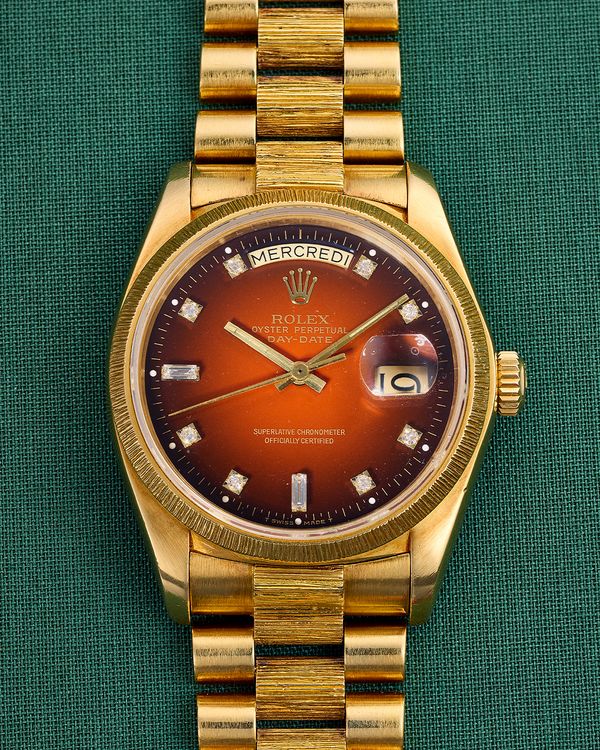
Lot 15: A Circa 1979 Rolex Day-Date Ref. 18078 in 18k Yellow Gold with Dégradé Lacquer Dial that's included in the Phillips New York Sessions, Spring 2025, Online Auction. Estimate: USD $20,000 - 40,000
In 1977, Rolex unveiled the Day-Date reference 18000 series, introducing the upgraded Caliber 3055. Beating at 28,800 vibrations per hour, the movement offered improved precision and a quickset date function. Since its debut in 1956, the Day-Date has been offered in an impressive range of case and dial configurations, reflecting Rolex’s commitment to diversity and distinction.
The present reference 18078 in yellow gold is a standout example. It features a unique bark-textured bezel and matching center links — an uncommon design flourish that adds depth and luxury to the watch’s appearance. Its rich reddish-brown vignette lacquer dial is especially captivating, fading from a deep near-black outer edge to a warm mahogany center. Diamond-set hour markers further elevate its elegance, while the French-language day disc adds a touch of international flair and rarity.
Offered in superb condition, this striking Day-Date combines bold design, refined craftsmanship, and desirable details — making it a prized piece for collectors and enthusiasts alike.
Lot 16: A Circa 1979 Rolex Explorer II Ref. 1655 in Stainless Steel with 'Mk 4' Dial
Estimate: USD $12,000 - 24,000
First introduced in 1971, the Rolex Explorer II reference 1655 marked a bold departure from its predecessors. It did away with the familiar 3-6-9 “Explorer” dial layout and introduced a new set of features designed specifically for adventurers. Housed in a robust 39mm Oyster case, it featured a date aperture, a fixed 24-hour bezel, and most notably, a large orange 24-hour hand. This distinctive hand allowed for easy tracking of time over a 24-hour scale and earned the watch its affectionate Italian nickname, Freccione — or “big arrow.”
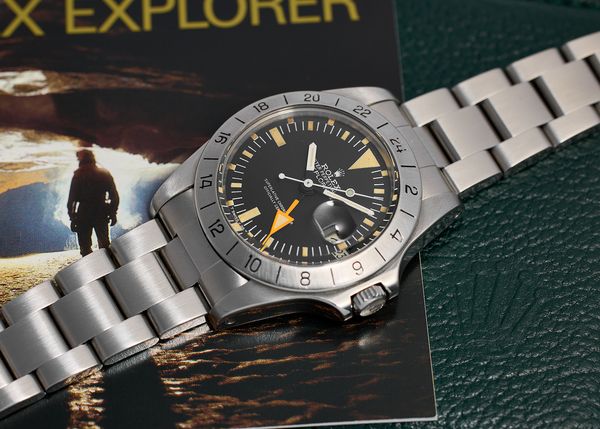
Lot 16: A Circa 1979 Rolex Explorer II Ref. 1655 in Stainless Steel with 'Mk 4' Dial that's included in the Phillips New York Sessions, Spring 2025, Online Auction. Estimate: USD $12,000 - 24,000
While the Explorer II was created with explorers and professionals in mind, its design catered especially to speleologists, or cave explorers. In environments with no natural light, the vibrant, luminous 24-hour hand enabled wearers to distinguish between day and night — an essential function during prolonged subterranean expeditions.
Produced through the mid-1980s, the reference 1655 saw five different dial variations during its run. The present example features the correct “Mk 4” dial, distinguished by its “T SWISS < 25T” signature in a serif typeface, matching the serial number range. Well-preserved and increasingly uncommon, this Explorer II remains a standout within the Rolex lineup — valued for its unique design, tool-watch pedigree, and enduring character.
Lot 17: A Circa 1979 Rolex Cosmograph Daytona Ref. 6265 in Stainless Steel with 'Big Red' Dial
Estimate: USD $50,000 - 100,000
The Rolex Cosmograph Daytona reference 6265 — introduced alongside its sibling, the 6263, around 1969 — remained in production until the late 1980s. Distinguished by its screw-down chronograph pushers and corresponding “Oyster” designation on the dial, the 6265 marked a significant step forward in both form and function for Rolex’s iconic chronograph.
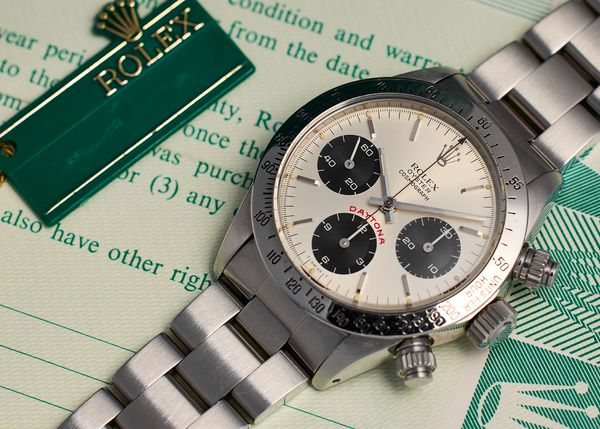
Lot 17: A Circa 1979 Rolex Cosmograph Daytona Ref. 6265 in Stainless Steel with 'Big Red' Dial that's included in the Phillips New York Sessions, Spring 2025, Online Auction. Estimate: USD $50,000 - 100,000
At its heart is the Caliber 727, a refined Rolex-modified version of the legendary Valjoux 72 movement. This final evolution of the manual-wind Daytona movement represents the end of an era — superseded in 1988 by the reference 16520, which introduced a self-winding caliber based on the Zenith El Primero. As such, the 6265 stands as the last of the hand-wound Daytonas, making it especially important in the model’s lineage.
Dating from 1979, the present example is a particularly exceptional specimen. It features the same steel bezel design first seen on the original Daytona reference 6239, offering a classic aesthetic paired with modern enhancements. Most notably, the watch boasts a striking silver "Big Red" dial — so named for the bold red "Daytona" text above the hour register — a highly coveted feature among collectors. Remarkably well-preserved, the dial displays minimal signs of age, further enhancing its desirability.
Offered with its original guarantee and Rolex presentation boxes, this reference 6265 is a premium example for the discerning collector — combining historical significance, sharp aesthetics, and outstanding condition.
Lot 18: A Circa 1979 Rolex Cosmograph Daytona Ref. 6265 in 18k Yellow Gold with Champagne Dial
Estimate: USD $80,000 - 160,000
Introduced in 1969 and produced until 1987, the Rolex Cosmograph Daytona reference 6265 is among the most iconic vintage chronographs in the brand’s history. While the vast majority were cased in stainless steel — ideal for the professional drivers the watch was originally designed to serve — Rolex also produced a small number of examples in 18K and 14K yellow gold. At the time, the concept of a luxurious tool watch was still novel, and gold Daytonas were seen as extravagant and less practical, resulting in extremely limited production. It is estimated that fewer than 2,000 gold 6265s were made during the model’s entire production run, making them exceptionally rare today.
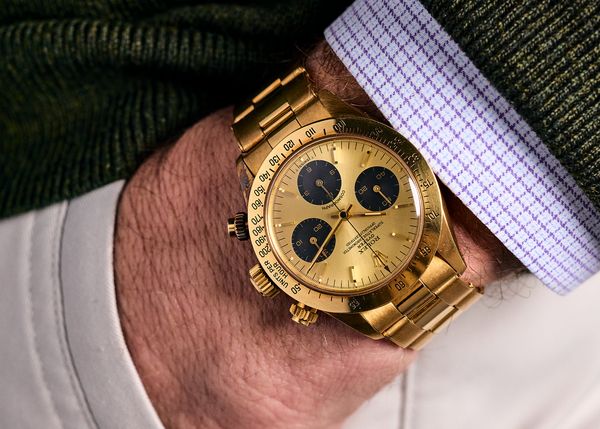
Lot 18: A Circa 1979 Rolex Cosmograph Daytona Ref. 6265 in 18k Yellow Gold with Champagne Dial that's included in the Phillips New York Sessions, Spring 2025, Online Auction. Estimate: USD $80,000 - 160,000
A key feature of the manually wound Caliber 727 movement found in the 6265 (as well as in references 6262, 6263, and 6264) is its ability to be regulated to chronometer standards. While steel Daytonas were not submitted for COSC certification, the gold versions — positioned as more prestigious offerings — were indeed sent for official chronometer testing. As a result, most gold 6265s bear the familiar “Superlative Chronometer Officially Certified” designation on the dial, a detail that sets them apart from their steel counterparts.
The present example is an outstanding specimen. Featuring a warm champagne dial accented by richly toned aubergine subdials, it exudes vintage character and elegance. The solid gold bezel and original riveted Oyster bracelet further enhance its presence. Notably, the case has developed a beautiful, asymmetrical patina over time — evidence of careful preservation and infrequent wear. Exceptionally well-preserved and visually striking, this rare 6265 is a collector’s dream, certain to attract strong interest from connoisseurs around the world.
Lot 19: A Circa 1979 Rolex GMT-Master Ref. 1675 in Stainless Steel with 'Mk V' Dial
Estimate: USD $10,000 - 20,000
The Rolex GMT-Master reference 1675 was introduced in 1959 as the direct successor to the original reference 6542, launched just four years earlier in 1955. While the 6542 pioneered the dual-time functionality that defined the GMT-Master line, the 1675 brought meaningful technical and aesthetic updates. Most notably, it introduced crown guards for added protection and replaced the fragile Bakelite bezel with a more robust aluminum insert — dramatically improving the model’s durability and wearability.
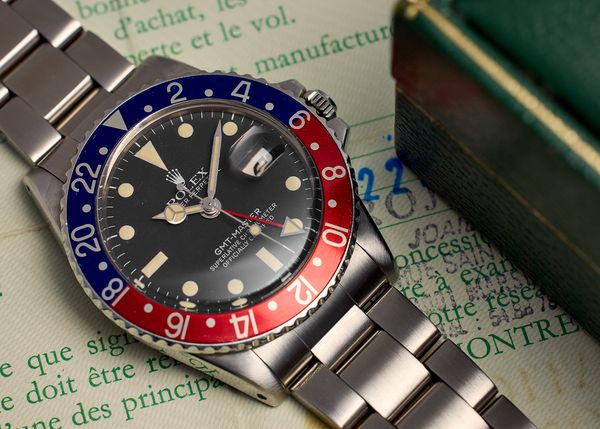
Lot 19: A Circa 1979 Rolex GMT-Master Ref. 1675 in Stainless Steel with 'Mk V' Dial that's included in the Phillips New York Sessions, Spring 2025, Online Auction. Estimate: USD $10,000 - 20,000
The present example is a particularly attractive and all-original watch, featuring the final evolution of the reference’s dial — the sought-after “MK V” variant. This dial is distinguished by the alignment of the “M” in “MASTER,” which falls neatly between the “CH” in “CHRONOMETER,” a hallmark of the correct dial for this late production period.
Accompanied by its original Rolex guarantee, dated March 22, 1979, along with its presentation box, this GMT-Master 1675 is a beautifully preserved and complete example of one of Rolex’s most enduring icons.
Lot 20: A Circa 1979 Rolex GMT-Master Ref. 16750 in Stainless Steel with Matte Dial
Estimate: USD $10,000 - 20,000
With the rise of transatlantic flights during the golden age of air travel, Rolex partnered with the legendary Pan American Airways to develop a practical tool for pilots navigating multiple time zones. The result was the GMT-Master — a dual-time wristwatch designed to help aviators combat the disorienting effects of jet lag. Since its debut, the GMT-Master has become one of Rolex’s most iconic and beloved models.
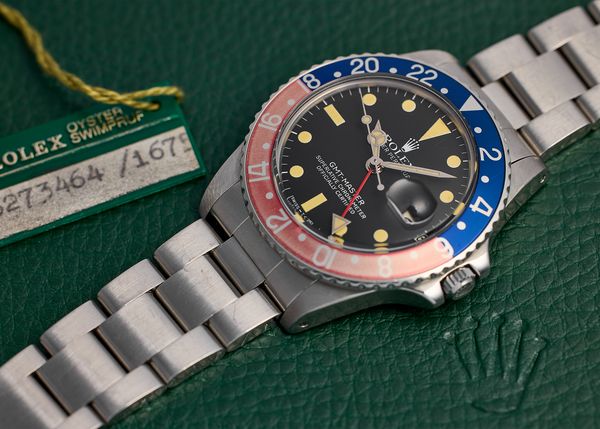
Lot 20: A Circa 1979 Rolex GMT-Master Ref. 16750 in Stainless Steel with Matte Dial that's included in the Phillips New York Sessions, Spring 2025, Online Auction. Estimate: USD $10,000 - 20,000
Introduced at the end of the 1970s, the reference 16750 succeeded the highly regarded 1675, bringing several meaningful upgrades. These included the improved Caliber 3075 with quick-set date functionality, increased water resistance from 50 to 100 meters, and a slightly larger 40mm case — enhancing both durability and wearability while preserving the model’s classic design DNA.
The present example, dating to circa 1979, is a well-preserved and highly desirable early version of the 16750. It features the rare matte dial that was offered only during the initial years of production — roughly until 1983 — before Rolex transitioned to glossy, lacquered dials with applied white gold hour markers. These early matte dial variants, with their clean, understated aesthetic, are now especially sought after by collectors. The dial on this watch has developed a beautiful patina, with its luminous hour markers fading to a pleasing light yellow tone.
Produced until around 1988, the reference 16750 represents a relatively short chapter in the GMT-Master’s history, and early examples like this — with their transitional features and vintage charm — offer an exceptional opportunity to acquire a modern grail watch with enduring appeal.
Lot 21: A Circa 1979 Rolex GMT-Master Ref. 1675 in Two-Tone with Black Dial
Estimate: USD $9,500 - 19,000
The Rolex GMT-Master reference 1675 is one of the most celebrated travel watches of the 20th century, perfectly capturing the spirit of the jet age with its dual-time functionality and iconic design. Introduced in the late 1950s and produced until 1980, the 1675 helped establish the GMT-Master as an essential tool for pilots and globe-trotters alike.
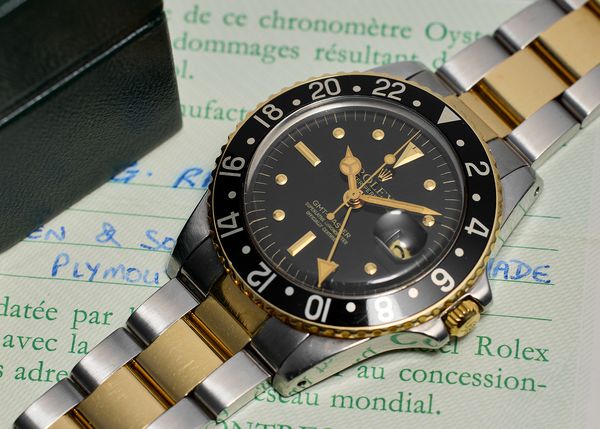
Lot 21: A Circa 1979 Rolex GMT-Master Ref. 1675 in Two-Tone with Black Dial that's included in the Phillips New York Sessions, Spring 2025, Online Auction. Estimate: USD $9,500 - 19,000
This particular example, dating to circa 1979, highlights the distinctive charm of the two-tone steel and yellow gold configuration. While many associate the two-tone 1675 with the brown “Root Beer” dial, this rarer variant features a striking black dial, giving it a more understated yet equally compelling aesthetic. The luminous hour markers, framed date window, and black bezel insert create a balanced, timeless look, while the gold accents offer a refined contrast that elevates the tool-watch origins of the GMT.
Accompanied by its full original set — including box, papers, and period-correct documentation — this well-preserved 1675 is an outstanding collector’s piece. It represents both a significant chapter in Rolex’s history and a rare opportunity to own a sophisticated and versatile vintage GMT-Master.
Lot 22: A Circa 1979 Rolex GMT-Master Ref. 1675 in 18k Yellow Gold with Brown 'Nipple' Dial
Estimate: USD $15,000 - 30,000
The Rolex GMT-Master reference 1675 remained in production until around 1980, with the vast majority of examples crafted in stainless steel. However, as with its predecessor, the reference 6542, Rolex also offered the 1675 in luxurious 18k yellow gold — produced in far more limited quantities, making these versions especially desirable among collectors.
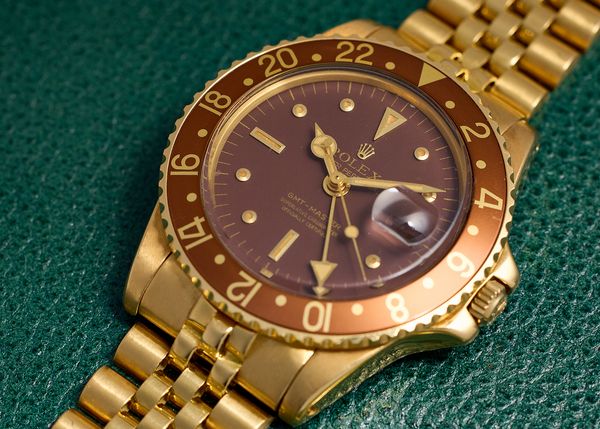
Lot 22: A Circa 1979 Rolex GMT-Master Ref. 1675 in 18k Yellow Gold with Brown 'Nipple' Dial that's included in the Phillips New York Sessions, Spring 2025, Online Auction. Estimate: USD $15,000 - 30,000
The present example, dating to 1979, hails from the final years of reference 1675 production, just before the transition to the five-digit reference series. Fitted with a refined Jubilee bracelet, the watch exudes vintage elegance while retaining the GMT’s signature utility. The rich mahogany brown dial features applied gold nipple-shaped hour markers filled with luminous material, perfectly echoing the warm tones of the 18k yellow gold case. A matching brown bezel insert complements the dial beautifully, while the bold 39mm case offers a confident, masculine presence on the wrist.
Well-preserved and visually striking, this late-production 18k gold 1675 is a rare opportunity to own one of the most distinctive and elegant variations of Rolex’s iconic travel watch.
Lot 23: A Circa 1979 Rolex GMT-Master Ref. 16758 in 18k Yellow Gold with Black 'Nipple' Dial
Estimate: USD $20,000 - 40,000
The Rolex GMT-Master is one of the brand’s most iconic tool watches, first introduced in 1955 in collaboration with Pan American Airways. Designed to assist pilots navigating multiple time zones, the GMT-Master offered a clever and practical solution: a fourth hand and rotating 24-hour bezel to track two time zones simultaneously. Originally fitted with a fragile Bakelite bezel, the model has since evolved into one of the most sought-after Rolex lines, offered in stainless steel, gold, and even gem-set configurations.
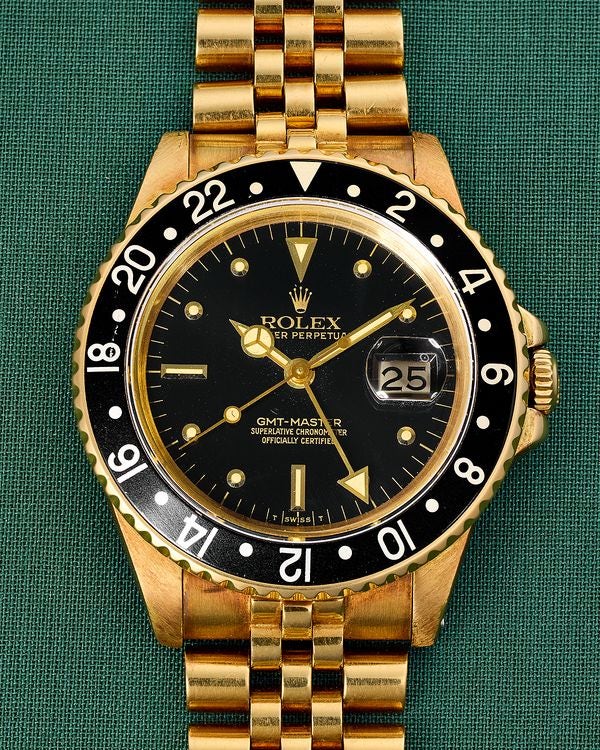
Lot 23: A Circa 1979 Rolex GMT-Master Ref. 16758 in 18k Yellow Gold with Black 'Nipple' Dial that's included in the Phillips New York Sessions, Spring 2025, Online Auction. Estimate: USD $20,000 - 40,000
Introduced at the end of the 1970s, the reference 16758 marked the yellow gold counterpart to the newly released stainless steel 16750. Both featured the upgraded Caliber 3075 movement with quick-set date functionality and enhanced water resistance to 100 meters. However, the 16758 also represented a turning point in the GMT-Master’s evolution — ushering in a more luxurious identity with its solid 18k yellow gold case. It was the first GMT-Master to feature a sapphire crystal, and notably, the first Rolex sports watch to be offered with precious stone settings, blending utility with high-end refinement.
The present example, dating to circa 1979, is a beautifully preserved early 16758 and features the coveted “nipple” dial — distinguished by its raised, gold-rimmed luminous hour markers. These early dial configurations are highly sought after by collectors for their vintage charm and rarity. Warmly aged and full of character, this 16758 is an exceptional example of Rolex's early exploration into luxury sports watches and a standout piece for the discerning collector.
Lot 24: A Circa 1979 Rolex Submariner Ref. 1680 in Stainless Steel with 'Mk 1' Dial
Estimate: USD $10,000 - 20,000
Introduced in 1967, the Rolex Submariner reference 1680 marked a pivotal moment in the model’s history — it was the first Submariner to feature a date complication. The addition of the date window, while undeniably practical, stirred controversy among purists who viewed it as a departure from the model’s original, minimalist tool-watch design — a debate that continues to divide enthusiasts to this day.
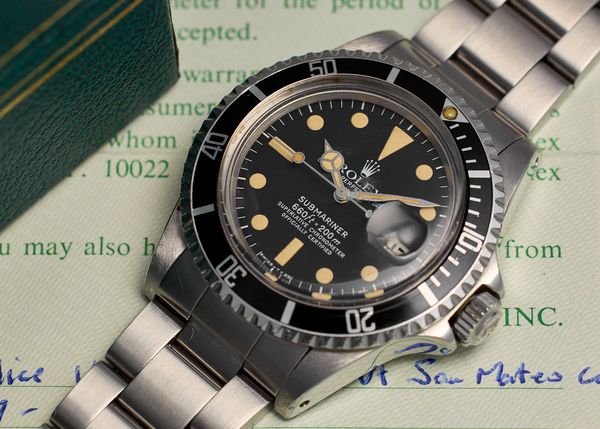
Lot 24: A Circa 1979 Rolex Submariner Ref. 1680 in Stainless Steel with 'Mk 1' Dial that's included in the Phillips New York Sessions, Spring 2025, Online Auction. Estimate: USD $10,000 - 20,000
The present example, dating to circa 1979, is a particularly well-preserved specimen that features the desirable MK I “feet first” dial. Key identifying traits include the closed 6s in the depth rating “660ft=200m” and the “L” in “ROLEX” perfectly centered beneath the coronet — hallmarks appreciated by seasoned collectors for their nuance and period correctness.
Part of the 1979 production year, this watch is offered in excellent overall condition and is accompanied by its punched guarantee papers, multiple detailed service records, and original presentation boxes. With its historical significance, correct dial variation, and complete set, this Submariner 1680 stands as a compelling example of one of Rolex’s most iconic dive watches.
Lot 25: A Circa 1979 Rolex Sea-Dweller Ref. 1665 in Stainless Steel with 'Rail' Dial
Estimate: USD $10,000 - 20,000
In 1967, Rolex officially launched the first-ever Sea-Dweller, reference 1665 — an evolution of the Submariner built to meet the demands of professional deep-sea divers. Early examples were distinguished by two lines of red text reading “SEA-DWELLER” and “SUBMARINER 2000,” a feature that earned them the now-iconic nickname: the “Double Red” Sea-Dweller.
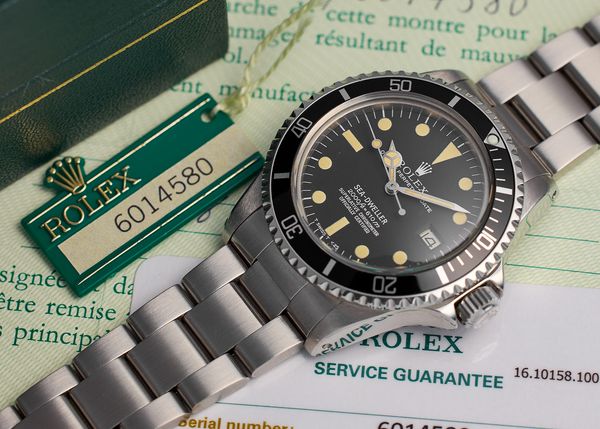
Lot 25: A Circa 1979 Rolex Sea-Dweller Ref. 1665 in Stainless Steel with 'Rail' Dial that's included in the Phillips New York Sessions, Spring 2025, Online Auction. Estimate: USD $10,000 - 20,000
By the mid-1970s, Rolex transitioned to what collectors now call the “Great White” dial, which omitted the red text in favor of an all-white print layout. Early examples of the “Great White” are rare in their own right, but among them, the elusive “Rail Dial” stands out as a true collector’s gem. Produced for just a short period — approximately two years — these dials were manufactured by Stern, the same company that would go on to become Patek Philippe’s parent company. Unlike standard Singer-made dials, the Rail Dial is marked by its unique text alignment.
Most notably, the last “E” in “Superlative” and the “Y” in “Officially” are vertically aligned, as are the “C” in “Chronometer” and the “C” in “Certified,” forming a visually distinctive “corridor” of space between the final two lines of text — hence the “rail” nickname. Adding to its uniqueness, the dial also bears the rare “T Swiss T < 25” designation, a detail found exclusively on Rail Dials within the Sea-Dweller family.
This particular Sea-Dweller, dating to 1979, is an exceptional example. The dial is beautifully preserved, with luminous hour markers that have aged to a warm, even beige patina, adding to the watch’s vintage charm. For the discerning collector, this is a rare opportunity to acquire one of the most sought-after configurations of Rolex’s legendary deep-sea tool watch.
Lot 26: A Circa 1979 Rolex Submariner Ref. 5513 in Stainless Steel
Estimate: USD $8,000 - 12,000
Few watches embody the spirit of Rolex’s dive watch legacy as completely as the Submariner reference 5513. Produced from the early 1960s through the late 1980s, the 5513 is one of the longest-running and most beloved references in the Submariner family — prized for its clean, no-date dial and rugged, purpose-built design.
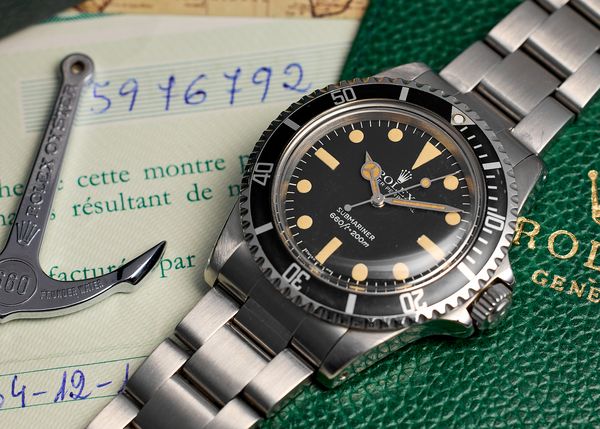
Lot 26: A Circa 1979 Rolex Submariner Ref. 5513 in Stainless Steel that's included in the Phillips New York Sessions, Spring 2025, Online Auction. Estimate: USD $8,000 - 12,000
This particular example, dating to circa 1979 with a 5.9 million serial number, features the desirable matte black dial characteristic of late 1970s production. The tritium hour markers and hands have aged beautifully to a warm, pumpkin-toned patina, lending the watch a rich vintage character. The domed acrylic crystal further enhances its classic appeal, offering a subtle distortion that amplifies the charm of the dial beneath. Together, these elements showcase the timeless functionality and design language that define the Submariner’s tool watch heritage.
With its striking aesthetics, strong condition, and full set of accompanying materials, this reference 5513 is a standout example that will appeal to both seasoned collectors and those seeking a cornerstone vintage Rolex for their collection.
Lot 27: A Circa 1979 Rolex Day-Date Ref. 18038 in 18k Yellow Gold with 'Birch Wood' Dial
Estimate: USD $15,000 - 30,000
The present Rolex Day-Date reference 18038 in yellow gold features a rare and highly desirable birch wood dial — an exquisite example of Rolex’s exploration of unconventional and luxurious materials. Over the years, the Day-Date has served as a canvas for an extraordinary range of dial variations, but few are as captivating — or as technically challenging to produce — as those crafted from natural wood.
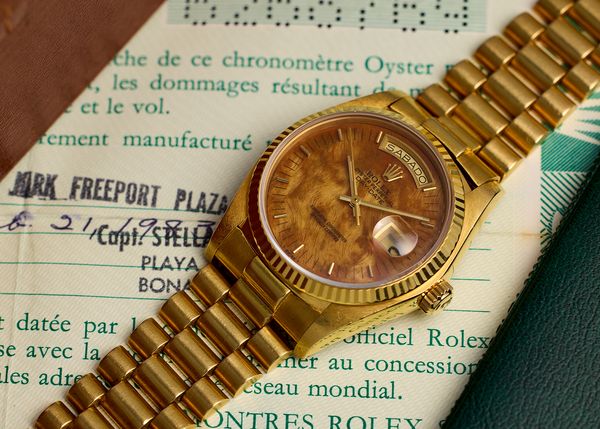
Lot 27: A Circa 1979 Rolex Day-Date Ref. 18038 in 18k Yellow Gold with 'Birch Wood' Dial that's included in the Phillips New York Sessions, Spring 2025, Online Auction. Estimate: USD $15,000 - 30,000
Wood dials are among the most delicate and difficult to manufacture, with each type requiring unique handling and finishing techniques. Among these, birch stands out for its lighter hue and distinctive grain, offering a softer, more luminous aesthetic compared to the deeper tones of walnut or madrona often seen on other wood dial variants.
This particular example showcases a beautifully patterned slice of birch, with swirling light and dark tones that create a striking sense of depth and movement. The gold-rimmed day and date apertures, hands, and applied hour markers perfectly complement the dial’s organic texture, while the Spanish-language date wheel adds an additional layer of rarity and international flair.
Vibrant, charismatic, and impressively well-preserved, this 18038 is a standout piece for collectors drawn to the artistry and individuality of Rolex’s most distinctive dial executions.
Lot 28: A Circa 1979 Rolex Day-Date Ref. 18000 in 18k White Gold with Diamond Hour Markers and German Day Wheel
Estimate: USD $15,000 - 30,000
Introduced in 1977, Rolex’s Day-Date reference 18000 series marked a significant evolution in the model’s lineage. It was powered by the upgraded Caliber 3055, which offered improved accuracy with a high-beat rate of 28,800 vibrations per hour and introduced the convenience of a quickset date function — streamlining time-setting for everyday use. Within this series, reference 18079 is distinguished by two key identifiers: the “7” denoting the distinctive bark-textured finish on the bezel and bracelet, and the “9” indicating the luxurious 18k white gold case.
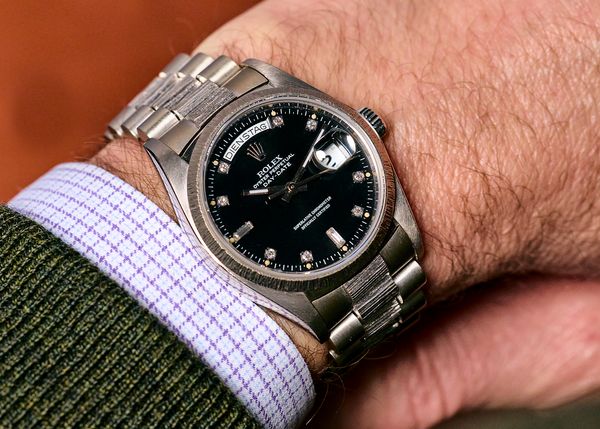
Lot 28: A Circa 1979 Rolex Day-Date Ref. 18000 in 18k White Gold with Diamond Hour Markers and German Day Wheel that's included in the Phillips New York Sessions, Spring 2025, Online Auction. Estimate: USD $15,000 - 30,000
This particular example is especially striking, featuring a glossy black dial set with diamond hour markers that beautifully complement the crisp white gold case. The pairing exudes refinement and understated luxury, made all the more compelling by the watch’s superb overall condition. Adding to its rarity is the presence of a German-language date wheel — a detail that not only underscores Rolex’s global appeal but also enhances the watch’s uniqueness in the market.
Seldom seen in this configuration, this Day-Date 18079 represents a fantastic opportunity for collectors seeking an elegant, well-preserved, and distinct variation of one of Rolex’s most iconic models.
Lot 29: A Circa 1979 Rolex Oysterquartz Day-Date Ref. 19018 in 18k Yellow Gold with 'Burl Wood' Dial
Estimate: USD $12,000 - 24,000
The Rolex Oysterquartz Day-Date reference 19018 represents a remarkable and often overlooked chapter in the brand’s storied history — merging cutting-edge technology with the timeless prestige of the Day-Date line. Crafted entirely in 18k yellow gold, the watch is distinguished by its sharply angular case and integrated bracelet — hallmarks of late 1970s design — and powered by Rolex’s in-house Caliber 5055 quartz movement. Developed at the height of the quartz revolution, the 5055 was a technological triumph, offering chronometer-certified precision while retaining Rolex’s commitment to craftsmanship and mechanical excellence.
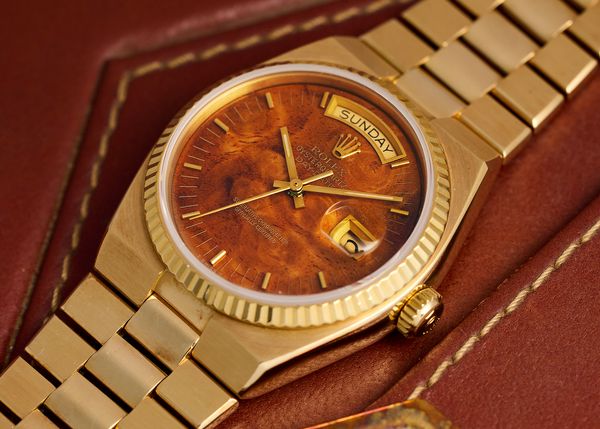
Lot 29: A Circa 1979 Rolex Oysterquartz Day-Date Ref. 19018 in 18k Yellow Gold with 'Burl Wood' Dial that's included in the Phillips New York Sessions, Spring 2025, Online Auction. Estimate: USD $12,000 - 24,000
What truly sets this example apart is its striking burl wood dial. Made from natural hardwood, each burl dial is inherently one of a kind, with swirling, organic grain patterns that create a captivating contrast against the lustrous gold case and bracelet. The warm, earthy tones lend a rich, artisanal quality rarely seen in Rolex’s lineup — an expression of the brand’s willingness to embrace unconventional materials with sophistication and restraint. Applied gold hour markers and the signature day and date windows are thoughtfully integrated into the design, ensuring both legibility and balance.
Produced in limited numbers, the reference 19018 with burl wood dial stands as a collector’s gem — a fusion of avant-garde innovation and refined craftsmanship. It captures a distinctive moment in Rolex’s history when the brand fearlessly experimented with design, materials, and technology. This exceptional example is offered with its original Rolex presentation box, underscoring its status as a true connoisseur’s piece.
Lot 30: A Circa 1979 Rolex Day-Date Ref. 18078 in 18k Yellow Gold with Aventurine Dial
Estimate: USD $20,000 - 40,000
Commonly known as the “President’s watch,” the Rolex Day-Date has held iconic status since its debut in 1956. Exclusively crafted in precious metals, the Day-Date has long represented the pinnacle of Rolex’s luxury offerings. Over the decades, the model has been produced in a remarkable variety of configurations, with a vast range of case materials, dial designs, exotic stones, and elaborate gem-setting — making it one of the brand’s most diverse and collectible lines.
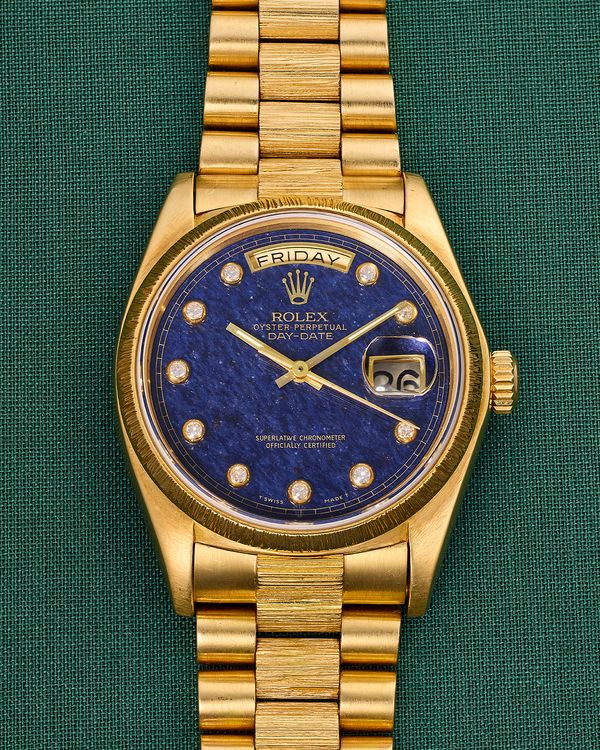
Lot 30: A Circa 1979 Rolex Day-Date Ref. 18078 in 18k Yellow Gold with Aventurine Dial that's included in the Phillips New York Sessions, Spring 2025, Online Auction. Estimate: USD $20,000 - 40,000
The reference 18078, introduced in the 1970s, is especially prized for its unique bark-finished detailing. This reference is characterized by its textured fluted bezel and matching bark-finished center links on the President bracelet — a distinctive and richly tactile variation that sets it apart within the Day-Date family.
What truly sets this example apart is its extremely rare blue aventurine dial, embellished with diamond hour markers. Aventurine is a type of natural quartz, and in its blue form, owes its color to the inclusion of dumortierite, a fibrous mineral that gives the stone its deep, celestial shimmer. The dial’s rich texture and depth are striking against the warm glow of the yellow gold case and bracelet, creating a dramatic yet refined presence on the wrist.
A product of the Day-Date’s golden era, this model reflects Rolex’s masterful blending of technical innovation, luxurious materials, and timeless design. Offered here in a seldom-seen configuration, it represents an exciting opportunity for collectors seeking a truly exceptional expression of the brand’s most prestigious wristwatch.
You can view the complete catalog for the Phillips Watches Online: The New York Sessions Featuring the 1979 Collection, Spring 2025, right here.
Our new online auction app for iOS offers a seamless way to browse and bid in online auctions. Download now to bid in the Phillips Watches Online: The New York Sessions Featuring the 1979 Collection, Spring 2025. Phillips Online is currently only available on iOS. Android users can browse and bid via their mobile browser.
About Phillips In Association With Bacs & Russo
The team of specialists at PHILLIPS Watches is dedicated to an uncompromised approach to quality, transparency, and client service. Phillips in Association with Bacs & Russo holds the world record for the most successful watch auction, with its Geneva Watch Auction: XIV having realized $74.5 million in 2021. Over the course of 2021 and 2022, the company sold 100% of the watches offered, a first in the industry, resulting in the highest annual total in history across all the auction houses at $227 million.
About Logan Baker
Logan has spent the past decade reporting on every aspect of the watch business. He joined Phillips in Association with Bacs & Russo at the start of 2023 as the department's Senior Editorial Manager. He splits his time between New York and Geneva.
Recommended Reading
The Different Shapes of Cartier
Three References, One Legacy, A Look at the Patek Philippe Calatrava
Specialists' Picks: The New York Sessions Featuring the 1979 Collection, Spring 2025