246
傑蘇斯.拉斐爾.索托
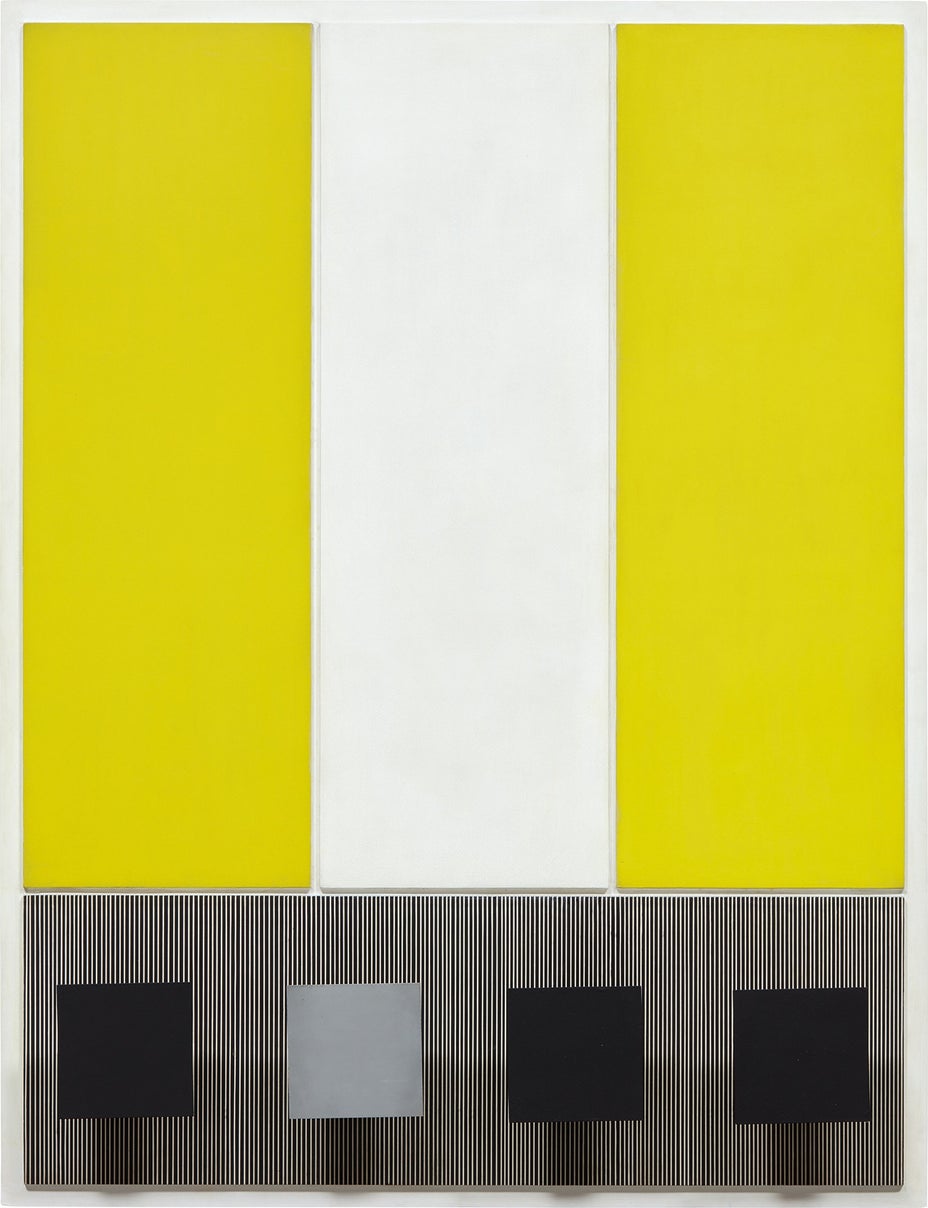
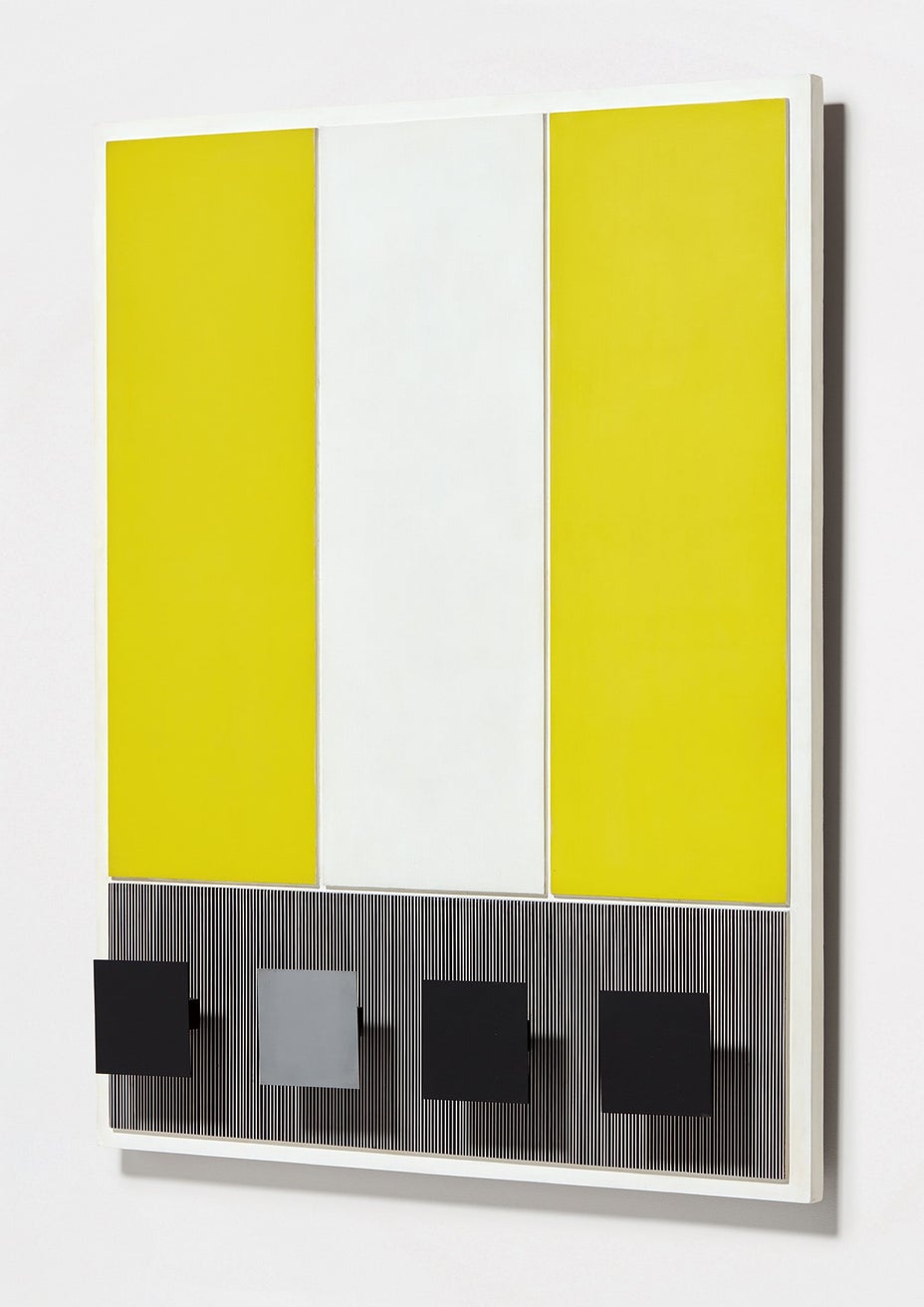
Rectangles et Carres
完整圖錄內容
The year 1969 represented the culmination of a decade during which Soto’s mature style emerged. Having grown up and studied figurative art in Venezuela, the artist immigrated to Paris in the early 1950s, immersing himself in the artistic post-war scene. This move was propelled by a creative epiphany that Soto experienced after hearing an acquaintance skeptically describe Malevich’s White on White, 1918 painting. Although he would not see this painting until years later, he immediately understood its far reaching implications. The conceptual nature of this insight reflects Soto’s approach to art, not as a creative or political expression, but as a form of knowledge akin to philosophical and scientific investigation.
Soto’s recurring use of the square stems from its abstract purity and independence from the human scale, which allowed him to break free from the constraints of classical composition and anthropocentrism. It is no wonder that he considered Mondrian to be the most significant abstract painter of his time. Addressing the unresolved tension inherent to Mondrian's work between the intersection of the vertical and horizontal axes, Soto's innovation was to add a third dimension to his works, achieving the sense of vibration that had inspired him since his youth.
The importance of Rectangles et Carres is further attested by its provenance. Originally sold by the gallery that first brought Soto’s work to prominence in Paris in 1955, this work belonged to the Venezuelan sculptor Francisco Narvaez. A compatriot from an earlier generation, Narvaez studied art in Paris, but returned to Venezuela in 1931, dedicating himself to expressing the local culture and ethnicity in a modern, artistic language. In a sense, the work of Narvaez’s generation paved the way for a cosmopolitan generation of post-war artists that fully embraced the universal, as the problem of local identity had already been widely investigated, if not resolved. Soto’s fascination with light was not specific to his tropical upbringing, but rather an instinctive curiosity towards the most basic, universal phenomenon. As Soto realized when first viewing the paintings of Vermeer, his aim was to capture the universality of light, movement, and vibration.
傑蘇斯.拉斐爾.索托
Venezuelan | B. 1923 D. 2005Jesús Rafael Soto was born in Ciudad Bolívar and studied at the School of Visual and Applied Arts in Caracas. During this period he became acquainted with Los Disidentes, a group of artists that included Alejandro Otero and Carlos Cruz-Diez. In addition to his fellow compatriots, Soto’'s work was influenced by Kazimir Malevich and Piet Mondrian.
The main artistic tenets evinced in Soto's works are pure abstraction, vibrations, progressions and geometric rigor. They can be seen through the use of lines and superimposed squares in his sculptures, made with paint and a series of industrial and synthetic materials. He spent much time in Europe, becoming a key member of the Group Zero movement, which included such artists as Lucio Fontana, Gunther Uecker and Yves Klein. As a result, Soto's work also incorporates modernist concepts such as light, time, movement, color manipulation and space. All of these facets place him as an important figure within the Kinetic and Op Art movements.