

66
Vacheron Constantin
Ref. 43050/1
Mercator
江詩丹頓,精美,黃金腕錶,備逆返讀時、逆返讀分、德國彩繪琺瑯錶盤,限量發行20枚。附保證冊子及錶盒
- 估價
- CHF25,000 - 50,000$25,000 - 50,100€25,700 - 51,500
CHF50,400
拍品詳情
- 製造商
- Vacheron Constantin
- 年份
- 2010
- 型號
- 43050/1
- 機芯編號
- 684'267
- 錶殼號碼
- 684'359
- 型號名稱
- Mercator
- 材料
- 18k yellow gold
- 機芯
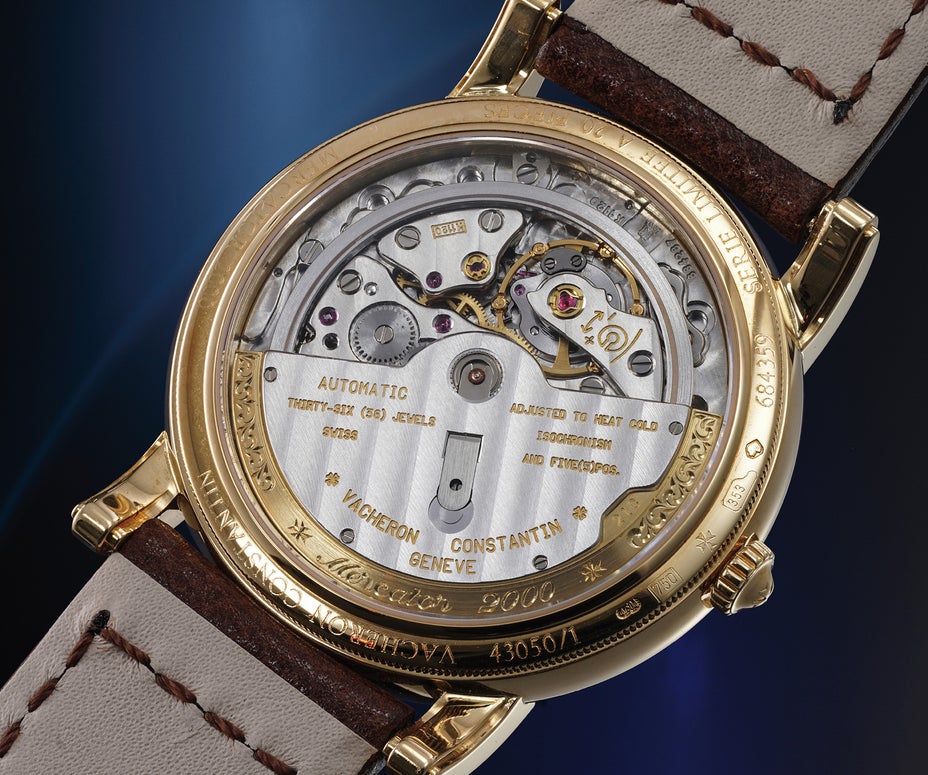
- Automatic, cal. 1120M, 36 jewels stamped with the Geneva Seal
- 錶帶/ 錶鏈
- Leather
- 錶扣
- 18k yellow gold Vacheron Constantin pin buckle
- 尺寸
- 36mm Diameter
- 簽名
- Case, dial, movement and buckle signed
- 配件
- Accompanied by Vacheron Constantin Certificate of Origin and Warranty, product literature, fitted box and outer packaging.
專家
完整圖錄內容
圖錄文章
Launched in 1994 on the occasion of the 400th anniversary of the celebrated Flemish/German cartographer’s passing, the Mercator may seem like a classic today but 20 years ago it was extremely cutting edge with its two retrograde hands and engraved or enamel dial. Gerardus Mercator developed the projection that still bears his name and which rendered the configuration of the terrestrial globe on to a flat surface and became the standard for nautical purposes.
It was in 1537 that he published his map of the Holy Land, the first of the 107 which were attributed to him.
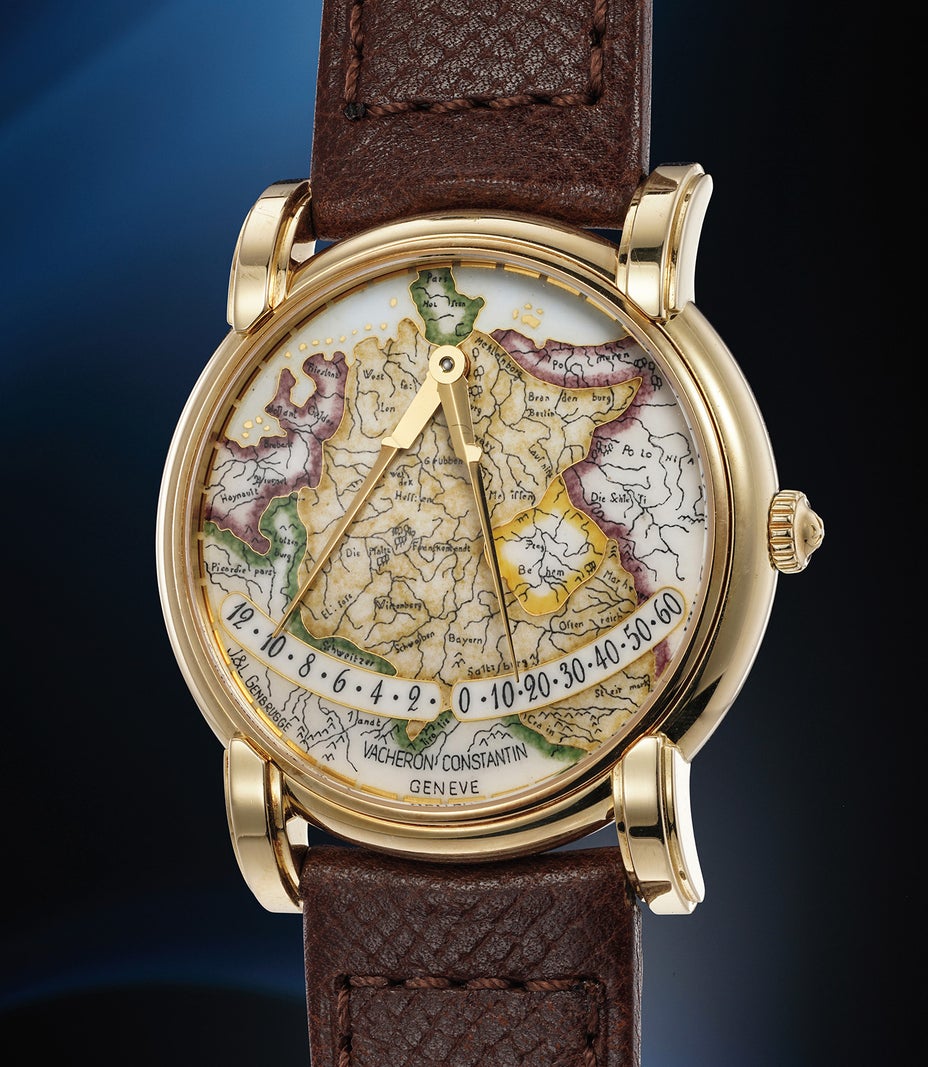
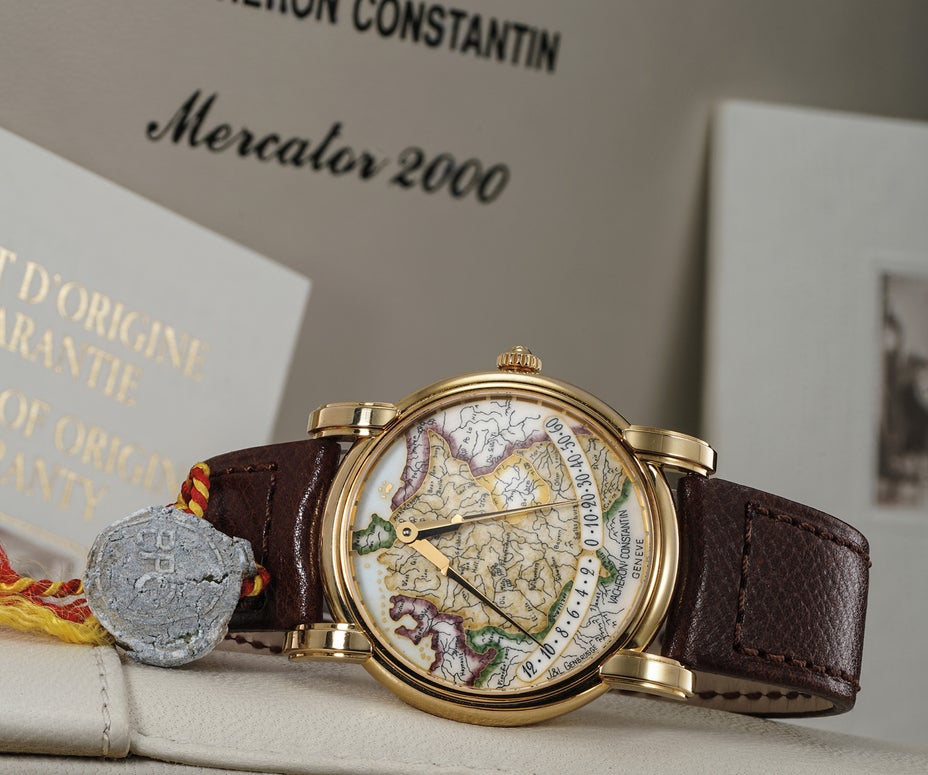
The enamel dial of the present Mercator represents Germany and parts of surrounding countries and was made in a limited edition of only 20 pieces.
The dial of the Mercator is enameled using the champlevé method, meaning the 18k gold dial is first hollowed out in the shape of the countries and other geographical features as well as the two sectors for hours and minutes. The resulting recesses are then filled with multiple layers of opaque enamel to form a suitable background. Each layer needs to be carefully fired at a temperature of 700° to 800° C (1290° to 1470°F) and, once it has cooled, meticulously smoothed before receiving the appropriate colors, in this case: green, yellow and purple, laid on with a brush composed of a few marten hairs. The operation needs to be repeated for each and every application of enamel, returning to the kiln a good thirty times or more, at various temperatures and for varying lengths of time depending on the color and the quantity of enamel applied. Finally, the workpiece is coated with transparent flux and fired one last time at about 900°C (1650°F) before smoothing and final polishing. Finally, the dials are extensively buffed until each is as flat and glossy as possible. Each individual map takes over twelve days to produce, meaning an average of just two dials can be made each month without taking into account the possible breaking as enamel is extremely brittle and unpredictable, requiring prudent and gradual cooling down to room temperature to avoid potentially destructive internal tensions that can cause the dial to shatter.
The movement of the Mercator is as interesting as its dial. It houses the extra flat (2.45mm thick) cal. 1120 modified for a bi-retrograde time indication. The hands, which have been very ingeniously shaped in the form of a compass, progress divergently across two arc-shaped zones, one graduated from 1 to 12 hours and the other from 0 to 60 minutes. Each hand returns instantly to zero on exactly completing one half day and one hour respectively.
The complexity of the double retrograde hands was made even more difficult by moving the hands to the top part of the dial resulting in the hands and the crown to be on a different axis.
It was in 1537 that he published his map of the Holy Land, the first of the 107 which were attributed to him.
The enamel dial of the present Mercator represents Germany and parts of surrounding countries and was made in a limited edition of only 20 pieces.
The dial of the Mercator is enameled using the champlevé method, meaning the 18k gold dial is first hollowed out in the shape of the countries and other geographical features as well as the two sectors for hours and minutes. The resulting recesses are then filled with multiple layers of opaque enamel to form a suitable background. Each layer needs to be carefully fired at a temperature of 700° to 800° C (1290° to 1470°F) and, once it has cooled, meticulously smoothed before receiving the appropriate colors, in this case: green, yellow and purple, laid on with a brush composed of a few marten hairs. The operation needs to be repeated for each and every application of enamel, returning to the kiln a good thirty times or more, at various temperatures and for varying lengths of time depending on the color and the quantity of enamel applied. Finally, the workpiece is coated with transparent flux and fired one last time at about 900°C (1650°F) before smoothing and final polishing. Finally, the dials are extensively buffed until each is as flat and glossy as possible. Each individual map takes over twelve days to produce, meaning an average of just two dials can be made each month without taking into account the possible breaking as enamel is extremely brittle and unpredictable, requiring prudent and gradual cooling down to room temperature to avoid potentially destructive internal tensions that can cause the dial to shatter.
The movement of the Mercator is as interesting as its dial. It houses the extra flat (2.45mm thick) cal. 1120 modified for a bi-retrograde time indication. The hands, which have been very ingeniously shaped in the form of a compass, progress divergently across two arc-shaped zones, one graduated from 1 to 12 hours and the other from 0 to 60 minutes. Each hand returns instantly to zero on exactly completing one half day and one hour respectively.
The complexity of the double retrograde hands was made even more difficult by moving the hands to the top part of the dial resulting in the hands and the crown to be on a different axis.
Vacheron Constantin
Swiss | 1755The world's oldest watch brand in continuous operation since its founding in 1755, Vacheron Constantin was the first watch company to manufacture movements with interchangeable parts beginning in 1839. Vacheron's watches are admired for their Latin-influenced case designs, well-balanced proportions and exquisitely finished movements of the highest quality. The Geneva-based manufacturer is known for their highly complicated masterpieces, including the King Farouk Grand Complication made in 1935, the Tour de l'Ile that was the most complicated serially produced wristwatch when introduced in 2005 and the 57260 — the world’s most complicated watch — made in 2015.
Key vintage models include minute repeating wristwatches such as the references 4261, chronographs such as the references 4178 and 6087 and the oversized Cioccolotone models such as ref. 4737. Collectors also appreciate Vacheron's Chronometer Royal pocket and wristwatches, as well as the '222,' the brand's first luxury sports watch produced from 1977 through 1984.
瀏覽製造者Key vintage models include minute repeating wristwatches such as the references 4261, chronographs such as the references 4178 and 6087 and the oversized Cioccolotone models such as ref. 4737. Collectors also appreciate Vacheron's Chronometer Royal pocket and wristwatches, as well as the '222,' the brand's first luxury sports watch produced from 1977 through 1984.