72
Rolex
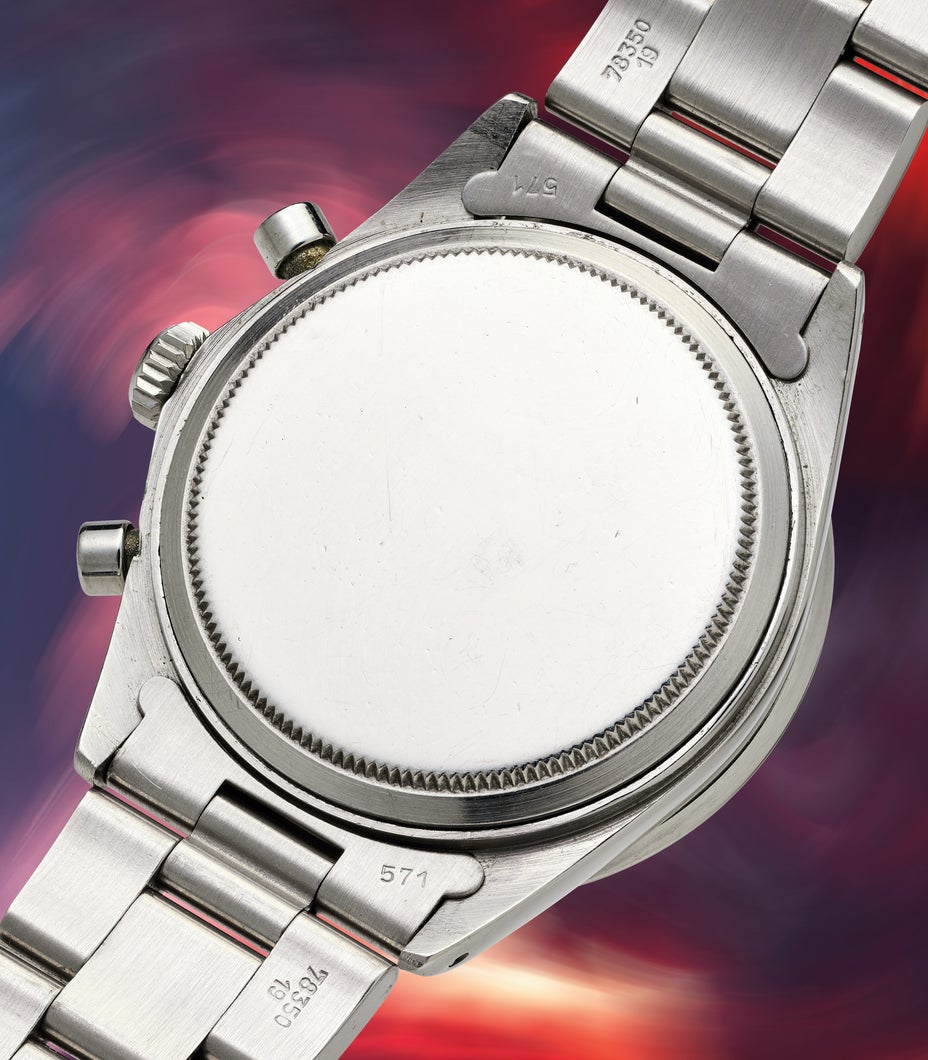
Ref. 6262, inside caseback stamped 6239
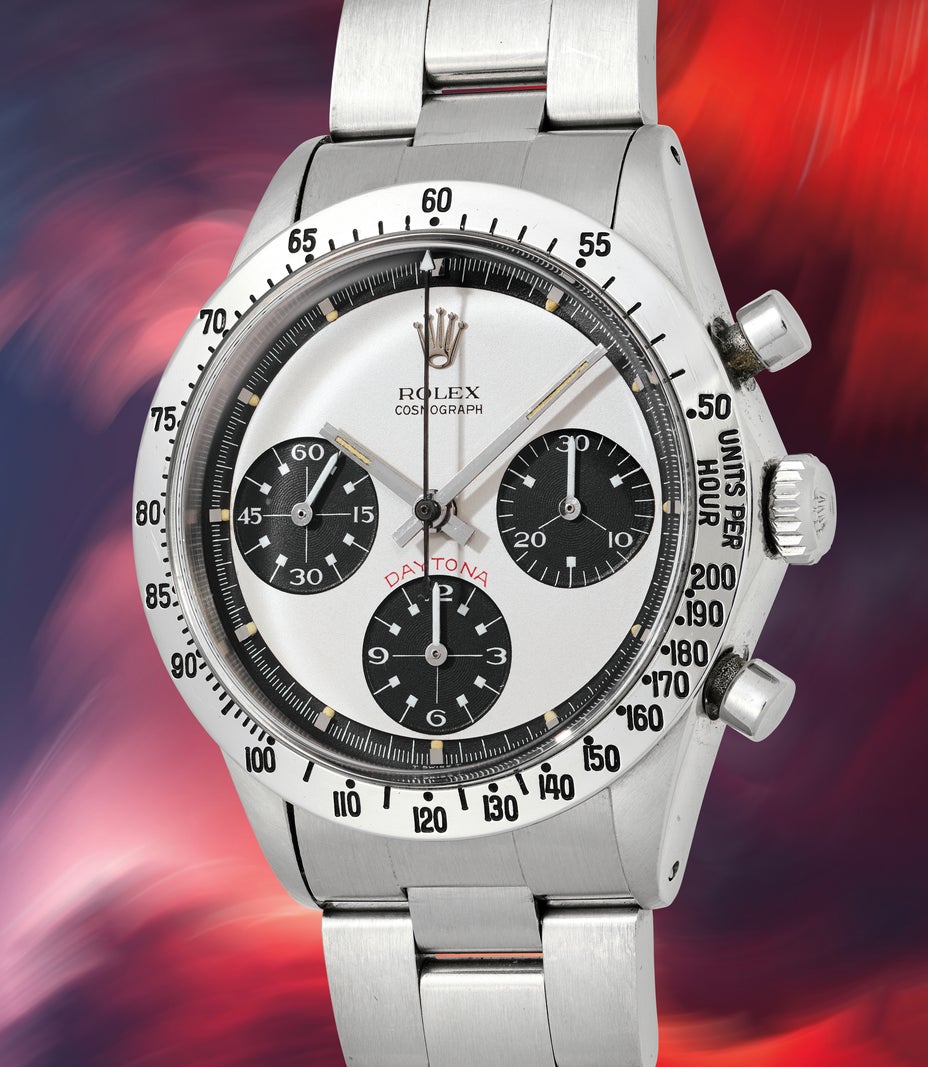
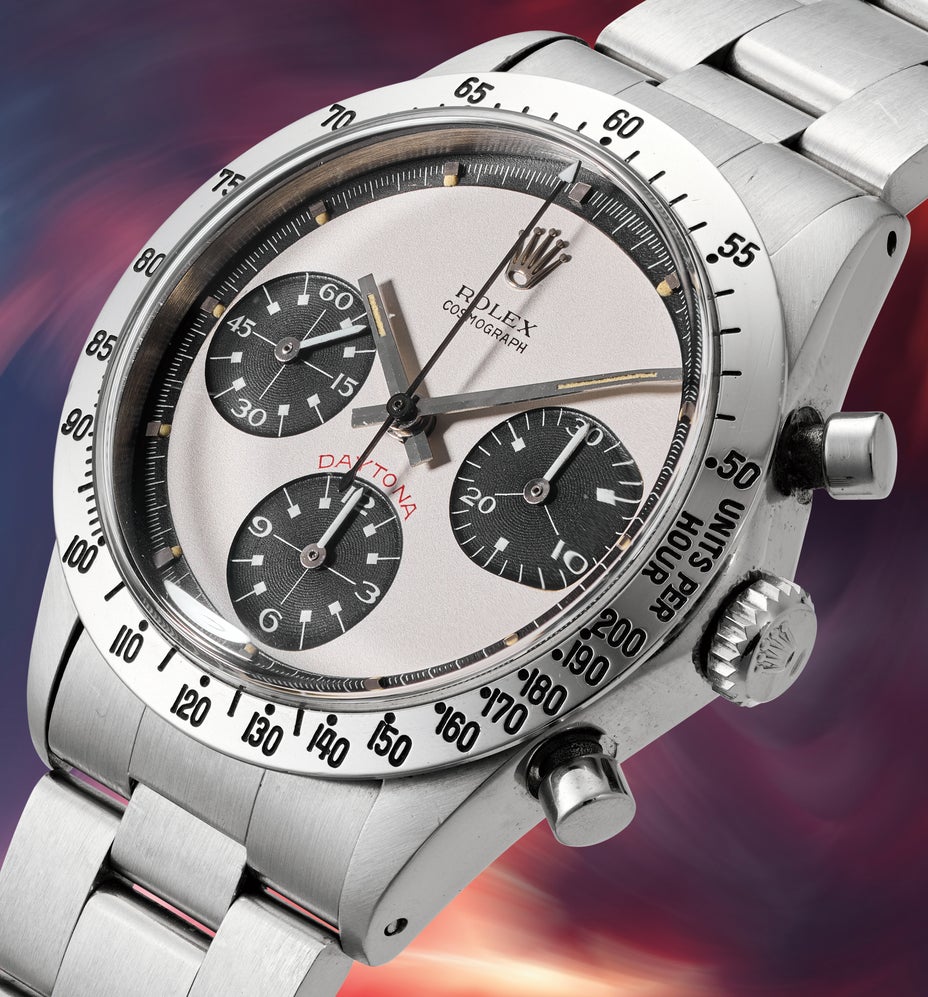
Cosmograph Daytona “Paul Newman”
A rare and highly attractive stainless steel chronograph wristwatch with “Paul Newman” exotic dial and bracelet
完整圖錄內容
-Iconic Paul Newman dial
-Transitional Rolex Daytona model
Rolex’s Oyster Cosmograph Daytona is a horological icon. In 1963, the brand revolutionized the chronograph with the reference 6239, the first Rolex chronograph to feature the tachymeter scale outside the dial, incorporated instead on the bezel.
Rolex introduced the reference 6262 with steel bezel and sister reference 6264 with an acrylic bezel in 1969. These two models are considered transitional as they are very similar to the previous generation references 6239 and 6241 but featured the upgraded caliber 727 and slightly larger cases. The references were discontinued in 1972 when Rolex launched the references 6263 and 6265 with screw-down pushers.
Rolex’s “exotic” dial, now known as the “Paul Newman” dial, was introduced in the late 1960s in the reference 6239, and was not well-received by retail clients. Early “Paul Newman” dials featured a three color scheme in red, white and black with a red Daytona signature over the 12-hour register at the 6 o’clock. As the Rolex Daytona chronograph evolved, so too did the exotic dial and by the late 1960s, the transitional references 6262 and 6264 featured a two color dial in black and white, with the red outer scale removed and replaced with white graphics.
The present example dating from 1971 is well-preserved, with a beautiful white grené dial hardly showing any signs of aging, and luminous hour markers, two of which were restored, and hands that have aged to a warm ivory tone. The white outer scale has a white flat “T Swiss T” designation, an evolution from the previously seen red scales with sing-a-song “T Swiss T” designation.
Rolex
Swiss | 1905Founded in 1905 England by Hans Wilsdorf and Alfred Davis as Wilsdorf & Davis, it soon became known as the Rolex Watch Company in 1915, moving its headquarters to Geneva in 1919. Like no other company, the success of the wristwatch can be attributed to many of Rolex's innovations that made them one of the most respected and well-known of all luxury brands. These innovations include their famous "Oyster" case — the world's first water resistant and dustproof watch case, invented in 1926 — and their "Perpetual" — the first reliable self-winding movement for wristwatches launched in 1933. They would form the foundation for Rolex's Datejust and Day-Date, respectively introduced in 1945 and 1956, but also importantly for their sports watches, such as the Explorer, Submariner and GMT-Master launched in the mid-1950s.
One of its most famous models is the Cosmograph Daytona. Launched in 1963, these chronographs are without any doubt amongst the most iconic and coveted of all collectible wristwatches. Other key collectible models include their most complicated vintage watches, including references 8171 and 6062 with triple calendar and moon phase, "Jean Claude Killy" triple date chronograph models and the Submariner, including early "big-crown" models and military-issued variants.