120
Patek Philippe
Ref. 4290/1
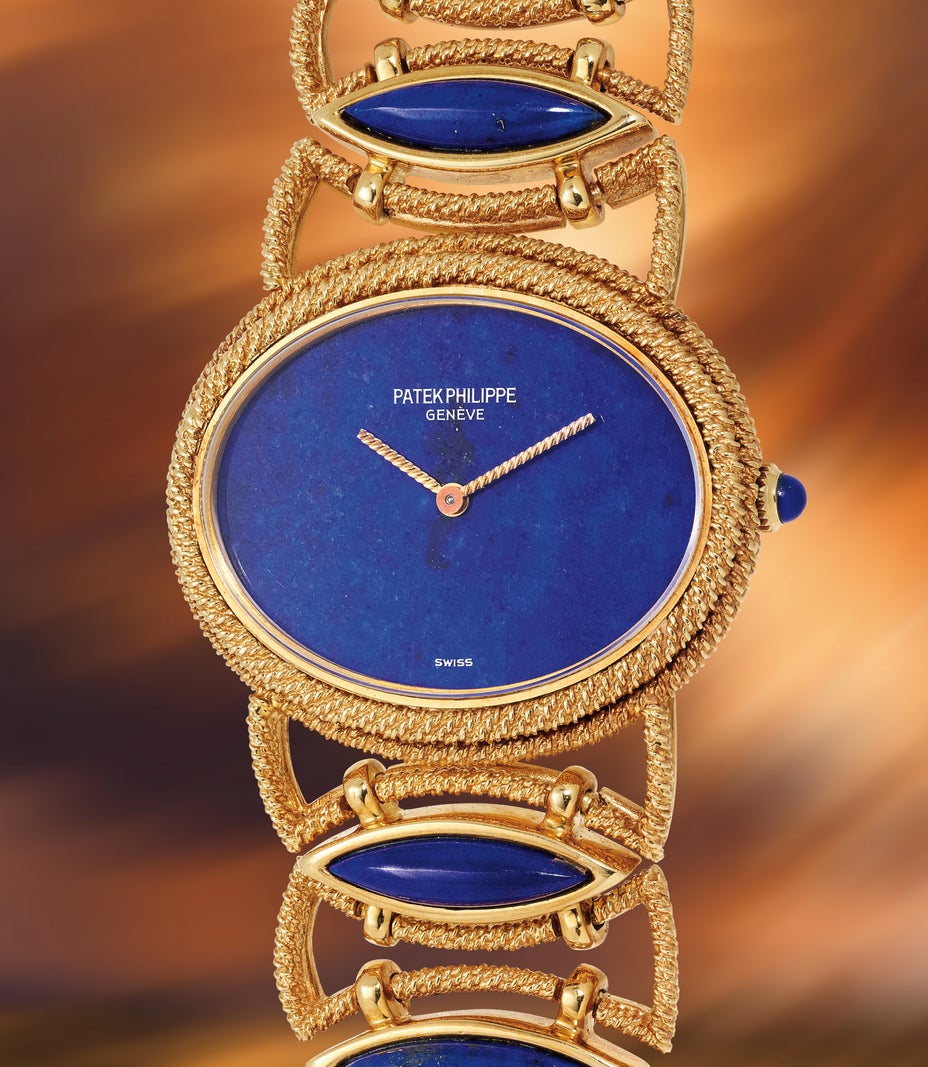
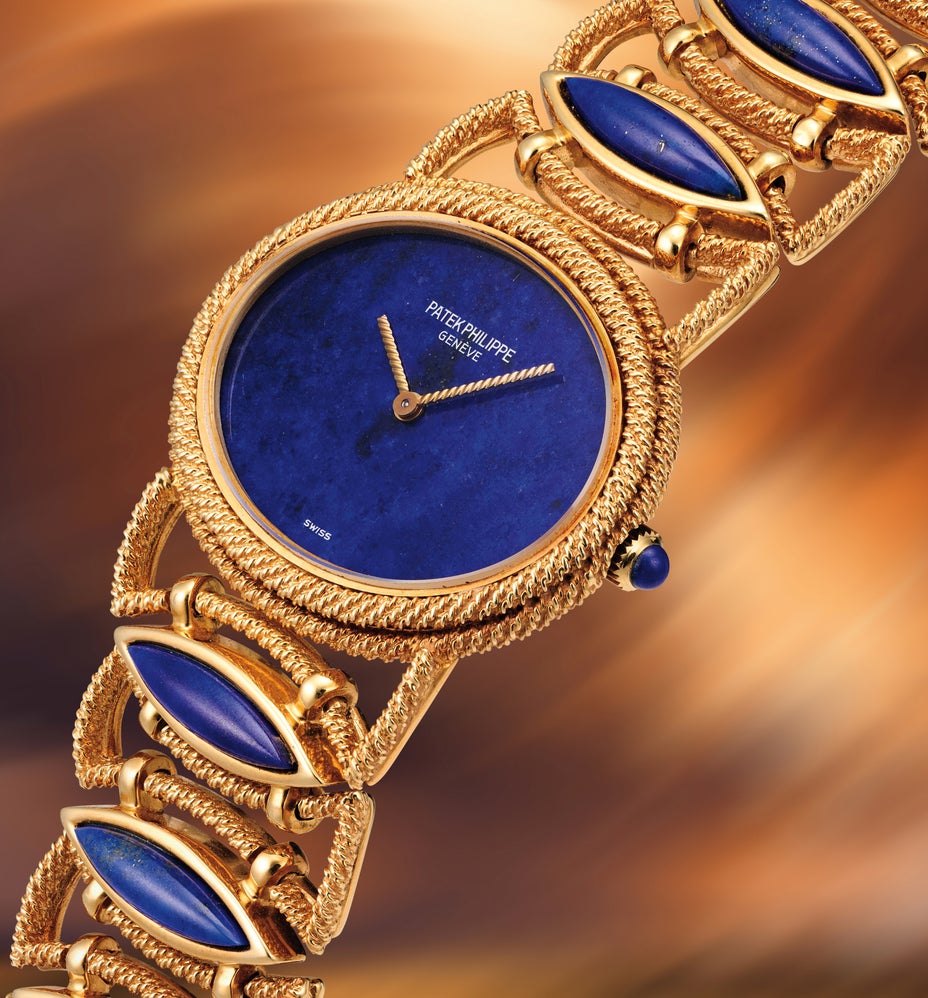
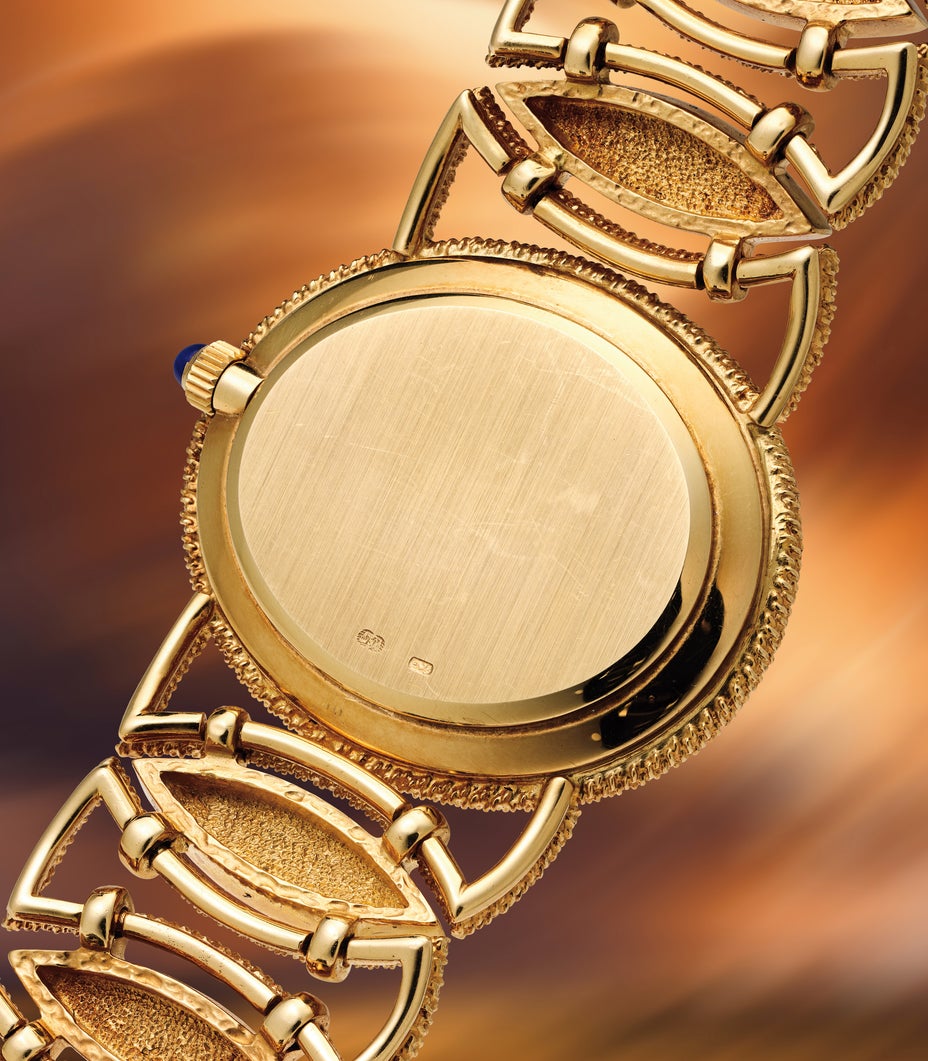
A highly rare and very attractive yellow gold and lapis lazuli bracelet watch
完整圖錄內容
• One of a handful known examples
• Extremely attractive usage of lapis lazuli stone throughout case and bracelet
• Preserved in outstanding condition with beautiful case patina
• Consigned by the daughter of the original owner
The 1970s represented a particularly adventurous period for Patek Philippe, during which the manufacture looked beyond the traditional confines of classical watchmaking. Reference 4290 is a compelling expression of this creative era, and the present example, pairing a richly colored lapis lazuli dial with a matching stone-set bracelet, is among its most visually arresting configurations.
What distinguishes the present watch even further is the remarkable continuity of its design. Not only does the crown feature a lapis lazuli cabochon, but the integrated yellow gold bracelet is embellished with no fewer than 14 individual lapis lazuli inserts. Rather than treating the dial as an isolated decorative element, Patek Philippe carries the stone throughout the entire composition, allowing the blue of the lapis to punctuate the bracelet and visually unite the watch from dial to clasp. Even the hands display a textured finish echoing the distinctive pattern of the bracelet.
Reference 4290 was produced in several configurations during the 1970s. Examples were offered on a leather strap, while the bracelet models included the reference 4290/2 with a gold bracelet and the reference 4290/1, such as the present watch, distinguished by its lapis lazuli inserts. The latter represents perhaps the most complete realization of the reference's design, transforming the wristwatch into a cohesive piece of wearable art. It was purchased by the present consignor's father in Switzerland during the 1970s for his beloved wife, one of the many extraordinary pieces he collected in his time. It has been cherished by father, mother, and then daughter for over half a century, and is now ready to be passed along for the next generation to enjoy.
Patek Philippe
Swiss | 1839Since its founding in 1839, this famous Geneva-based firm has been surprising its clientele with superbly crafted timepieces fitted with watchmaking's most prestigious complications. Traditional and conservative designs are found across Patek Philippe's watches made throughout their history — the utmost in understated elegance.
Well-known for the Graves Supercomplication — a highly complicated pocket watch that was the world’s most complicated watch for 50 years — this family-owned brand has earned a reputation of excellence around the world. Patek's complicated vintage watches hold the highest number of world records for results achieved at auction compared with any other brand. For collectors, key models include the reference 1518, the world's first serially produced perpetual calendar chronograph, and its successor, the reference 2499. Other famous models include perpetual calendars such as the ref. 1526, ref. 3448 and 3450, chronographs such as the reference 130, 530 and 1463, as well as reference 1436 and 1563 split seconds chronographs. Patek is also well-known for their classically styled, time-only "Calatrava" dress watches, and the "Nautilus," an iconic luxury sports watch first introduced in 1976 as the reference 3700 that is still in production today.