998
Patek Philippe
Ref. 3971, Second Series
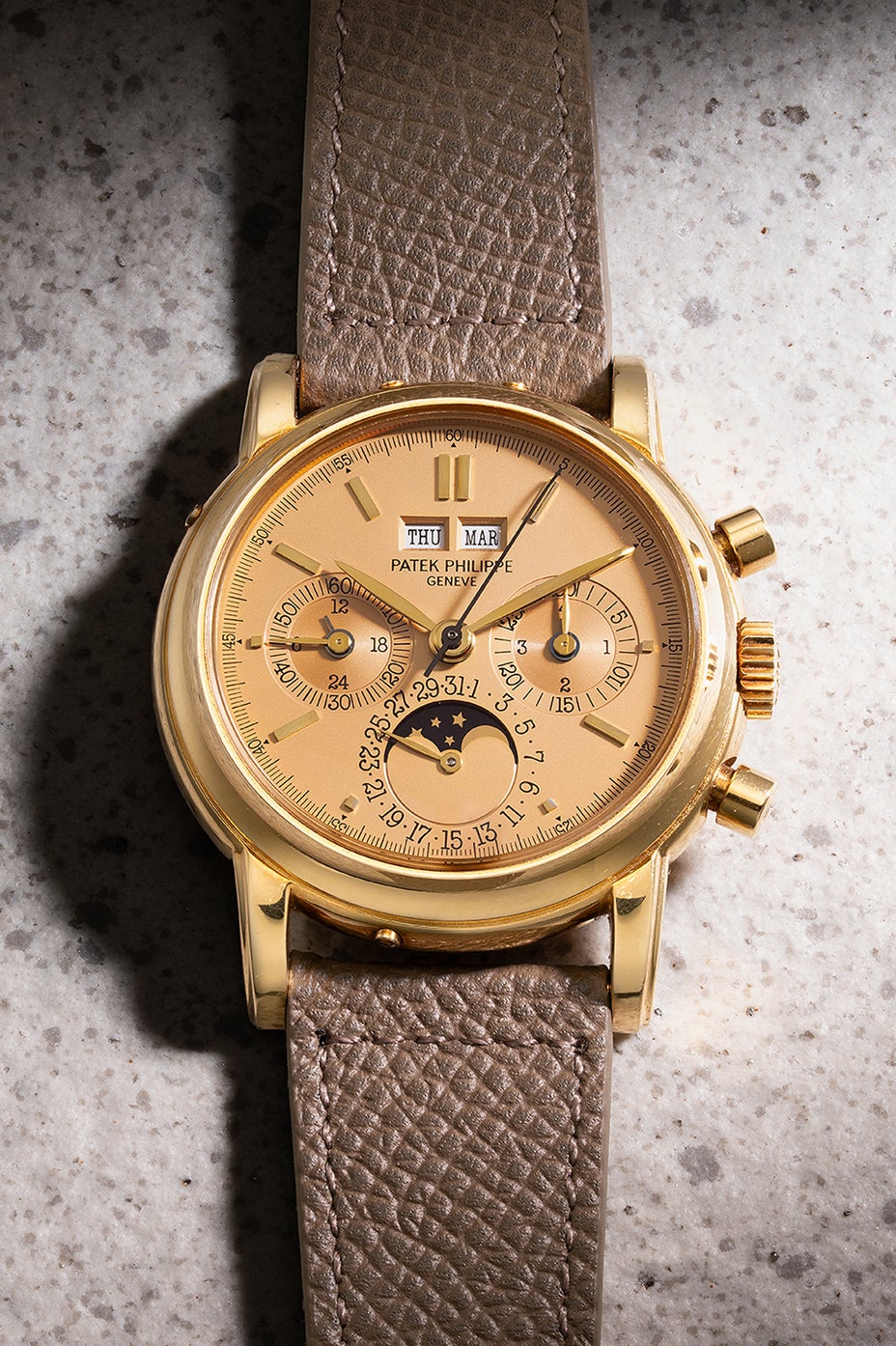
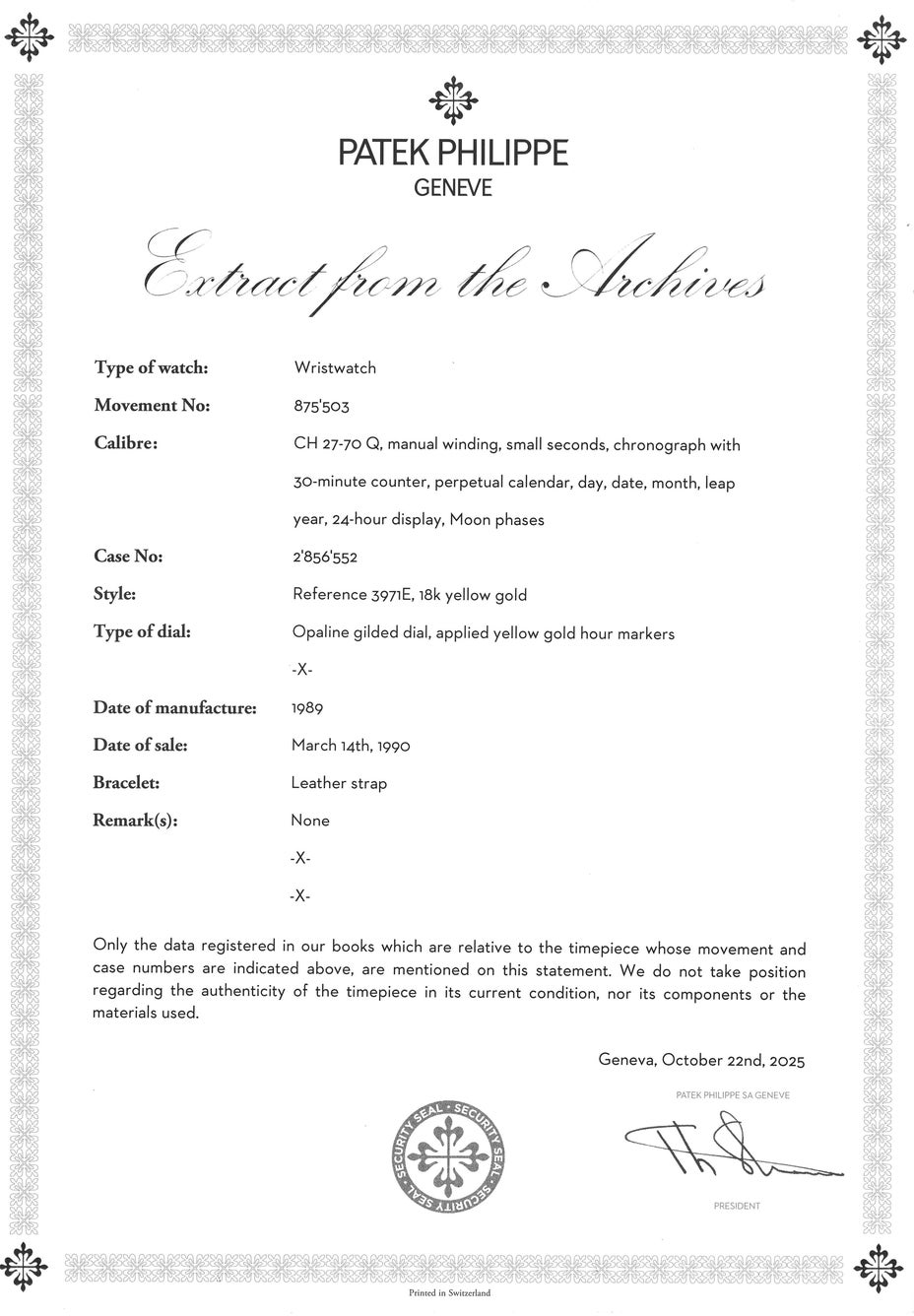
百達翡麗,型號3971「Second Series」,非常精美、重要,黃金萬年曆計時腕錶,備「doré」錶盤、月相、閏年、24小時顯示,1989年製。附原裝證書、調整筆、錶盒
完整圖錄內容
The watch cases of the references are crafted by the renowned Atelier Réunis, a case, bracelet, and chain maker acquired by Patek Philippe in 1975. The company established workshops on rue des Vieux-Grenadiers, and in the early 2000s, it ceased production for other brands, with the building eventually becoming home to the present Patek Philippe Museum.
With growing scholarship for the model, the ref. 3970/3971 can now be divided into 4 series.
First series (1986 – 1988) – Features a solid snap back case for ref. 3970 and snap on sapphire caseback for ref. 3971, feuille hands and rectangular indexes. Only produced in yellow gold with an estimated 100 examples produced.
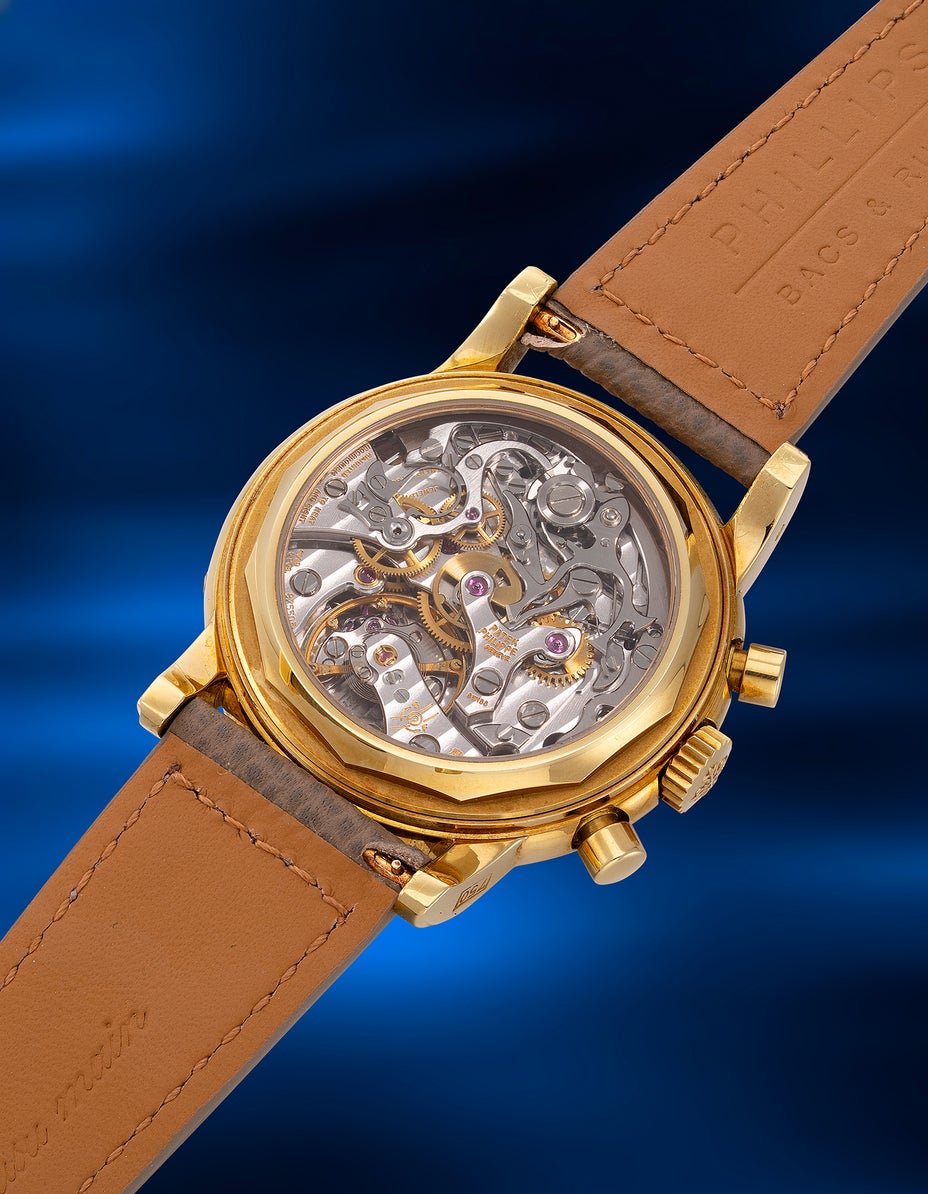
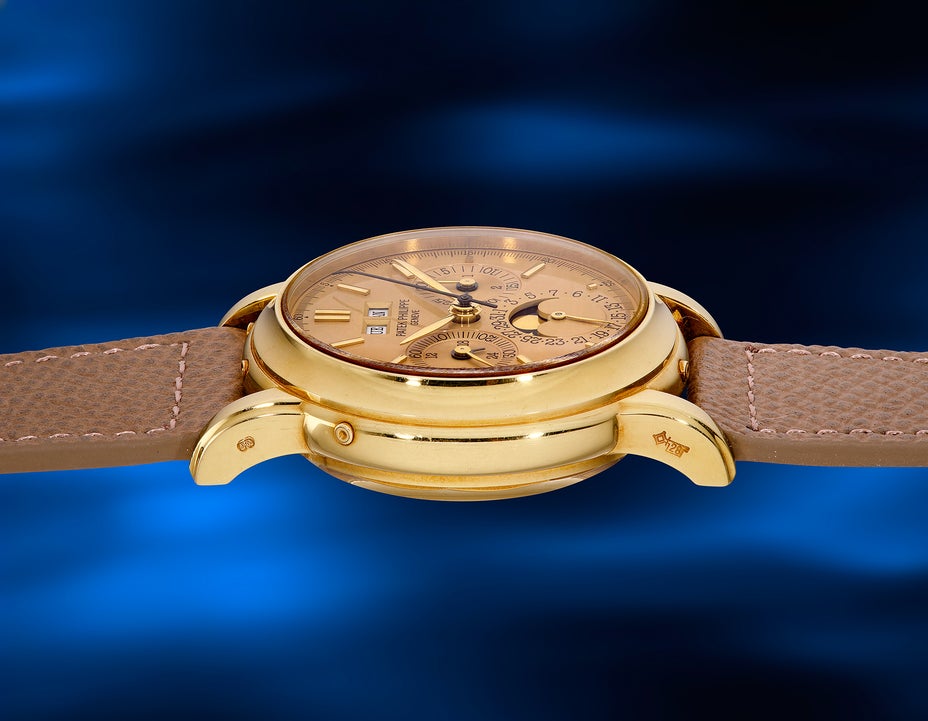
Second series (1987 – 1990) – Features a solid screw back case “E – Etanche”, feuille hands and baton indexes. Hallmarks on the side of the lugs. Produced in all four case materials with an estimated 650 examples produced across all metals, with 150-200 of those being reference ref. 3971 and only around 50 ref. 3971s are known to the market. (The present example)
Third series (1989 – 1995) – Features a solid screw back case “E – Etanche” and an additional sapphire caseback, baton hands and lapidated indexes. Estimated 1,350 examples produced across all metals.
Fourth series (1994 – 2004) – Same configuration as the third series however there is a change in serial number ranges in the movement and case and from 1997 onwards it features deployant clasp. Estimated 2,000 examples produced across all four metals.
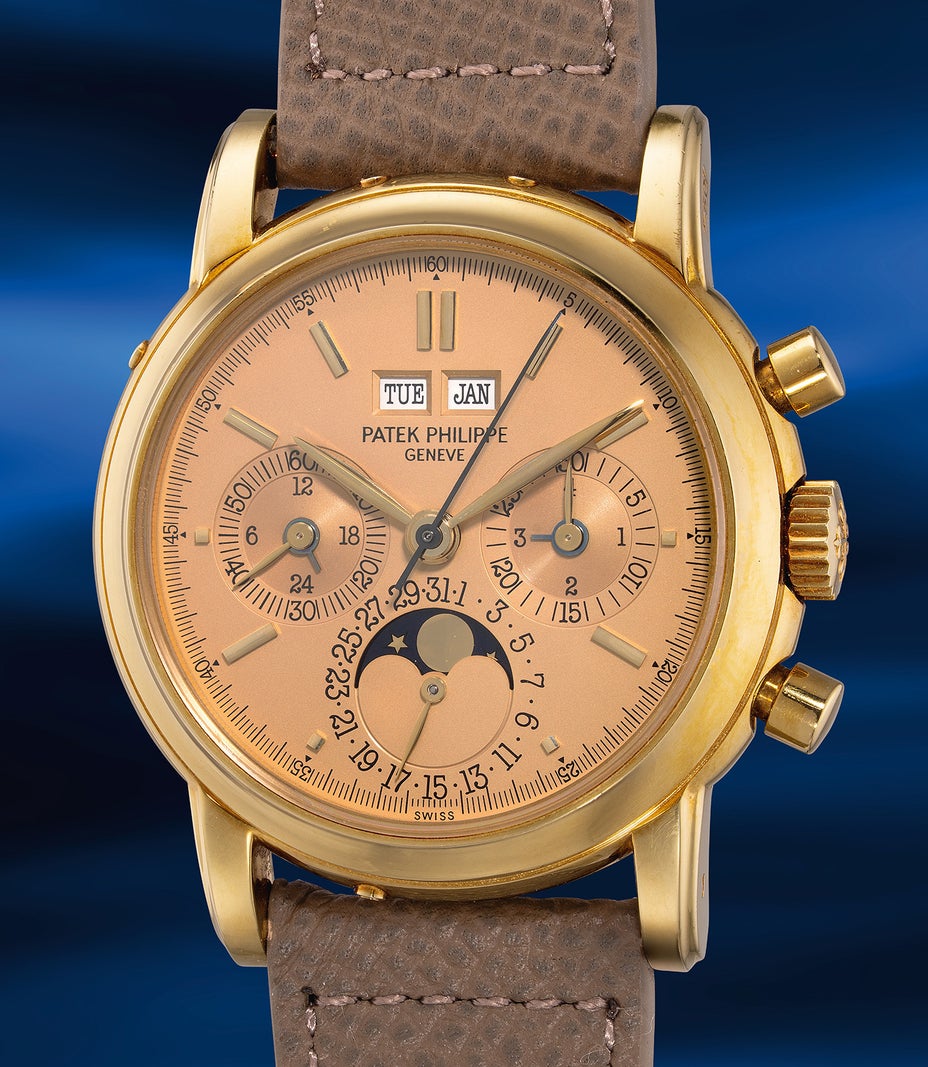
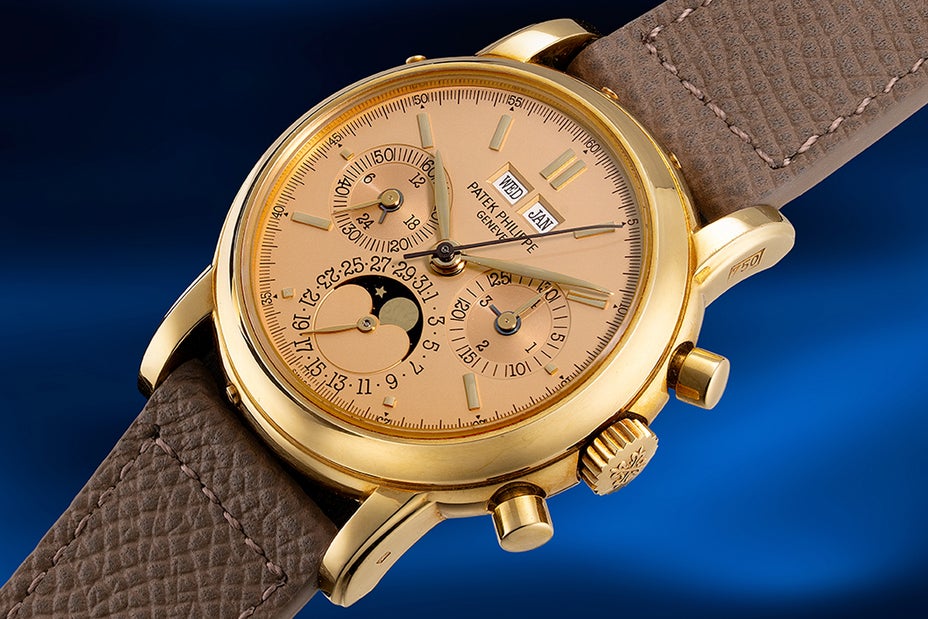
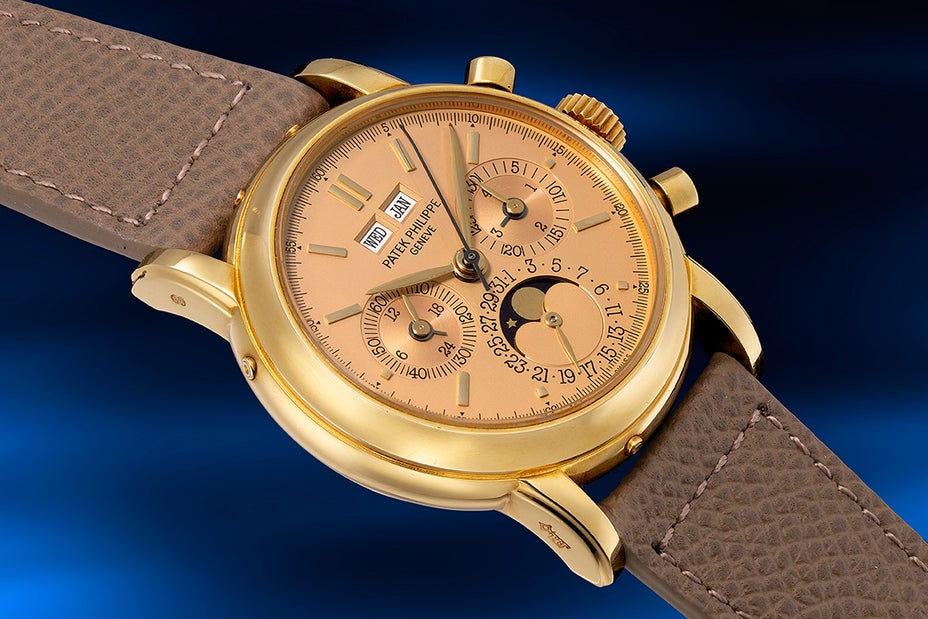
It’s a dream come true when an example of the coveted doré dial ref. 3971 appears on the market. This is one of the rarest dial combinations for this reference, even more scarce than its sister reference, the 3940 and 3941. Often referred to as opaline-gilt, the dial features a silky, matte golden hue with a subtle sheen on the subdials, a characteristic shared with the standard silvered second series dials. The deep gold color beautifully complements the classic yellow gold case, creating a combination rarely seen in other Patek Philippe watches.
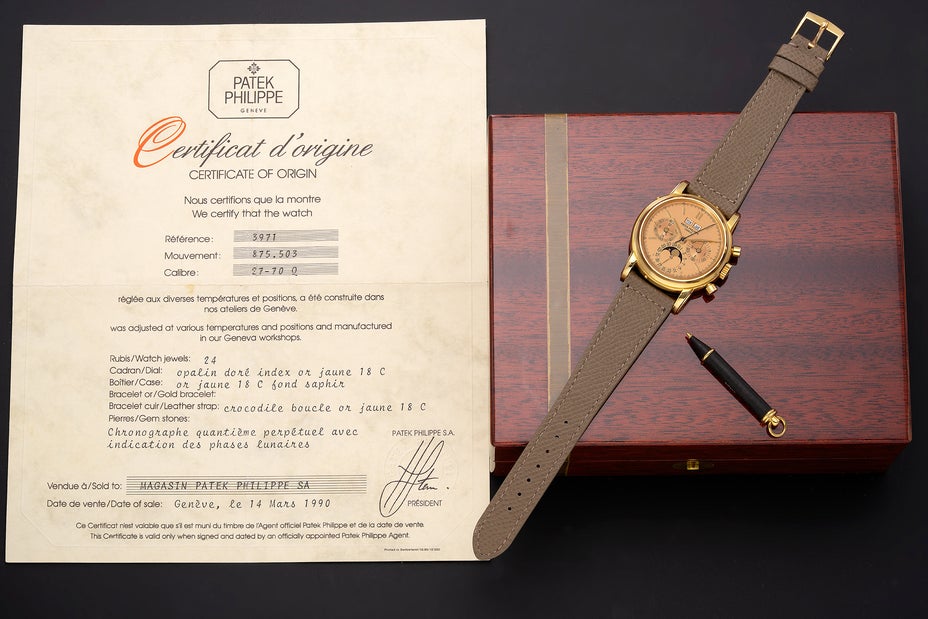
Very few examples of the 3970 and 3971 are known to feature this specific dial color. Research indicates that only 10 examples across both references have appeared at auction with a doré dial, and the present lot is one of just two confirmed to have the original doré dial as verified by its Certificate of Origin. The other known original doré dial is just one case and movement number away, confirmed by its Extract from the Archives. Other known examples had their doré dials replaced at a Patek Philippe service or by request.
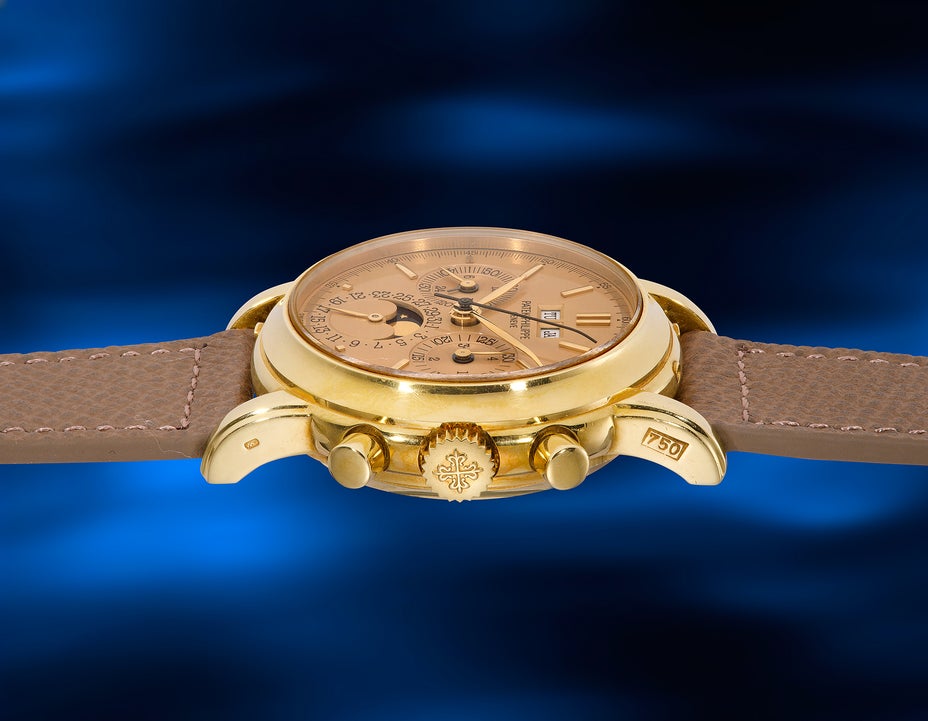
Across the second series, variations in hallmark placement can be observed. Initially, small hallmarks were punched on the caseback (and inside the caseback). For about two years, hallmarks appeared on the outside of the lugs, though not on every example. In the middle of second-series production, such as the present watch, they begin to feature larger “big 750 hallmarks”, with the casemaker number 28 stamped outside the lug as well. These examples are particularly sought after in today’s market. Notably, these hallmarks are sensitive to polishing, and all four hallmarks in this watch—including the Geneva Helvetia hallmark and the small 750—are preserved in ultra crisp condition, just as they were when the watch first left the factory.
Extremely well-preserved and kept in a private collection for four years since its last market appearance, the present example was likely worn only a few times, spending most of its life in a bank vault. It is also confirmed by the Certificate of Origin that the watch originally came with the sapphire caseback and was purchased on March 14, 1990.
Patek Philippe
Swiss | 1839Since its founding in 1839, this famous Geneva-based firm has been surprising its clientele with superbly crafted timepieces fitted with watchmaking's most prestigious complications. Traditional and conservative designs are found across Patek Philippe's watches made throughout their history — the utmost in understated elegance.
Well-known for the Graves Supercomplication — a highly complicated pocket watch that was the world’s most complicated watch for 50 years — this family-owned brand has earned a reputation of excellence around the world. Patek's complicated vintage watches hold the highest number of world records for results achieved at auction compared with any other brand. For collectors, key models include the reference 1518, the world's first serially produced perpetual calendar chronograph, and its successor, the reference 2499. Other famous models include perpetual calendars such as the ref. 1526, ref. 3448 and 3450, chronographs such as the reference 130, 530 and 1463, as well as reference 1436 and 1563 split seconds chronographs. Patek is also well-known for their classically styled, time-only "Calatrava" dress watches, and the "Nautilus," an iconic luxury sports watch first introduced in 1976 as the reference 3700 that is still in production today.