855
Patek Philippe
Ref. 505.25
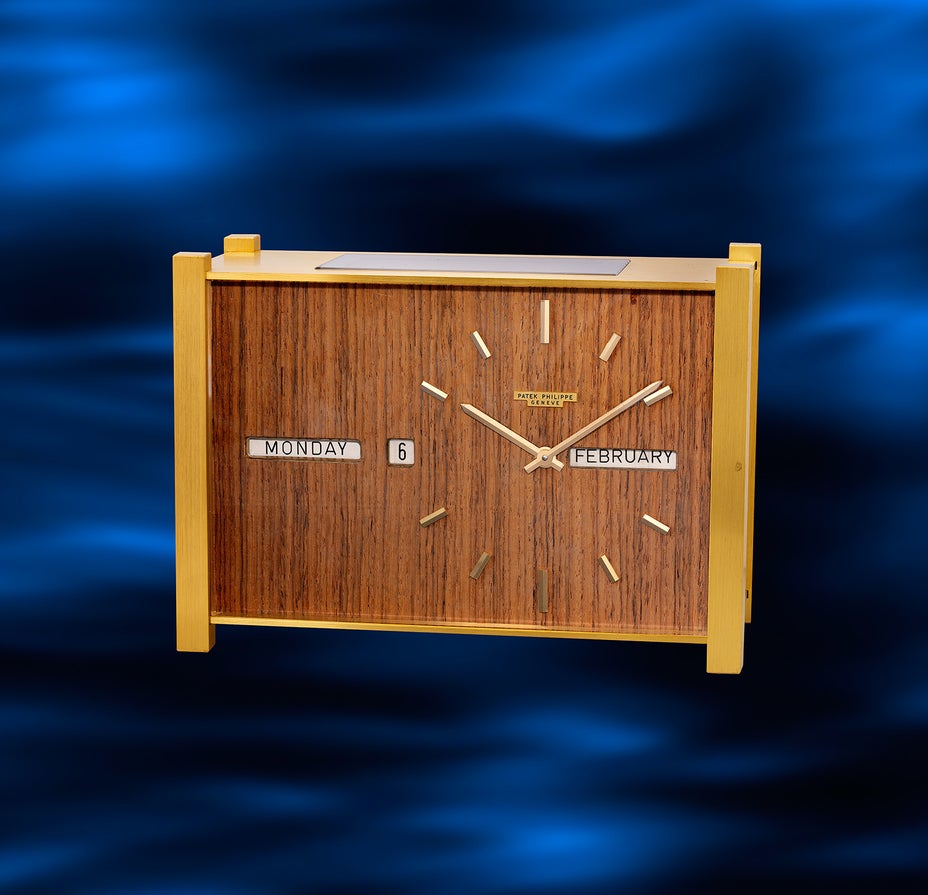
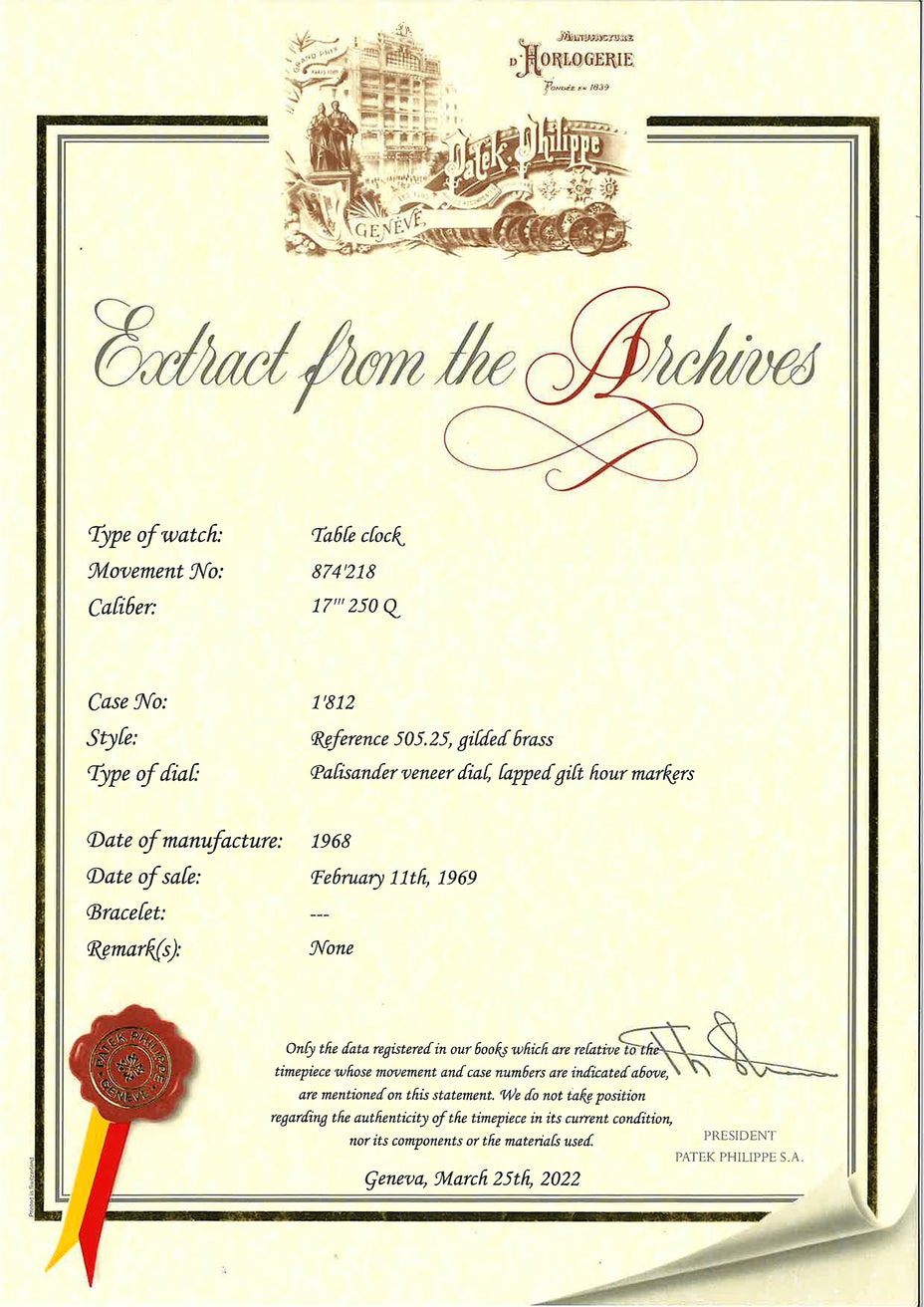
百達翡麗,型號505.25,方形鍍金銅及柚木太陽能萬年曆座鐘,備直線式窗口及閏年顯示,約1968年製。附帶盒子、後補證書
完整圖錄內容
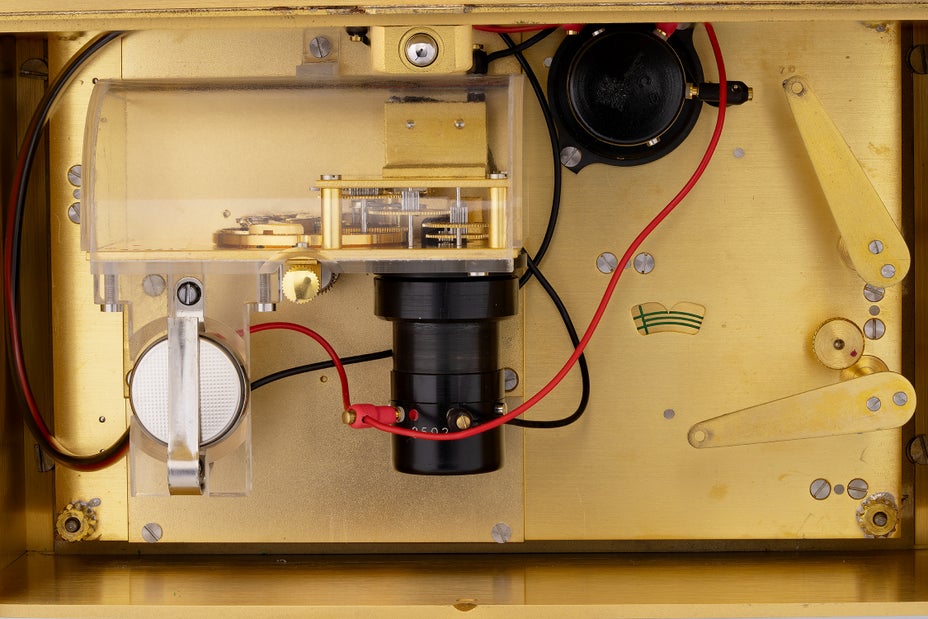
This avant-garde table clock operates on the same photoelectrical principles that power today’s communication satellites, harnessing light as its energy source. Remarkably, the movement requires only minimal exposure—just 5 hours of natural or artificial light to run for an entire day. Additionally, it features a backup battery system, enabling it to function in complete darkness for at least a year. This clever design is particularly advantageous, as the clock serves as a perpetual calendar that eliminates the need for date adjustments.
The excellent condition of this example further enhances the timeless appeal of its design. The modern, minimalist, and asymmetrical dial showcases three large apertures for the calendar, reminiscent of an airport’s arrival and departure board.
While many other examples are adorned with gilt brass panels and silvered dials, this perpetual calendar clock stands out as one of the few fitted with wooden panels and a matching wood dial. This elegant detail beautifully highlights Patek Philippe’s technical innovation while showcasing a harmonious collaboration with nature, resulting in an attractive timepiece.
Patek Philippe
Swiss | 1839Since its founding in 1839, this famous Geneva-based firm has been surprising its clientele with superbly crafted timepieces fitted with watchmaking's most prestigious complications. Traditional and conservative designs are found across Patek Philippe's watches made throughout their history — the utmost in understated elegance.
Well-known for the Graves Supercomplication — a highly complicated pocket watch that was the world’s most complicated watch for 50 years — this family-owned brand has earned a reputation of excellence around the world. Patek's complicated vintage watches hold the highest number of world records for results achieved at auction compared with any other brand. For collectors, key models include the reference 1518, the world's first serially produced perpetual calendar chronograph, and its successor, the reference 2499. Other famous models include perpetual calendars such as the ref. 1526, ref. 3448 and 3450, chronographs such as the reference 130, 530 and 1463, as well as reference 1436 and 1563 split seconds chronographs. Patek is also well-known for their classically styled, time-only "Calatrava" dress watches, and the "Nautilus," an iconic luxury sports watch first introduced in 1976 as the reference 3700 that is still in production today.