64
Patek Philippe
百達翡麗,精細優雅,黃金懷錶,備「multi-tone」扇面錶盤、中心秒針。
完整圖錄內容
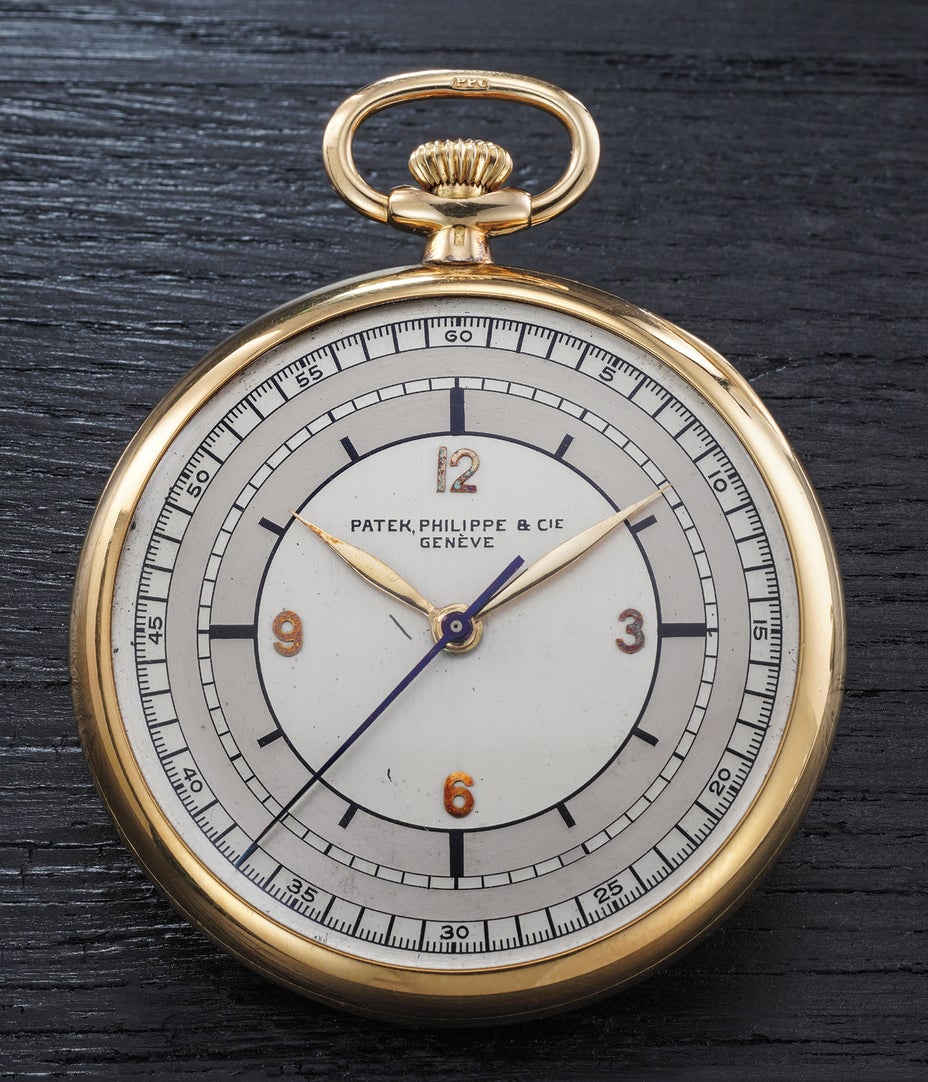
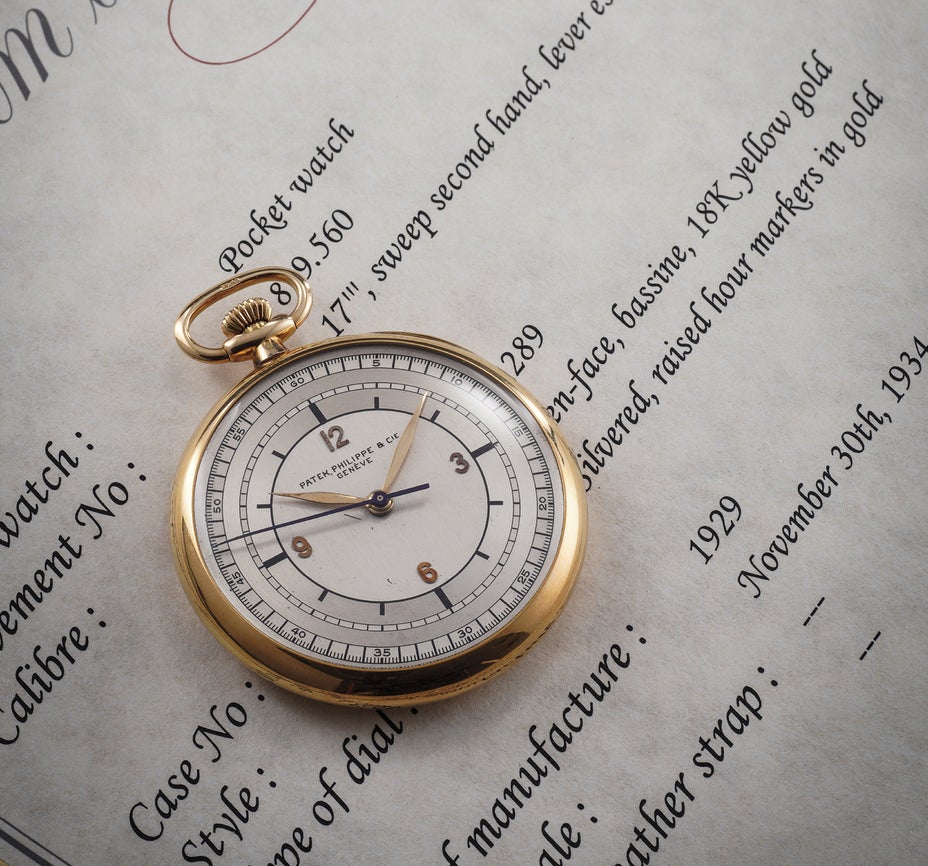
Produced in 1929, the present yellow gold open face pocket watch is fitted with what collectors can arguably consider the most aesthetically pleasing dials of the era, the sector dial with sweep-seconds hand. Sector dials truly became popular in the 1930s and usually allowed for the execution of a striking multi-tone silver dials with dark numerals at 3, 6, 9 and 12 o’clock, like the present pocket watch. Typically fitted on “sportier” Longines and Omega pocket watches, classic sector dials could exceptionally also be found on Rolexes, Breguets and Patek Philippes, like the present example. Most notably, sector dials have been fitted on the most coveted and sought after Patek Philippe's of the 19th century.
Housed in a large 44mm diameter case, the geometric design of the “chemin de fer” railway minute track, and the contrasting font around the center dial captures the architectural, modern style that defined the art deco movement of the late 1920s through 1940s. The long and refined gold hands provide the finishing touch for this timeless and elegant watch that looks as stylish and modern today as it did so many decades ago.
The present open-face yellow gold pocket watch is a classic example of the exceptional workmanship and understated design Patek Philippe is renowned for. Featuring a sporty multi-tone sector dial with sweep-seconds hand, applied Arabic numerals, and indelible enamel long signature, the present pocket watch is as equally contemporary and legible today as it was almost a century ago.
Patek Philippe
Swiss | 1839Since its founding in 1839, this famous Geneva-based firm has been surprising its clientele with superbly crafted timepieces fitted with watchmaking's most prestigious complications. Traditional and conservative designs are found across Patek Philippe's watches made throughout their history — the utmost in understated elegance.
Well-known for the Graves Supercomplication — a highly complicated pocket watch that was the world’s most complicated watch for 50 years — this family-owned brand has earned a reputation of excellence around the world. Patek's complicated vintage watches hold the highest number of world records for results achieved at auction compared with any other brand. For collectors, key models include the reference 1518, the world's first serially produced perpetual calendar chronograph, and its successor, the reference 2499. Other famous models include perpetual calendars such as the ref. 1526, ref. 3448 and 3450, chronographs such as the reference 130, 530 and 1463, as well as reference 1436 and 1563 split seconds chronographs. Patek is also well-known for their classically styled, time-only "Calatrava" dress watches, and the "Nautilus," an iconic luxury sports watch first introduced in 1976 as the reference 3700 that is still in production today.