201
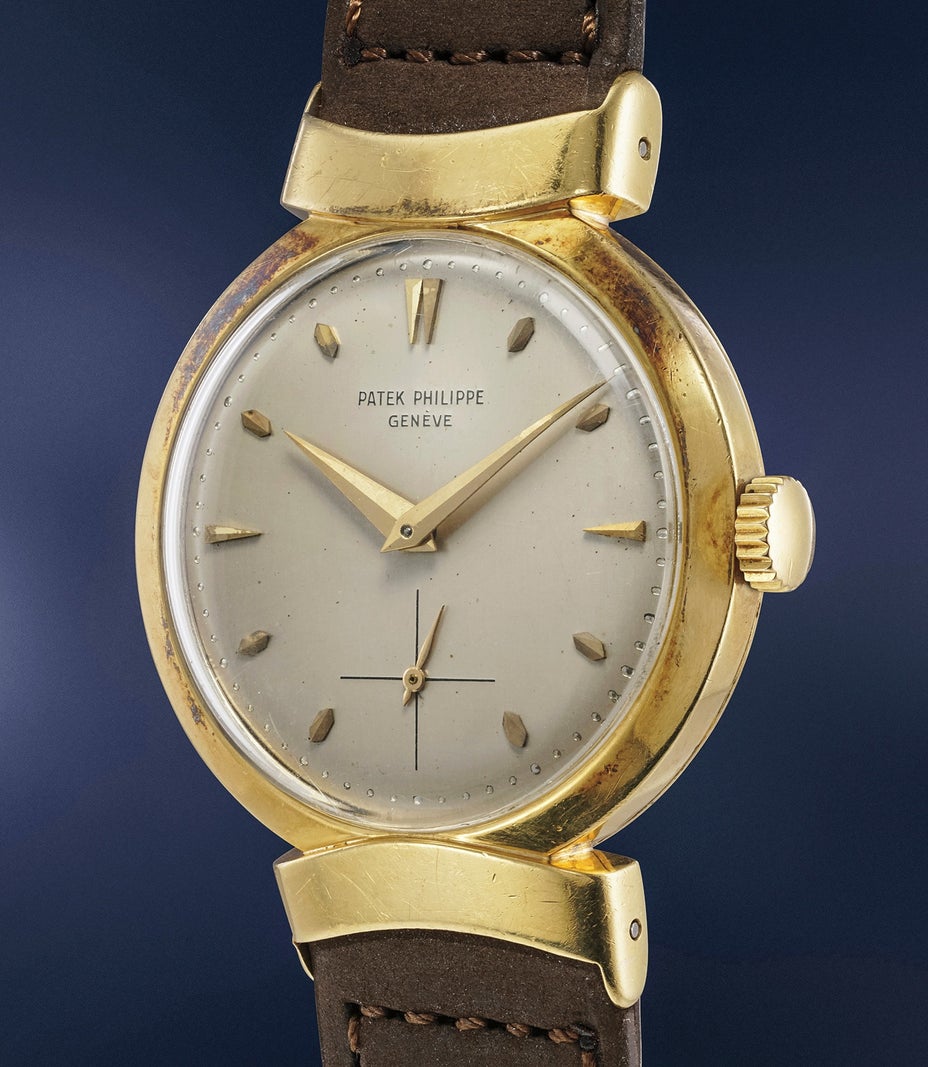
Patek Philippe
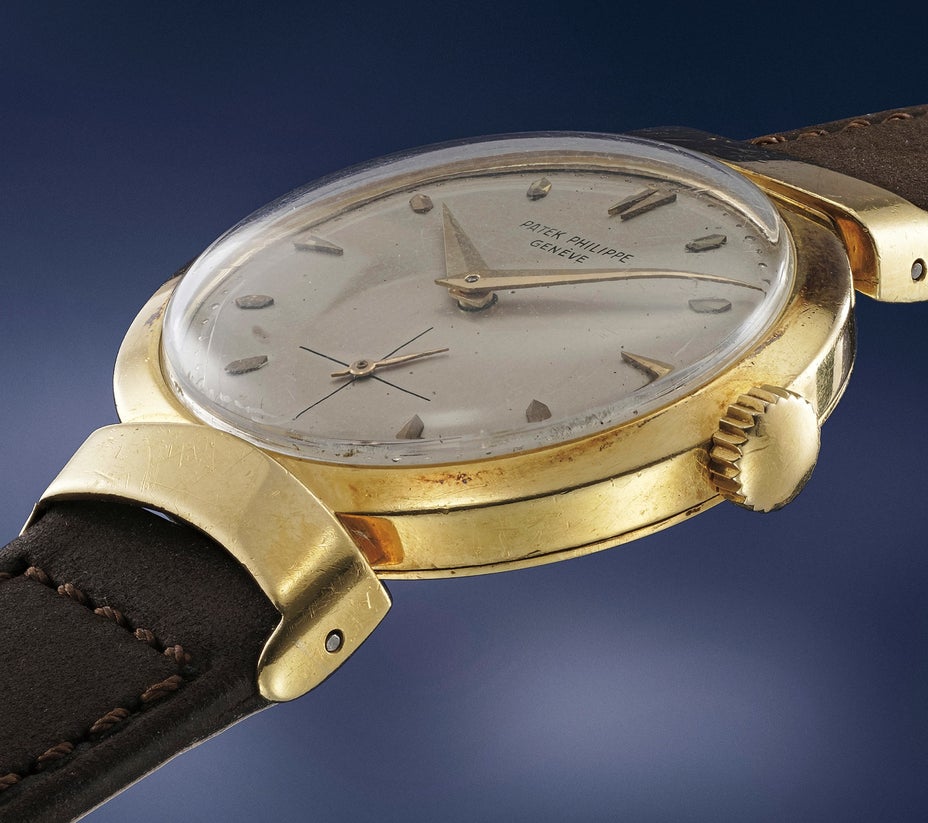
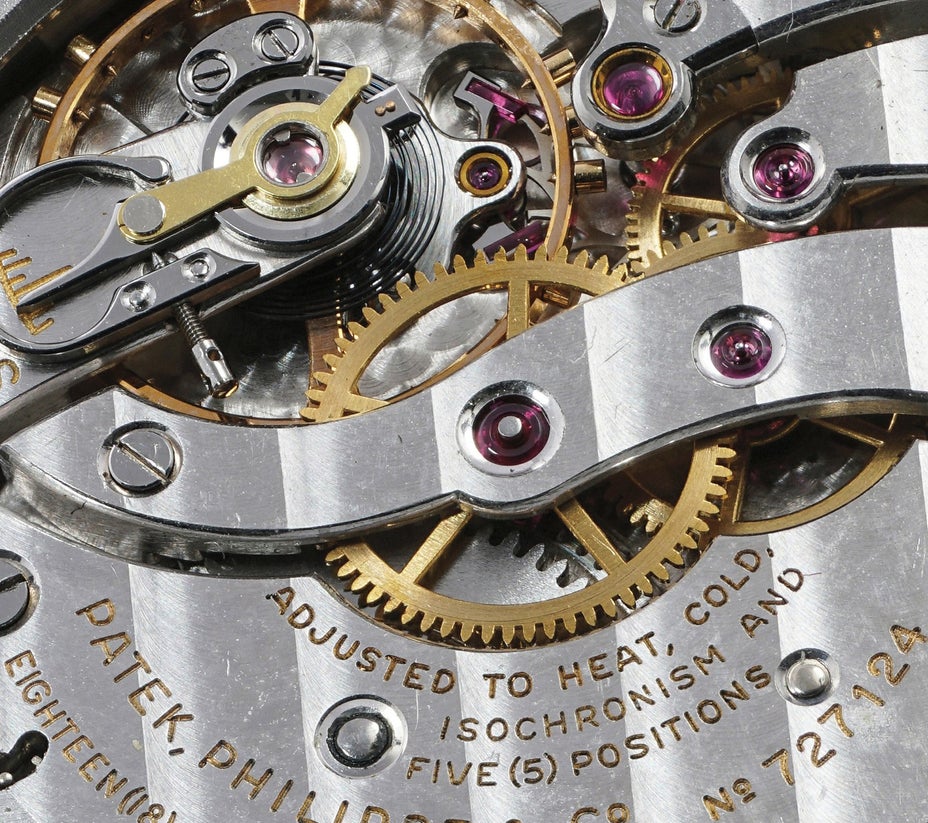
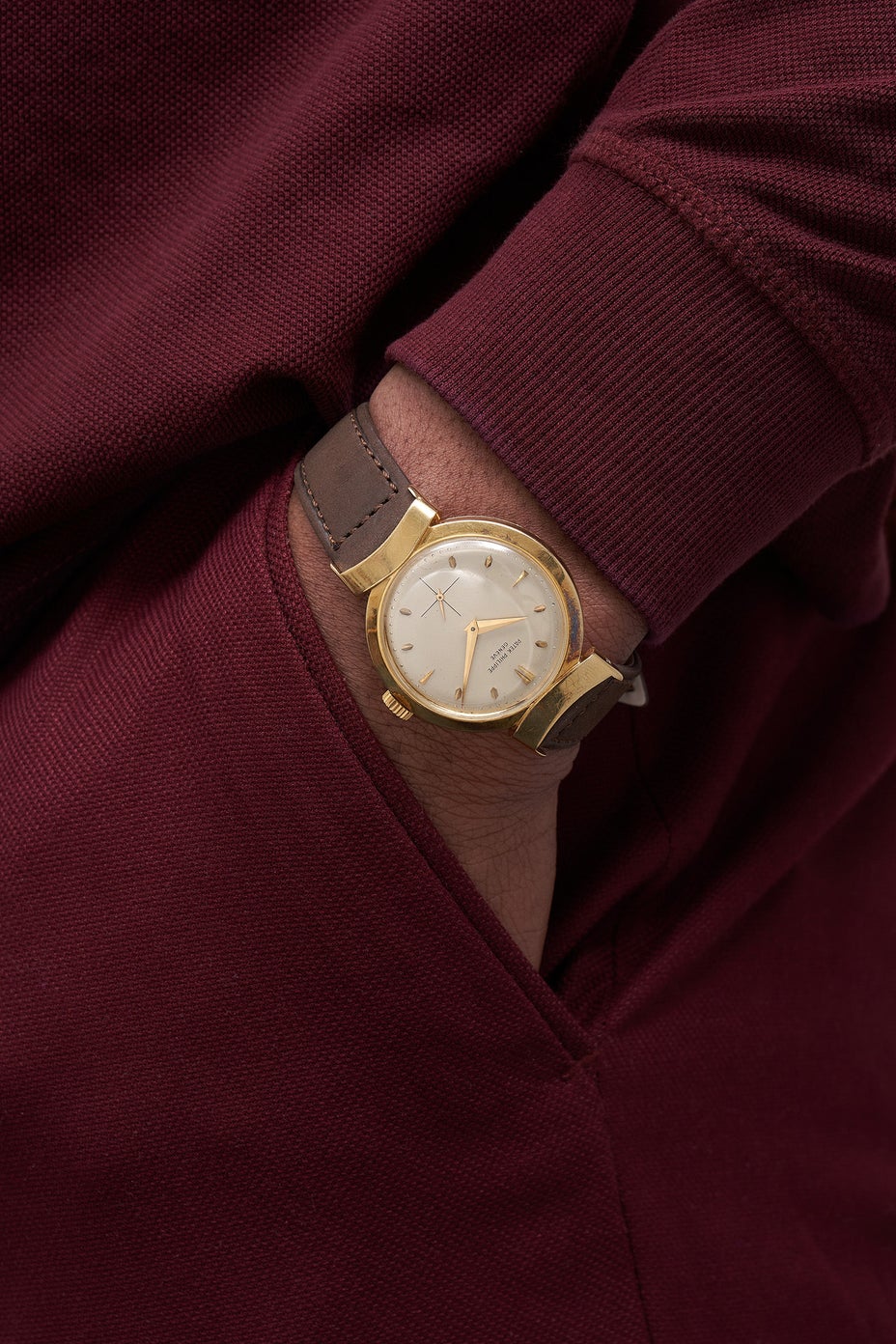
Ref. 2560
獨特及十分罕有,18K黃金腕錶,備折葉錶耳。
完整圖錄內容
The case was made by Le Locle based casemaker “Cedex, Charles Dubois SA”, identified by the number 170 in the hammerhead. Interestingly, the Dubois family had three branches, all of them into the case making business and each identifies by a different number (the other two being 171 and 172).
Even the most knowledgeable connoisseur of vintage watches might be stumped when admiring this exquisite timepiece, and with good reason. Reference 2560 appears to be one of the most elusive models in all of Patek Philippe’s production: so far only two pieces, including this example, have appeared on the market. The other known ref. 2560 appeared at auction in 1997 and now resides in the Patek Philippe museum, making this specimen the only one publicly available. A timepiece for the collector who wants to merge whimsical looks with the highest tier of exclusivity.
Patek Philippe
Swiss | 1839Since its founding in 1839, this famous Geneva-based firm has been surprising its clientele with superbly crafted timepieces fitted with watchmaking's most prestigious complications. Traditional and conservative designs are found across Patek Philippe's watches made throughout their history — the utmost in understated elegance.
Well-known for the Graves Supercomplication — a highly complicated pocket watch that was the world’s most complicated watch for 50 years — this family-owned brand has earned a reputation of excellence around the world. Patek's complicated vintage watches hold the highest number of world records for results achieved at auction compared with any other brand. For collectors, key models include the reference 1518, the world's first serially produced perpetual calendar chronograph, and its successor, the reference 2499. Other famous models include perpetual calendars such as the ref. 1526, ref. 3448 and 3450, chronographs such as the reference 130, 530 and 1463, as well as reference 1436 and 1563 split seconds chronographs. Patek is also well-known for their classically styled, time-only "Calatrava" dress watches, and the "Nautilus," an iconic luxury sports watch first introduced in 1976 as the reference 3700 that is still in production today.