重要亞洲私人收藏
873
Heuer
Ref. 2447N
Carrera
豪雅,「Carrera」型號2447N,精鋼計時鏈帶腕錶,約1970年代製
估價
HK$50,000–80,000
€6,100–9,700
$6,400–10,300
成交價
HK$107,950
製造商
Heuer
年份
Circa 1970s
型號
2447N
錶殼號碼
92’652
型號名稱
Carrera
材料
Stainless steel
機芯
Manual, cal. 72, 17 jewels
錶帶/ 錶鏈
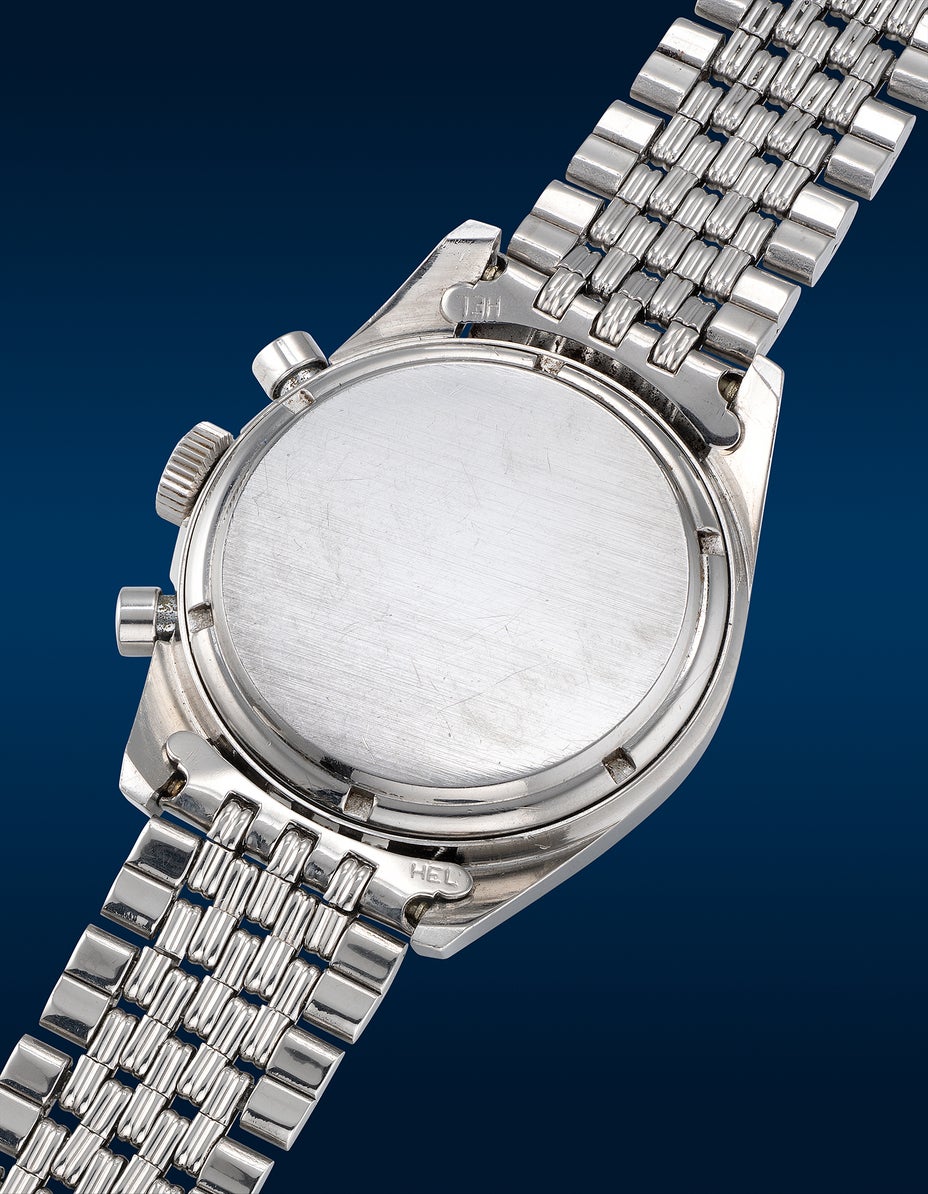
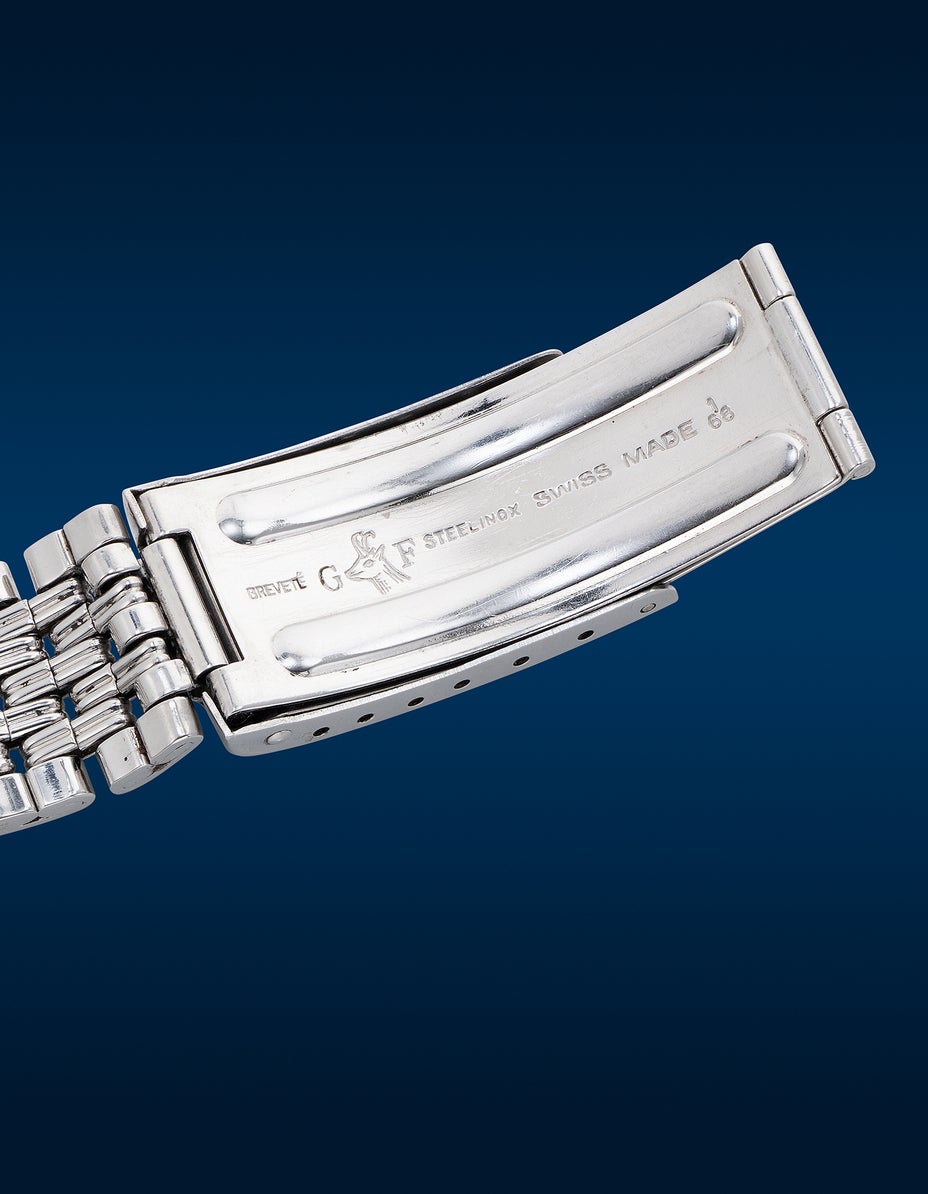
Stainless steel Gay Frères bracelet, endlinks stamped “HEL”, max length 205mm
錶扣
Stainless steel Heuer deployant clasp stamped “1.68”
尺寸
35.3mm diameter
簽名
Case, dial, movement, bracelet and clasp signed
完整圖錄內容
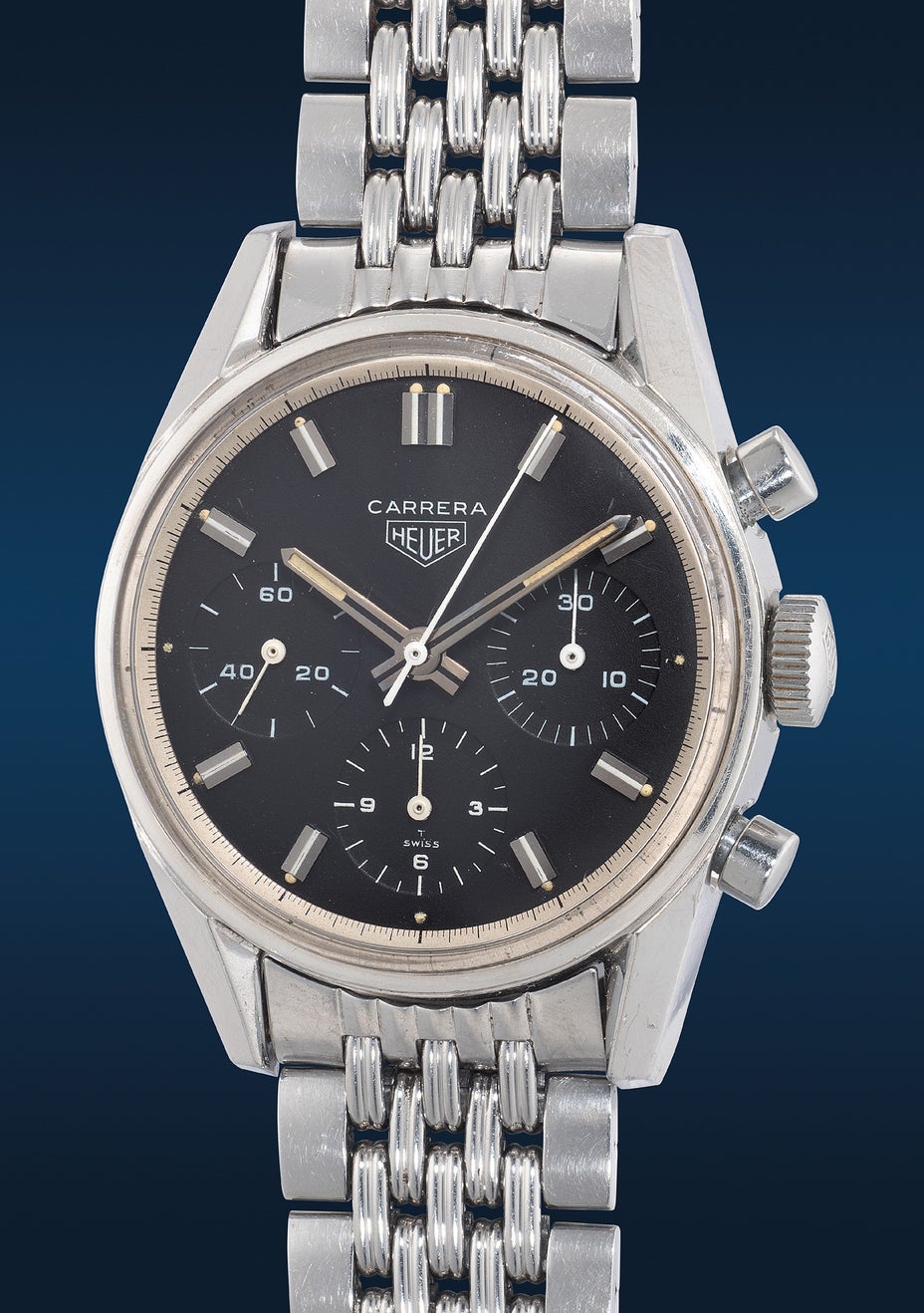
Built for the racetracks, the Heuer Carrera traces back to its muse since 1963. From the Carrera Panamericana, a legendary car race through Mexico, Jack Heuer set out to create a professional chronograph that ticks all his boxes: clean, legible, practical, waterproof and modern. The answer was the Carrera ref. 2447. An incredible success and an important pillar in Heuer’s heritage, the Carrera has been offered in more than 110 varieties since its birth, and till this day, the model holds an important place in Tag Heuer’s line-up and aficionados heart. And of course, the vintage designs back in the old days are collectors’ favourites.
In the early years, the Carrera was available with a silver dial or a black (noir, in French) dial; 2447S, for silver, and 2447N for noir. The present example fitted with an all black dial is the latter and belongs to second-execution variant from the series. In the same way that car manufacturers update a model without totally reworking the chassis, the Carrera was given a facelift partway through the run.
The earliest Carreras from 1963, or first-executions, have characteristics like applied indexes, hands with luminous insert, and unsigned crowns; later examples of second-executions from 1970 onwards feature hands with black and luminous inserts, and additional strips of white on the applied indexes. Furthermore, the markers at 3, 6, 9 o’ clock have been replaced with luminous dots instead. The second-execution models are more uncommon compared to earlier examples and sought-after by collectors as a result.
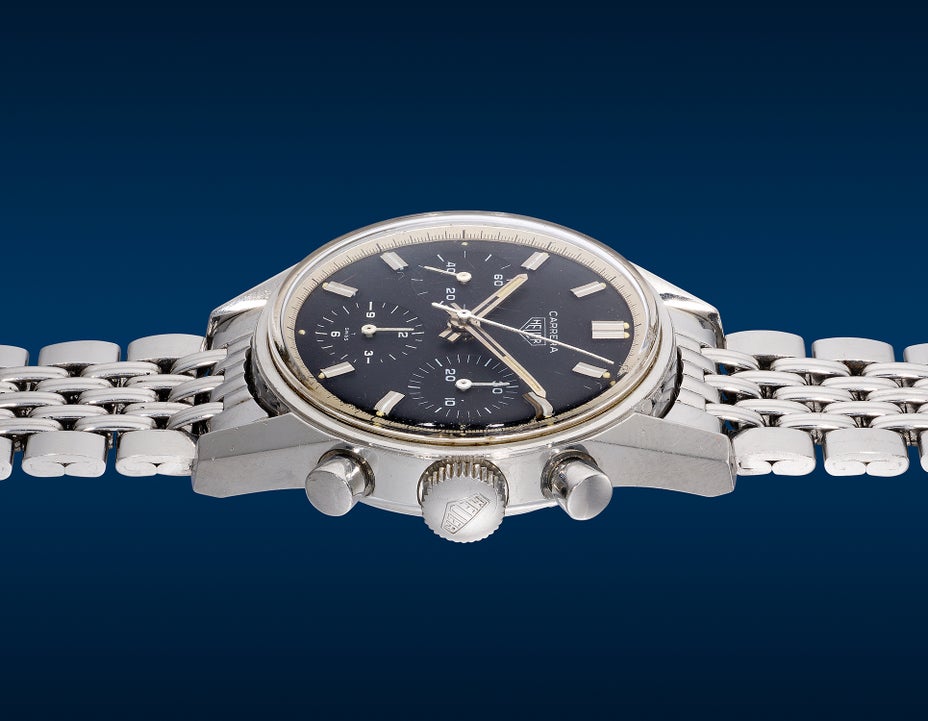
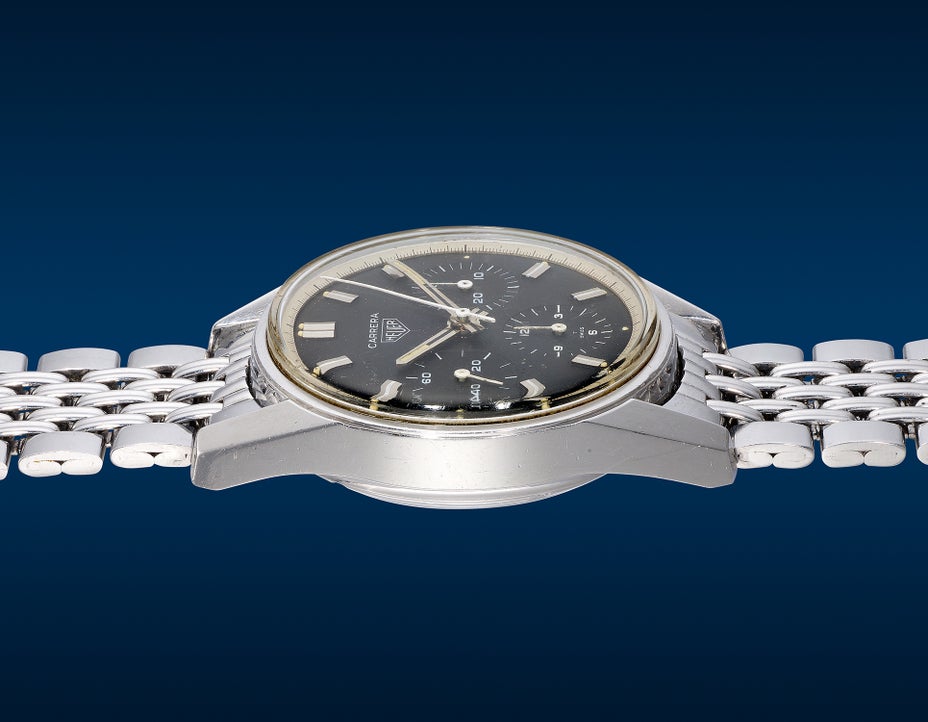
Presented in excellent overall condition retaining its original strong case proportion, the luminous material on the dial has furthermore aged into a beautiful yellow hue, heightening the vintage charm of this timepiece. A spirit of endurance and the 60th anniversary of the icon, this ref. 2447N is furthermore fitted with a Gay Frères bracelet that makes this even more desirable.
In the early years, the Carrera was available with a silver dial or a black (noir, in French) dial; 2447S, for silver, and 2447N for noir. The present example fitted with an all black dial is the latter and belongs to second-execution variant from the series. In the same way that car manufacturers update a model without totally reworking the chassis, the Carrera was given a facelift partway through the run.
The earliest Carreras from 1963, or first-executions, have characteristics like applied indexes, hands with luminous insert, and unsigned crowns; later examples of second-executions from 1970 onwards feature hands with black and luminous inserts, and additional strips of white on the applied indexes. Furthermore, the markers at 3, 6, 9 o’ clock have been replaced with luminous dots instead. The second-execution models are more uncommon compared to earlier examples and sought-after by collectors as a result.
Presented in excellent overall condition retaining its original strong case proportion, the luminous material on the dial has furthermore aged into a beautiful yellow hue, heightening the vintage charm of this timepiece. A spirit of endurance and the 60th anniversary of the icon, this ref. 2447N is furthermore fitted with a Gay Frères bracelet that makes this even more desirable.
Heuer
Swiss | 1860This iconic chronograph manufacturer has a long tradition of precision timekeeping. As early as 1882, founder Edouard Heuer held a patent for a chronograph watch; in 1887, he received a patent for an oscillating pinion, which is still in use today. These specialized timepieces have been at the heart of the firm's success, enabling the brand to be chosen as early timekeepers for the Olympics. In 1969, the company introduced their first automatic chronograph watch, the Monaco Heuer, which celebrated the Monaco Grand Prix. Other key chronograph models include the Autavia and the Carrera, all of which having become iconic models of the firm.