


75Σ
Cartier
Ref. 2356
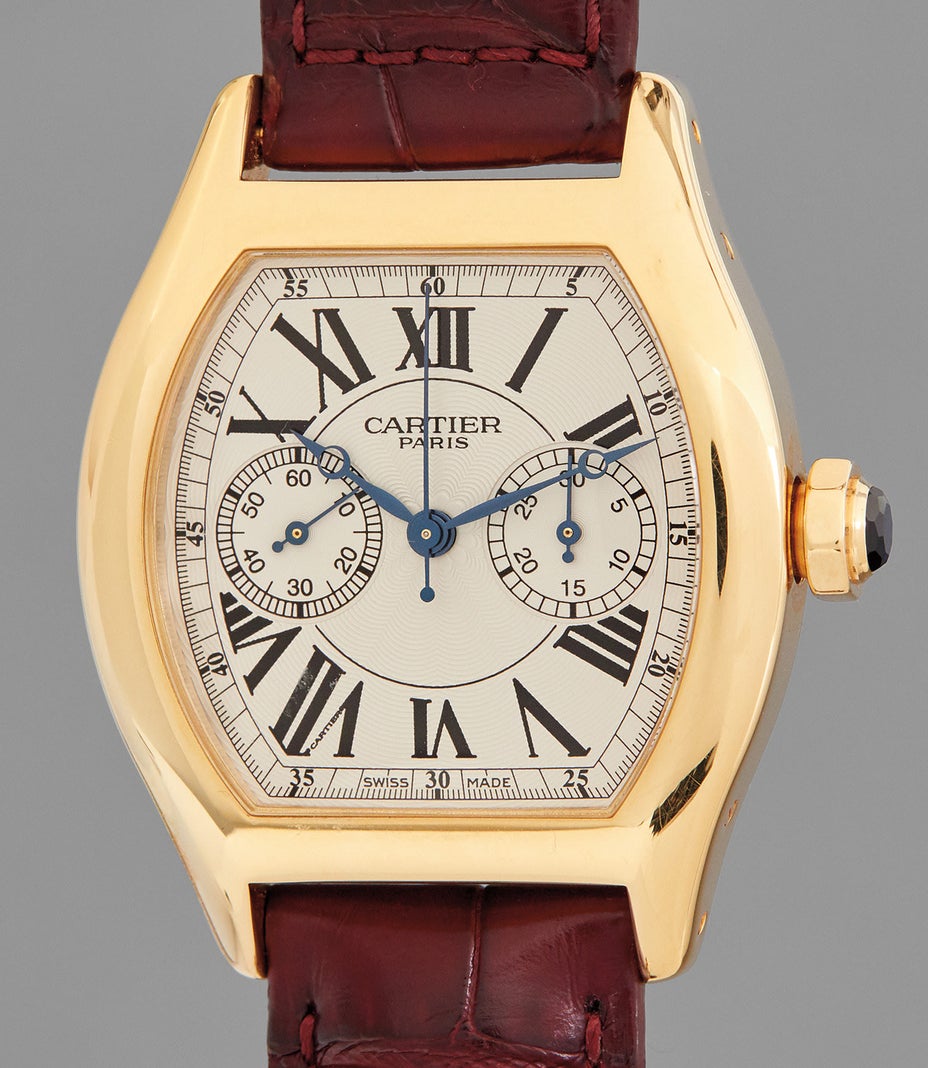
Tortue Monopoussoir CPCP
A fine and attractive yellow gold single button chronograph wristwatch with certificate and presentation box
- 估價
- $8,000 - 12,000
$50,400
拍品詳情
- 製造商
- Cartier
- 年份
- Circa 2003
- 型號
- 2356
- 錶殼號碼
- No. 0040OCE
- 型號名稱
- Tortue Monopoussoir CPCP
- 材料
- 18K yellow gold
- 機芯
- Manual, cal. 045 MC, 22 jewels
- 錶帶/ 錶鏈
- Crocodile
- 錶扣
- 18K yellow gold Cartier deployant buckle
- 尺寸
- 34mm Width and 43mm Length
- 簽名
- Case, dial, movement and buckle signed
- 配件
- Accompanied by Cartier Certificate dated 2003, stamped Gioielleria Tomasini Francia, Spoleto, red Cartier fitted Collection Privée box with product literature and Collection Privée CD, hang tag, red cloth watch bag, additional wooden Cartier box with wood loupe, polish cloth, watch bag and Cartier service receipt dated March 10, 2020.
專家
完整圖錄內容
圖錄文章
Cartier’s first Tortue-shaped watch was released in 1912, and updated in the 1990s with the Cartier Privée Paris Collection. Offered as time-only, tourbillon, and monopusher chronograph models, it was the chronograph that was a standout. In the 1930s, Cartier worked with Edmond Jaeger and LeCoultre using European Watch and Clock Company-branded movements that could fit these rare and unusual pieces. The first Cartier monopusher was released in 1928, and operated through a single button in the crown, with the start-stop-reset completed all through the one button. This allowed a cleaner and more elegant case line, compared to two button chronograph watches that had a more casual, sportive look.
When the brand released the Cartier Privée Paris Collection (CPCP) in 1998, it gave the them an opportunity to update and modernise some of their most cherished, and iconic wristwatches. It was with great pride and fanfare that they reintroduced the Cartier Tortue Monopoussoir. Named “tortue à pattes” or “turtle on legs” it was a symbol of good fortune and longevity. The new watch was larger and contemporary, featuring the all-new chronograph caliber 045MC. This new movement is historic itself as it was co-developed by Vianney Halter, Denis Flageollet, and Francois-Paul Journe through their firm at the time, Techniques horlogères Appliquées (THA).
Well-preserved in excellent condition with a nicely aged dial, this watch is a wonderful example for the demanding collector. Hardly ever seen at auction, it’s a rare opportunity to acquire such an important and iconic timepiece. The present watch, freshly serviced this year by Cartier, is complete with its original guarantee, box, and full complement of Cartier CPCP accessories.
When the brand released the Cartier Privée Paris Collection (CPCP) in 1998, it gave the them an opportunity to update and modernise some of their most cherished, and iconic wristwatches. It was with great pride and fanfare that they reintroduced the Cartier Tortue Monopoussoir. Named “tortue à pattes” or “turtle on legs” it was a symbol of good fortune and longevity. The new watch was larger and contemporary, featuring the all-new chronograph caliber 045MC. This new movement is historic itself as it was co-developed by Vianney Halter, Denis Flageollet, and Francois-Paul Journe through their firm at the time, Techniques horlogères Appliquées (THA).
Well-preserved in excellent condition with a nicely aged dial, this watch is a wonderful example for the demanding collector. Hardly ever seen at auction, it’s a rare opportunity to acquire such an important and iconic timepiece. The present watch, freshly serviced this year by Cartier, is complete with its original guarantee, box, and full complement of Cartier CPCP accessories.
Cartier
FrenchWith the Constitution of 1848 came a new standard for luxury in France. Founded one year prior by Louis-Francois Cartier, the house of Cartier was one of the first to use platinum in jewelry making. This incredibly expensive material became the stepping-stone for Cartier to experiment in form, mechanisms and attitude. It helped men move from pocket watches to wristwatches, effectively making the watch much more functional and prominent in a man's overall wardrobe.Cartier did not only touch on functionality. Inspired by a commissioned painting by George Barbier featuring a black panther at the feet of an elegantly bejeweled woman, Cartier began incorporating wild animals in his designs—most notably, Cartier Panthère rings, bangle bracelets and watches. Yet it wasn't until the late 1960s that the house of Cartier debuted their iconic yellow and rose gold LOVE collection, which includes the famous bracelet that only a special screwdriver can open.
瀏覽製造者