41
Breitling
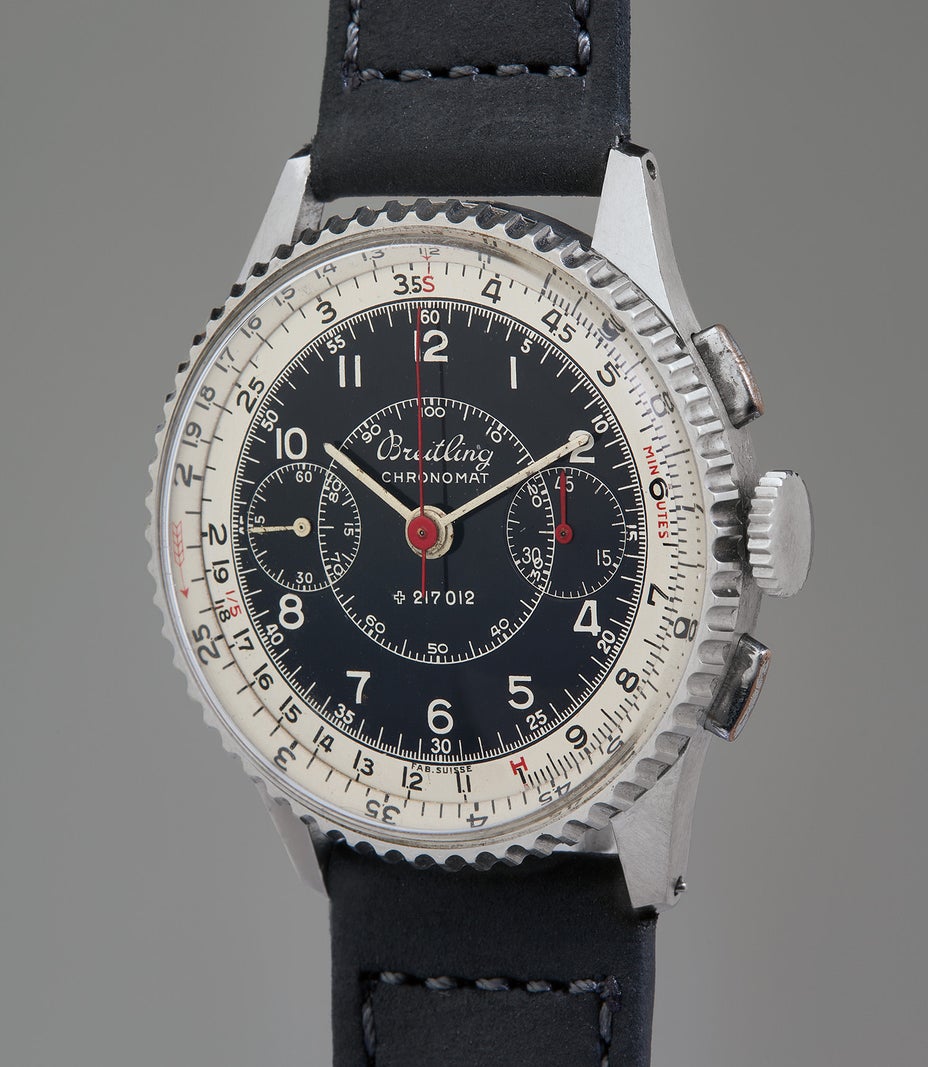
Chronomat "Pre-769"
An early and well preserved stainless steel chronograph wristwatch with circular slide rule
估價
$4,000–8,000
成交價
$10,625
製造商
Breitling
年份
1942
錶殼號碼
479'515
型號名稱
Chronomat "Pre-769"
材料
Stainless steel
機芯
Manual
錶帶/ 錶鏈
Leather
錶扣
Stainless steel
尺寸
36mm Diameter
簽名
Case numbered, dial signed
完整圖錄內容
Breitling is best known for their line of iconic chronograph tool watches, which are especially useful for aviators due to their unique ability to perform various mathematical calculations and measurements. In today’s modern era, it is difficult to remember that early fight navigation was completed without the aid of computers, and the pilot’s wristwatch was a necessary fight tool. As early as the 1920s, watch manufacturers were producing watches that allowed pilots to calculate location based on timing accuracy, where a miscalculation of just a few seconds could mean a course deviation of several miles. Charles Lindbergh few from Roosevelt Field on Long Island to Le Bourget field in Paris in 1927 using dead reckoning navigation, which determined location based on a fixed position, estimated speed and the elapsed time - as measured by an accurate watch.
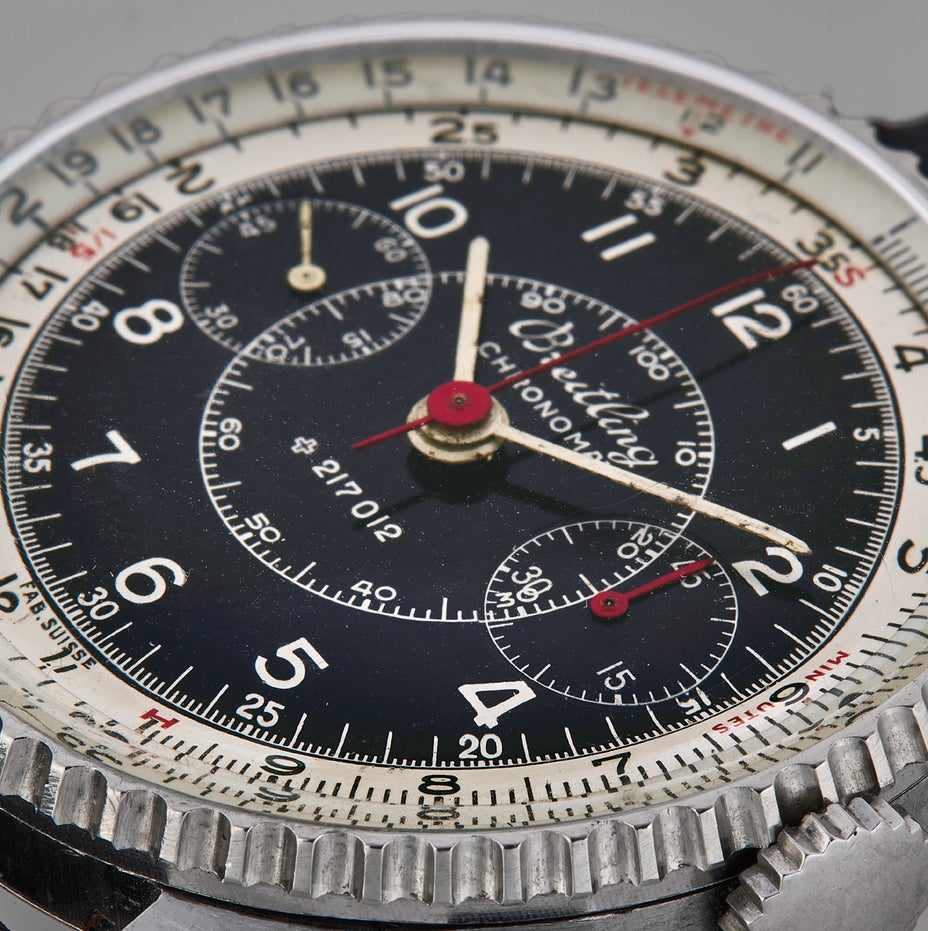
Breitling submitted patent number 217012 in 1942, for a chronograph watch with rotating bezel incorporating a circular slide rule. This system easily allowed pilots
to make necessary calculations rapidly with the watch worn on their wrists. Launched in 1942, the Chronomat was based on this new patent, and an innovation in the field of aviator’s watches. The Chronomat became the basis for Breitling’s most recognizable chronograph, the Navitimer, which was released in 1952 with the iconic reference 806.
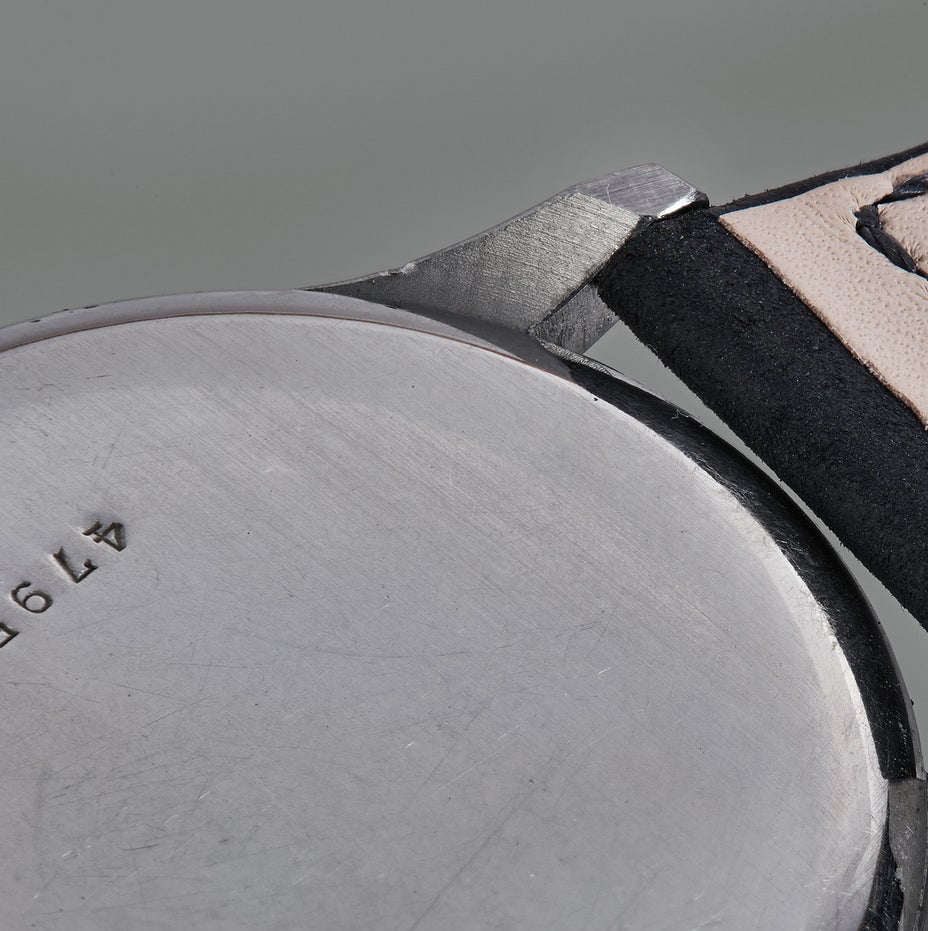
The present example is exceptionally rare - fitted with a hardly-ever seen stunning glossy black dial and white sub-dials. It remains well-preserved in outstanding original condition with a sharp case and crisp serial numbers engraved on its caseback. According to Breitling’s archive, this is a very early example featuring only the case number, and not the reference number as seen on later models, as well as the earlier Venus 150 movement versus the later Venus 175. Furthermore, the dial is designated “Fab. Suisse” at 6 o’clock – a rare characteristic indicating the watch was made for the French market.
Breitling submitted patent number 217012 in 1942, for a chronograph watch with rotating bezel incorporating a circular slide rule. This system easily allowed pilots
to make necessary calculations rapidly with the watch worn on their wrists. Launched in 1942, the Chronomat was based on this new patent, and an innovation in the field of aviator’s watches. The Chronomat became the basis for Breitling’s most recognizable chronograph, the Navitimer, which was released in 1952 with the iconic reference 806.
The present example is exceptionally rare - fitted with a hardly-ever seen stunning glossy black dial and white sub-dials. It remains well-preserved in outstanding original condition with a sharp case and crisp serial numbers engraved on its caseback. According to Breitling’s archive, this is a very early example featuring only the case number, and not the reference number as seen on later models, as well as the earlier Venus 150 movement versus the later Venus 175. Furthermore, the dial is designated “Fab. Suisse” at 6 o’clock – a rare characteristic indicating the watch was made for the French market.
Breitling
Swiss | 1884The firm started by Leon Breitling in 1884 is best known for its technical aviation and oceanic watches. Today, all models are outfitted with certified chronometer movements, used for accurate timing. Early aviation pioneers in specialized chronograph timepieces, Breitling introduced the circular slide rule to watches in the 1940s for use by pilots. The firm’s most iconic chronograph, the Navitimer, was introduced in 1954 and continues to be manufactured today. Another key model is the Duograph, a split-seconds chronograph that was Breitling's most prestigious wristwatch during the 1940s through '60s. Their watches are built on their reputation for precision and sturdiness.