文章 | When Mechanical Watchmaking Reinvented Itself Phillips Geneva Fall 2026 Online Auction
When Mechanical Watchmaking Reinvented Itself
From independent watchmakers and revived manufactures to grand complications and reimagined classics, we explore some of the forces behind mechanical watchmaking's resurgence following the quartz crisis.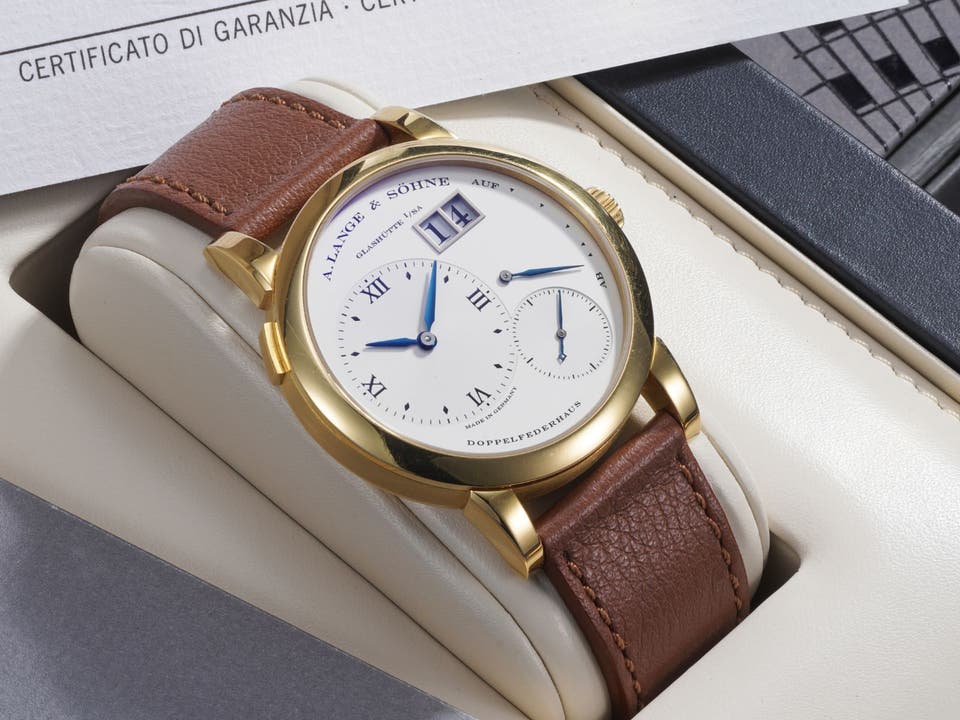
Phillips in Association with Bacs & Russo is pleased to present The Geneva Sessions, Fall 2026, an online auction running from 4–11 September. Featuring more than 90 exceptional luxury timepieces from leading makers including A. Lange & Söhne, Audemars Piguet, F.P. Journe, and Patek Philippe, the sale includes all five watches featured in this story.
As the 1980s began, mechanical watchmaking was emerging from a decade transformed by the rise of quartz. Quartz had permanently won the battle for affordability, convenience, and precision, leaving the traditional mechanical watch in search of a new purpose.
That purpose emerged as the industry began repositioning the mechanical watch – not as a superior instrument, but as a luxury object, valued for its craftsmanship, heritage, and human ingenuity rather than its ability to keep better time. Freed from competing with quartz on purely practical terms, mechanical watchmaking entered one of the most creative periods in its history.
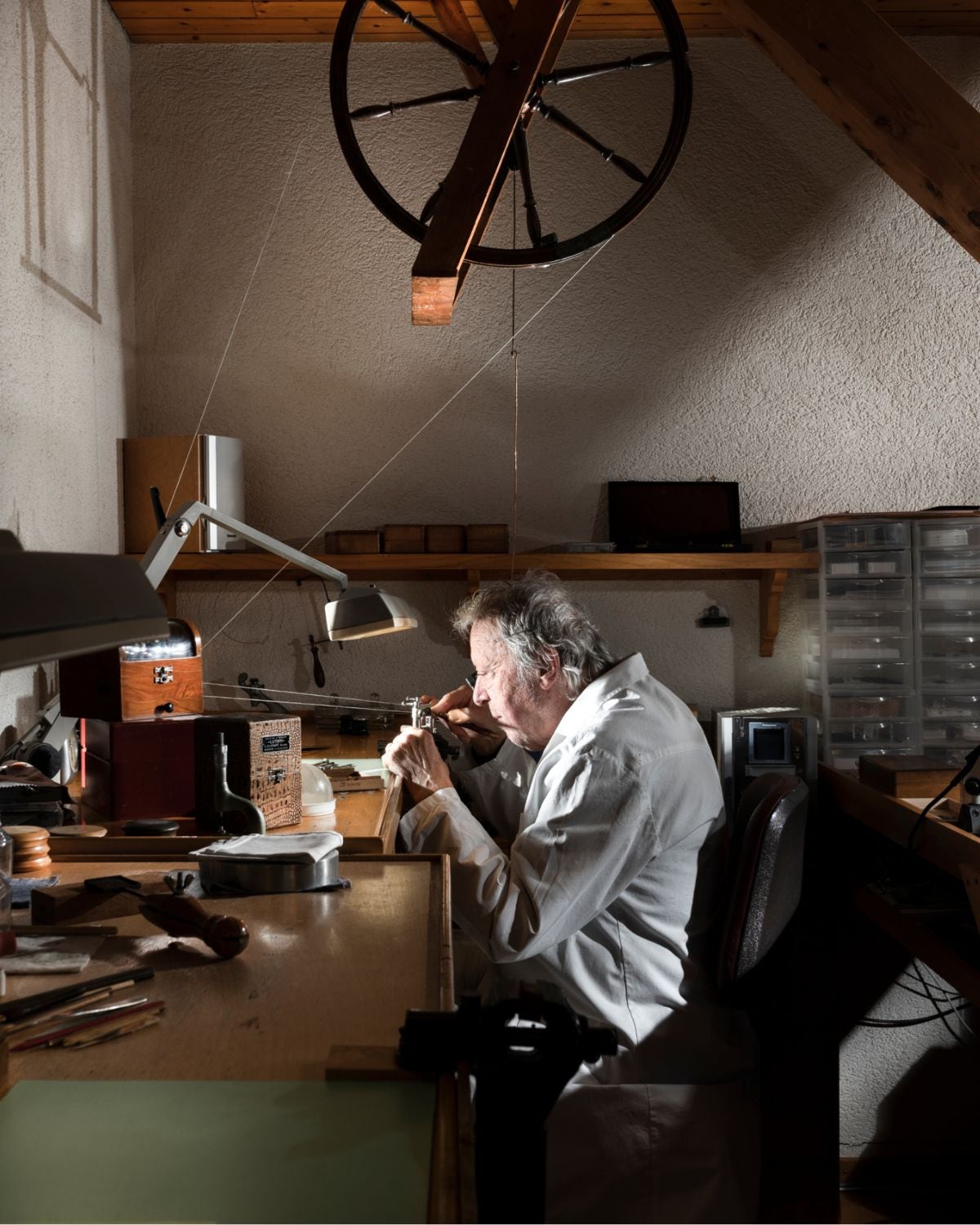
Daniel Roth became part of a new generation of independent watchmakers in the late 1980s. Daniel Roth
There wasn’t necessarily a single catalyst. Rather, the revival unfolded through a series of interconnected developments that helped to reshape both the industry and the watches it created. Within little more than a decade, mechanical watchmaking had undergone one of the most remarkable reinventions in modern industrial history.
Return of Lone Craftsmen
During the darkest years of the quartz crisis, much of Switzerland's traditional watch industry had been reduced to consolidation and survival. Beyond the walls of the major manufactures, however, a handful of watchmakers could see another path. If quartz had become the most practical way of telling time, perhaps the future of the mechanical watch lay instead in low-volume craftsmanship and the vision of a single creator.
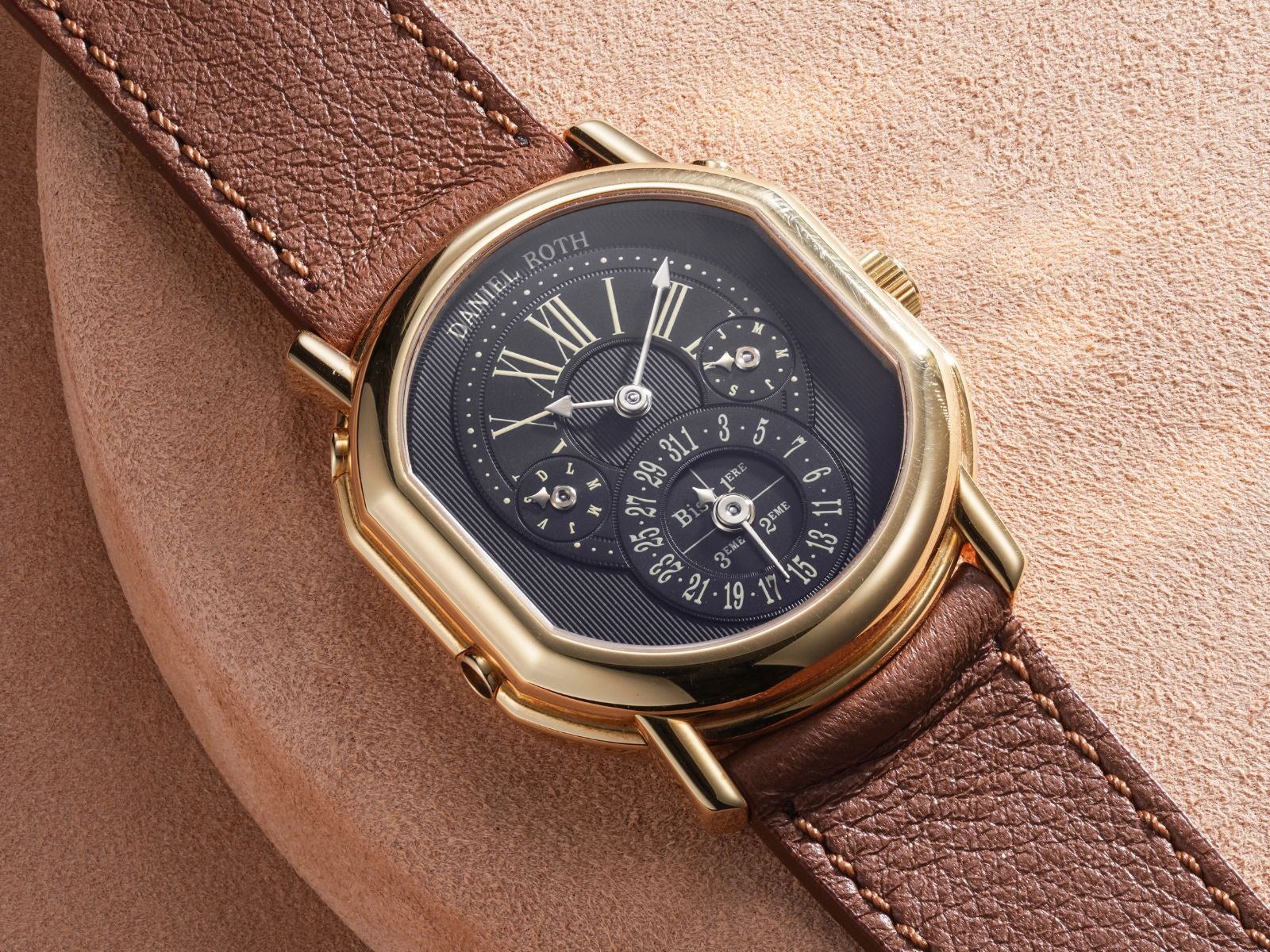
Lot 9: A circa 1994 Daniel Roth Perpetual Calendar 2117 in 18k pink gold, included in the Phillips Geneva Sessions, Fall 2026, Online Auction. Estimate: CHF 30,000–60,000
By the late 1980s, a new generation of independent watchmakers was emerging. Inspired by pioneers such as George Daniels and supported by the growing Académie Horlogère des Créateurs Indépendants (AHCI) community, Svend Andersen, Vincent Calabrese, Daniel Roth, Philippe Dufour and, soon after, Franck Muller showed that reputations could once again be built around individual ambitions rather than the names of established maisons.
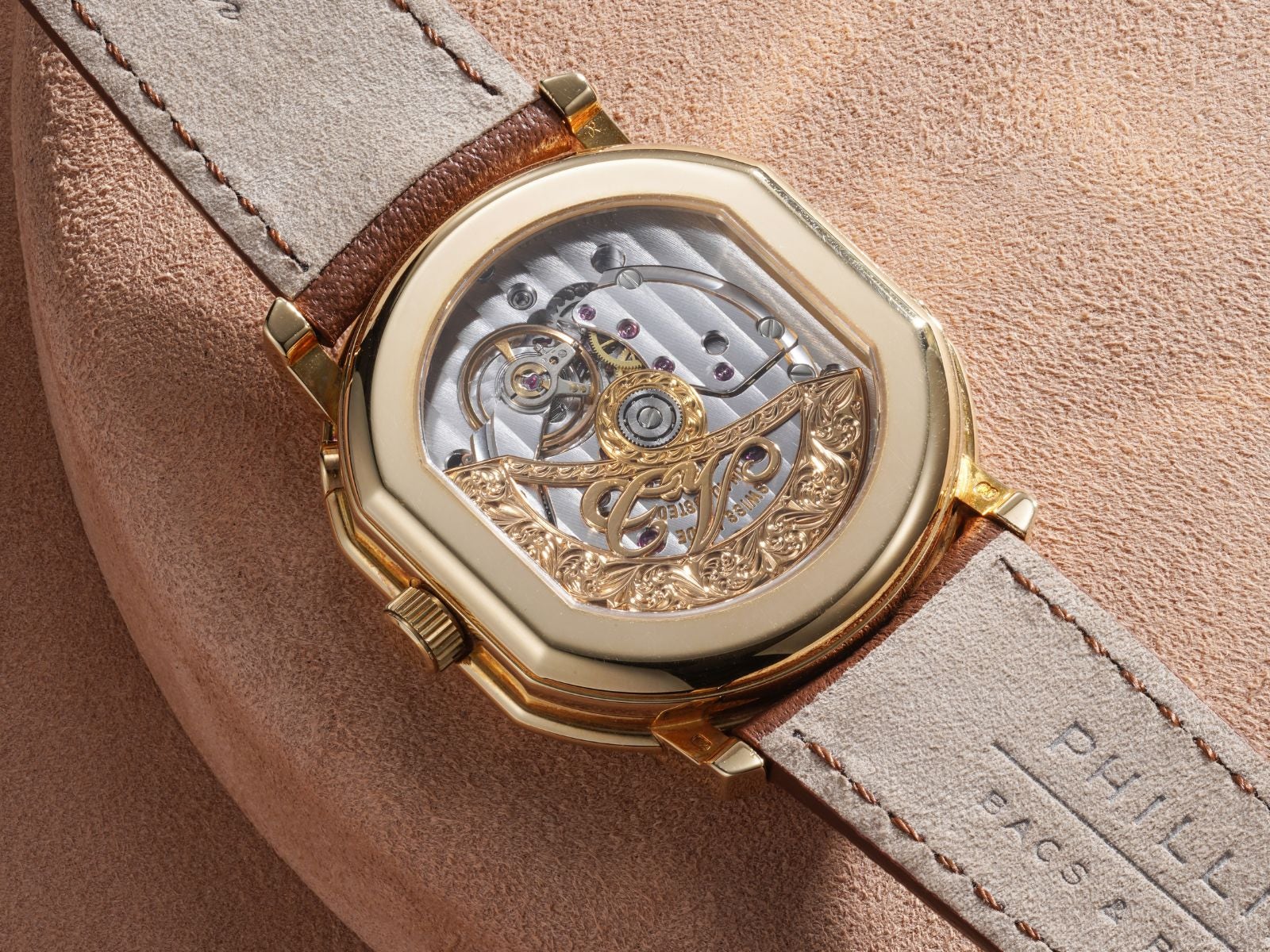
Lot 9: A circa 1994 Daniel Roth Perpetual Calendar 2117 in 18k pink gold, included in the Phillips Geneva Sessions, Fall 2026, Online Auction. Estimate: CHF 30,000–60,000
Roth was among the movement's leading figures. Having helped revive Breguet under the Chaumet brothers by reinterpreting Abraham-Louis Breguet's work for the wristwatch, the Nice native established his own workshop in the Vallée de Joux in 1988. At a time when independent watchmaking remained more or less unproven, success would largely depend on the quality of the watches themselves.
The Perpetual Calendar Ref. 2117 reflects that philosophy. Developed with fellow Vallée de Joux watchmaker Philippe Dufour and introduced in the mid-1990s, it grew out of an ambitious attempt to create one of the first truly instantaneous perpetual calendar wristwatches. When the original aperture-display concept proved too energy-intensive, the pair redesigned the display using hands, allowing all the calendar indications to change simultaneously at midnight.
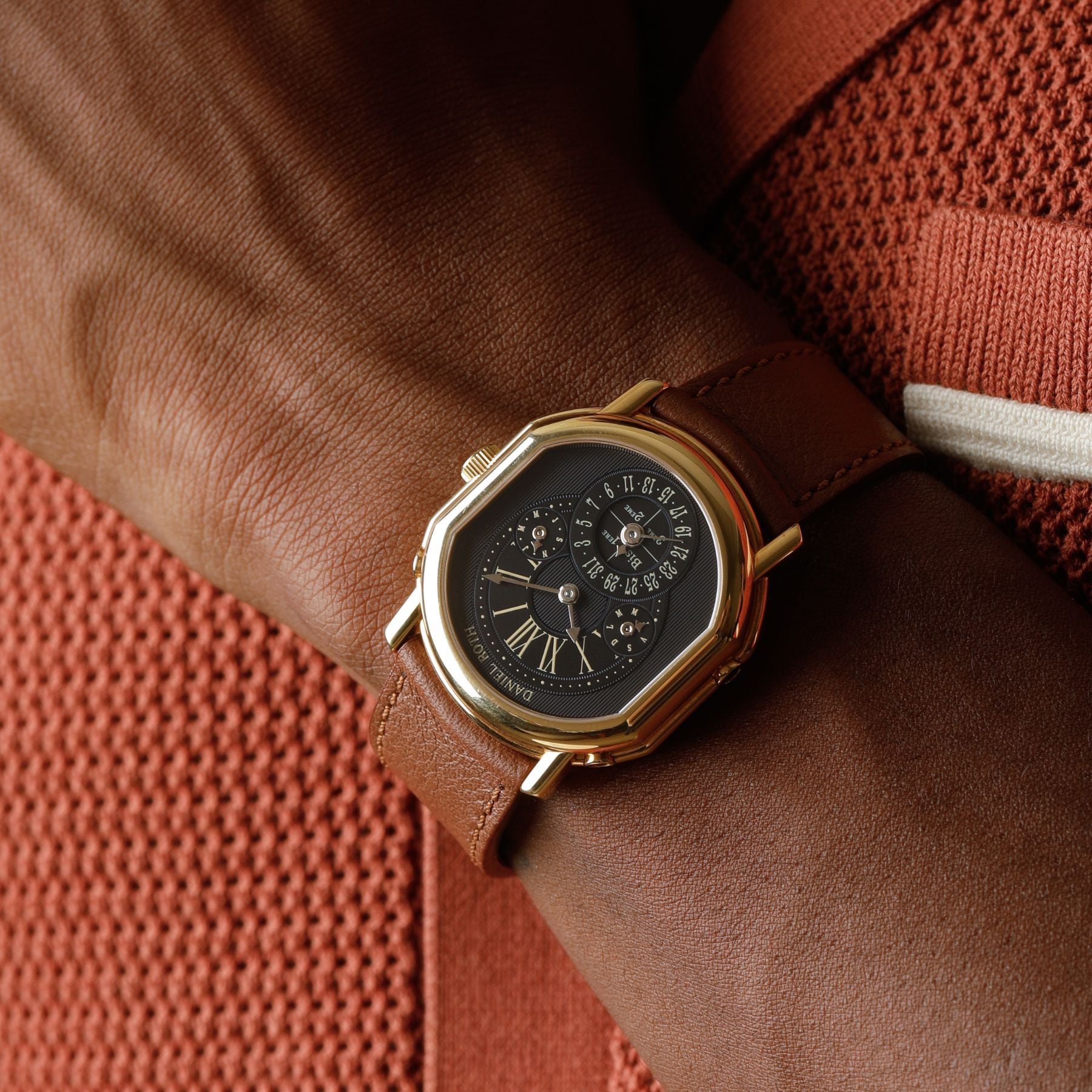
Lot 9: A circa 1994 Daniel Roth Perpetual Calendar 2117 in 18k pink gold, included in the Phillips Geneva Sessions, Fall 2026, Online Auction. Estimate: CHF 30,000–60,000
The heavily reworked Lemania caliber demonstrated that a small independent workshop could tackle technical challenges once considered the preserve of the largest manufactures.
Reclaiming Identity
The rebirth of mechanical watchmaking post-quartz was not just confined to independent ateliers, or even Switzerland; it also involved the restoration of one of Europe's great watchmaking names.
Founded in Glashütte in 1845, A. Lange & Söhne was expropriated in 1948 as East Germany nationalized its watch industry. Although watchmaking continued in Glashütte, the A. Lange & Söhne name disappeared for more than four decades. It was only after German reunification that Walter Lange, the founder's great-grandson, returned to revive the family business with the backing of industry visionary Günter Blümlein.
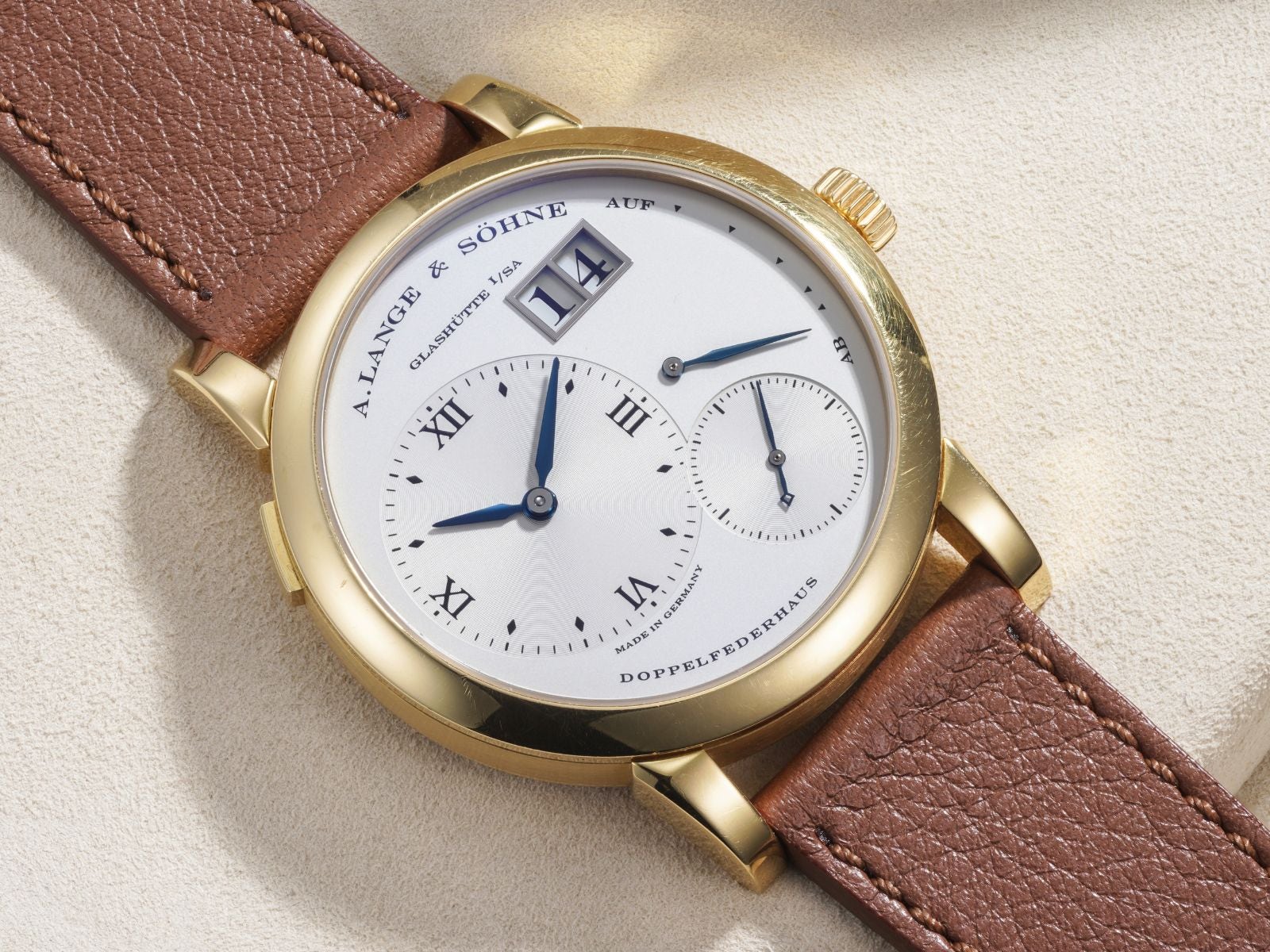
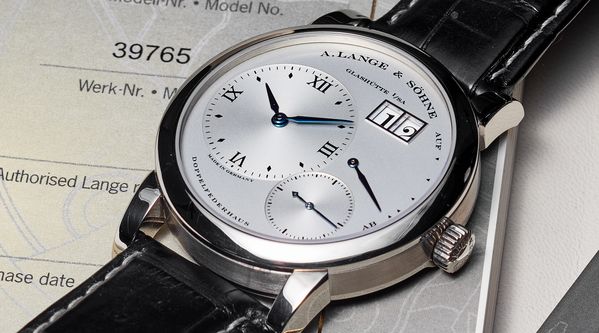
Lot 72: A 1995 A. Lange & Söhne Lange 1 in 18k yellow gold, included in the Phillips Geneva Sessions, Fall 2026, Online Auction. Estimate: CHF 23,000–50,000
When the first collection debuted in 1994, it essentially set out to answer a simple but profound question: what might A. Lange & Söhne have become had its development never been interrupted? Instead of recreating the past, it established a modern interpretation of Saxon watchmaking. The Lange 1 became a quintessential expression of that approach.
At first glance, the Lange 1 looked unlike anything else. Rather than following the symmetrical layouts that had long defined classical watchmaking, it arranged its indications asymmetrically according to the golden ratio. The outsize date, inspired by Dresden's historic Semper Opera House clock, became a signature and gave the reborn manufacture an identity of its own.
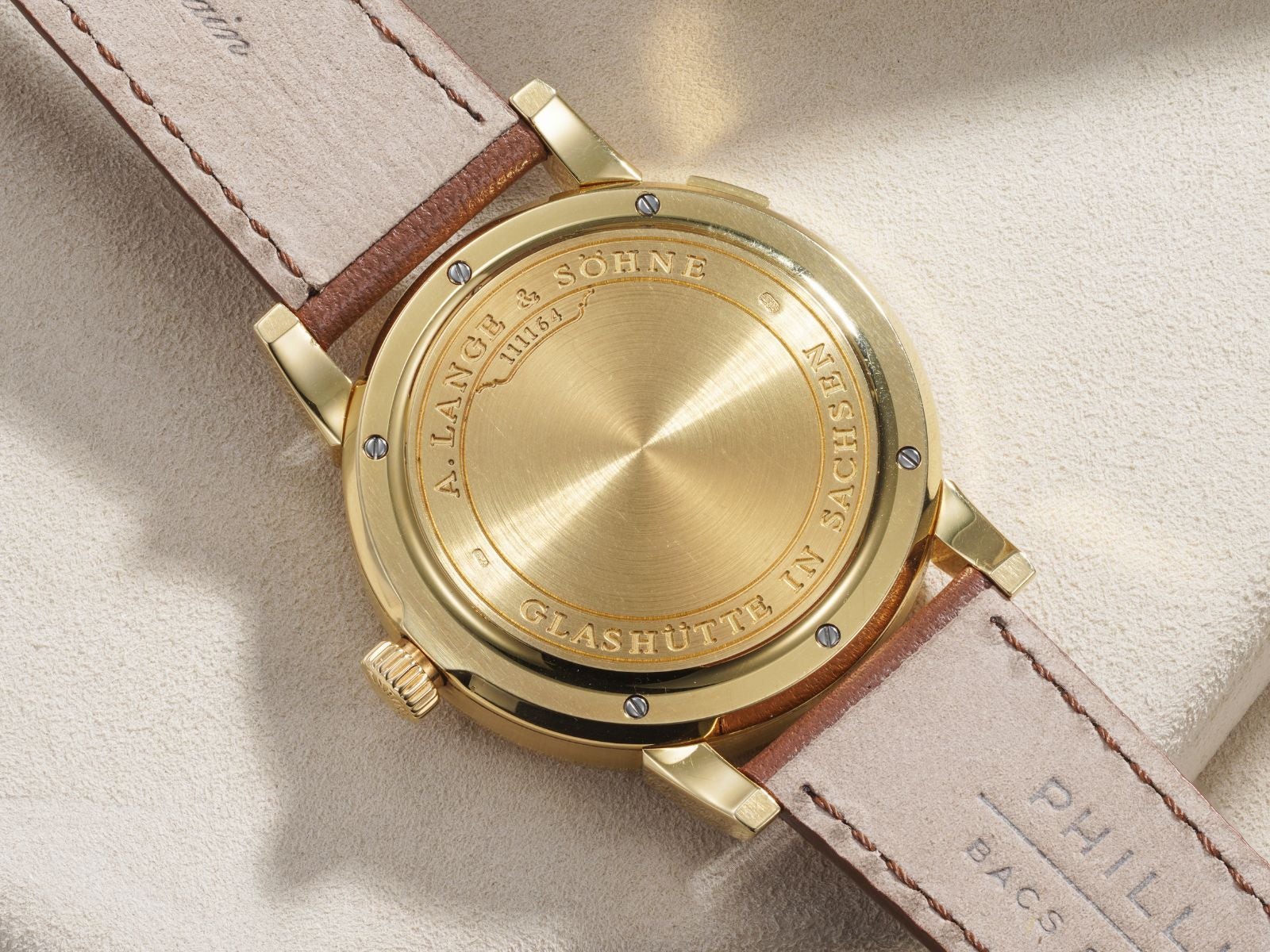
Lot 72: A 1995 A. Lange & Söhne Lange 1 in 18k yellow gold, included in the Phillips Geneva Sessions, Fall 2026, Online Auction. Estimate: CHF 23,000–50,000
Underneath the solid gold caseback, the manually wound L901.0 caliber reflected the same uncompromising approach. Its untreated German silver three-quarter plate, screwed gold chatons and hand-engraved balance cock drew directly on the traditions of Saxon watchmaking.
Although hidden from view on the earliest examples, its meticulous finishing established a new benchmark for serially produced mechanical movements.
Reinterpreting History
By the early 1990s, mechanical watchmaking had begun to rediscover something else: its own history. As confidence returned to the industry, some watchmakers looked beyond contemporary design for inspiration, revisiting ideas from centuries past in order to reinterpret them for a new era.
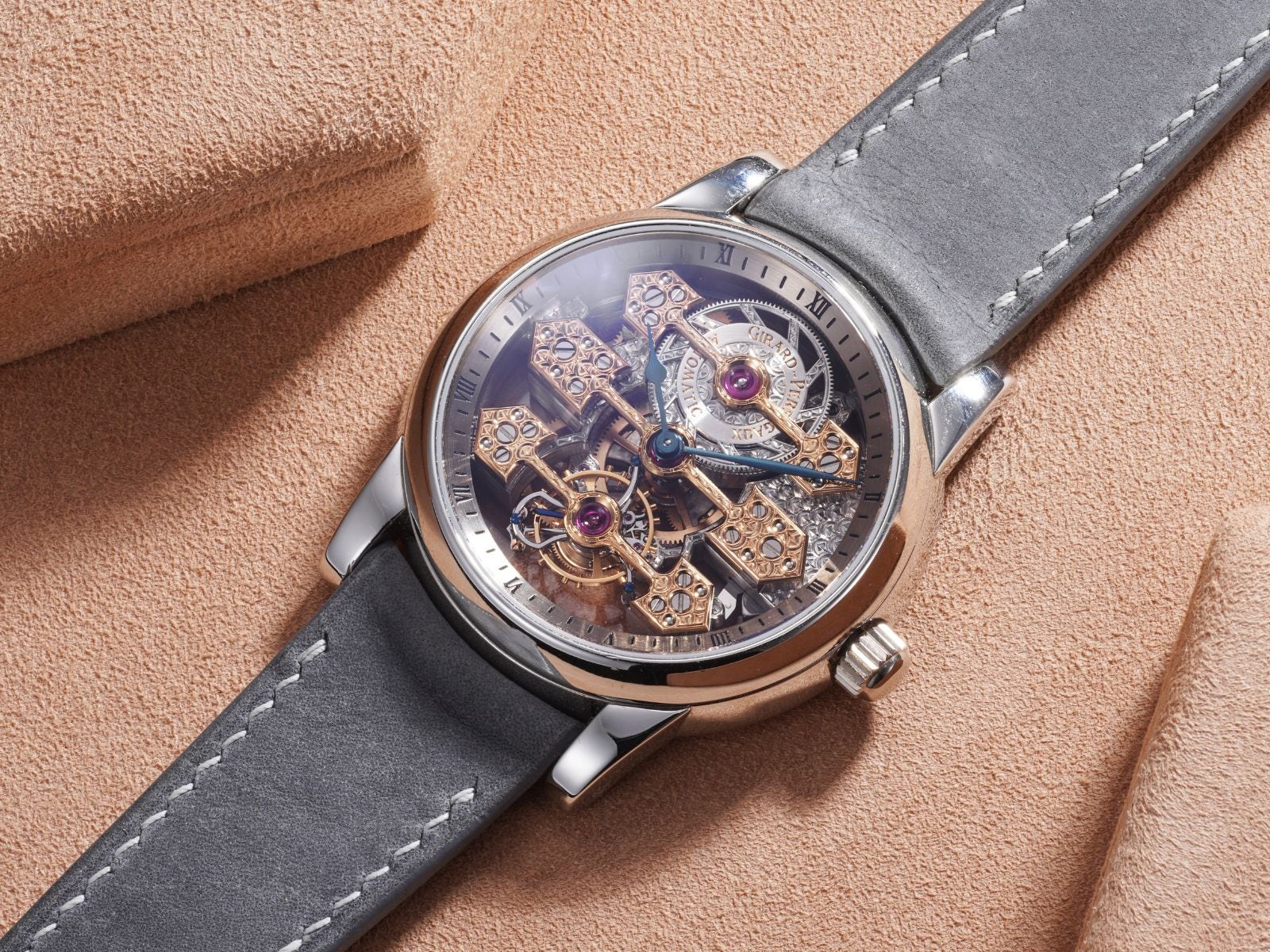
Lot 14: A circa 2000, skeletonized Girard-Perregaux Three Bridges in platinum, included in the Phillips Geneva Sessions, Fall 2026, Online Auction. Estimate: CHF 20,000–40,000
Girard-Perregaux had one obvious place to look. Constant Girard's Tourbillon with Three Gold Bridges pocket watch had become one of the major achievements of 19th-century watchmaking, winning a gold medal at the Paris Universal Exhibition in 1889 and transforming functional movement bridges into the watch's principal visual feature.
The La Chaux-de-Fonds brand's return to the Three Bridges began in 1981, when Francis Besson oversaw the recreation of the historic pocket watch, proving that the manufacture could reinterpret one of its greatest accomplishments from yesteryear.
After acquiring Girard-Perregaux later that decade and refocusing it on high-end mechanical watchmaking, Besson took the next step by adapting the design for the company's bicentenary in 1991.
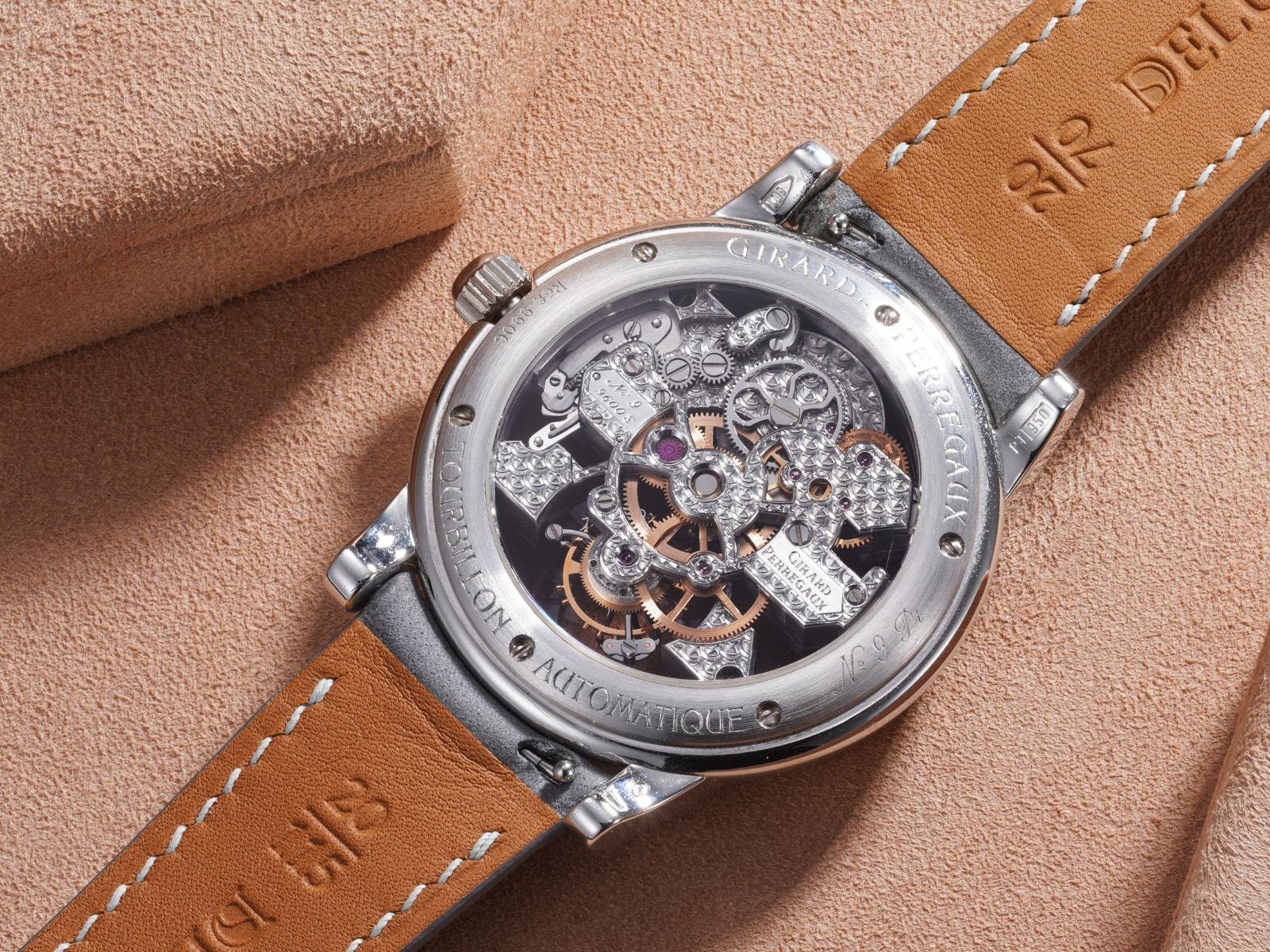
Lot 14: A circa 2000, skeletonized Girard-Perregaux Three Bridges in platinum, included in the Phillips Geneva Sessions, Fall 2026, Online Auction. Estimate: CHF 20,000–40,000
Instead of reproducing the pocket watch once again, G-P translated its architecture into a wristwatch. The Tourbillon with Three Gold Bridges preserved the signature arrangement of the three gold bridges while adapting the movement to a smaller format. In doing so, it established a design motif that remains the brand’s calling card to this day.
Pushing Technical Boundaries
Grand complications had long represented the highest expression of mechanical watchmaking. After years in which relatively few manufacturers had been willing or able to invest in their development, exceptionally complicated wristwatches were once again becoming a focus of serious attention.
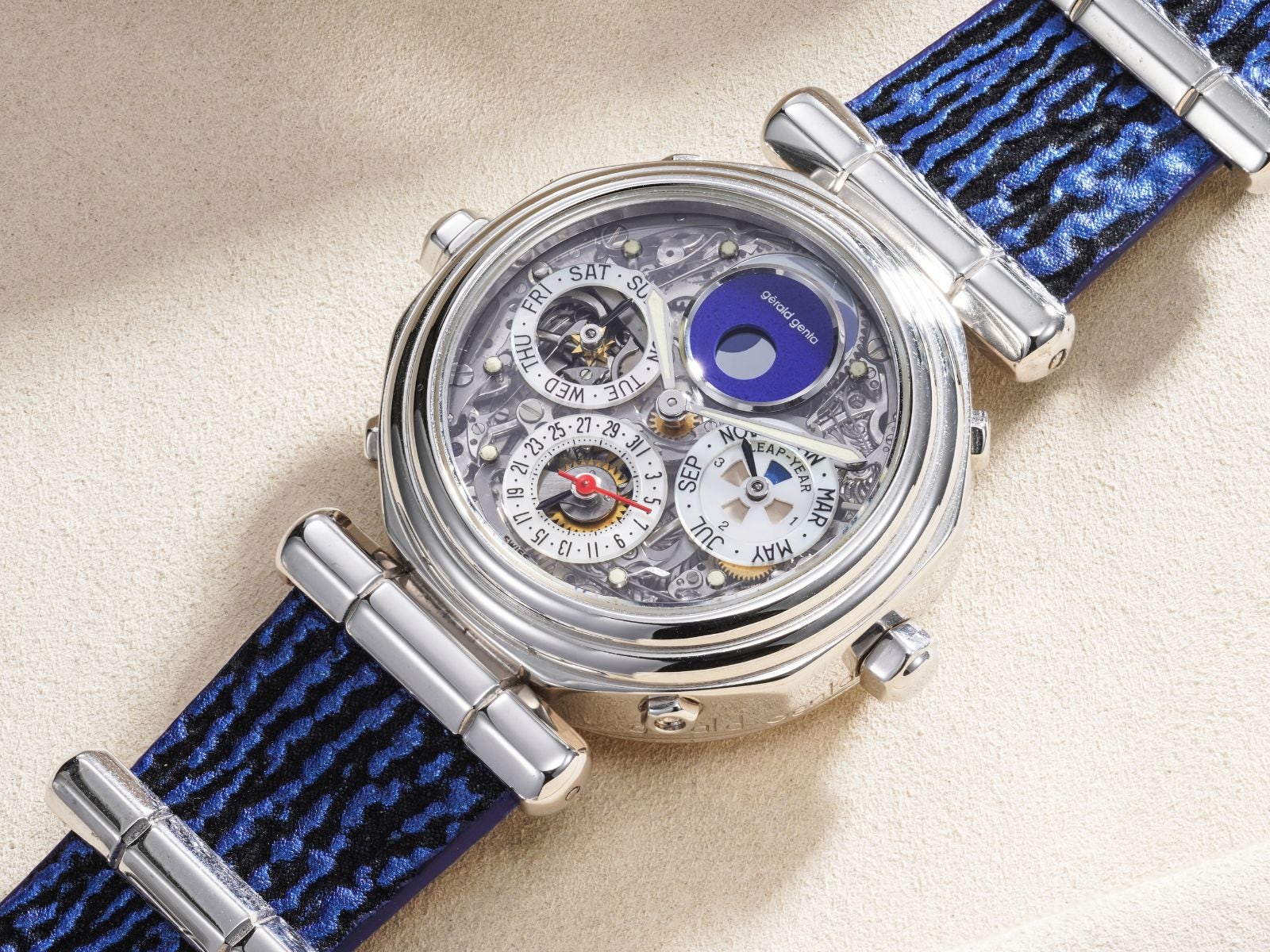
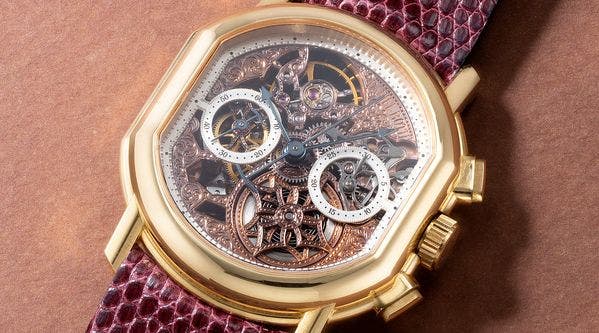
Lot 94: A circa 1993 Gérald Genta Minute Repeating Perpetual Calendar Tourbillon Ref. G4010 4 in 18k white gold, included in the Phillips Geneva Sessions, Fall 2026, Online Auction. Estimate: CHF 30,000–60,000
Gérald Genta was among those pushing mechanical complexity in increasingly ambitious directions. Come the early 1990 and the celebrated designer had turned his attention to watches combining some of traditional watchmaking's most demanding complications.
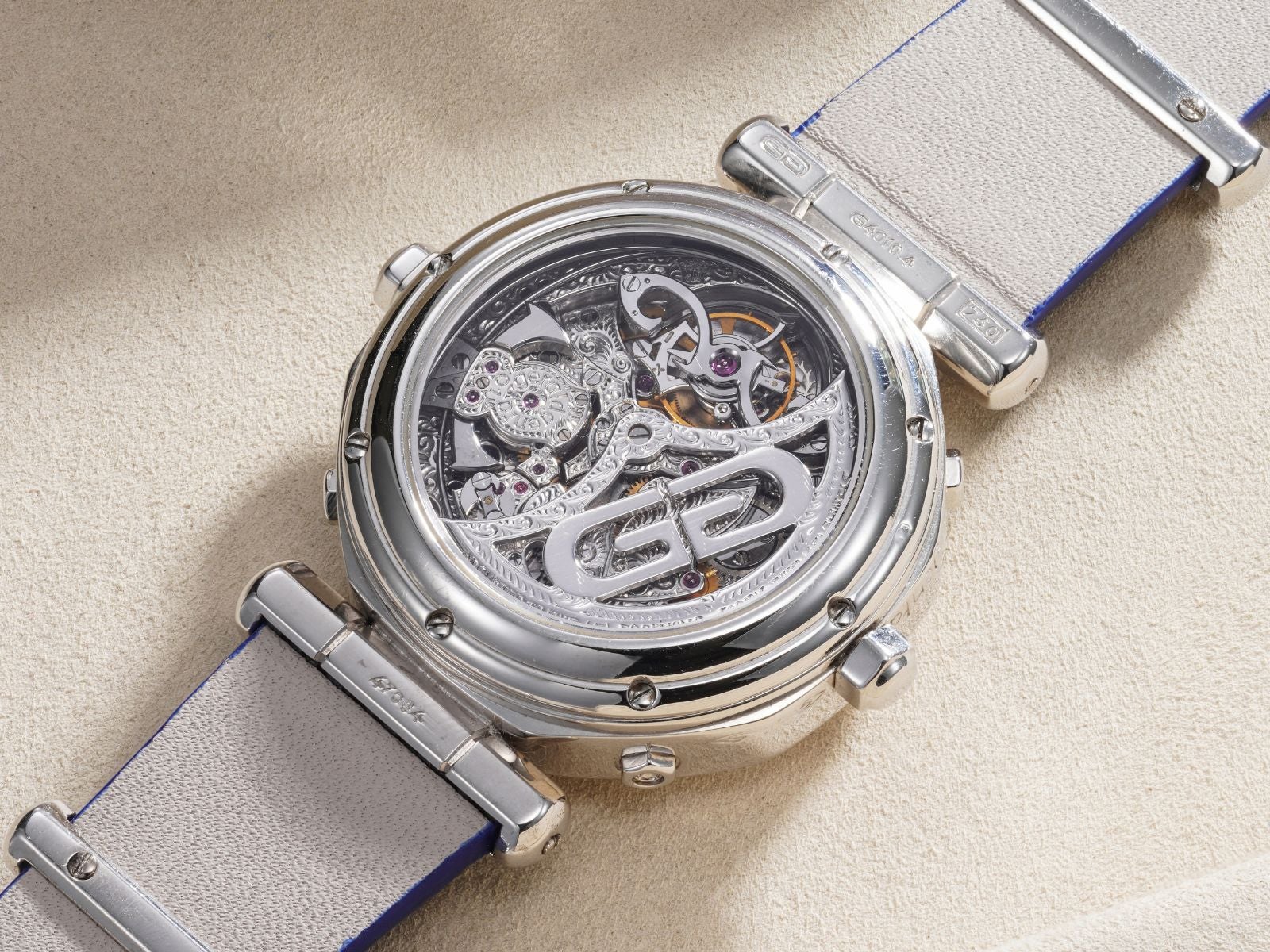
Lot 94: A circa 1993 Gérald Genta Minute Repeating Perpetual Calendar Tourbillon Ref. G4010 4 in 18k white gold, included in the Phillips Geneva Sessions, Fall 2026, Online Auction. Estimate: CHF 30,000–60,000
The Ref. G4010.4 offered here, dating from circa 1993, is a salient example. Within its 35 mm white-gold case, its automatic movement combines a one-minute tourbillon, minute repeater, and perpetual calendar with leap-year and moonphase indications. Its skeletonized construction exposes much of the mechanism beneath, while the stepped octagonal case and sculptural Vendôme lugs are inimitably Genta.
Bringing a tourbillon, minute repeater, and perpetual calendar together in a wristwatch represented exactly the kind of mechanical ambition that was returning to high-end watchmaking during this period.
Renaissance Reaches Maturity
By the mid-1990s, the mechanical watchmaking renaissance had reached a new stage. Independent watchmakers had established themselves, historic manufactures had returned, brands were drawing inspiration from their heritage, and collectors had embraced increasingly complicated watches. Against that backdrop, even the industry's most established maisons began expressing this renewed confidence in fresh ways.
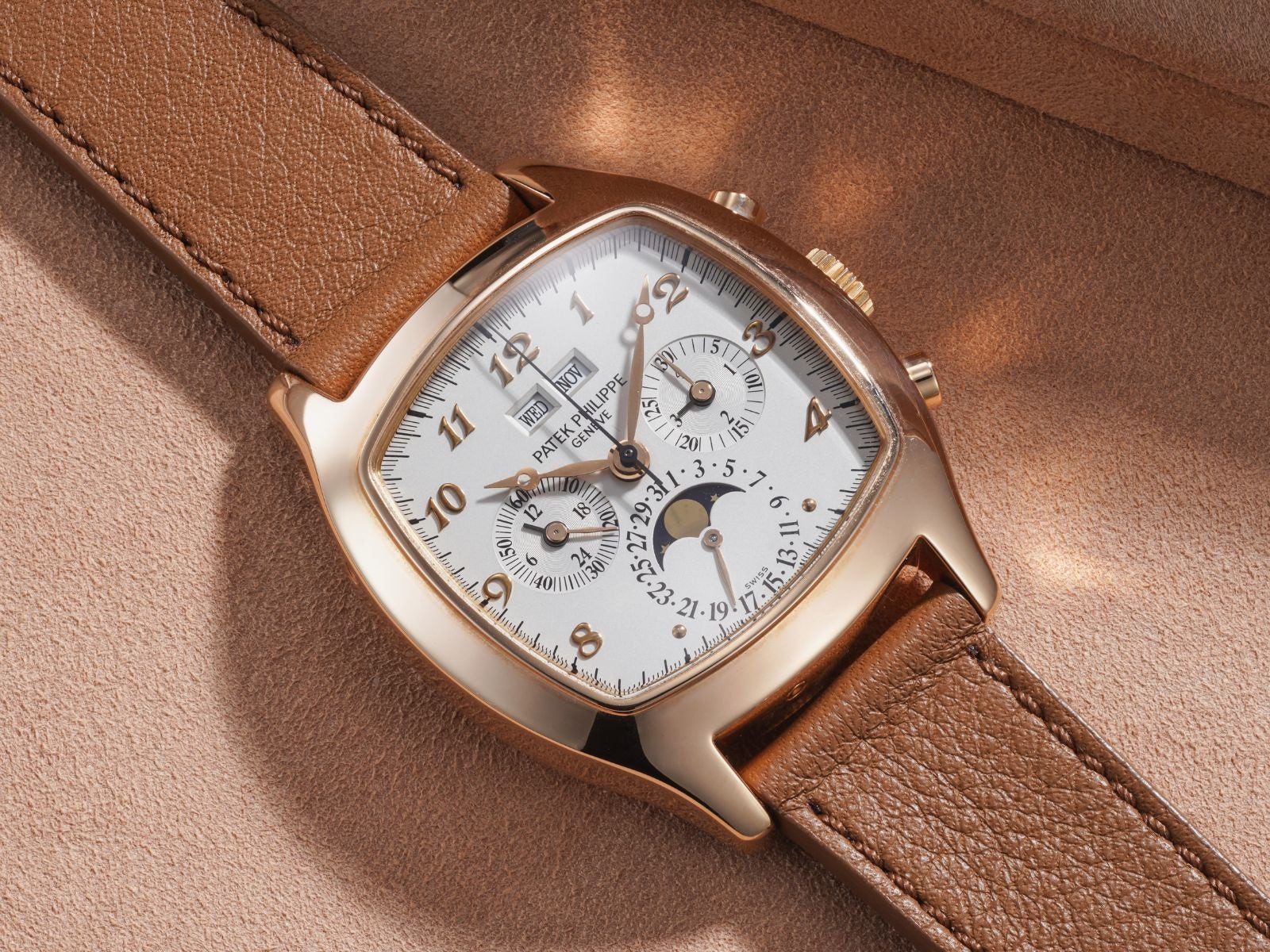
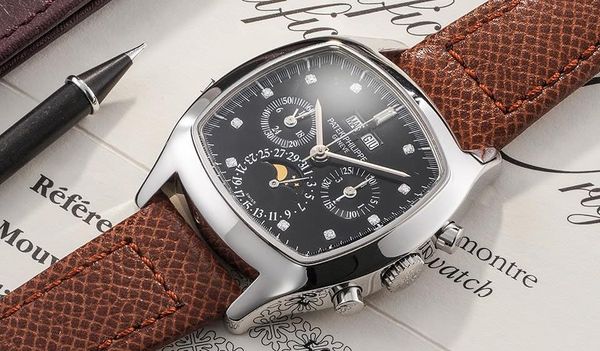
Lot 54: A 1994 Patek Philippe Perpetual Calendar Chronograph Ref. 5020 in 18k pink gold, included in the Phillips Geneva Sessions, Fall 2026, Online Auction. Estimate: CHF 30,000–60,000
Introduced in 1993, Patek Philippe's Ref. 5020 reflected that changing outlook. Mechanically, it changed almost nothing. Powered by the same Lemania-based Caliber CH 27-70 Q as the Ref. 3970, it offered the same perpetual calendar chronograph in a markedly different form.
Its distinctive cushion-shaped case, inspired by early Patek Philippe wristwatches of the 1920s, departed from the round cases long associated with the manufacture's flagship complication. Collectors would later nickname it the "TV" for its unusual silhouette.
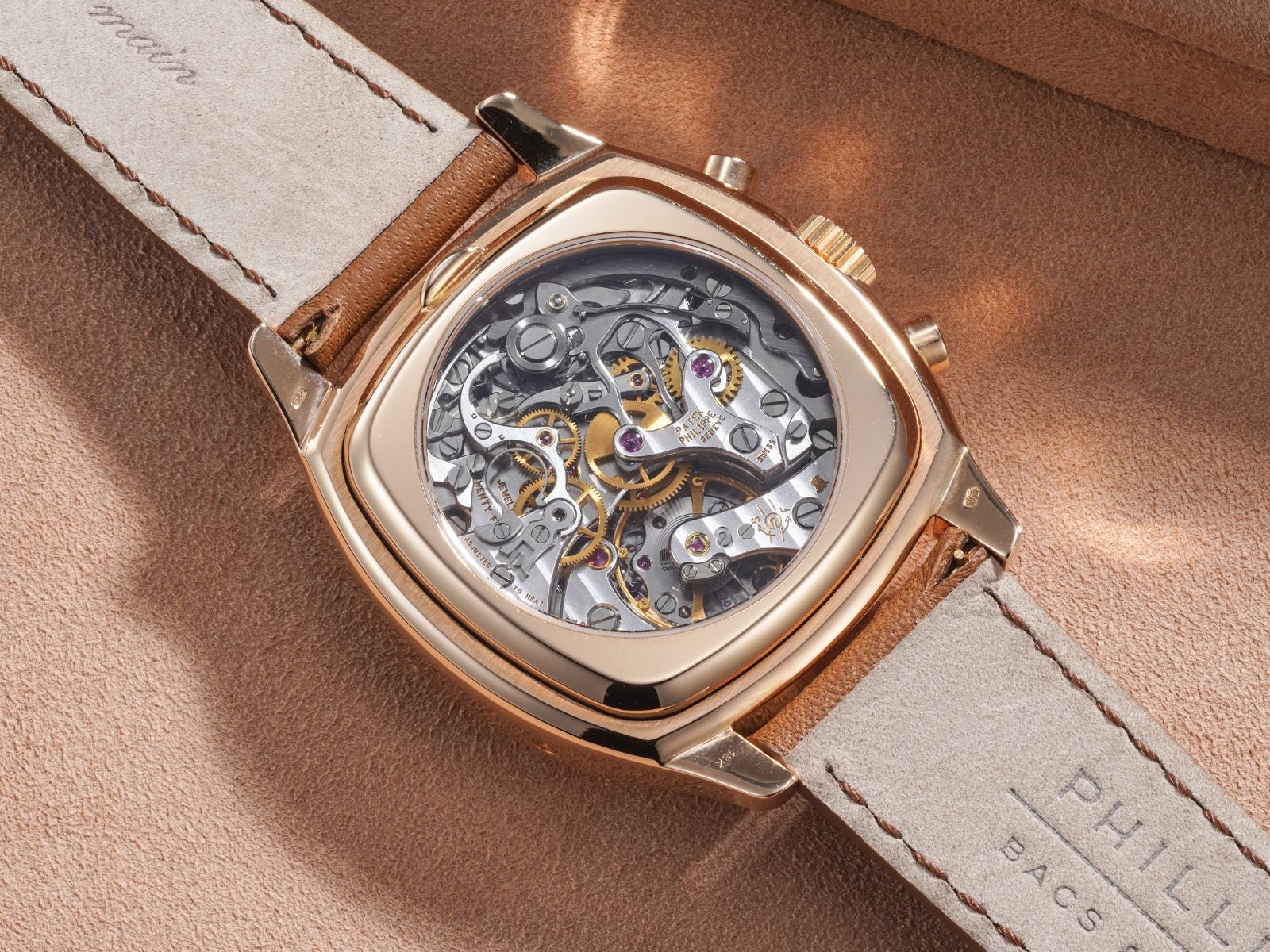
Lot 54: A 1994 Patek Philippe Perpetual Calendar Chronograph Ref. 5020 in 18k pink gold, included in the Phillips Geneva Sessions, Fall 2026, Online Auction. Estimate: CHF 30,000–60,000
The example offered here, produced in 1994, belongs to the earliest years of the reference. The larger case creates a more open dial, while applied Breguet numerals and hands reinforce its dialogue with the manufacture's past.
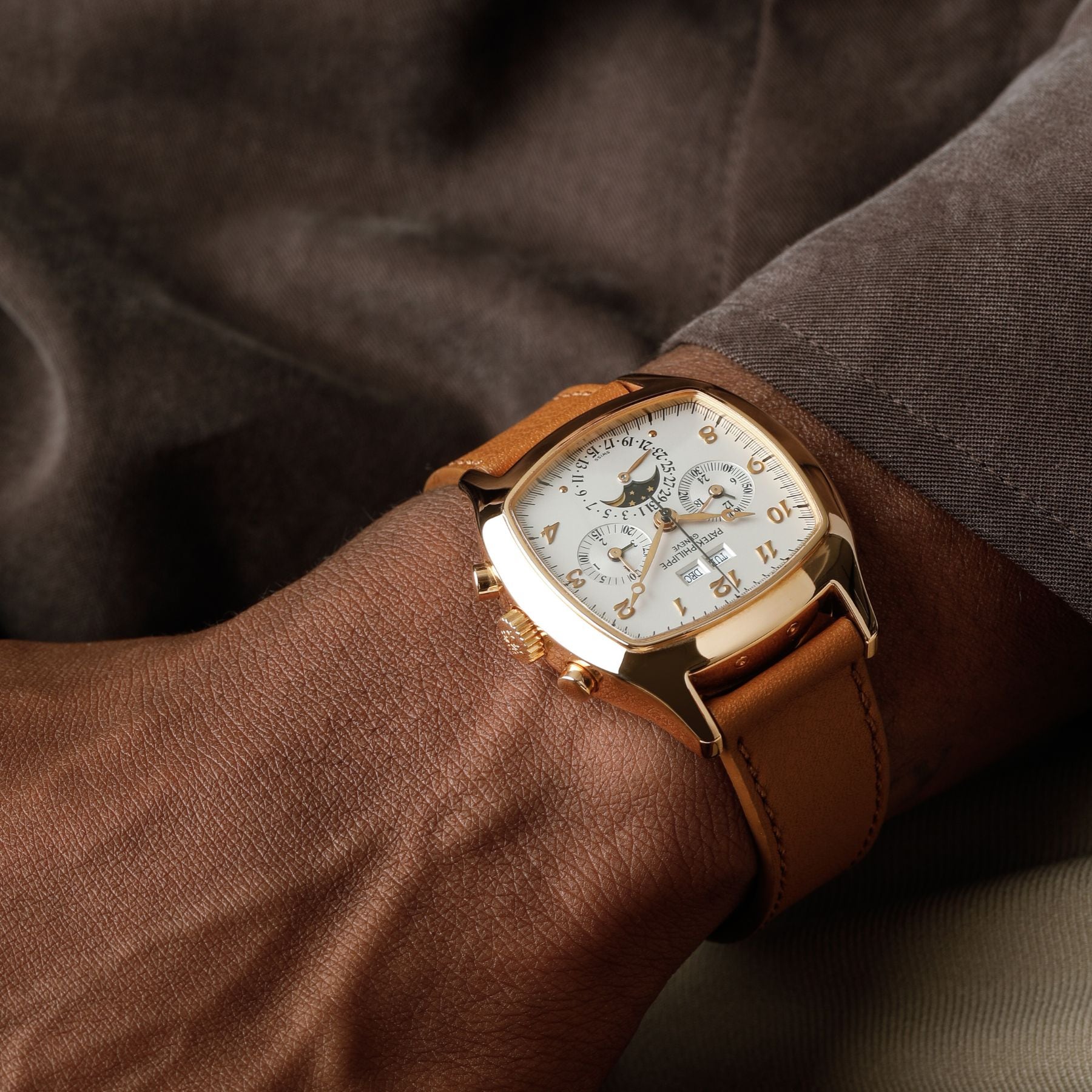
Lot 54: A 1994 Patek Philippe Perpetual Calendar Chronograph Ref. 5020 in 18k pink gold, included in the Phillips Geneva Sessions, Fall 2026, Online Auction. Estimate: CHF 30,000–60,000
Over three decades later, the Ref. 5020 remains one of the most eye-catching interpretations of Patek Philippe's perpetual calendar chronograph, illustrating how one of the Geneva brand's most traditional complications could be reimagined without sacrificing its identity.
You can learn more, place a bid, and view the entire Geneva Sessions, Fall 2026, catalog here.