文章 | Robert Mapplethorpe Platinum Print Photogravure Auction New York October 2026
Printing Precision in Robert Mapplethorpe’s Late Works
Four remarkable works from 1985 and 1987 make a rare appearance at our Photographs auction in New York.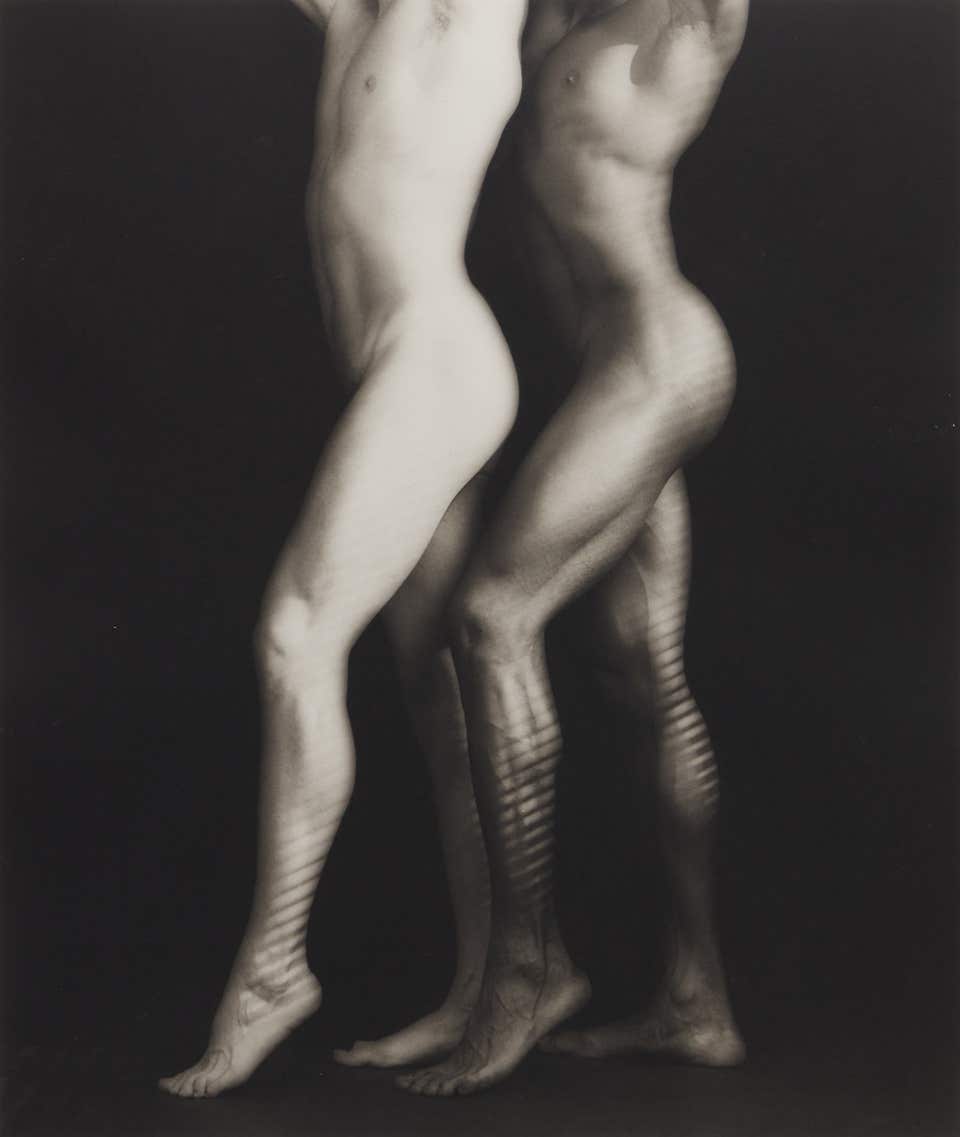
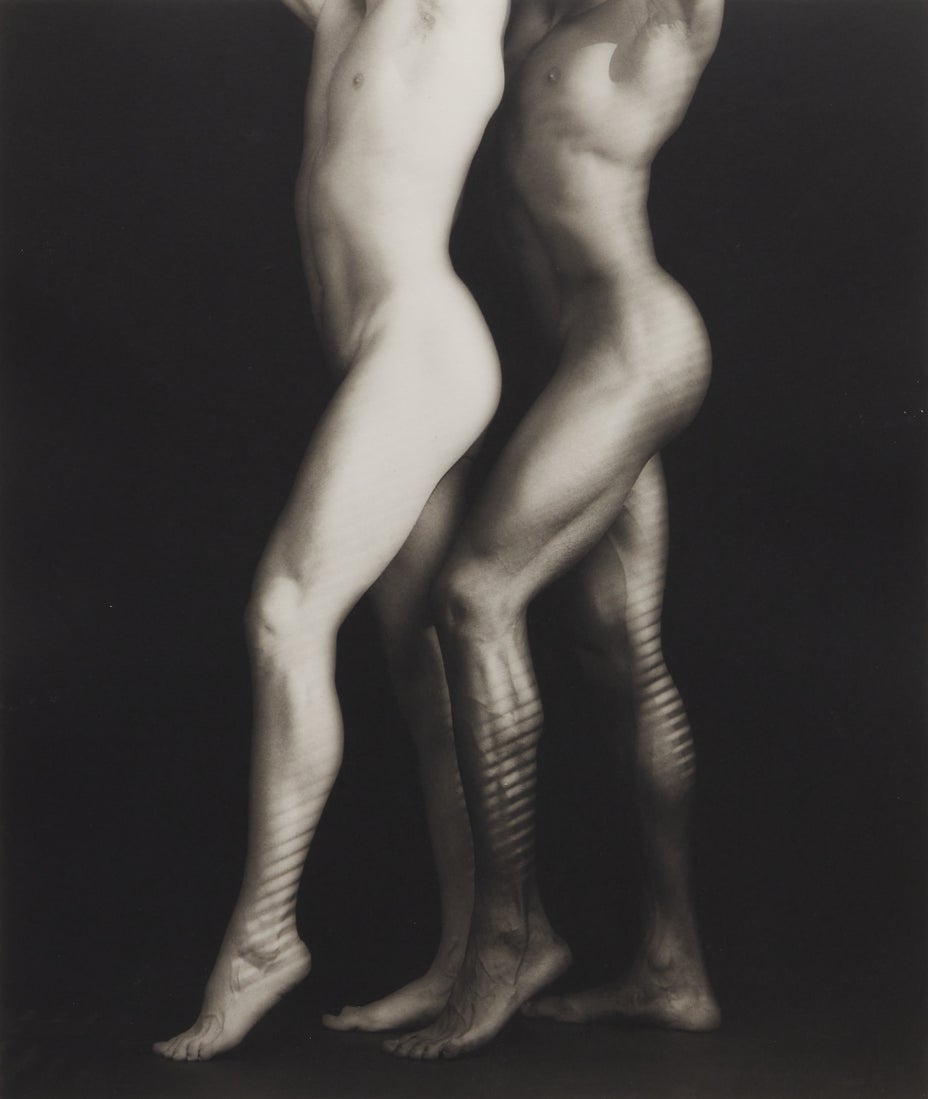
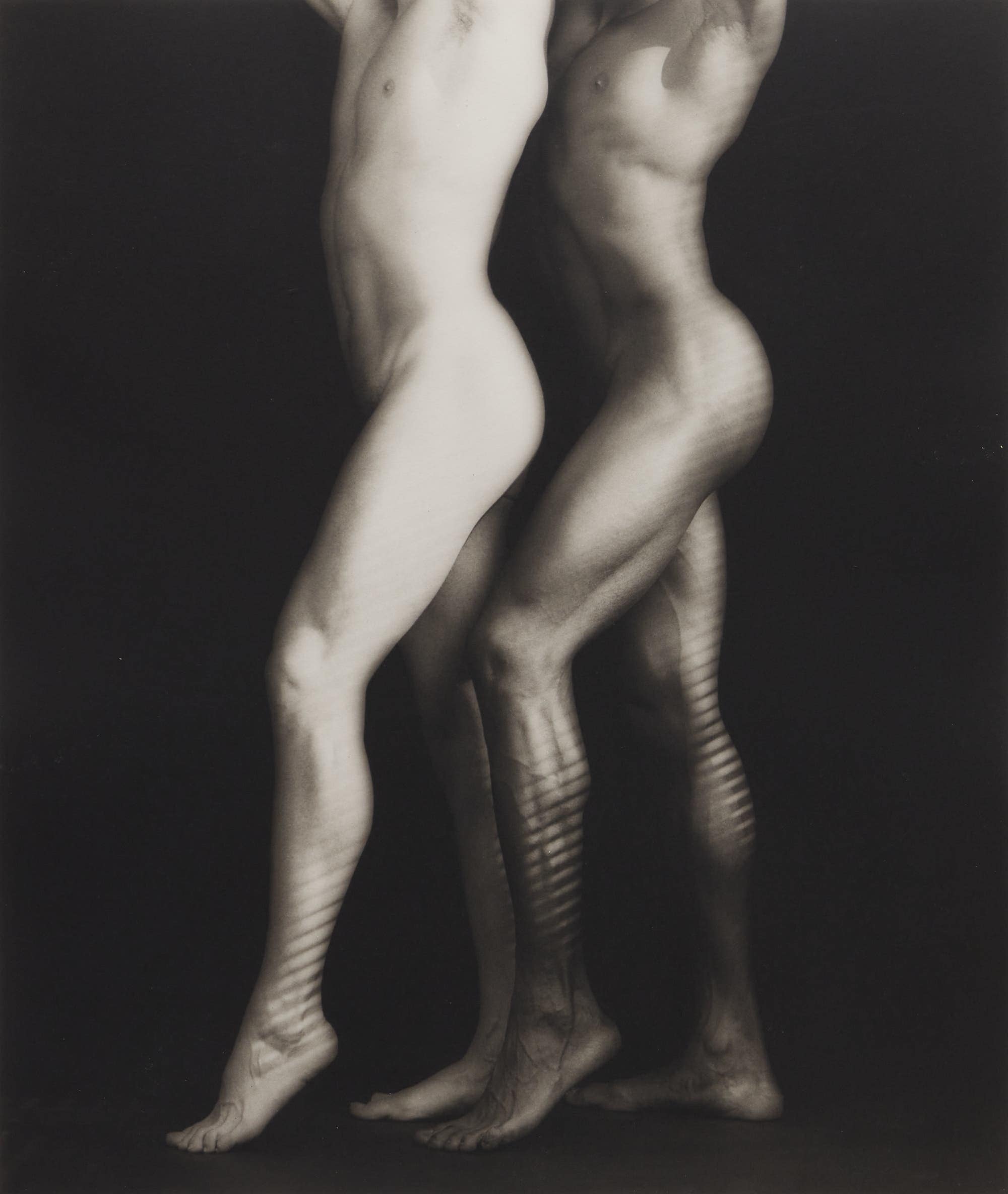
ROBERT MAPPLETHORPE, Ken and Tyler, 1985. Photographs New York.
Deeply embedded in the lore of downtown New York subculture and queer history, the name Robert Mapplethorpe evokes many associations. One might think of the infamous and consequential controversies his work has sparked over the years, or the famous names who sat for him — ranging from his close friend Patti Smith to Grace Jones, Andy Warhol, Debbie Harry, and so many other figures. Today, his name evokes a contemporary kind of longing for the gritty glamour of the old downtown and the creative freedoms it afforded, but also a pointed remembrance of the AIDS crisis that ultimately took the artist’s life.
It’s safe to say at this point that Mapplethorpe is a mythic figure, but one aspect of the artist that is perhaps unfairly overlooked in popular culture is his absolute devotion to the look of his prints and his openness to alternative photographic techniques. We see this throughout his career, from his earliest mixed-media works to his use of Polaroid, and eventually to the silver, platinum, and photogravure prints he would produce as he matured as an artist. How process and medium impacted the final appearance of an image was something that Mapplethorpe didn’t just accept and learn to control, but rather exploited for intentional artistic ends.
The works featured here, on offer in our upcoming Photographs auction in New York, represent some of the finest examples of Mapplethorpe’s work.
Ken and Tyler: A study in platinum
By the 1980s, already well known for the bravura-quality gelatin silver prints of his images, Mapplethorpe introduced platinum printing to his repertoire just as his work began to shift towards classical form and composition. A process that requires exacting skill, platinum printing relied on the light sensitivity of iron salts in conjunction with platinum to create the image through an almost alchemical process. It was, and remains, a technique practiced by a very few master printers. Mapplethorpe relied upon these few to create prints that exhibited a tonal range unattainable by other means, and create an entirely new interpretation of his images.
ROBERT MAPPLETHORPE, Ken and Tyler, 1985. Photographs New York.
In this remarkable work from 1985, Mapplethorpe explores visual contrasts and cultural binaries, employing platinum’s unique deep tonal range — rich darks, subtle transitions, and exceptional clarity — not just to create the ideal print of this image but to heighten his artistic aims. The play of light, the detail of the shadow across the figures’ legs, and the contrasts of skin tone and muscular structure all combine to create a balanced composition, but it is the platinum print’s power that helps the cultural connotations truly speak. This work was included in the touring comprehensive — and controversial — exhibition The Perfect Moment, mounted just before the photographer’s death.
“I could always tell when I have chemistry with a photographer, and with Robert I knew immediately that he was going to produce incredible photographs.” —Ken Moody
Graphicstudio: Floral still lifes in photogravure
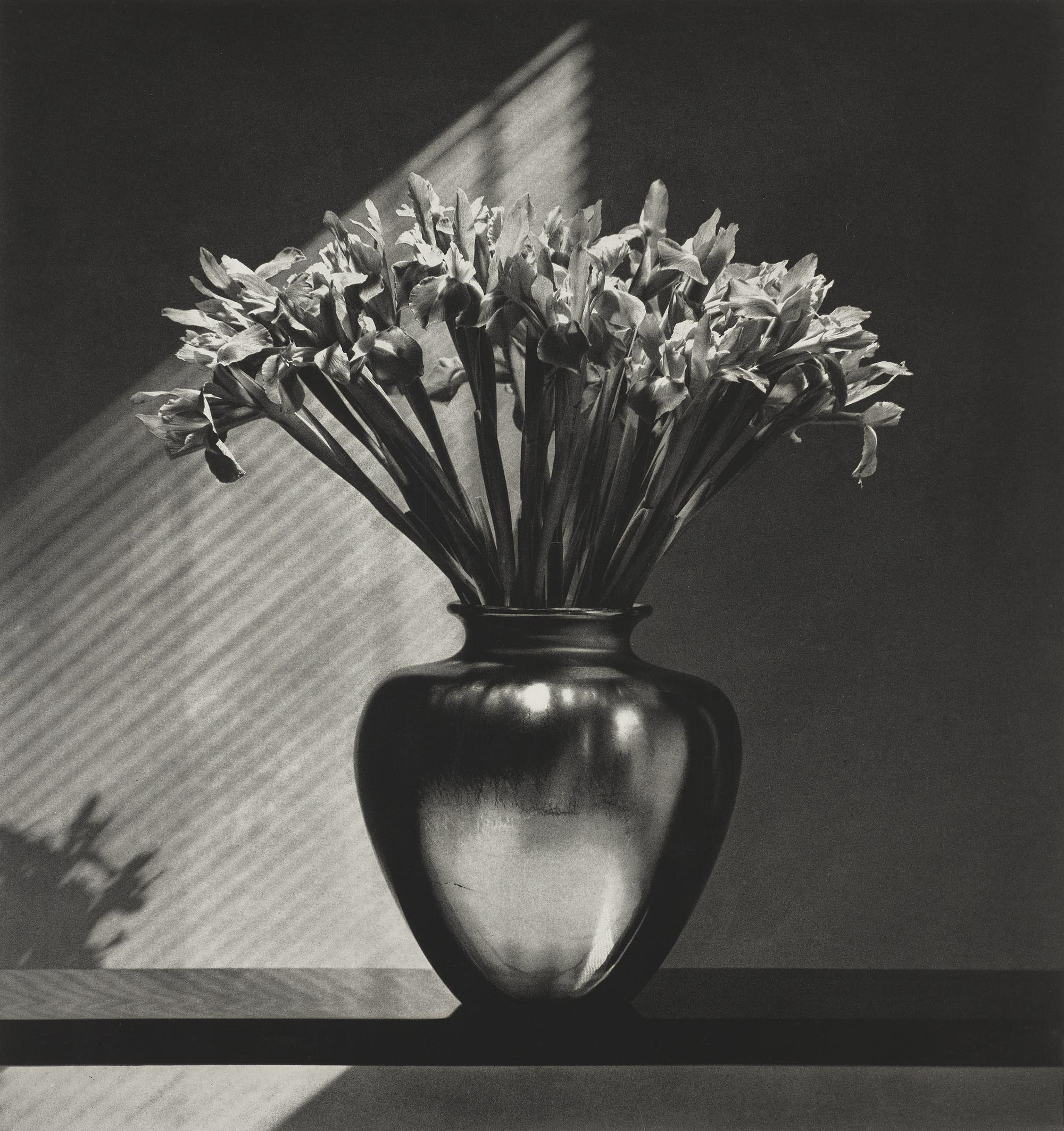
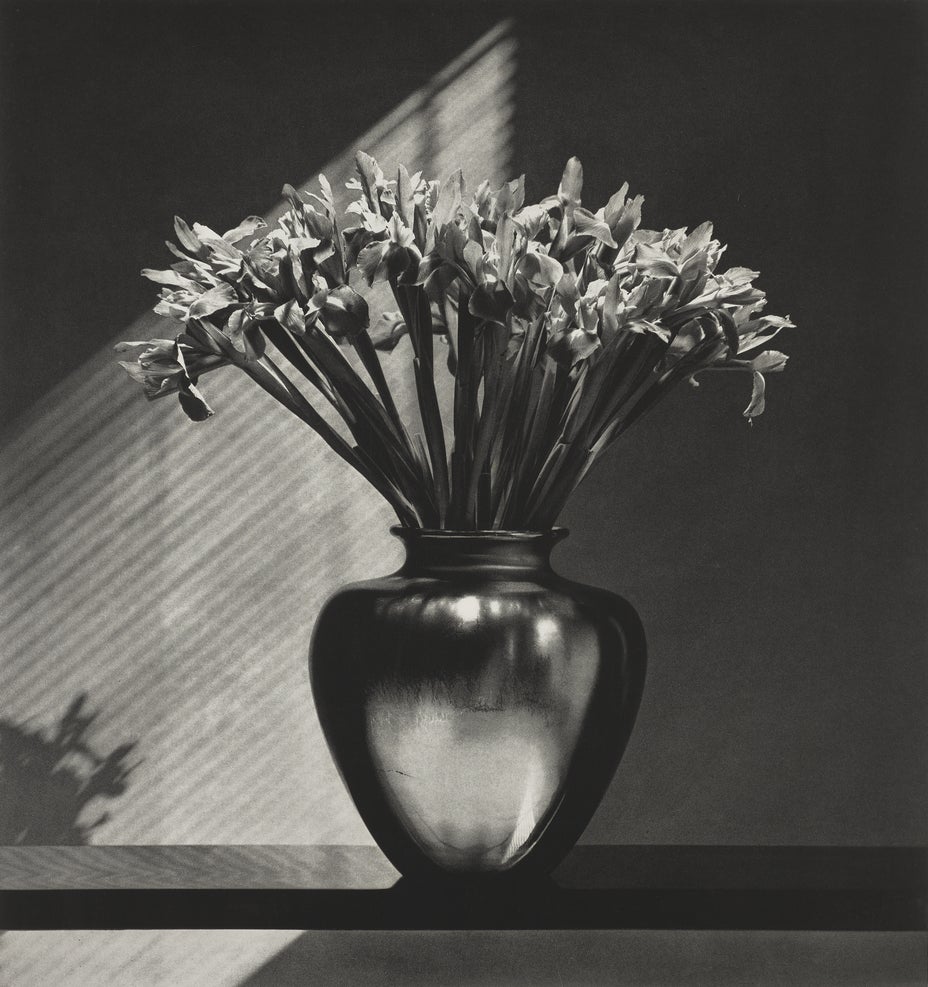
ROBERT MAPPLETHORPE, Irises, 1987. Photographs New York.
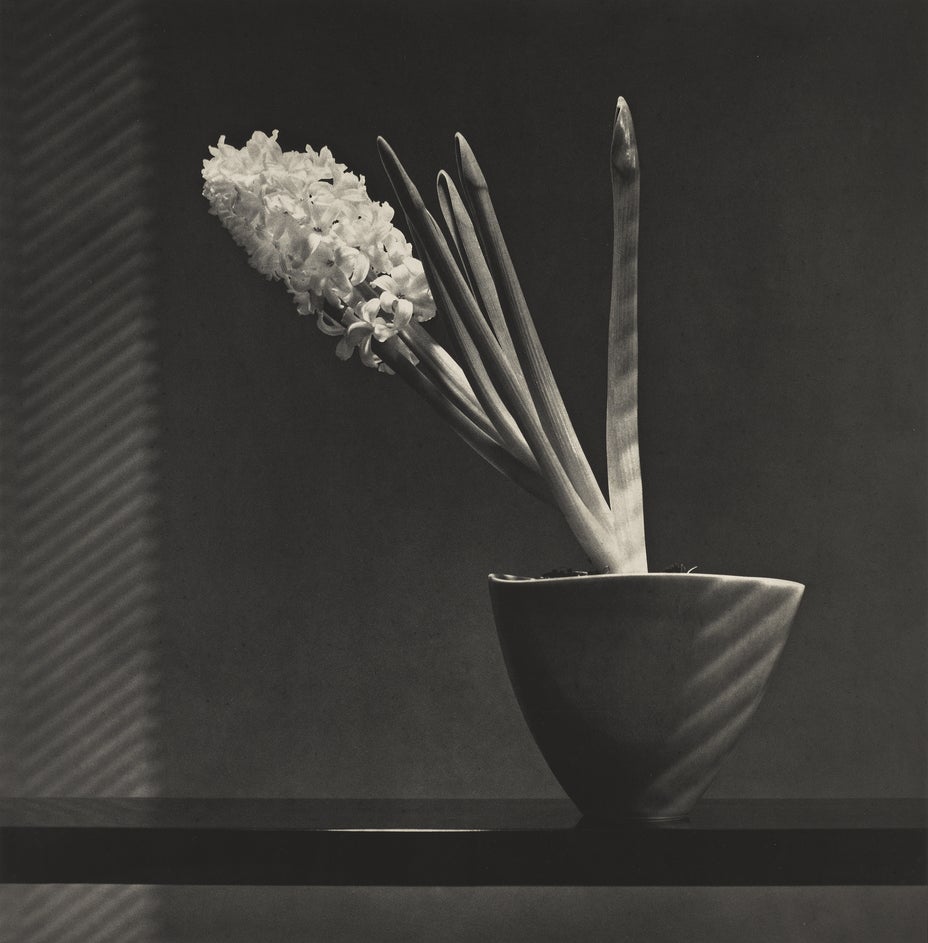
Mapplethorpe received a positive HIV diagnosis in 1986 and created these large-format floral images in 1987. Knowing this timeline, it’s impossible not to see the poignancy of still life in full bloom in these works, at once a celebration of life’s beauty and a document of its potential for decay.
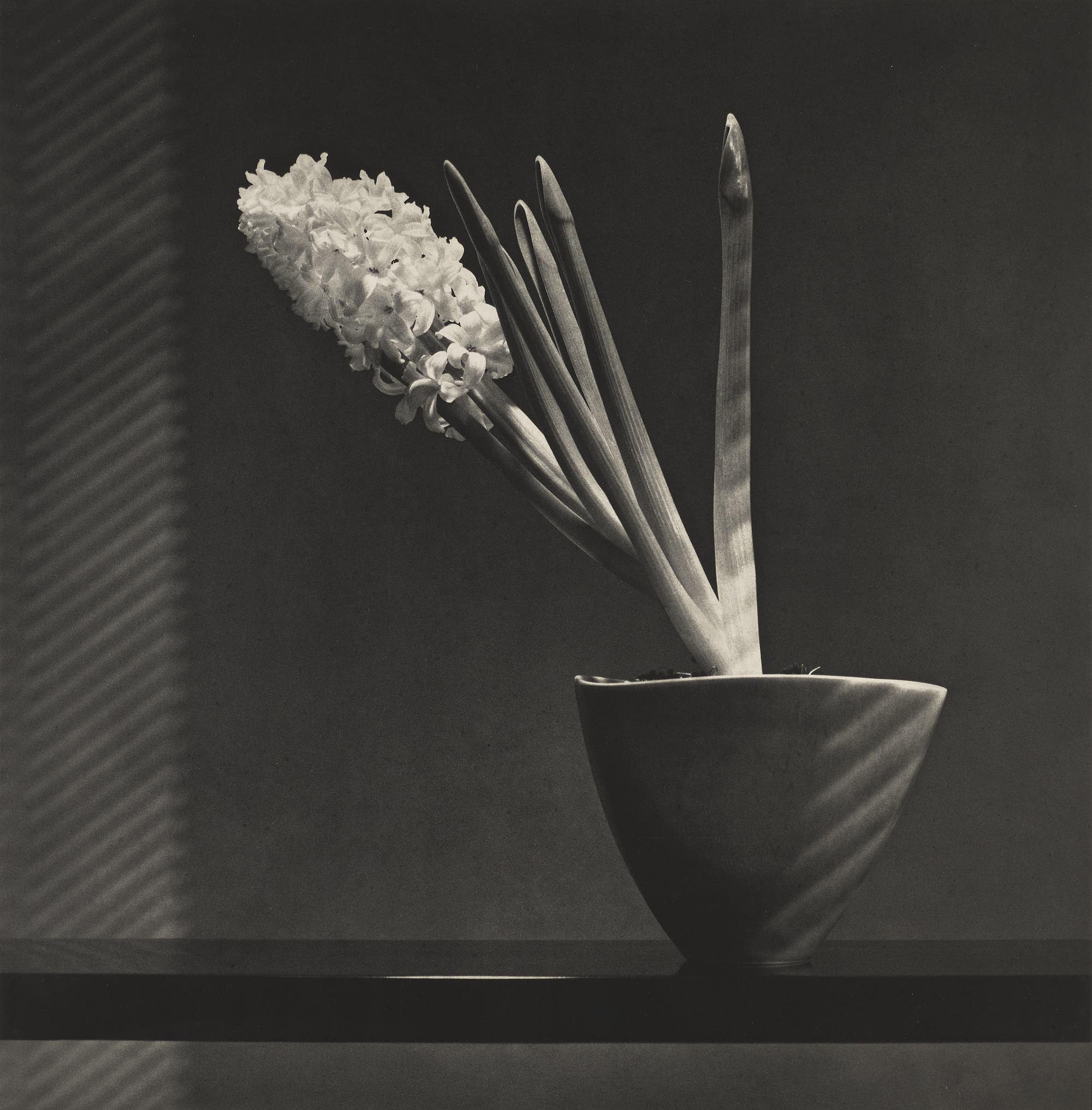
ROBERT MAPPLETHORPE, Hyacinth, 1987. Photographs New York.
As he had done since his earliest mixed media works, Mapplethorpe turned to an alternative printing process to execute his artistic vision. Working in close collaboration with Graphicstudio, a photographic research and printing lab at the University of South Florida, he began investigating the antiquated photogravure process. With the assistance of Graphicstudio Research Director Deli Sacilotto, Mapplethorpe took full advantage of the potential of the process, a 19th-century technique that is a hybrid of photography and intaglio printing. This multi-phase printing craft involves exposing a positive photographic transparency onto a copper plate and treating it chemically, yielding an etched plate which is then coated with thick, richly pigmented inks and run through a printing press.
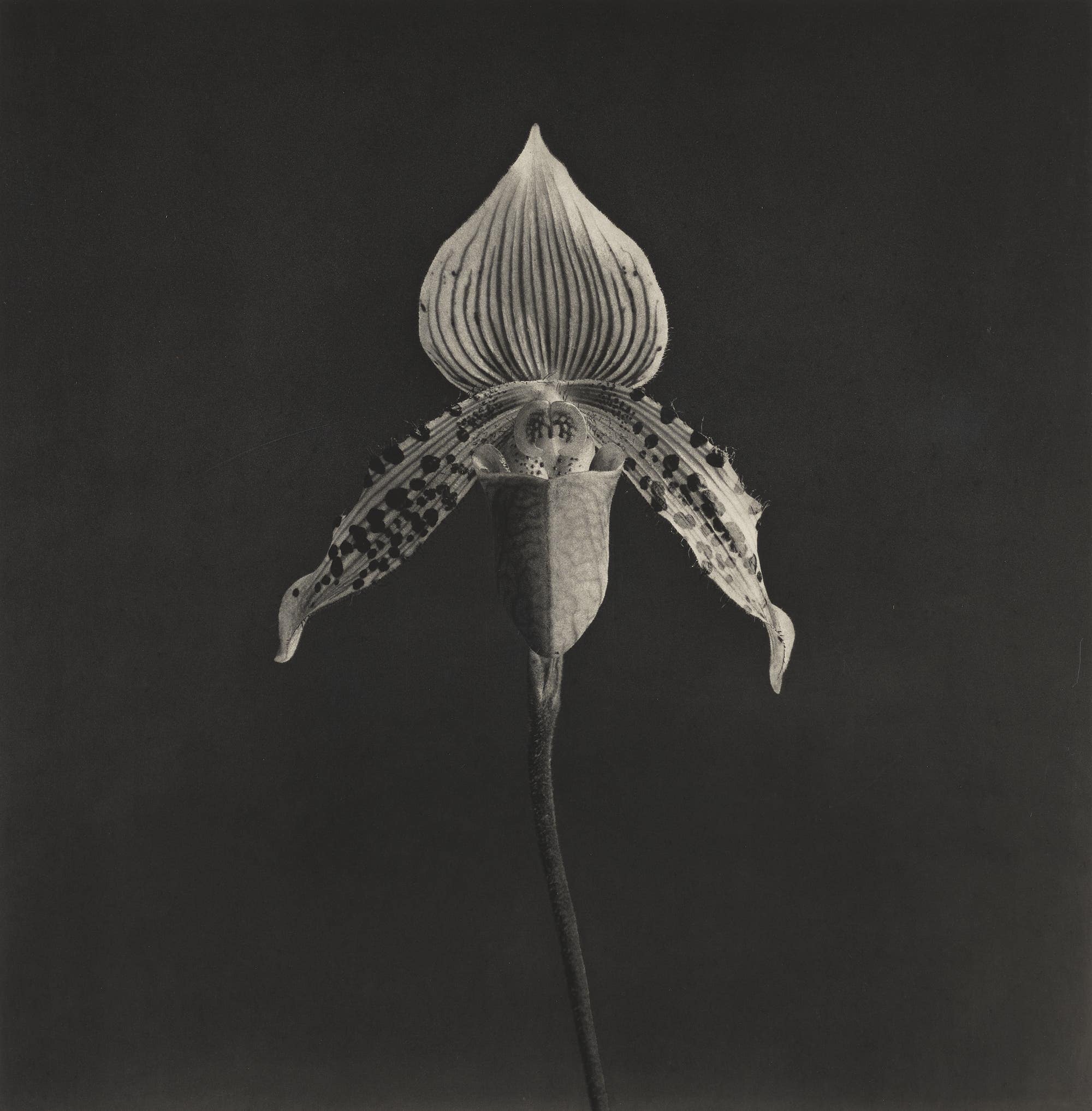
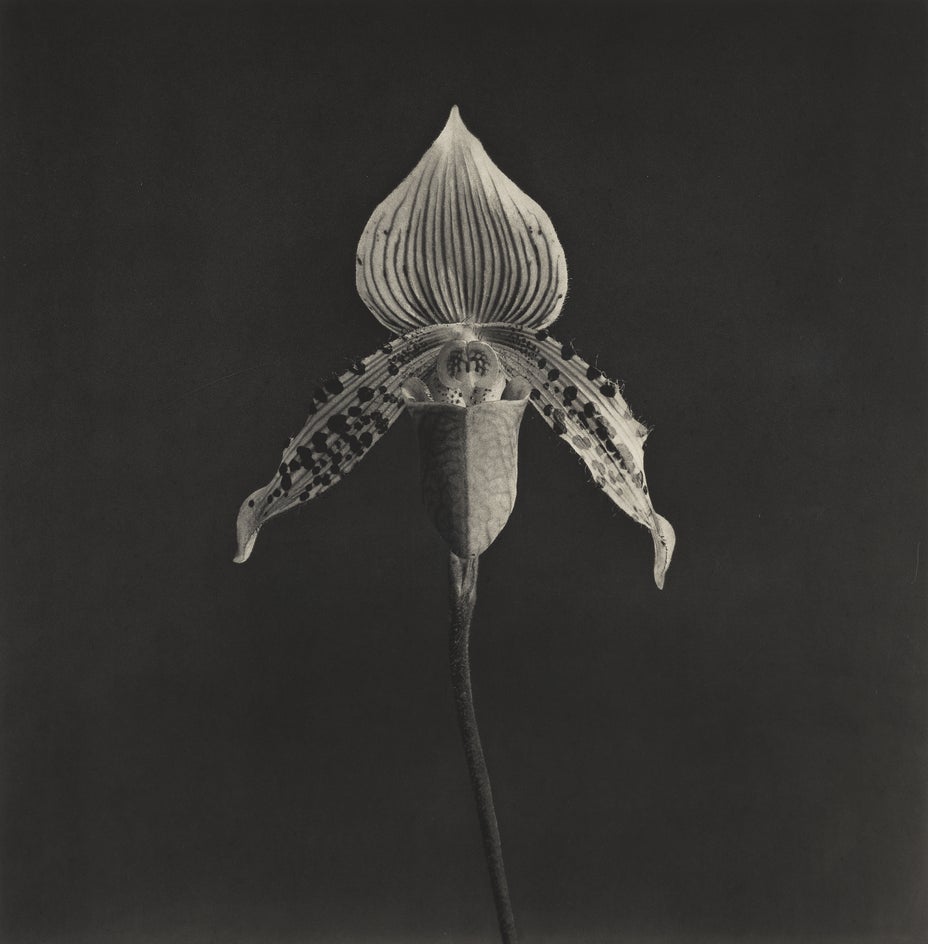
ROBERT MAPPLETHORPE, Orchid, 1987. Photographs New York.
The three lauded, large-format photogravures from this collaboration are rarely seen together. Together, with Ken and Tyler, they offer a window into a pivotal era of Mapplethorpe’s life, one defined as much by rapid artistic evolution as it was by the decline of his health against the backdrop of the AIDS crisis. They show an artist who was obsessive about technique until the very end, continuously pushing his own boundaries in the pursuit of perfection. Spend some time looking at these masterworks and we think you’ll agree he achieved it.
Discover the full array of Mapplethorpe work in our October Photographs auction >