文章 | Modern British Art Auction London October 2026
Freewheeling Britannia: Property from a Prestigious British Collection
Property from a Prestigious British Collection features works by David Hockney and other celebrated British artists, offering a portal back to the vivid spirit of the era.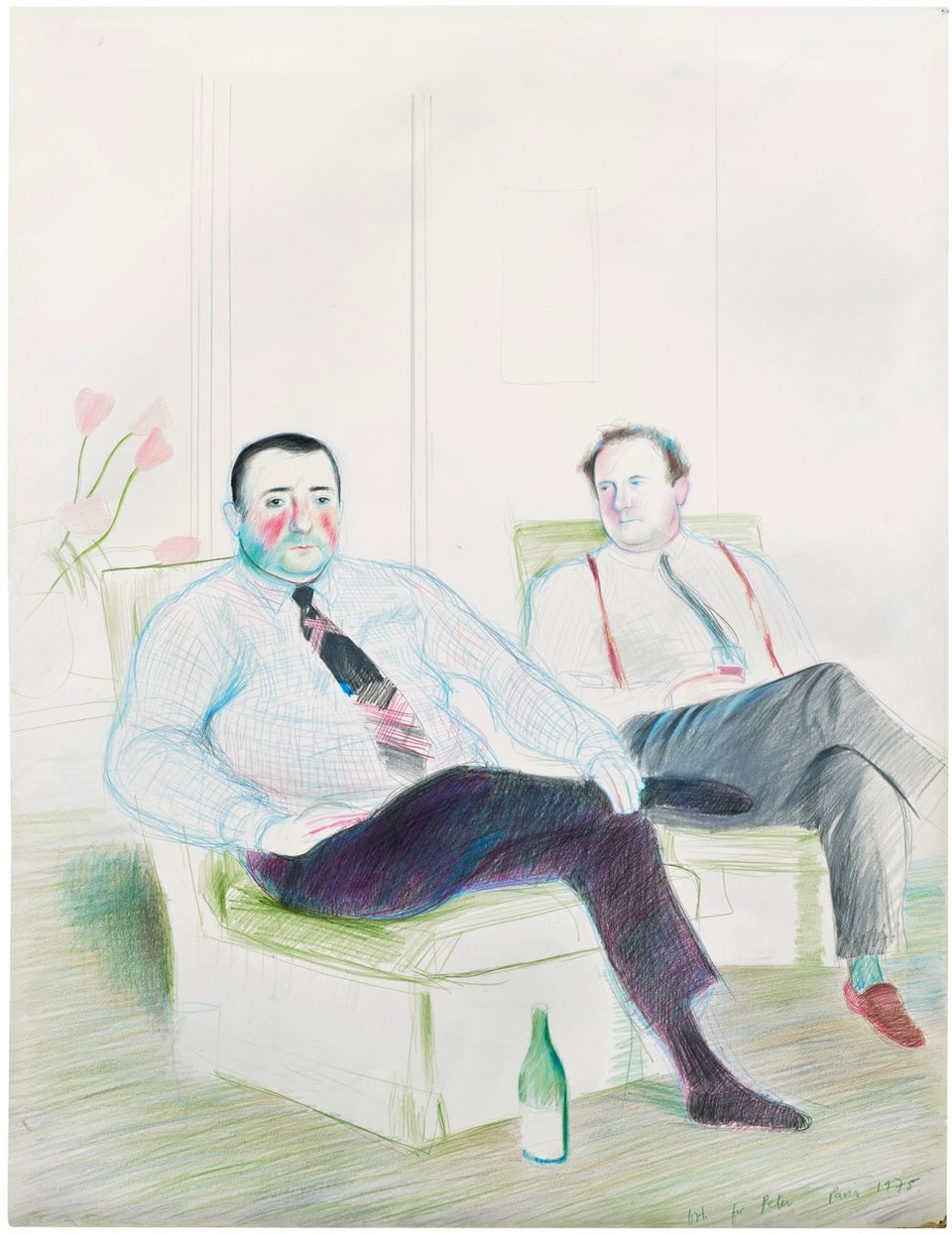
DAVID HOCKNEY, Portrait of Peter Langan and Jean-Marc Moussis, 1975. Modern & Contemporary Art Evening Sale, London.
Capturing an age flush with character and charisma, Property from a Prestigious British Collection comes to auction at Phillips London this season. Broad in scope but tightly curated, these works invite viewers directly into a buoyant, high-energy cultural landscape — most clearly embodied by David Hockney’s Portrait of Peter Langan and Jean-Marc Moussis.
David Hockney
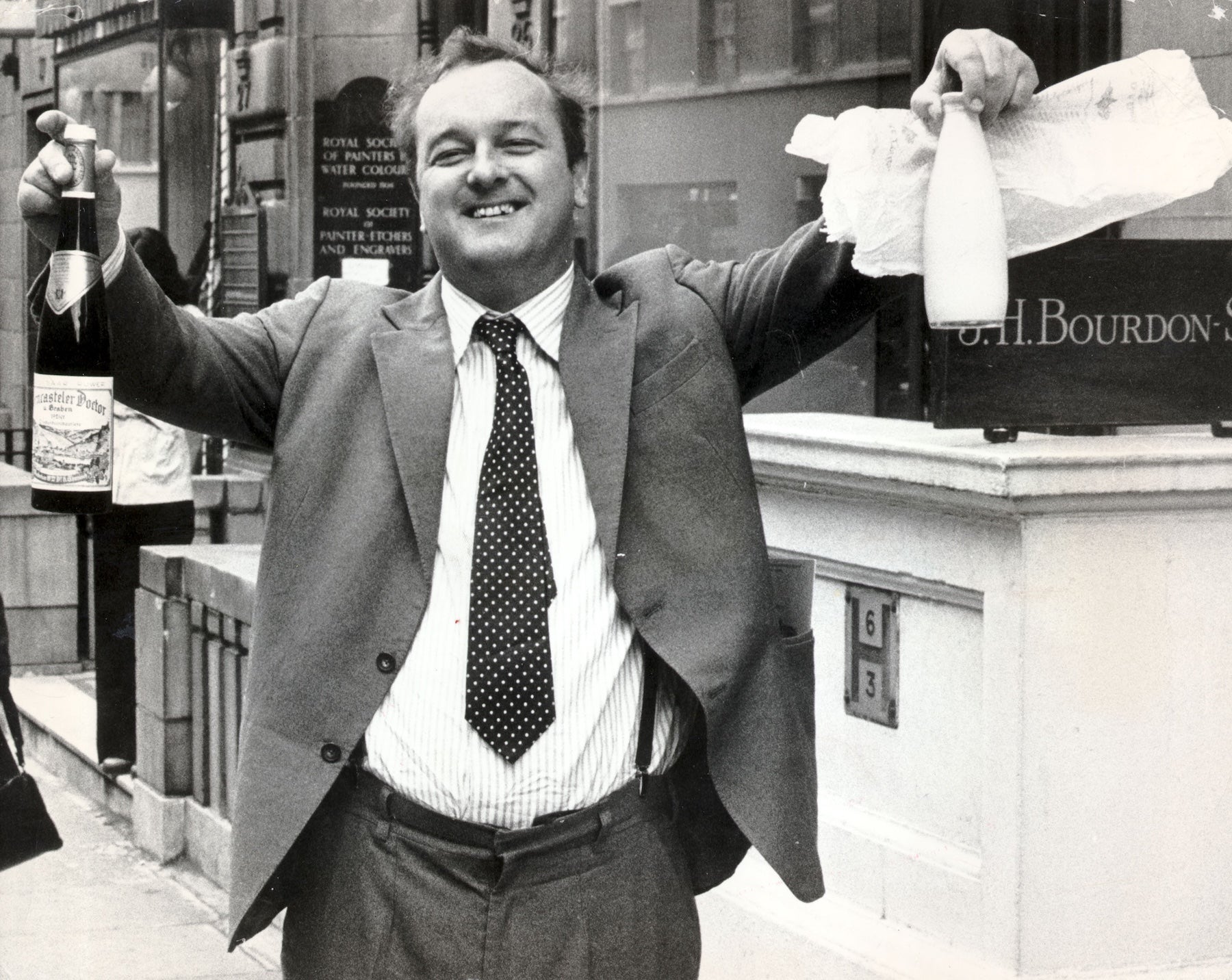
Peter Langan, co-owner of Odin’s and co-founder of Langan’s Brasserie, 1975. Image: Bill Cross/Daily Mail/Shutterstock
Hockney first drew restaurateur Peter Langan in the late 1960s, as his personal notoriety was growing alongside that of his first restaurant, Odin’s in Marylebone. Hockney was among the artists who frequented the establishment, often trading artwork for meals. Langan became well known for his wild, outrageous, and eccentric behavior, yet his namesake brasserie, which opened later in Mayfair, nonetheless became a haunt in the mid-1980s for global icons, including Princess Grace of Monaco, Elizabeth Taylor, Mick Jagger, Francis Bacon, and Muhammad Ali.
This work showcases Hockney’s masterful approach to double portraiture which offer audiences a glimpse into the characters and personalities of his social circle. One of the most characteristic and sought-after bodies of work in his prolific output, the almost translucent layers of coloured crayon show Hockney’s draughtsmanship at its height. Viewing the work, we can sense the tension between Langan and his wine merchant, Jean-Marc Moussis, following a misunderstanding that led to the misordering of 30,000 bottles of wine instead of 3,000. Despite the wayward business deal, the drawing appears to have been to Langan’s likeness as the work ultimately was used on the menu of Odin’s.
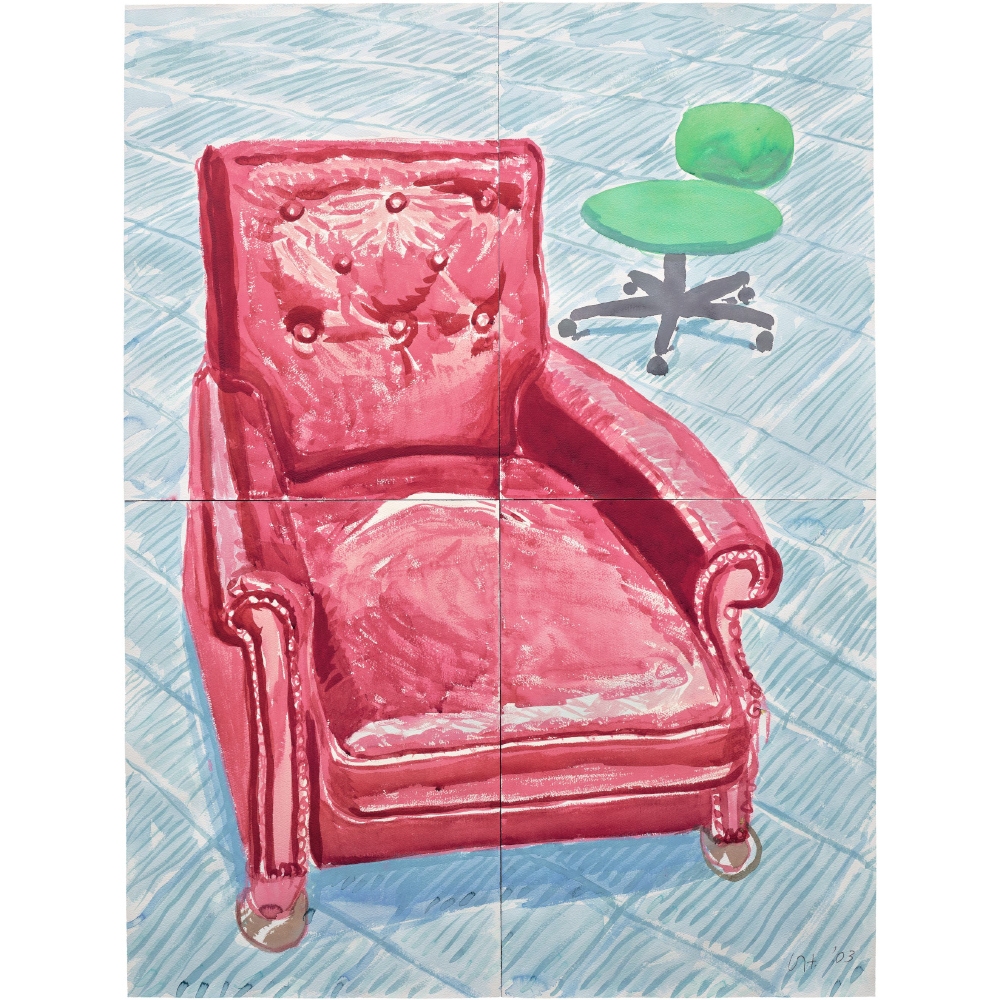
DAVID HOCKNEY, Red Leather Chair, 2003. Modern & Contemporary Art Evening Sale, London.
Conceptually, Hockney’s Red Leather Chair from 2003 can also be seen to belong to the artist’s body of double portraiture works. Hockney began creating double portraits in 1968, a format he continued to find inspiration in, and by 2003, the same year the work was created, Hockney was the subject of his Five Double Portraits at the National Portrait Gallery in London. In Red Leather Chair, human presence is suggested by two empty chairs and the impressions worn into the leather by their sitters. Showing the artist’s deftness with watercolour, a medium he fully embraced after being inspired by a 2002 Asian art exhibition at the Metropolitan Museum in New York, Hockney’s hand moves seamlessly from the fine details of the upholstery studs to pooled, intensely saturated Fauve-like hues.
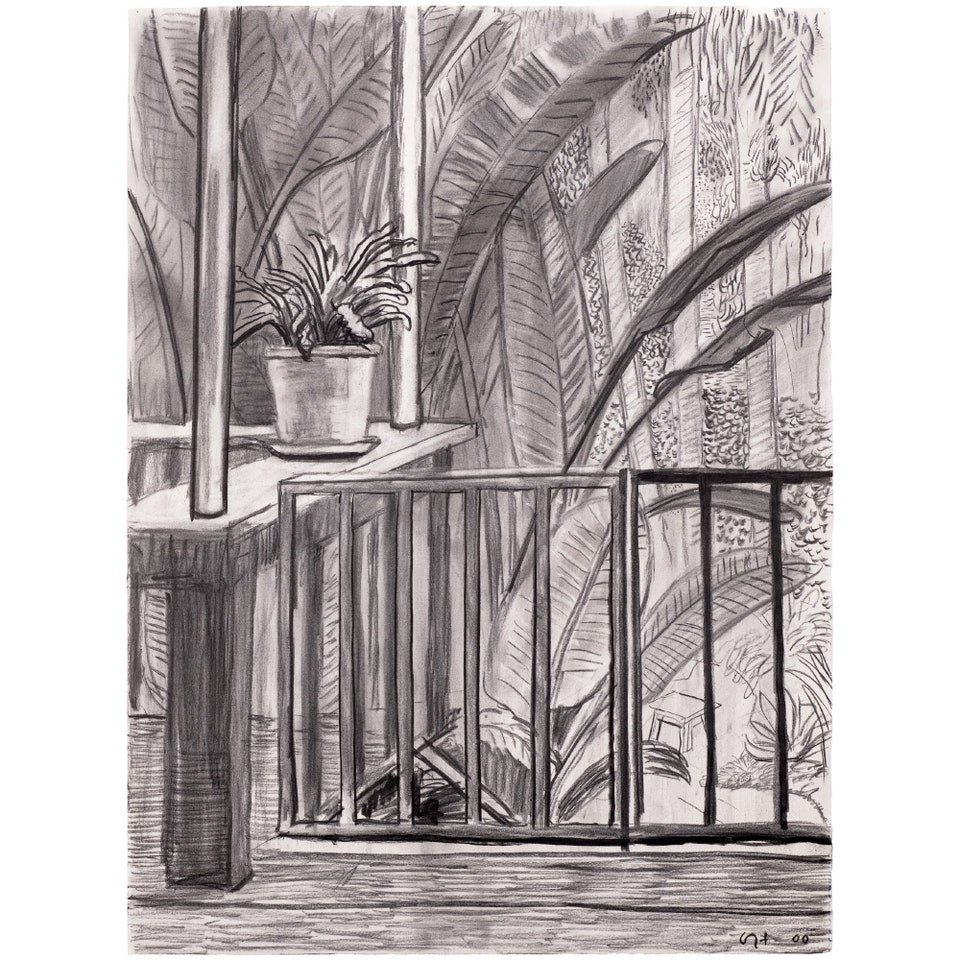
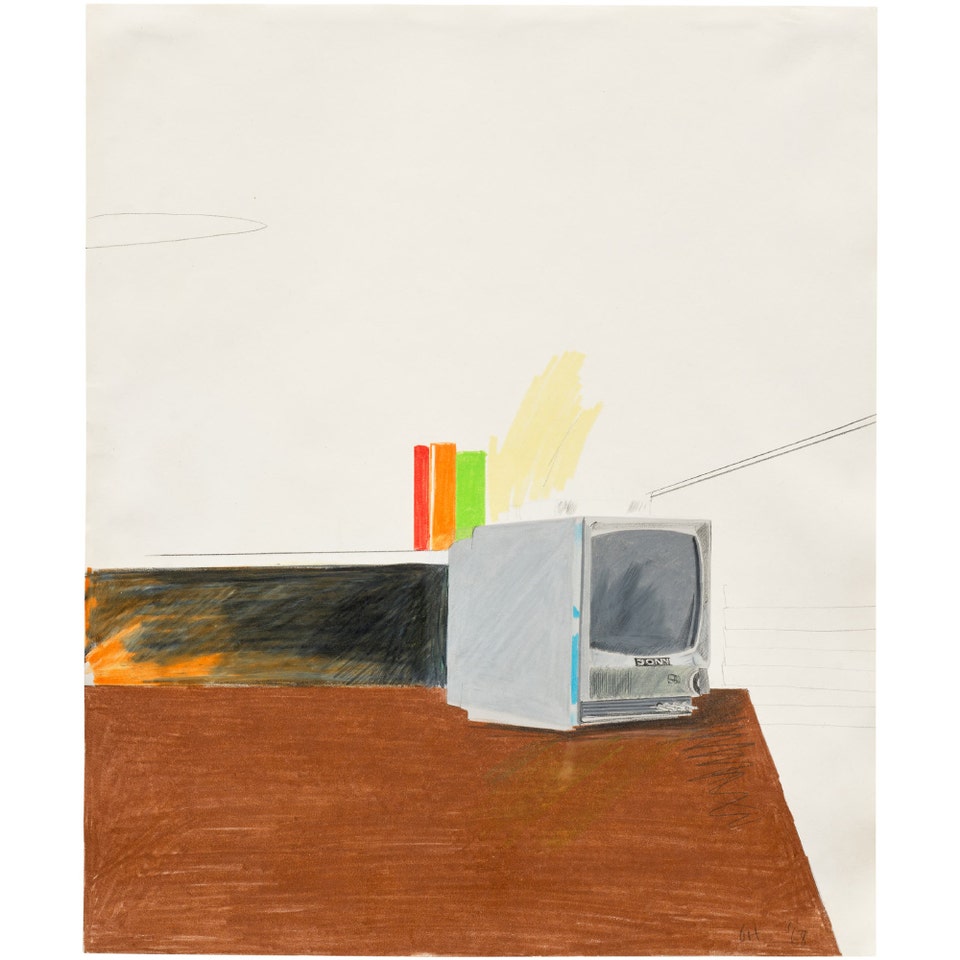
The spirit of British art is felt throughout the other Hockney works in the collection, from the pure visual pleasure of West Coast light in Deck Gate to the domestic interior of Sony TV, representing the height of the artist’s naturalist and observational style.
Elsewhere in the collection, Modern British works capture a similar spirit of exuberance, celebrating the era’s creative fervor. Perhaps none more so than two remarkable abstractions by Patrick Heron, an influential post-war painter and critic, who rose in the cultural landscape through continuous engagement with the wider currents of modernist art and contemporary abstraction in Britain, Europe, and the United States.
Patrick Heron
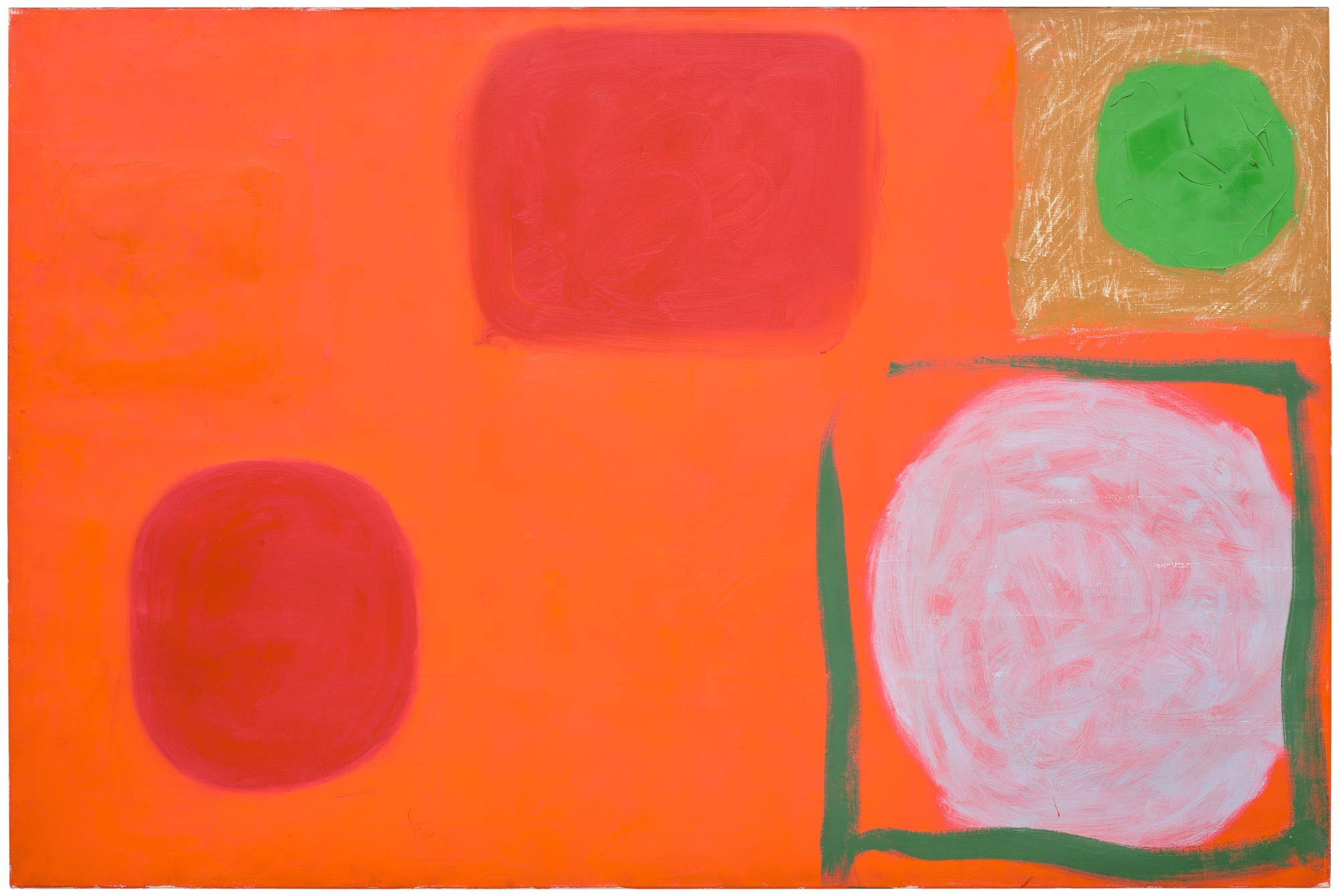
PATRICK HERON, RED PAINTING WITH EMERALD DISC : OCTOBER 1961, 1961. Modern & Contemporary Art, London.
Heron’s early studies of Matisse, Braque, and Bonnard shaped his understanding of colour and surface, while emergent American painting offered him new perspectives on the possibilities of abstraction. From these influences, Heron developed his own distinct practice rooted in sensory experience and the ways in which a single colour could wield its transformative capacity as, in his words, “both the subject and means; the form and the content; the image and the meaning.” Between 1958 and 1963, this investigation found expression in concentrated areas of colour set against broad expanses of paint, as seen brilliantly in RED PAINTING WITH EMERALD DISC : OCTOBER 1961: a field of intense vermilion is punctuated with soft, floating forms that appear to overlap and recede, their relationships generating the painting’s spatial tension. Expansive in both size and effect, the work reflects Heron’s ability to transform the rhythms and contours of the visible world into an abstract language of colour, surface, and space.
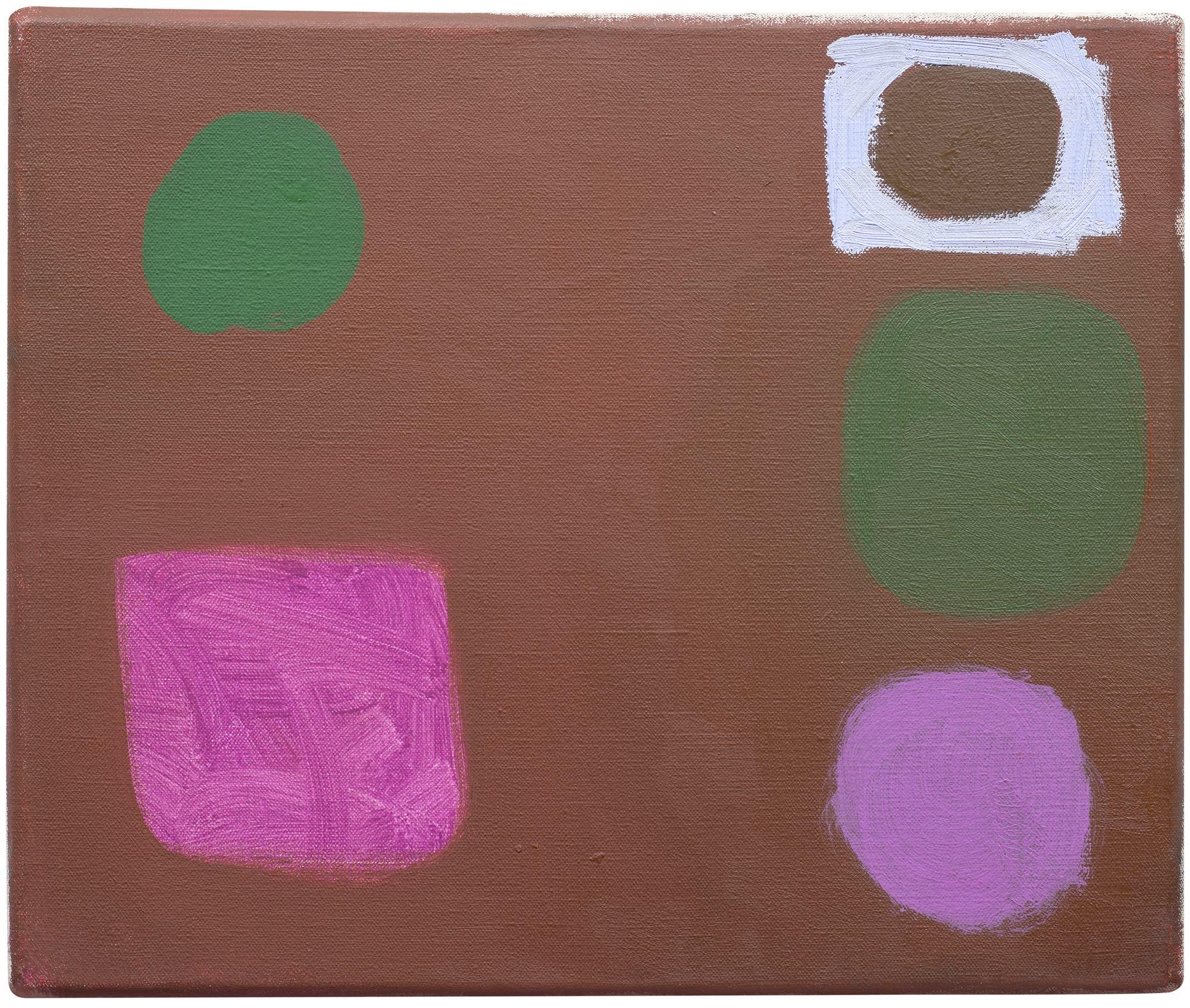
PATRICK HERON, Five shapes in brown: March 3:62, 1962. Modern & Contemporary Art, London.
Executed the following year, Five shapes in brown: March 3:62 continues Heron’s conceptual exploration at a much smaller scale. Almost as if to capture a discrete moment in comparison to the optical heft of the earlier work, the more muted palette and clustered forms demonstrate just how the sensation of the work is maintained through its sense of space. Whether in miniature or monument, Heron explained that colour alone establishes space as the “only direction in which painting can travel.”
Sir Terry Frost and William Scott
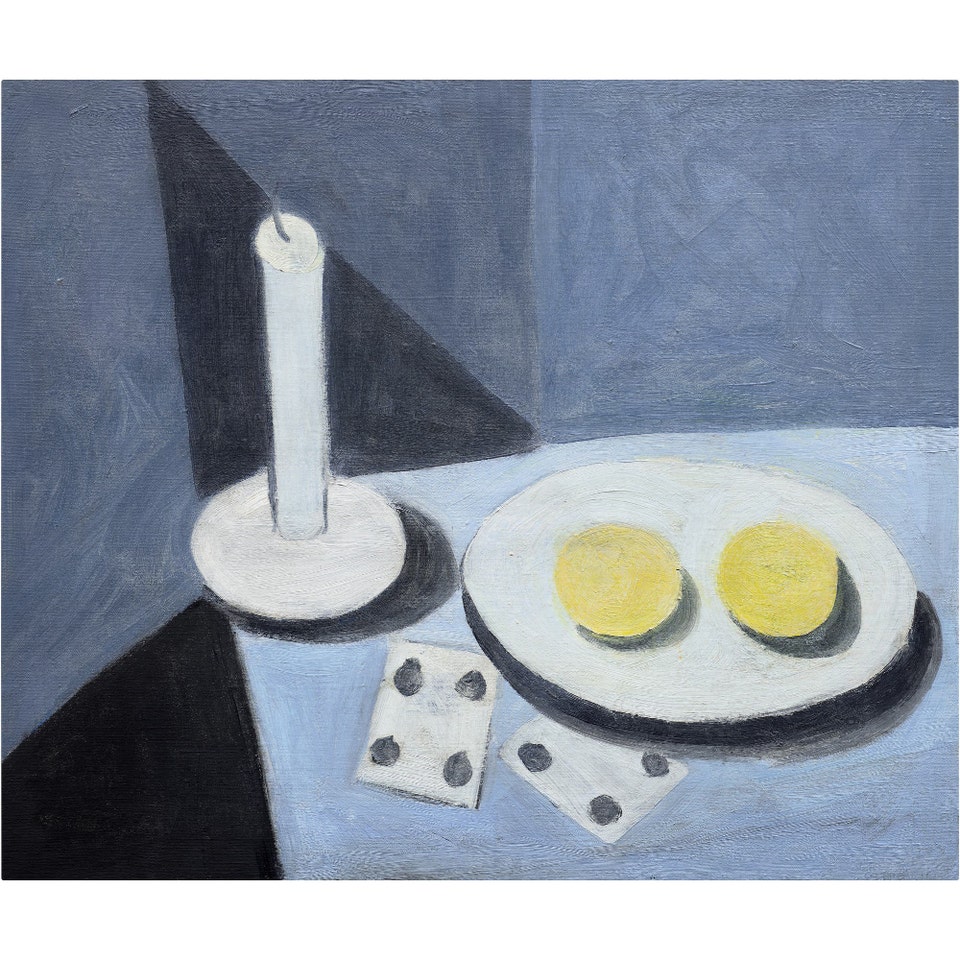
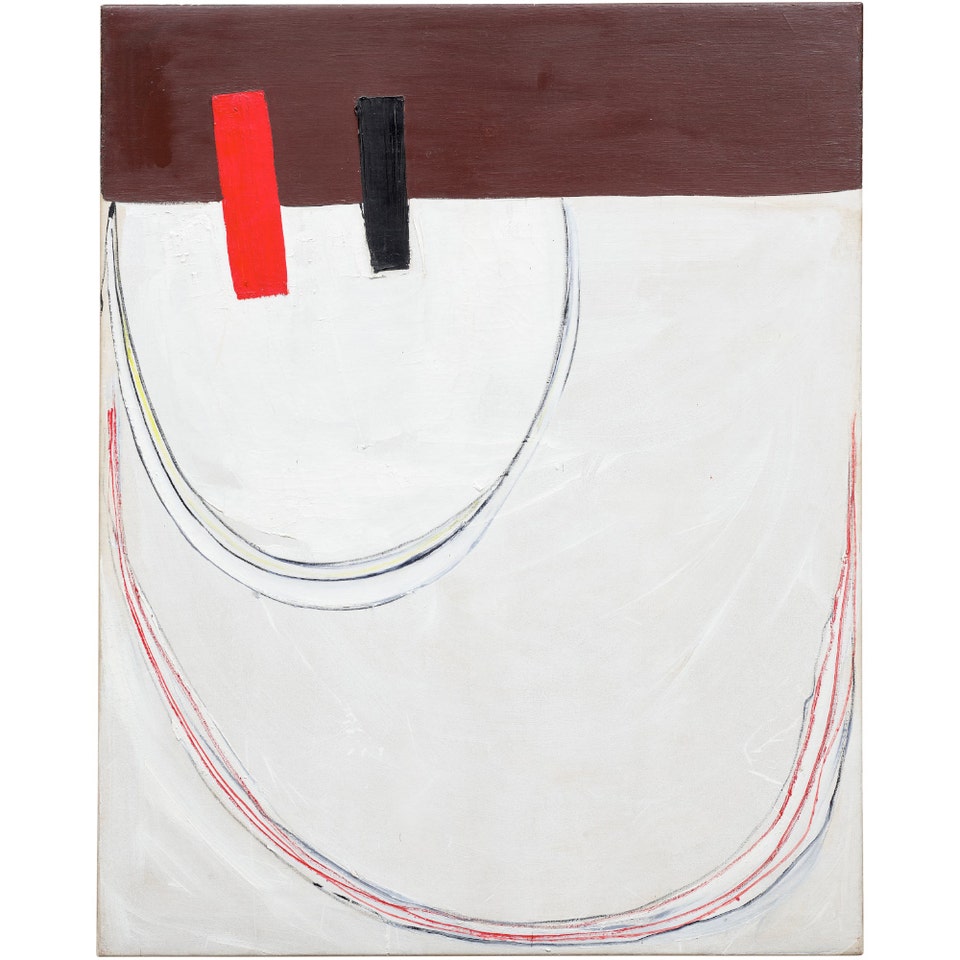
Works by William Scott and Sir Terry Frost round out the collection’s scope of British midcentury creativity. Painted a few short years before his pivotal visit to New York in 1953, William Scott’s Still Life with Candle exemplifies the artist’s practice of reducing everyday domestic objects to their fundamental forms. Where his later works would come to be known for their looser, more flattened surfaces, the present work utilises the familiar tablescape scene as an embrace of its abstract qualities: rather than focusing on its subjects’ interior — or ulterior, as a similar scene might be rendered in the contemporaneous Kitchen Sink Painters style — Scott presents a composition built through sharp angles, precariously balanced placements, and shadows that range from voids to vertical accents. Although very little is made explicit by its motionlessness, the more we examine its particulars, the less they seem to convey, and it is precisely in this loss of context that the work’s essential quietism becomes apparent.
Sir Terry Frost’s journey into painting was a truly remarkable mix of unlikely circumstance and fortuitous intuition: as a prisoner of war in Bavaria in 1941, Frost met painter Adrian Heath at Stalag 383. After the war, following his studies at Camberwell, he traveled to St Ives, where he became an assistant to Barbara Hepworth. Developing his practice within the burgeoning Cornwall scene, Frost found that his focus on sensation and observed experience allowed for a kind of elemental optimism, one which pursued form and composition as modular and capable of expressing colour in its most direct capacity. Red and Black Wedge, from 1961, makes use of weighty shapes and two “wedges” that act almost as clips holding two colour fields together, as though the final work is undergoing a process of revision or contemplation by the artist before being rearranged again.