文章 | Art Worlds Within New York Online Auction September 2026
Art Worlds Within
Across generations and styles, interiors and domestic spaces offer artists a fruitful ground for exploring the public and the private.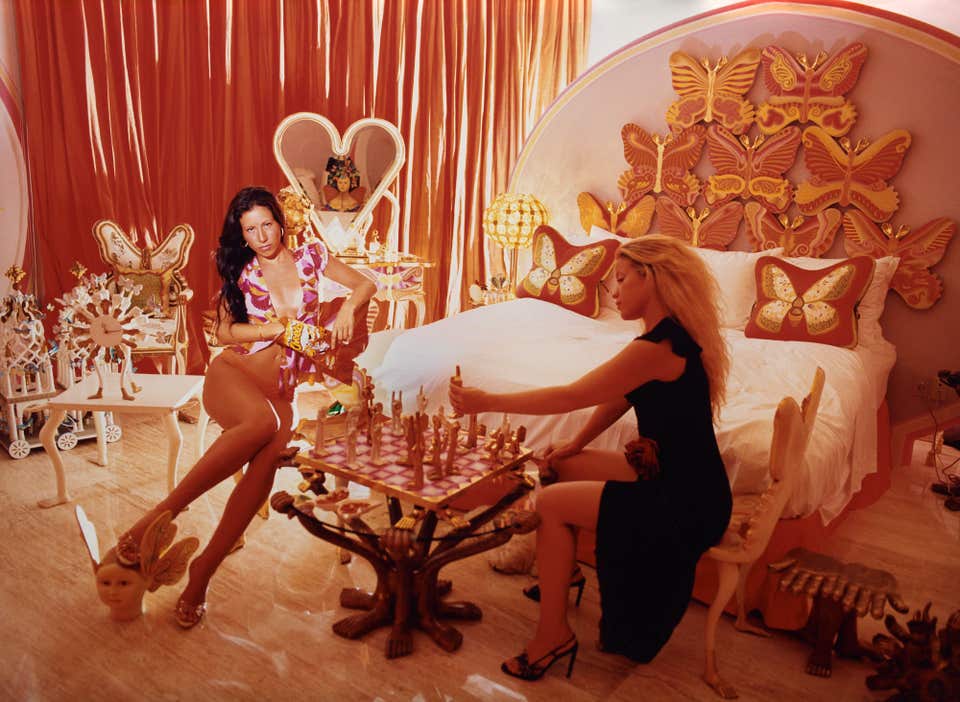
DANIELA ROSSELL, Third World Blondes Have More Money (Natasha and Jana in Butterfly Room), 2002. Modern & Contemporary Art: Online Auction, New York.
There is something quietly captivating about artworks depicting interior and domestic spaces. Of course, it’s partly due to the meta joy of hanging them on your own walls, but it’s also the sense of comfort they offer. After all, a glimpse into another’s interior world — both physically and psychologically — can help us make better sense of our own. Below, from playful contemporary works to the modern masters, we highlight the infinite worlds depicted in works on offer in our upcoming Modern & Contemporary Art: Online Auction in New York.
JJ Manford
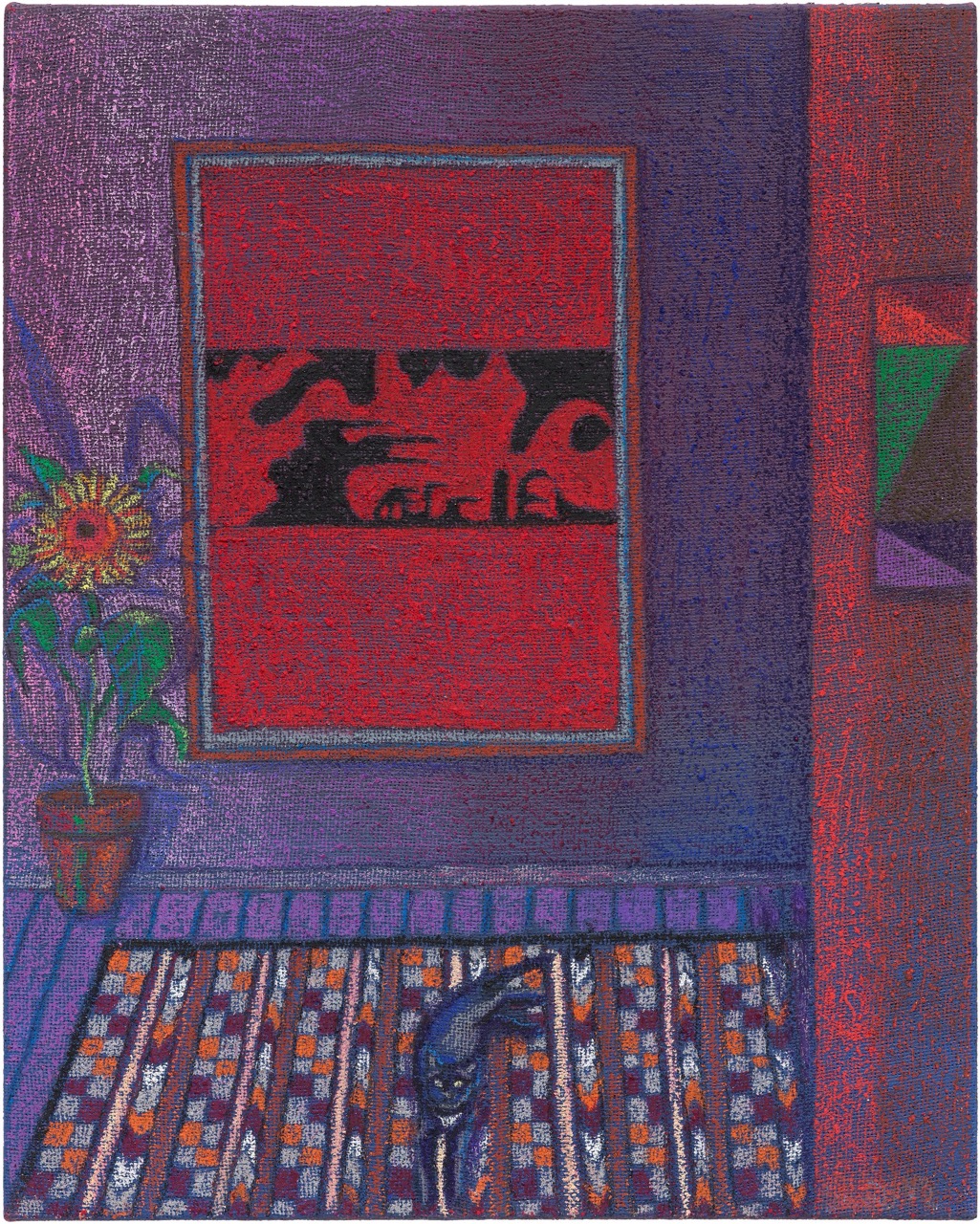
JJ MANFORD, Room with MoMA Exhibition Poster (Charles Burchfield: Early Watercolors, 1916-1918), 2020. Modern & Contemporary Art: Online Auction, New York.
Brooklyn-based artist JJ Manford often creates paradoxical domestic spaces that identify what is outside of them through the objects they contain. These are the home spaces of collectors, each calling attention to an exteriority behind their assemblages. In Room with MoMA Exhibition Poster, however, Manford takes a more subtle approach: without the work’s title, a viewer would likely not connect the red and black composition in the image to the associated MoMA exhibition, its poster, or any particular artist. The painting's linear composition takes a keener interest in geometry than much of Manford's work, and its muted and textured use of color brings a distinct sense of intimacy.
Katie Stout
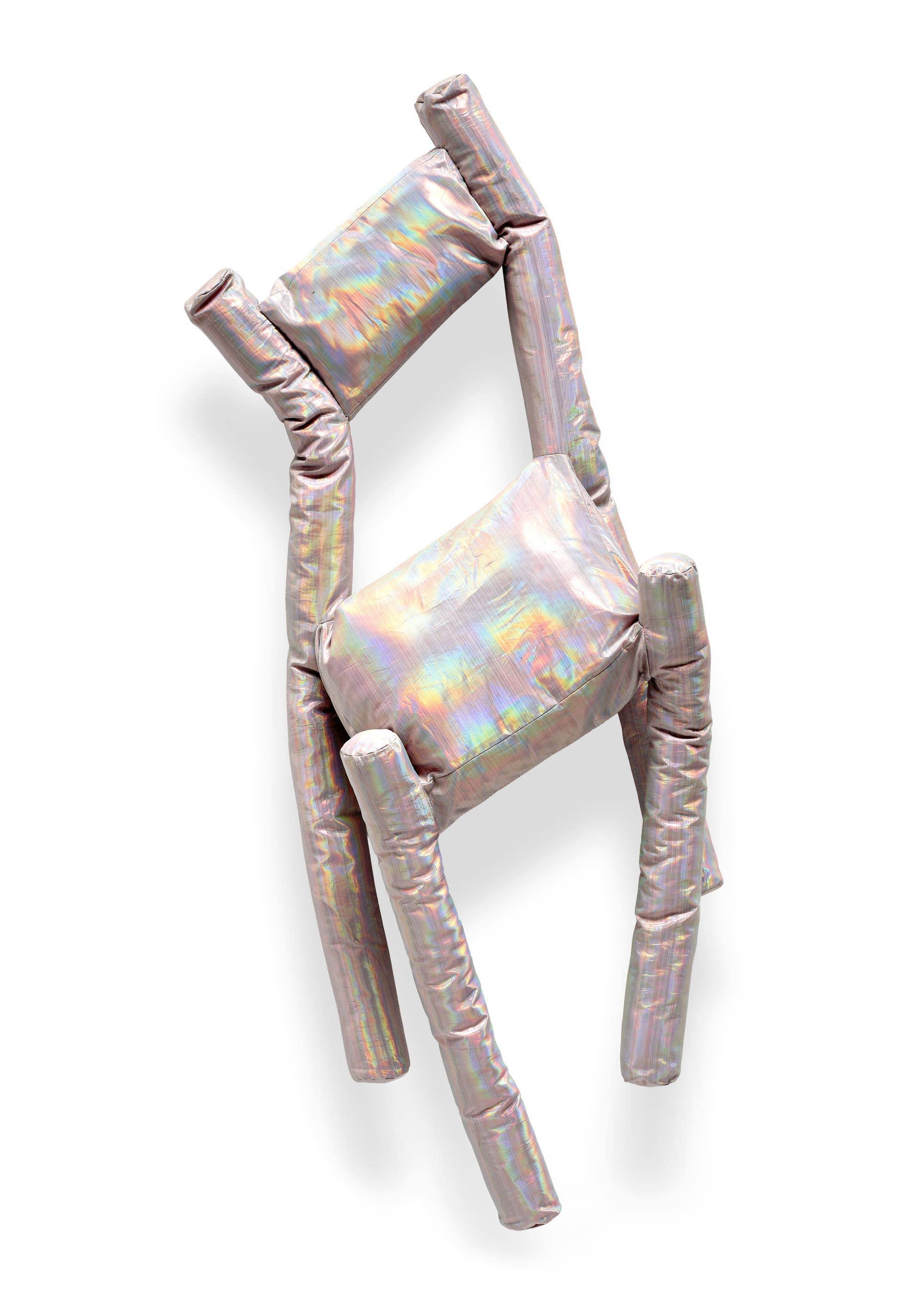
KATIE STOUT, Sad Chair 2, 2015. Modern & Contemporary Art: Online Auction, New York.
Katie Stout works across art and design, playfully blurring the boundaries between practical objects and fine art. While her delightfully crude, maximalist ceramic works may be more widely known, Stout’s practice spans metalwork, paper-mâché, fiber, and more. Frequently biomorphic and often depicting female figures, her creations enjoin pop sensibility with a sharp feminist perspective. In Sad Chair 2, Stout's conceptual prowess shows through restraint: the chair, that linear bastion of design, is rendered pliable, canted, and shimmering. The heavy hand of the title implies a wink, coyly asking how we judge what we understand as “sad” or “chair” as individual terms and as visual indicators alike.
Daniela Rossell
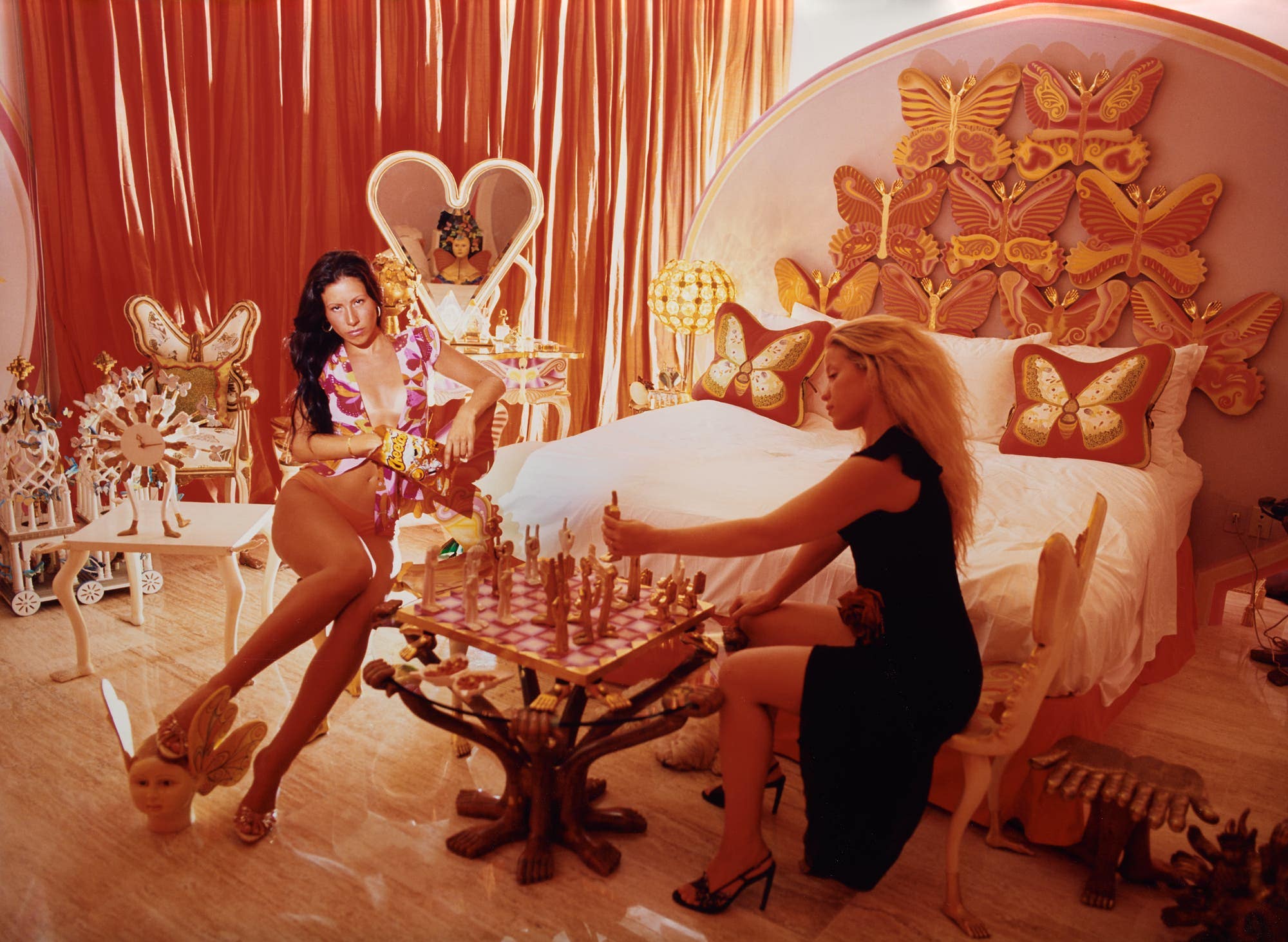
DANIELA ROSSELL, Third World Blondes Have More Money (Natasha and Jana in Butterfly Room), 2002. Modern & Contemporary Art: Online Auction, New York.
Mexico City-based photographer Daniela Rossell’s practice captures the spectacular interiors of the wealthy through portraits of the “Ricas y Famosas” (rich and famous), as seen in the title of her best-known series. Herself a member of the Mexican upper crust, Rossell carefully stages these photographs, selecting wardrobe, objects, and poses. In Third World Blondes Have More Money, Rossell captures the daughters of millionaires in environments overflowing with décor. A careful viewer will notice how shapes and patterns recur across the frame, where the teasingly separated lower legs of the lefthand figure become the proliferating butterfly wings in a richly unfolding image.
Charles Camoin
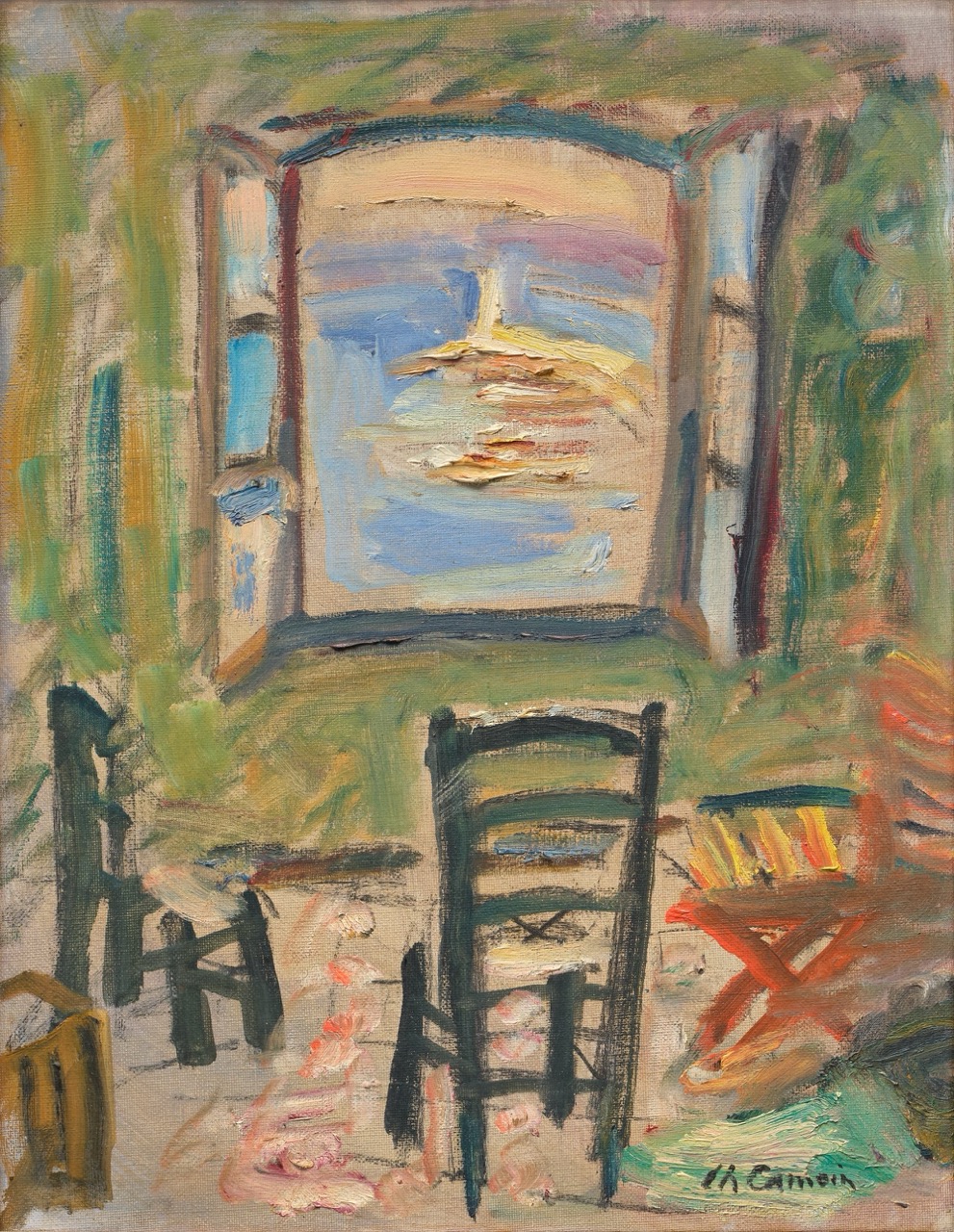
CHARLES CAMOIN, La Fenêtre de l'atelier aux deux chaises, 1963. Modern & Contemporary Art: Online Auction, New York.
Marseille-born artist Charles Camoin was one of the core members of the Fauves, the French post-Impressionist group which worked in bold brushstrokes and non-naturalistic colors, following the emotion of an image rather than its physical appearance. The present work, painted in 1963, comes only two years before Camoin’s death, long after the brief-lived collective had been overtaken by Cubism and the currents that followed. In 1913, Camoin reportedly destroyed dozens of paintings made during a period of artistic doubt, resolved only after taking a joint trip to Morocco with Henri Matisse. This late work shows the balance and liveliness of his more evolved style, combined with a looseness that animates the composition. The image seems to dance around its focal point, the open window, drawing the outside in and celebrating the work’s true subject, the layered materiality of paint highlighted in the center of the window frame.
Boris Anisfeld
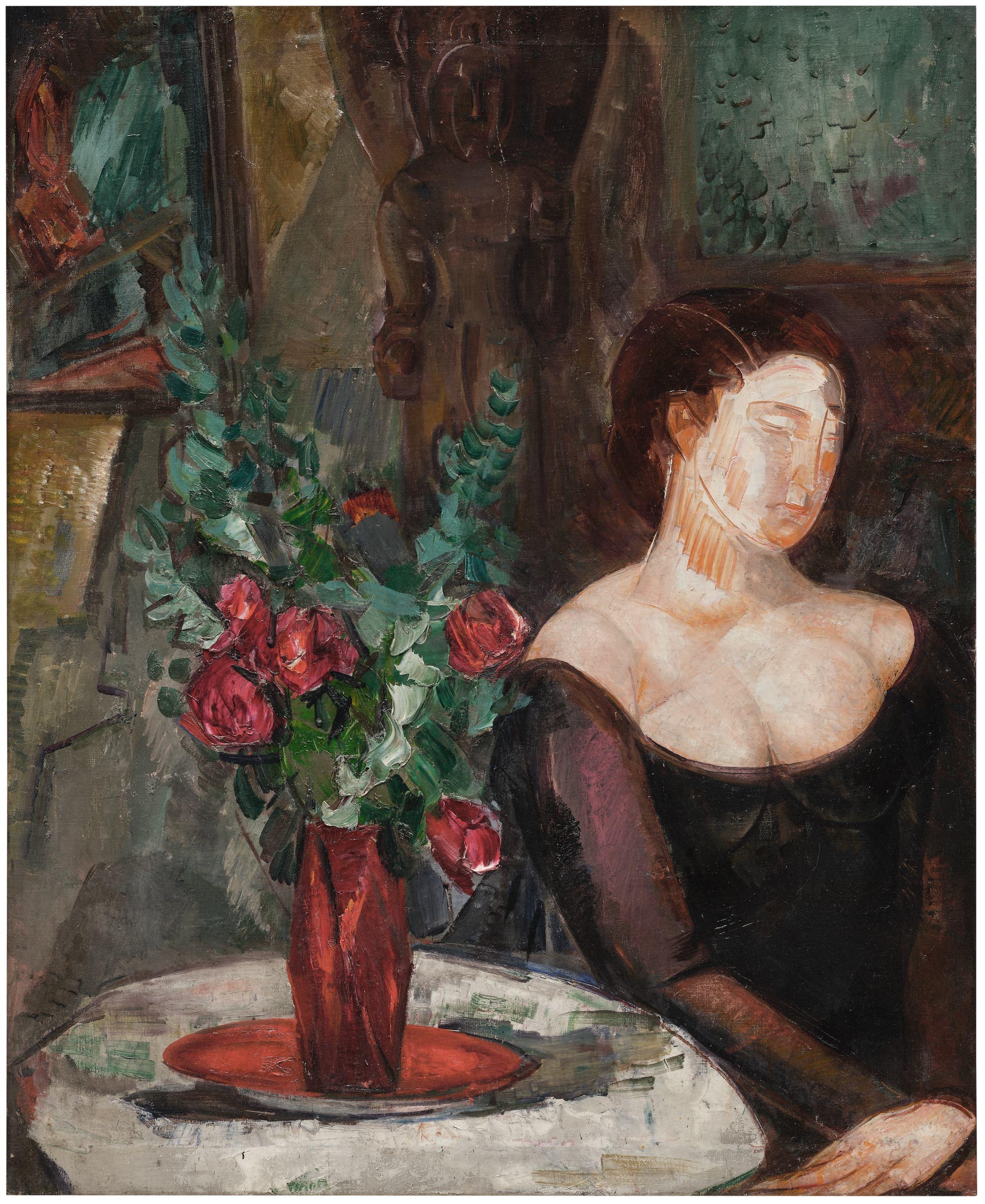
BORIS ANISFELD, Red Roses, 1930s. Modern & Contemporary Art: Online Auction, New York.
Russian-American painter Boris Anisfeld’s earliest development was influenced by the work of the Russian Symbolists, particularly the Blue Rose group in Moscow, who focused on the relationship between color and composition, along with the possibilities of synesthesia, which Anisfeld himself experienced. Anisfeld arrived in the United States in 1917, when he began working in the theater as a costume and set designer. In Roses and Woman, Anisfeld conjures that context through an indistinct figure –– totem, mask, angel? — presiding over the image. His treatment of the woman’s skin is alternately smooth and geometric, echoing the thicker strokes of the rose petals. The woman's pose, head downturned, chimes with the drooping rose blooms. Is it a private moment, or one staged before an audience?
Jonathan Wateridge
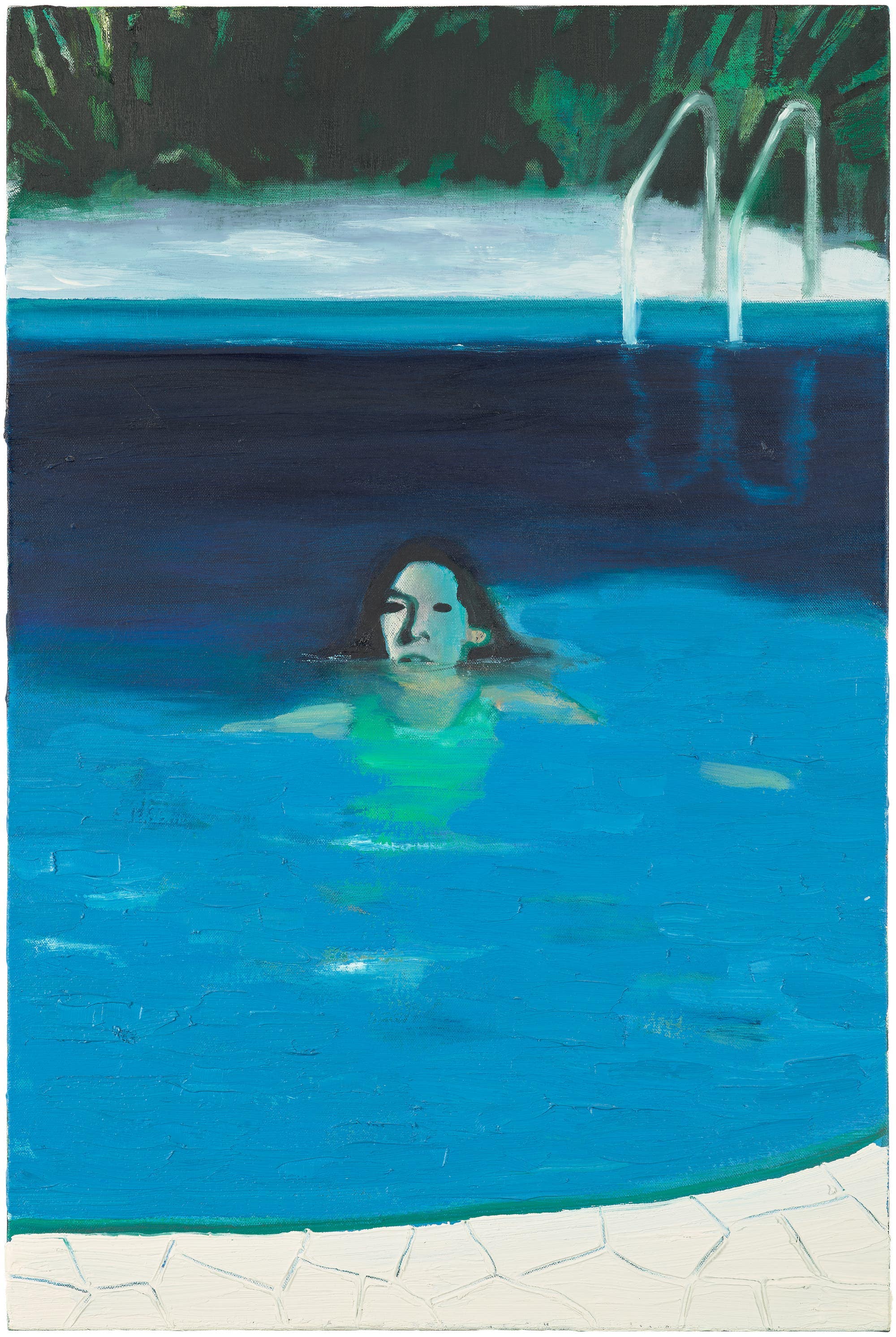
JONATHAN WATERIDGE, Day Swim, 2021. Modern & Contemporary Art: Online Auction, New York.
It’s hard to say why a viewer immediately perceives this outdoor scene as part of a domestic environment. Nothing in the image itself necessarily indicates that this swimming pool couldn't be public or belong to a hotel, but somehow we feel that the figure is not a guest here. Perhaps it is the directness of her gaze, her apparent calmness in the water. Zambia-born Jonathan Wateridge is known for his explorations of isolated figures, often poolside or in pools, which began as an investigation of the racial tensions he witnessed in those settings. His figures are frequently otherworldly, as if ghosts or alien presences. In this unique painting, however, Wateridge's treatment of the subject is more ambivalent, allowing the woman to be suspended between the flagstones and the dark greenery in a moment without embellishment.
More to explore
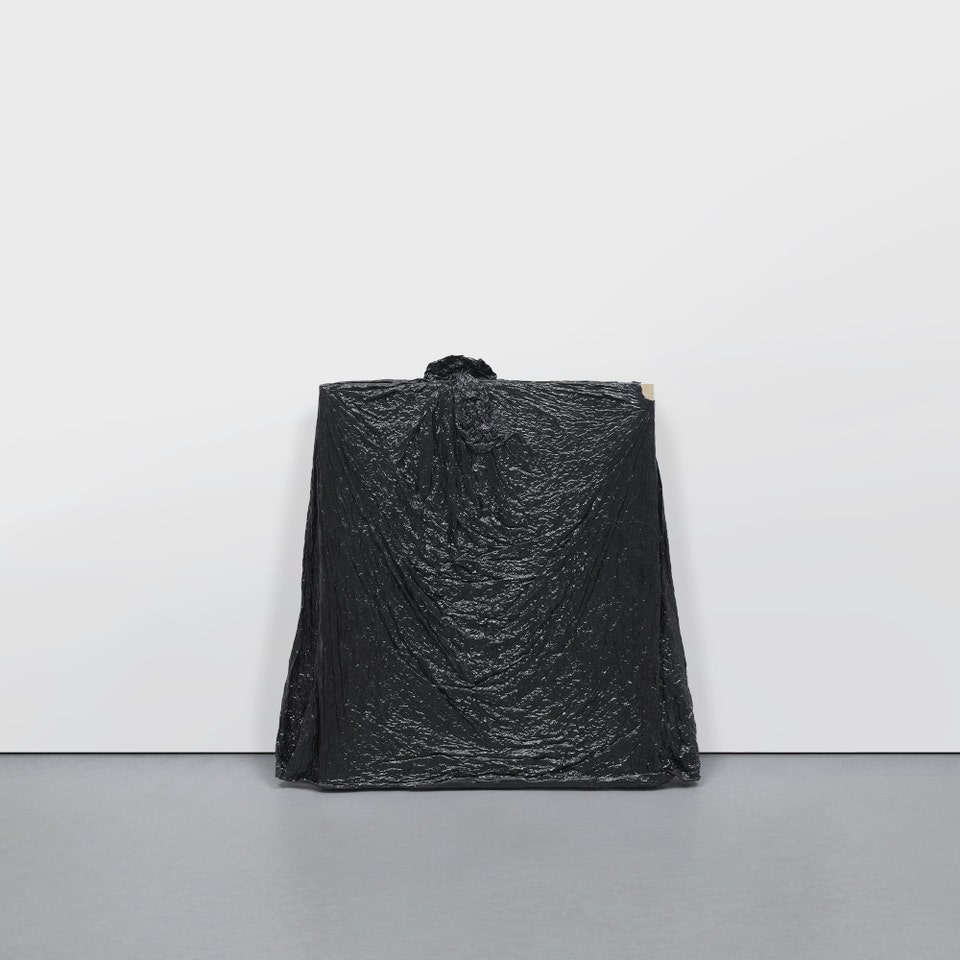
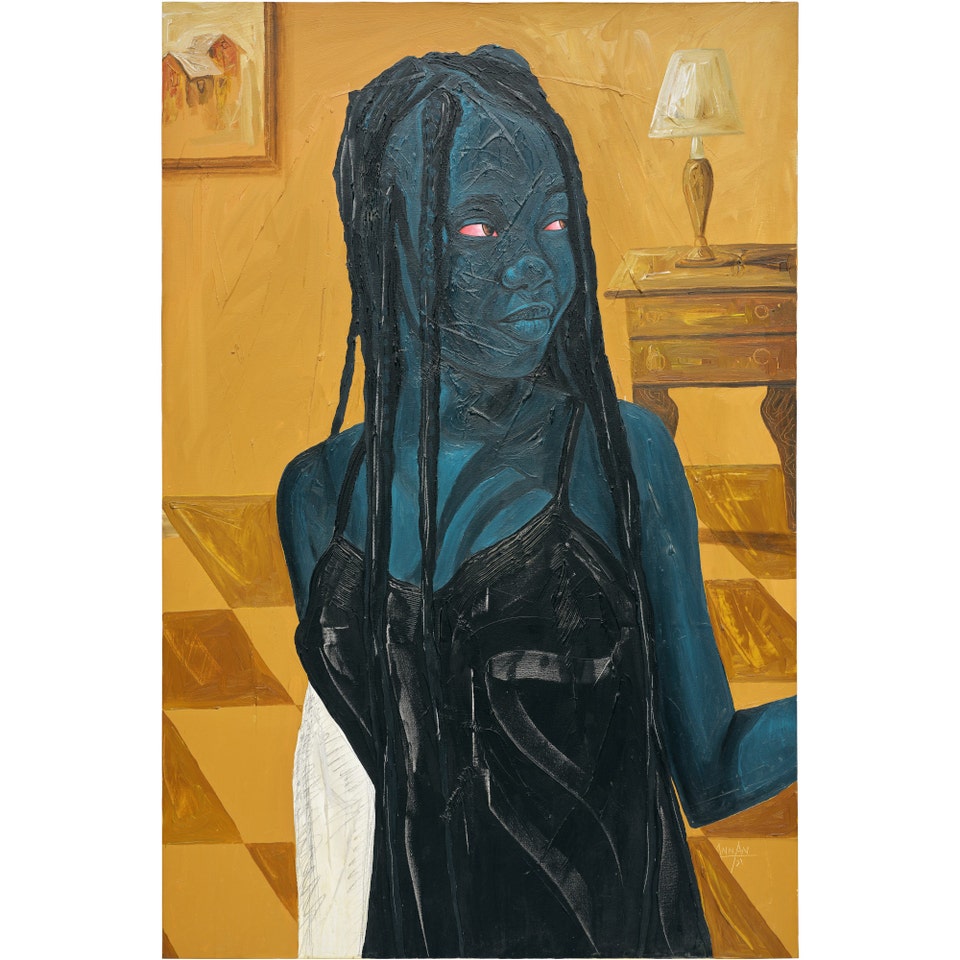
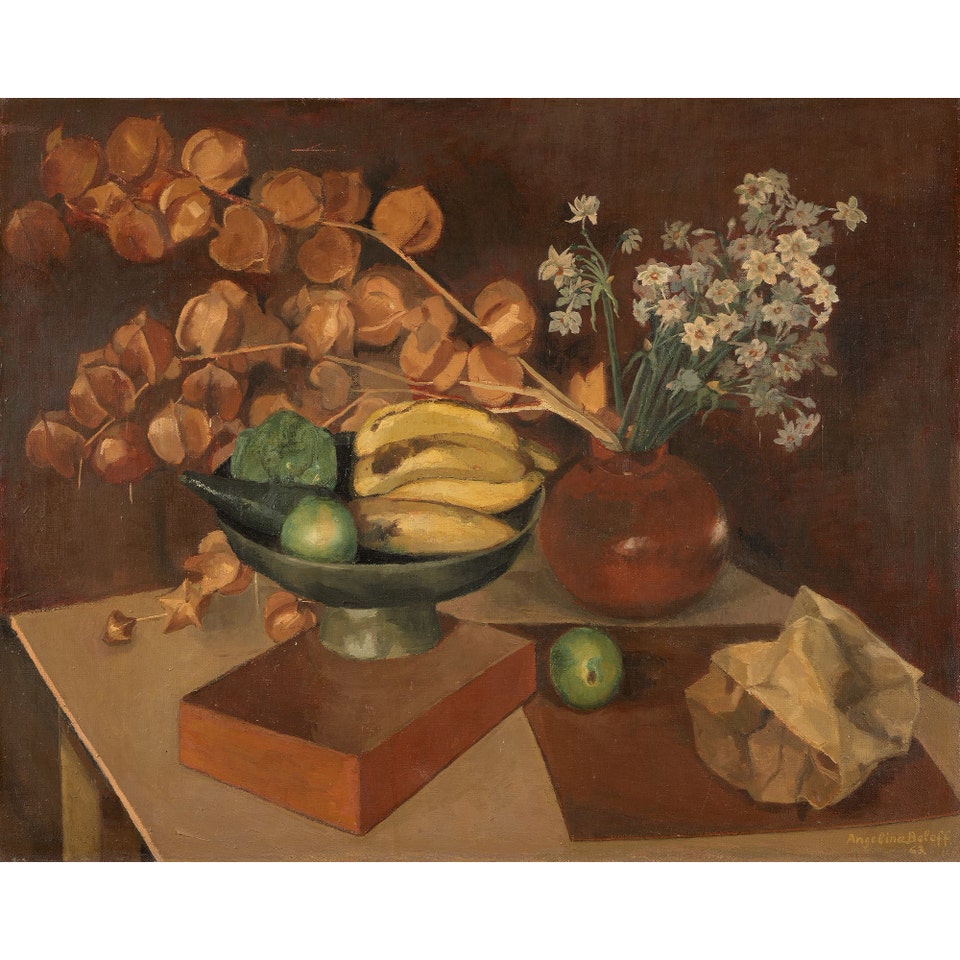
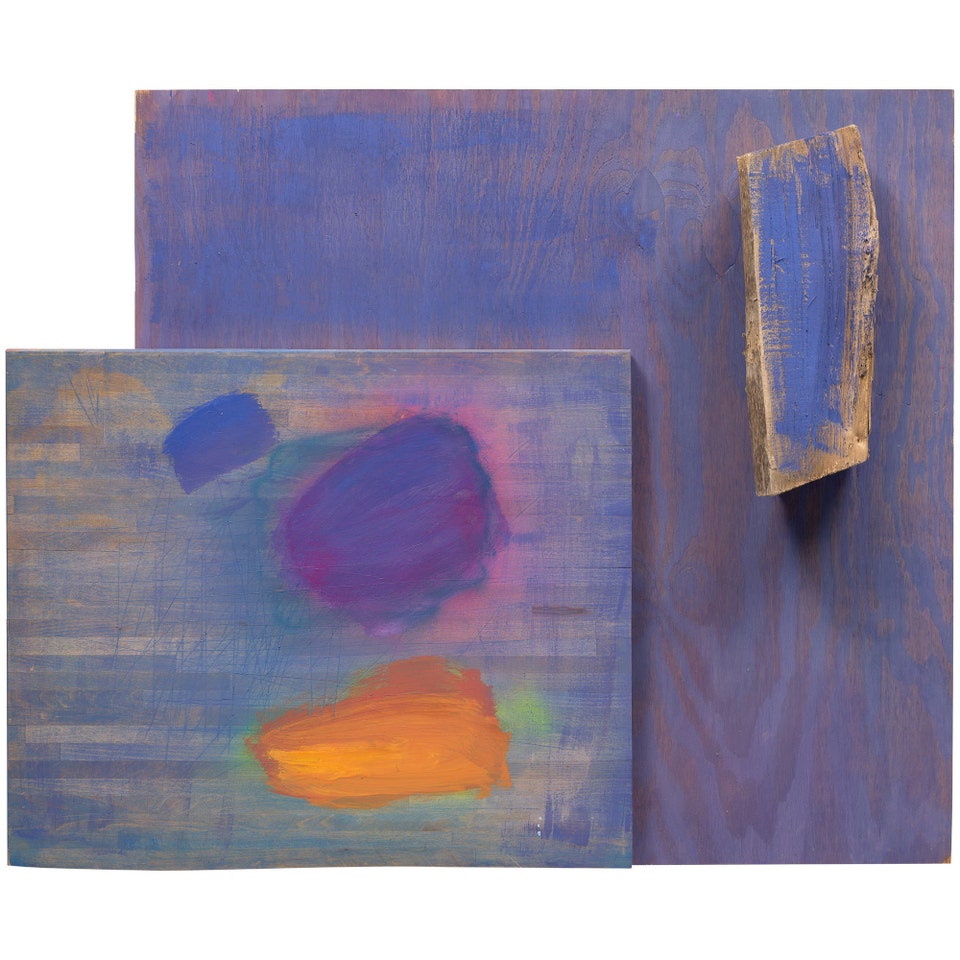
Much more awaits discovery in the sale. From Analia Saban’s characteristic manipulation of unexpected materials — here, paint made to appear like a large domestic trash bag — to Annan Affotey’s psychological domestic portraiture and varied approaches to still life, these works remind us why we fell in love with art in the first place: its ability to make the familiar entirely new.