文章 | A Garden Of Earthbound Delights Sculpture Joel Carole Bernstein Family Collection Auction Modern Contemporary Art November 2026
A Garden of Earthbound Delights
Works from the Joel and Carole Bernstein Family Collection showcase the brilliant artists who breathe life into sculpture and embrace its place in nature.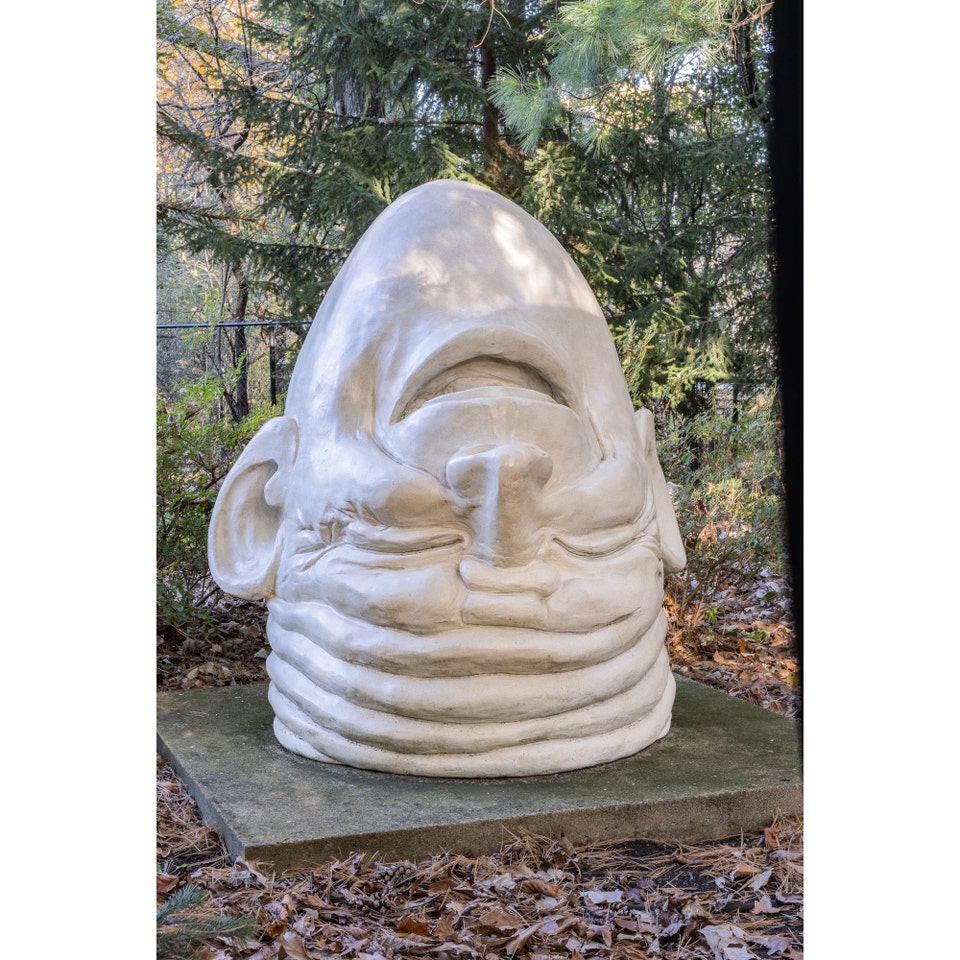
ROBERT ARNESON, Fatal Laff, 1992. Modern & Contemporary Art: Morning Session, New York.
Fernando Botero
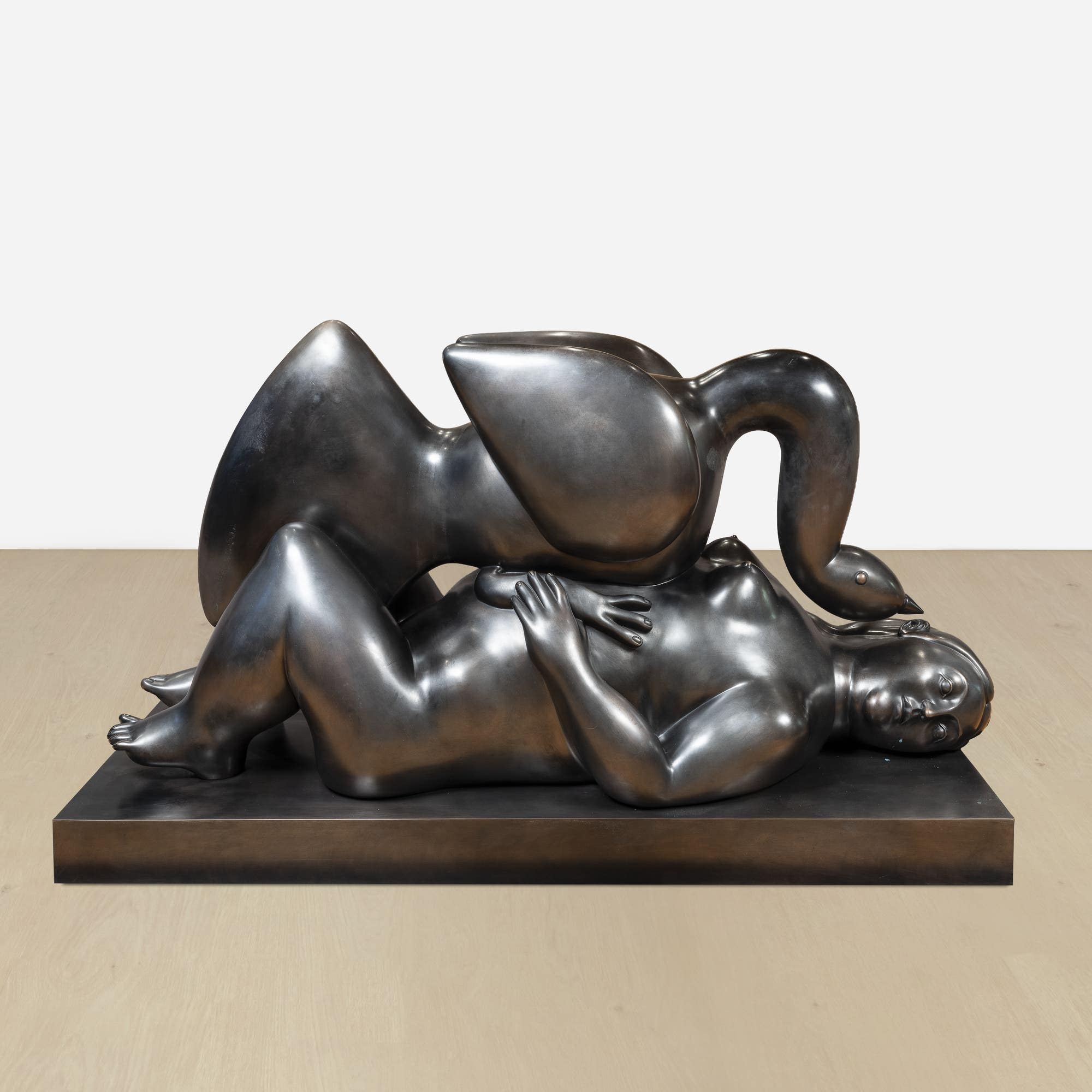
FERNANDO BOTERO, Leda and the Swan, 2006. Modern & Contemporary Art: Morning Session, New York.
A recurring subject throughout Western art history, the myth of Leda and the Swan particularly captivated Renaissance masters, including Leonardo da Vinci and Michelangelo, who explored the myth’s erotic undertones through idealized representations of the female nude. Fernando Botero revisits the subject in the 2006 sculpture, Leda and the Swan, reimagining the salacious encounter between Leda and Zeus through his distinctive proportions and sensuous forms. According to the myth, Zeus, captivated by the Spartan queen’s beauty, assumed the guise of a swan to approach her, resulting in the union that produced Helen of Troy and Polydeuces. Botero’s interpretation embraces tradition while departing from its conventional treatment of the human figure. The artist’s lifelong fascination with Renaissance painting, particularly its emphasis on volume, monumentality, and harmonious composition, finds expression in Leda’s generously rounded body and the swan's sweeping, curvilinear form.
Sir Anthony Caro
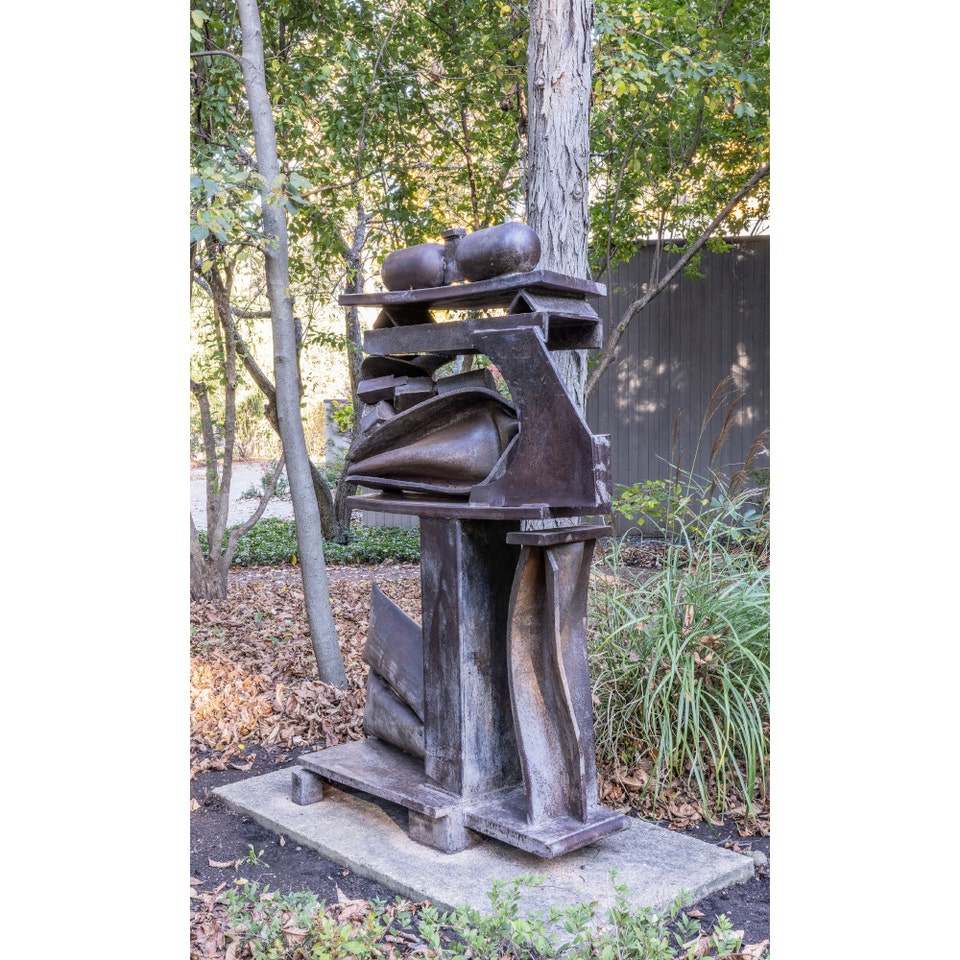
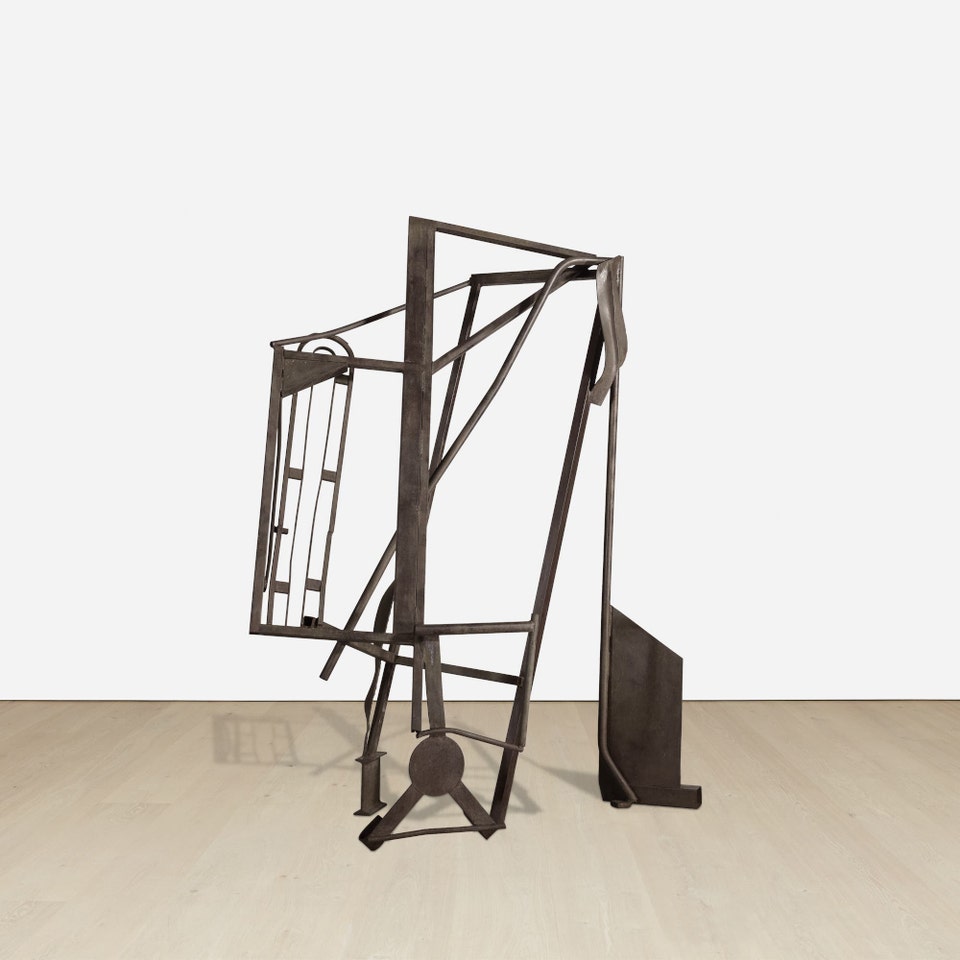
Sir Anthony Caro revolutionized modern sculpture when he did away with the plinth in the early 1960s and began assembling welded steel in arrangements that invited the viewer to engage with the works in their own space. Part of Caro’s lifelong engagement with the table as a sculptural format, High Table (1986) is rendered in varnished steel in an intricate arrangement of surfaces, forms, and textures — the structure itself calls into question the nature of a table as less of a set image and more of a surface for relationships between planes and shapes to take place. Barcelona Bunting, executed the following year, is visually lighter and more buoyant, as its festive title suggests. Its welded elements are placed with a decorative energy that reflects his more spirited works from the late 1980s. Taken together, both pieces display Caro’s characteristic improvisational method and remarkable intuition for arrangement.
Magdalena Abakanowicz
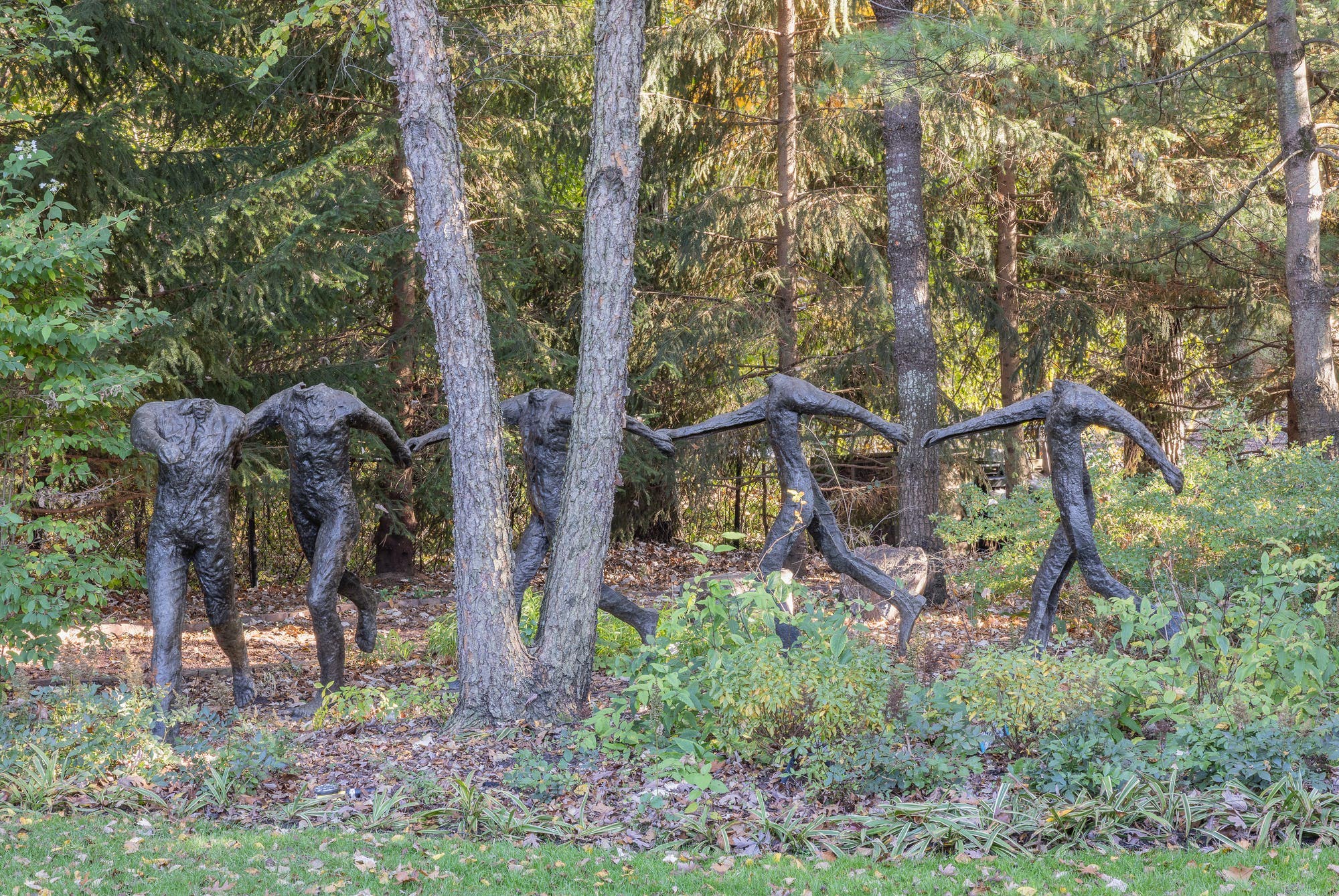
MAGDALENA ABAKANOWICZ, Five Running, 2005. Modern & Contemporary Art: Morning Session, New York.
Executed in 2005, Magdalena Abakanowicz’s Five Running exemplifies the Polish artist’s longstanding exploration of the human form as a vehicle for discovering collective experience, movement, and emotion. In Five Running, these concerns are distilled into a dynamic composition that captures a fleeting moment of shared action. The sculpture depicts five figures arranged in a rhythmic sequence that conveys both physical energy and communal unity, echoing the composition of Henri Matisse’s seminal painting, Dance (I), 1909. Throughout her career, Abakanowicz focused on fragmented and androgynous bodies, investigating the relationship between the individual and the larger social group. Characteristically, Abakanowicz eschews individual portraiture in favor of archetypal forms, allowing the work to transcend specific identities and speak to broader human experience. Forged in welded bronze, Five Running transforms an ephemeral instant into a lasting monument.
Jaume Plensa
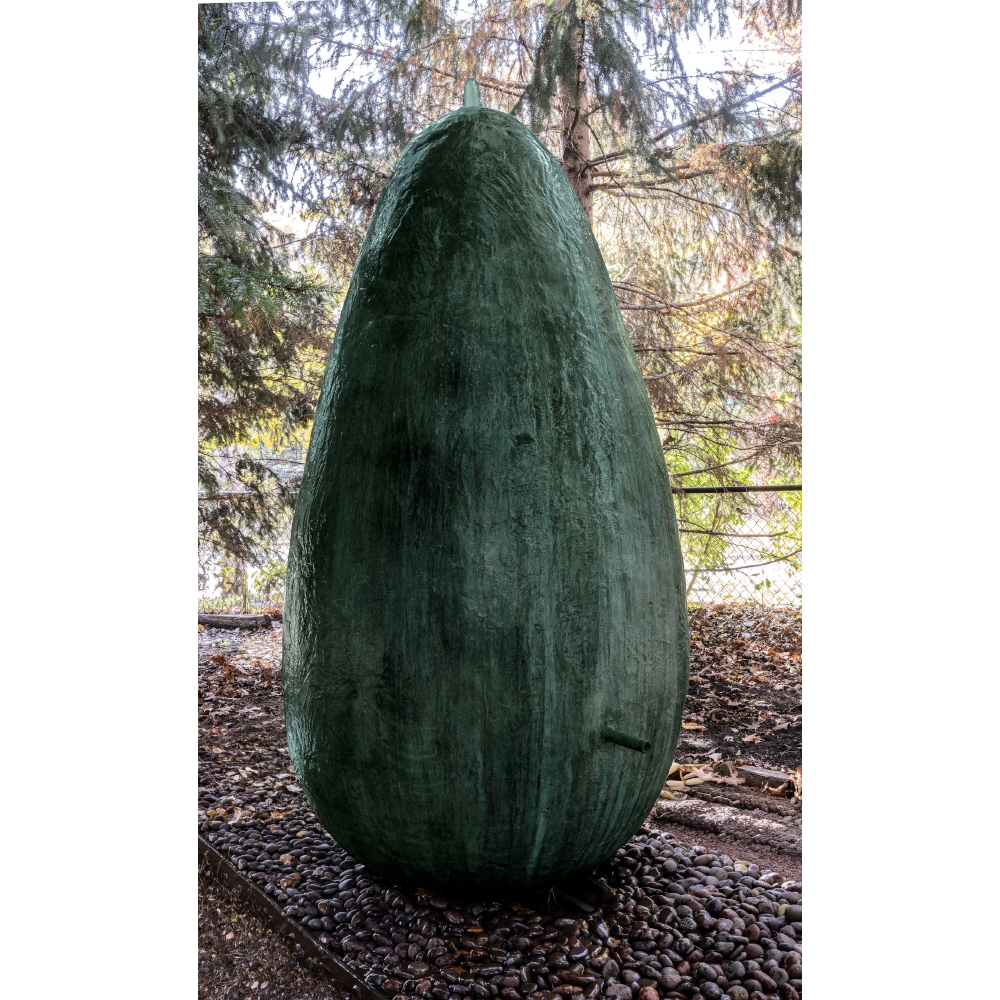
JAUME PLENSA, The Personal Miraculous Fountain, 2005. Modern & Contemporary Art: Morning Session, New York.
The Personal Miraculous Fountain, executed and cast between 1994 and 2005, exemplifies Jaume Plensa’s sustained exploration of sculpture as a vessel for reflection and a meeting place for direct human connection. Reconsidering the fountain as a social anchor and community pulse, Plensa transforms the ordinary structure into a site of contemplation, where water circulates experiences and the regenerative cycle of life itself. Its shape takes the form of an egg, a vessel of origin and renewal, while the fountain’s towering structure and substantial mass remain inviting, grounding the ephemeral, fluid movement of water in a monumental scale. Through this interplay of material permanence and transience, The Personal Miraculous Fountain transforms architectural and natural spaces into conceptual and literal evocations of communal exchange.
Joel Shapiro
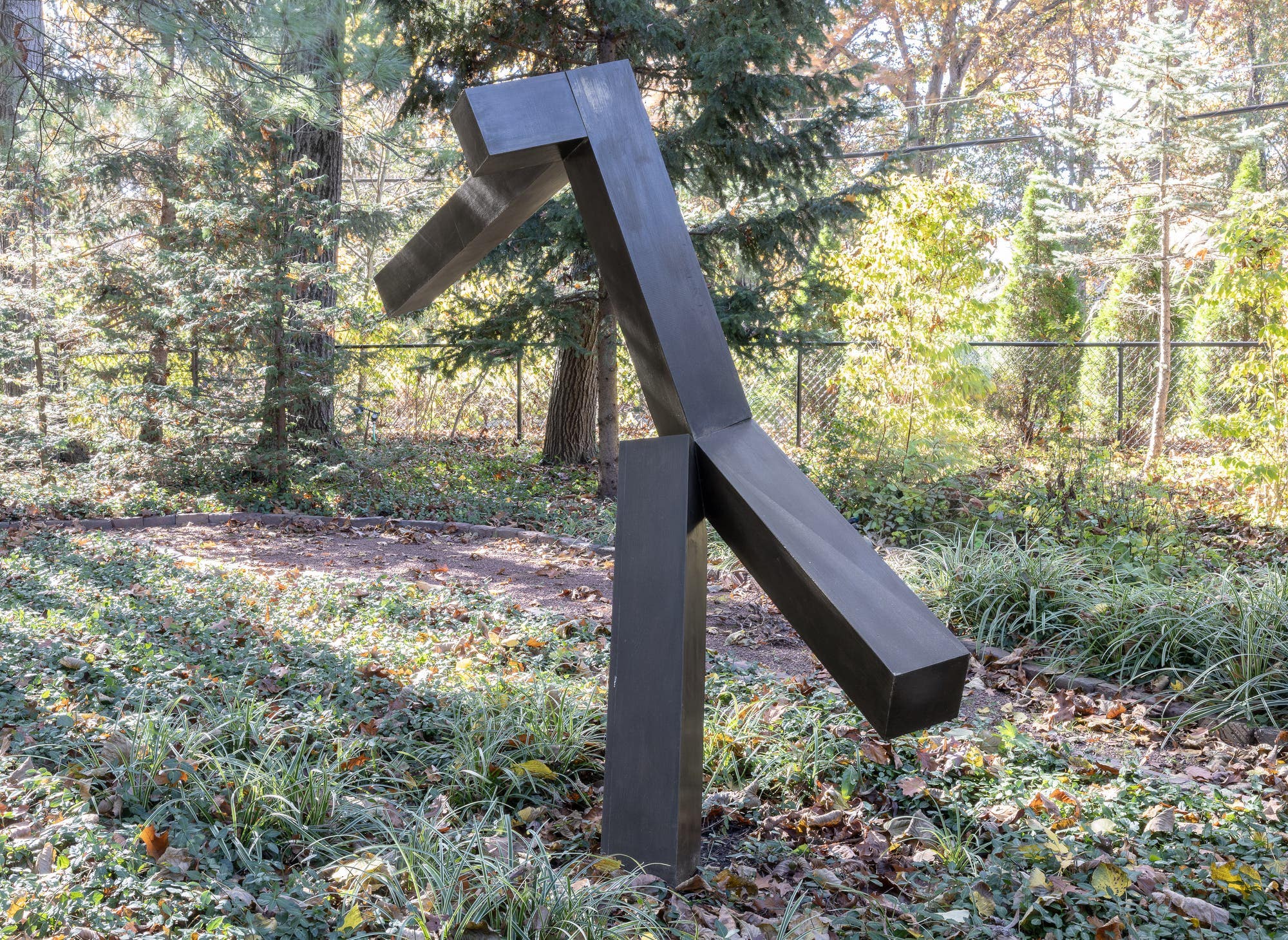
JOEL SHAPIRO, Untitled, 1996. Modern & Contemporary Art: Morning Session, New York.
Joel Shapiro’s 1996 Untitled is composed of only a few rectangular bronze beams, yet it evokes a figure in clear motion. Standing over two meters tall and extending more than three meters wide, the sculpture exceeds the viewer’s scale. One vertical element functions like a weight-bearing leg, while another projects outward at a sharp angle, suggesting a kick or stride. Above, a long horizontal beam reads simultaneously as torso and outstretched arm. From one vantage point, the figure seems to lean forward dynamically; from another, it appears almost planar, its precarious equilibrium difficult to resolve. Shapiro’s rectilinear forms acknowledge the legacy of Minimalism, yet their assembly into anthropomorphic configurations reintroduces the body as a central reference. Untitled belongs to a pivotal period in which the artist’s monumental bronzes increasingly entered the public sphere. Across a career spanning more than five decades, he has developed a sculptural language that is at once formally rigorous and deeply expressive, with his large-scale standing figures representing its most powerful and enduring manifestation.
Barry Flanagan
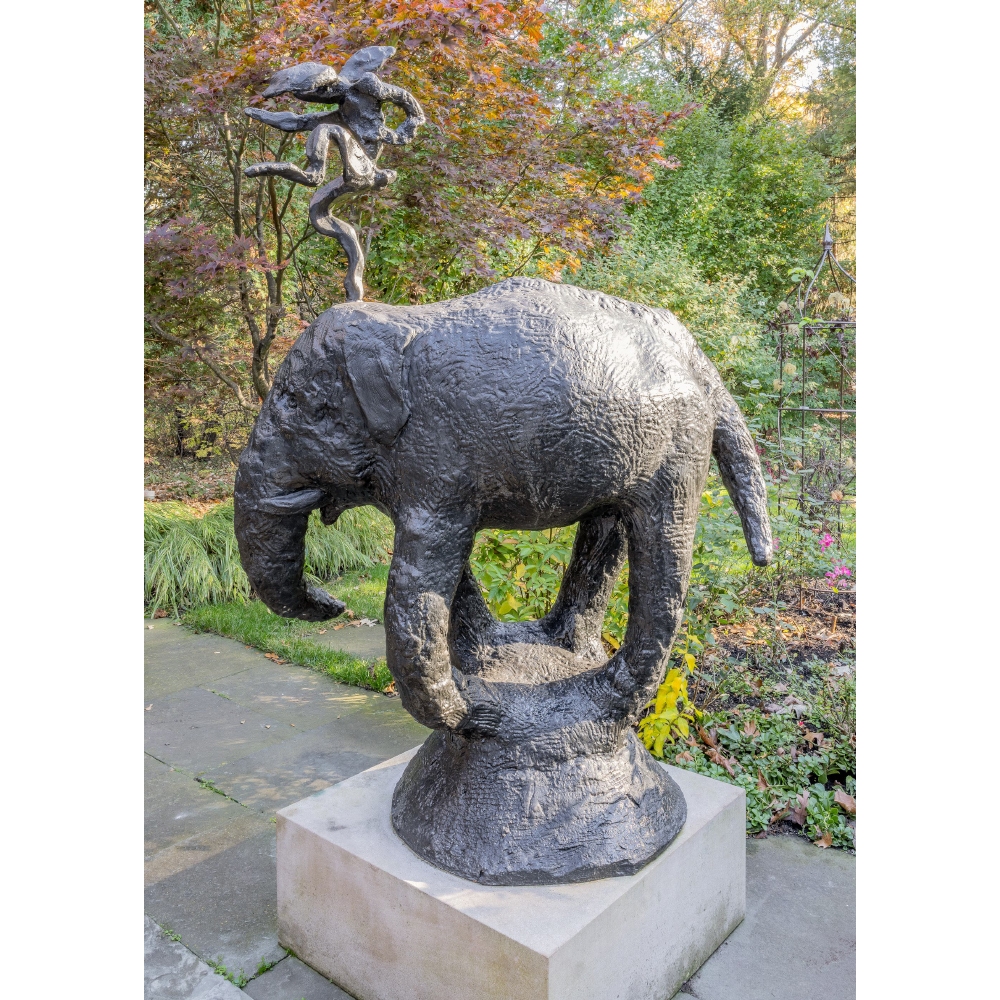
BARRY FLANAGAN RA, Elephant With Tusks and Nijinski Hare, 1996. Modern & Contemporary Art: Morning Session, New York.
Also executed in 1996, Barry Flanagan’s Elephant With Tusks and Nijinski Hare showcases the artist’s defining anthropomorphic imagery. Perched atop the head of a tusked elephant, itself balanced on a small pedestal nearly indistinguishable from its feet, is one of Flanagan’s signature Nijinski hares. Frozen in a moment of dance, the hare’s movement contrasts with the grounded elephant, whose head becomes its stage. Across cultures, the hare has been associated with life, immortality, and fertility, while also symbolizing deception, cunning, and triumph. For Flanagan, it embodied distinctly human qualities beneath its animal form. As he notes: “In a way, the hare stands for the underdog.” He held a similar interest in the elephant, long associated with wisdom, memory, stoicism, and loyalty. The interplay between the agile hare and the weighty elephant produces a dynamic pairing of symbolic animals that evokes the complexities of human experience while remaining firmly rooted in bronze's materiality.
Kiki Smith
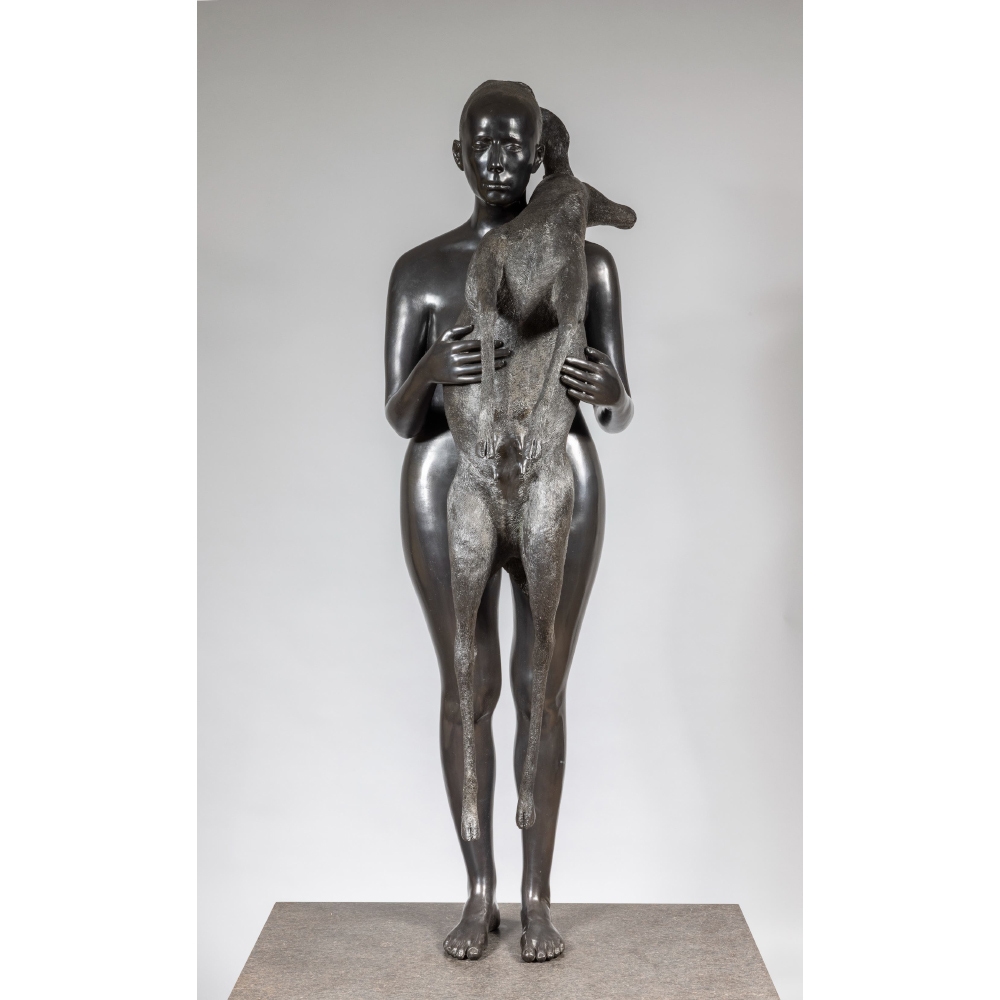
KIKI SMITH, Her, 2003. Modern & Contemporary Art: Morning Session, New York.
Few artists have so consistently found remarkable ways of exploring the vulnerability and resilience of the human form as Kiki Smith. Her, from 2003, belongs to Smith’s early 2000s shift from fragmented, anatomical works to her more charged, contemplative examinations of the female body. Rendered here in bronze, the work highlights Smith’s longtime folkloric and religious iconographic studies, with its subject embracing a mother deer in the manner of Diana, the Roman goddess of the hunt and childbirth. Her indistinct expression invites the viewer to imagine an everywoman and a myth, or to inhabit a place between human and animal, reflecting Smith’s belief that sculpture can make the body at once strange and deeply familiar.
Eric Fischl
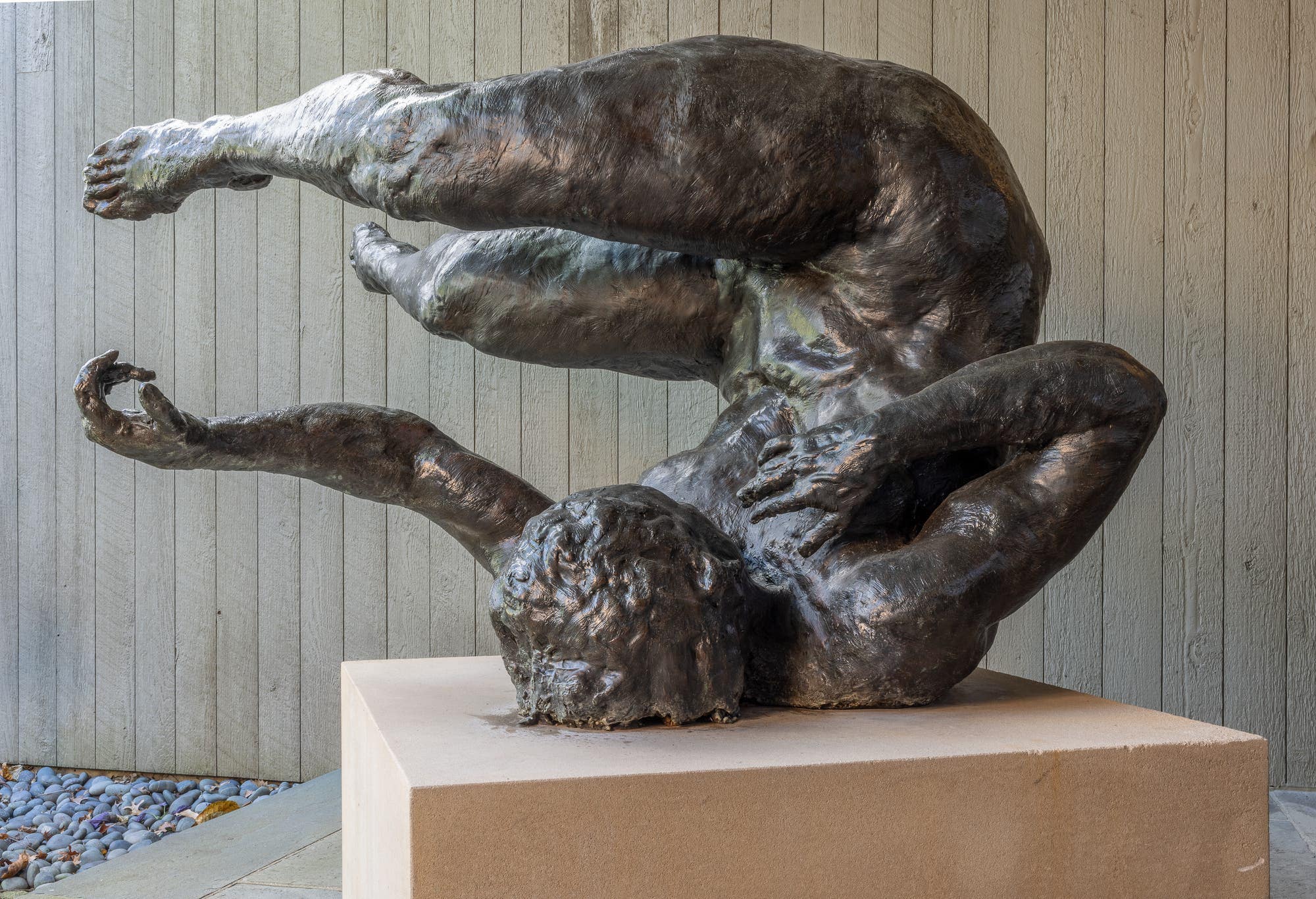
ERIC FISCHL, Tumbling Woman, conceived in 2002 and cast in 2003. Modern & Contemporary Art: Morning Session, New York.
Eric Fischl initially emerged as a painter of suburban quietude and its unspoken tensions, and his sculptures carry the same psychological dimension into new forms. Tumbling Woman was created in the aftermath of the September 11th attacks and the haunting images of falling victims that played on live television. Rather than depicting the spectacle, however, Fischl instead isolates a single female figure, contorted and weightless, in a universal image of vulnerability. The artist conceived of the work as an act of mourning and as a memorial, and its dichotomy between heavy cast metal and violent stillness creates a powerful, emotional moment for the viewer.
Robert Arneson
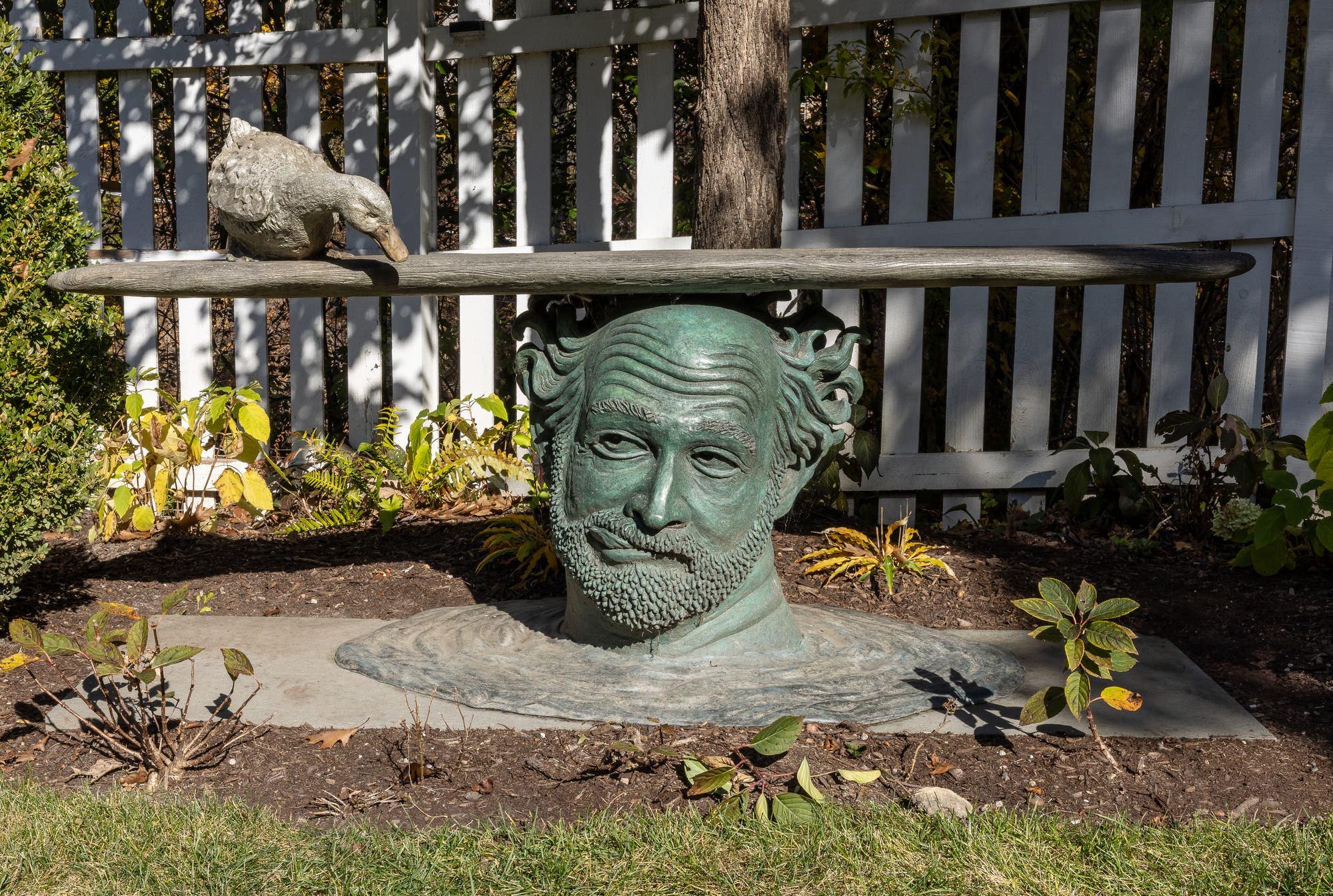
ROBERT ARNESON, Bench Head, 1991. Modern & Contemporary Art: Morning Session, New York.
From the heart of the Bay Area Funk movement, Robert Arneson turned ceramics into a medium for irreverent satire, self-examination, and public-facing criticism. Bench Head (1991) and Fatal Laff (1992) both date from the final years of Arneson’s life and remain among his sharpest meditations on mortality and identity. In each work, the artist’s own head becomes the subject, and the heavy modeling that defined his practice is theatrically exaggerated to great effect: Bench Head mocks the classical bust’s solemn brusqueness, while Fatal Laff turns the head on its head, creating an unsettling effect through a frown-grin and layered forehead that at once recalls traditional drama and death masks while simultaneously curdling any distinction between high and low art — a practice Arneson championed throughout his career.
Jacques Lipchitz
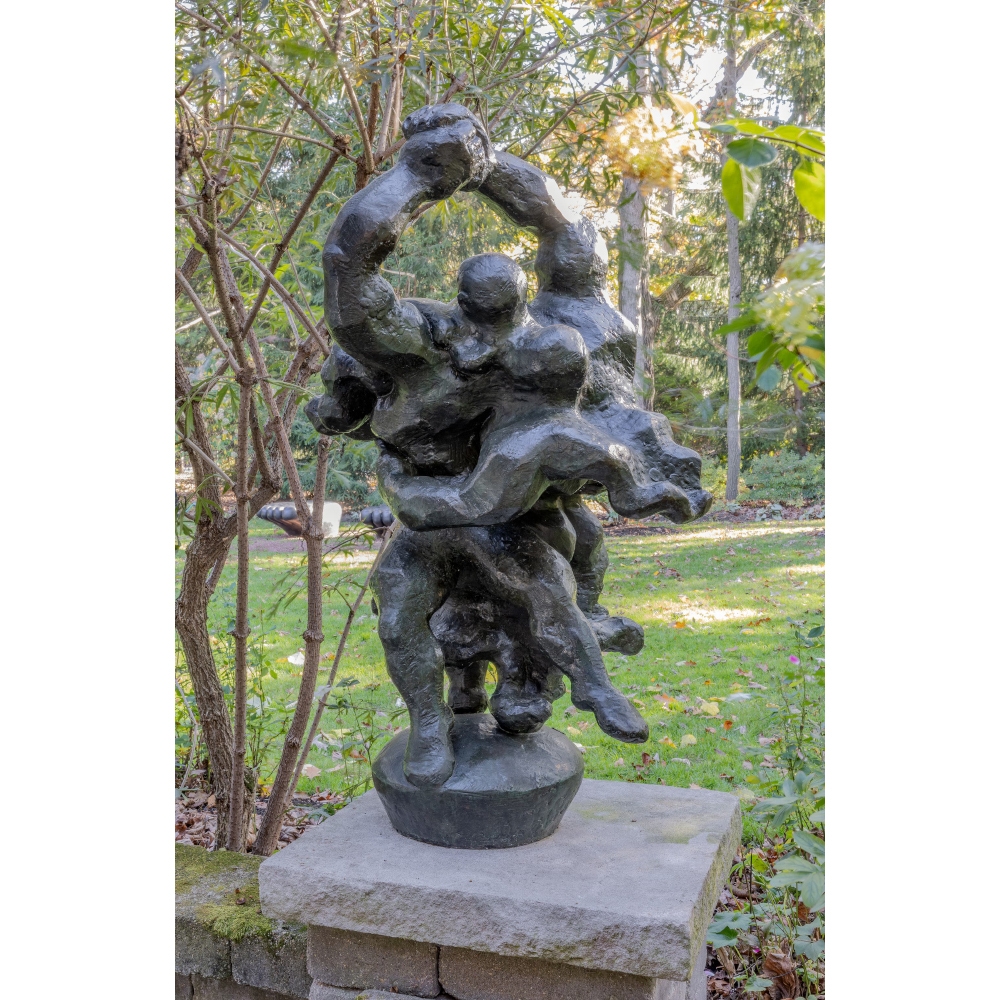
JACQUES LIPCHITZ, The Dance, 1936. Modern & Contemporary Art: Morning Session, New York.
Jacques Lipchitz was one of Cubism’s great sculptural innovators, regarded often as a bridge between the early avant-garde and later, more mythic-inspired artists of the alter century. By the mid-1930s, he had moved from the architectural forms of his early work toward a visual language informed by energetic, curved forms. The Dance, created in 1936, captures this crucial transition period for the artist through its interlocking forms engaged in a rhythmic dance. Each section of mass and empty space plays against the other, making the figures appear to spiral in and out of themselves. Dance, with its celebratory and communal connotations, was a recurring theme for Lipchitz, and the modeled surfaces throughout the work retain the artist’s hand as a partner in guiding its movement.
William Turnbull
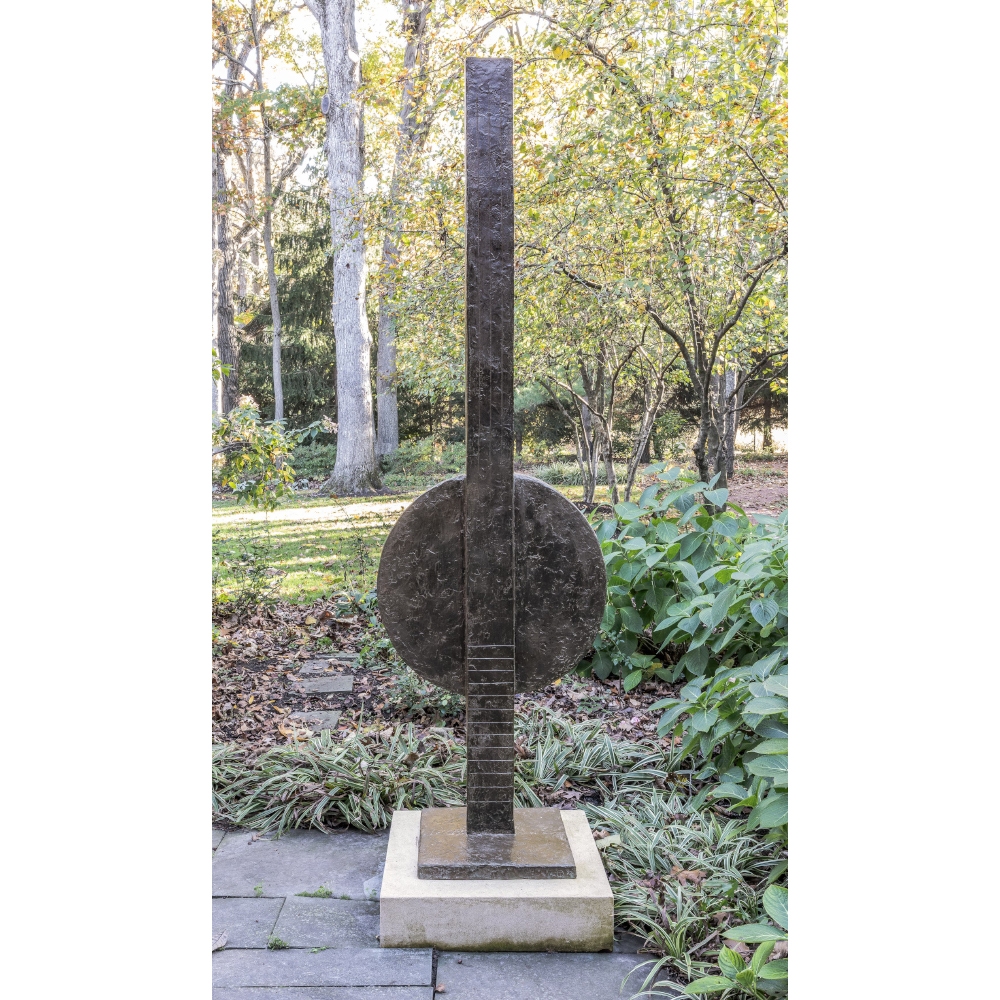
WILLIAM TURNBULL, Figure, 1992. Modern & Contemporary Art: Morning Session, New York.
William Turnbull holds a singular place in post war British art, having moved fluidly between painting and sculpture, figuration and abstraction throughout his career. His late bronzes, among which Figure (1992) stands as a distinguished example, draw on ancient forms, particularly the stylized idols of the Cycladic islands and totemic works from earlier human civilizations. The figure is reduced to its absolute essentials: a frontal, upright form with a flattened perspective that lends the work a sense of antiquity, as though unearthed rather than rendered. The result is a sculpture that feels distinctly modern yet quizzically ancient, and offers an illuminating example of the artist’s belief that the most enduring forms are often the simplest.
William Tucker
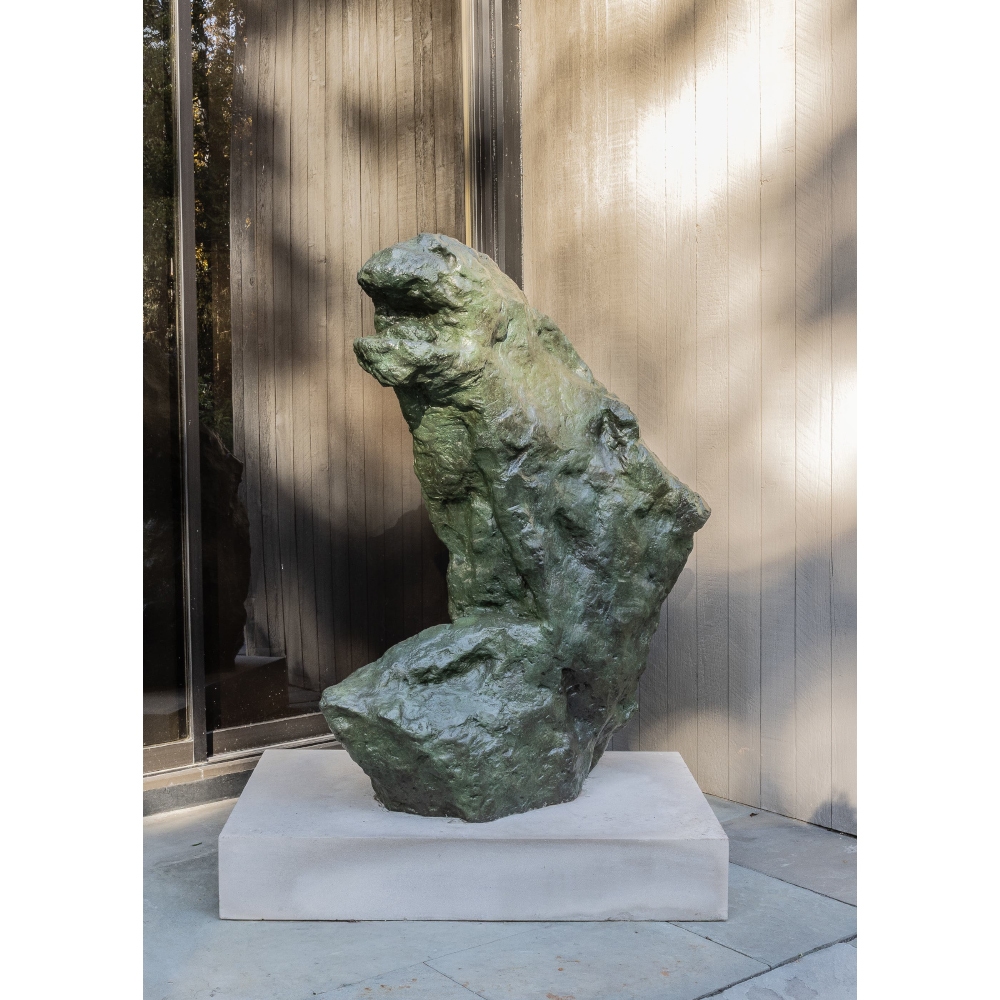
WILLIAM TUCKER, Greek Horse, 2003. Modern & Contemporary Art: Morning Session, New York.
William Tucker rose to prominence during the 1960s as a leading figure of the New Generation of British sculptors, known then primarily for his abstract works in geometric steel before turning to a more figurative approach in the ‘70s and ‘80s. Greek Horse, from 2003, fits within this later phase: the sculpture’s surface was initially built in plaster, then cast in bronze, giving it a tactile, almost geological presence. Tucker’s title nods to the classical lineage of the horse as one of Western sculpture’s oldest and most studied subjects, yet the artist does not adhere to its classical representation. Instead, it emerges from the material; its weight and surface speak to its physicality before its form can bear its representation.
Bryan Hunt
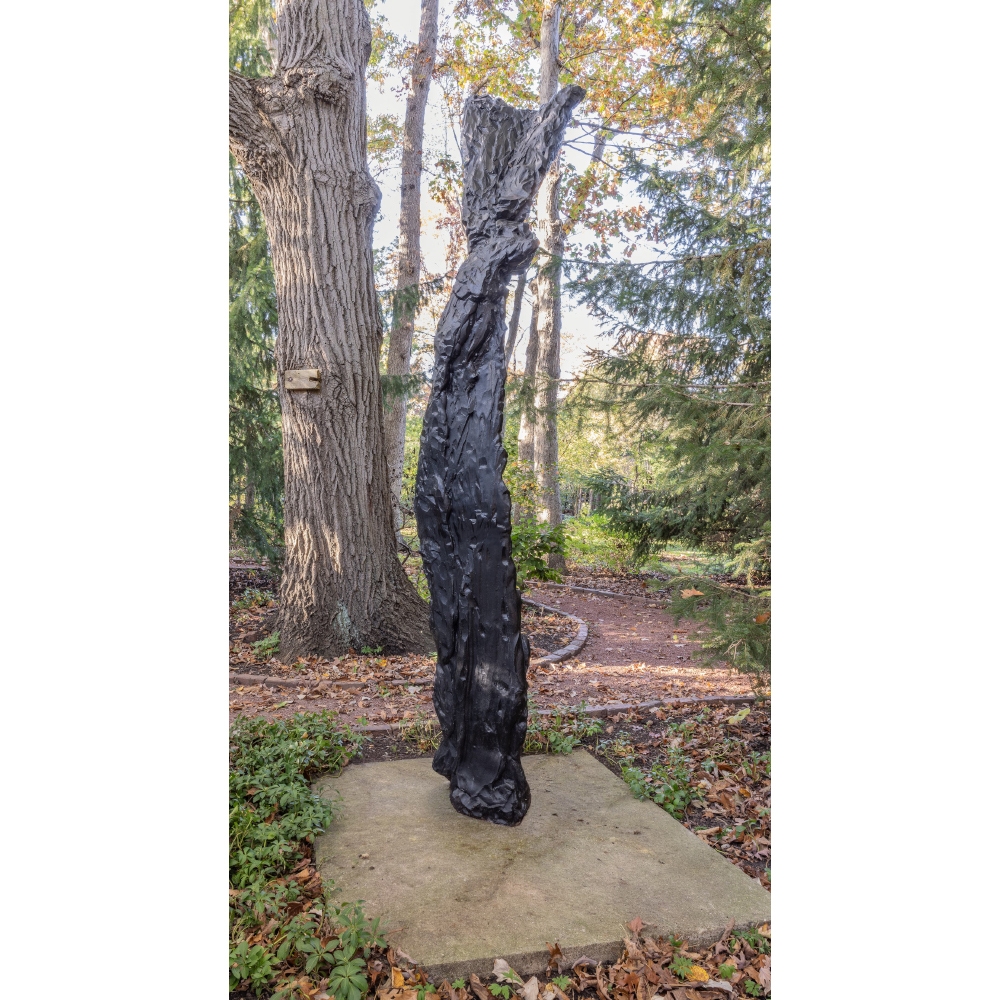
BRYAN HUNT, Daphne II, Waterfall, 1980–1981. Modern & Contemporary Art: Morning Session, New York.
A longtime admirer of natural phenomena and their relationships with human endeavor, Bryan Hunt’s early work from the 1970s evolved into an exploration of fluidity and energetic exchange between nature and the built environment. Case in point, in 1979, Hunt undertook his first sculpture commission for Frank Lloyd Wright’s Fallingwater House. From the following year, Waterfall captures the dynamism of a cataract in cast bronze, compressing the cascade’s energy into a static column, with the bronze’s surface lending the impression of rushing movement. Hunt was drawn to the sublime in nature, but his approach is more sparing and prudent in execution, treating the waterfall as a distilled gesture rather than a full-fledged landscape with surrounding elements.