Article | Vacheron Constantin Chronometre Royal History
The History of the Vacheron Constantin Chronomètre Royal
From Observatory trials to wristwatches, the Chronomètre Royal charts a century-long commitment to chronometry at Vacheron Constantin.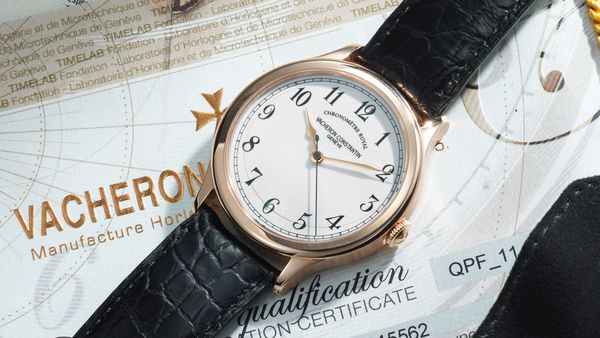
Phillips in Association with Bacs & Russo is thrilled to welcome you to The Geneva Sessions, Spring 2026, Online Auction, running from 12:00 PM CET, Thursday, 5 March, to 2:00 PM CET, Thursday, 12 March. The sale features more than 80 high-end luxury wristwatches, ranging from A. Lange & Söhne and F.P. Journe to Audemars Piguet and Patek Philippe.
– By Logan Baker
The name Chronomètre Royal sounds faintly theatrical today, a relic of an era when watchmaking language leaned comfortably toward grandeur. Yet behind that flourish lies one of the most serious and consequential projects ever undertaken by Vacheron Constantin.
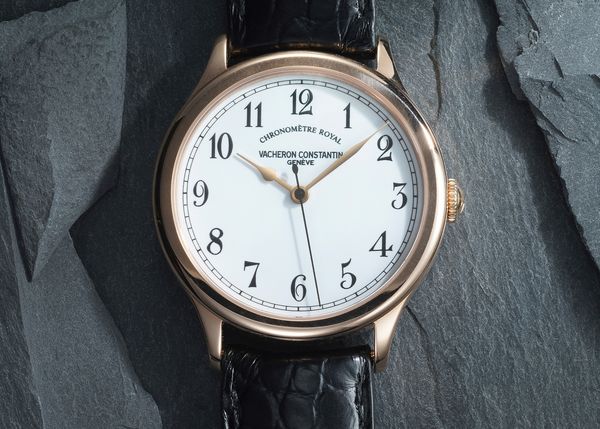
Lot 37: A 2011 Vacheron Constantin Chronomètre Royale 1907 in 18k pink gold that is included in the upcoming Phillips Geneva Sessions, Spring 2026, Online Auction. Estimate: CHF 7,000 - 14,000
Introduced in 1907, the Chronomètre Royal was not conceived as a showpiece, nor as an experimental one-off for Observatory competitions. It was something far more ambitious for its time: a precision timekeeper designed for serial production and daily use, informed directly by the brand’s extensive experience in chronometric trials.
To understand why this mattered, it helps to remember how uncertain precise timekeeping once was. Today, the expectation that a mechanical watch should keep respectable time is so deeply ingrained that it feels almost natural. In the late 19th and early 20th centuries, this was anything but assured. Materials were inconsistent, lubrication was imperfect, and regulation demanded exceptional skill. Achieving sustained precision across positions and temperatures was closer to a scientific exercise than a manufacturing routine.
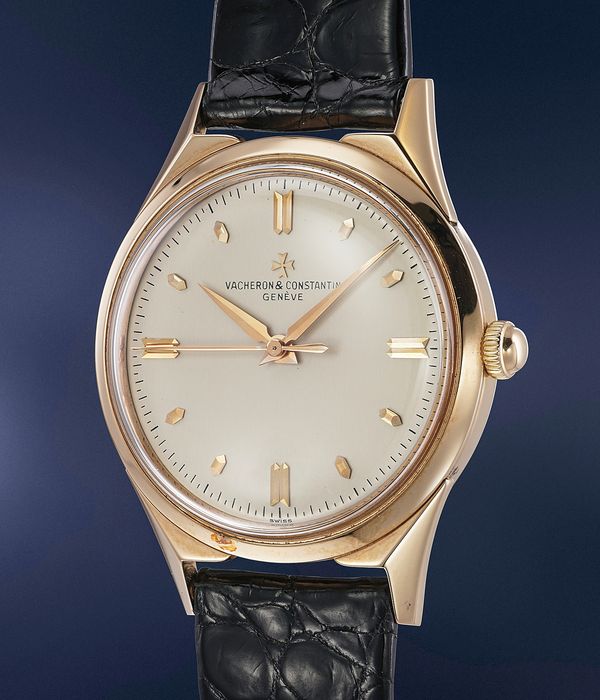
A 1957 Vacheron Constantin Chronomètre Royale Ref. 6111 in 18k pink gold that sold for CHF 22,680 at Phillips Geneva, in May 2021.
This uncertainty fueled intense competition among manufacturers. Throughout the second half of the 19th century, Observatory trials emerged as the ultimate proving ground for chronometry. Switzerland’s most important competitions were held in Neuchâtel beginning in 1866 and in Geneva from 1873. These trials were not commercial showcases in the modern sense. The movements submitted were never intended for sale. Instead, they were purpose-built instruments, stripped of aesthetic considerations, and optimized entirely for performance. Their value lay in what they revealed about a manufacture’s technical competence and intellectual rigor.
Before a movement could even compete, it had to meet stringent entry standards. Once accepted, it faced weeks of testing in multiple positions and at carefully controlled temperatures. Scores were calculated according to tightly defined criteria, and results were published publicly. Success brought prestige not only to the brand but to the individual regulators whose names appeared in the records. At Vacheron Constantin, figures such as Batifolier, whose movement won first prize at the Geneva Observatory in 1898, became celebrated within professional circles.
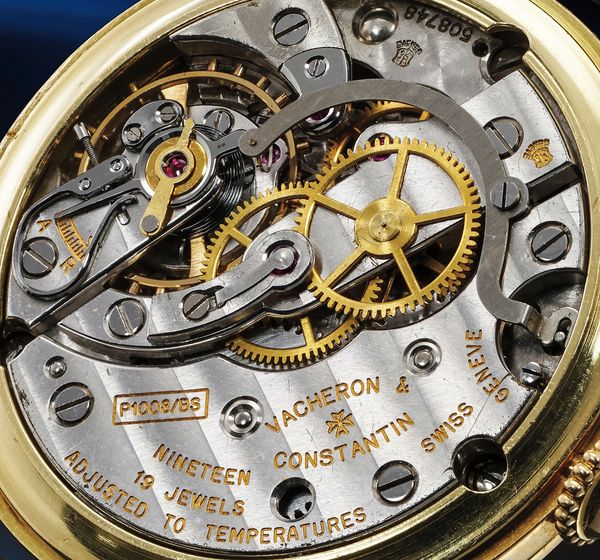
The manual-wind VC calibre 1008BS inside a 1954 Chronomètre Royal.
By the early 20th century, Vacheron Constantin made a decisive leap. Rather than confining its best chronometric thinking to competition pieces, the firm chose to apply it to a watch intended for customers. The result was the Chronomètre Royal, officially trademarked in 1907, with its English designation protected the following year.
The concept was clear and unusually disciplined. The Chronomètre Royal was designed as a precision instrument first, with robustness and legibility taking precedence over decoration. Its movement finishing echoed that of Observatory calibres, favoring functional gilt surfaces over elaborate Genevan flourishes. The dial was white enamel, selected for stability and long-term legibility. Cases were typically gold, occasionally silver, with restrained detailing and a practical sunburst guilloché on the back.
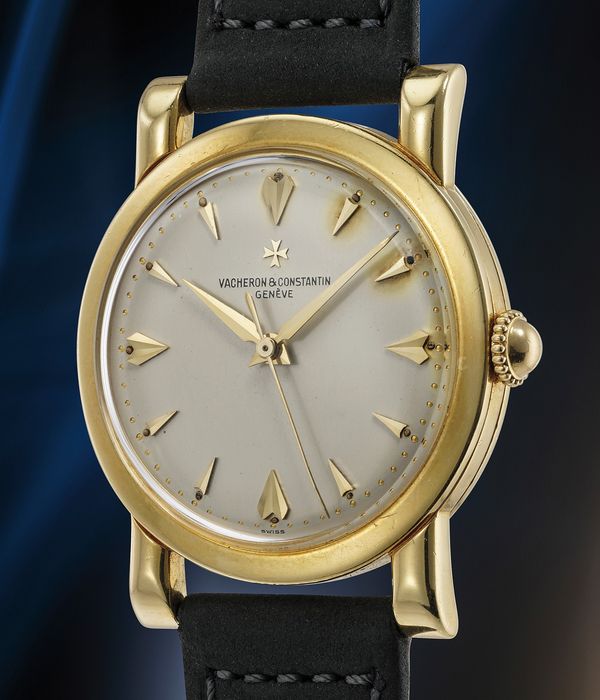
A 1954 Vacheron Constantin Chronomètre Royale Ref. 4838 in 18k pink gold that sold for CHF 10,710 at Phillips Geneva, in May 2022.
Technically, these pocket watches shared a common architecture across sizes ranging from 11 to 22 lignes. Key pivots were mounted on carefully chosen bearings, including sapphire for the balance staff. Regulation was accomplished via micrometric screws, reflecting the seriousness of the chronometric intent. Everything about the construction pointed toward controlled friction, consistency, and durability.
The market response was immediate. Demand emerged first and most strongly from South America, particularly Brazil. A surviving letter from a Rio de Janeiro agent dated April 1907 underscores what local clients were seeking: a watch capable of maintaining accuracy despite heat, humidity, and altitude. An innovative lottery-based sales system proved remarkably effective, and between 1907 and 1911, a single agent accounted for roughly 80 percent of total Chronomètre Royal production. In total, just over 10,000 examples were produced before the end of the First World War.
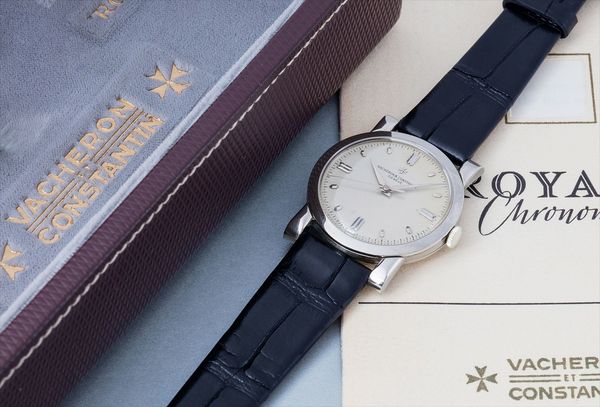
A 1954 Vacheron Constantin Chronomètre Royal Ref. 4907 in 18k white gold that sold for CHF 125,000 at Phillips Geneva, in May 2016.
The success of the Chronomètre Royal did not diminish Vacheron Constantin’s involvement in Observatory competitions. On the contrary, the interwar period saw some of the brand’s most impressive results. In 1934, the manufacture claimed first prize in three separate chronometric categories at Geneva, a feat it later surpassed. By the mid-20th century, Vacheron Constantin had amassed an extraordinary record of first prizes, reinforcing the technical credibility that underpinned the Chronomètre Royal name.
The transition from pocket watches to wristwatches marked the next chapter. In 1953, Vacheron Constantin reintroduced the Chronomètre Royal as a wristwatch, powered by the manual-wind calibres 1007BS and 1008BS. These movements incorporated a balance-stop mechanism, allowing the seconds hand to halt when setting the time, a feature still uncommon in civilian wristwatches at the time.
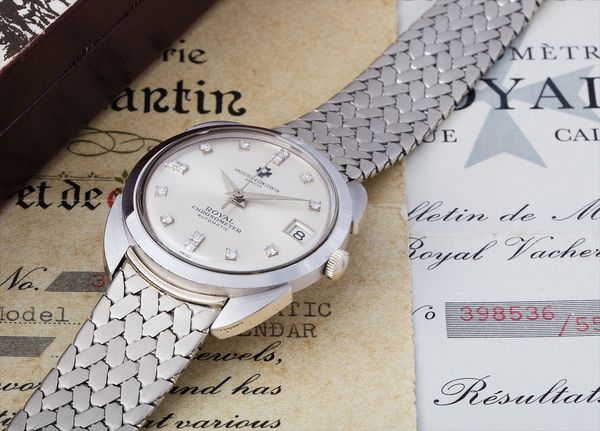
An 1963 Vacheron Constantin Chronomètre Royal 'Batman' Ref. 6694 (6950) in 18k white gold that sold for CHF 27,500 at Phillips Geneva, in November 2015.
Unlike their pocket-watch predecessors, these wristwatch movements were finished to an exceptionally high aesthetic standard. Precision remained paramount, but beauty was no longer treated as a secondary concern. The watches were delivered with individual Observatory bulletins, certifying their performance, and contemporary advertising made explicit reference to the manufacture’s dominance in chronometric trials.
As the industry moved toward standardized certification, chronometry itself evolved. The creation of the Contrôle Officiel Suisse des Chronomètres in 1973 formalized what Observatory competitions had long pursued, albeit under different conditions. COSC testing focused on series-produced movements, evaluated over 15 days in multiple positions and temperatures. Passing these tests required not only quality components but careful assembly and regulation.
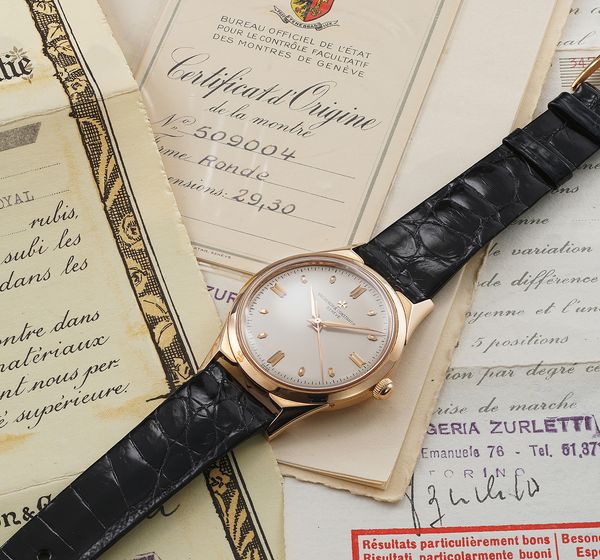
A 1957 Vacheron Constantin Chronomètre Royale Ref. 6111 in 18k pink gold that sold for CHF 22,680 at Phillips Geneva, in May 2021.
Vacheron Constantin embraced this framework early. In 1962, the brand introduced calibre 1072, its first automatic movement certified to chronometer standards. Technically advanced for its time, the movement used ruby bearings to reduce friction and proved that automatic winding need not compromise precision.
Yet the broader market was shifting. The rise of quartz technology in the 1970s reshaped consumer expectations, and mechanical chronometry retreated from public attention. The Chronomètre Royal line entered a period of dormancy, resurfacing only sporadically in unconventional designs before reappearing unexpectedly within the Phidias collection in the 1990s.
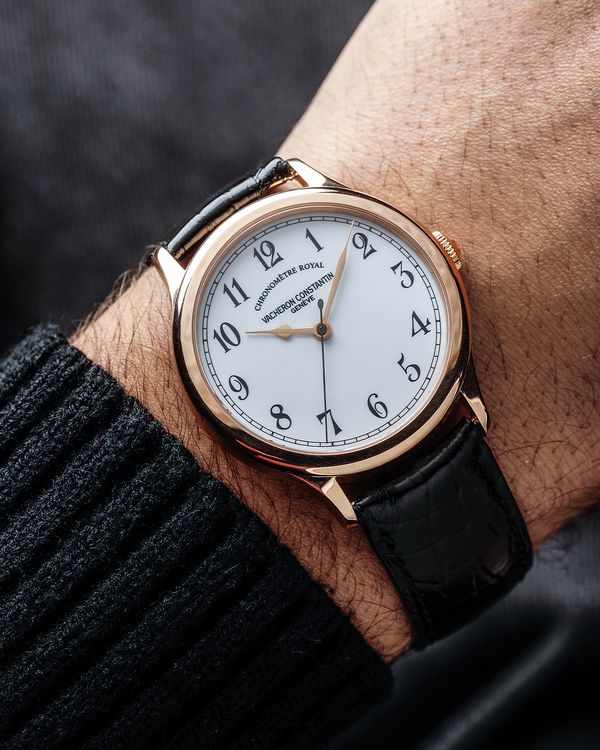
Lot 37: A 2011 Vacheron Constantin Chronomètre Royale 1907 in 18k pink gold that is included in the upcoming Phillips Geneva Sessions, Spring 2026, Online Auction. Estimate: CHF 7,000 - 14,000
However, the true revival came with the centenary of the original model.
In 2007, Vacheron Constantin introduced the Historiques Chronomètre Royal 1907, a watch conceived as both homage and continuation. Certain decisions were non-negotiable. The dial would be grand feu enamel, echoing the clarity and restraint of the original. The movement would be an in-house automatic calibre, regulated and certified to modern chronometric standards.
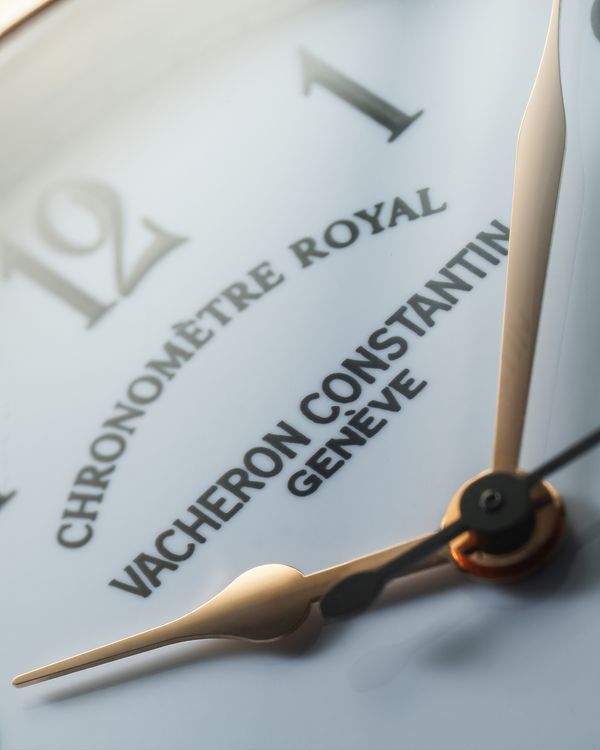
Lot 37: A 2011 Vacheron Constantin Chronomètre Royale 1907 in 18k pink gold that is included in the upcoming Phillips Geneva Sessions, Spring 2026, Online Auction. Estimate: CHF 7,000 - 14,000
The dial alone represents an extraordinary technical undertaking. Built on a white gold base to minimize deformation, it is engraved using the champlevé technique and enameled on both sides to balance internal stresses. Multiple firings at temperatures approaching 800 degrees Celsius are required, with a significant rejection rate. The numerals are also enamel, not printed, and the presence of two colors, including the signature burgundy 12 o'clock numeral on the first 100 pieces, adds further complexity.
Powering the watch is calibre 2460 SCC, a modern automatic movement bearing the Geneva Seal and certified by COSC. It beats at 28,800 vibrations per hour, features a hacking seconds mechanism, and uses a ceramic-mounted rotor requiring no lubrication. Before certification, each movement underwent extensive internal testing, followed by further evaluation once cased.
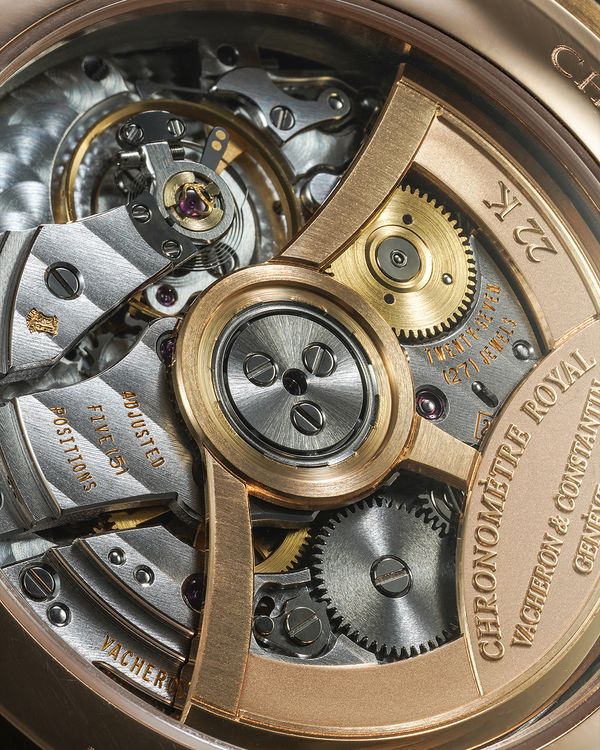
Lot 37: A 2011 Vacheron Constantin Chronomètre Royale 1907 in 18k pink gold that is included in the upcoming Phillips Geneva Sessions, Spring 2026, Online Auction. Estimate: CHF 7,000 - 14,000
The result is a contemporary chronometer that embodies a philosophy stretching back more than a century. Seen in this light, the Chronomètre Royal is a throughline connecting bservatory science, early industrial watchmaking, and modern mechanical excellence.
You can view the complete Phillips Geneva Sessions, Spring 2026, Online Auction catalogue here.
About Phillips In Association With Bacs & Russo
The team of specialists at PHILLIPS Watches is dedicated to an uncompromised approach to quality, transparency, and client service. Phillips in Association with Bacs & Russo holds the world record for the most successful watch auction, with its Geneva Watch Auction: XIV having realized $74.5 million in 2021. Over the course of 2021 and 2022, the company sold 100% of the watches offered, a first in the industry, resulting in the highest annual total in history across all the auction houses at $227 million.
About Logan Baker
Logan has spent the past ten years covering the watch industry from every angle. He joined Phillips in Association with Bacs & Russo in early 2023 as Senior Editorial Manager, after previous roles at Hodinkee and WatchTime. Originally from Texas, he spent a decade in New York and now calls Geneva home.
Recommended Reading
The Patek Philippe 'Ref. 50-' Series, and the Rebirth of Complicated Watchmaking
A History Of Alternative Time Displays At Vacheron Constantin
A Question of Gravity: The Tourbillons in the Phillips Geneva Sessions, Spring 2026, Online Auction