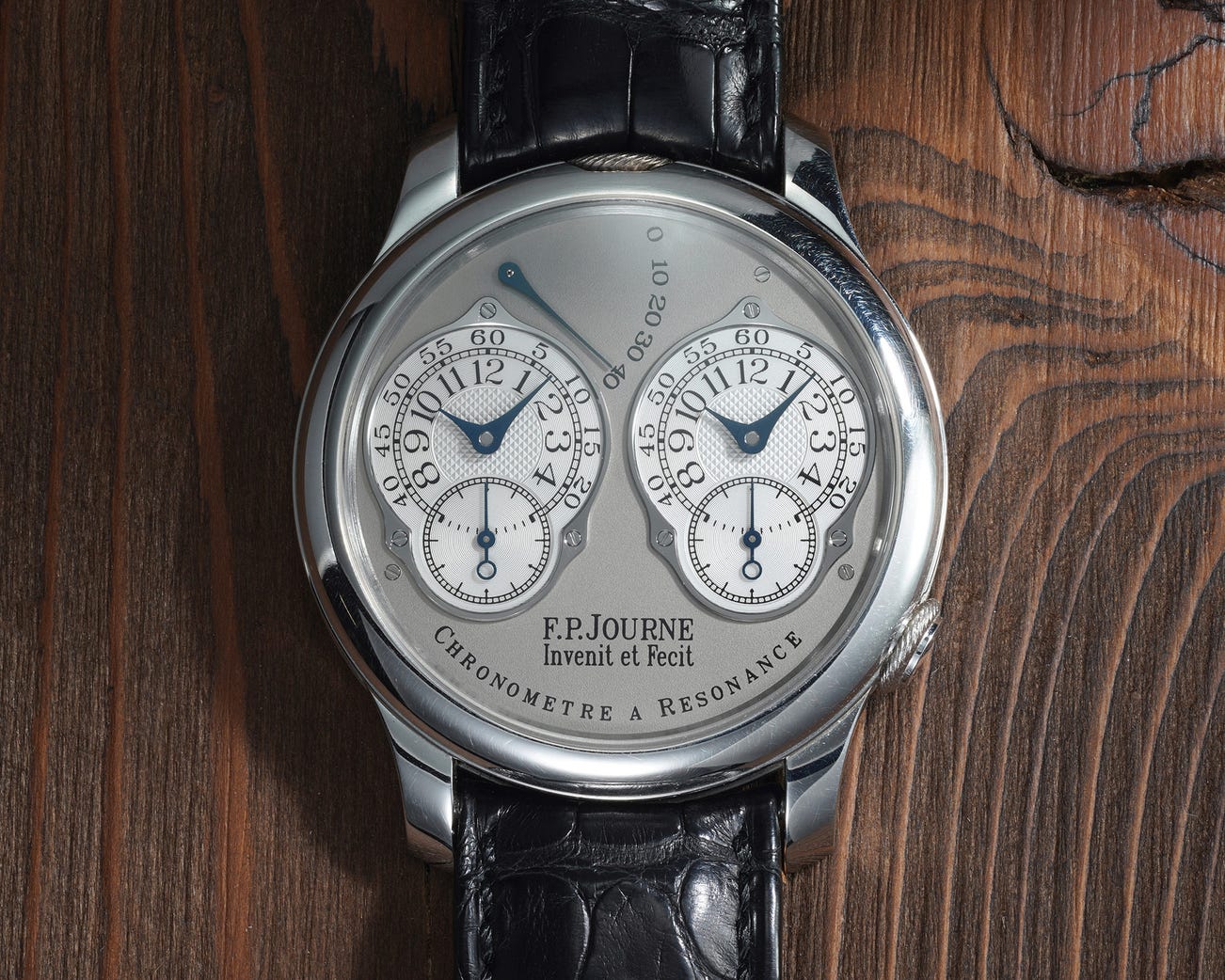
Article | A Question Of Gravity The Tourbillons In The Phillips Geneva Sessions Spring 2026 Online Auction
A Question of Gravity: The Tourbillons in the Phillips Geneva Sessions, Spring 2026, Online Auction
The tourbillon as solution, symbol, and statement, from early chronometry to contemporary haute horlogerie.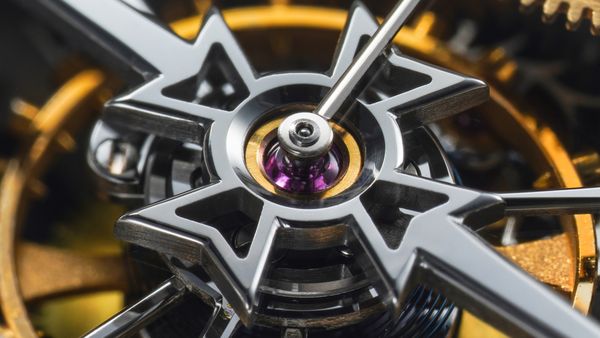
Phillips in Association with Bacs & Russo is thrilled to welcome you to The Geneva Sessions, Spring 2026, Online Auction, running from 12:00 PM CET, Thursday, 5 March, to 2:00 PM CET, Thursday, 12 March. The sale features more than 80 high-end luxury wristwatches, ranging from A. Lange & Söhne and F.P. Journe to Audemars Piguet and Patek Philippe.
– By Logan Baker
More than two centuries after its invention, the tourbillon remains one of watchmaking’s most compelling ideas.
Conceived in an era when precision was pursued through ingenuity rather than materials science, the device was patented on 26 June 1801 by Abraham-Louis Breguet as a practical solution to a specific problem.
Pocket watches spent most of their lives resting upright, and gravity introduced small but persistent rate errors. By placing the balance and escapement in a rotating cage, Breguet sought to average out those deviations.
It was a rational answer, grounded in chronometry.
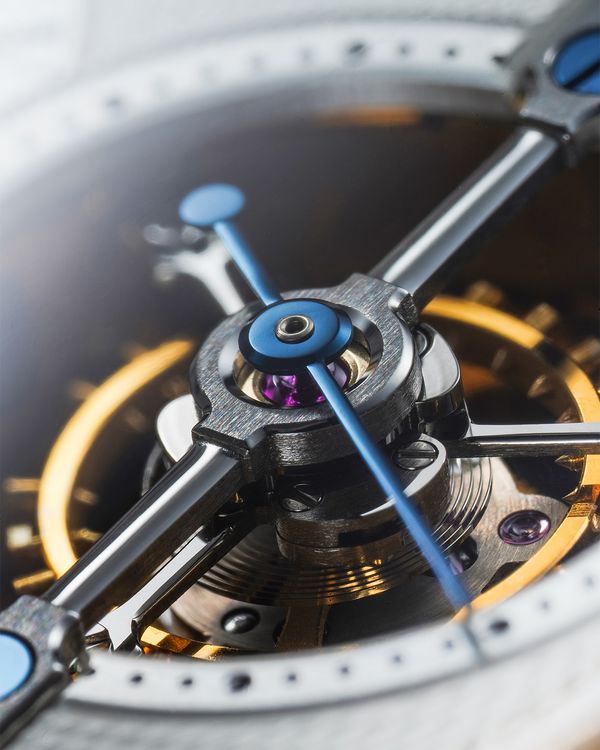
Lot 14: A 2007 Breguet Classique Régulateur Tourbillon Ref. 5307BA that’s included in the upcoming Phillips Geneva Sessions, Spring 2026, Online Auction. Estimate: CHF 20,000 - 40,000
Over time, the tourbillon’s role has evolved. As wristwatches replaced pocket watches and positional errors became less pronounced, the tourbillon's functional necessity diminished. Yet its symbolic power only grew. The tourbillon became a proving ground, a complication that demanded exceptional skill in design, adjustment, and finishing. To execute well, one needs not just technical competence, but confidence. It is no coincidence that many manufactures chose the tourbillon as a milestone complication, introducing it at pivotal moments in their modern histories.
What makes the tourbillon enduring is its adaptability. It has been interpreted through classical architecture and radical experimentation, hidden discreetly on the back or elevated to center stage. Some makers have treated it as an object of restraint, while others have treated it as an opportunity for innovation.
Across generations, it has absorbed new materials, new aesthetics, and new philosophies without losing its identity.
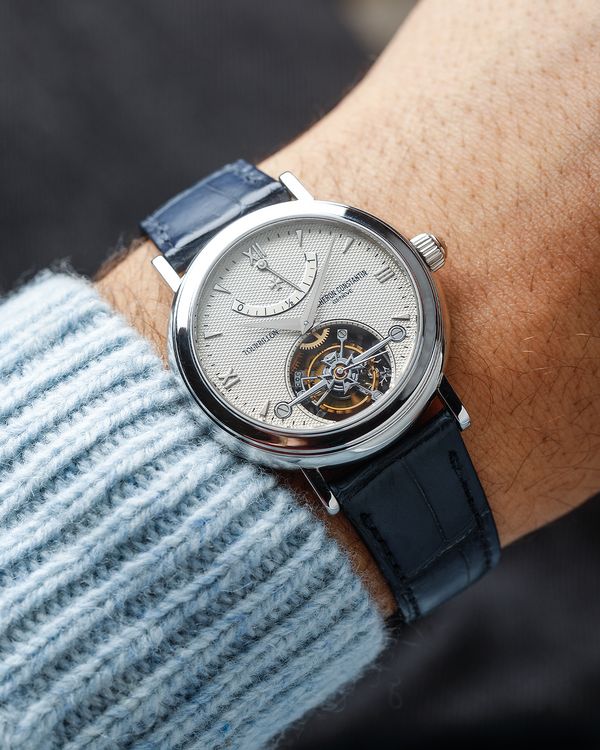
Lot 40: A 1995 Vacheron Constantin Patrimony Tourbillon Ref. 30050/000P-8 in platinum that’s included in the upcoming Phillips Geneva Sessions, Spring 2026, Online Auction. Estimate: CHF 20,000 - 40,000
The watches that follow trace that evolution.
Together, they show how a single idea, born in the early 19th century, continues to inspire wildly different expressions of mechanical watchmaking today.
Lot 59: A 1998 Girard-Perregaux Tourbillon 'Sous Trois Ponts d’Or' Ref. GP9910 in 18k Yellow Gold
Estimate: CHF 18,000 - 36,000
In 1867, Girard-Perregaux presented a movement that looked unlike anything else in Swiss watchmaking.
Instead of hiding the going train beneath plates and bridges, the brand turned the architecture inside out. Three arrow-shaped bridges spanned the movement in full view, each one executed in gold and aligned along the axis of the gear train and tourbillon. This was a structural idea made visual, and it immediately set Girard-Perregaux apart.
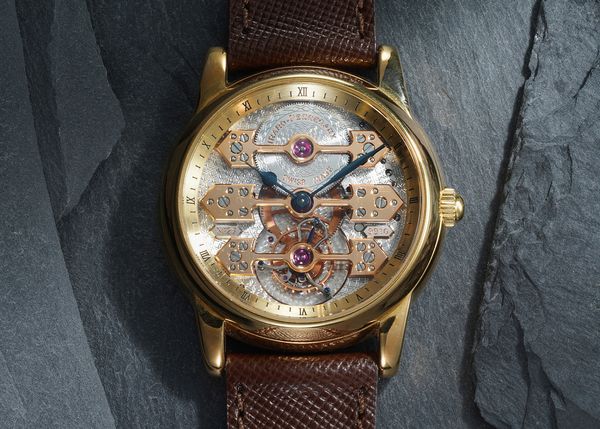
Lot 59: A 1998 Girard-Perregaux Tourbillon 'Sous Trois Ponts d’Or' Ref. GP9910 in 18k yellow gold that’s included in the upcoming Phillips Geneva Sessions, Spring 2026, Online Auction. Estimate: CHF 18,000 - 36,000
The technical merit was recognized early. That same year, the movement earned a First Class Bulletin from the Neuchâtel Observatory, a serious endorsement at a time when Observatory trials were among the highest measures of chronometric performance. But the design’s lasting cultural impact came two decades later. In 1889, the La Esmeralda Tourbillon with Three Gold Bridges was shown at the Exposition Universelle in Paris, where it received one of the fair’s highest honors – a gold medal. The watch had become both a technical benchmark and an aesthetic signature, proof that a movement could be precise, expressive, and instantly recognizable.
More than a century later, Girard-Perregaux treated this history with unusual seriousness. In 1982, the brand recreated the original Three Gold Bridges tourbillon as a modern pocket watch, fully disassembling the 19th-century example and reverse-engineering each component rather than relying on drawings or approximations. In 1991, Girard-Perregaux presented the Three Gold Bridges Tourbillon as a wristwatch, at a time when very few brands had mastered the tourbillon in this more wearable form. Early examples, including those with finely guilloché baseplates and low serial numbers such as the present watch, still carry the feeling of a brand carefully translating a 19th-century idea into a modern, mechanical language.
Lot 7: A 2003 A. Lange & Söhne Lange 1 Tourbillon Ref. 704.032 in 18k Pink Gold
Estimate: CHF 30,000 - 60,000
When A. Lange & Söhne was reborn in 1990, the challenge was not simply to restart production but to define a new visual and mechanical language for high-end German watchmaking. The answer arrived in 1994 with the Lange 1. Its asymmetric dial broke decisively from Swiss convention yet felt instantly resolved. The oversized date at one o’clock anchored the design, while the off-center time display and the sweeping power reserve from two to four o’clock delivered clarity without symmetry.
As the turn of the millennium approached, Lange began exploring how far that architecture could stretch. A series of Lange 1 variants followed, each adding complexity while preserving the core layout. The culmination was the Lange 1 Tourbillon, the most technically ambitious expression of the family and, in many ways, its conceptual endpoint.
Issued in a limited run of 250 pieces in pink gold and 150 in platinum, the model remained in production for only three years before being discontinued in 2003, cementing its status as one of the great early statements of the modern Lange era.
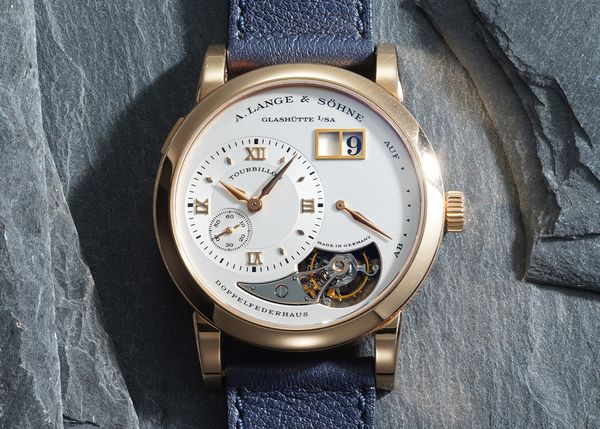
Lot 7: A 2003 A. Lange & Söhne Lange 1 Tourbillon Ref. 704.032 in 18k pink gold that’s included in the upcoming Phillips Geneva Sessions, Spring 2026, Online Auction. Estimate: CHF 30,000 - 60,000
Housed in a restrained 38.5mm round case, the watch rewards closer inspection from the reverse.
Beneath the sapphire caseback lies the three-quarter plate in untreated German silver, its warm tone deepening with age, hand-engraved with the manufacture’s signature flourishes. The balance cock, engraved freehand, serves as both a structural component and a personal mark of the artisan. At five o’clock, the tourbillon commands attention. Composed of 72 individual parts, the cage completes one rotation per minute, continuously averaging positional errors and reinforcing the watch’s chronometric intent rather than merely its visual appeal.
Examples preserved in strong condition underscore just how carefully Lange approached this period of experimentation. Early specimens such as this one capture a moment when the manufacture was still defining its modern identity, testing the upper limits of complication within an already iconic design.
Lot 14: A 2007 Breguet Classique Régulateur Tourbillon Ref. 5307BA in 18k Yellow Gold
Estimate: CHF 20,000 - 40,000
Among the many lines produced by Breguet, the Classique collection is the most explicit link to the brand’s origins. It was conceived to recover the visual grammar and technical priorities established by Abraham-Louis Breguet himself, from finely fluted cases and engine-turned dials to a relentless focus on chronometry. In a catalogue spanning everything from the sporty Marine to contemporary complications, the Classique collection remains the clearest expression of what the Breguet name stands for.
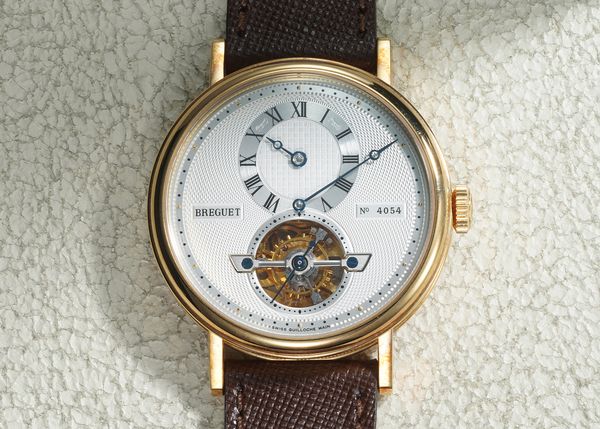
Lot 14: A 2007 Breguet Classique Régulateur Tourbillon Ref. 5307BA that’s included in the upcoming Phillips Geneva Sessions, Spring 2026, Online Auction. Estimate: CHF 20,000 - 40,000
This watch centers on the invention most closely associated with Abraham-Louis Breguet: the tourbillon. In this example, the historical weight of the invention is acknowledged with a discreet engraving on the back of the tourbillon cage itself. The date appears as “7 Messidor, An 9,” its original notation under the French Revolutionary calendar, a romantic detail that feels entirely on brand.
Condition and completeness further reinforce the appeal. Offered as a full set, including its numbered sale tag, the watch shows minimal signs of wear.
Lot 40: A 1995 Vacheron Constantin Patrimony Tourbillon Ref. 30050/000P-8 in Platinum
Estimate: CHF 20,000 - 40,000
Reference 30050 occupies a subtly important place in the modern history of Vacheron Constantin.
It was the brand's first wristwatch to feature a tourbillon, a late but deliberate entry into a field long associated with the highest tier of traditional European watchmaking. Rather than rushing the complication to market, Vacheron approached it with characteristic restraint, partnering with Nouvelle Lémania to develop the hand-wind calibre 1760. The result was a movement built around a tourbillon and twin mainspring barrels, conceived to deliver both stability and long-term chronometric consistency.
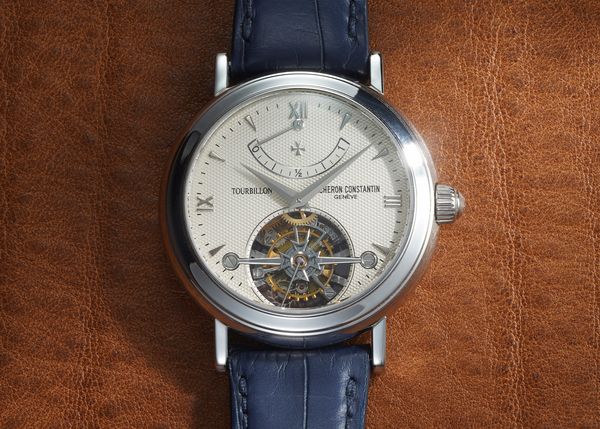
Lot 40: A 1995 Vacheron Constantin Patrimony Tourbillon Ref. 30050/000P-8 in platinum that’s included in the upcoming Phillips Geneva Sessions, Spring 2026, Online Auction. Estimate: CHF 20,000 - 40,000
The watch itself strikes a careful balance between presence and proportion. At 38mm, the case feels bold for its era without tipping into excess, its dimensions giving the movement room to breathe while remaining elegant on the wrist. A sapphire exhibition caseback reveals the calibre in full. The twin barrels speak to the movement’s technical ambition, while the tourbillon cage draws the eye immediately. Shaped into Vacheron Constantin’s Maltese Cross emblem, a symbol the brand has used since 1780, it functions as both a regulating organ and a visual signature.
From the front, the watch remains disciplined and classical. The dial is finished to a high standard, with a finely executed hand guilloché pattern that catches light without overwhelming the layout. Applied Roman numerals and faceted dagger markers provide depth and clarity, reinforcing the sense that every element has been considered.
With an estimated production of just 300 examples for the calibre 1760, the reference stands as a measured but meaningful declaration that Vacheron Constantin could approach the tourbillon on its own terms, and do so with conviction.
Lot 75: A Circa 2000 Franck Muller Cintrée Curvex Imperial Tourbillon Minute Repeater Ref. 5850 RM T in 18k Yellow Gold
Estimate: CHF 20,000 - 40,000
Among the earliest expressions of what would become Franck Muller's visual calling card, this watch stands out not only for its tonneau case but also for the ambition packed inside. Today, the curved, elongated case shape feels inseparable from the brand’s identity. In the early years, however, it was still an open question, one that Franck Muller explored alongside an unusually high level of mechanical complexity. This piece ranks among the most complicated of those formative models, produced at a moment when the brand was defining itself in real time.
The most immediate feature is the large tourbillon anchored at six o’clock, a visual and technical centerpiece that leaves no doubt about the watch’s intent. But the real intrigue lies in the minute repeater, which departs from convention in ways that feel almost improvisational by modern standards. Instead of the familiar low-high sequence used to mark the quarters, this repeater signals them using a single high note, the same tone used for the minutes. The distinction comes through tempo rather than pitch, with the quarters struck more slowly before a brief pause, followed by a quicker cadence for the minutes. It is a simplification, but a deliberate one, and it speaks to the intensely artisanal nature of early Franck Muller production.
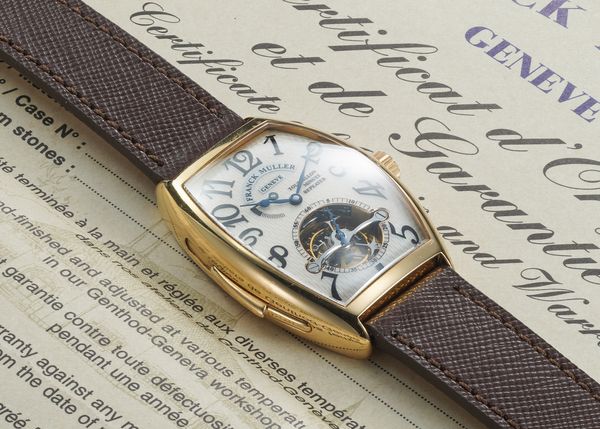
Lot 75: A circa 2000 Franck Muller Cintrée Curvex Imperial Tourbillon Minute Repeater Ref. 5850 RM T in 18k yellow gold that’s included in the upcoming Phillips Geneva Sessions, Spring 2026, Online Auction. Estimate: CHF 20,000 - 40,000
The second deviation is more visible, though easy to misread. What appears at first glance to be a power-reserve indicator around nine to ten o’clock is actually a repeater status display. When the repeater is activated, the hand snaps downward and then gradually returns toward the darker sector. Only once it settles back into place is the mechanism fully disengaged and ready to be safely activated again. It is a functional complication disguised as something familiar, a reminder that in these early years, Franck Muller was less concerned with following established codes than with solving problems in his own way.
The watch captures a brief but fascinating phase in independent watchmaking, when rules were still flexible, and ideas could be tested directly on the wrist. The tonneau case may now be synonymous with the brand, but here it feels exploratory, paired with mechanics that reveal just how experimental, and how personal, Franck Muller’s early work really was.
Lot 67: A 2008 Ulysse Nardin Freak 'Blue Phantom' Ref. 020-81 in 18k White Gold
Estimate: CHF 12,000 - 24,000
For more than two decades, the Freak has stood at the center of Ulysse Nardin's catalogue, and today it reads less like a curiosity and more like a landmark. When it debuted in 2001, the Freak challenged nearly every assumption about how a mechanical wristwatch should be built and used. It became the first wristwatch to incorporate silicon impulse wheels, employed within Ludwig Oechslin's signature double-wheel escapement, years before silicon would become an industry-wide talking point. Just as radically, it eliminated the crown altogether. The watch is wound by turning the caseback and set by rotating the bezel, which can then be locked in place, rethinking the entire interface between owner and watch.
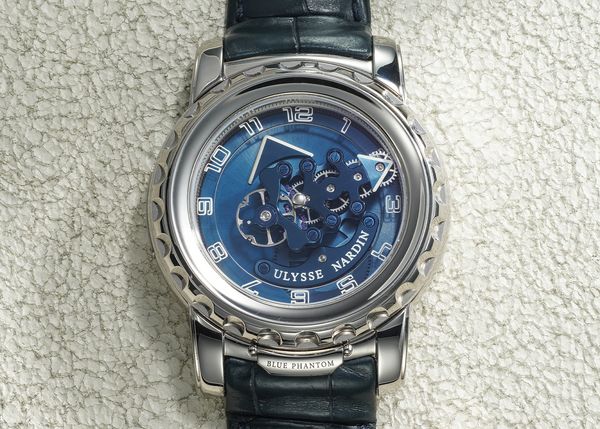
Lot 67: A 2008 Ulysse Nardin Freak 'Blue Phantom' Ref. 020-81 in 18k white gold that’s included in the upcoming Phillips Geneva Sessions, Spring 2026, Online Auction. Estimate: CHF 12,000 - 24,000
The conceptual roots of the Freak run even deeper. Originally envisioned as a central carrousel tourbillon project, the watch was designed by Carole Forestier Kasapi and brought to life under the technical direction of Ludwig Oechslin. The solution they arrived at was unlike anything else on the market. Rather than hiding the movement beneath a dial, the Freak places it front and center. The entire gear train and escapement rotate once every hour, acting simultaneously as the regulating system and the minute hand. Time is not indicated by hands laid over a movement, but by the movement itself, an idea that continues to feel audacious today.
The Blue Phantom, introduced in 2008, marked a meaningful evolution of the concept. With a larger 44.8mm white-gold case, it gave the architecture more space to breathe while sharpening its visual impact. Clear sapphire jewels replace traditional red rubies throughout the movement, including in the shock settings. It is a choice few brands bother to make, yet here it matters, preserving the watch’s cool, monochromatic aesthetic and reinforcing the sense of transparency that defines the Freak.
Lot 31: A Circa 2005 Jaquet Droz Tourbillon Minute Repeater in 18k White Gold
Estimate: CHF 30,000 - 60,000
This timepiece brings together the visual codes collectors most closely associate with Jaquet Droz. The composition is immediately recognizable. A large offset seconds display anchors the dial, framed by a screwed chapter ring that adds depth and a subtle, raw flair. It is a layout that looks simple at first glance, then gradually reveals its nuance.
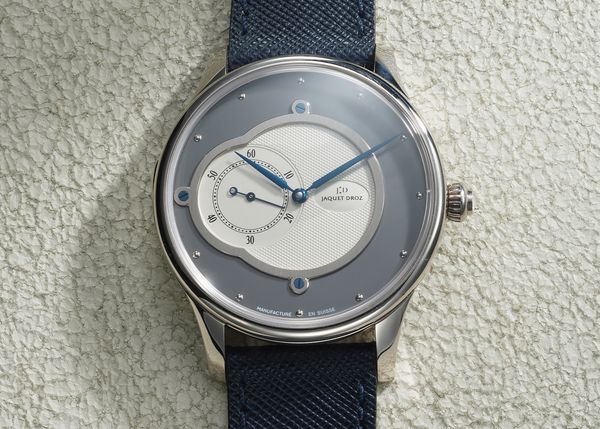
Lot 31: A circa 2005 Jaquet Droz Tourbillon Minute Repeater in 18k white gold that’s included in the upcoming Phillips Geneva Sessions, Spring 2026, Online Auction. Estimate: CHF 30,000 - 60,000
Beneath that calm exterior lies a more involved mechanical story. The watch is equipped with a minute repeater, tuned for clarity rather than spectacle, and complemented by a tourbillon visible through the caseback. The regulating organ is based on an ébauche from Christophe Claret, a name long associated with high complication and acoustic expertise. Seen from the reverse, the tourbillon adds a layer of animation that contrasts nicely with the composed dial side, reinforcing the idea that this is a watch meant to reward close inspection.
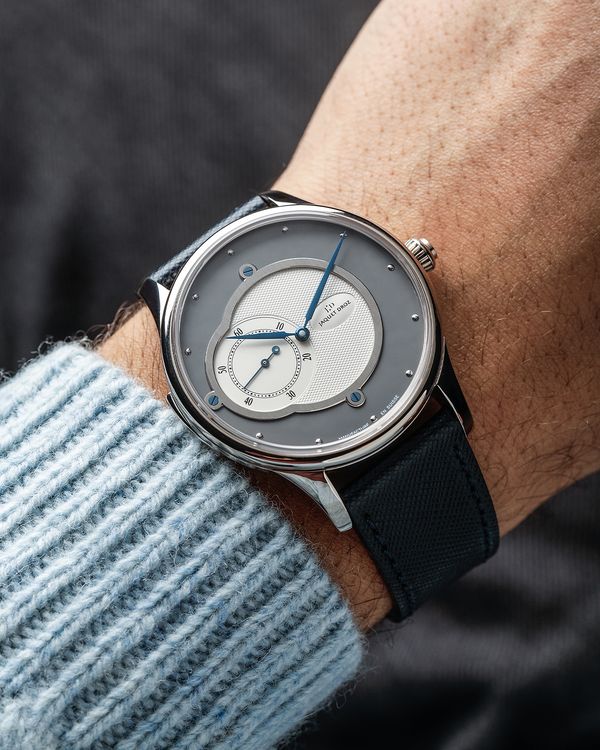
Lot 31: A circa 2005 Jaquet Droz Tourbillon Minute Repeater in 18k white gold that’s included in the upcoming Phillips Geneva Sessions, Spring 2026, Online Auction. Estimate: CHF 30,000 - 60,000
Limited to just eight examples, this piece numbered eight, it sits firmly in the realm of connoisseur production.
It reflects a period when Jaquet Droz was exploring how far it could push traditional forms without abandoning its identity, combining classical aesthetics with serious mechanical ambition.
Lot 44: A 2002 Breguet Classique Tourbillon Chronograph Ref. 3577BA in 18k Yellow Gold
Estimate: CHF 20,000 - 40,000
On 26 June 1801, Abraham-Louis Breguet secured a patent for a device that would permanently alter the trajectory of mechanical watchmaking. The tourbillon was conceived as a practical answer to a real problem. By placing the balance and escapement inside a rotating cage, Breguet sought to average out the rate errors caused by gravity when a pocket watch spent most of its life in a vertical position.
More than two centuries on, the tourbillon remains one of the most admired and debated achievements in horology, equal parts technical solution and philosophical statement.
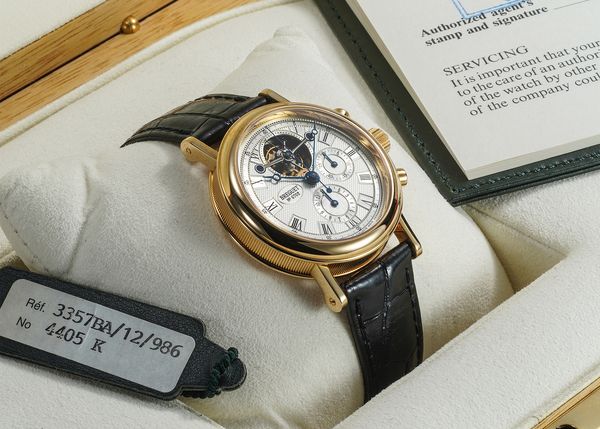
Lot 44: A 2002 Breguet Classique Tourbillon Chronograph Ref. 3577BA in 18k yellow gold that’s included in the upcoming Phillips Geneva Sessions, Spring 2026, Online Auction. Estimate: CHF 20,000 - 40,000
The tourbillon takes pride of place at 12 o’clock on the Ref. 3577 Classique Tourbillon Chronograph, an unapologetic focal point that anchors the dial. Around it, the silver surface becomes a showcase of traditional guilloché: clous de Paris, basketweave, wave, and brushed motifs coexist without visual noise, each texture clearly defined yet carefully balanced. Paired with the unmistakable blued Breguet hands, the result is instantly recognizable and deeply rooted in the brand's historical vocabulary.
What elevates the reference further is the addition of a chronograph, complete with 30-minute and 12-hour counters. It introduces real utility without disturbing the watch’s composure, a difficult balance to strike in a design already carrying so much historical weight.
Lot 68: A 2017 Angelus U40 Racing Skeleton Tourbillon in Titanium
Estimate: CHF 12,000 - 24,000
When Angelus was revived in 2011, the decision was made to look forward rather than backward.
Instead of mining its historical catalogue for familiar shapes, the new Angelus positioned itself firmly in the contemporary space, embracing technical transparency and an assertive, modern aesthetic. It was a clear statement that the brand’s second life would be defined by engineering and architecture, not nostalgia.
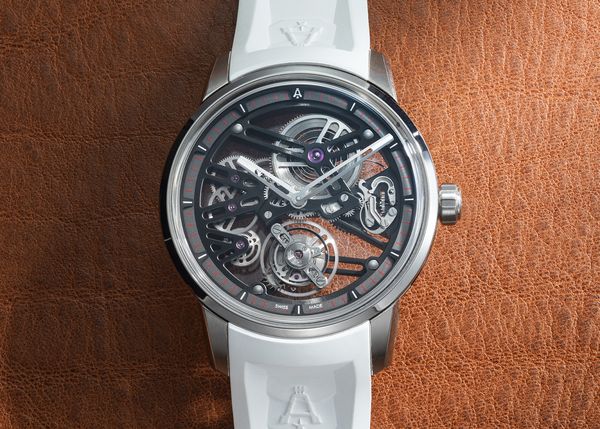
Lot 68: A 2017 Angelus U40 Racing Skeleton Tourbillon in titanium that’s included in the upcoming Phillips Geneva Sessions, Spring 2026, Online Auction. Estimate: CHF 12,000 - 24,000
The U40 Racing Skeletonized Tourbillon is a direct expression of that philosophy. Its movement was conceived from the outset to be openworked, rather than skeletonized after the fact. To achieve both rigidity and lightness, the traditional construction of a mainplate and separate bridges was abandoned in favor of two nearly identical plates that secure the entire mechanism. This approach reduces weight while increasing structural integrity, reinforcing the sense that every element serves a functional purpose.
Those plates are treated with an ADLC coating, their deep, matte finish creating a striking contrast with the exposed steel components of the movement. The effect is graphic and legible, emphasizing depth and layering without sacrificing coherence. The case continues the same logic. Crafted in titanium, it keeps overall weight low, while the hollowed lugs introduce an architectural quality, as though the watch has been engineered from the inside out.
Lot 70: A Roger Dubuis Excalibur Tourbillon Ajouré Limited Edition in 18k Pink Gold
Estimate: CHF 12,000 - 24,000
Legend has it that a Roger Dubuis client once presented co-founder Carlos Dias with an authentic medieval sword, a theatrical gesture that neatly captured the spirit he and Roger Dubuis were cultivating at the time.
The image of fearless, rule-breaking watchmakers resonated deeply, and in 2005, it crystallized into the Excalibur collection. From the start, Excalibur was meant to be unmistakable. The round case, fluted bezel, and signature triple lugs created a visual identity that felt bold yet controlled.
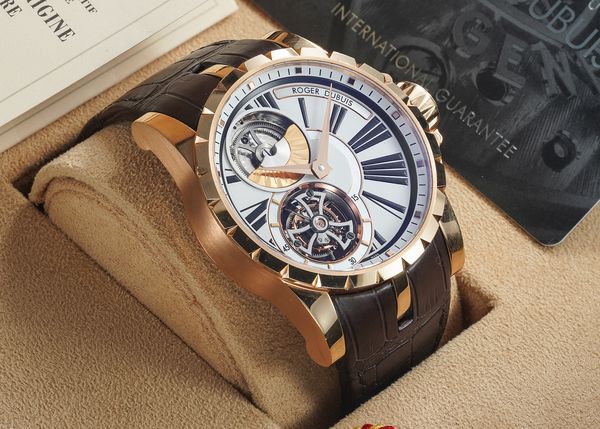
Lot 70: A Roger Dubuis Excalibur Tourbillon Ajouré Limited Edition in 18k pink gold that’s included in the upcoming Phillips Geneva Sessions, Spring 2026, Online Auction. Estimate: CHF 12,000 - 24,000
At the heart of the collection lies one of Roger Dubuis’s defining technical statements: the flying tourbillon.
Widely regarded as one of the most demanding complications to execute, the flying tourbillon dispenses with the upper bridge, leaving the cage supported only from beneath. The result is an escapement that appears to float in space. For the Roger Dubuis brand, it became both a technical calling card and a philosophical one – a demonstration of mastery paired with visual drama.
You can view the complete Phillips Geneva Sessions, Spring 2026, Online Auction catalogue here.
About Phillips In Association With Bacs & Russo
The team of specialists at PHILLIPS Watches is dedicated to an uncompromised approach to quality, transparency, and client service. Phillips in Association with Bacs & Russo holds the world record for the most successful watch auction, with its Geneva Watch Auction: XIV having realized $74.5 million in 2021. Over the course of 2021 and 2022, the company sold 100% of the watches offered, a first in the industry, resulting in the highest annual total in history across all the auction houses at $227 million.
About Logan Baker
Logan has spent the past ten years covering the watch industry from every angle. He joined Phillips in Association with Bacs & Russo in early 2023 as Senior Editorial Manager, after previous roles at Hodinkee and WatchTime. Originally from Texas, he spent a decade in New York and now calls Geneva home.
Recommended Reading
Timing Is Everything: The Chronographs in the Phillips Geneva Sessions, Spring 2026, Online Auction
The History of the Vacheron Constantin Chronomètre Royal
The Patek Philippe 'Ref. 50-' Series, and the Rebirth of Complicated Watchmaking