Article | Inside The Ernst Schuster Collection
Inside the Ernst Schuster Collection
Inside the extraordinary Patek Philippe collection assembled by Mr. Ernst Schuster, now coming to auction at Decade One (2015-2025) in Geneva.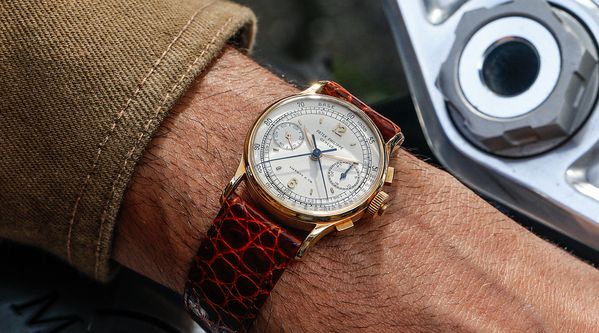
This November, Phillips in Association with Bacs & Russo will celebrate a decade of watch auctions with the Decade One (2015-2025) thematic sale at the Hôtel Président in Geneva. This landmark sale marks the successful first 10 years of the Phillips Watches department, reflecting on the remarkable watches, record-breaking results, and new scholarship that have shaped Phillips Watches since its inaugural auction in 2015.
– By Logan Baker
Ernst Schuster lived many lives at once. Born in Würzburg, Germany, in 1946, he left his family’s farm at 19 and built a new life for himself in Munich, where he would go on to become a gentleman racer, taking his Ferraris and Porsches to Goodwood, Le Mans, and the Targa Florio. He collected art with the same intensity, forming friendships with figures like Keith Haring, who once sketched spontaneously on the caseback of one of Schuster’s watches – a stainless steel Patek Philippe Ref. 1518, one of only four known. That mix of curiosity, instinct, and courage defined everything he did.
Watches were central to that story. Schuster began collecting in the 1960s, drawn first to Patek Philippe and Rolex, and later to Cartier. He started buying seriously in the 1970s, at the height of the Quartz Crisis, when mechanical watchmaking seemed destined for obsolescence. Where others saw anachronisms, Schuster saw beauty and longevity. He sought out complicated Patek Philippe chronographs and world timers that languished in display cases, Rolex Daytonas that few yet called “Paul Newman,” and Cartier creations that bridged design and horology. His approach was instinctive, not speculative – he bought what delighted him, often on a large scale, and often long before the rest of the world caught up.
The result was a collection of remarkable depth and vision, assembled at a pivotal moment in modern watch history. Now, decades later, Schuster has decided to part with some of those pieces, sharing the watches that defined his life and taste with a new generation of collectors. Highlights from the Ernst Schuster Collection will appear in Phillips’ Decade One sale in Geneva, with additional watches offered in the Hong Kong Watch Auction: XXI that follows. Together, they offer a rare chance to acquire watches with true provenance – the work of a collector who always saw what others missed.
Lot 105: A 1983 Patek Philippe Perpetual Calendar Chronograph Ref. 2499/100 with 'Gübelin'-Signed Dial
Estimate: CHF 400,000 - 800,000
The Patek Philippe Ref. 2499 is one of the most celebrated wristwatches of the 20th century – a cornerstone of high-end collecting and, for many, an ultimate “endgame” watch. Produced from 1951 to 1985 as the successor to the Ref. 1518, only 349 examples were made over 34 years, averaging about 10 per year. Early cases were supplied by Vichet, later by Wenger, whose work introduced a larger 37.5mm case. Production eventually moved in-house to Atelier Reunis (case maker mark 28), which created the final cases, including the example offered here.
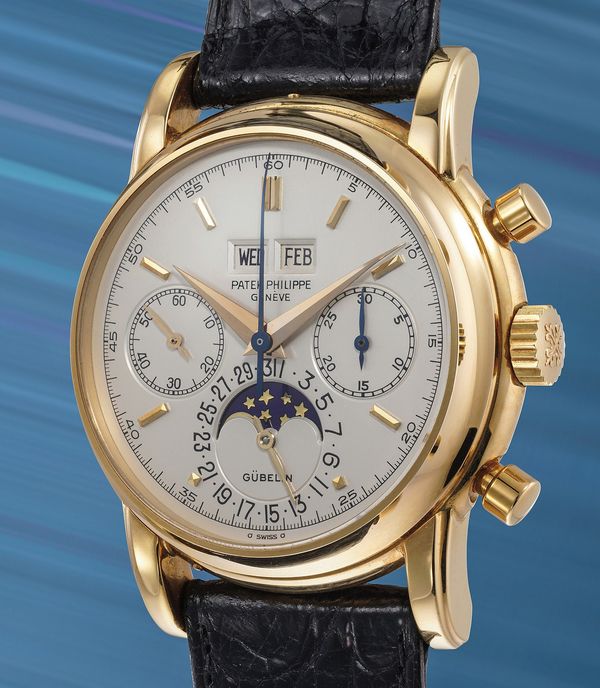
Lot 105: A 1983 Patek Philippe Perpetual Calendar Chronograph Ref. 2499/100 with 'Gübelin'-Signed Dial that's included in the Phillips Decade One (2015-2025) catalogue. Estimate: CHF 400,000 - 800,000
With the 2499, Patek Philippe departed from the restrained Calatrava-inspired lines of the 1518 and embraced a more sculptural design language. Its bold case size, interplay of concave and convex surfaces, and elegant sculpted lugs gave the watch architectural presence without sacrificing balance. This combination of rarity, technical complexity, and timeless design cemented the 2499’s legendary status from the very start of wristwatch collecting.
The reference evolved through four series.
- First series: square pushers, Arabic numerals, tachymeter scale
- Second series: round pushers, baton or Arabic numerals, tachymeter scale
- Third series: round pushers, applied baton markers, outer seconds track, no tachymeter
- Fourth series (2499/100): round pushers, applied batons, outer seconds track, and sapphire crystal with a slightly taller bezel and more pronounced wrist presence
The example offered here belongs to the final series and stands out for both its condition and its retailer signature. Signed by Gübelin – one of Switzerland’s most prestigious retailers – it is one of only six known Gübelin-signed 2499s, and just five of those, including this one, are 2499/100. The dial is exceptionally well preserved, free from the oxidation often seen on this series, while the case retains sharp lines, crisp hallmarks, and an unpolished satin finish.
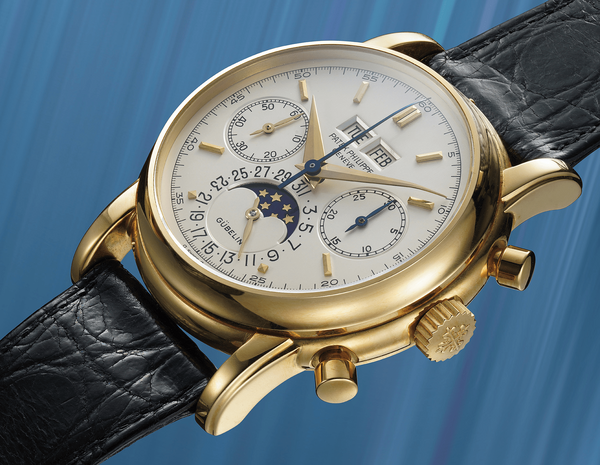
Lot 105: A 1983 Patek Philippe Perpetual Calendar Chronograph Ref. 2499/100 with 'Gübelin'-Signed Dial that's included in the Phillips Decade One (2015-2025) catalogue. Estimate: CHF 400,000 - 800,000
Rare, beautifully preserved, and double signed, this 2499/100 ranks among the most important and desirable examples of one of Patek Philippe’s most iconic watches.
Lot 106: A 1956 Patek Philippe Split-Seconds Chronograph Ref. 1436 with 'Tiffany & Co.'-Signed Dial
Estimate: CHF 150,000 - 300,000
The Ref. 1436 is one of the most elegant and collectible vintage chronographs Patek Philippe ever produced. Introduced in 1938, just four years after the debut of the Ref. 130, it added a split-seconds function to the classic chronograph – a complication prized for timing races and scientific experiments. The result was a watch that combined refined aesthetics with technical sophistication, and one that remained in production for more than three decades. Yet even across that span, output was tiny: around 140 examples in total, or roughly four per year, making the 1436 one of the rarest serially produced Patek Philippe references.
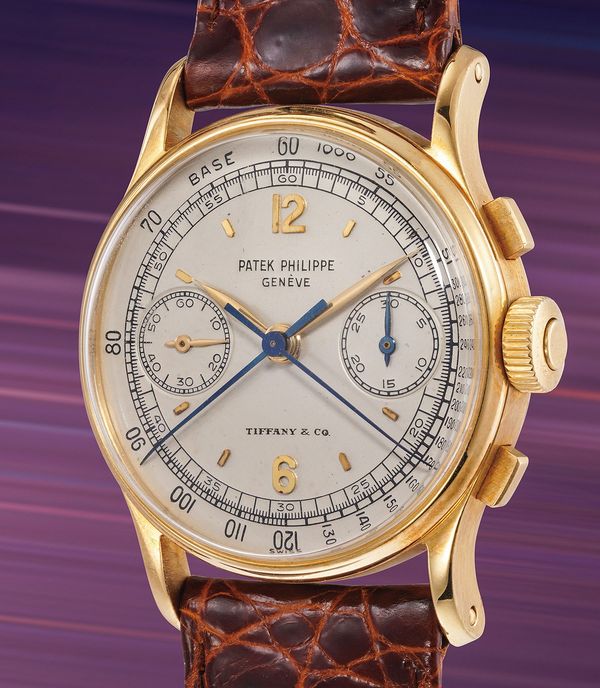
Lot 106: A 1956 Patek Philippe Split-Seconds Chronograph Ref. 1436 with 'Tiffany & Co.'-Signed Dial that's included in the Phillips Decade One (2015-2025) catalogue. Estimate: CHF 150,000 - 300,000
The model itself evolved over time. Early versions used the crown as the split-seconds pusher, while later examples, like the watch offered here, introduced a co-axial button integrated into the crown – a subtle change that gave the watch a sportier look and remains a key visual distinction for collectors.
This particular 1436 belongs to an even more exclusive category. Its dial is signed by Tiffany & Co., one of Patek Philippe’s oldest and most important retail partners. Their collaboration dates back more than 150 years, and Tiffany remains the only retailer permitted to share the dial with Patek Philippe’s name. Fewer than ten Tiffany-signed Ref. 1436s are known publicly, and this watch – unseen since 1988 – is one of them. Complete with a Tiffany stock number hand-engraved behind the lug and the “HOX” import stamp on the movement, it represents a rare opportunity to acquire a masterpiece that embodies both technical achievement and historic provenance.
Lot 15: A 1952 Patek Philippe Chronograph Ref. 1579 'Anse a Ragno'
Estimate: CHF 30,000 - 60,000
Among Patek Philippe’s landmark vintage chronographs – references 130, 533, 591, 1463, and 530 – the Ref. 1579 stands apart. It’s the only model distinguished by its dramatic faceted lugs, shaped like briolette diamonds, which earned it the nickname “spider lug” chronograph. This striking case architecture, paired with classic chronograph proportions, makes the 1579 one of the most distinctive designs of the mid-20th century.
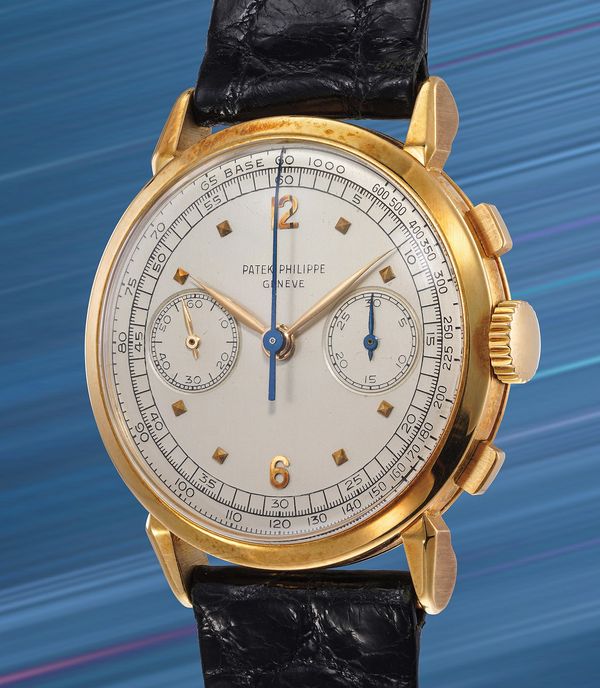
Lot 15: A 1952 Patek Philippe Chronograph Ref. 1579 'Anse a Ragno' that's included in the Phillips Decade One (2015-2025) catalogue. Estimate: CHF 30,000 - 60,000
Introduced at Basel in 1943 and produced until 1964, the reference features a 36mm Wenger case with sharply faceted lugs and rectangular pushers – an unconventional silhouette that remains elegant and refined. Inside, the Valjoux-based calibre 13''' was hand-finished to Patek Philippe’s exacting standards and stands among the finest manual-wind chronograph movements of its time.
The case size, considered large for the era, gives the 1579 a contemporary presence even today, while the bold geometry of its lugs ensures it remains instantly recognizable. More than 80 years after its debut, it still feels fresh and modern – a timeless chronograph that bridges classic design and enduring wearability.
Lot 18: A 1961 Patek Philippe 'Gilbert Albert' Ref. 3424/1 in Platinum
Estimate: CHF 100,000 - 200,000
Gilbert Albert is celebrated for the bold, sculptural designs he created for Patek Philippe in the 1950s and 1960s – watches that broke entirely with convention. Inspired by modern artists like Brancusi and Mondrian, Albert brought an avant-garde sensibility to watchmaking, and his daring case shapes still look strikingly modern today.
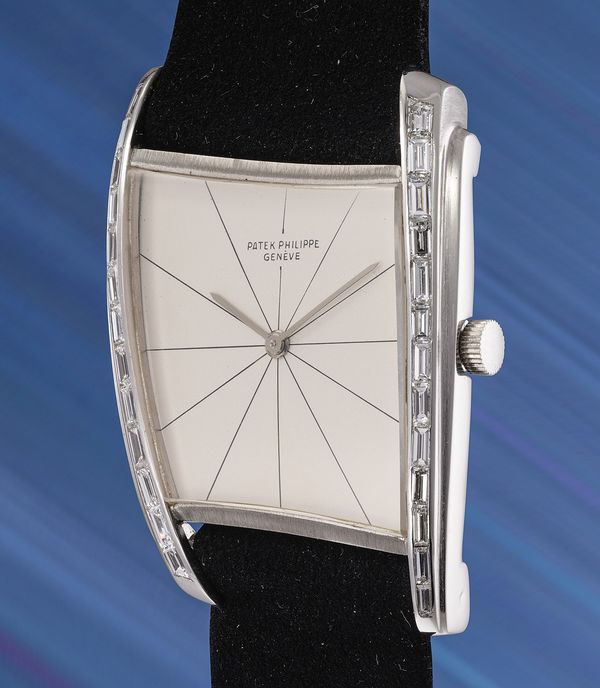
Lot 18: A 1961 Patek Philippe 'Gilbert Albert' Ref. 3424/1 in Platinum that's included in the Phillips Decade One (2015-2025) catalogue. Estimate: CHF 100,000 - 200,000
The watch offered here is part of his celebrated Asymétrie collection, a series of radical designs defined by dramatic, off-center geometry. While many of Albert’s ideas remained prototypes, Henri Stern, then president of Patek Philippe, was captivated by this case and approved it for production as Ref. 3424. Even so, the model was made in extremely limited numbers by Geneva case maker Markowski (identified by key number 8).
This example is rarer still. It’s the elusive Ref. 3424/1 – a gem-set variant adorned with baguette diamonds. Such pieces were extraordinarily expensive and produced in vanishingly small quantities, as the market of the time was not yet receptive to such extravagance. This watch, completed in 1961 but not sold until 1984, illustrates that rarity. Only ten platinum 3424s are known, and just four of them, including this watch, are the hyper-exclusive diamond-set /1 version.
Lot 14: A 1990 Patek Philippe Perpetual Calendar Chronograph Ref. 3971 in 18k Yellow Gold
Estimate: CHF 100,000 - 200,000
This Ref. 3971 is offered in exceptional condition, with a crisp, well-preserved case that retains deep grooves in the lugs, sharp hallmarks, and a clean bezel. The dial is pristine, showing no signs of oxidation, marks, or scratches. It’s accompanied by a remarkably complete set of accessories, including its original box and Certificate, the numbered Patek Philippe envelope, a Garrard & Patek Philippe document holder, and even the original UK price list – evidence that the watch was originally sold through the historic London retailer.
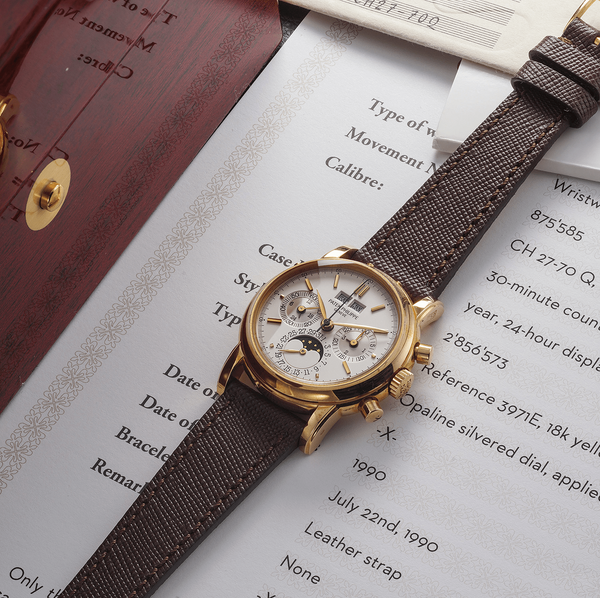
Lot 14: A 1990 Patek Philippe Perpetual Calendar Chronograph Ref. 3971 in 18k Yellow Gold that's included in the Phillips Decade One (2015-2025) catalogue. Estimate: CHF 100,000 - 200,000
Patek Philippe pioneered the perpetual calendar chronograph wristwatch with the legendary Ref. 1518 in the 1940s, followed by the iconic Ref. 2499 – long considered the “perfect wristwatch.” In 1986, the 2499 gave way to its successor, Ref. 3970, which carried forward much of the same design language but introduced a major technical evolution. Its movement was now based on a Lemania ébauche rather than a Valjoux, and the case size was slightly reduced to 36mm, giving the watch a more contemporary feel. Produced for nearly two decades, the 3970 was made in three main series, each with subtle but meaningful updates.
- First series (1986–1988): Solid snap-back case (3970) or snap-on sapphire caseback (3971), feuille hands, rectangular indexes. Only ~100 pieces produced, all in yellow gold.
- Second series (1987–1990): Solid screw-back case marked “E – Étanche,” feuille hands, baton indexes, hallmarks on the side of the lugs. Produced across all four metals, with ~650 pieces in total. Ref. 3971 continued into this series – including the present watch.
- Third series (1989–1995): Solid screw-back case with an additional sapphire back, baton hands, and lapidated indexes. About 1,350 examples produced across all metals.
A beautifully preserved example of the rare second series, complete with an unusually full set of period documentation, this 3971 captures the evolution of one of Patek Philippe’s most important complications – and the enduring appeal of the perpetual calendar chronograph.
Lot 102: A 1946 Patek Philippe World Time Pocket Watch in 18k Yellow Gold
Estimate: CHF 25,000 - 50,000
The Ref. 605 is the pocket watch expression of Patek Philippe’s famed World Time (Heures Universelles) complication, invented by Louis Cottier. Between 1930 and 1964, Cottier supplied Patek Philippe with just 95 modified 17-170 movements – considered among the finest time-only calibres of their era – most of which were used in Ref. 605. With total production below 100 pieces, it is one of the rarest World Time models ever made.
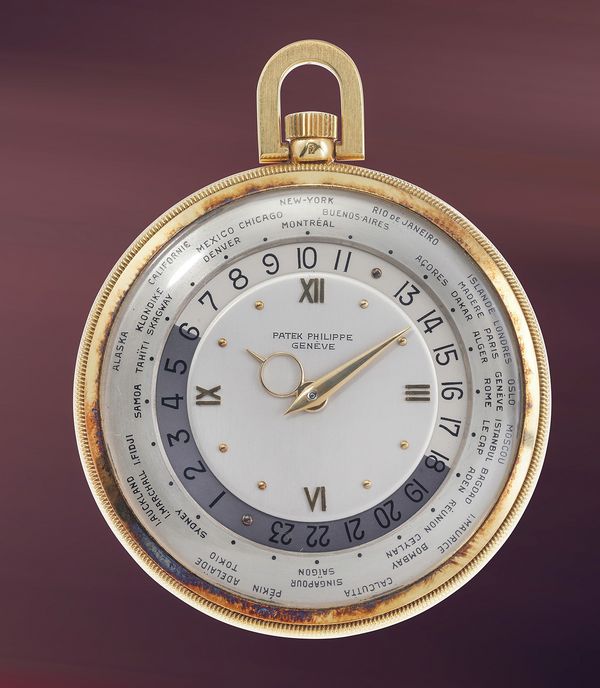
Lot 102: A 1946 Patek Philippe World Time Pocket Watch in 18k Yellow Gold that's included in the Phillips Decade One (2015-2025) catalogue. Estimate: CHF 25,000 - 50,000
The example offered here stands out for its extraordinary state of preservation. Likely worn only sparingly, it remains in superb condition throughout, allowing close study of the case’s original proportions and the dial’s crisp details. The satin finish on the back is strong, the bow hallmark is sharp, and a natural layer of oxidation is present. The city ring rotates smoothly and snaps into place with precision, a sign that the mechanism is free of debris and in excellent working order.
Adding further appeal, this watch features Patek Philippe’s early “short signature.” The firm transitioned from “Patek Philippe & Co.” to simply “Patek Philippe” in 1948. According to the Extract, this watch’s movement was made in 1946 and sold in October 1948, suggesting the dial was fitted during final assembly that year. That makes it one of the earliest known examples to bear the updated signature – a historically significant detail on an already rare and beautifully preserved World Time.
Lot 104: A 1943 Patek Philippe Chronograph Ref. 130 in 18k Pink Gold
Estimate: CHF 20,000 - 40,000
This pink gold example of Ref. 130 stands out not only for its rarity and condition but also for its highly unusual dial configuration. Most examples of the reference feature Arabic numerals at 12 and 6 paired with short baton markers, or Roman numerals at 12 and 6 with dot indexes. Other known variations include sector dials, Breguet numerals, and combinations of these core designs.
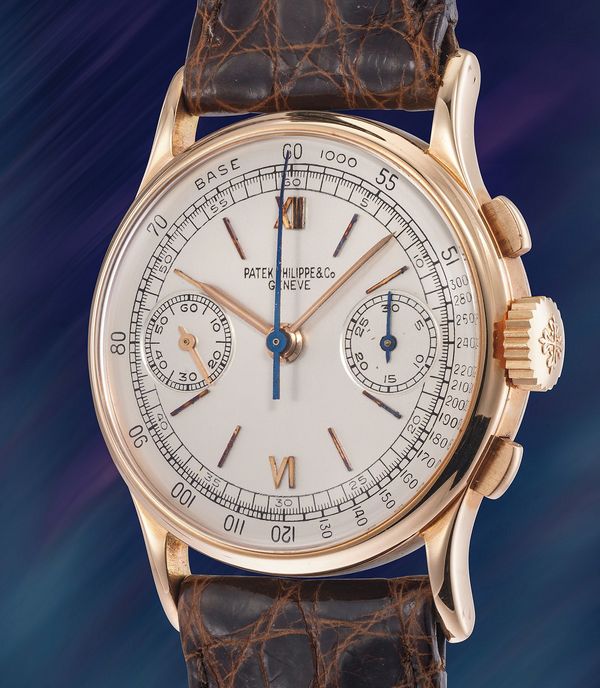
Lot 104: A 1943 Patek Philippe Chronograph Ref. 130 in 18k Pink Gold that's included in the Phillips Decade One (2015-2025) catalogue. Estimate: CHF 20,000 - 40,000
Here, the dial adopts a distinctive layout with Roman numerals at 12 and 6 paired with elongated baton markers that extend to the edge of the subsidiary dials at 2, 4, 8, and 10 o’clock. This subtle but striking detail gives the watch a more refined, elegant presence compared to the sportier aesthetic of short baton dials – a rare and desirable variation within the 130 family.
Introduced in 1934, Ref. 130 was Patek Philippe’s first serially produced chronograph. Early examples were sometimes equipped with a Victorin Piguet ébauche before the firm transitioned to its own heavily modified Valjoux-based calibre 13-130, developed to fit the 130’s case. Those cases, including the present one, were crafted by master casemaker Emile Vichet, whose mark – the number 9 inside a key – is stamped inside the back. The result is a chronograph that combines historical importance, mechanical pedigree, and aesthetic rarity in a single, beautifully preserved watch.
Lot 17: A 1950 Patek Philippe 'Muletto' Ref. 1544 in Stainless Steel
Estimate: CHF 6,000 - 12,000
Reference 1544 is among the rarest and most unusual wristwatches Patek Philippe ever produced – both in design and in purpose. It was never intended for sale. Instead, the company created it as a temporary “loaner” for clients who sent their watches in for servicing. Once the repair was complete, the client would return the watch to Patek Philippe. This unusual role earned it the Italian nickname Muletto – “forklift” – a term used in motorsport to describe a backup car, half-jokingly implying something less refined than the main vehicle.
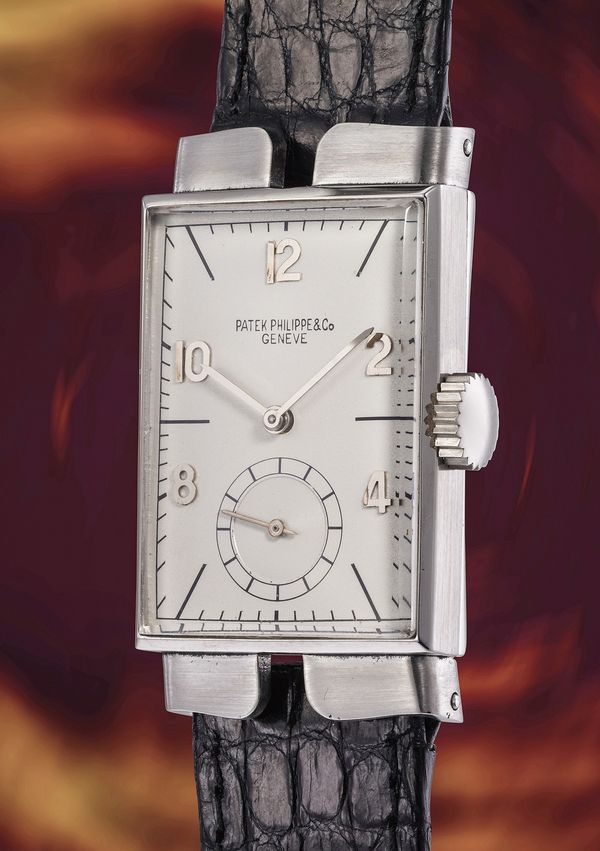
Lot 17: A 1950 Patek Philippe 'Muletto' Ref. 1544 in Stainless Steel that's included in the Phillips Decade One (2015-2025) catalogue. Estimate: CHF 6,000 - 12,000
Even in this utilitarian context, Patek Philippe refused to compromise on quality. The 1544 still features an engraved and enameled dial, a detail that reflects the brand’s unwavering standards. Because these watches were meant to remain with the company, very few ever left its possession permanently, and only a handful – possibly as few as four – are known to exist today.
The example offered here has remarkable provenance, last appearing publicly in April 1989 at The Art of Patek Philippe sale celebrating the firm’s 150th anniversary. Its rarity, purpose, and history make it one of the most intriguing and elusive Patek Philippe wristwatches ever made.
Lot 19: A 1919 Patek Philippe Deck Chronometer Pocket Watch in Brass
Estimate: CHF 10,000 - 20,000
Exceptionally rare, this piece is one of fewer than two dozen known Patek Philippe deck clocks fitted with observatory-grade movements. Originally created as display pieces for prominent retailers, each was built to chronometer standards. Phillips has previously sold examples of this type, including no. 170’205, made for Oscar Linke in Genoa and identical in size to the clock offered here.
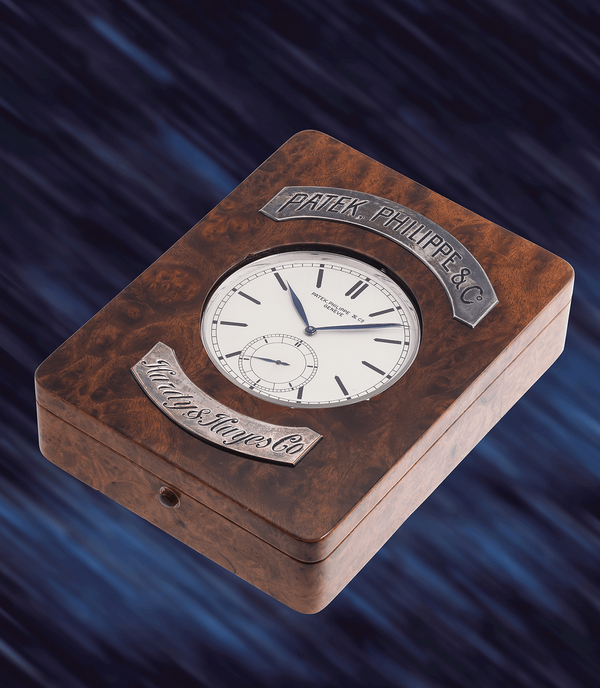
Lot 19: A 1919 Patek Philippe Deck Chronometer Pocket Watch in Brass that's included in the Phillips Decade One (2015-2025) catalogue. Estimate: CHF 10,000 - 20,000
This example was produced for Hardy & Hayes, a distinguished retailer in Pittsburgh, Pennsylvania, whose name is proudly displayed on the striking presentation box. Inside the substantial case beats one of Patek Philippe’s most precise chronometer movements, regulated by a finely crafted Guillaume balance. The movement earned honorable mentions at the Geneva Observatory chronometer trials in 1923 and 1924 and secured third prize in 1926 – a testament to its exceptional performance.
Combining technical excellence, historical significance, and extreme rarity, this deck clock represents a remarkable chapter in Patek Philippe’s pursuit of precision and offers collectors a rare opportunity to acquire one of the firm’s most extraordinary mechanical achievements.
Lot 99: A 1985 Patek Philippe Perpetual Calendar Ref. 3940 in 18k Yellow Gold
Estimate: CHF 25,000 - 50,000
Introduced in 1985, the Patek Philippe Ref. 3940 is one of the most important automatic perpetual calendar wristwatches of the modern era. Produced in yellow, pink, and white gold as well as platinum, it remained a mainstay of the collection for more than two decades until production ended in 2007. Most examples were made in yellow gold, including the piece offered here.
This 3940J dates to the very start of production and is powered by movement no. 770’057, placing it firmly in the First Series. The first 25 watches, delivered to Zurich retailer Beyer, are considered “pre-series” pieces. Standard production began with movement no. 770’025, making this the 33rd example produced – an early and highly collectible watch.
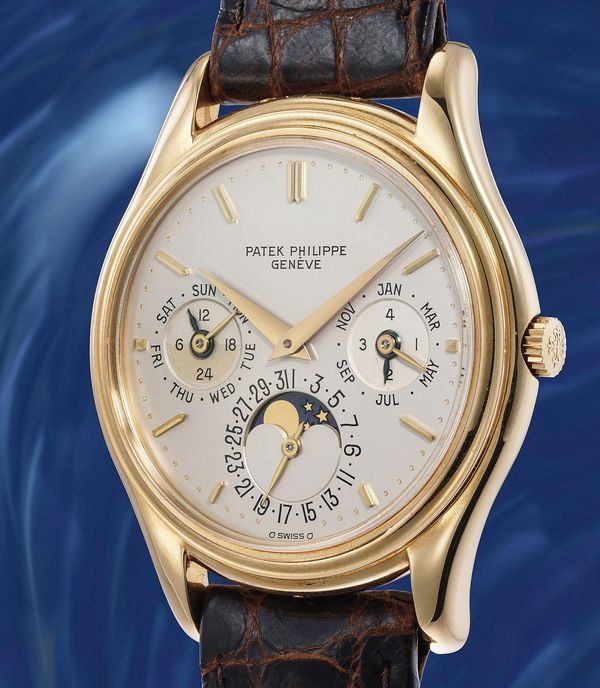
Lot 99: A 1985 Patek Philippe Perpetual Calendar Ref. 3940 in 18k Yellow Gold that's included in the Phillips Decade One (2015-2025) catalogue. Estimate: CHF 25,000 - 50,000
First Series 3940s are defined by their dials, most notably the vertical “walls” of the subdials, which were later replaced by gently sloped edges. Within that early production, three dial variants exist: two produced by Stern and one by Singer.
- Stern dial A: shorter middle bar in the “E” of “Patek Philippe”; two-tone 24-hour register.
- Stern dial B: evenly sized bars in the “E”; monotone 24-hour register.
- Singer dial: rounded transitions between subdial walls and base; “σ . SWISS . σ” at 6 o’clock.
Fresh to the market and in remarkable condition, this watch is one of the rarest and most sought-after versions of the Ref. 3940 – a landmark reference that defined Patek Philippe’s perpetual calendar lineage for more than two decades.
Lot 103: A 1999 Patek Philippe Chronograph Ref. 5070 in 18k Yellow Gold
Estimate: CHF 35,000 - 70,000
Reference 5070 holds a special place in Patek Philippe’s history. It was not only one of the largest wristwatches the brand ever produced, but also the first – and last – pure chronograph powered by a modified Lemania 2310-based ébauche, before the transition to an in-house movement with the Ref. 5170.
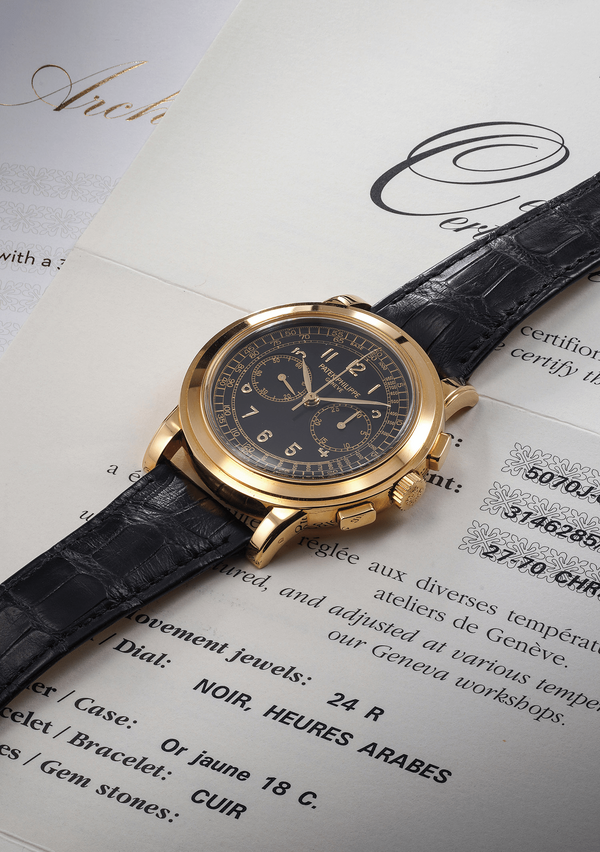
Lot 103: A 1999 Patek Philippe Chronograph Ref. 5070 in 18k Yellow Gold that's included in the Phillips Decade One (2015-2025) catalogue. Estimate: CHF 35,000 - 70,000
Launched in 1998 as a long-awaited successor to the Ref. 1463, which had been discontinued in the 1960s, the 5070 brought a bold new presence to Patek Philippe’s chronograph line. Its water-resistant case with a screw-down back measured an imposing 42mm, inspired by the unique Ref. 2512 – a 46.2mm split-seconds chronograph from the early 1950s that blended Art Deco styling with the proportions of a pilot’s watch. That historic piece now resides in the Patek Philippe Museum in Geneva.
The 5070 debuted in yellow gold with a striking black dial, as seen on the present watch, and was later produced in white gold, rose gold, and platinum. The yellow gold version, discontinued soon after its release, remains the most faithful to the original design inspiration and one of the most visually impactful, thanks to the bold contrast of gold and black.
Offered for the first time at auction, this 1999 example is preserved with its original Certificate of Origin and presentation box.
Lot 101: A 1958 Patek Philippe Ref. 2553 in 18k Pink Gold
Estimate: CHF 5,000 - 10,000
The Ref. 2553 is one of Patek Philippe’s most distinctive shaped wristwatches. Launched in the mid-1950s, it features an angular case design and unusual lugs that give it striking wrist presence despite its modest size. The model reflects a period when Patek Philippe treated shaped watches as a creative playground, in contrast to the more conservative designs of its round cases. Other notable examples from this era include the “Tour Eiffel” Ref. 2441, the “Marilyn” Ref. 2442, and the “Manta Ray” Ref. 2554.
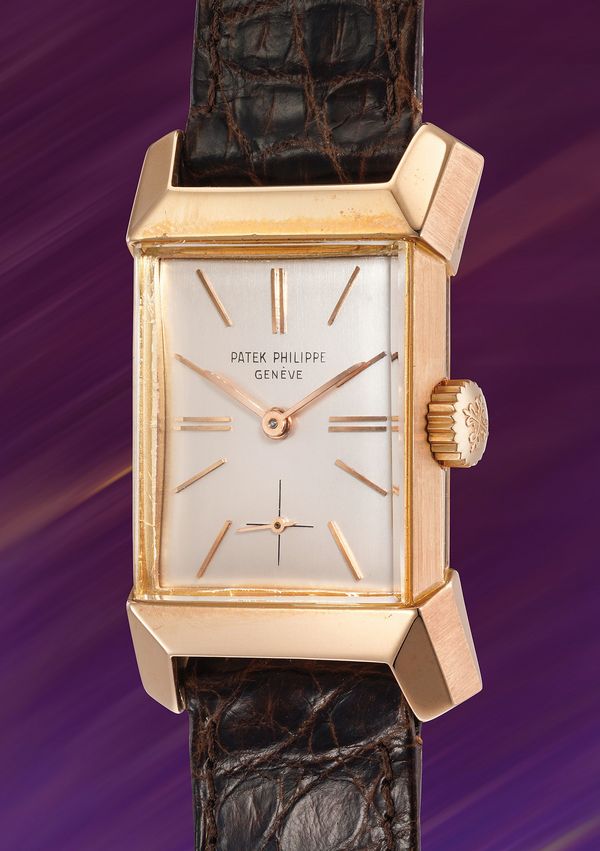
Lot 101: A 1958 Patek Philippe Ref. 2553 in 18k Pink Gold that's included in the Phillips Decade One (2015-2025) catalogue. Estimate: CHF 5,000 - 10,000
Among these sculptural designs, Ref. 2553 is one of the rarest. Fewer than 20 examples are known to have appeared at auction, underscoring its exclusivity and desirability among collectors of Patek Philippe’s most creative mid-century designs.
Lot 16: A 1928 Patek Philippe Ref. 559 in 18k Pink Gold
Estimate: CHF 4,000 - 8,000
One of Patek Philippe’s rarest and most distinctive creations, Ref. 559 was produced in the 1920s and 1930s and reflects the playful spirit and evolving tastes of the Roaring Twenties. Its most striking feature is a pair of unusual hooded lugs with subtle hinging, designed to help the watch sit more comfortably on the wrist. Unlike many designs of the Art Deco era, which favored curves and floral motifs, Ref. 559 embraces a clean, geometric aesthetic – a forward-looking approach that anticipated trends that would flourish in the 1960s and 1970s.
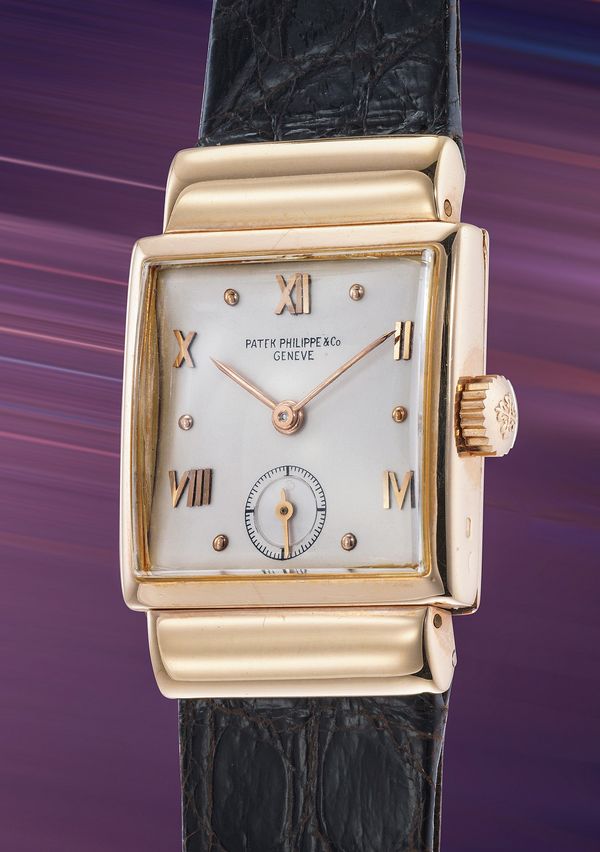
Lot 16: A 1928 Patek Philippe Ref. 559 in 18k Pink Gold that's included in the Phillips Decade One (2015-2025) catalogue. Estimate: CHF 4,000 - 8,000
The reference is exceptionally elusive. Only nine examples were known before the discovery of this watch: four in yellow gold, three in pink gold, one in steel, and one in a two-tone white and pink gold case. The appearance of this previously unknown piece marks the tenth recorded example, adding a new chapter to the history of one of Patek Philippe’s most intriguing early wristwatches.
Lot 12: A 1998 Patek Philippe Ref. 3796 in 18k Pink Gold
Estimate: CHF 6,000 - 12,000
Produced from 1982 to 1999, the Patek Philippe Ref. 3796 is the purest modern descendant of the legendary Ref. 96 – the original Calatrava introduced in the 1930s. It retains the same understated architecture: a 31mm case, flat bezel, and clean, Bauhaus-inspired design. The example offered here is crafted in pink gold, a metal closely associated with the 1920s that underscores the watch’s vintage character and timeless elegance.
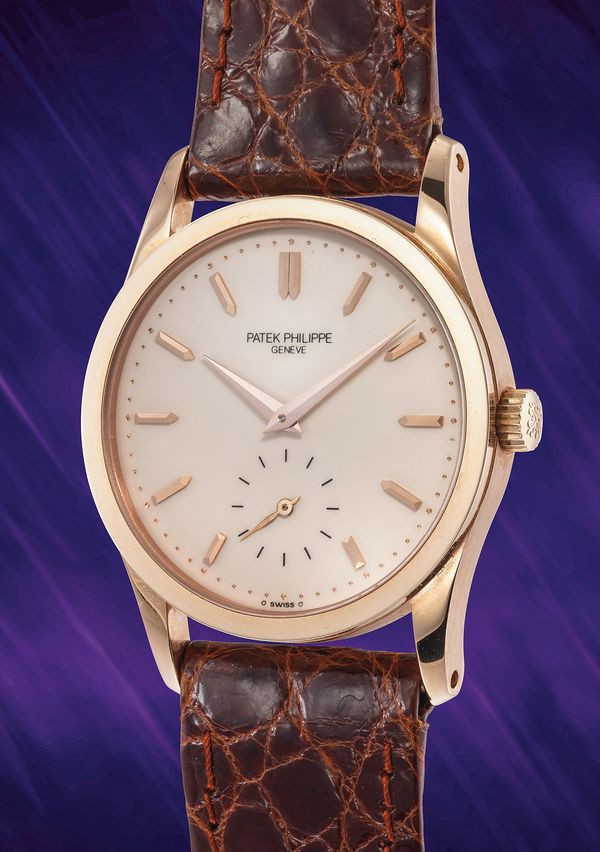
Lot 12: A 1998 Patek Philippe Ref. 3796 in 18k Pink Gold that's included in the Phillips Decade One (2015-2025) catalogue. Estimate: CHF 6,000 - 12,000
The virtually mint case pairs beautifully with an off-white ivory dial, complemented by pink gold dauphine hands and applied baton hour markers that add depth and refinement. Inside beats the calibre 215, introduced in 1974 as the successor to the renowned 12-120 and a cornerstone of the Calatrava line.
Preserved in exceptional condition, this Ref. 3796 embodies Patek Philippe’s signature blend of discretion, balance, and enduring style – a quintessential expression of the Calatrava philosophy that continues to resonate with collectors today.
Lot 13: A 1989 Patek Philippe Ref. 3796 in 18k White Gold
Estimate: CHF 6,000 - 12,000
The white-gold counterpart to the previous pink gold Ref. 3796, the watch offered here exudes a crisp, understated elegance. Its cool, silvery sheen plays beautifully against the warm ivory dial, creating a refined contrast that enhances the watch’s minimalist design and timeless proportions.
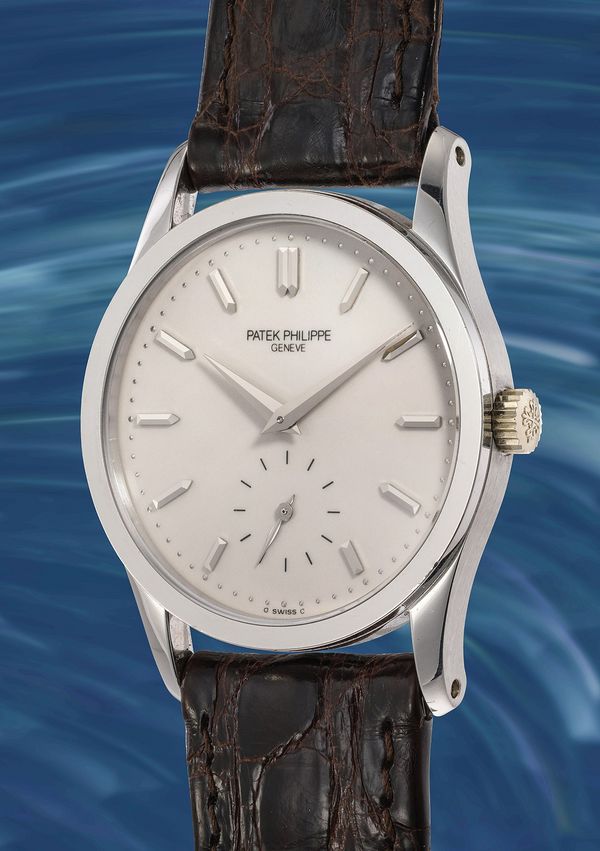
Lot 13: A 1989 Patek Philippe Ref. 3796 in 18k White Gold Estimate: CHF 6,000 - 12,000
Opportunities to acquire both versions – the “warm” pink gold and the “cool” platinum – are exceedingly rare. Together, they represent two distinct yet complementary expressions of one of Patek Philippe’s most elegant and enduring Calatrava references.
Lot 100: A 2001 Patek Philippe Ref. 5150 in 18k White Gold with 'Tiffany & Co.'-Signed Dial
Estimate: CHF 15,000 - 30,000
Created in 2001 to mark the 150th anniversary of Patek Philippe’s historic partnership with Tiffany & Co., the Ref. 5150 – also known as the “T150” – is one of the most distinctive annual calendars the brand has ever produced. Limited to 150 pieces each in yellow, white, and pink gold, it stands apart both technically and aesthetically from Patek Philippe’s standard production.
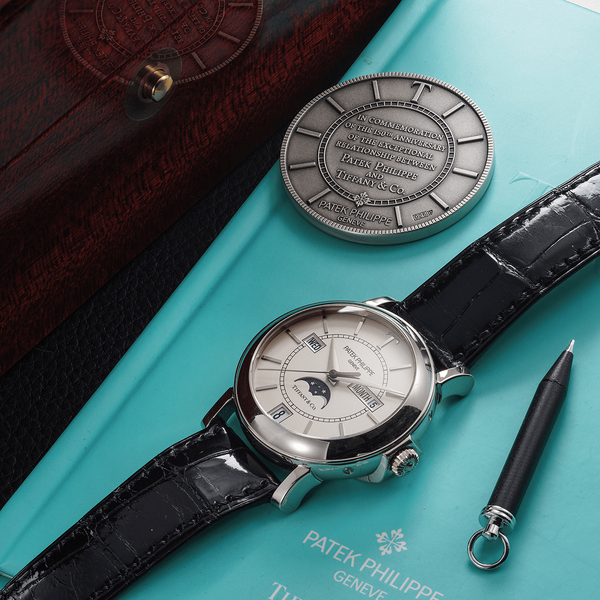
Lot 100: A 2001 Patek Philippe Ref. 5150 in 18k White Gold with 'Tiffany & Co.'-Signed Dial that's included in the Phillips Decade One (2015-2025) catalogue. Estimate: CHF 15,000 - 30,000
The watch features an officer-style case with a hinged back and a Louis XV–style crown, its flowing curves lending a touch of vintage character. Most notably, the dial departs from tradition: under the creative direction of Philippe and Thierry Stern, the month is displayed as a numeral for the first time rather than spelled out in text. A bold “T” appears at 12 o’clock in tribute to Tiffany, whose signature also sits beneath the moon phase display. On the reverse, the caseback is engraved with the façade of the original Geneva workshop the two houses shared in the 1860s.
The Tiffany connection extends even to the model name. Ref. 5150 is one of the very few Patek Philippe watches to carry a distinct designation – T150 – a direct nod to the anniversary it commemorates. Offered here in white gold and preserved in excellent condition, this watch is both a celebration of one of watchmaking’s most storied collaborations and a rare opportunity to own a landmark piece from Patek Philippe’s modern history.
You can view the complete Phillips Decade One (2015-2025) auction catalogue here.