869
伕名
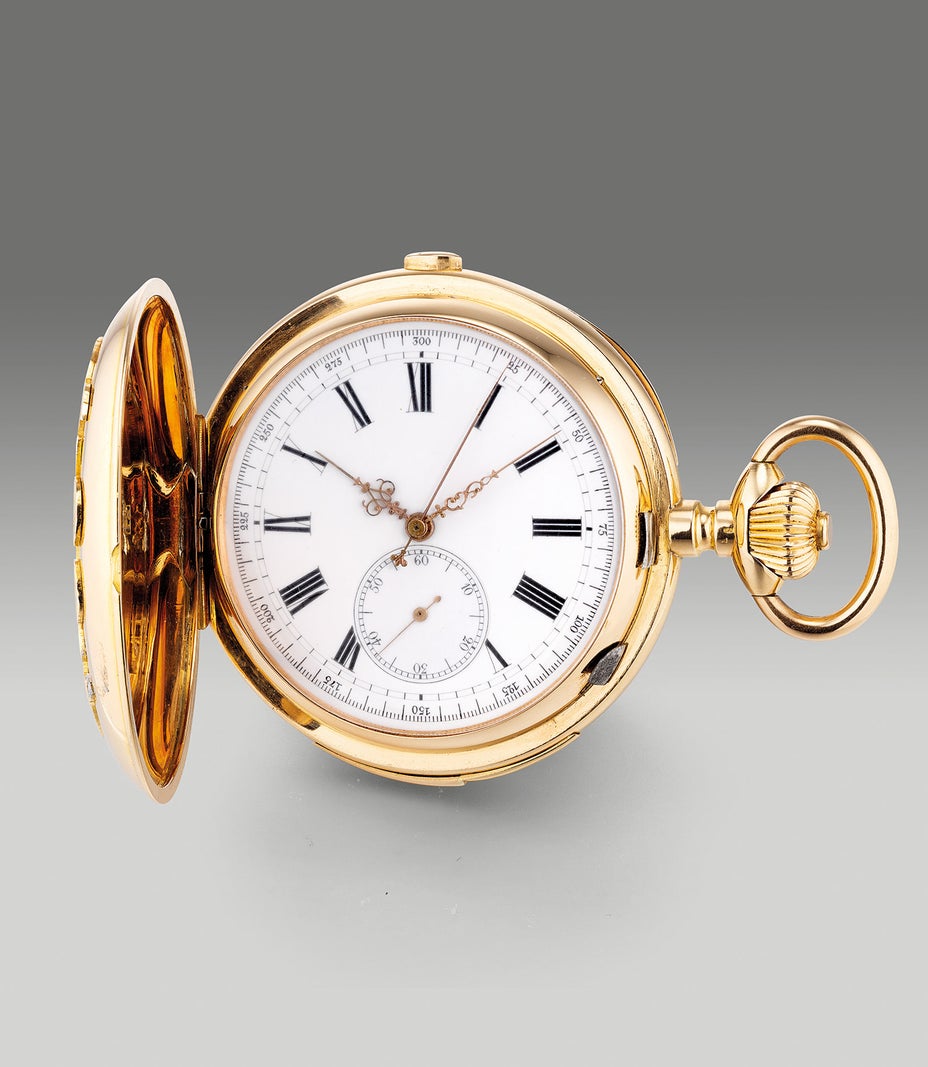
精細,18K玫瑰金三問計時獵蓋懷錶,約1900年製。附錶盒、日本保養收據
估價
HK$48,000–80,000
€5,200–8,700
$6,200–10,300
成交價
HK$87,500
製造商
伕名
年份
Circa 1900
錶殼號碼
217679, cuvette patent no. 217679
材料
18K pink gold
機芯
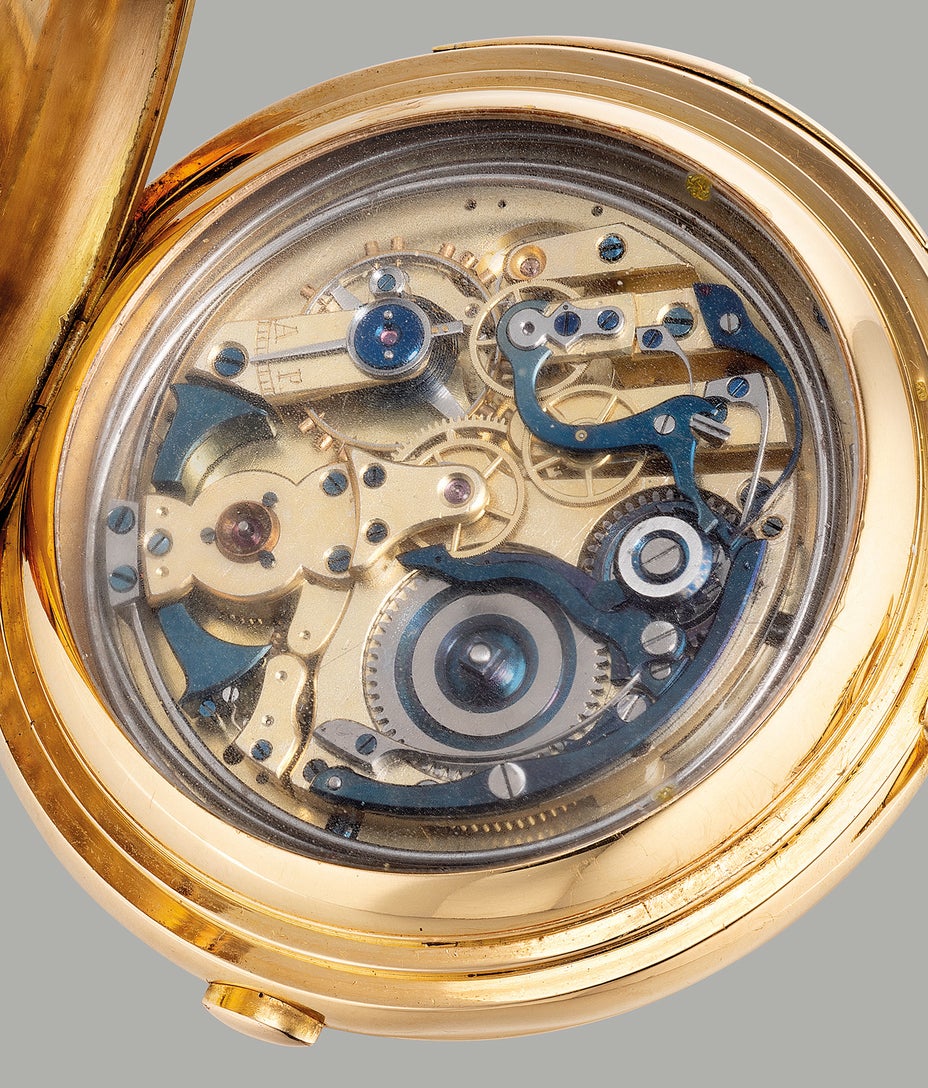
Manual, lever movement, 32 jewels
尺寸
63mm diameter
簽名
Cuvette signed Maar Beer and numbered, case numbered
配件
Further accompanied by a fitted wooden presentation box and 2010 service papers.
完整圖錄內容
Oversized complicated pocket watches represent the finest in traditional horology. They are mechanical marvels that demonstrate the skill and talent of fine watchmakers, who through a series of gear, wheels and the escapement produce timepieces, which not only tell time but chime it as well. Evolving from repeating clocks, the first chiming watches were developed at the end of the 18th century, when Edward Barlow and Daniel Quare applied for patents, with Quare ultimately awarded it. By 1750 Thomas Mudge created the first minute repeating watch with the addition of a third snail wheel and rack. Famed watch maker Abraham-Louis Breguet improved the repeater with the use of steel gongs, which allowed for a cleaner brighter tone and quality. Today, the tradition of repeating timepieces continues with luxury Swiss brands producing some of the finest repeating wristwatches available on the market.
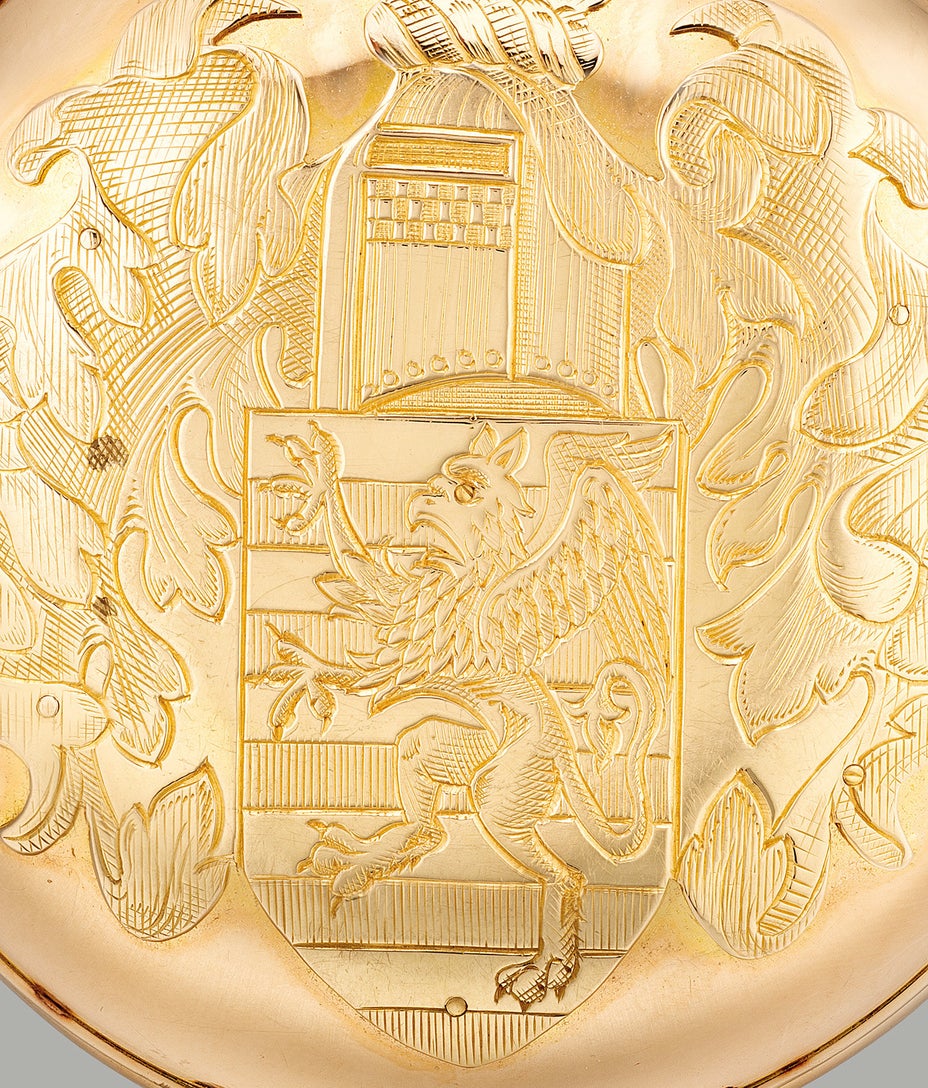
The present minute repeating chronograph hunter case pocket watch is an excellent example of the quality and workmanship found in horology at the turn of the 20th century. Many known and unknown watch makers were manufacturing watches for a growing clientele of wealthy businessmen, and this pocket watch is signed Maar Beer with the patent no. 217679. While there is little historical information available for the maker, the watch is a testament to his workmanship. The heavy oversized yellow gold case features engraved coats of arms to the front and back covers. Both have remained relatively crisp over the years with the engraved lines clean and clear. The dial has nicely aged and is clean. The movement, which is the heart of the watch, repeats with a lovely tone and clear sound.
Today’s collectors often forget to look at the past, but timepieces like the present pocket watch is a reminder of the evolution of horology and fine workmanship of those who came before.
The present minute repeating chronograph hunter case pocket watch is an excellent example of the quality and workmanship found in horology at the turn of the 20th century. Many known and unknown watch makers were manufacturing watches for a growing clientele of wealthy businessmen, and this pocket watch is signed Maar Beer with the patent no. 217679. While there is little historical information available for the maker, the watch is a testament to his workmanship. The heavy oversized yellow gold case features engraved coats of arms to the front and back covers. Both have remained relatively crisp over the years with the engraved lines clean and clear. The dial has nicely aged and is clean. The movement, which is the heart of the watch, repeats with a lovely tone and clear sound.
Today’s collectors often forget to look at the past, but timepieces like the present pocket watch is a reminder of the evolution of horology and fine workmanship of those who came before.