47
Grand Seiko
Ref. 6186-8000-G
VFA
Grand Seiko,極度精細,精鋼腕錶,備星期、日期顯示。附錶盒
估價
CHF10,000–20,000
€10,400–20,800
$11,400–22,800
成交價
CHF27,940
製造商
Grand Seiko
年份
Circa 1973
型號
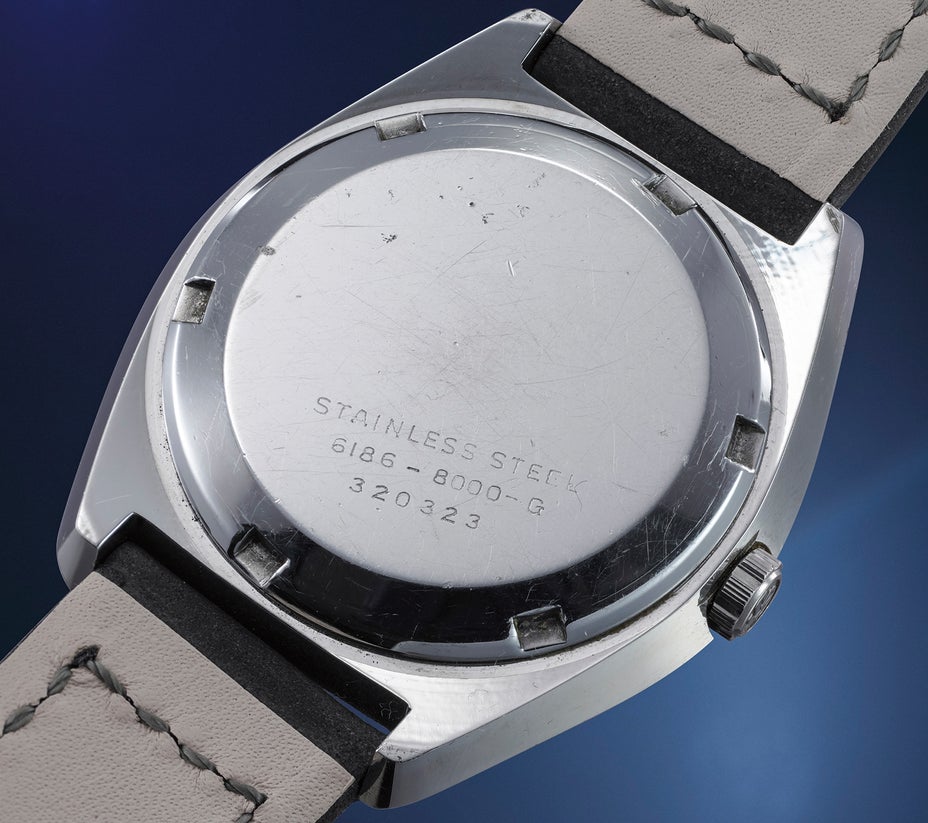
6186-8000-G
錶殼號碼
320'323
型號名稱
VFA
材料
Stainless steel
機芯
Automatic, cal. 6186
錶帶/ 錶鏈
Leather
錶扣
Stainless steel Seiko pin buckle
尺寸
37mm Diameter
簽名
Case, dial, movement and buckle signed
配件
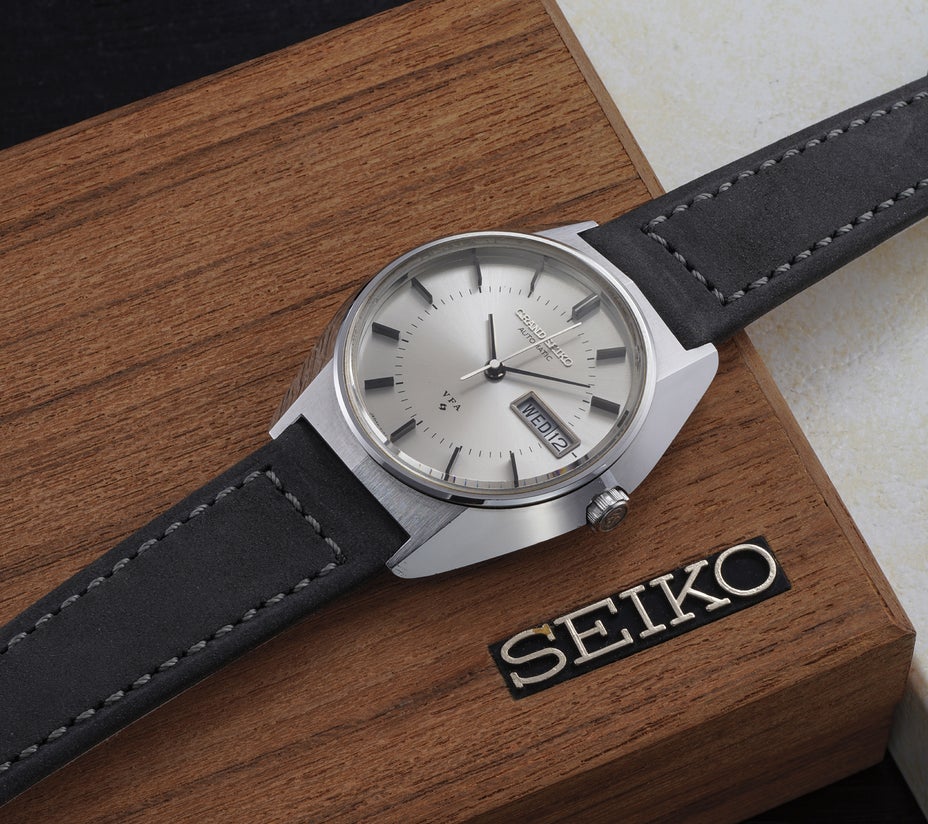
Accompanied by Grand Seiko original fitted box and outer packaging.
完整圖錄內容
With the launch of the first Grand Seiko Chronometer in 1960, Seiko’s objective was to create what they considered the “ideal” watch that would be a benchmark in terms of precision, durability and beauty.
Benefiting from the lessons learned from their participation in the Neuchâtel Chronometry Competitions of the 1960’s, and less than a decade after the launch of their first Chronometer, Grand Seiko debuted watches precise to an astonishing +/- 2 seconds per day.
These watches were described as being “very finely adjusted”, or “VFA” for short.
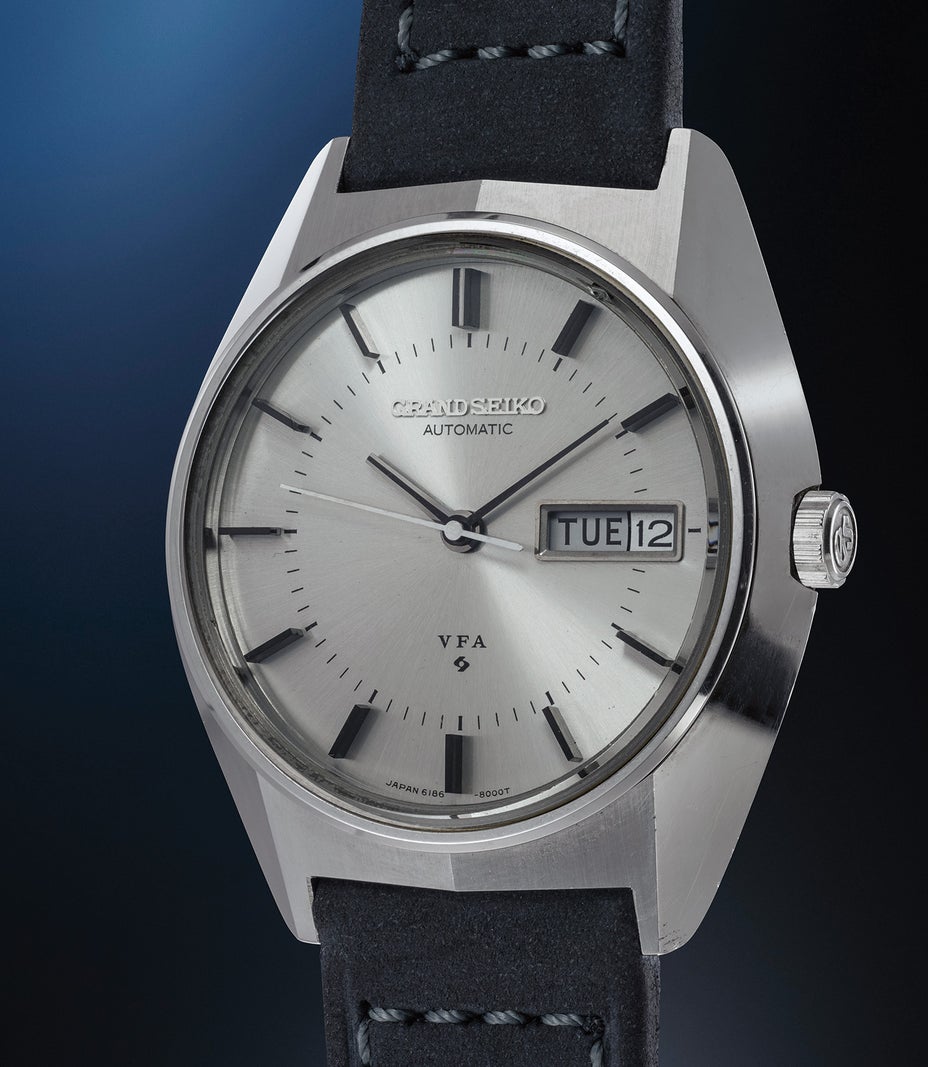
The design language of the first VFAs - whose production commenced in December 1968 - was distinct from the rest of the Grand Seiko range, with steep case angles, taught lines and a futuristic appearance that remains just as striking today as it did when first introduced. The dial’s indices are possibly influenced by the monolith featured in Stanley Kubrick's seminal “2001: A Space Odyssey” - a film that premiered earlier in 1968.
Reference 6186-8000 debuted in 1972, and retains the same key design elements as the earliest of the VFA’s.
While the 6186-8000 VFA continued to be offered as the flagship of the mechanical Grand Seiko range until 1975, recent research indicates that production occurred in just five individual calendar months, spread over the lifespan of the reference, with the example offered here dating from February 1973.
With its unpolished hardened stainless steel case and flawless silver sunburst dial, the present watch is undoubtedly one of the best examples of the reference to come to market in the last decade. It is all the more outstanding for being accompanied by its original, and extraordinarily rare, inner and outer boxes, with the latter still retaining a sticker on the end identifying the reference’s catalogue number.
Benefiting from the lessons learned from their participation in the Neuchâtel Chronometry Competitions of the 1960’s, and less than a decade after the launch of their first Chronometer, Grand Seiko debuted watches precise to an astonishing +/- 2 seconds per day.
These watches were described as being “very finely adjusted”, or “VFA” for short.
The design language of the first VFAs - whose production commenced in December 1968 - was distinct from the rest of the Grand Seiko range, with steep case angles, taught lines and a futuristic appearance that remains just as striking today as it did when first introduced. The dial’s indices are possibly influenced by the monolith featured in Stanley Kubrick's seminal “2001: A Space Odyssey” - a film that premiered earlier in 1968.
Reference 6186-8000 debuted in 1972, and retains the same key design elements as the earliest of the VFA’s.
While the 6186-8000 VFA continued to be offered as the flagship of the mechanical Grand Seiko range until 1975, recent research indicates that production occurred in just five individual calendar months, spread over the lifespan of the reference, with the example offered here dating from February 1973.
With its unpolished hardened stainless steel case and flawless silver sunburst dial, the present watch is undoubtedly one of the best examples of the reference to come to market in the last decade. It is all the more outstanding for being accompanied by its original, and extraordinarily rare, inner and outer boxes, with the latter still retaining a sticker on the end identifying the reference’s catalogue number.