1096
Edouard Juvet
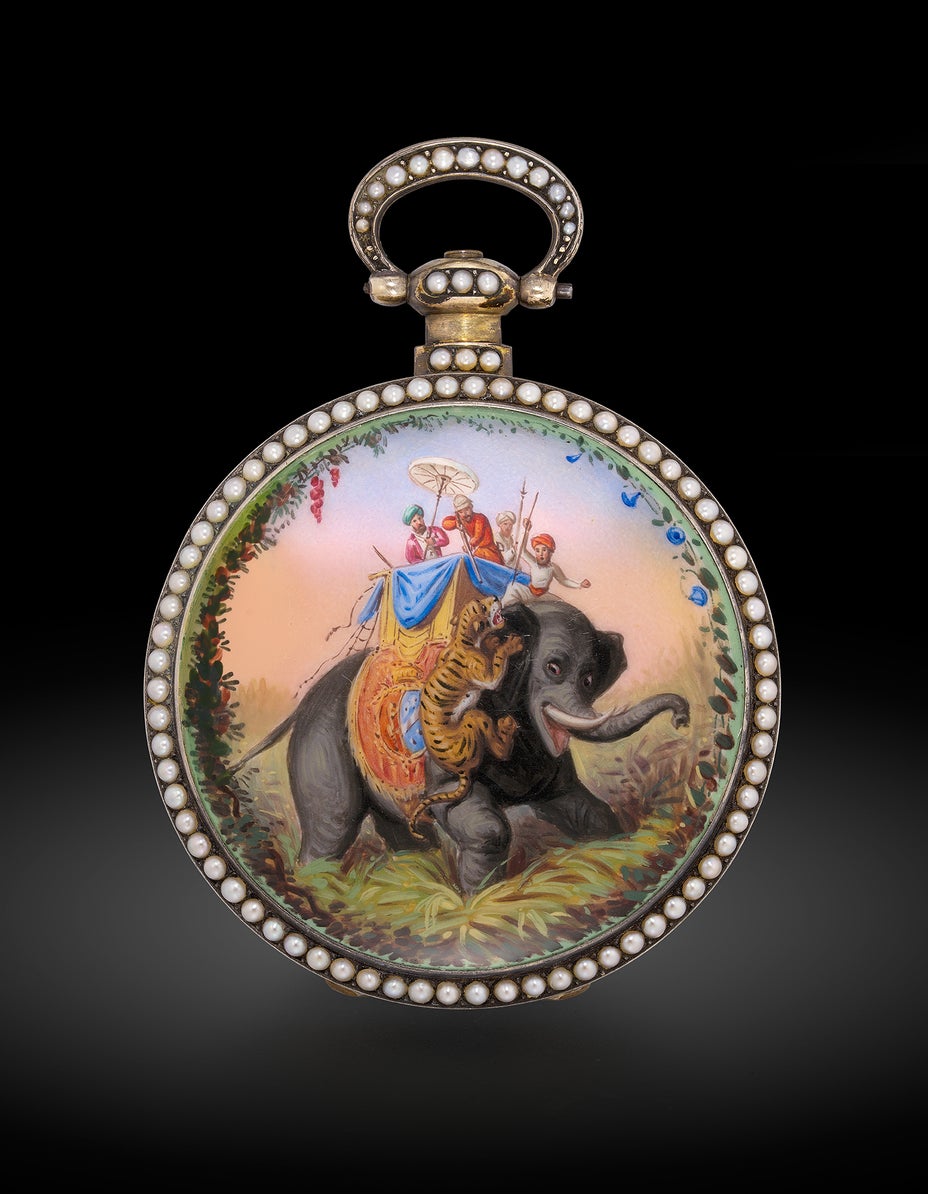
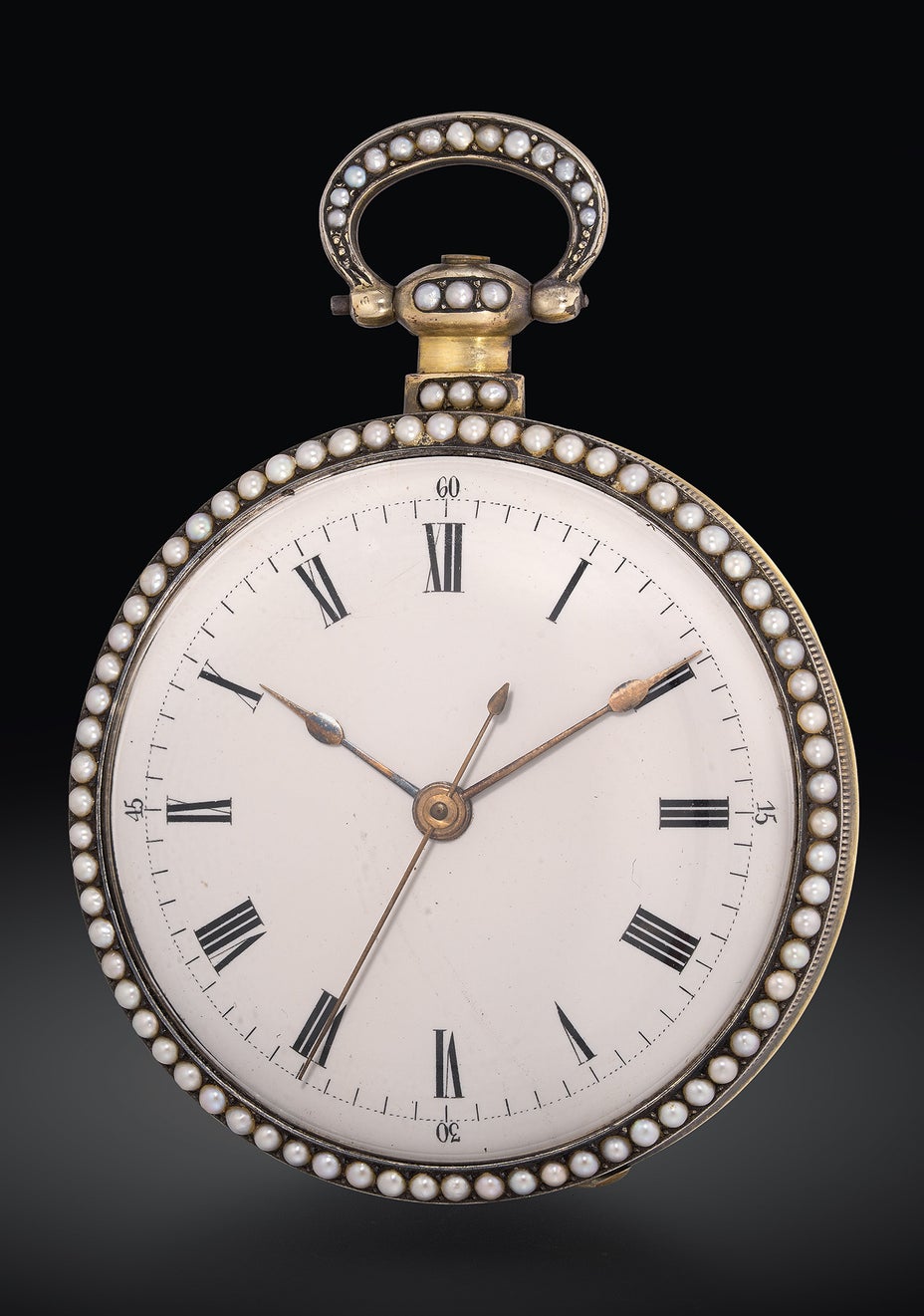
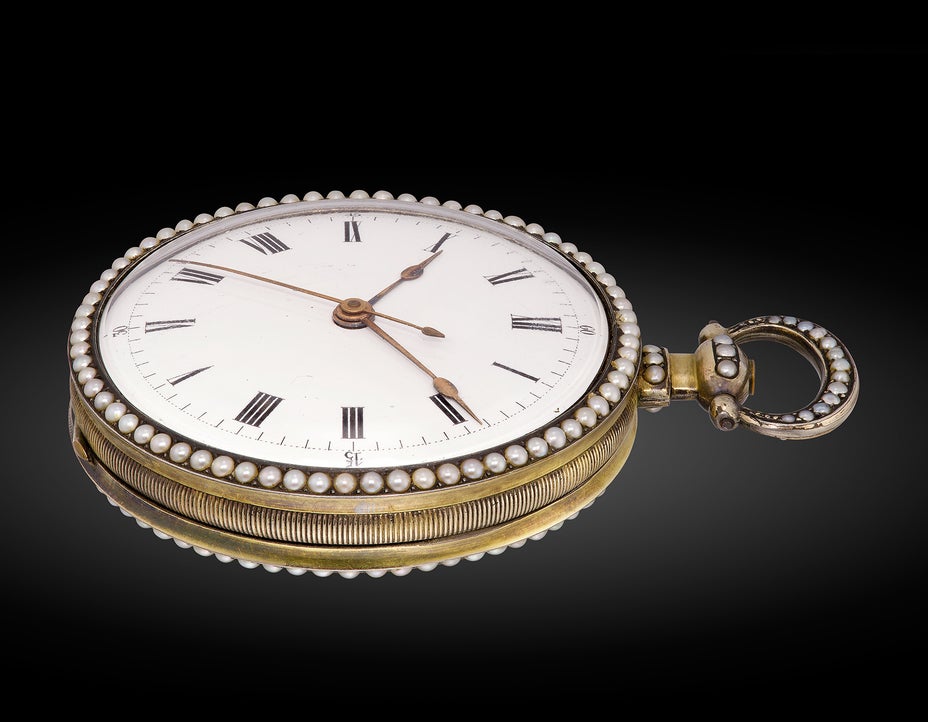
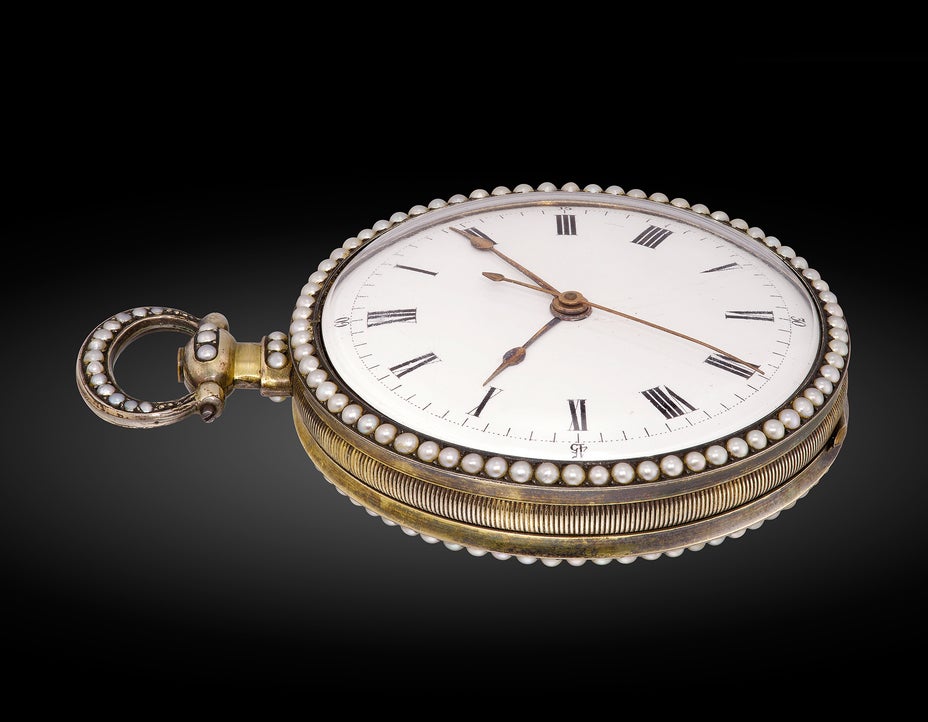
有喴,極為罕見、精美,鍍金銀製鑲珍珠大八件大三針懷錶,備白色琺瑯錶盤、雕花機芯、雙聯式擒縱、可歸為Pierre-Amédée Champod之打獵場景彩繪琺瑯作品,特為中國市場而製,約1830年代製。
估價
HK$40,000–80,000
€4,400–8,800
$5,100–10,300
成交價
HK$82,550
製造商
Edouard Juvet
年份
Circa 1830s
錶殼號碼
293
材料
Gilt-silver, pearls and enamel
機芯
Manual, duplex movement
尺寸
57mm diameter
完整圖錄內容
This magnificent Empire‑style pearl‑set pocket watch, likely attributed to Pierre‑Amédée Champod, captures a dramatic hunting scene: Indian hunters confronting a tiger from the back of an elephant. Executed in vivid polychrome enamel, the scene exemplifies the fascination of Qing dynasty elites for depictions of exotic animals and distant lands. Measuring 57 mm and numbered 293, the present piece is dated to the 1830s and preserved in remarkable condition.
This example is by the celebrated Juvet horological family, one of the foremost Swiss firms supplying high‑quality enamel timepieces to the Chinese market from the mid‑19th century. Founded by Edouard Juvet (1820–1883), the maison established operations in Fleurier in 1842 before opening branches in Shanghai, Tien‑Tsin, and Saigon. The Juvets achieved such success that in 1873 they registered a Chinese trademark, “You Wei 有喴,” proudly displayed on their timepieces. Rivalled chiefly by Bovet, Juvet timepieces were considered essential acquisitions for local elites, their popularity summed up by a letter from Léo Juvet in 1872 proclaiming, “Our watches sell like salt.”
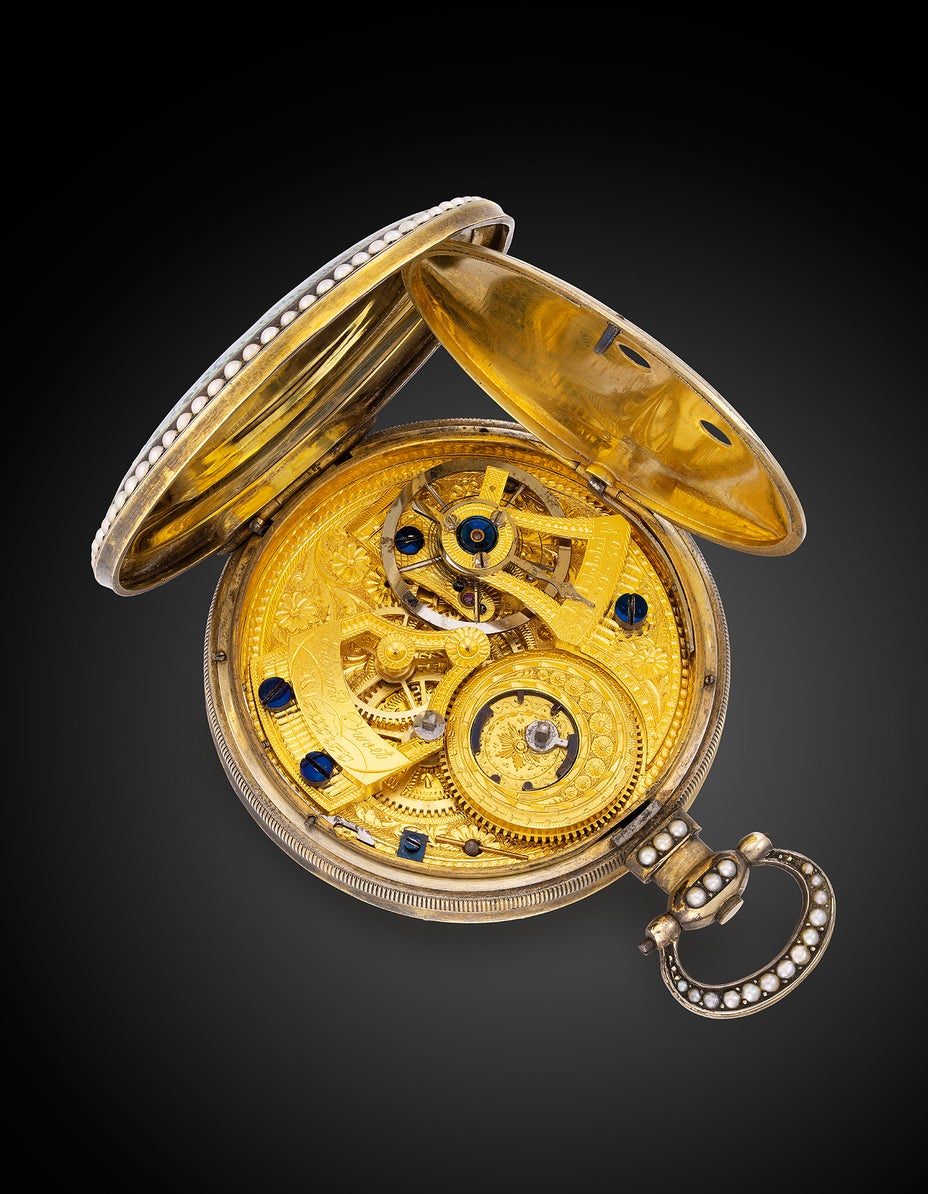
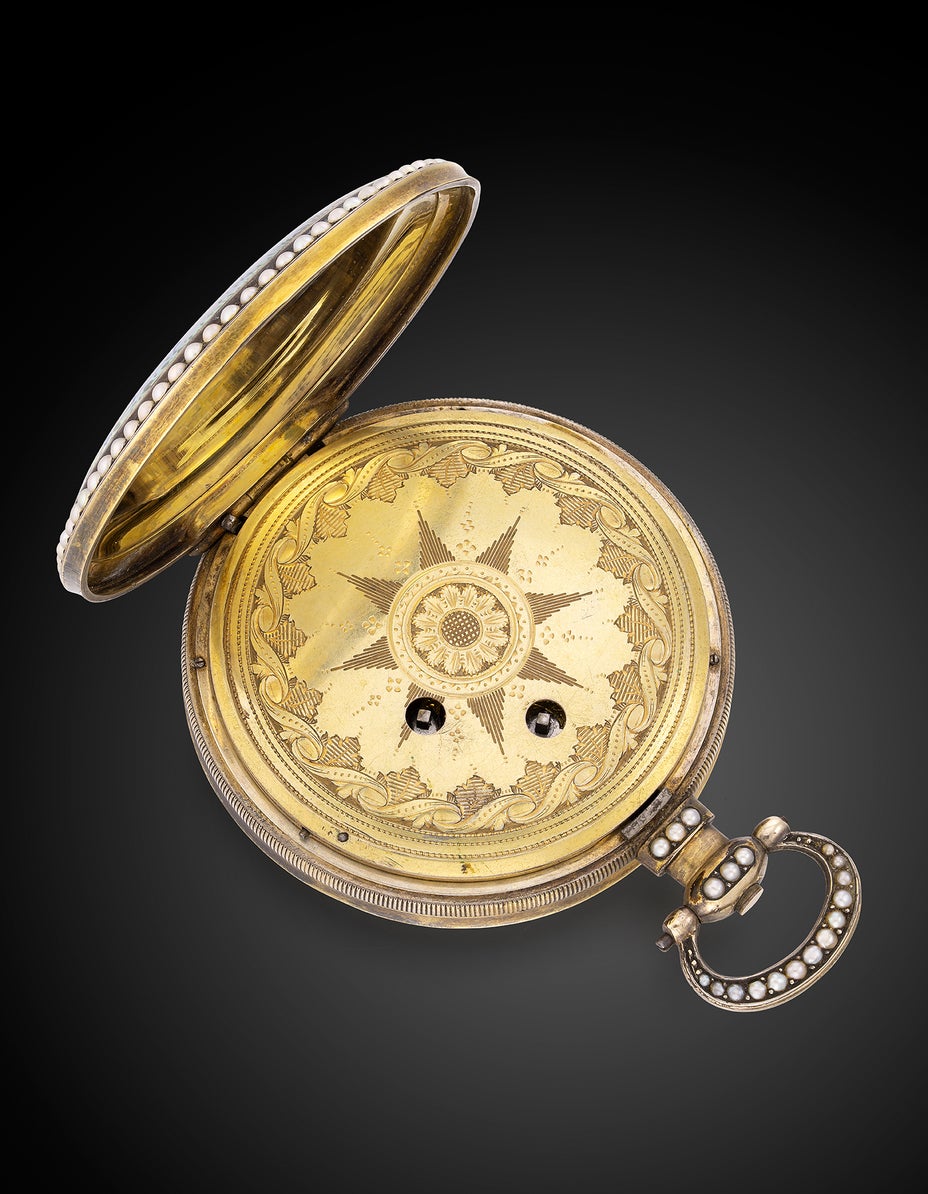
Beneath the golden cuvette lies a superb duplex movement, a technically advanced escapement originally conceived by Robert Hooke around 1700 and later refined by Dutertre, Le Roy, and Thomas Tyrer, who patented its perfected form in 1782. Decorated with scroll‑engraved plates and bridges, and fitted with a five‑armed polished steel balance with ruby endstone, the movement exhibits the mechanical sophistication demanded by the Chinese clientele.
Preserved in extraordinary condition for over 165 years, it stands as a vibrant testament to the dialogue between Swiss craftsmanship, European artistry, and Chinese taste in the golden age of decorative enamel watchmaking.
This example is by the celebrated Juvet horological family, one of the foremost Swiss firms supplying high‑quality enamel timepieces to the Chinese market from the mid‑19th century. Founded by Edouard Juvet (1820–1883), the maison established operations in Fleurier in 1842 before opening branches in Shanghai, Tien‑Tsin, and Saigon. The Juvets achieved such success that in 1873 they registered a Chinese trademark, “You Wei 有喴,” proudly displayed on their timepieces. Rivalled chiefly by Bovet, Juvet timepieces were considered essential acquisitions for local elites, their popularity summed up by a letter from Léo Juvet in 1872 proclaiming, “Our watches sell like salt.”
Beneath the golden cuvette lies a superb duplex movement, a technically advanced escapement originally conceived by Robert Hooke around 1700 and later refined by Dutertre, Le Roy, and Thomas Tyrer, who patented its perfected form in 1782. Decorated with scroll‑engraved plates and bridges, and fitted with a five‑armed polished steel balance with ruby endstone, the movement exhibits the mechanical sophistication demanded by the Chinese clientele.
Preserved in extraordinary condition for over 165 years, it stands as a vibrant testament to the dialogue between Swiss craftsmanship, European artistry, and Chinese taste in the golden age of decorative enamel watchmaking.