Article | Emily Friedman On Collecting Ahead Of The Curve
Emily Friedman on Collecting Ahead of the Curve
The art advisor spoke to Phillips about all things Alma Thomas and collecting ahead of the offering, 'Everything is Beautiful: Works from a Prestigious Private Collection.'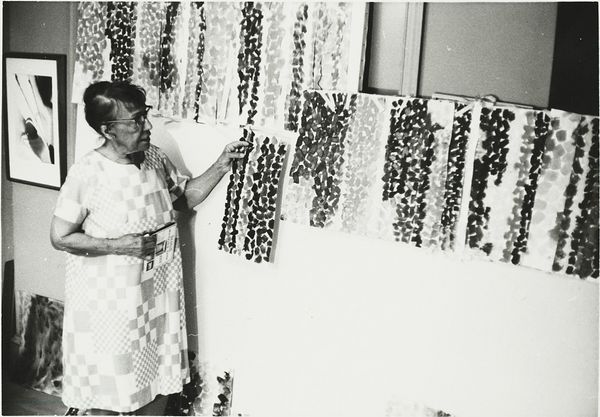
The present work [top left] in progress, as seen in a photograph of Alma Thomas in her studio, circa 1968. Photograph by Ida Jervis. Archives of American Art, Smithsonian Institution, Washington, D.C. Image: Archives of American Art, Smithsonian Institution, Alma Thomas Papers, circa 1894-2001, Artwork: © 2025 Estate of Alma Thomas (Courtesy of the Hart Family) / Artists Rights Society (ARS), New York.
Phillips is proud to offer the selection Everything is Beautiful: Works from a Prestigious Private Collection in our Modern & Contemporary Art auctions this November in New York. Leading the group is Alma Thomas’ remarkable Untitled, which will be offered in the Evening Sale on 19 November.
Ahead of the sales, we spoke with Emily Friedman, founder of Emily Friedman Fine Art, a full-service advisory specializing in contemporary and post-war art, to discuss her role in curating the collection. She also remarks on Alma Thomas’ late-career abstraction, Untitled’s prominent institutional recognition, and other highlights from the collection on offer in our upcoming sales. Join her as she shares her insights with Lena Walker, Phillips’ Researcher/Writer for Modern & Contemporary Art.
On Alma Thomas
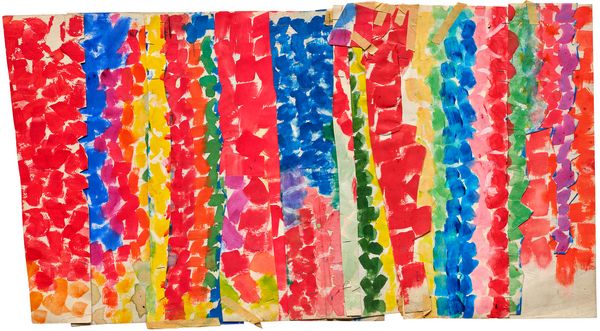
Alma Thomas, Untitled, circa 1968. Modern & Contemporary Art Evening Sale New York.
LENA WALKER: This work by Alma Thomas is extraordinary — not only visually, but also in its rarity and historical significance. How did you first identify it as a key acquisition opportunity for your client?
EMILY FRIEDMAN: The moment I saw it, I knew we had found something special. I was blown away by the scale, beauty, and sheer energy. You don’t come across a work like this every day. Beyond its visual power, this piece embodies the ‘constructive element’ that is central to her genius. This intuitive understanding of how to assemble color and form was informed by Thomas’ early background in theater and costume design. When you get up close, you can see her hand in the tape and staples she used, where the cut and layered shapes function like swatches of fabric, assembled into rhythmic patterns of color and form. It's as if she were assembling the pieces like a costume, creating the blueprint for her most iconic and celebrated, mosaic-like canvases.
LW: Untitled was featured on the cover of the Everything is Beautiful exhibition catalog. How did it feel to see this work receive such prominent institutional recognition?
EF: It was thrilling to see the work on the cover of such a major exhibition catalog. Out of all the canvases in the show, the curators chose this work on paper. It was a powerful statement that validates her works on paper as a distinct and central part of her practice.
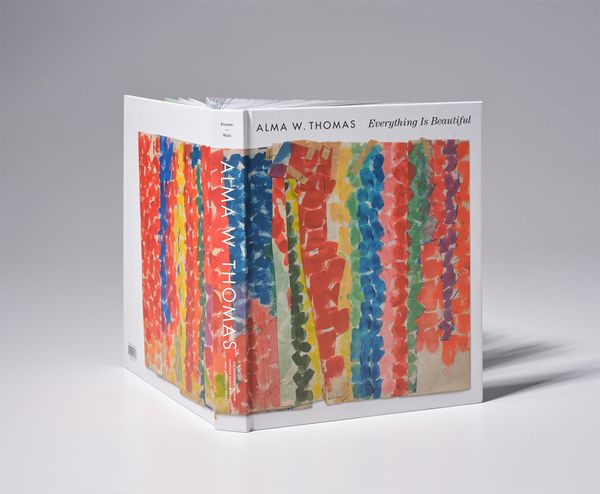
Untitled as it appears on the cover of the 2022 exhibition catalogue Alma W. Thomas: Everything Is Beautiful.
LW: As the first — and certainly the most celebrated — of Thomas’ collage-inspired works to come to market, how do you view your role in shaping the artist’s evolving legacy through this moment?
EF: This is a proud moment in my career. I always feel a deep sense of responsibility to serve as a shepherd for these pieces of history. It was a privilege for me to work with the Columbus Museum on the retrospective of Alma Thomas and to facilitate its placement on the cover of their exhibition catalog. Guiding this leg of its journey to a new home in this historic evening sale is both a full-circle moment and a poignant end to my role with this painting.
LW: Thomas’ market and institutional relevance has grown steadily in recent years. Was your recommendation driven by early insights into these trajectories — and if so, what stood out to you?
EF: I had an early insight into Thomas’ market trajectory because her work aligned perfectly with my focus on the Washington Color School. At the time, I was already immersed in the movement, actively buying and selling works by her contemporaries like Morris Louis, Kenneth Noland, and Sam Gilliam. I was first introduced to her when the Obamas unveiled her 1966 painting Resurrection as part of the White House Collection during Black History Month in 2015 and was immediately captivated. She was one of the very few women in a male-dominated movement, and for her to now be a household name is a testament to her genius. Thomas is an artist who transcends conventional categories, and her historical firsts at the Whitney and the White House cemented her legacy.
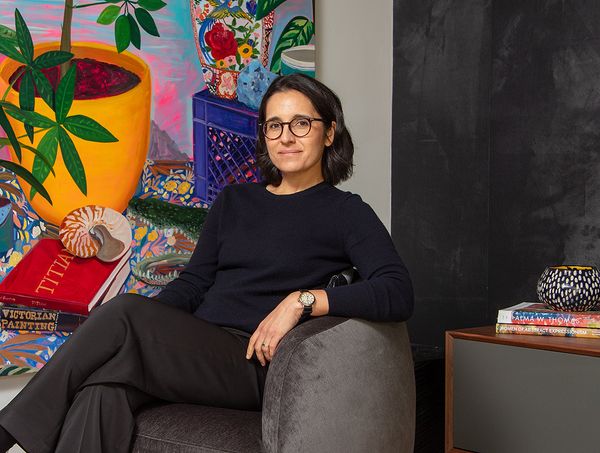
Art Advisor Emily Friedman of Emily Friedman Fine Art.
LW: What aspects of condition, provenance, and exhibition history were most important as you evaluated the long-term significance of Untitled?
EF: For me, it always begins with the soul of the piece — that instant, undeniable connection you feel at first sight. Beyond that, two aspects were most compelling in evaluating the long-term significance of the piece. First, its pristine condition is a testament to careful stewardship and a rare, critical factor in assessing its value. Second, the discovery that the most closely comparable work is in the collection of the Museum of Modern Art, New York, immediately validated its art-historical importance and confirmed its place as a key example from Thomas’ most acclaimed period.
LW: What is it about Thomas’ late-career abstraction that you feel resonates so strongly with collectors today — and with your client in particular?
EF: At a time when so much of modern art was centered on angst and turmoil, Thomas chose to focus on beauty, hope, and the restorative power of color. Her paintings offer a sense of optimism and a connection to the natural world, whether through the light in her garden or the wonder of space exploration, all rendered in her signature, mosaic-like style. This work is a perfect example of an artist at the peak of her maturity, creating a visual language that is both sophisticated and universally beautiful.
LW: How do you see Untitled positioning itself in both the marketplace and the broader art historical canon in the years to come?
EF: This is a historic moment that will reshape the market for Alma Thomas' works on paper. Not only is this work the first of its kind to be offered in an evening sale, it’s the largest and most important work on paper by the artist to ever come to auction. The inclusion of Untitled in a major evening sale elevates her works on paper to the same status as her most celebrated canvases.
On the broader collection
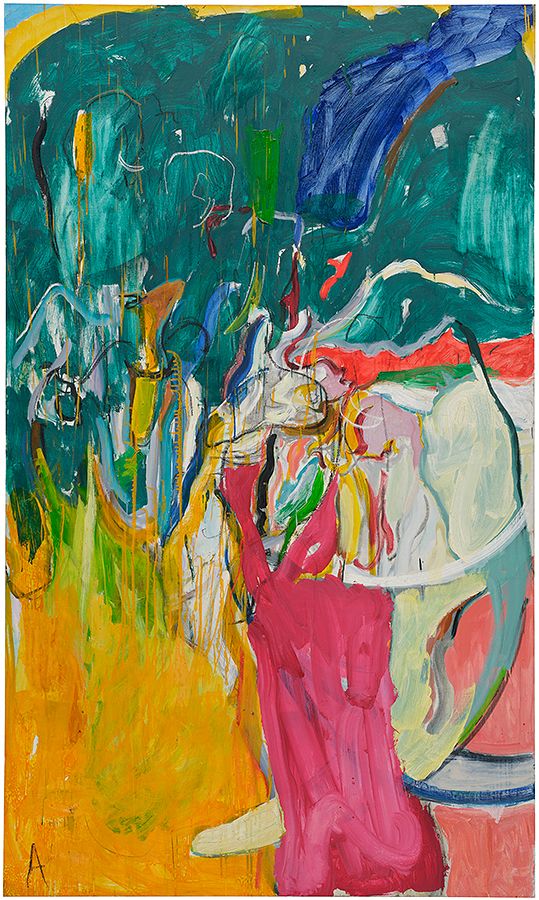
Mary Abbott, Forest of Dak, circa 1965. Modern & Contemporary Art Day Sale, Morning Session, New York.
LW: This collection spans some of the most visionary artists of the 20th and 21st centuries. How did you and your client approach shaping its direction — was there a shared vision from the outset, or did it evolve organically over time?
EF: Our approach was a true collaboration from the beginning. My client was a voracious collector who was crazy about color and abstraction, so that was our starting point. We had a shared vision to build something meaningful, but he was also very smart about making strategic investments. We had so much fun together, always on the lookout for undervalued artists with powerful, compelling stories. The collection's direction evolved organically, but the guiding principle was always this: to find museum-quality works that were visually stunning, historically significant and smart long-term investments.
LW: Many of the artists represented — such as Mary Abbott, Lita Albuquerque, and Sam Gilliam — are now enjoying long-overdue institutional and market recognition. Were you deliberately collecting ahead of the curve, and what informed those early convictions?
EF: Yes, we absolutely were. We were always looking at artists who were on the margins of major movements my client cared about. We had so much fun with this part of the process—chasing down great examples of work by artists who we felt were profoundly undervalued. I paid close attention to where the institutional conversation was headed, and if I heard about a major museum show on the horizon for an artist we believed in, I would immediately chase to find the best example we could. Seeing artists like Mary Abbott, Sam Gilliam and Alma Thomas now get the long-overdue recognition they deserve is a tremendous reward.
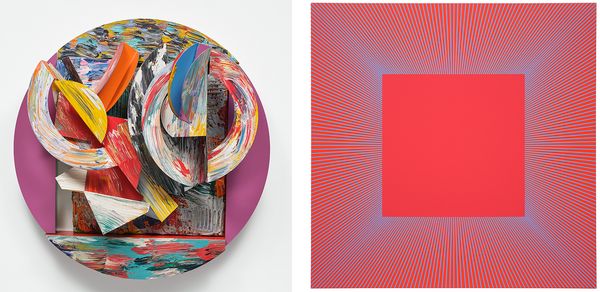
Left: Sam Gilliam, An Imitation Frieze, circa 1980s. Right: Richard Anuszkiewicz, Silent Red Square, 2016. Right: Modern & Contemporary Art Day Sale, Morning Session, New York.
LW: This collection includes both canonical figures and rediscovered pioneers. How do you approach balancing blue-chip stability with historical reassessment when building a collection of this caliber?
EF: We always knew we wanted a collection that felt both timeless and forward-thinking. So for us, it was always a blend of securing quality blue-chip pieces while also having the freedom to pursue undervalued artists we believed in. We were constantly asking ourselves: How does this work fit into the bigger vision? What are our dream pieces? Do we think this artist will grow with the collection? It's about trusting your instincts and finding those extraordinary pieces that you know will become anchors of the collection and help tell a broader story.
Discover more from Modern & Contemporary Art >
Recommended Reading