4
尚.普魯韋
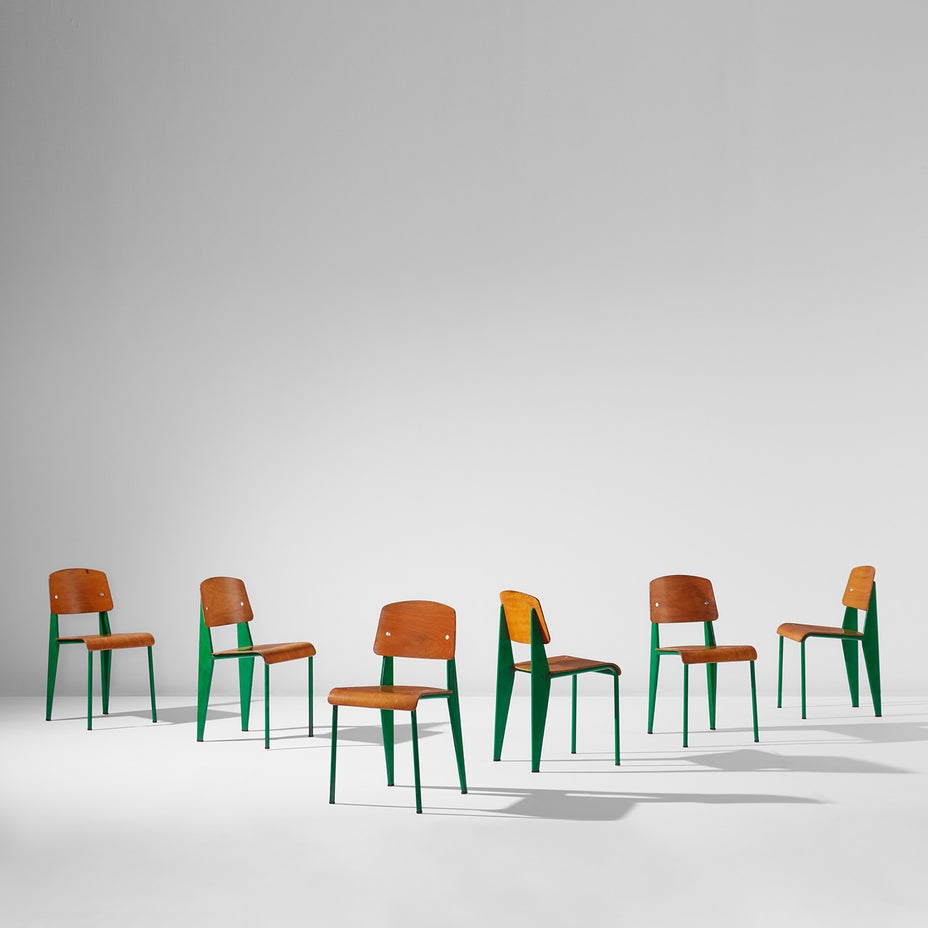
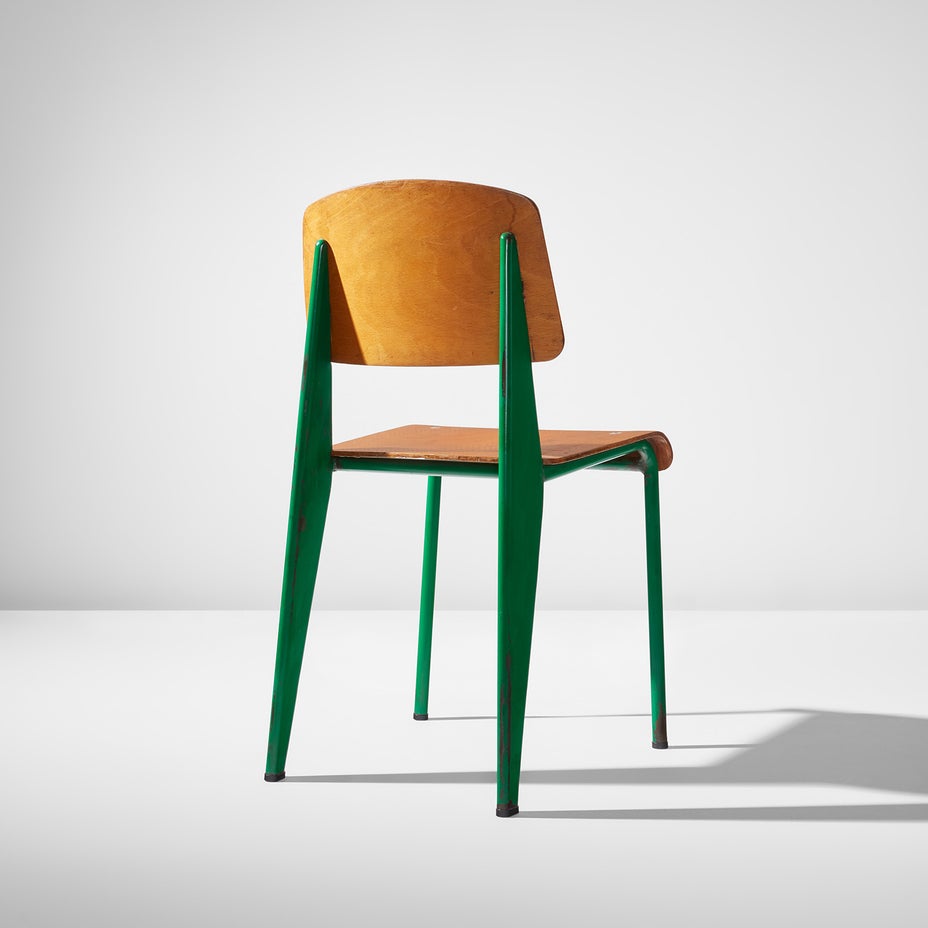
《「半金屬」椅子六張 型號305》
完整圖錄內容
The Semi-metal chair—first designed in 1935 and developed for broader production in the 1950s—epitomizes the effort to marry ingenious design and mass production. Prouvé wanted to design a chair in which the user could lean back onto the rear feet, which bear the most weight, without compromising the sleek silhouette of the lightweight design. His solution was to design back legs of folded metal, resembling an airfoil with their gracefully tapered form. This metal support is not just functional, but also the most striking aspect of the design.
尚.普魯韋
French | B. 1901 D. 1984Jean Prouvé believed in design as a vehicle for improvement. His manufactory Les Ateliers Jean Prouvé, located in Nancy, France, produced furniture for schools, factories and municipal projects, both within France and in locations as far flung as the Congo. Though he designed for the masses, pieces such as his "Potence" lamps and "Standard" chairs are among the most iconic fixtures in sophisticated, high-design interiors today. Collectors connect with his utilitarian, austere designs that strip materials down to the bare minimum without compromising on proportion or style.
Prouvé grew up in Nancy, France, the son of Victor Prouvé, an artist and co-founder of the École de Nancy, and Marie Duhamel, a pianist. He apprenticed to master blacksmiths in Paris and opened a small wrought iron forge in Nancy. However it was sheet steel that ultimately captured Prouvé's imagination, and he ingeniously adapted it to furniture, lighting and even pre-fabricated houses, often collaborating with other design luminaries of the period, such as Robert Mallet-Stevens, Le Corbusier and Charlotte Perriand.