PROPERTY FROM A PRESTIGIOUS FAMILY COLLECTION
91
Smith & Son
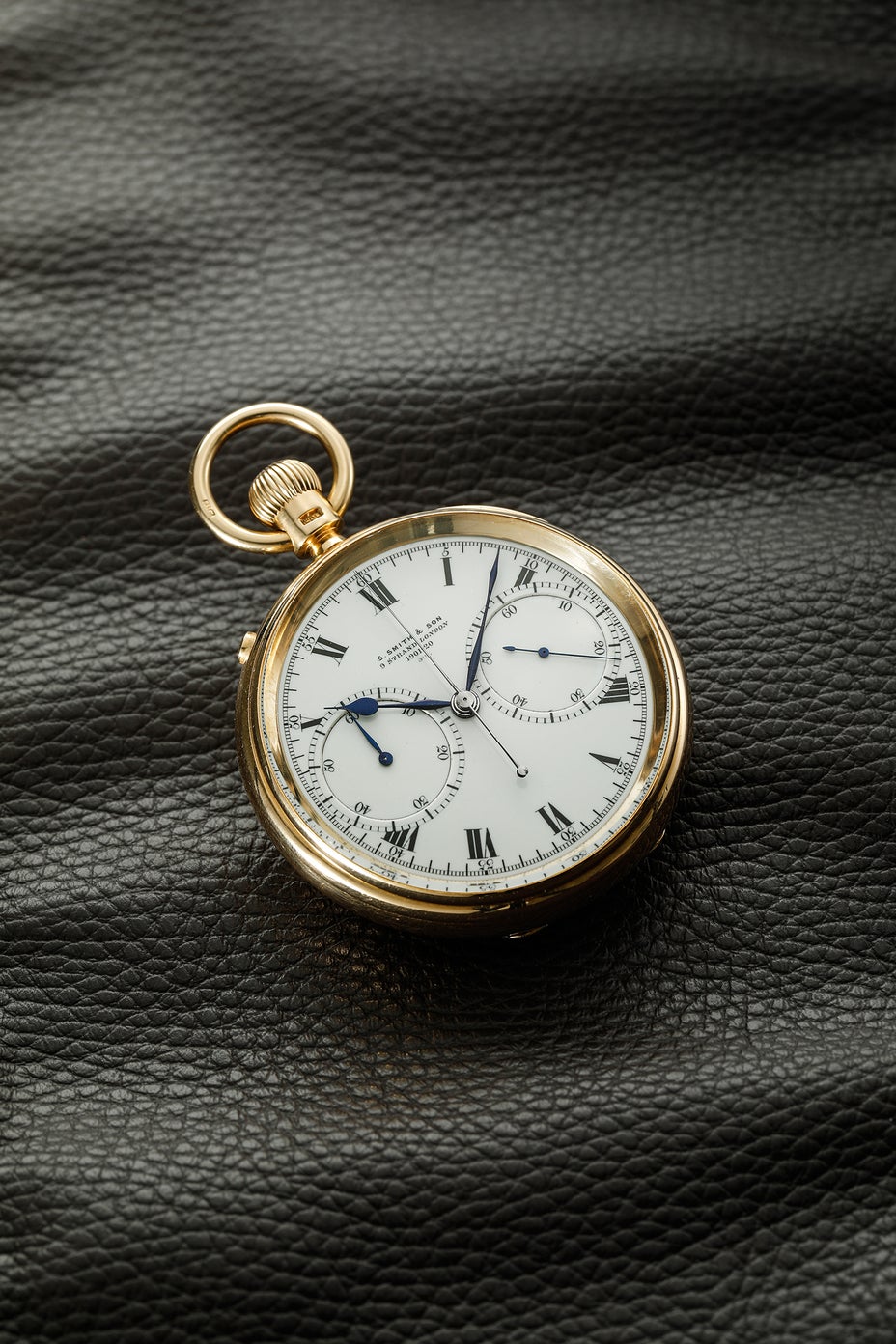
Smith & Son,極度罕有、重要,黃金追針天文台懷錶,備一分鐘陀飛輪。
估價
$50,000–100,000
成交價
$165,100
製造商
Smith & Son
年份
Circa 1900
機芯編號
1901-20
錶殼號碼
1901-20, London hallmarks for 1900
材料
18K yellow gold
機芯
Manual, three quarter plate gilt brass English lateral lever movement, 24 jewels
尺寸
59mm Diameter
簽名
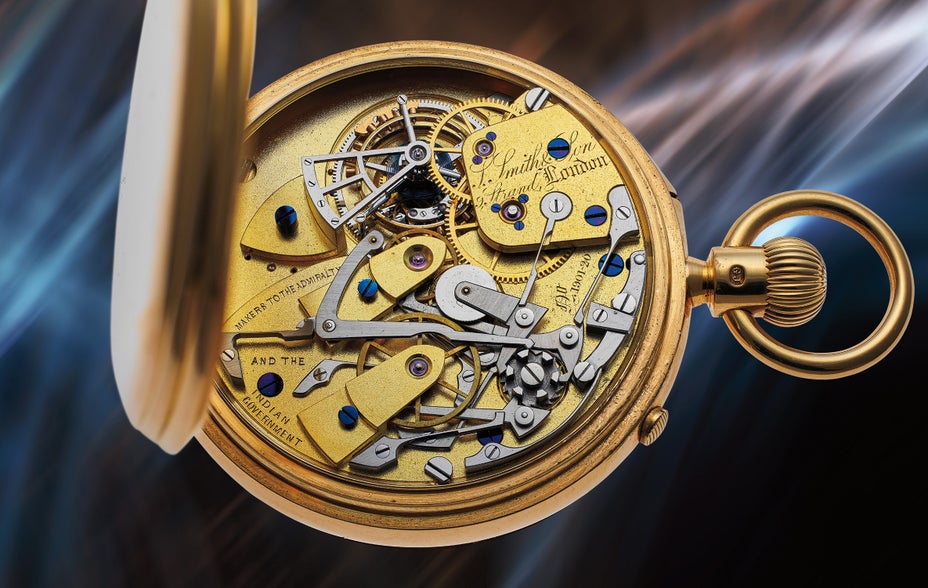
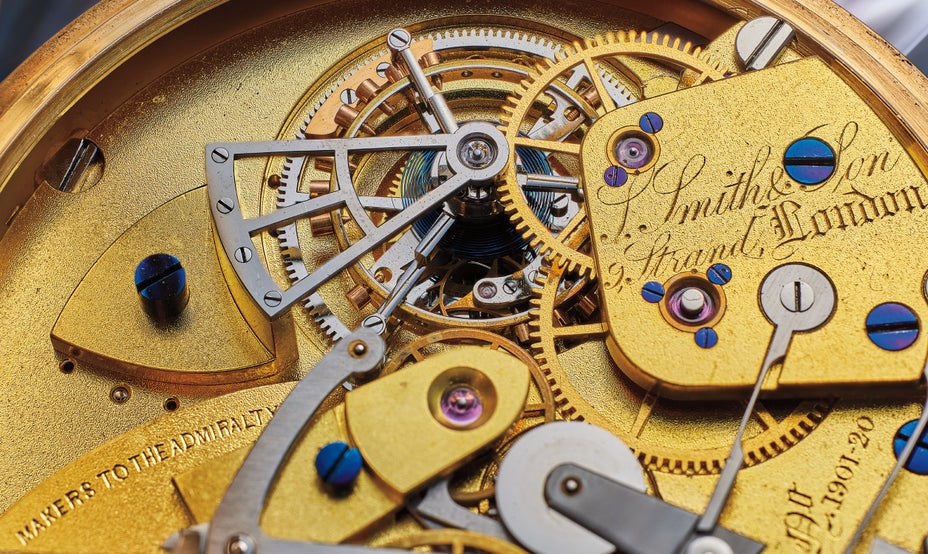
Case and cuvette stamped SS with London hallmarks for 1900, dial signed 9 Strand, London 1901-20/360, movement signed S. Smith & Son 9 Strand, London Makers to the Admirality and the Indian Government; case, cuvette, dial and movement numbered 1901-20.
完整圖錄內容
Looking back through the history of horology, it is extremely rare to find any timepiece combining a split-seconds chronograph with tourbillon, even in this day and age of pushing the boundaries of horology. Each trade show seems to be a race - always thinner, more accurate, more complicated. It is important to remember that what seems new to modern observers is in fact a replication and reintroduction of what has happened in the past, just adapted to different tastes.
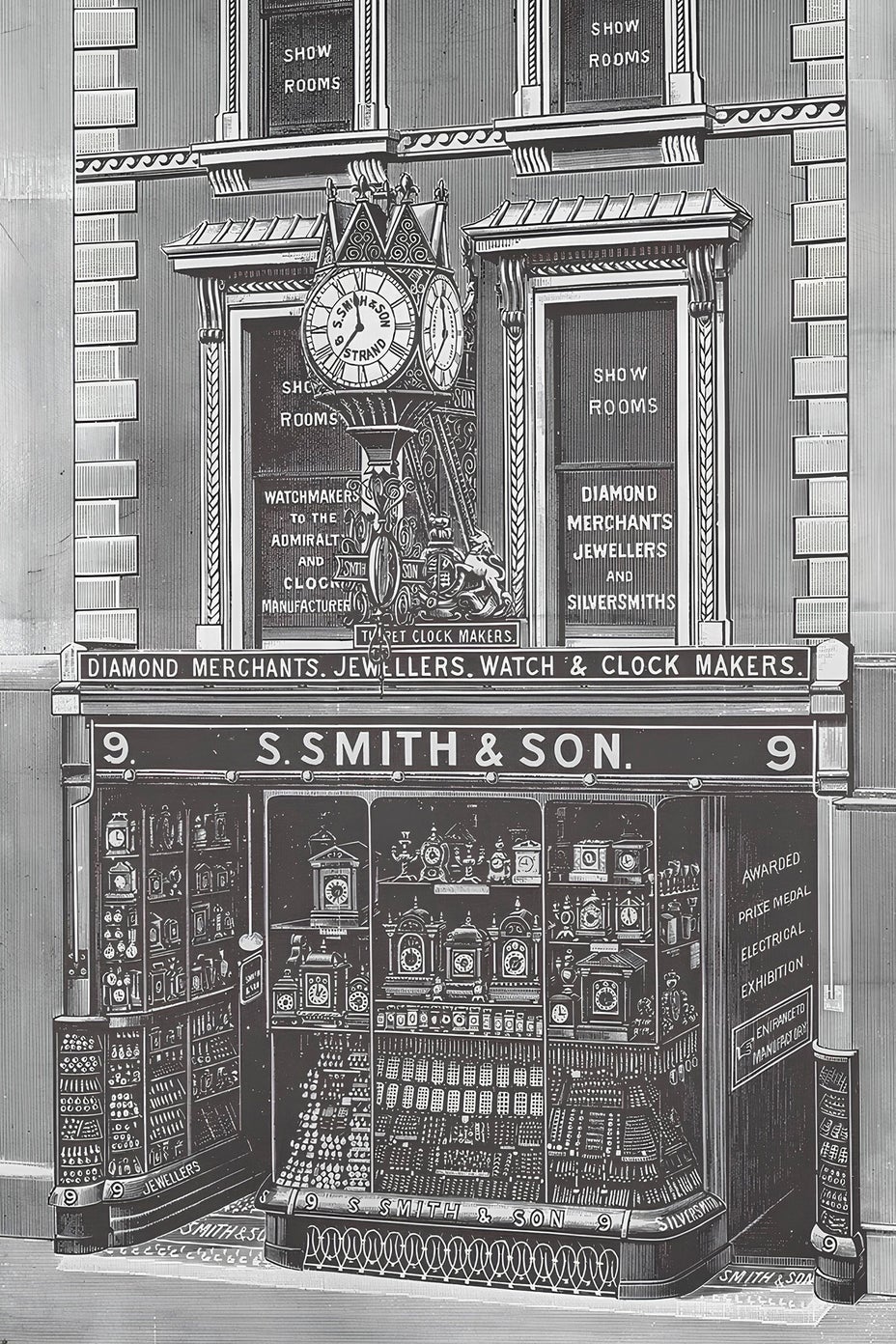
Prominently featured and described in Geoge Daniels and Cecil Clutton’s book Watches, the present lot features one of the highest grade movements of its era, cased and sold by S. Smith & Sons, the preeminent makers of clocks and pocket watches. Manufactured by Nicole Nielsen & Co. for the prestigious retailer, as evidenced by the Nielsen number engraved to the bottom plate, it was based on a Victorin Elysée Piguet ébauche. From its beginning around 1870 until 1933, when the realities of the post-WWI British economy and the Great Depression no doubt took its toll, N N & Co. produced some of the finest and most complicated English watch movements, supplying all the top London makers, including S. Smith & Sons.
Examining the exquisitely complicated movement is a feast for the eyes. The finest English hand craftsmanship is evident throughout, particularly in the visible split-chronograph mechanism. The large balance wheel, fitted with 16 timing screws made of gold, is set within a Nicole Nielsen type-2 one-minute tourbillon carriage featuring three mirror polished, stepped carriage arms. A highest-quality “single-button” chronograph design, the crown starts, stops, and resets the chronograph function, and a pusher on the case at 11 o’clock stops and resets the split-seconds, or rattrapante, hand. A highest quality movement in terms of finishing, it was submitted to the Kew Observatory six times between 1901 and 1905. The best result was in 1902, where it achieved a remarkable Especially Good ‘A’ rating of 82 marks.
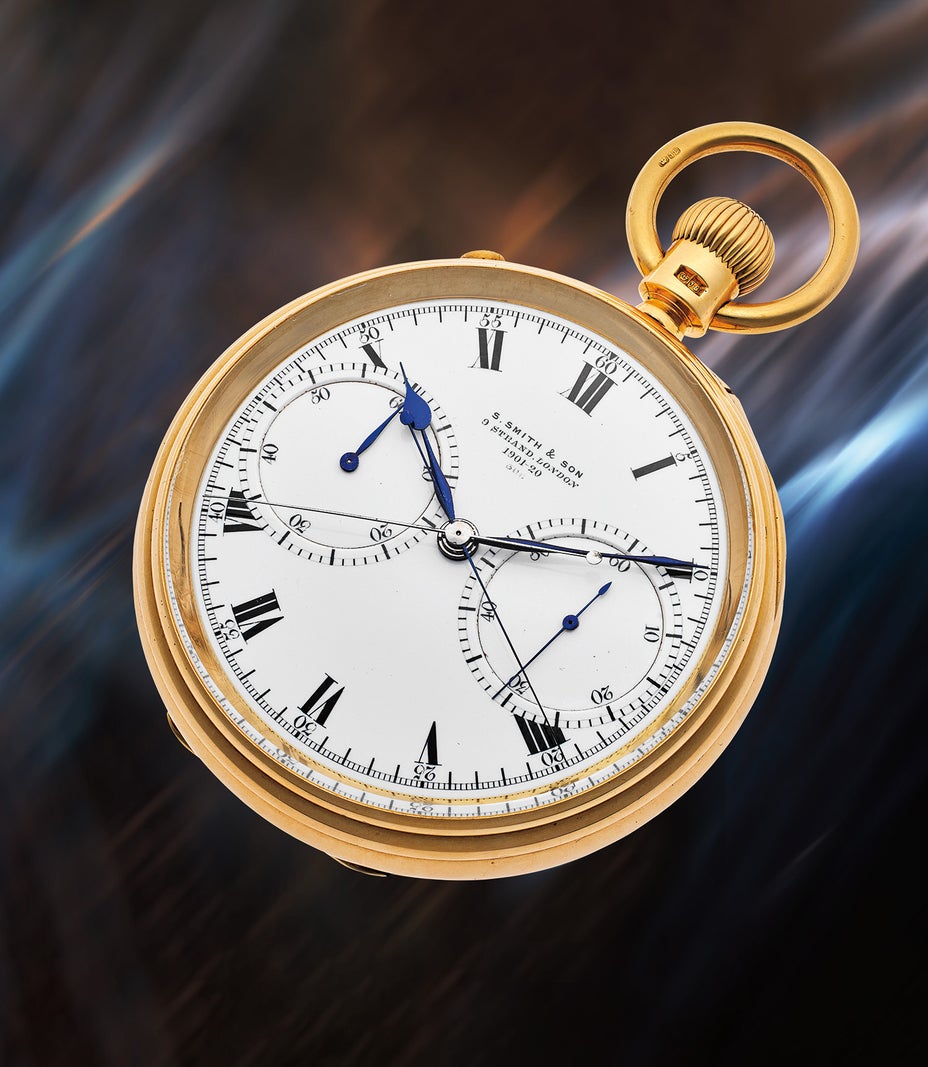
Not content to achieve excellence in the movement alone, the dial is perfectly balanced, with two oversized registers, delicate spade hands, and the delicately off-white enamel dial made and signed by Willis, masters of the craft of dialmaking who supplied some of the finest dials of the late 19th and early 20th century.
Weighing a more-than-impressive 191 grams, the polished 18K yellow gold four-bodied case, made in a time where all cases were crafted by hand, measures 59mm in diameter with all the attributes of a quality English case; turning pendant, 5-knuckle joints, and a raised push piece. Preserved in remarkable condition, the consignor has owned this watch since its purchase at auction in 1989, and it remains in the identical state of preservation, having never been used since then.
Prominently featured and described in Geoge Daniels and Cecil Clutton’s book Watches, the present lot features one of the highest grade movements of its era, cased and sold by S. Smith & Sons, the preeminent makers of clocks and pocket watches. Manufactured by Nicole Nielsen & Co. for the prestigious retailer, as evidenced by the Nielsen number engraved to the bottom plate, it was based on a Victorin Elysée Piguet ébauche. From its beginning around 1870 until 1933, when the realities of the post-WWI British economy and the Great Depression no doubt took its toll, N N & Co. produced some of the finest and most complicated English watch movements, supplying all the top London makers, including S. Smith & Sons.
Examining the exquisitely complicated movement is a feast for the eyes. The finest English hand craftsmanship is evident throughout, particularly in the visible split-chronograph mechanism. The large balance wheel, fitted with 16 timing screws made of gold, is set within a Nicole Nielsen type-2 one-minute tourbillon carriage featuring three mirror polished, stepped carriage arms. A highest-quality “single-button” chronograph design, the crown starts, stops, and resets the chronograph function, and a pusher on the case at 11 o’clock stops and resets the split-seconds, or rattrapante, hand. A highest quality movement in terms of finishing, it was submitted to the Kew Observatory six times between 1901 and 1905. The best result was in 1902, where it achieved a remarkable Especially Good ‘A’ rating of 82 marks.
Not content to achieve excellence in the movement alone, the dial is perfectly balanced, with two oversized registers, delicate spade hands, and the delicately off-white enamel dial made and signed by Willis, masters of the craft of dialmaking who supplied some of the finest dials of the late 19th and early 20th century.
Weighing a more-than-impressive 191 grams, the polished 18K yellow gold four-bodied case, made in a time where all cases were crafted by hand, measures 59mm in diameter with all the attributes of a quality English case; turning pendant, 5-knuckle joints, and a raised push piece. Preserved in remarkable condition, the consignor has owned this watch since its purchase at auction in 1989, and it remains in the identical state of preservation, having never been used since then.