56
Rolex
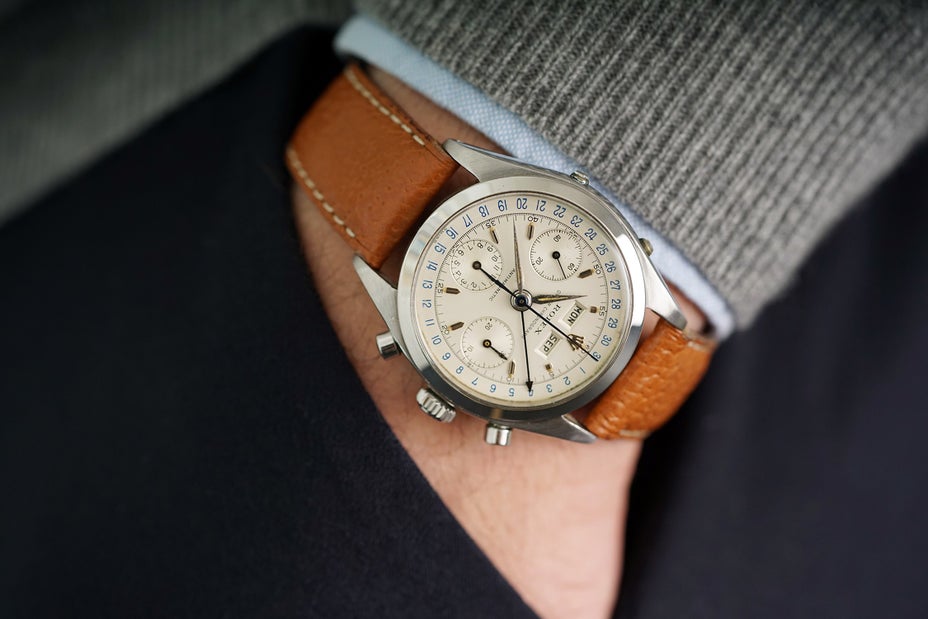
Ref. 6236
"The Guido Mondani Killy"
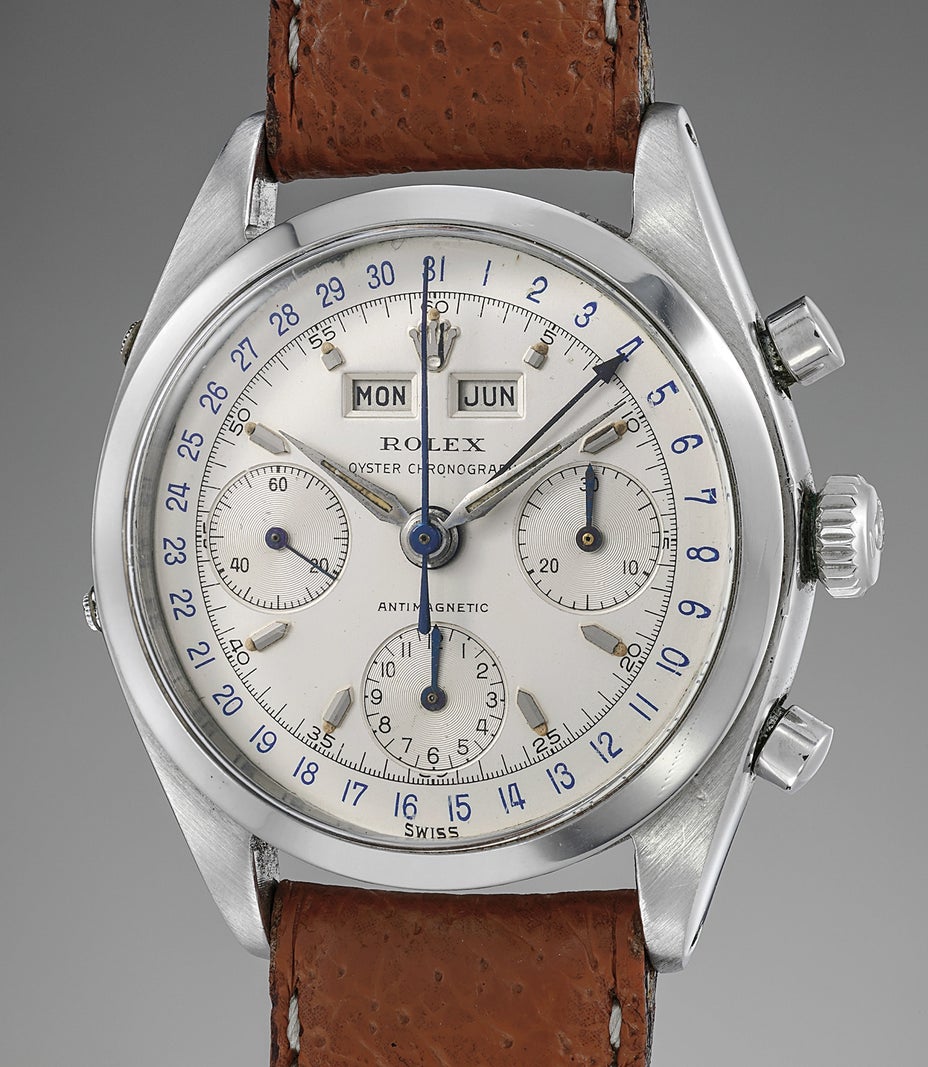
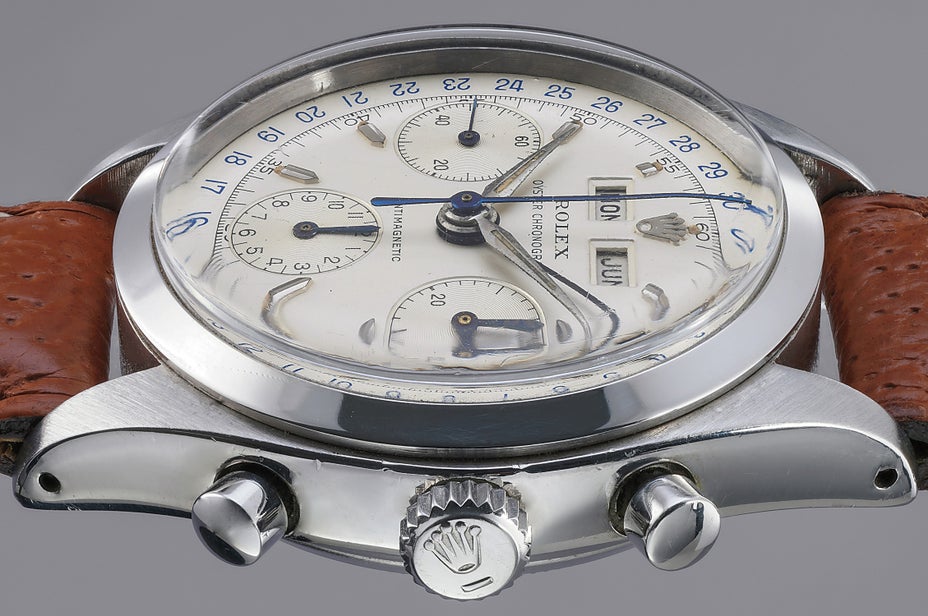
A very fine, rare and incredibly well-preserved stainless steel triple calendar chronograph wristwatch
完整圖錄內容
Its roots date back to 1947, when Rolex launched reference 4767 - Rolex's very first triple calendar chronograph wristwatch fitted inside a water-resistant Oyster case. Between 1947 and 1962, a total of four different Oyster Dato-Compax models were produced: references 4767, 5036, 6036 and 6236. Produced in yellow and pink gold as well as stainless steel, the production run was very small for each variation. Over the years, Rolex modified both the dial and case design, with the final watch in this series, the reference 6236, featuring a more modern, clean dial style, as well as a three-piece case with larger bezel.
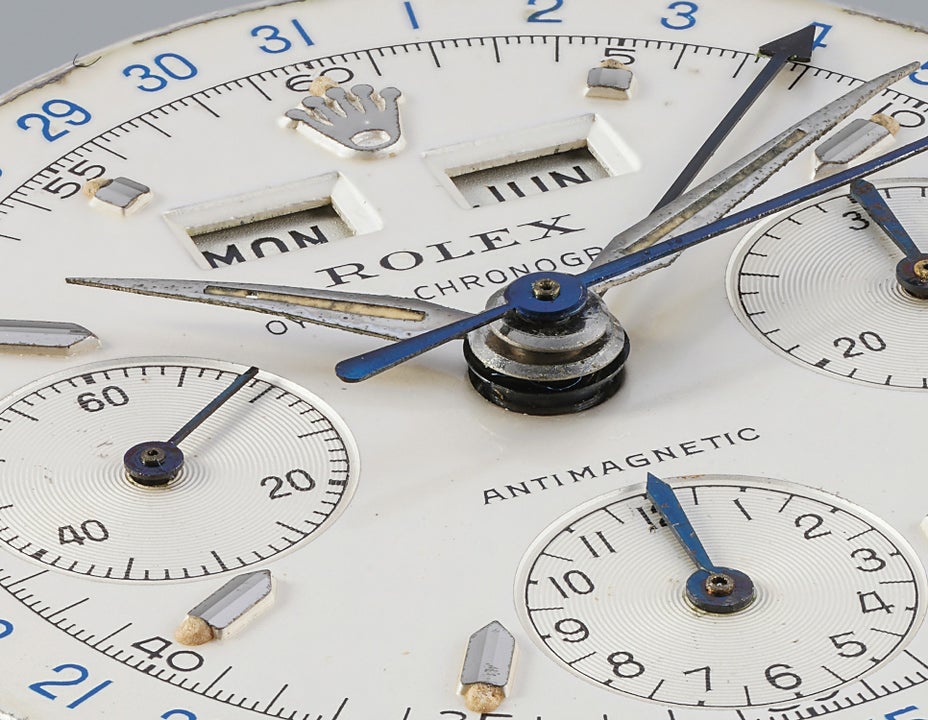
The present example is one of the most impressive reference 6236s to come on the market. Featuring a robust case that is crisp and sharp, the watch has been barely touched throughout its lifespan. Furthermore, the dial is preserved in excellent condition with barely any blemishes or marks, which is quite astounding when one considers the age of the timepiece.
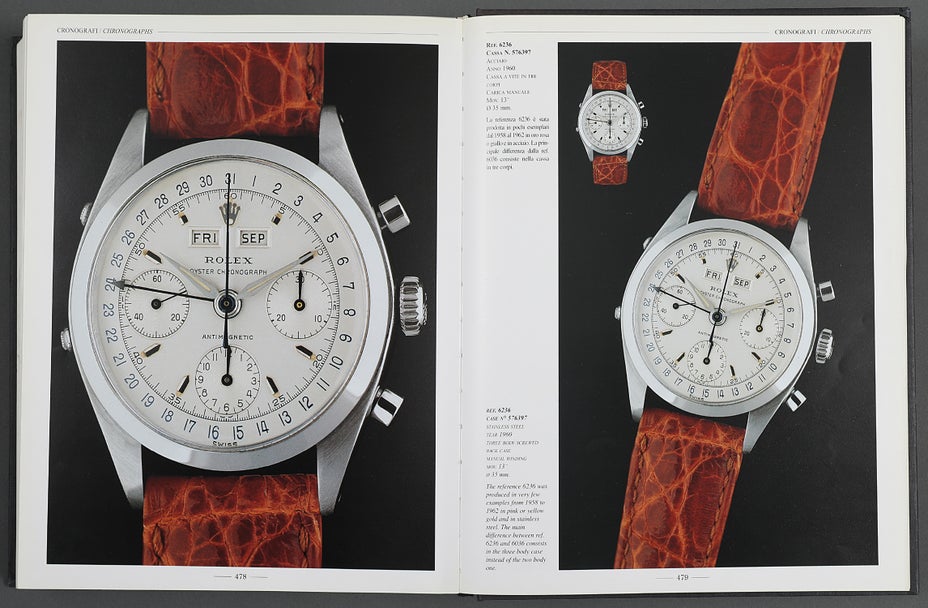
Its provenance is particularly impressive, having been previously sold at the The Mondani Collection of Rolex Wristwatches, lot 75 on April 1, 2006. It is further immortalised in literature, as the watch is prominently illustrated in Collezionare Orologi da Polso Rolex Collecting Wristwatches by Osvaldo Patrizzi, pages 478 and 479.
Interestingly, the present timepiece is only 5 digits away in serial number to record breaking reference 6236 from the Gordon Bethune collection, which sold at the Phillips Geneva Watch Auction: EIGHT for 702,500 CHF.
Rolex
Swiss | 1905Founded in 1905 England by Hans Wilsdorf and Alfred Davis as Wilsdorf & Davis, it soon became known as the Rolex Watch Company in 1915, moving its headquarters to Geneva in 1919. Like no other company, the success of the wristwatch can be attributed to many of Rolex's innovations that made them one of the most respected and well-known of all luxury brands. These innovations include their famous "Oyster" case — the world's first water resistant and dustproof watch case, invented in 1926 — and their "Perpetual" — the first reliable self-winding movement for wristwatches launched in 1933. They would form the foundation for Rolex's Datejust and Day-Date, respectively introduced in 1945 and 1956, but also importantly for their sports watches, such as the Explorer, Submariner and GMT-Master launched in the mid-1950s.
One of its most famous models is the Cosmograph Daytona. Launched in 1963, these chronographs are without any doubt amongst the most iconic and coveted of all collectible wristwatches. Other key collectible models include their most complicated vintage watches, including references 8171 and 6062 with triple calendar and moon phase, "Jean Claude Killy" triple date chronograph models and the Submariner, including early "big-crown" models and military-issued variants.