127
Patek Philippe
Ref. 2597
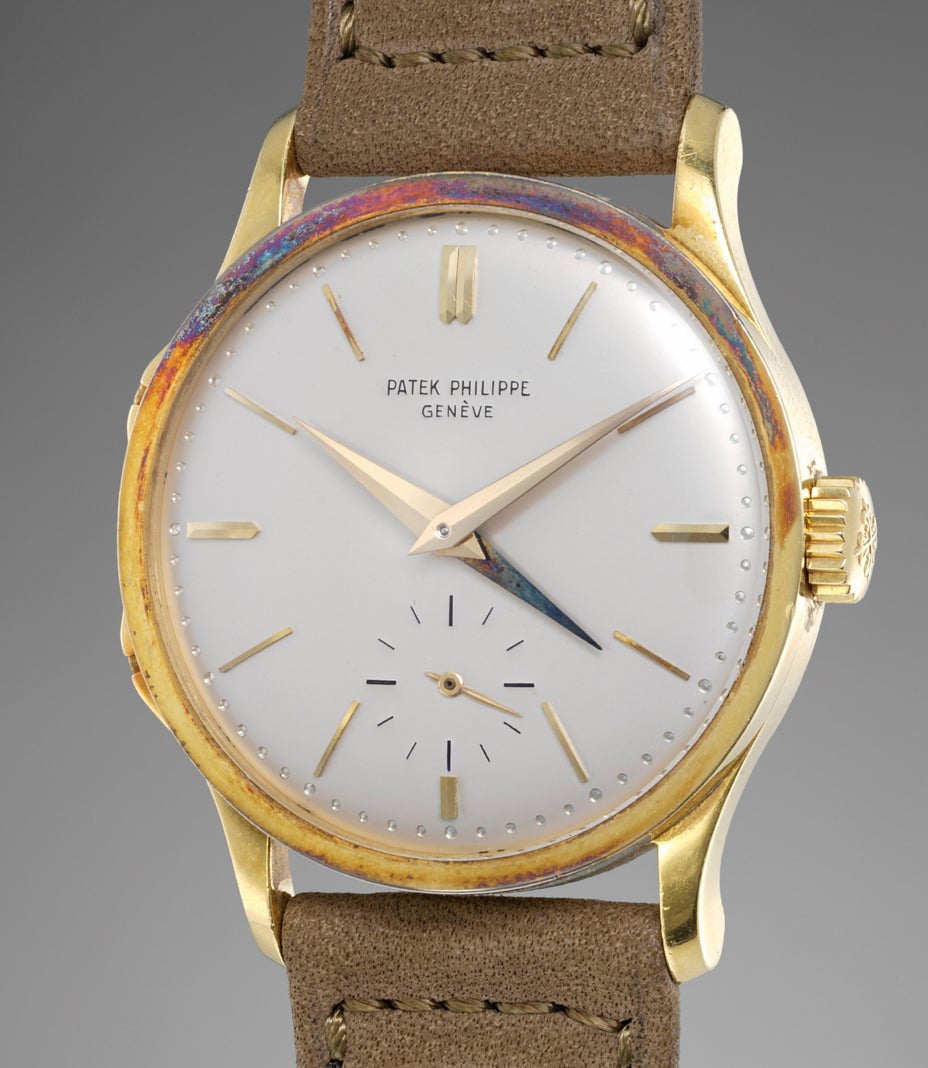
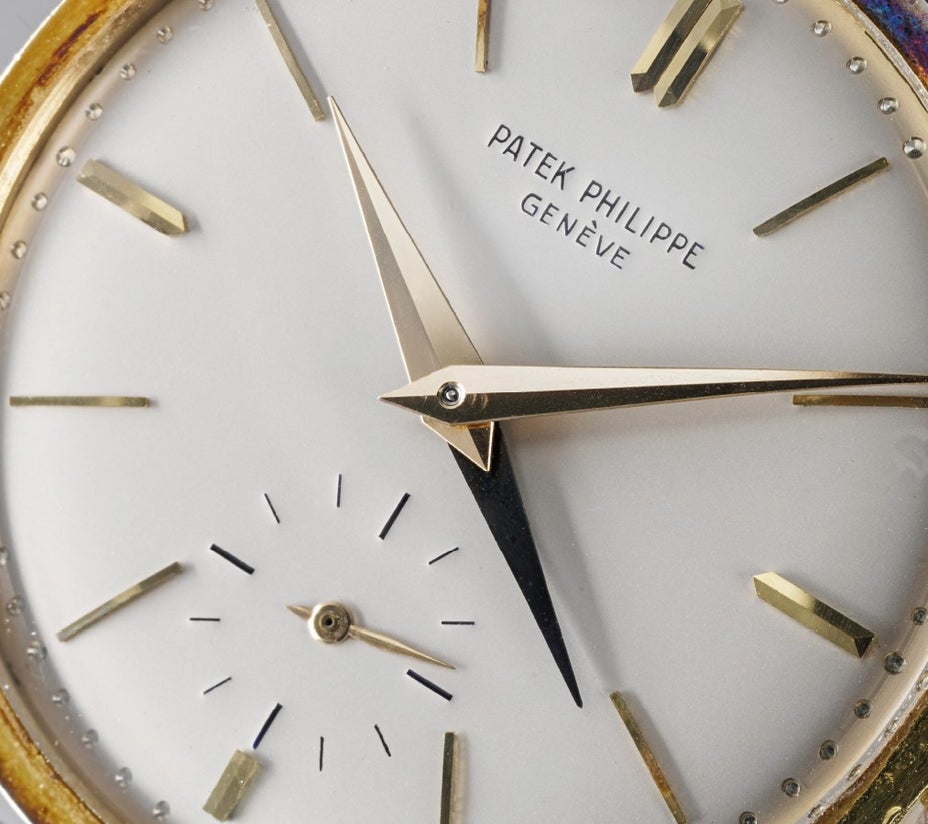
A highly rare and attractive yellow gold dual time wristwatch with additional adjustable jumping hour hand
完整圖錄內容
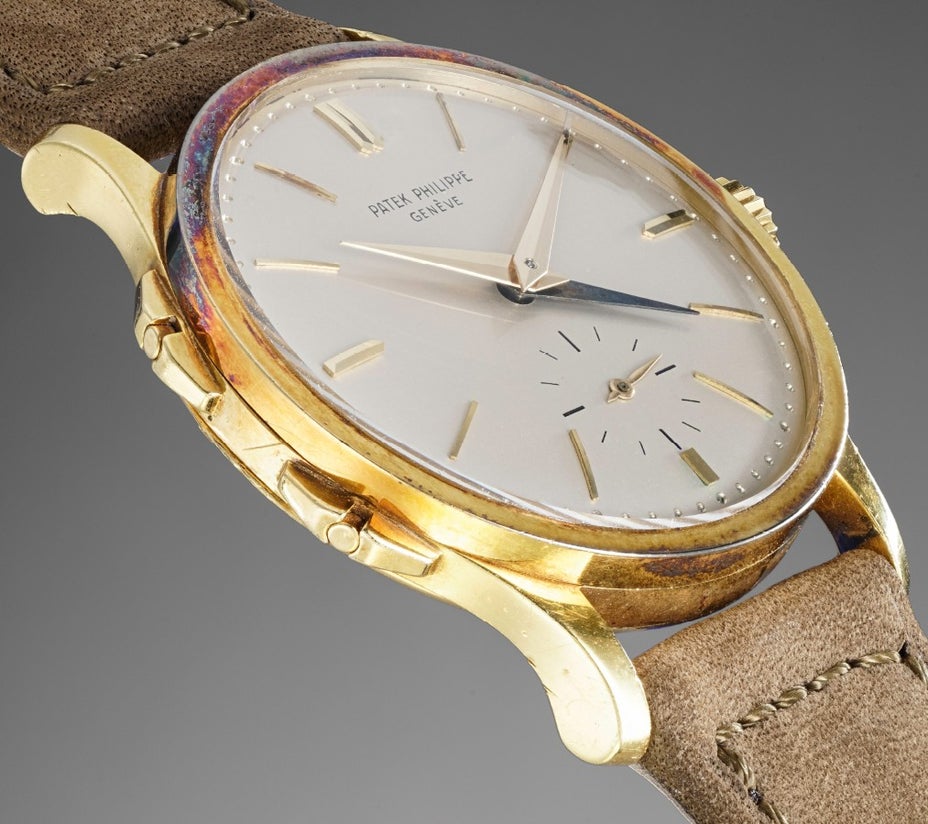
Patek Philippe's similarly iconic reference 2597 was also born during this era, created as a direct response to this new age of travel. An easy way to keep track of time across multiple time zones, Patek Philippe used the ingenious designs of Louis Cottier in his development of the world time watch and asked him to engineer what would become the 2597, made in two versions. The first series featured an independently adjustable hour hand whereas the second, like the present watch introduced in 1962, included an additional hour hand. Contemporary corporate literature made clear the need for accuracy and clarity in timing, and this new function, with its independently adjustable hour hand, succeeded by having no effect on timekeeping. One would simply press the pushers at 8 o'clock and 10 o'clock to quickly adjust the hour without changing the time through the crown. Patek Philippe patented this system in 1959, with Swiss Patent 340191 for a "Time Zone Watch".
The cases of reference 2597 were produced by Antoine Gerlach, one of the firms specializing in making cases for Patek Philippe. The current example in yellow gold dates to 1961 and in our opinion, has never been polished. The case has beautifully oxidized over the intervening years, with few signs of careful wear over its lifetime. The raised, hard enamel print is perfectly intact and the factory, brushed finished to the caseback remains crisp, making this a superb example of one of the world's most sought after travel watches of the mid 20th century.
Patek Philippe
Swiss | 1839Since its founding in 1839, this famous Geneva-based firm has been surprising its clientele with superbly crafted timepieces fitted with watchmaking's most prestigious complications. Traditional and conservative designs are found across Patek Philippe's watches made throughout their history — the utmost in understated elegance.
Well-known for the Graves Supercomplication — a highly complicated pocket watch that was the world’s most complicated watch for 50 years — this family-owned brand has earned a reputation of excellence around the world. Patek's complicated vintage watches hold the highest number of world records for results achieved at auction compared with any other brand. For collectors, key models include the reference 1518, the world's first serially produced perpetual calendar chronograph, and its successor, the reference 2499. Other famous models include perpetual calendars such as the ref. 1526, ref. 3448 and 3450, chronographs such as the reference 130, 530 and 1463, as well as reference 1436 and 1563 split seconds chronographs. Patek is also well-known for their classically styled, time-only "Calatrava" dress watches, and the "Nautilus," an iconic luxury sports watch first introduced in 1976 as the reference 3700 that is still in production today.