Article | A Particular Time In A Particular Place Modern American Painting Auction May 2026
A Particular Time in a Particular Place
What nearly one hundred years of modern painting tells us about the roots of American visual culture.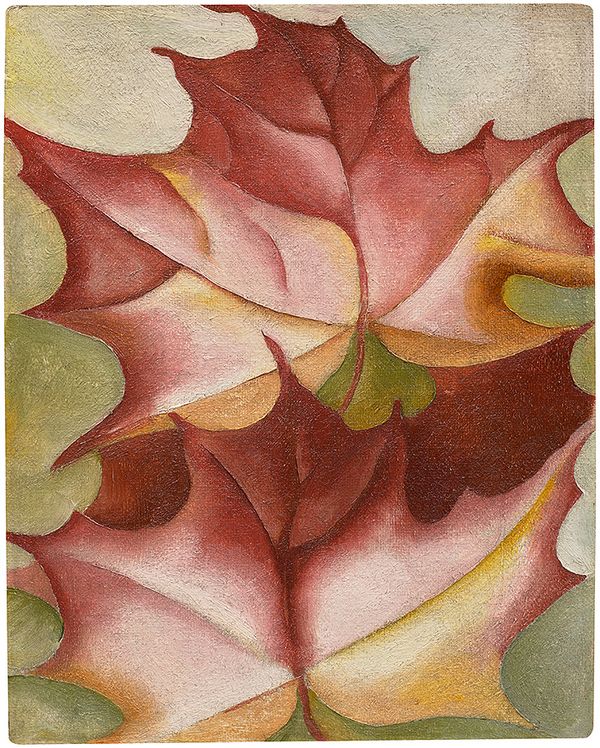
Georgia O'Keeffe, Maple Leaves (recto) and Flowering Cactus (verso) (double-sided), 1925 and circa 1922. Modern & Contemporary Art Evening Sale, New York.
There’s nothing like a stroll through history to leave us with new ways to see the world today. And across our upcoming Modern & Contemporary Art sales in New York, works from the Tanenbaum Family Collection offer us that compelling experience. Works from the same collection were recently offered in Phillips’ Modernism: Editions & Works on Paper auction in New York, where they were received with enthusiasm from collectors.
The works from this collection on offer in the Modern & Contemporary Art sales can be seen as a small survey of modern American painting, charting a course from the Hudson River School to American Impressionism, Modernism, and beyond. They each serve as portals to another time, and the subtext is perhaps how early modern advancements enabled artists to connect with ideas emerging in different locations, to travel more widely and frequently, and to share ideas with each other from afar. Indeed, many of the artists in this selection shared personal connections, and all of them felt deep ties to the locations they both inhabited and depicted.
Georgia O'Keeffe’s double-sided rarity
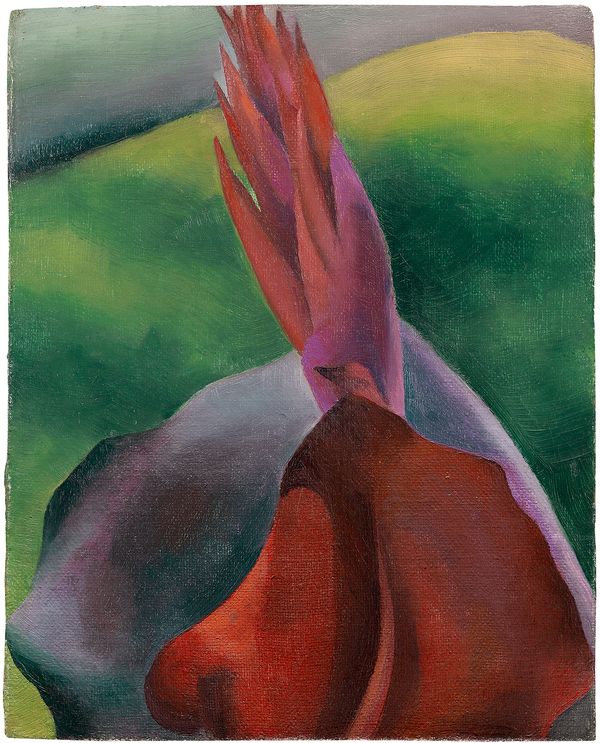
Georgia O'Keeffe, Maple Leaves (recto) and Flowering Cactus (verso) (double-sided), 1925 and circa 1922. Modern & Contemporary Art Evening Sale, New York.
A remarkable double-sided Georgia O'Keeffe canvas leads the selection, created during a period when the artist split her time between Manhattan and Alfred Stieglitz’s family estate in Lake George, New York. Curiously, in 1925, O'Keeffe returned to a circa 1922 floral study, painting an autumnal leaf on the alternate face. On both sides of this canvas, we discover her almost photographic sense of tight cropping, chromatic intensity, and the formal isolation that would anchor her place as a pioneer of American modernism.
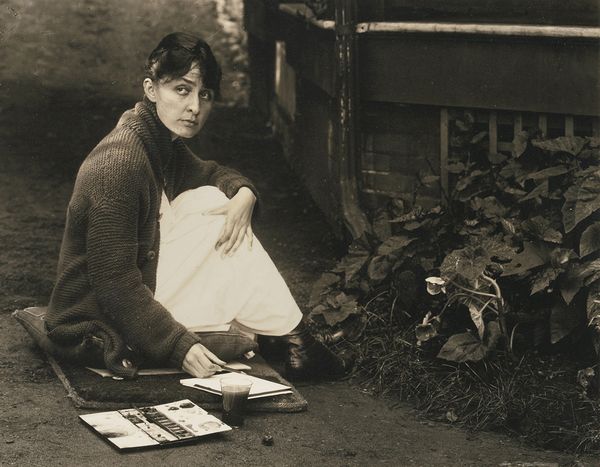
Georgia O'Keeffe in Lake George, New York, 1918. Photograph by Alfred Stieglitz. Image via Wikimedia Commons.
Adding to the work’s allure, this canvas was first handled by Alfred Stieglitz’s landmark New York gallery, An American Place. The gallery served as a platform for O'Keeffe and the intimate circle of other artists Stieglitz championed, including Marsden Hartley and John Marin, who are also represented in the collection. For O'Keeffe, the two subjects across each side of this canvas are deeply emblematic of how she constructed an American visual identity and, in many respects, built towards the apex of American modernism. But to understand how she arrived here and how this national visual identity emerged, it’s helpful to revisit the origins of American visual language — the Hudson River School.
Thomas Cole, George Bellows, and William Merritt Chase in New York
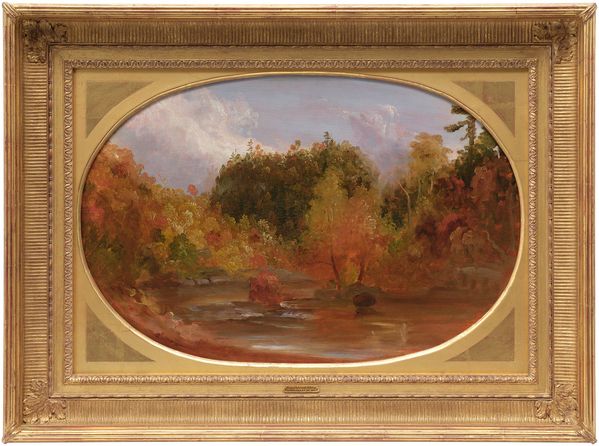
Thomas Cole, Catskill Stream Autumn Foliage, 1828. Modern & Contemporary Art Morning Session, New York.
Thomas Cole is widely considered the founding father of the Hudson River School, a movement that helped forge a distinctly American identity in visual art. Influenced by European Romantic painters like John Constable and J.M.W. Turner, these artists brought national sensibilities to their works, which often explored themes of exploration, settlement, and pastoral spirituality, rooted in the idyllic landscape of the Hudson River Valley. We see these themes clearly in this work by Thomas Cole. Painted in Catskill, New York, this inviting painting depicts the region’s iconic autumn foliage at its vibrant peak.
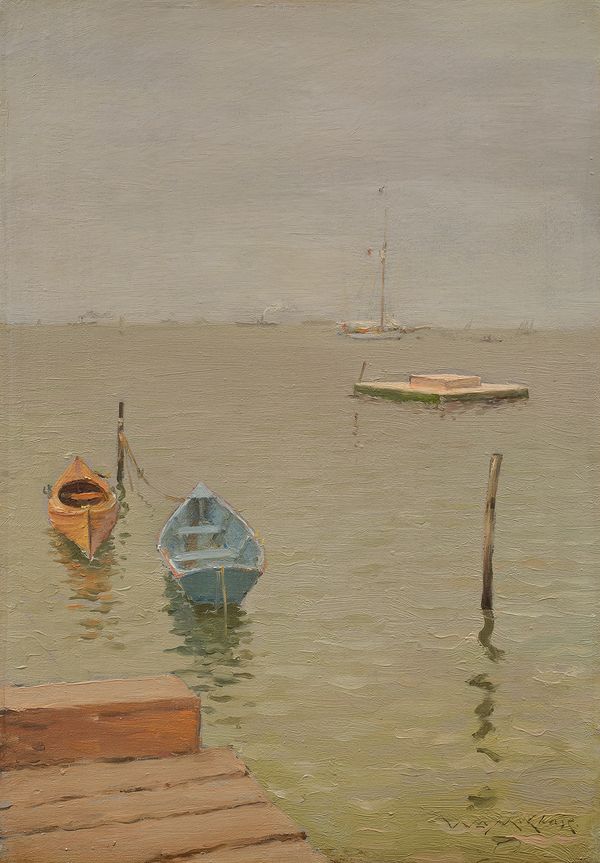
William Merritt Chase, A Stormy Day at Bath Beach, Long Island, 1889. Modern & Contemporary Art Morning Session, New York.
This William Merritt Chase scene, painted at Bath Beach in Brooklyn, shows how subsequent painters came to pivot away from the sensibilities of the Hudson River School. Chase, an American Impressionist painter, offers a direct study of light and reflection in this work, avoiding the overtly spiritual quality that so defined the Hudson River School works.
There are interesting connections between Chase and other artists in this selection as well. He founded the Chase School, which later became the Parsons School of Design, and also taught at the Art Students League, where he encountered other iconic American artists who are represented in the collection during their student years, including Georgia O'Keeffe, George Bellows, Robert Henri, and Charles Sheeler.
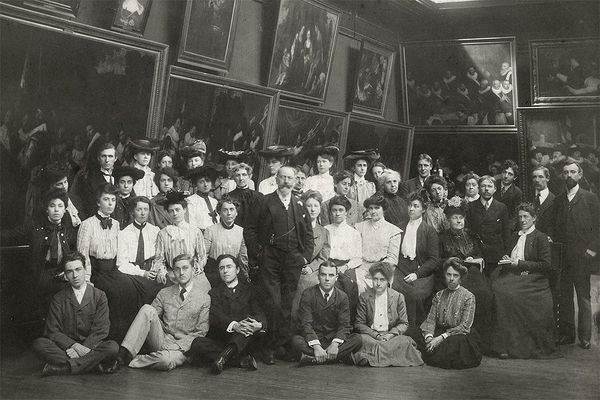
William Merritt Chase with Parsons School of Design students. Image via Wikimedia Commons.
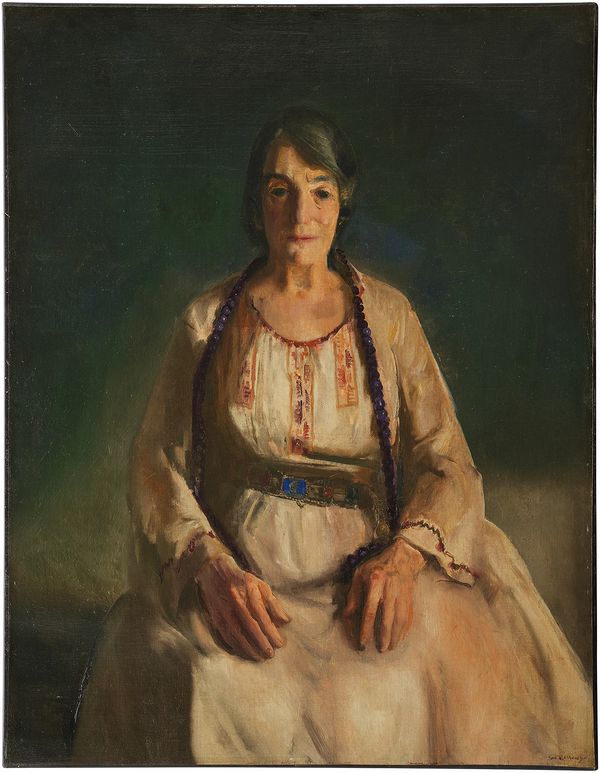
George Bellows, Miss Ruth, 1920. Modern & Contemporary Art Morning Session, New York.
In subsequent reaction to the work of the American Impressionists, a group of artists emerged known as the Ashcan School. Led by Robert Henri — whose star student was George Bellows — their approach was more in the vein of American realist painting, refusing to shy away from the rougher edges of modern life.
This 1920 portrait by George Bellows, painted in Woodstock, New York, is a prime example of this novel concept. Her gaze greets us with an almost uncomfortable intensity, the imperfections of her skin and clothing depicted boldly. Characteristic of Bellows’ approach to portraiture, the high-contrast, dark background echoes many of the artist’s European influences, including Velázquez, Hals, and Goya. But most tellingly, he presents an ordinary person as subject, privileging the psychological depth of the portrait over the Impressionists’ leanings toward elegant depictions of the leisure class.
Robert Henri in Pennsylvania
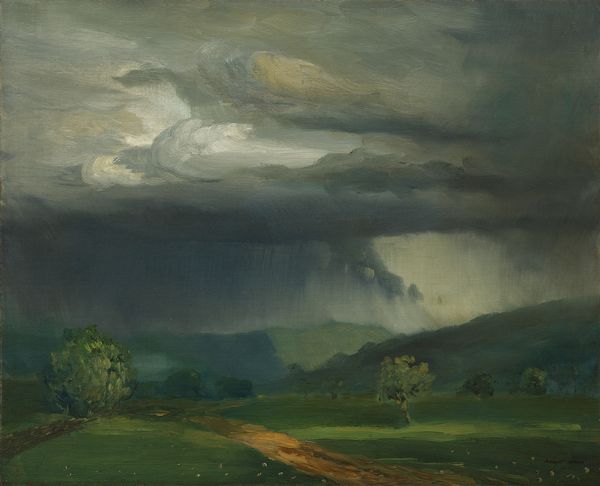
Robert Henri, The Rain Storm-Wyoming, 1902. Modern & Contemporary Art Morning Session, New York.
A collection of American art from this era would be incomplete without the work of Robert Henri, who was perhaps the most defining voice of American Realism. This depiction of an impending storm, painted in Wyoming Valley, Pennsylvania, is a shining example of Henri’s approach to landscape. Executed in a bold and gestural style, the atmospheric work captures the spirit of the place — one can almost feel the shifts in air pressure and the gusts of wind in this wide open valley. For Henri, imparting the sensation of the overwhelming power of nature was as important as its sight.
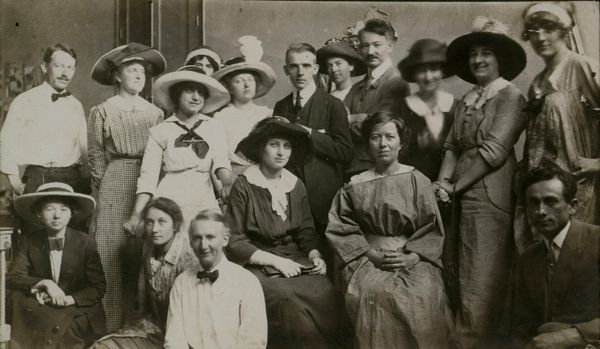
Robert Henri with his students, circa 1911.
In Henri’s later portrait, Teresa, we find resonance with Bellows’ above portrait. Here, Henri also presents a direct gaze, and he boldly executes, and perhaps accentuates, his subject’s flushed cheeks and wrinkled, faded clothing, but her faint smile and slightly askew hair are cheerfully defiant. Again, we get a sense of which social class this subject might belong to, and it is one that Henri must have felt was being overlooked by his contemporaries. Henri and his followers painted what they saw, exploring the margins of society in ways that challenge our assumptions and resonate with a wide range of later American artists, from figures like Diane Arbus to the street culture of Jean-Michel Basquiat and Keith Haring.
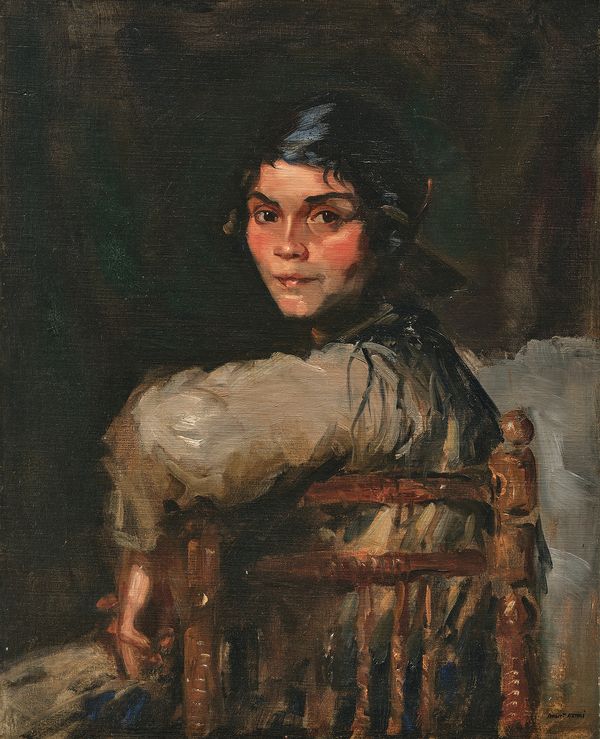
Robert Henri, Teresa, 1924. Modern & Contemporary Art Morning Session, New York.
Thomas Eakins and John Marin in New Jersey
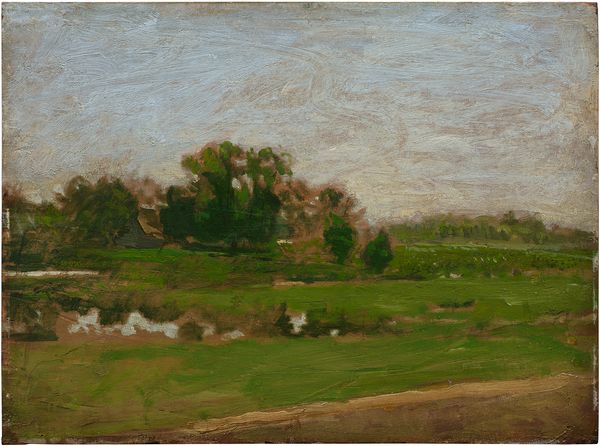
Thomas Eakins, Study for The Meadows, Gloucester, New Jersey, 1882. Modern & Contemporary Art Morning Session, New York.
Thomas Eakins’ approach to Realism, coming several decades before Henri and Bellows, was rooted in a quest for truth, exemplified by his anatomical studies as a student. In this landscape study, painted in Gloucester, New Jersey, we can observe the artist precisely working out the reality of perspective, depth, and atmosphere.
His portrait, A Spanish Woman (Dolores), likely painted in Seville, Spain, during a stint the artist spent in the country from 1869 to 1870, offers an interesting contrast to Henri and Bellows’ later portraits. Here, careful attention is paid to the anatomical structure of the subject’s face and torso and the play of light and shadow. Unlike the direct, confrontational gazes favored by Henri and Bellows, her eyes are cast into the distance. The reality Eakins depicts is one of objective, physical truth rather than an exploration of hidden psychologies.
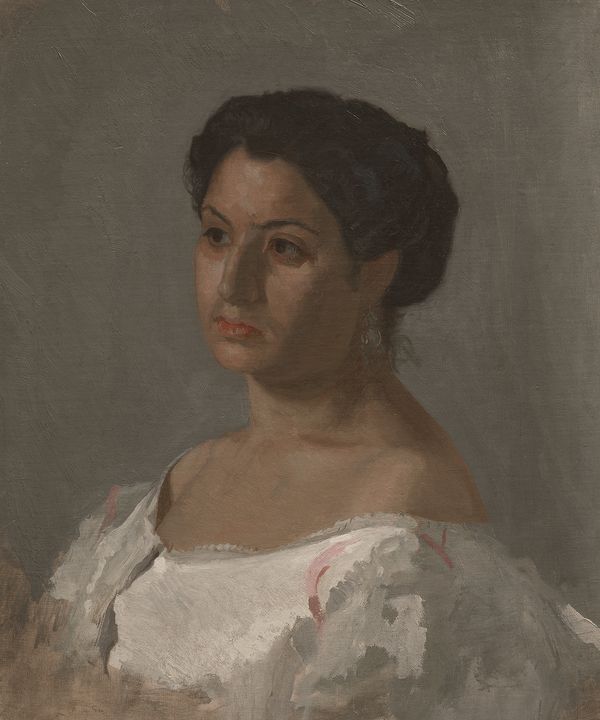
Thomas Eakins, A Spanish Woman (Dolores), 1870. Modern & Contemporary Art Morning Session, New York.
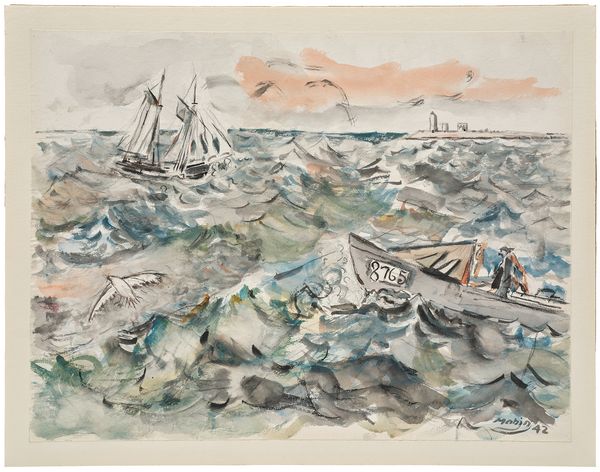
John Marin, Sea Fantasy No. 1, 1942. Modern & Contemporary Art Morning Session, New York.
New Jersey-born artist John Marin is celebrated for his semi-abstract watercolor landscape paintings, and was also closely associated with the circle surrounding Alfred Stieglitz and Georgia O'Keeffe. At the time the artist painted this 1942 seascape, he was living and working between New Jersey and Cape Split, Maine, and this remarkable work captures the explosive energy of the sea and the myriad colors that reflect off its surface. Visually, we can place this scene in either New England or New Jersey, and indeed, the artist may have drawn from his intimacy with each setting.
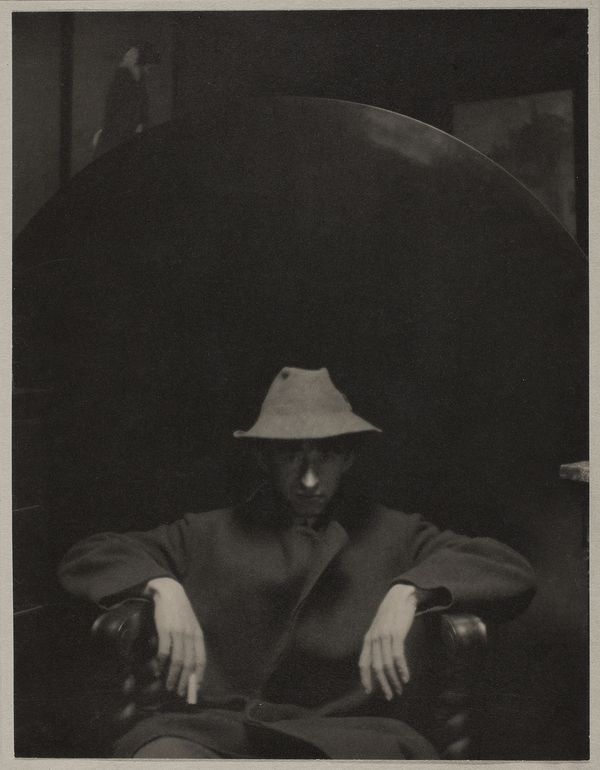
John Marin. Photograph by Alfred Stieglitz, circa 1911. Image: Art Institute of Chicago, Alfred Stieglitz Collection, 1949.712
Maurice Brazil Prendergast and Marsden Hartley in New England
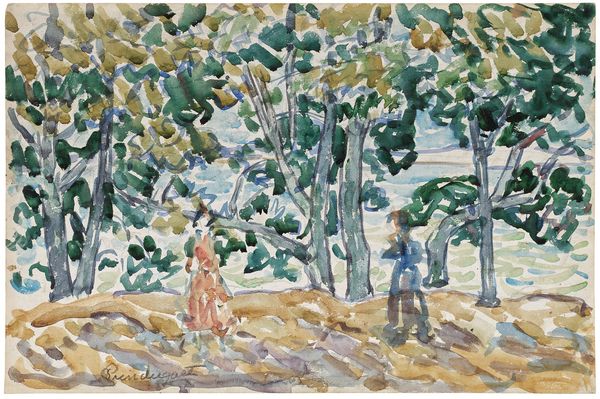
Maurice Brazil Prendergast, Salem, 1916. Modern & Contemporary Art Morning Session, New York.
Also associated with the loose group of artists surrounding Robert Henri, Prendergast’s work showcases a distinctive and personal Modernist voice. He did much to introduce Modernist aesthetics to the United States, including acting as an organizer of the 1913 Armory Show. The above depiction of a landscape scene in Salem, Massachusetts, is highly characteristic of his colorful, mosaic-like imagery of figures relaxing in nature. Depicted in light, airy strokes, this charming work invites us to imagine its narrative.
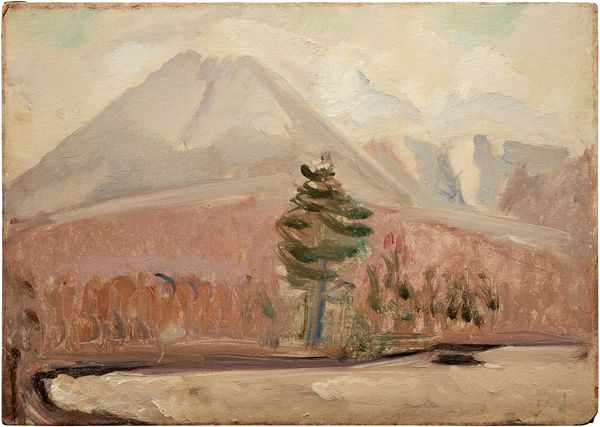
Marsden Hartley, Snow Capped Mountains, 1941. Modern & Contemporary Art Morning Session, New York.
In contrast, Marsden Hartley’s 1941 depiction of his beloved Mt. Katahdin, executed when the artist lived in Maine during his later years, showcases the large, heavy brushstrokes that are emblematic of his late style. Having experienced personal tragedy by the time he painted this work at 64, Hartley seemingly found relief in depicting this colossal mountain, and in the endurance and strength it represents.
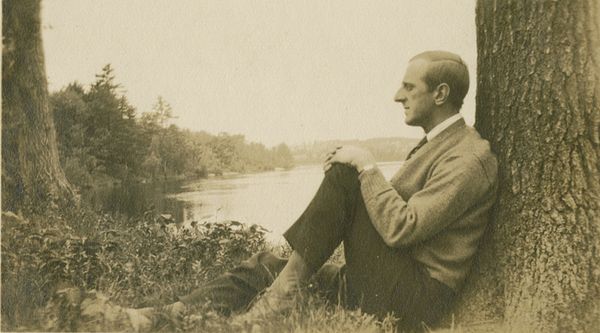
Marsden Hartley on the banks of the Androscoggin River at Lewiston, Maine, circa 1911.
Across these works, we find not just a multitude of approaches to painting but a loose narrative of the progression of Modernism in American visual culture. Each work is fully present in its own way in its own time and place, but from our vantage point more than a quarter of the way through the 21st century, there's perhaps another loose connection hiding in plain sight. We can sense across these works — spanning the 1820s up to the precipice of the Second World War — just how much modern life seems to move ever faster with each passing year. And the transcendent experience of viewing these works all together gives us the space we need to slow it down, offering us visions of places we may know well but can now see through different eyes in an era as much like our own as it isn’t.
Phillips’ spring auctions of Modern & Contemporary Art will be on view from 9 May 2026 at 432 Park Avenue.